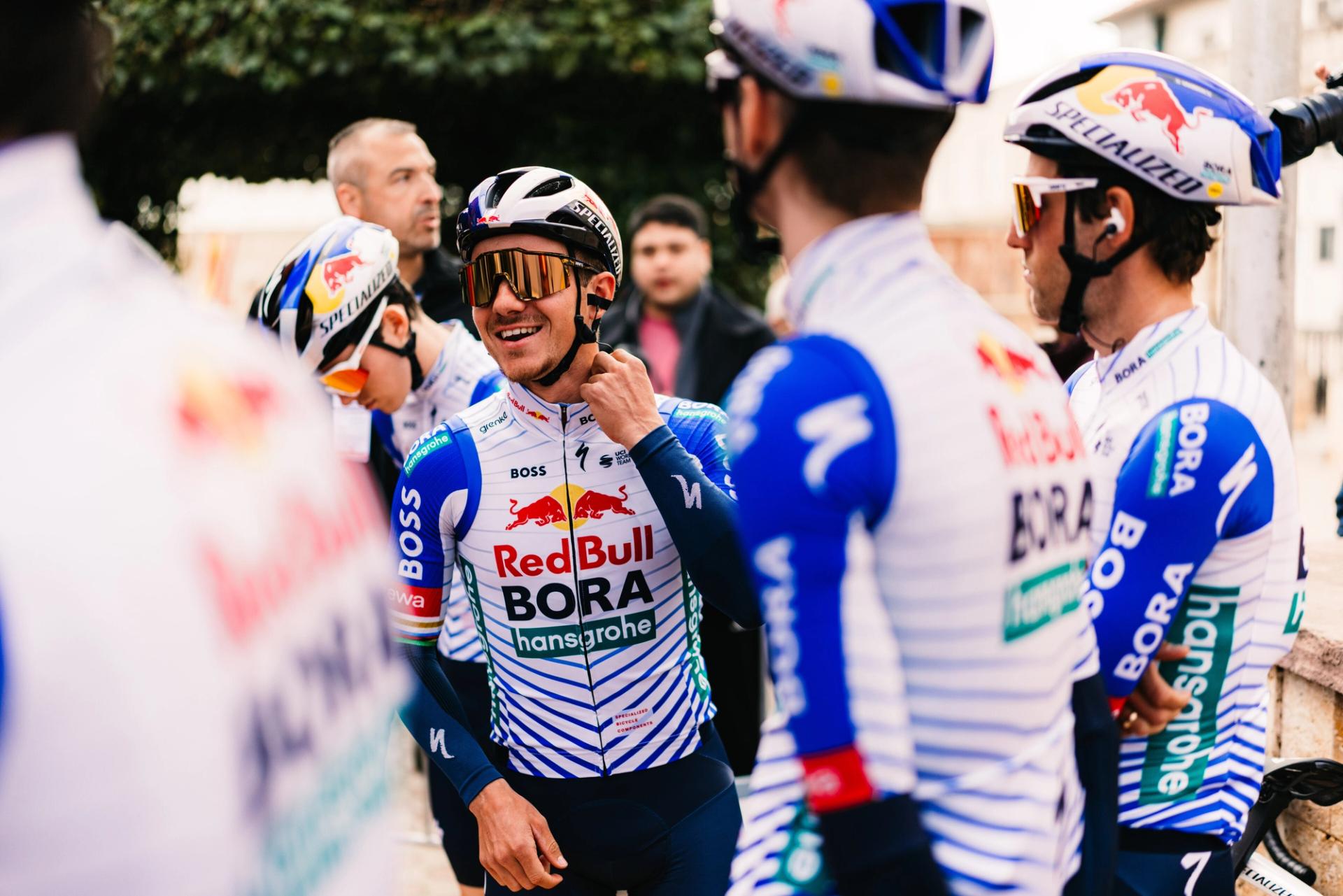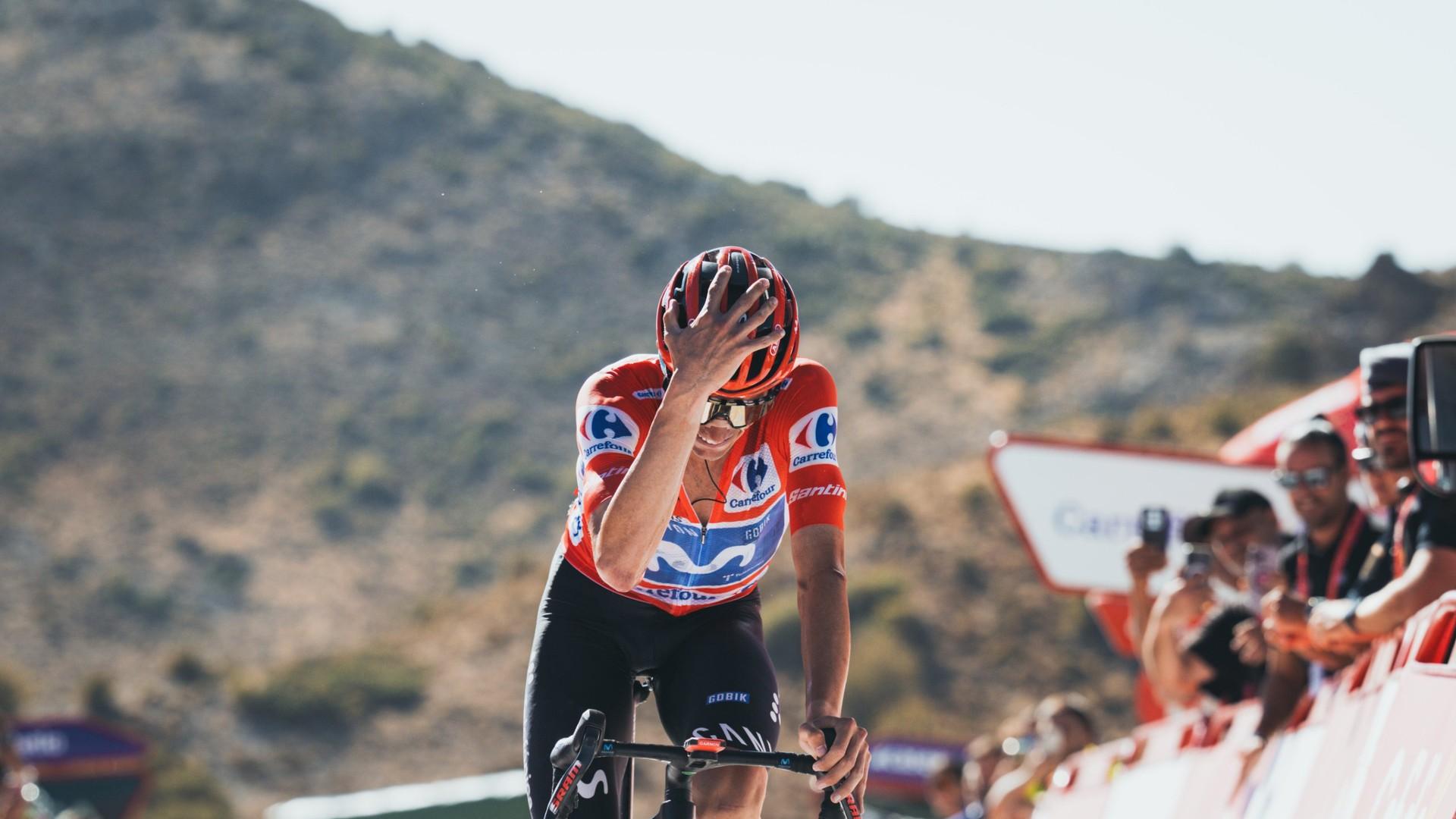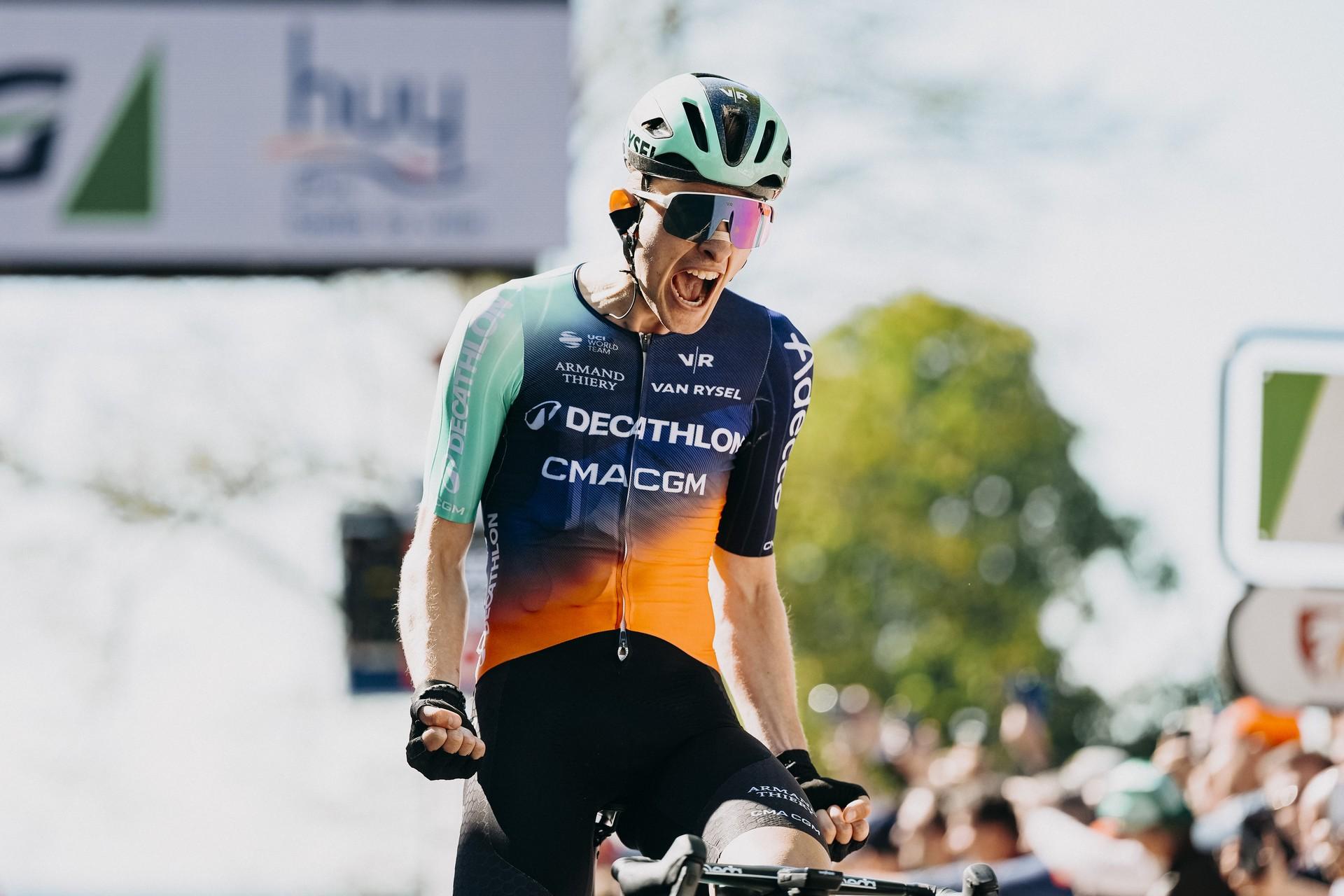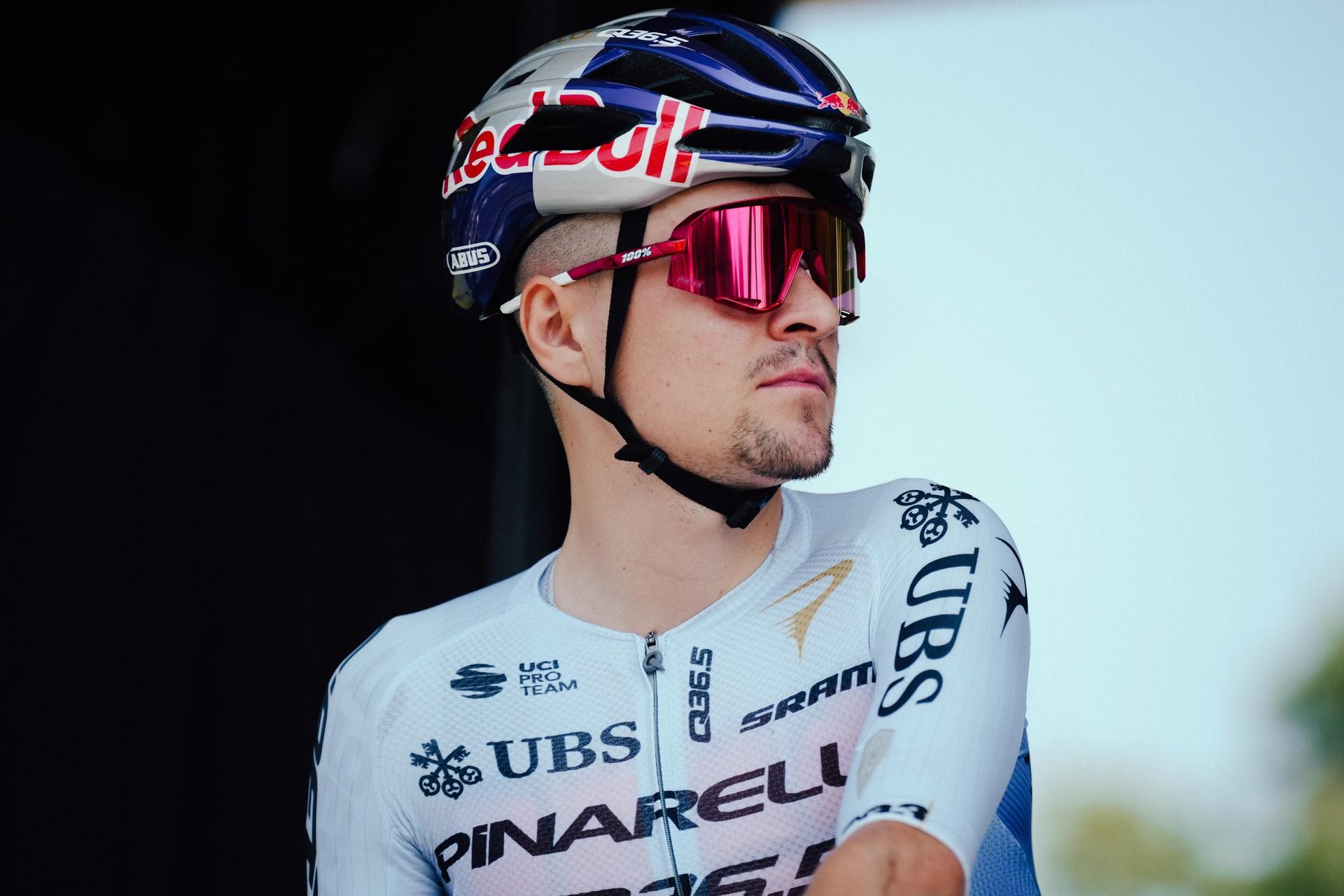
The 105th Volta Ciclista a Catalunya starts on Monday, March 23, with Jonas Vingegaard (Visma | Lease a Bike), Remco Evenepoel (Red Bull-BORA-hansgrohe) and João Almeida (UAE Team Emirates-XRG) leading a deep field into a route that includes three summit finishes and more than 20,000 metres of climbing across seven stages.
The peloton contains seven Grand Tour winners overall, with Tom Pidcock (Q36.5 Pro Cycling Team), Enric Mas (Movistar Team), Richard Carapaz (EF Education-EasyPost), Mikel Landa (Soudal-QuickStep), Carlos Rodríguez (Ineos Grenadiers) and Florian Lipowitz (Red Bull-BORA-hansgrohe) among the confirmed starters. Catalunya tends to expose riders through repeated daily stress rather than one decisive blow, which makes cumulative fatigue and team depth as important as raw climbing power.
Volta a Catalunya 2026: Start List
The race opens along the Costa Brava in Sant Feliu de Guíxols and finishes a week later with repeated laps of Barcelona's Montjuïc circuit. Between those bookends sit stages to Vallter (stage 4), Coll de Pal (stage 5) and Queralt (stage 6), a three-day mountain block that should determine the GC.
Route
7 Stages • 1,081.2km total

| Stage | Date | Route | Distance | Type |
|---|---|---|---|---|
| 1 | Mar 23 | Sant Feliu de Guíxols | 172.8 km | Road Stage |
| 2 | Mar 24 | Figueres - Banyoles | 167.4 km | Road Stage |
| 3 | Mar 25 | Mont-roig del Camp - Vila-seca | 159.4 km | Road Stage |
| 4 | Mar 26 | Mataró - Vallter | 173 km | Road Stage |
| 5 | Mar 27 | La Seu d'Urgell - La Molina / Coll de Pal | 155.3 km | Road Stage |
| 6 | Mar 28 | Berga - Queralt | 158.2 km | Road Stage |
| 7 | Mar 29 | Barcelona | 95.1 km | Road Stage |
Related - How to watch Volta a Catalunya 2026
Volta a Catalunya 2026 route
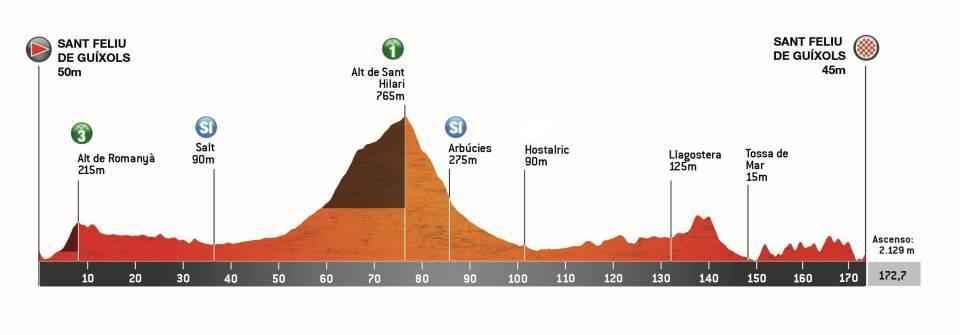
Stage 1: Sant Feliu de Guíxols, 172.8 km. Image credit: Volta a Catalunya
Stages 1 to 3 are labelled flat or hilly but contain enough pressure points to catch anyone switching off. Stage 1 includes the Cat. 1 Alt de Sant Hilari, which should stretch the bunch and complicate the finale for pure sprinters. Stage 3, running through a corridor similar to the one where Richard Carapaz and Sergio Higuita raided the 2022 race on the Costa Daurada, offers GC teams an early opportunity to force time gaps if they choose to race aggressively.
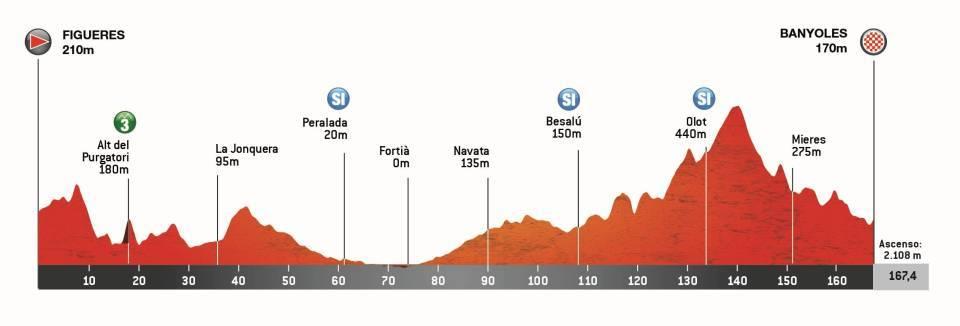
Stage 2: Figueres – Banyoles, 167.4 km. Image credit: Volta a Catalunya
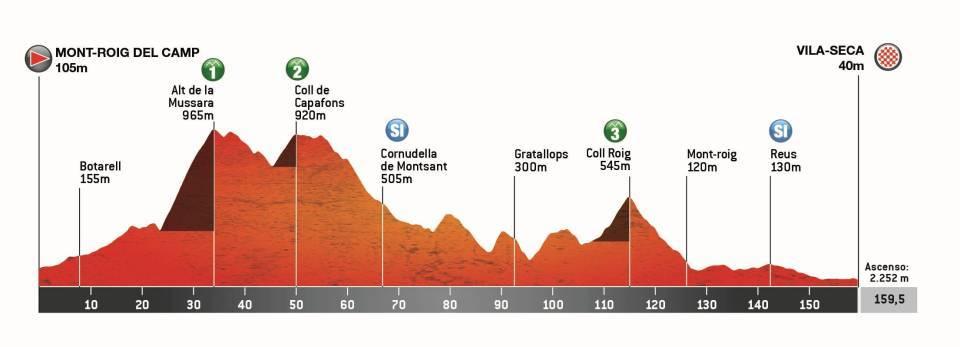
Stage 3: Mont-roig del Camp – Vila-seca, 159.4 km. Image credit: Volta a Catalunya
The real sorting begins on stage 4. Vallter's 11.4 km at 7.6% is long enough to expose any rider who arrived undercooked, and the finish altitude around 2,100m adds a layer that pure wattage alone cannot solve.
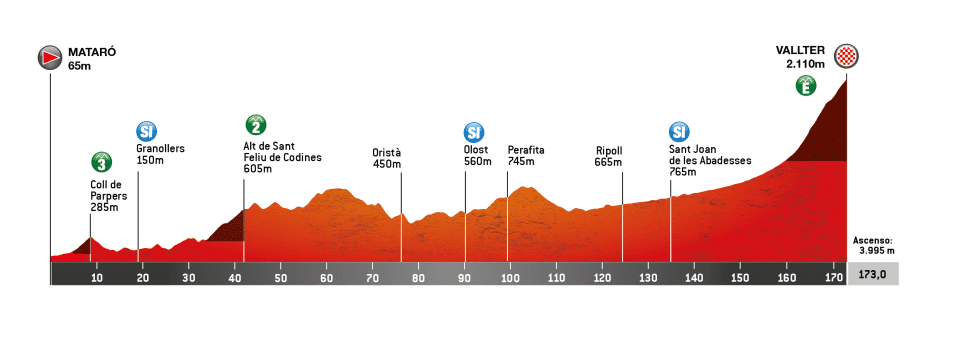
Stage 4: Mataró – Vallter, 173 km. Image credit: Volta a Catalunya
A flatter section from roughly 5 km to 3 km to go may invite tactical braking and counter-attacks, but a strong team setting tempo should still reduce the front group to single digits.
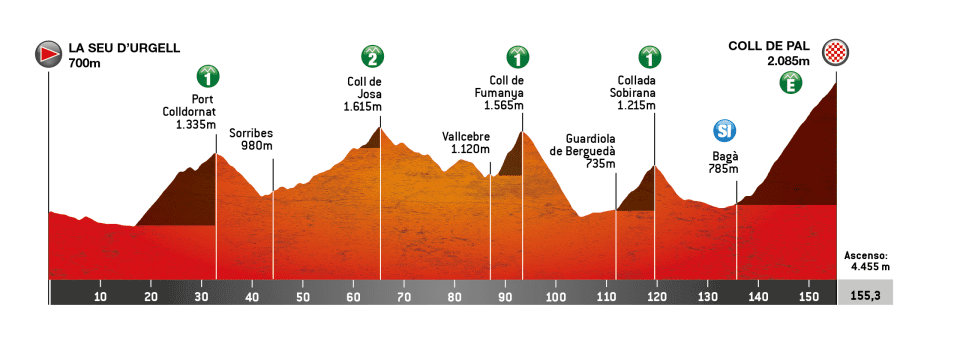
Stage 5: La Seu d'Urgell – La Molina / Coll de Pal, 155.3 km. Image credit: Volta a Catalunya
Stage 5 is the queen stage and likely the day that determines the overall winner. Five categorised climbs totalling approximately 4,500 metres of elevation gain, combined with long descents between them, reward teams that can attack in layers rather than simply tow a leader to the base of the final ascent. This is where having three or four genuine climbers becomes decisive, and where a squad relying on a lone leader risks isolation.
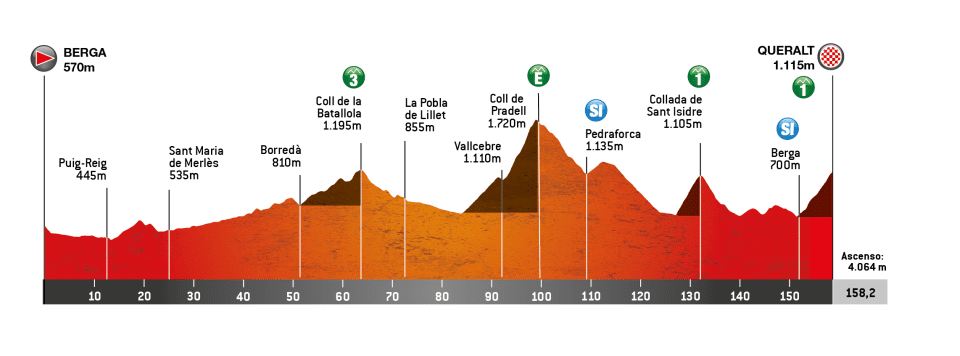
Stage 6: Berga – Queralt, 158.2 km. Image credit: Volta a Catalunya
Stage 6 to Queralt comes after the hardest day of the week, making recovery an active variable. The final climb is shorter than Vallter or Coll de Pal, 7.6 km at 5.5%, but its steeper second half with ramps to 11% can punish fatigued legs disproportionately. Stage 7's repeated Montjuïc laps then offer one last chance for a tight GC to shift, as Catalunya has a habit of staying alive through the final afternoon.
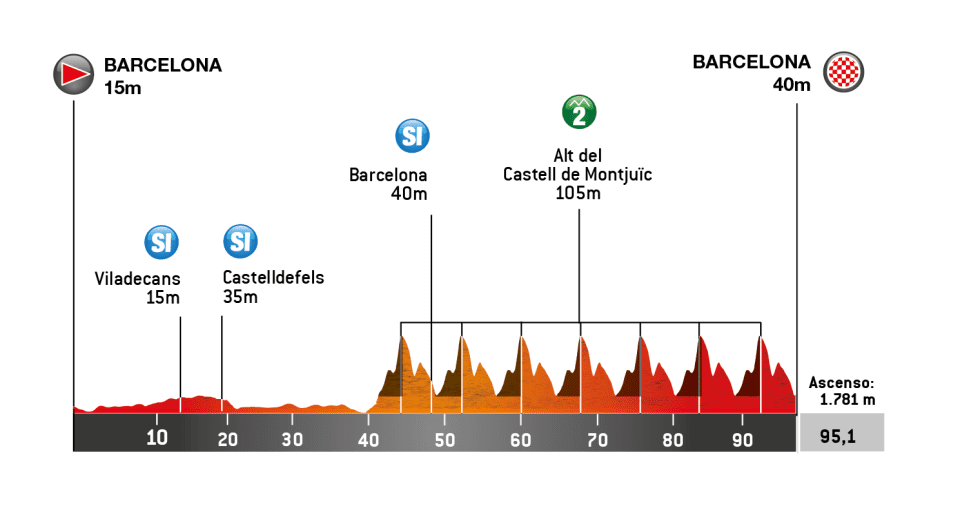
Stage 7: Barcelona, 95.1 km. Image credit: Volta a Catalunya
Mountain forecasts for Vallter suggest temperatures near freezing on race week, with snow and wind possible at altitude. Even if conditions do not force route changes, cold descents and wet roads would further favour composed, experienced climbers.
Volta a Catalunya 2026 contenders
Vingegaard arrives after winning Paris-Nice overall by a record margin and creating a renewed sense of expectation that the Dane could present a challenge to Pogačar. Vingegaard handled chaos, crosswinds and a hard mountain finale with equal control. Visma | Lease a Bike bring Sepp Kuss among their confirmed starters, giving Vingegaard a powerful lieutenant to dictate pace on stages 4 and 5. If he is near the level he showed in France, he should be the hardest rider to crack on repeated summit finishes.
Evenepoel is his most anticipated challenger – following brief concerns that snow disruption in Tenerife would prevent him from making the start – and a rider who will face the expectation of most of the cycling world. His early-season form has been decisive, and the Volta a la Comunitat Valenciana showed he can force separation on short, steep finishes while controlling a stage race from the front.
The summit finishes here are not excessively long, which suits him, but the question is whether he carries enough high-mountain endurance to match Vingegaard across three consecutive mountain days. Lipowitz gives Red Bull-BORA-hansgrohe a second card to play if the race fragments.
Almeida may be the cleanest route fit of the top three. Less explosive than Evenepoel and less devastating on outright peaks than Vingegaard, he compensates by rarely losing ground on any single day. His second place behind Evenepoel in the Volta a la Comunitat Valenciana confirmed his early-season condition, and UAE Team Emirates-XRG have Jay Vine and Brandon McNulty among their mountain support, enough depth to shape the race aggressively on the queen stage.
Pidcock is a credible GC outsider, fresh from his exceptional performance at Milan–San Remo. His explosive climbing could yield dividends if the summit finishes are raced with surges rather than sustained tempo, though a full week of this severity is a sterner GC test than most of his recent assignments. Mas is always dangerous on home terrain, with a diesel climbing style that thrives on attrition, while Carapaz and Landa remain threats if the race becomes chaotic on the harder mountain stages. Rodríguez and Oscar Onley (Ineos Grenadiers) are worth monitoring if the GC comes down to consistency rather than pure climbing dominance.
Vingegaard looks the safest pick given his Paris-Nice form and team depth. Almeida's reliability makes him the most secure podium bet. The unresolved question is whether Evenepoel's early-season sharpness translates into the sustained high-altitude endurance required to stay with Vingegaard on three consecutive summit finishes, or whether one violent acceleration on Vallter or Coll de Pal can open enough of a gap to make it irrelevant.