The 2026 Women's Santos Tour Down Under will open the UCI Women's WorldTour on 17 January with its longest and most climbing-heavy route to date, after organisers removed the traditional Willunga Hill summit finish in favour of Paracombe and a double ascent of Corkscrew Road.
The three-day race covers 394.6km with 4,587 metres of vertical gain, an increase designed in response to feedback from teams and riders requesting longer and more selective stages, the organisers said. All 15 Women's WorldTour teams will contest the event, bringing approximately 90 riders to South Australia.
Forecasts point to three sunny, dry days with highs between 28°C and 31°C – peaking on stage three – and no significant rain.
For the full timing and broadcast details, please check our guide on how to watch the Women's Tour Down Under.
For the men's race, check out our preview of the Men's Tour Down Under.
Route Overview
The redesigned course spreads its GC-defining terrain across stages two and three rather than concentrating it on a single summit finish. Stages one and two both exceed 130km, a deliberate shift towards a more endurance-focused format.
Route
3 Stages • 394.6km total

| Stage | Date | Route | Distance | Type |
|---|---|---|---|---|
| 1 | Jan 17 | Willunga | 137.4 km | Road Stage |
| 2 | Jan 18 | Magill - Paracombe | 130.7 km | Road Stage |
| 3 | Jan 19 | Norwood - Campbelltown | 126.5 km | Road Stage |
Stage Analysis
Stage 1: Willunga to Willunga (137.4km, 897m climbing)
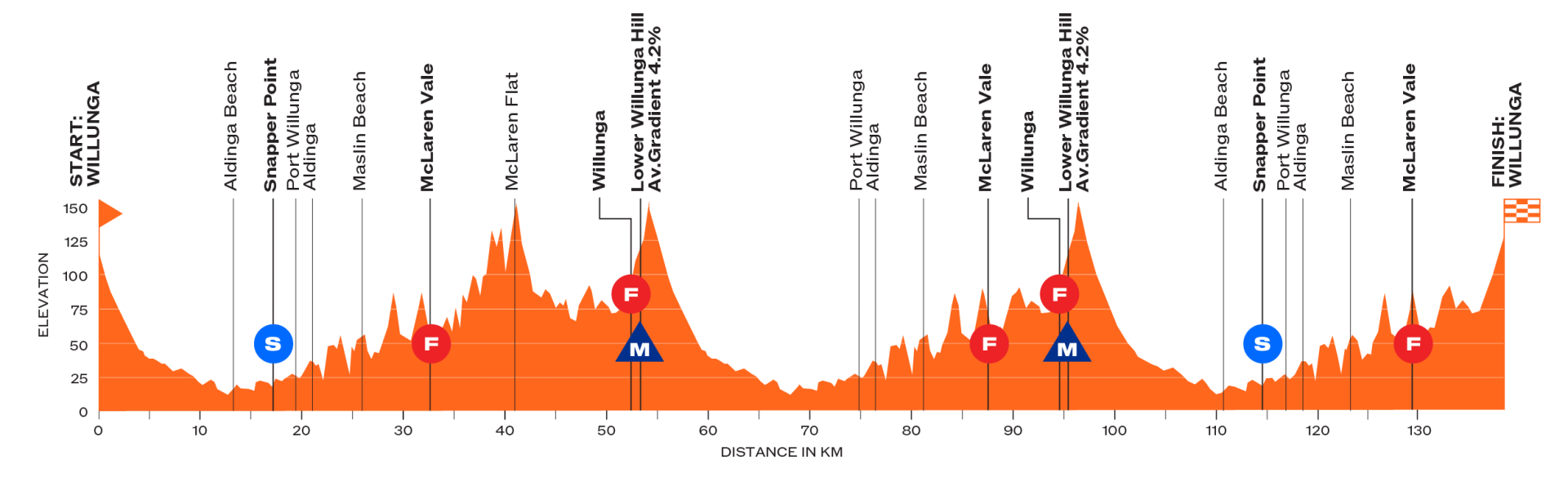
The opening stage looped through McLaren Vale before returning to Willunga, with the 2026 route bypassing the full climb and instead finishing on Lower Willunga Hill's 400m uphill drag.
Alessia Vigilia (Uno-X Mobility) attacked with 100km remaining, building a three-and-a-half-minute advantage and sweeping both QOM climbs. FDJ United-Suez controlled the chase, bringing the gap down to 1'25" with 20km to go.
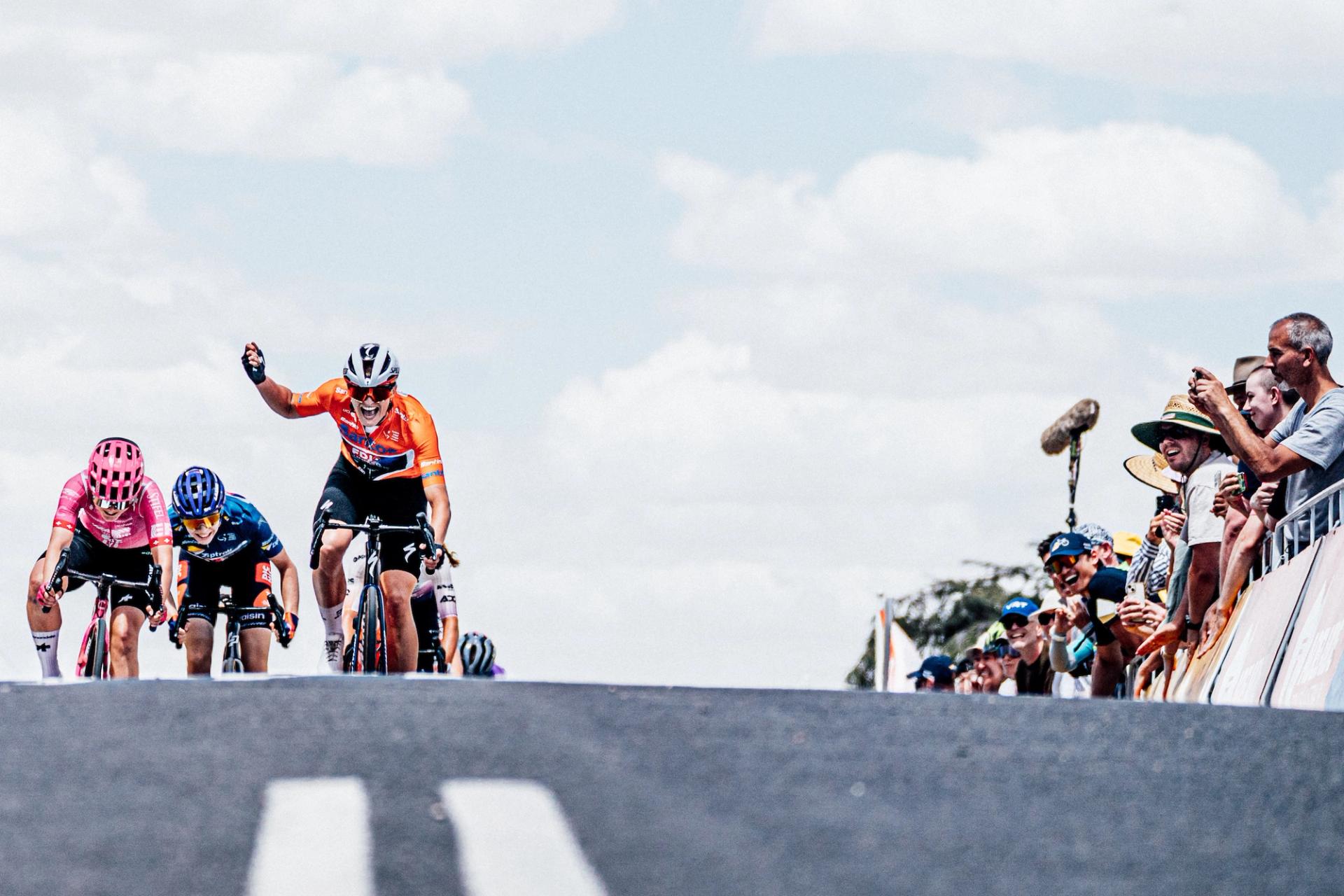
Vigilia entered the final kilometre with a slim lead, but Ally Wollaston (FDJ United-Suez) accelerated on the uphill finish to catch her inside the final 300m, taking both the stage and the ochre jersey. Josie Nelson (Picnic-PostNL) and Femke Gerritse (SD Worx-Protime) completed the podium from the reduced bunch.
Stage 2: Magill to Paracombe (130.7km, 1,896m climbing)
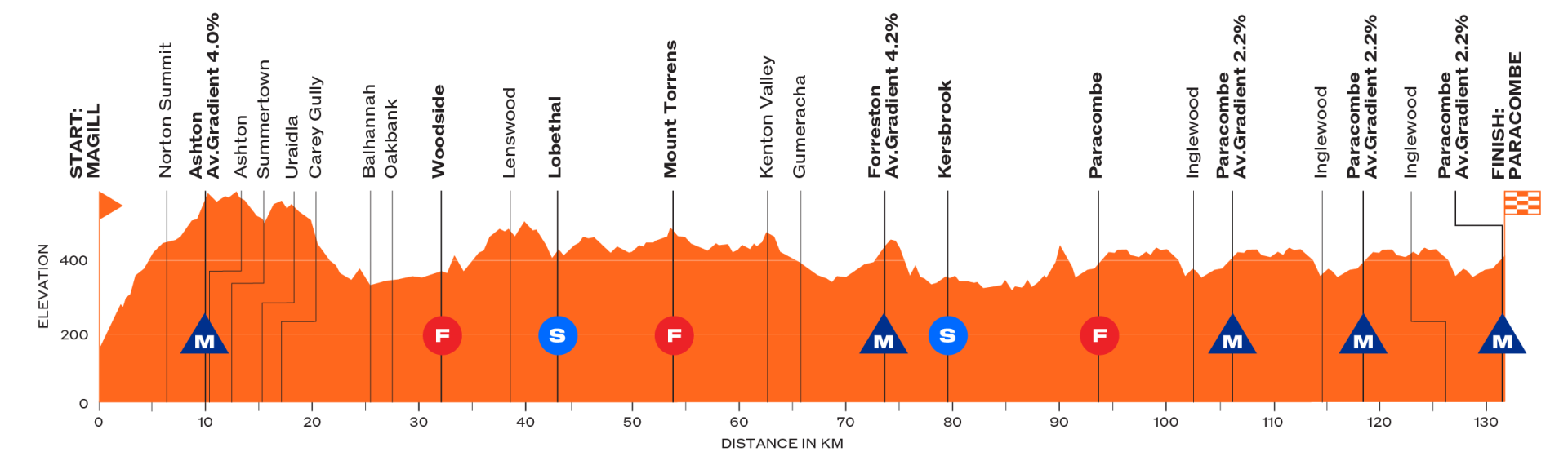
The race started in Magill for the first time, winding through the Adelaide Hills before finishing on the uphill drag to Paracombe. With nearly 1,900 metres of climbing, the stage delivered the first meaningful GC gaps, as Ally Wollaston powered to her second consecutive stage win and extended her overall lead.
The narrow, twisting roads on the approach helped thin the field and set up a reduced sprint at the summit, where FDJ United-Suez controlled the finale and positioning proved decisive among the GC contenders.
Stage 3: Norwood to Campbelltown (126.5km, 1,794m climbing)
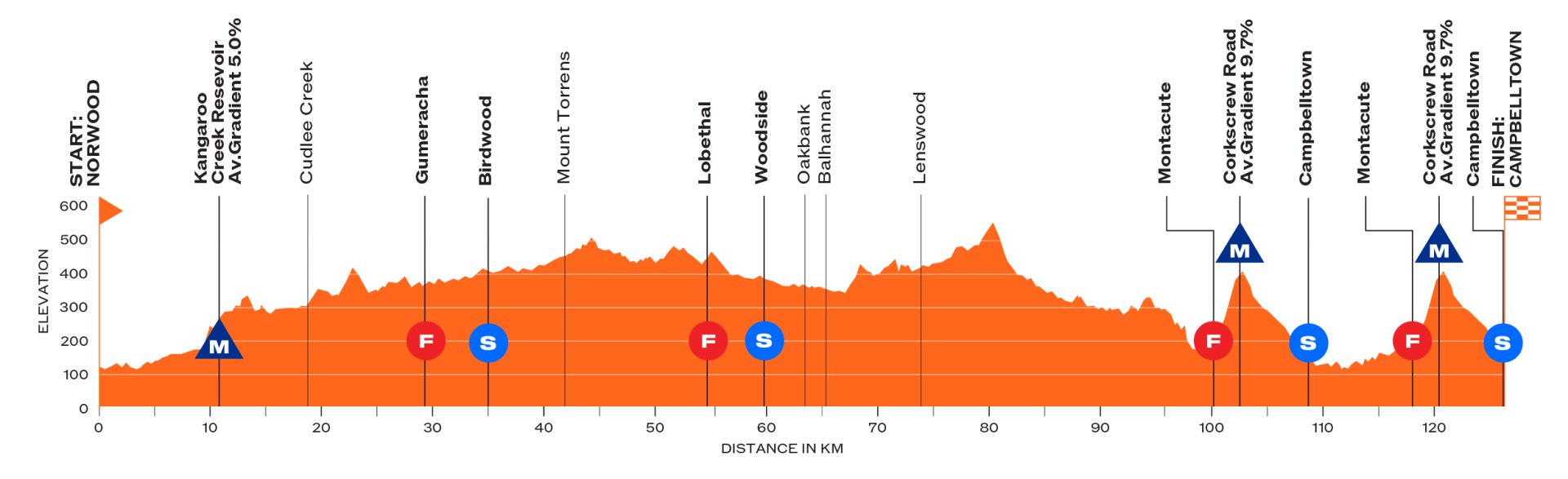
The final stage includes two ascents of Corkscrew Road, a short but steep climb above Campbelltown known for its gradient changes and tight bends. The second ascent crests just 5km from the finish line and is expected to be a key point for the overall standings.
The fast descent to Campbelltown offers limited regrouping time, meaning any rider who crests with even a 10-15 second advantage may be able to hold that gap to the line. Teams defending the leader's jersey are likely to try to control the first Corkscrew ascent to prevent early breakaways from building a large lead.
Santos Tour Down Under women's favourites
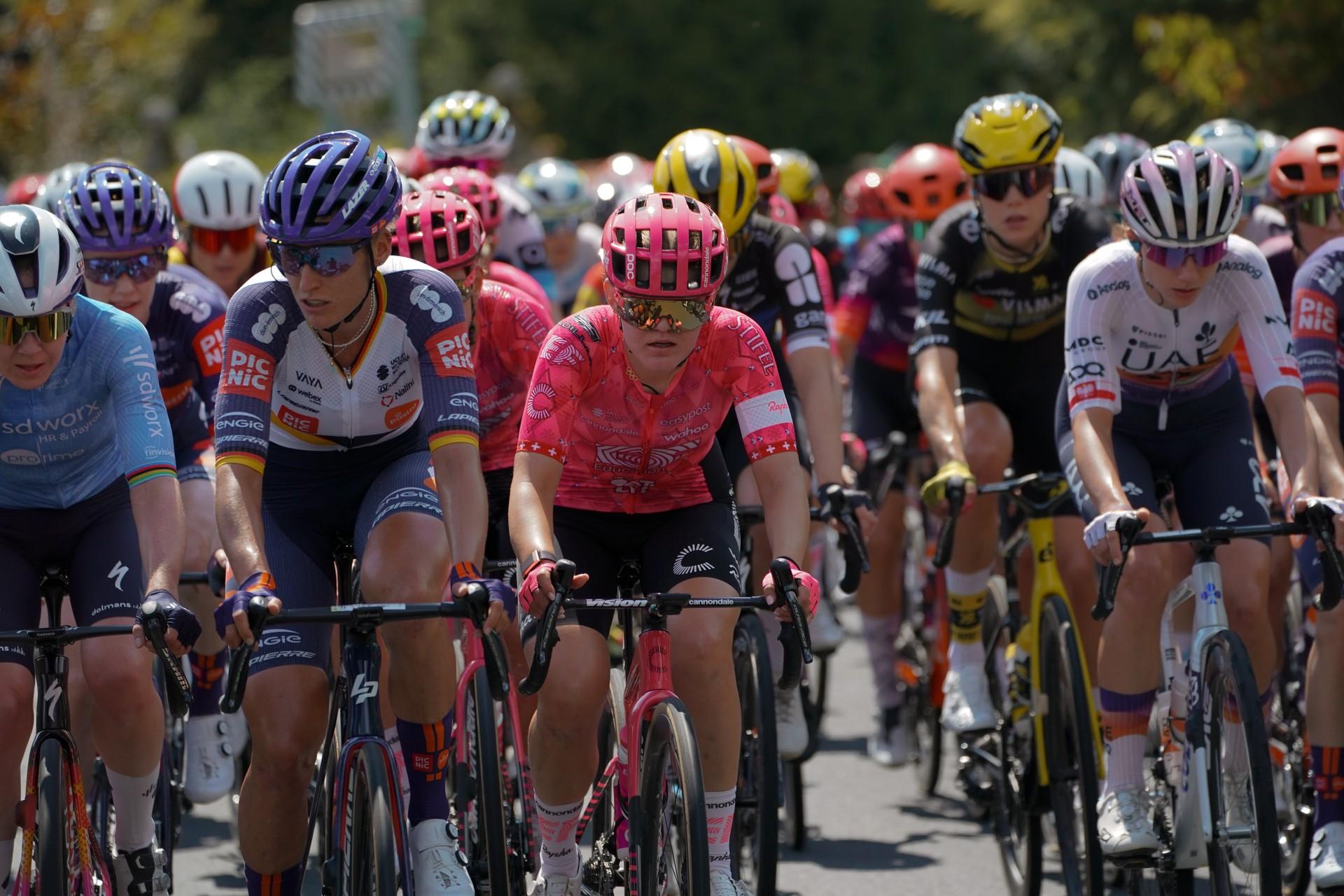
Defending champion Noemi Rüegg (EF Education-Oatly) returns with the number one bib and a GC-oriented squad including Magdeleine Vallières and Kim Cadzow. Rüegg's consistency across varied terrain is a key asset on this course, though she faces stiffer climbing challenges than in 2025.
Three-time winner Amanda Spratt (Lidl-Trek) has extensive experience racing in South Australia, having finished second in 2023, fourth in 2024 and seventh in 2025. Lidl-Trek's climbing depth – Gaia Realini and Ricarda Bauernfeind join Spratt in the mountains squad – gives them tactical flexibility on stages two and three.
Mackenzie Coupland (Liv AlUla Jayco) arrives as newly crowned Australian road champion after winning solo at Perth earlier in January. Her combination of climbing ability and tactical awareness puts her among the GC contenders, while teammate Ruby Roseman-Gannon – second at the Nationals – provides a secondary option from reduced groups.
Neve Bradbury (CANYON//SRAM zondacrypto) may focus on stage three's double Corkscrew. The young climber's riding style suits the short, steep gradients, and a strong performance on both ascents could bring her into GC contention.
For reduced-bunch finishes, Ally Wollaston (FDJ United-SUEZ) and Emma Norsgaard (Lidl-Trek) offer fast finishes from selective groups, giving them strong chances on the undulating opening day.
Notable Absences
Sarah Gigante (AG Insurance-Soudal), the 2024 champion, is the most significant confirmed absence. Gigante is recovering from a broken femur sustained in a late-2025 training crash, and her team confirmed she will miss the entire Australian summer racing block. She is targeting a competitive return in March.