The 78th edition of Kuurne-Brussel-Kuurne rolls out of Kortrijk on Sunday, March 1, covering approximately 195 kilometres before finishing on the Brugsesteenweg in Kuurne. As the second act of Opening Weekend, it arrives with a familiar label – the "sprinters' classic" – and a start list deep enough to justify it.
Jasper Philipsen (Alpecin-Premier Tech) returns as defending champion, Biniam Girmay (NSN Cycling Team) brings the sharpest early-season form of any fast man in the peloton, and Jonathan Milan (Lidl-Trek) adds raw power to a bulging sprint contingent.
The 61.3 kilometres of flat road between the final climb and the finish line lean heavily toward a sprint finish, but in modern cycling it seems nothing is ever guaranteed.
Kuurne-Brussel-Kuurne route
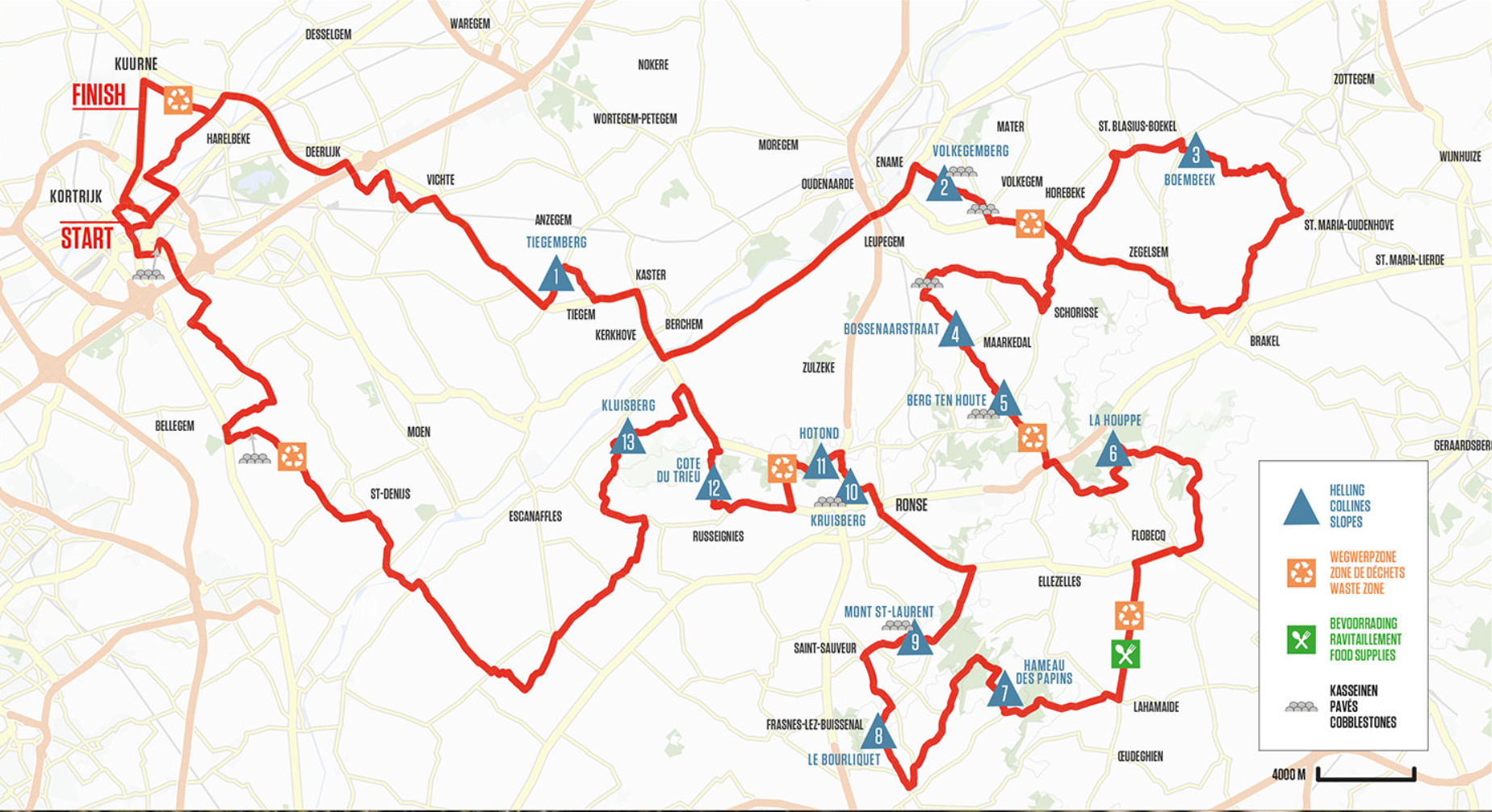
Kuurne-Brussel-Kuurne exists in Omloop Het Nieuwsblad's shadow, but it rewards a fundamentally different type of rider. Where Omloop's late climbs and cobbles create a natural selection, KBK's difficulty is front-loaded: seven categorised climbs packed into a roughly 40-kilometre window in the race's middle third. After cresting the Kluisberg with around 60 kilometres remaining, the road flattens out and stays flat all the way to the finish.
That geometry creates a tug-of-war. Attackers must commit early and sustain a coordinated effort across enormous distance. Sprint teams, even if fractured on the bergs, have time and terrain to reorganise. In 2024, Van Aert won from a small group; in 2025, the bunch came back together and Philipsen took the sprint. The route barely changes year to year. The outcome depends on who controls what happens after the hills.
The opening 70 kilometres through the Tiegemberg, Volkegemberg, and Bossenaarstraat serve as a steady warm-up. The real stress begins with the Berg Ten Houte (1.1 km at 6.2% average, ramps to 13%), which fractures leadout trains and forces sprint teams to burn matches keeping their man near the front. The Hameau des Papins (1.2 km at 6.6%, maximum 16.2%) follows and is the steepest gradient of the day – sharp enough to drop any sprinter who has lost shelter. The Côte du Trieu (7.0% average) and the Kluisberg (6.0%) are the final two meaningful obstacles, and they arrive with roughly 67 and 60 kilometres to go, respectively.
Those gradients are punishing enough to shred domestiques and isolate fast finishers, but they come far too early to serve as a decisive launchpad for most solo attackers. Any move off the Kluisberg needs teammates ahead or a disorganised peloton behind. Without both, the flat roads absorb the effort.
Route Pressure Points
Key climbs in the hilly block

Climb | Distance to Go | Avg Gradient | Max Gradient |
|---|---|---|---|
| Berg Ten Houte | ~124 km | 6.2% | 13% |
| Côte du Trieu | ~67 km | 7.0% | - |
| Hameau des Papins | ~99 km | 6.6% | 16.2% |
| Kluisberg | ~60 km | 6.0% | - |
| Tiegemberg | ~178 km | 4.0% | - |
The teams that want a sprint – and those that don't
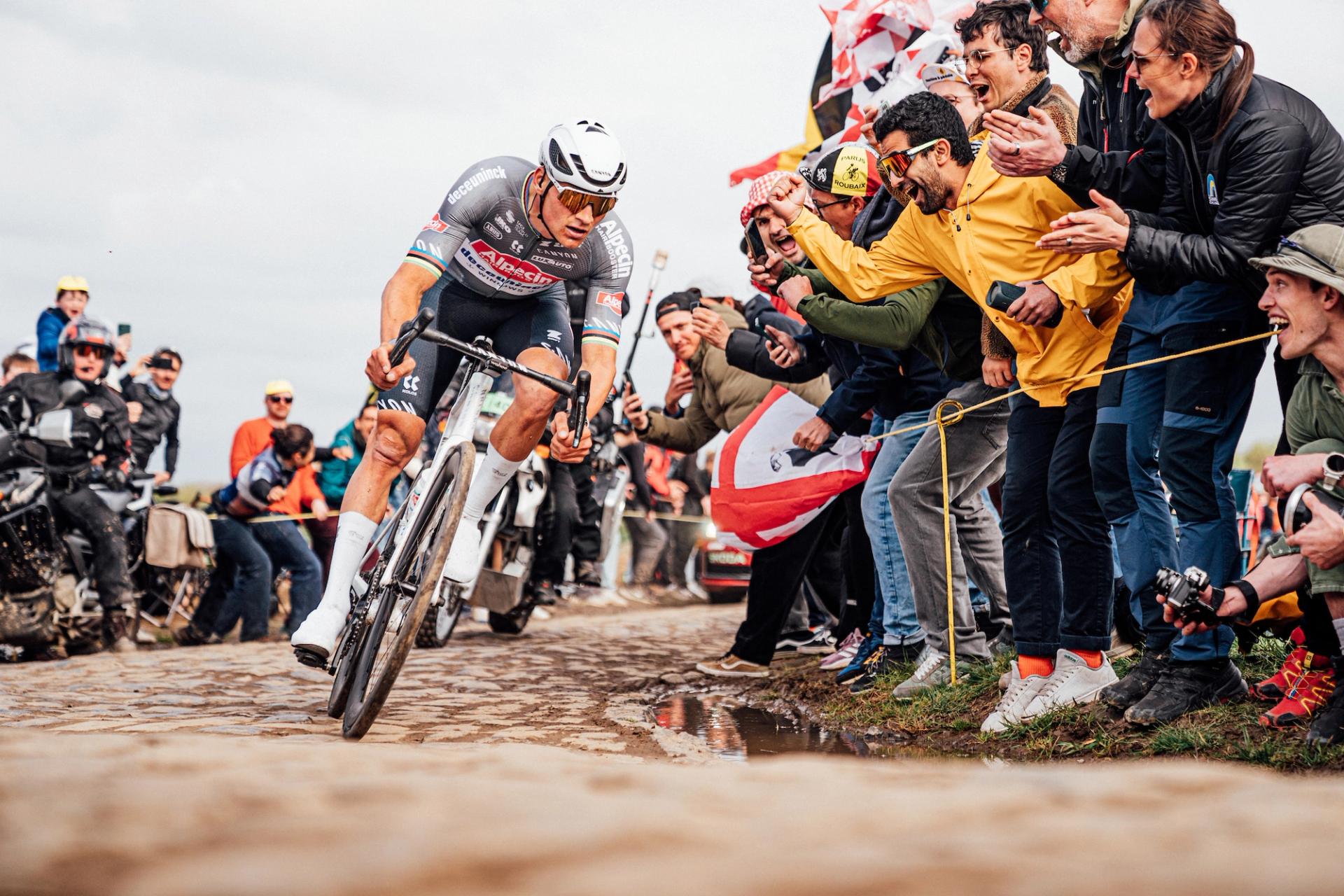
Alpecin-Premier Tech will race to defend Philipsen's title, and their provisional roster – including Florian Sénéchal and a few reports that Mathieu van der Poel may race – is built for race control.
Lidl-Trek will do everything they can to place fastman Jonathan Milan at the front end of the peloton for the final.
NSN Cycling Team have shown a genuinely strong leadout this season; Girmay's Clásica de Almería victory was delivered by a textbook train, and the unit around him – Hugo Hofstetter, Lewis Askey, Riley Sheehan – looked drilled.
Both squads need the peloton to regroup after the Kluisberg and will invest heavily in tempo-setting across the flat.
The catch is that several teams have no interest in letting that happen. Soudal-QuickStep arrive with Paul Magnier, who finished second at the 2025 Omloop Het Nieuwsblad, flanked by Dylan van Baarle, Jasper Stuyven, and Yves Lampaert. Magnier will have a better chance to win a reduced bunch kick.
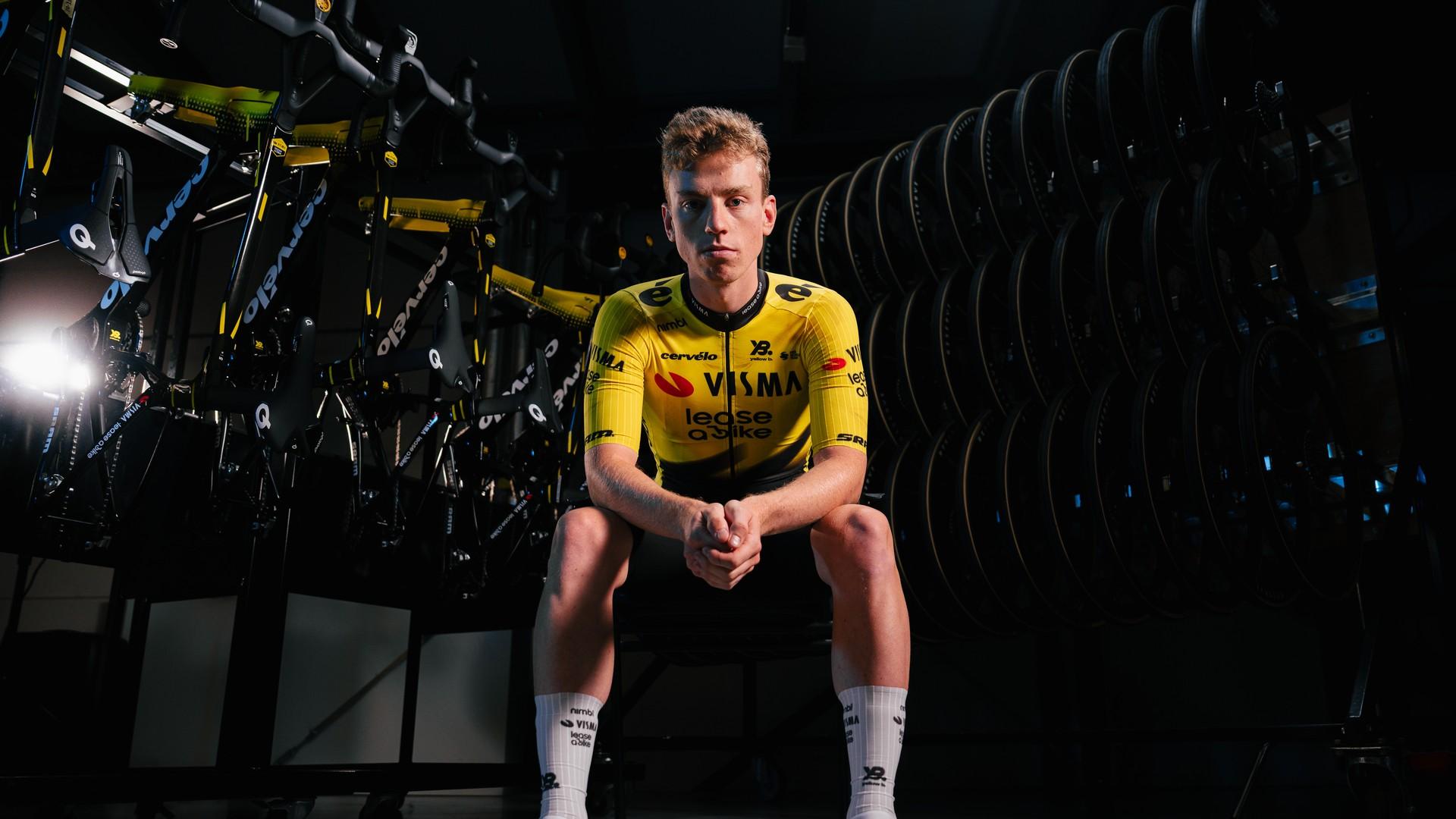
Visma-Lease a Bike's Christophe Laporte will prosper in a reduced group or a messy sprint, and rising talent Matthew Brennan adds an unpredictable attacking option. Axel Zingle's inclusion adds further depth for aggressive racing. Visma are unlikely to ride for pure bunch-sprint control – Laporte's best odds improve as the group shrinks.
The contenders
Jonathan Milan has the most sheer wattage of the sprinters, though the Lidl-Trek man will need a high-speed run-in to be best positioned for a clean sprint. The hilly block is not his terrain, and if he loses contact on the Hameau des Papins, the 61km chase back is a significant energy expenditure.
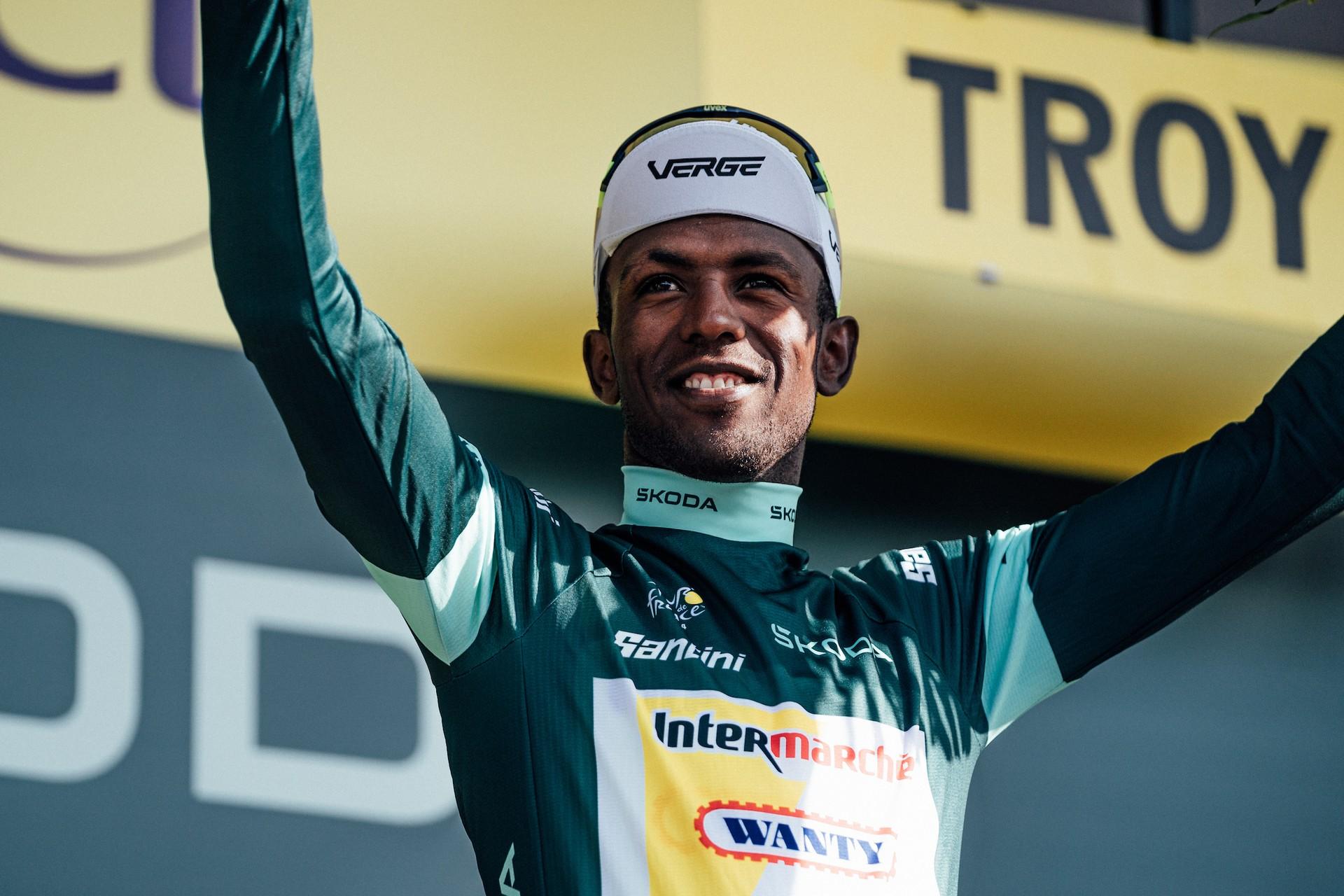
Biniam Girmay is the form sprinter of the early season. Two wins already, a stage at the Volta Valenciana and the Clásica de Almería, and his NSN leadout has functioned with rare precision. In a clean bunch sprint on the Brugsesteenweg, he is arguably the fastest man on the start list. The question is whether that leadout survives the hilly block intact. If it does, he is the rider to beat.
Jasper Philipsen is winless so far in 2026 after narrow misses at the Volta ao Algarve, where Alpecin attributed the results to positioning problems and early-season fatigue rather than a lack of top-end speed. Philipsen has a long track record of peaking precisely when the cobbled classics arrive. He won this race last year. Dismissing him over a quiet Algarve would be a mistake.
Paul Magnier represents the most dangerous hybrid threat. The young Frenchman has the sprint speed to win from a reduced group but rides behind a team that will actively try to thin the field. If Stuyven or Van Baarle force a selection on the bergs and Magnier survives with fresh legs, the sprint dynamic tilts sharply in his favour.
Christophe Laporte is not the fastest in a 30-man bunch sprint, but he rarely needs to be – his tactical awareness and ability to read the closing kilometres make him lethal when the race situation is unclear. With Brennan and Zingle capable of animating ahead of him, Visma could create the right conditions.
Wind, weather, and the wildcard variable
The forecast suggests moderate southwesterly winds of 14–15 km/h and temperatures around 8°C – relatively benign for early March in Belgium. The rain probability is low, around 20%. These conditions are unlikely to trigger full echelon chaos on their own.
INEOS Grenadiers have skipped the event entirely – continuing a multi-year trend of bypassing KBK.
Prediction
The depth of the sprint field and the sheer length of the flat run-in make a bunch finish the most probable outcome. Soudal-QuickStep and UAE will try to break it apart, but Alpecin and NSN have the numbers and the motivation to pull it back. In a sprint, Milan will have the most firepower if he makes it to the sharp end of the finish. If not, Girmay's current form edges it over Philipsen and Magnier. If the race fragments, Laporte and Magnier become the prime beneficiaries.
Winner: Jonathan Milan
Podium: Biniam Girmay, Jasper Philipsen
Dark horse: Christophe Laporte