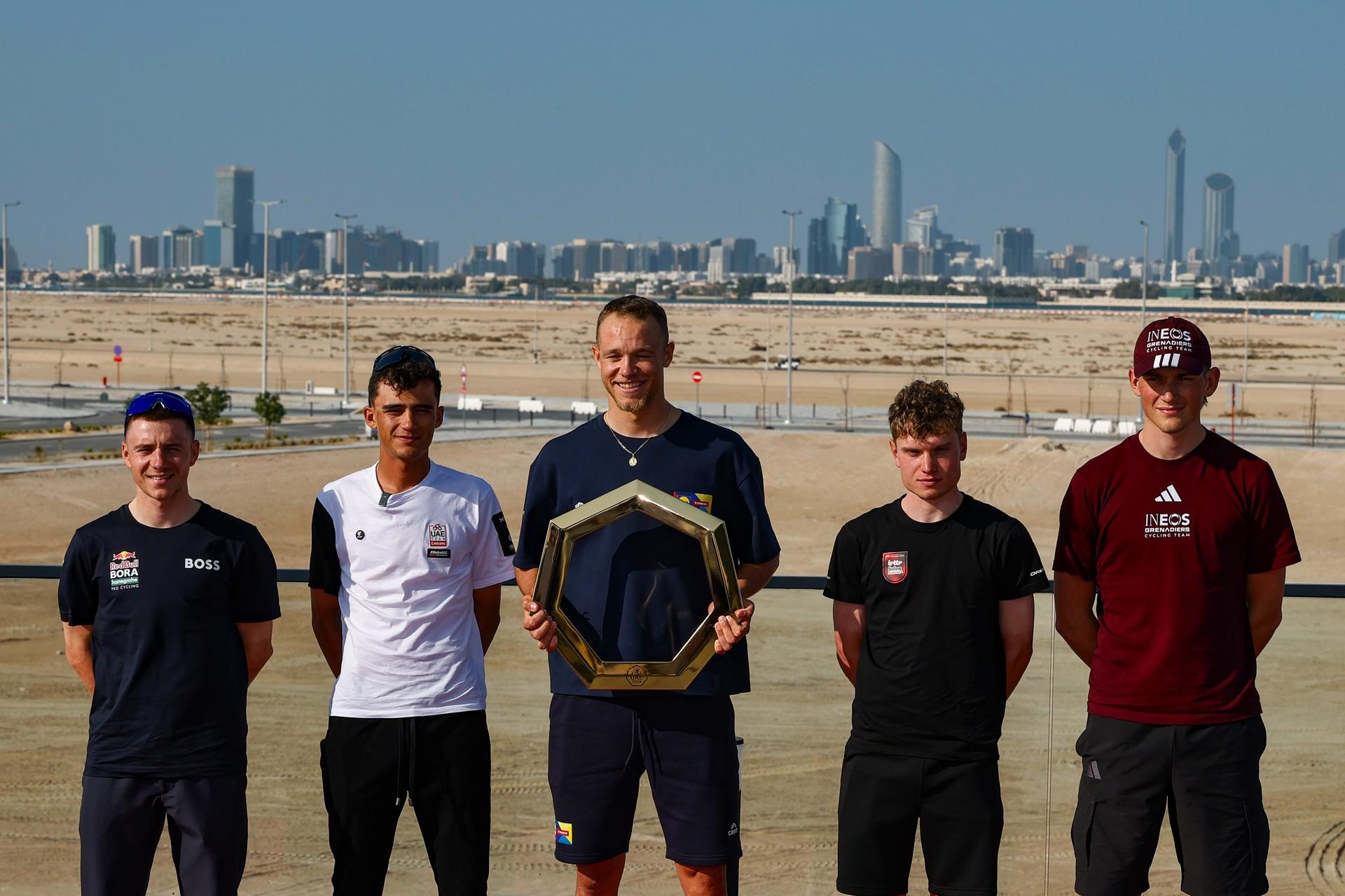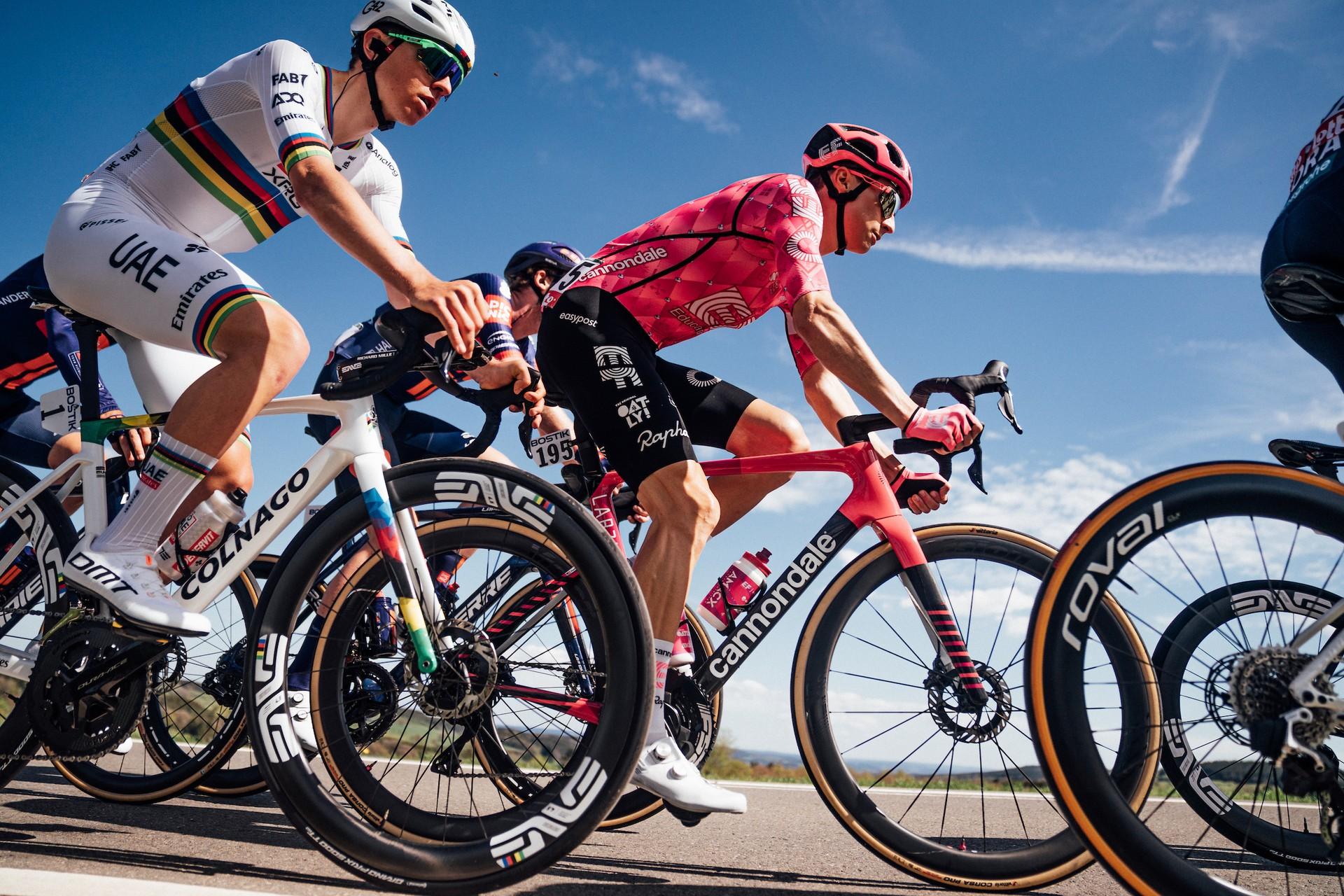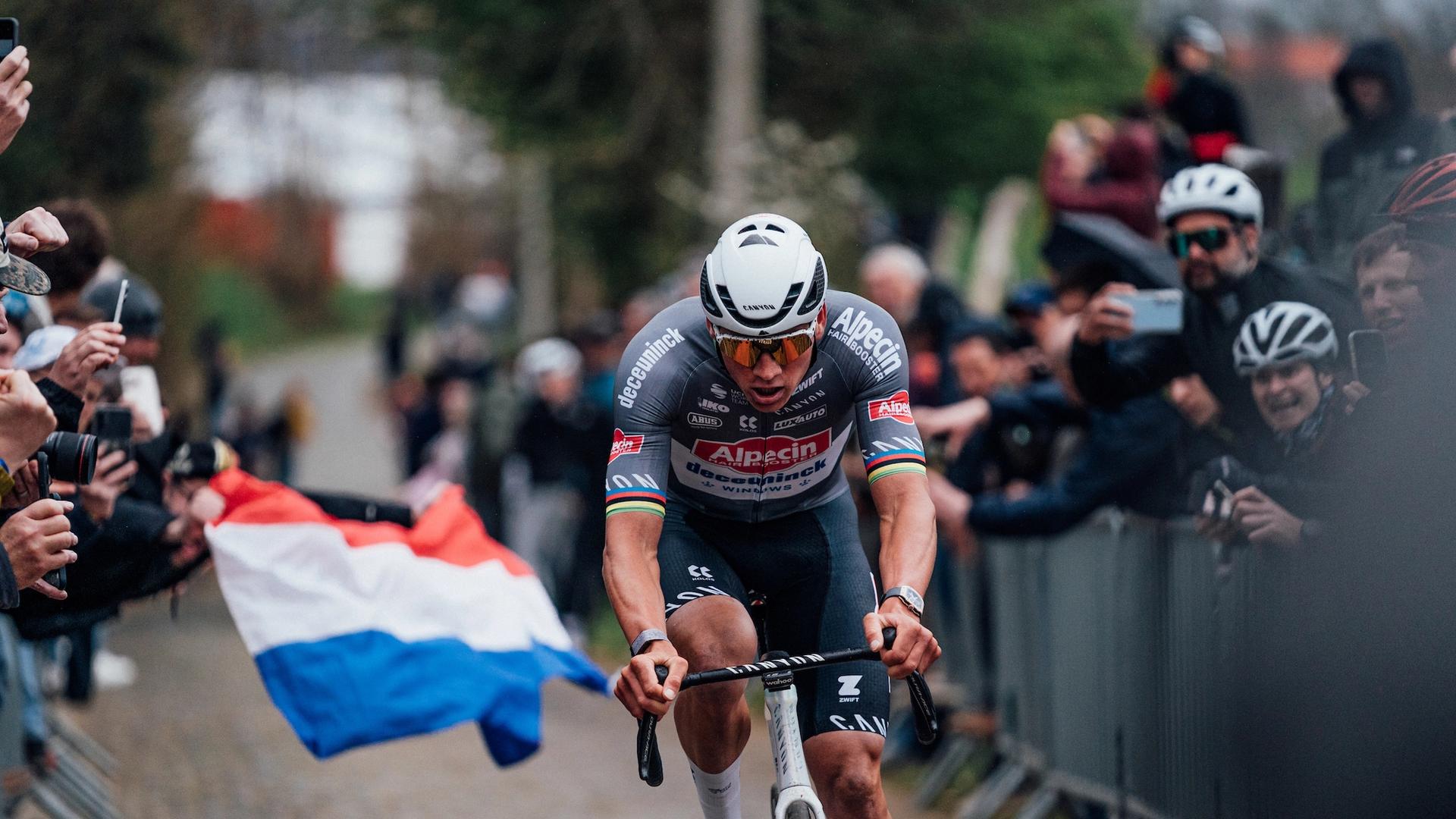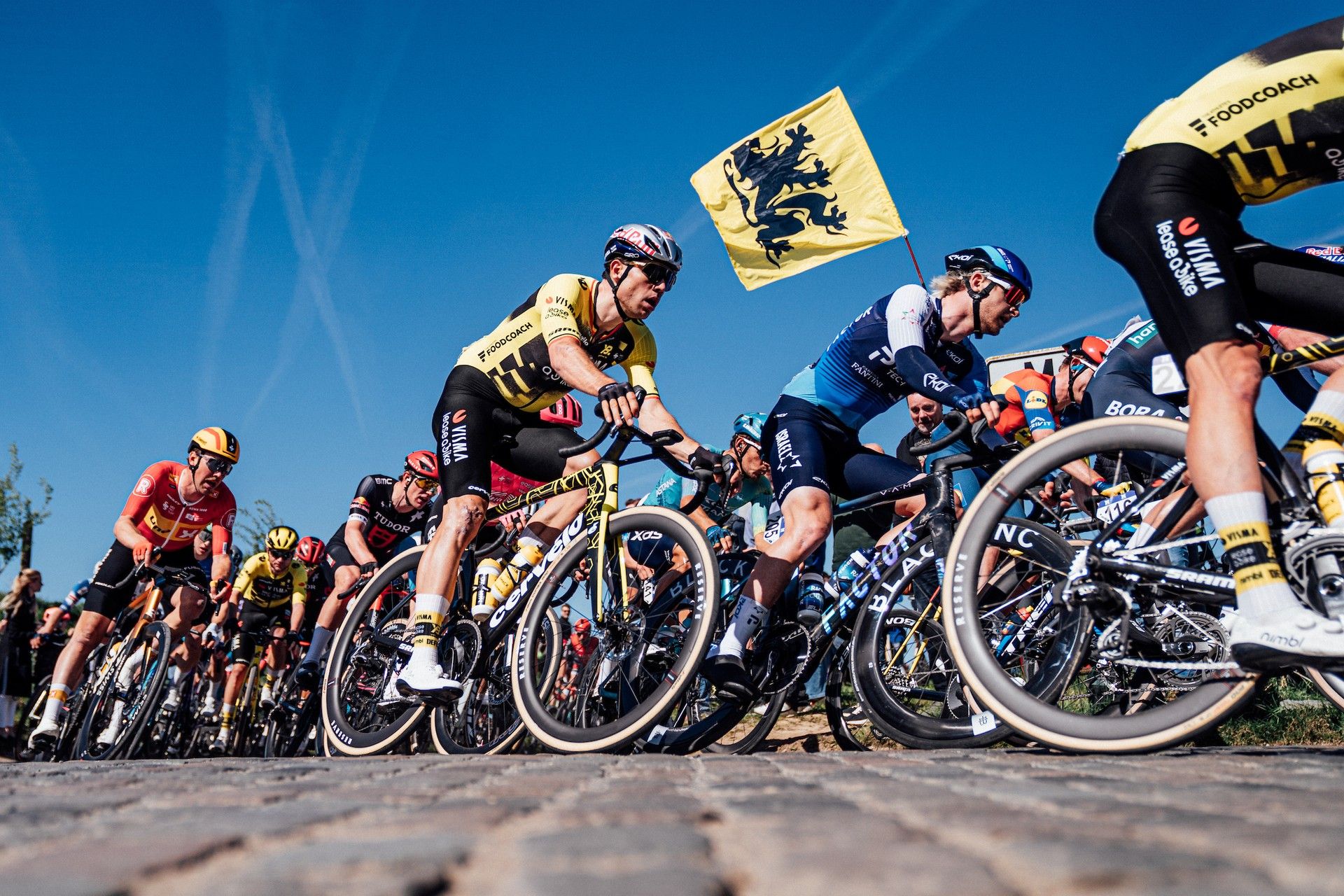
The 110th Ronde van Vlaanderen on Sunday brings the deepest concentration of Monument-level talent the race has seen in years. Tadej Pogačar (UAE Team Emirates-XRG), Mathieu van der Poel (Alpecin-Premier Tech), Wout van Aert (Visma | Lease a Bike), Mads Pedersen (Lidl-Trek) and Remco Evenepoel (Red Bull-Bora-Hansgrohe) are all on the provisional start list for Sunday's 278-kilometre race from Antwerp to Oudenaarde.
It's the first time that all four of Pogačar, Van der Poel, Van Aert and Evenepoel, have been in the same race since the Tour de France in 2024, and the first one day race since the World Road Championships in 2023.
Flanders is a unique stage for them to compete on. As a festival of Flandrien cycling and Flemish national pride, the meeting of Wout van Aert alongside the unexpected arrival of Remco Evenepoel marks an exceptionally exciting moment in Belgian cycling.
Personally, Ronde van Vlaanderen is second only to Paris-Roubaix as my favourite race of the year.
The route architecture is unchanged in principle: 16 climbs, six flat cobbled sectors, and the decisive late sequence of Oude Kwaremont and Paterberg that has decided the race for years. A small tweak sees Marlboroughstraat replace Steenbeekdries because of roadworks, but the underlying test remains the same. Flanders rewards the rider who can repeat near-maximal efforts deep into the finale, not the one who produces a single explosive move. This year, the field's vulnerabilities are all about durability under accumulated stress.
The route and cobbled sectors
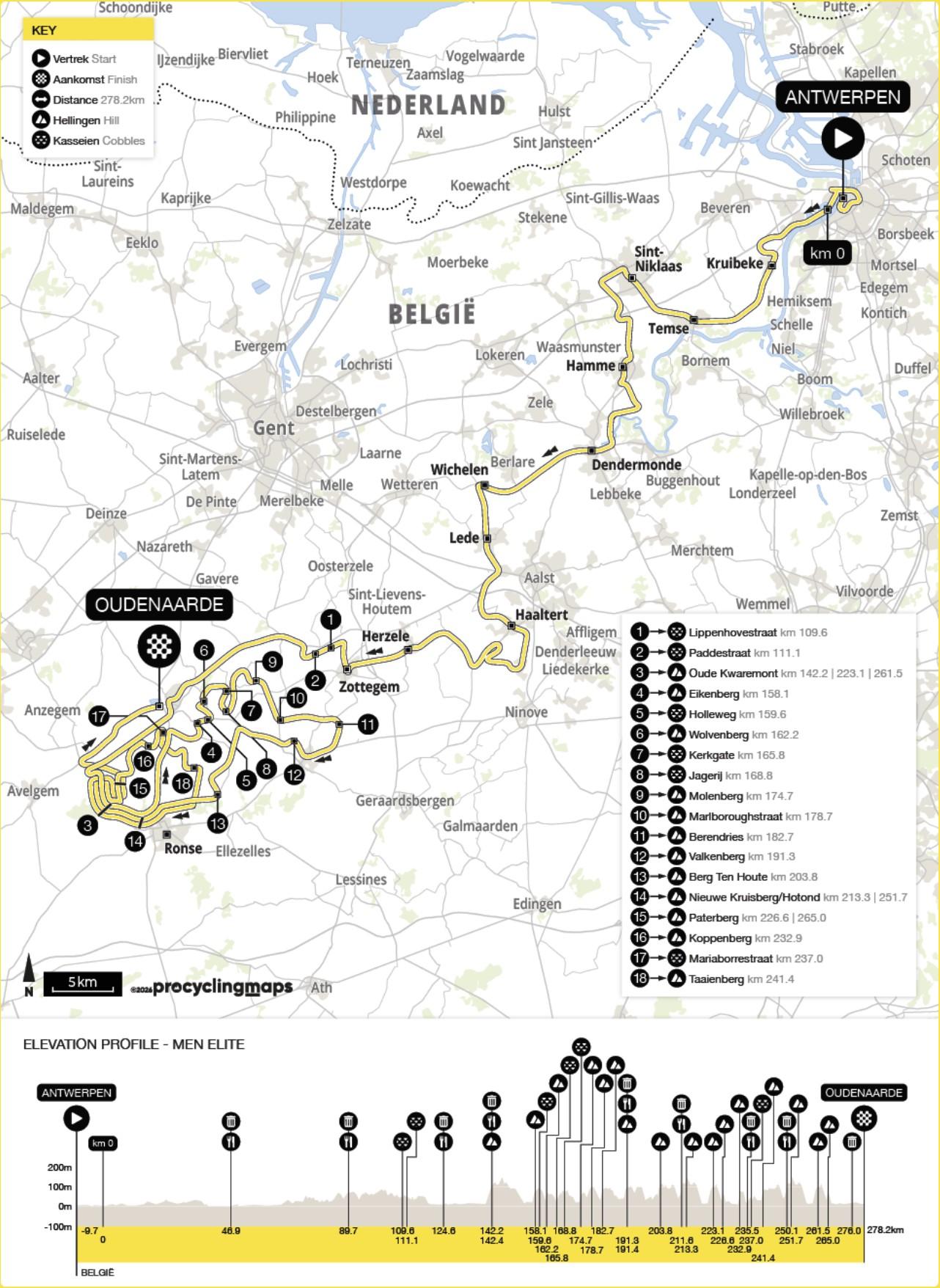
The 2026 Ronde van Vlaanderen runs 278.2 km from Antwerp to Oudenaarde, with a neutral start at 10:00, official racing from km 0 at 10:20, and a projected finish around 16:31. One route change from previous editions: Marlboroughstraat replaces Steenbeekdries in the Brakel section due to roadworks.
The opening 110 km head north through Sint-Niklaas, loop back through Hamme, then track south-west through Erpe-Mere, Haaltert, and Herzele. It is flat, processional, and tactically irrelevant – but it burns hours in the saddle before the cobbles arrive.
The race begins to show its teeth at Velzeke-Ruddershove, where the Lippenhovestraat and Paddestraat cobbled sectors land in quick succession around km 109–111. From there, the route enters a relentless midsection through the Flemish Ardennes: the first passage of the Oude Kwaremont (km 142), then Eikenberg, Holleweg cobbles, Wolvenberg, Kerkgate and Jagerij cobbles, before Molenberg, the new Marlboroughstraat climb, Berendries, Valkenberg, and Berg Ten Houte. None of these sectors alone is decisive, but collectively they drain the energy that riders will desperately need later.
The real contest starts at roughly 55 km to go. From here, the race enters the chain that defines Flanders: Nieuwe Kruisberg/Hotond, then the second Oude Kwaremont and Paterberg, then the Koppenberg at 45.3 km to go, Mariaborrestraat cobbles, and Taaienberg. The final phase delivers the decisive blows: a second Oude Kruisberg/Hotond, then the final Oude Kwaremont at 16.7 km to go and the last Paterberg at 13.2 km.
The Koppenberg – steep, narrow, cobbled – forces both physical and positional failures, but it comes too early to be the launchpad for most winning moves. The penultimate Kwaremont, longer and more sustained, is where the race is most often decided. The Paterberg then acts as a confirmation ramp: steep enough to shed anyone clinging on, short enough that the gap must already be significant to survive 13 km of flat roads into Oudenaarde.
Cobbled Sectors and Climbs in Race Order
22 key cobbled sectors and climbs from Antwerp to Oudenaarde with projected race times (CEST)

No. | Sector | Type | Km to go | ETA |
|---|---|---|---|---|
| 1 | Lippenhovestraat | Cobbles | 168.6 | 12:46 |
| 2 | Paddestraat | Cobbles | 167.1 | 12:48 |
| 3 | Oude Kwaremont 1 | Climb | 136.0 | 13:30 |
| 4 | Eikenberg | Climb | 120.1 | 13:51 |
| 5 | Holleweg | Cobbles | 118.6 | 13:53 |
| 6 | Wolvenberg | Climb | 116.0 | 13:56 |
| 7 | Kerkgate | Cobbles | 112.4 | 14:01 |
| 8 | Jagerij | Cobbles | 109.4 | 14:05 |
| 9 | Molenberg | Climb | 103.5 | 14:13 |
| 10 | Marlboroughstraat | Climb | 99.5 | 14:18 |
| 11 | Berendries | Climb | 95.5 | 14:24 |
| 12 | Valkenberg | Climb | 86.9 | 14:35 |
| 13 | Berg Ten Houte | Climb | 74.4 | 14:52 |
| 14 | Nieuwe Kruisberg/Hotond 1 | Climb | 64.9 | 15:04 |
| 15 | Oude Kwaremont 2 | Climb | 55.1 | 15:17 |
| 16 | Paterberg 1 | Climb | 51.6 | 15:22 |
| 17 | Koppenberg | Climb | 45.3 | 15:30 |
| 18 | Mariaborrestraat | Cobbles | 41.2 | 15:36 |
| 19 | Taaienberg | Climb | 36.8 | 15:42 |
| 20 | Oude Kruisberg/Hotond 2 | Climb | 26.5 | 15:56 |
| 21 | Oude Kwaremont 3 | Climb | 16.7 | 16:09 |
| 22 | Paterberg 2 | Climb | 13.2 | 16:13 |
Tour of Flanders favourites
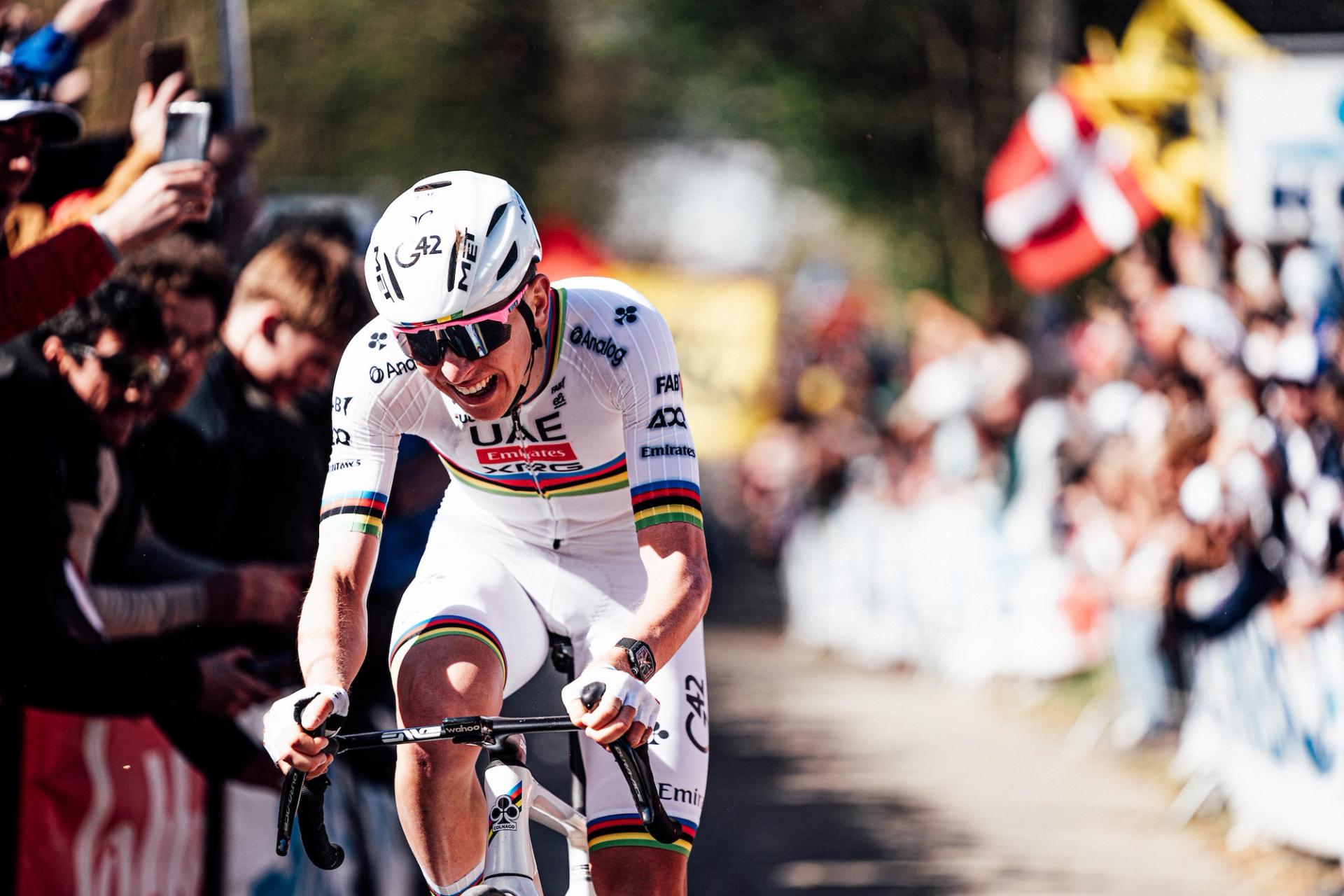
Pogačar is the rider best equipped to exploit that sequence. His ability to attack repeatedly on cobbled climbs and then sustain a hard solo pace afterwards makes the second Kwaremont his ideal launch point..
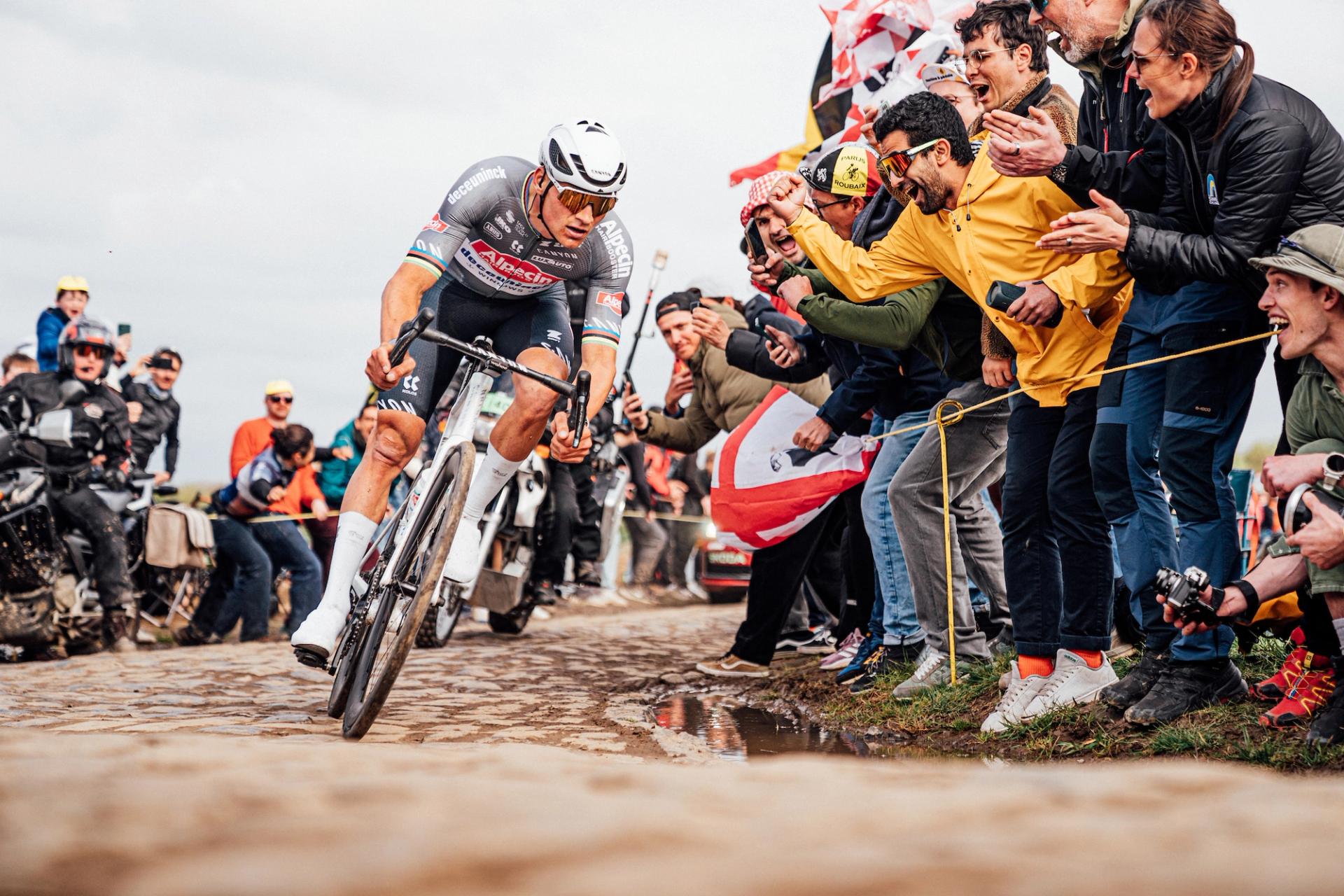
Van der Poel is the most obvious obstacle to that logic, but his hand injury complicates the picture. He crashed at Milan-San Remo and described hand pain following the race. He has remained competitive while managing the discomfort, but 278km of repeated braking and out-of-saddle torquing on cobbles could test that resilience. Against an in-form Pogačar, his substantially narrows his historic cobbled favourite status.
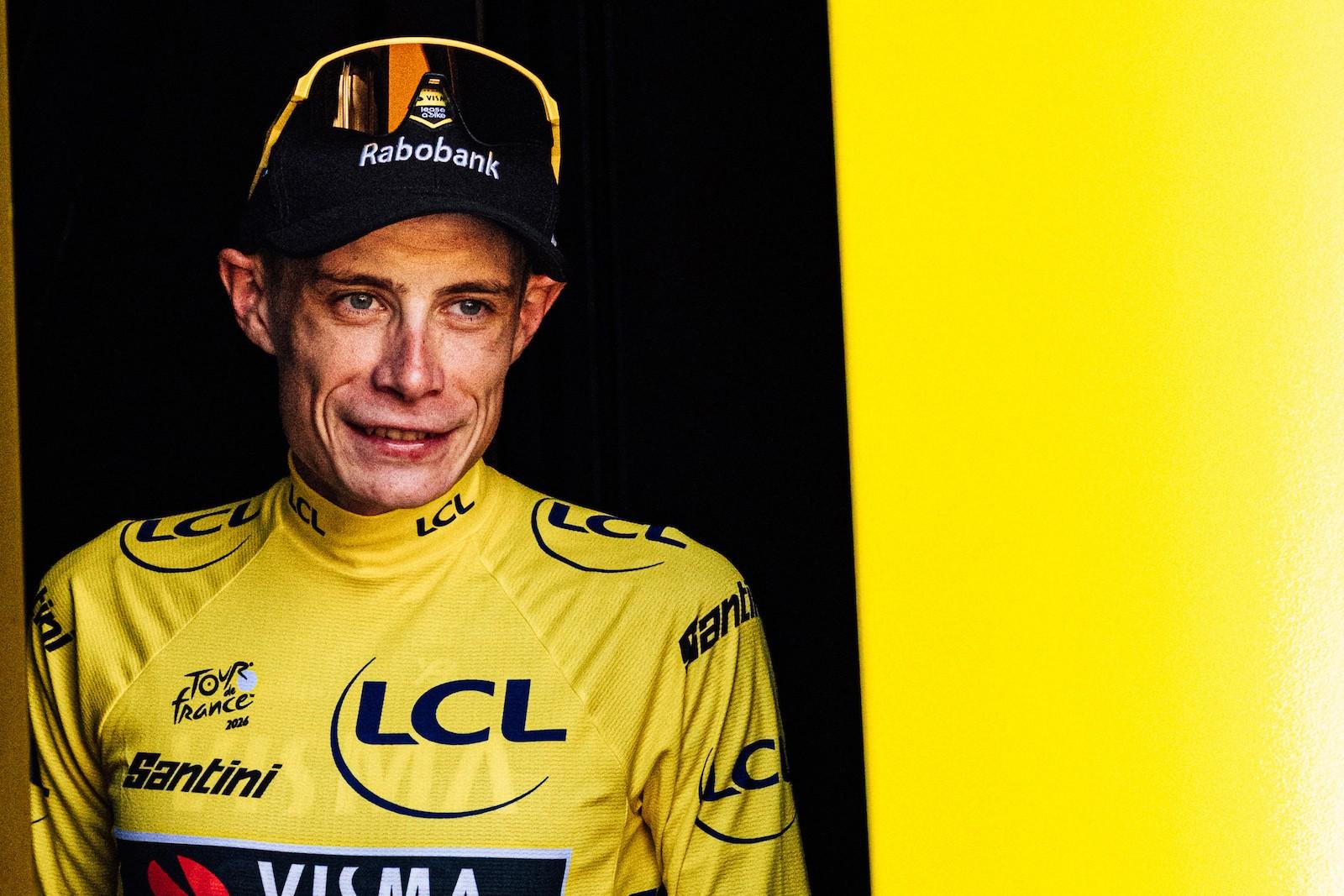
Van Aert's trajectory points upward. He fractured his ankle in January but by late March was the only rider able to follow Van der Poel on the Kemmelberg at In Flanders Fields. Losing domestique Timo Kielich, who broke his collarbone in that same race, weakens his support train. But Visma still have Christophe Laporte as a second tactical option, and Van Aert himself looks close enough to shape the finale. If the race becomes more about timing and positioning than raw destruction, his versatility makes him dangerous.
Pedersen is the most interesting puzzle among the leading contenders. His recent run of fourth at Milan-San Remo, ninth at E3 and 10th at Dwars door Vlaanderen shows his endurance is intact despite months out of the saddle at the start of the season. But the sprint is not. "If you’re missing 5–10%, then it’s really damn hard to make the difference," he said ahead of the race. On a course this long and this hard, reaching the finale is only half the job. If four riders arrive together in Oudenaarde, Pedersen's blunted finish changes his odds considerably.
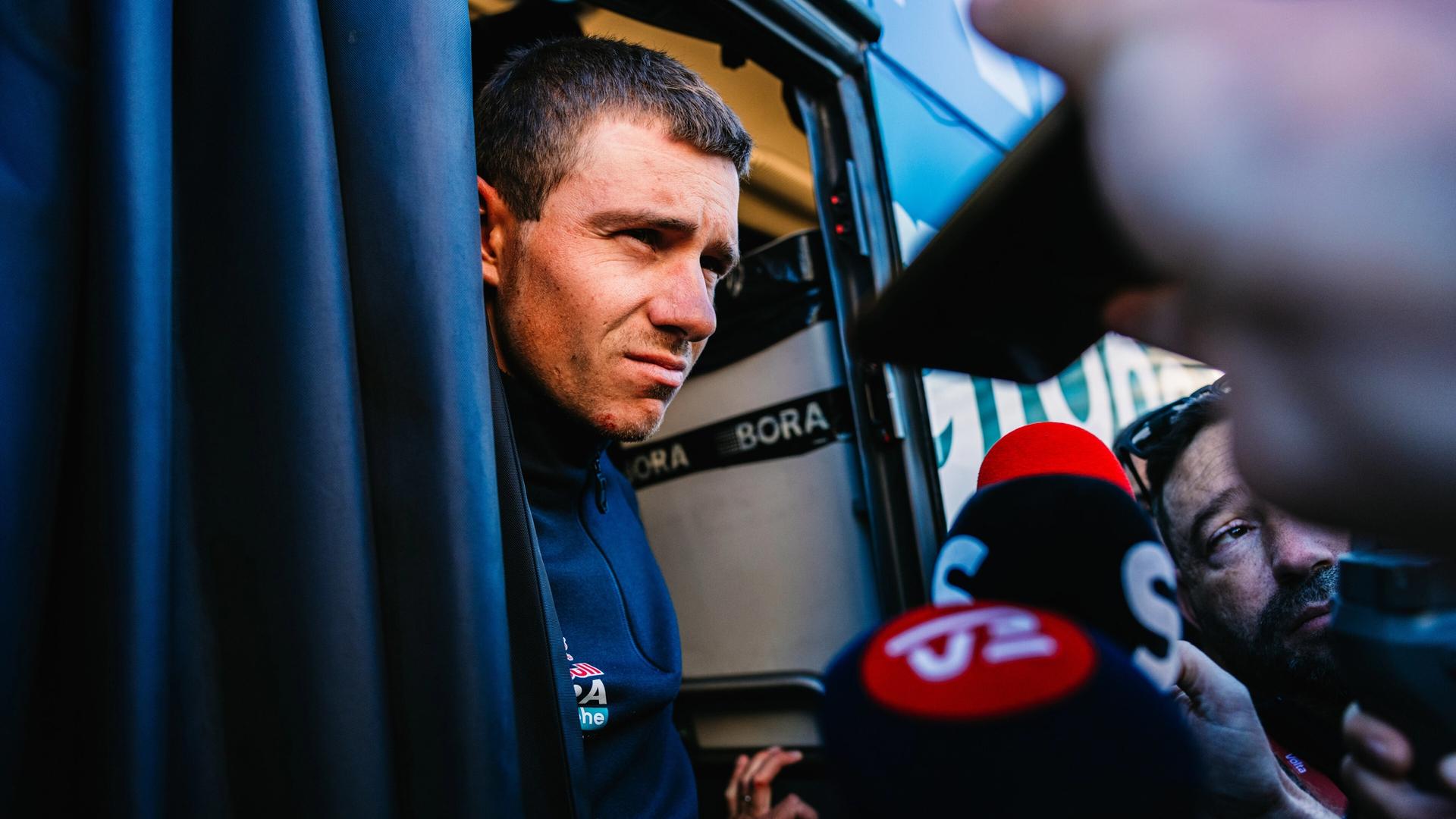
Evenepoel's inclusion is the wildcard, whose arrival has set cycling fandom alight. Earlier reporting suggested he would not make a 2026 Flanders debut, but the provisional start list (below)published this week has him in Red Bull-Bora-Hansgrohe's lineup alongside Gianni Vermeersch, Jan Tratnik and Laurence Pithie. His exact race-specific form is less documented than the others, but his sustained-power engine, if he survives to the second Kwaremont, could alter the calculus of who can ride away and who cannot.
Tour of Flanders 2026 Start List (175 riders)
- 1. POGACAR Tadej (SLO)
- 2. ALVES OLIVEIRA Rui Filipe (POR)
- 3. BJERG Mikkel Norsgaard (DEN)
- 4. COSNEFROY Benoit (FRA)
- 5. POLITT Nils (GER)
- 6. TOMAS MORGADO Antonio (POR)
- 7. VERMEERSCH Florian (BEL)
- 11. VAN DER POEL Mathieu (NED)
- 12. DILLIER Silvan (SUI)
- 13. GEENS Jonas (BEL)
- 14. PLANCKAERT Edward (BEL)
- 15. GOGL Michael (AUT)
- 16. RIESEBEEK Oscar (NED)
- 17. SENECHAL Florian (FRA)
- 21. MOHORIC Matej (SLO)
- 22. SEGAERT Alec (BEL)
- 23. BORGO Alessandro (ITA)
- 24. GOVEKAR Matevz (SLO)
- 25. GRADEK Kamil (POL)
- 26. MIQUEL DELGADO Pau (ESP)
- 27. ERZEN Zak (SLO)
- 31. BISSEGGER Stefan (SUI)
- 32. BOL Cees (NED)
- 33. PEDERSEN Sojberg Rasmus (DEN)
- 34. DE PESTEL Sander (BEL)
- 35. DEWULF Stan (BEL)
- 36. HOOLE Daan (NED)
- 37. NAESEN Oliver (BEL)
- 41. ASGREEN Kasper (DEN)
- 42. VALGREN Michael (DEN)
- 43. HONORE Frolich Mikkel (DEN)
- 44. LAMPERTI Luke (USA)
- 45. SCHWARZBACHER Matthias (SVK)
- 46. SIMMONS Colby (USA)
- 47. WALKER Max (GBR)
- 51. GREGOIRE Romain (FRA)
- 52. MADOUAS Valentin (FRA)
- 53. JACOBS Johan (SUI)
- 54. BARTHE Cyril (FRA)
- 55. GRUEL Thibaud (FRA)
- 56. HUENS Axel (FRA)
- 57. RUSSO Clement (FRA)
- 61. TARLING Joshua Michael (GBR)
- 62. HEIDUK Kim Alexander (GER)
- 63. SHEFFIELD Magnus (USA)
- 64. SWIFT Connor (GBR)
- 65. TURNER Ben (GBR)
- 66. WATSON Sam (GBR)
- 67. SHMIDT Artem (USA)
- 71. PEDERSEN Mads (DEN)
- 72. KRAGH ANDERSEN Soren (DEN)
- 73. NORSGAARD Sunekaer (DEN)
- 74. VACEK Mathias (CZE)
- 75. WALSCHEID Maximilian (GER)
- 76. TEUTENBERG Tim Torn (GER)
- 77. THEUNS Edward (BEL)
- 81. DE LIE Arnaud (BEL)
- 82. AERTS Toon (BEL)
- 83. ARTZ Huub (NED)
- 84. BERCKMOES Jenno (BEL)
- 85. BEULLENS Cedric (BEL)
- 86. BRAET Vito (BEL)
- 87. RUTSCH Jonas (GER)
- 91. GARCIA CORTINA Ivan (ESP)
- 92. BARRENETXEA GOLZARRI (ESP)
- 93. CANAL BLANCO Carlos (ESP)
- 94. MILESI Lorenzo (ITA)
- 95. MACIEJUK Filip (POL)
- 96. AULAR SANABRIA Orluis (VEN)
- 97. TORRES BARCELO Albert (ESP)
- 101. GIRMAY Biniam (ERI)
- 102. ASKEY Lewis (GBR)
- 103. SMITH Dion Allan (NZL)
- 104. LOUVEL Matis (FRA)
- 105. VAN TRICHT Floris (BEL)
- 106. SHEEHAN Riley (USA)
- 107. VAN ASBROECK Tom (BEL)
- 111. EVENEPOEL Remco (BEL)
- 112. VERMEERSCH Gianni (BEL)
- 113. DRIZNERS Jarrad Eriks (AUS)
- 114. PITHIE Laurence (NZL)
- 115. TRATNIK Jan (SLO)
- 116. VAN DIJKE Mick (NED)
- 117. VAN DIJKE Tim (NED)
- 121. VAN BAARLE Dylan (NED)
- 122. MAGNIER Paul (FRA)
- 123. STUYVEN Jasper (BEL)
- 124. REINDERINK Pepijn (NED)
- 125. VAN DEN BOSSCHE Fabio (BEL)
- 126. VAN GESTEL Dries (BEL)
- 127. VERVENNE Jonathan (BEL)
- 131. DE BONDT Dries (BEL)
- 132. DE POOTER Dries (BEL)
- 133. DONALDSON Robert (GBR)
- 134. DURBRIDGE Luke (AUS)
- 135. MEZGEC Luka (SLO)
- 136. O'BRIEN Kelland (AUS)
- 137. SUTTERLIN Jasha (GER)
- 141. NABERMAN Tim (NED)
- 142. MARKL Niklas (GER)
- 143. FLYNN Sean (GBR)
- 144. RENARD HAQUIN Henri (FRA)
- 145. CORKERY Dillon (IRL)
- 146. VAN DEN BERG Julius (NED)
- 147. PEACE Oliver (GBR)
- 151. VAN AERT Wout (BEL)
- 152. AFFINI Edoardo (ITA)
- 153. BRENNAN Matthew (GBR)
- 154. DOULL Owain (GBR)
- 155. HAGENES Per Strand (NOR)
- 156. LAPORTE Christophe (FRA)
- 157. ZINGLE Axel (FRA)
- 161. ABRAHAMSEN Jonas (NOR)
- 162. BYSTROM Sven Erik (NOR)
- 163. HOELGAARD Markus (NOR)
- 164. LEVY Blume William (DEN)
- 165. RESELL Erik Nordsaeter (NOR)
- 166. TILLER Rasmus (NOR)
- 167. WAERENSKJOLD Soren (NOR)
- 171. BETTIOL Alberto (ITA)
- 172. BALLERINI Davide (ITA)
- 173. FEDOROV Yevgeniy (KAZ)
- 174. GATE Aaron (NZL)
- 175. LIVYNS Arjen (BEL)
- 176. ROMELE Alessandro (ITA)
- 177. TEUNISSEN Mike (NED)
- 181. TEUNS Dylan (BEL)
- 182. ALLEGAERT Piet (BEL)
- 183. ANIOLKOWSKI Stanislaw (POL)
- 184. BIERMANS Jenthe (BEL)
- 185. PAGE Hugo (FRA)
- 186. RENARD Alexis (FRA)
- 187. ZAMPERINI Edoardo (ITA)
- 191. DE GENDT Aime (BEL)
- 192. FRISON Frederik (BEL)
- 193. LIEPINS Emils (LAT)
- 194. MALECKI Kamil (POL)
- 195. VAN MOER Brent (BEL)
- 196. WRIGHT Alfred Brockwell (GBR)
- 197. ZUKOWSKY Nickolas (CAN)
- 201. TRENTIN Matteo (ITA)
- 202. HALLER Marco (AUT)
- 203. KLUCKERS Arthur (LUX)
- 204. LIENHARD Fabian (SUI)
- 205. FROIDEVAUX Robin (SUI)
- 206. MOZZATO Luca (ITA)
- 207. PLUIMERS Rick (NED)
- 211. ALLENO Clement (FRA)
- 212. CAVIA SANZ Daniel (ESP)
- 213. DE LA CALLE ARANGO Hugo (ESP)
- 214. FAGUNDEZ LIMA Antonio Eric (URU)
- 215. KMINEK Vojtech (CZE)
- 216. MACIAS ESTRADA Cesar (MEX)
- 217. SAINBAYAR Jambaljamts (MGL)
- 221. DEMAN Brem (BEL)
- 222. LAMBRECHT Michiel (BEL)
- 223. LANHOVE Milan (BEL)
- 224. VAN HEMELEN Vincent (BEL)
- 225. VANDENSTORME Dylan (BEL)
- 226. VANHOOF Ward (BEL)
- 227. VERCOUILLIE Victor (BEL)
- 231. TURGIS Anthony (FRA)
- 232. BOULAHOITE Rayan (FRA)
- 233. BRUNEL Alexys (FRA)
- 234. DAUPHIN Florian (FRA)
- 235. DUJARDIN Sandy (FRA)
- 236. GACHIGNARD Thomas (FRA)
- 237. LEROUX Samuel (FRA)
- 241. KUBIS Lukas (SVK)
- 242. BLOEM Joren (NED)
- 243. DE VRIES Hartthijs (NED)
- 244. KOPECKY Casper Matyas (CZE)
- 245. KOPECKY Cornelius Tomas (CZE)
- 246. RASENBERG Martijn (NED)
- 247. LARSEN Niklas (DEN)
Beyond the headline five, the field contains credible alternatives if the favourites neutralise one another. Jasper Stuyven (Soudal-Quickstep) has Monument experience and the tactical patience for a long, destructive race. Arnaud De Lie (Lotto-Intermarché) has the power for a reduced-group sprint. Matej Mohorič (Bahrain-Victorious) can exploit chaos with unorthodox long-range attacks. Kasper Asgreen (EF Education-EasyPost) has proven Flanders pedigree in pure attritional conditions. Biniam Girmay (NSN Cycling Team) has the fastest finish of anyone in the field if he survives deep enough into the cobbled hills.
Weather and predictions
Weather forecasts for Oudenaarde suggest around 13-15°C, a moderate westerly breeze and the possibility of light rain. Conditions that are hard enough to matter on cobbles but not chaotic enough to override form and team strength. A modest tailwind in the finale would encourage longer attacks and make it harder for a chasing group to close gaps on the flat run to the finish.
The most likely winning scenario remains Pogačar attacking on the second Oude Kwaremont, using the Paterberg to confirm the gap, and riding solo into Oudenaarde. Van der Poel is the clearest threat to that plan if his hand holds up through 278km. Van Aert is the best alternative if the race becomes more tactical than destructive.