Juan Ayuso (Lidl-Trek) abandoned Paris-Nice and was taken to hospital after crashing at an estimated 70–80 km/h on a rain-soaked descent during Stage 4 on Wednesday, surrendering the yellow jersey and handing control of the race to Jonas Vingegaard (Visma-Lease a Bike). Subsequent team updates confirmed that Ayuso had suffered no fractures but would continue to be monitored.
Ayuso was one of at least 12 riders who failed to finish the 195km stage from Bourges to Uchon, a day in which crashes reshaped the general classification of both Paris-Nice and Tirreno-Adriatico.
Ayuso, 23, had entered the stage with a two-second lead. With roughly 47km remaining, on the descent following the Cat.3 Côte de la Croix des Cerisiers, he went down in a multi-rider crash involving a group of around 40. TV images showed him attempting to remount with torn shorts and visible distress before stopping at the roadside, unable to continue. Brandon McNulty (UAE Team Emirates-XRG) and Iván Romeo (Movistar) were also caught in the crash, with McNulty forced to abandon.
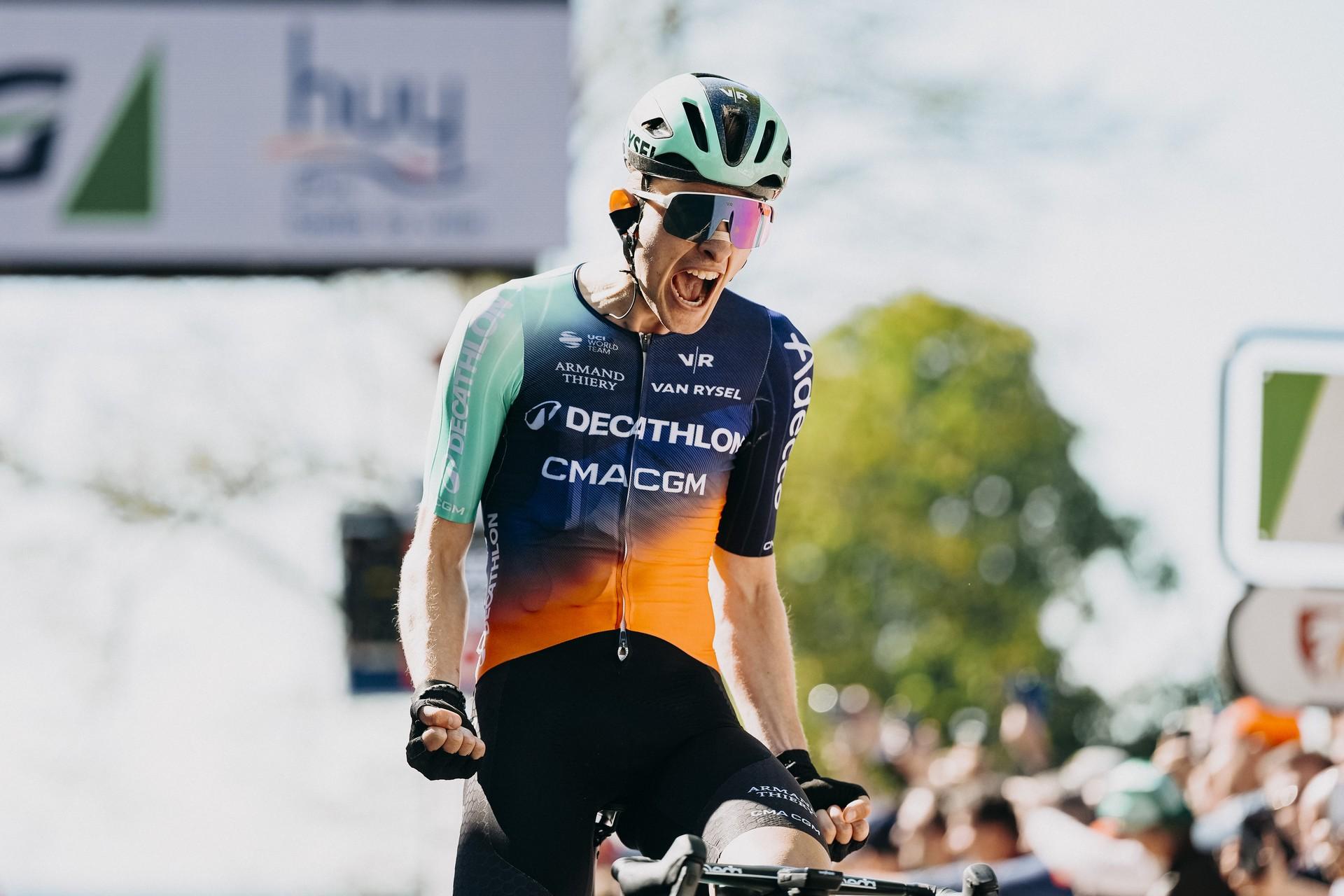
An earlier incident, roughly 100km from the finish, had already claimed Daan Hoole (Decathlon-CMA CGM), who entered the day fourth overall and was forced out. Oscar Onley (Ineos Grenadiers), third on GC at the time, went down in the same crash and lost significant time despite teammate Josh Tarling's efforts to pace him back.
Vingegaard, racing for the first time this season, attacked under the flamme rouge on the final climb to Uchon and opened a 41-second gap on Dani Martínez (Red Bull-Bora-Hansgrohe) in the space of a single kilometre. He now leads the race by 52 seconds, with Georg Steinhauser (EF Education-EasyPost) third at 3:20 and Kevin Vauquelin (Ineos Grenadiers), who had been second overall before being distanced in crosswinds, fourth at 3:39.
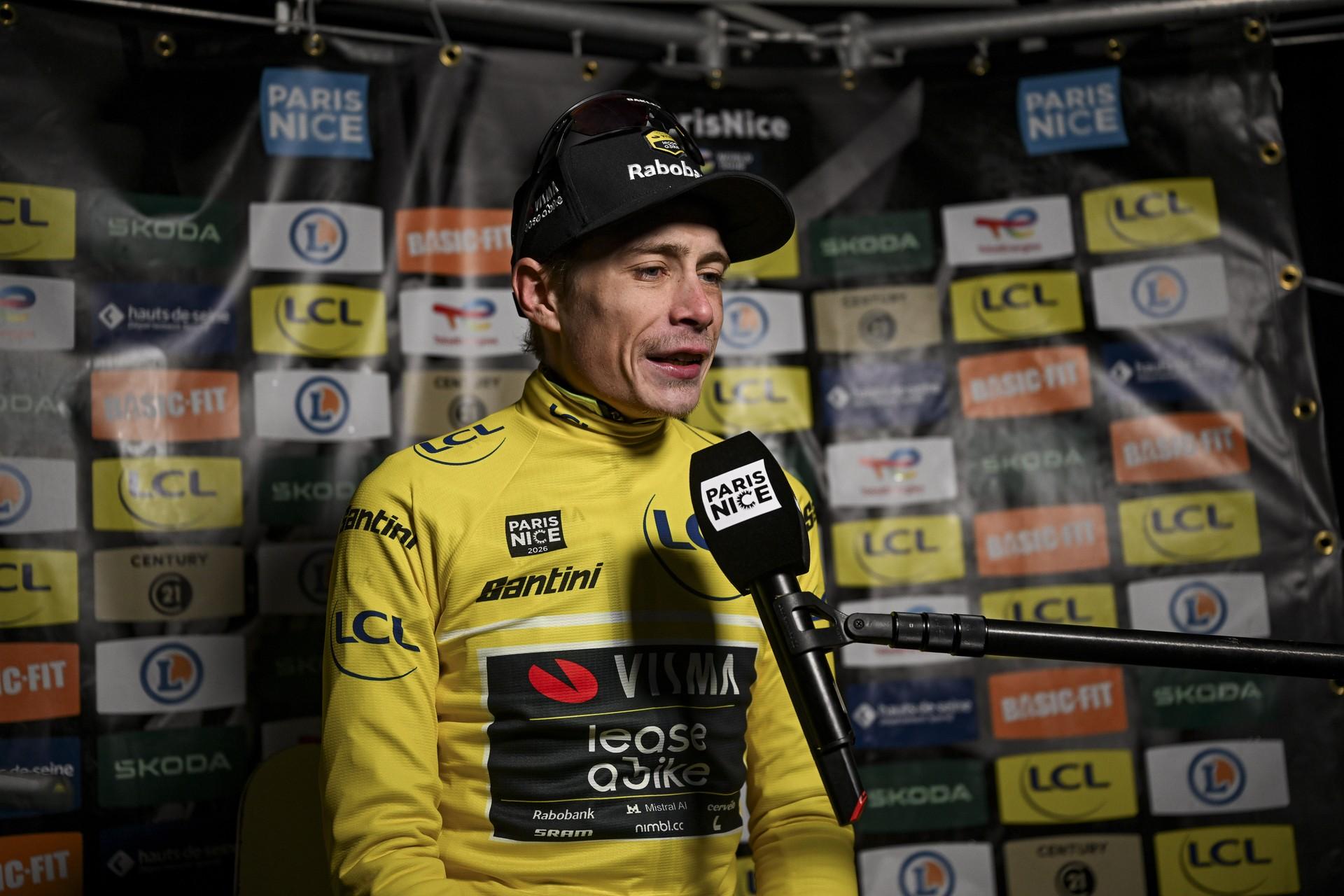 Photo: Billy Ceusters
The result is that one cold, wet afternoon eliminated the race leader, gutted at least two teams' GC plans and compressed the classification into something unrecognisable from the morning's startlist.
Tirreno's gravel problem
Paris-Nice was not the only race shaped by crashes on Wednesday. At Tirreno-Adriatico, the fallout from Tuesday's gravel stage to San Gimignano continued to define the GC picture. Thymen Arensman (Ineos Grenadiers), who had been second overall after a strong opening time trial, crashed on a wet right-hand bend on the 5.3km gravel sector, the same corner where Mathieu van der Poel (Alpecin-Premier Tech) had already lost traction. Arensman lost 1:38 to new race leader Isaac Del Toro (UAE Team Emirates-XRG), effectively ending his classification bid.
Arensman had raised concerns about the course design before the stage, in comments made to IDL Pro Cycling. "I really like gravel, but now it's only one gravel sector in the finale," he said. "And with a few sharp corners, which in my opinion is a bit like asking for problems."
After the crash he reported no fractures but extensive road rash. "I'm relatively okay. I haven't broken anything, but I do have a lot of superficial wounds," Arensman said.
Matteo Jorgenson (Visma-Lease a Bike) also went down in the gravel finale, with teammate Wout van Aert saying the crash cost the team both their best chance at the stage win and their broader GC strategy.
The crashes across both races have raised questions regarding course safety and responsibility when weather compounds difficulty.
Spring races typically involve unpredictable weather, and in recent years have led to a string of high-profile injuries. Only two years ago at Itzulia Basque Country Vingegaard was among a raft of riders who were set back for weeks and months by the extensive crash on stage 4.
How exactly to counter the risk of crashes in races with increasing speed and more unpredictable weather is not an easy problem for the UCI.