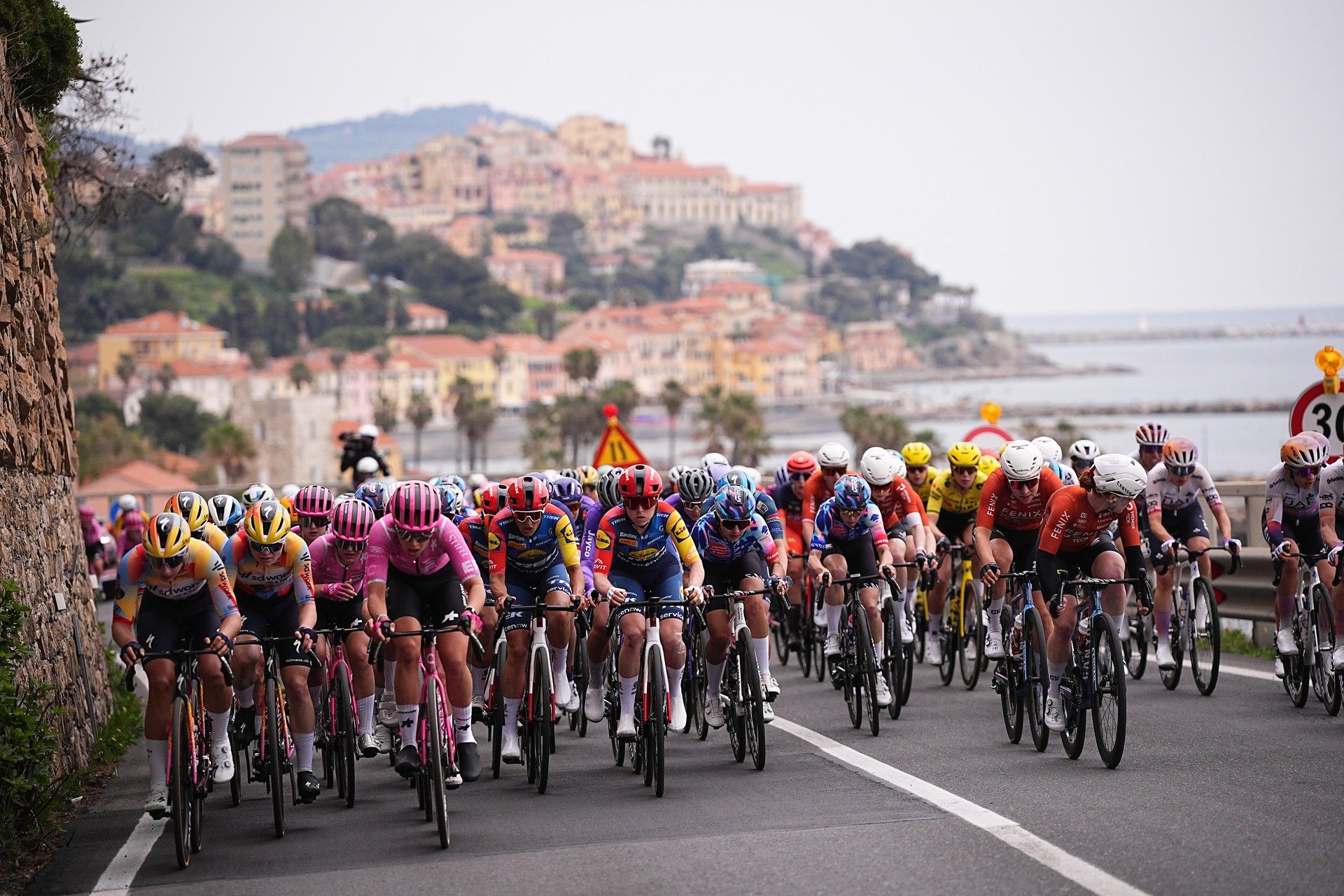
RCS Sport announced on April 15 that 21 teams will start the 2026 Giro d'Italia Women from May 30 to June 7, including five Italian Continental squads whose presence appears difficult to reconcile with the UCI's new 2026 Women's WorldTour participation rules.
The regulation change, introduced for the 2026 season, bars Continental teams from Women's WorldTour races by default. Under UCI regulation 2.1.005, Continental teams may only be invited if, 30 days before the event, the number of confirmed professional teams falls below the required minimum. The Giro's published field already exceeds that threshold.
The start list includes all 14 Women's WorldTeams, Laboral Kutxa–Fundación Euskadi as the ProTeam qualified by 2025 ranking, and St Michel–Preference Home–Auber 93 as a wildcard ProTeam. That is 16 professional teams before the five Continental wild cards are counted. The Continental invitees, Aromitalia Vaiano, Isolmant–Premac–Vittoria, Team Mendelspeck E-Work, Top Girls Fassa Bortolo and Vini Fantini–BePink, are all Italian.
The exception clause exists to prevent races from being under-filled. With 15 or 16 professional teams already confirmed, the Giro does not appear to meet that condition.
A pattern from earlier in 2026
The Giro is not the first Women's WorldTour race to test the new rule this season. At the UAE Tour Women in February, three Continental teams were admitted after a similar request process – with race directors eager to avoid a race with only 15 teams. "To do a race with only 15 teams, especially a WorldTour race, is not nice," UAE Tour Women race director Fabrizio D'Amico told Cyclingnews in February.
The UCI's response to that case left the door open. "Organiser can always make a request that will be assessed by the UCI, in compliance with UCI Regulations," the governing body said. That language frames organiser requests as routine rather than exceptional, even where the regulation appears restrictive.
The Giro's case tests the same limits. While the UAE Tour successfully argued that a 17-team professional peloton was too small to exclude Continental invites, the Giro is requesting the same bypass for a 16-team professional peloton, proving that organisers universally view the UCI's 15-team threshold as inadequate.
The organisers' reasoning is clear enough from a sporting perspective. All five Continental invitees are Italian, preserving domestic representation in the country's biggest women's stage race. Continental teams animate breakaways, create local interest and give developing riders exposure at the highest level. RCS Sport has historically used wild cards to keep Italian squads visible in its races.
That's at odds with the actual regulations, though. The 2026 rule change was designed to formalise the top tier of women's racing by drawing a clean line between WorldTour events and Continental-level teams. If exceptions are granted whenever organisers prefer a larger or more local field, that line becomes negotiable.
The inconsistency also carries consequences beyond Italy. British Continental teams face likely exclusion from the Tour of Britain Women under the same 2026 framework, because the WorldTour-only rule would prevent their participation unless the minimum-team exception applies. If Italian Continental teams can race the Giro while British teams cannot race their home WorldTour event, the practical effect depends on organiser leverage and UCI discretion rather than uniform regulation.
The race starts on May 30, placing the 30-day confirmation deadline at April 30. RCS Sport published its team list 15 days before that threshold.
The announced field as it stands includes more than enough professional teams to fill the race without Continental invitations. The question is whether the UCI's 2026 rules mean what they say.