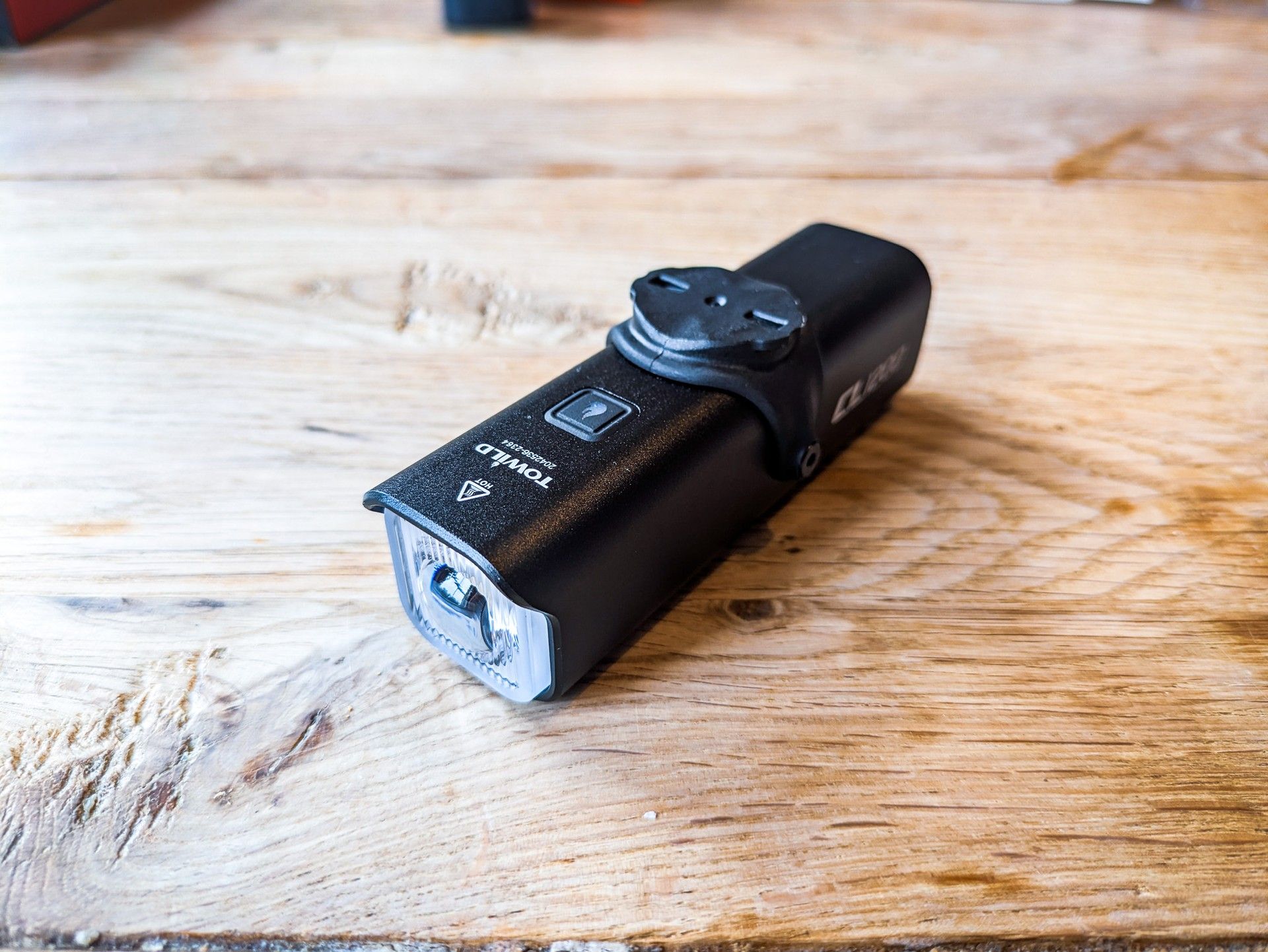
The Towild CL1200 is a 1,200-lumen torch-style front light with a one-piece metal body, a Garmin-compatible quarter-turn mount and a claimed 2h 45m of runtime at full power. We tested it as part of our upcoming bike light group test, where we compare six highly rated front lights at affordable price points.
Quick verdict
The Towild has slightly worse beam quality than the Ravemen and the HORI 1300, the other similarly powerful lights on test. But the Towild has much more endurance. The 5,000mAh battery has a claimed runtime of almost three hours at 1,200 lumens, which is enough to ride a full winter evening without dropping to a lower mode to protect the battery.
Velora review
CL1200 front light

A solid, unflashy torch-style light that trades a little beam reach and edge spread for the longest claimed full-power runtime of the standard-sized lights in our test. Suited to unlit lanes and tame gravel at steady speeds rather than fast descents or technical trails.
For
- +2h 45m at full 1,200 lumens
- +One-piece metal body with sealed USB-C port
- +Standard Garmin/Wahoo mount plus GoPro adapter
Against
- –Beam falls away at the edges
- –Does not project as far as the Ravemen FR 1100 SE or Magicshine HORI 1300
Beam and runtime
On the test route, the Towild produced reasonably even coverage across the road in the near field, and directly in front of the wheel it was marginally better than the HORI 1300. Further out, its performance drops off. The beam falls away at the edges more sharply than the Ravemen's but not as sharply as the HORI's, and it does not throw light as far down the road as either, though the difference is marginal. The beam felt effective out to about 20 metres; beyond that, the track dims faster than with the other two lights, even though all three have similar outputs.
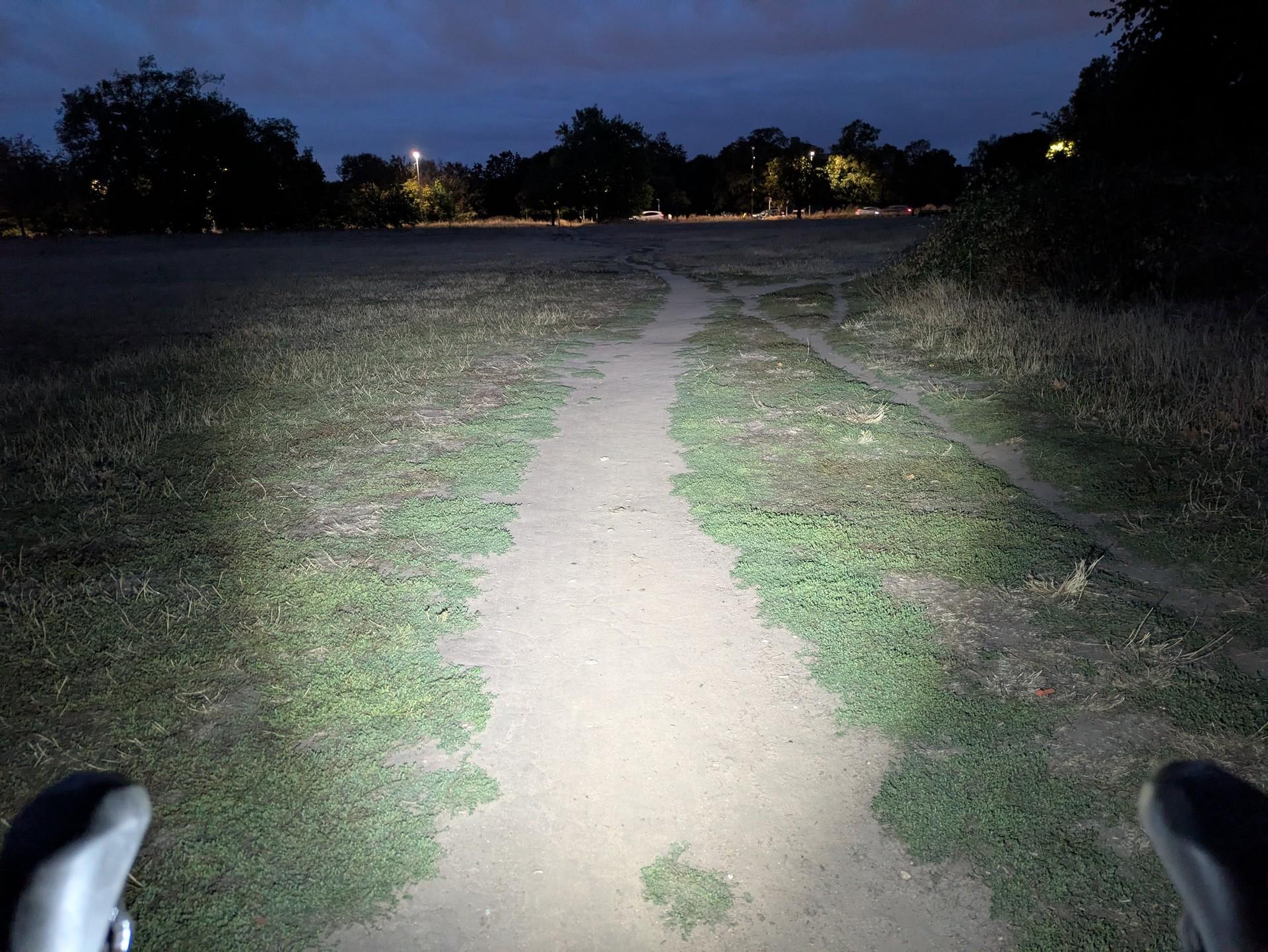
Against the Exposure Strada RS (beam below), the long-term benchmark for this group test and a light that costs roughly four times as much as most of the field, the Towild does not match the overall beam quality or the width of peripheral coverage. None of the three standard-sized lights did, but the Ravemen came closest on uniformity and the HORI on distance.
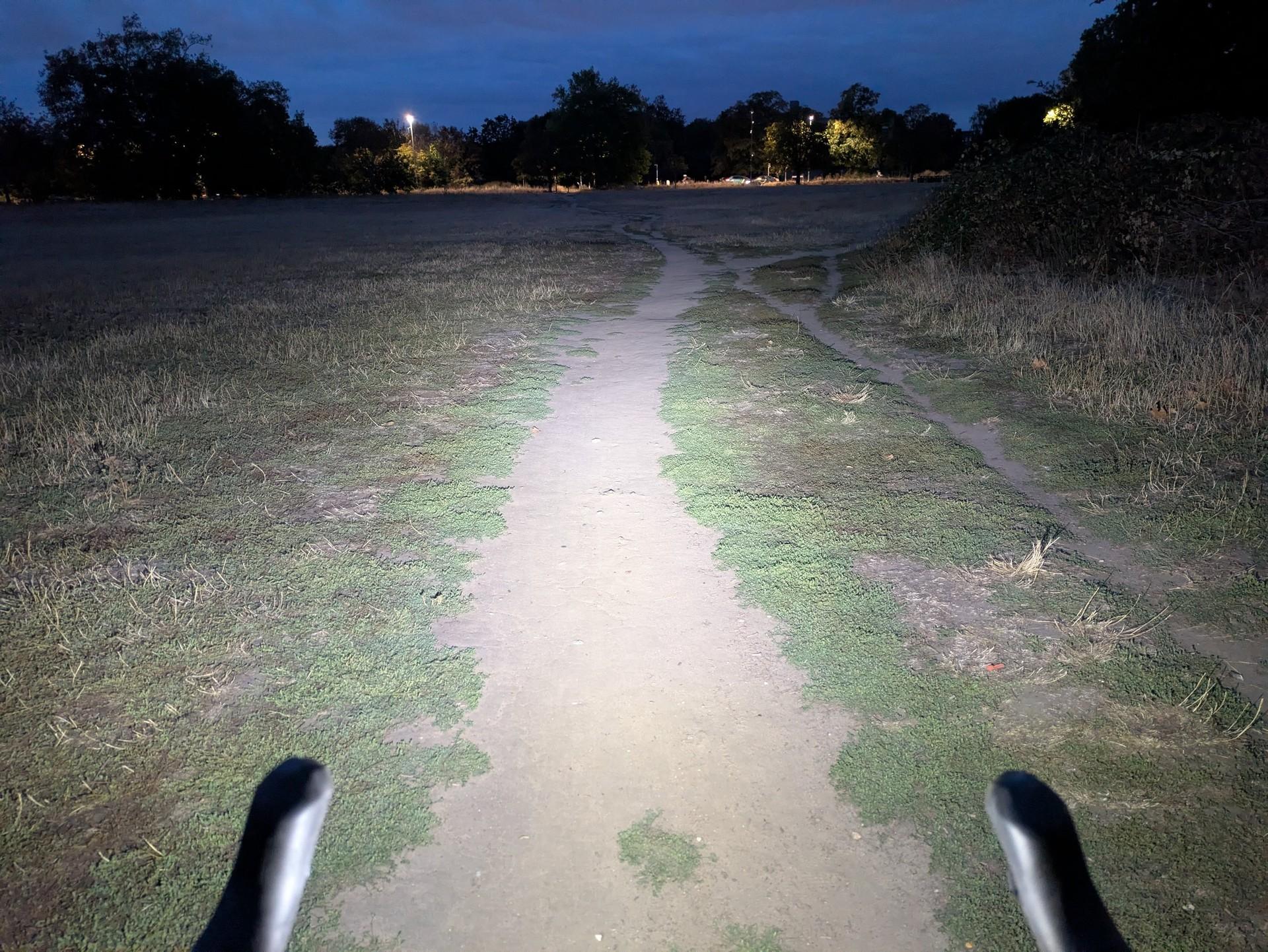
The range suits steady cruising speeds on unlit country lanes or tame gravel, where it is enough to read the surface and pick a line. On a fast descent or technical singletrack, however, its limited reach and peripheral coverage become harder to overlook. Towild's own listing claims a beam distance of up to 160 metres, a figure that describes where photons land rather than where a rider can usefully see.
Runtime is 2h 45m at 1,200 lumens, while the 600- and 300-lumen settings are rated for five and 10 hours respectively. Towild says these figures come from laboratory estimates and may vary with conditions. Charging takes around four hours over USB-C.
Build, controls and mounting
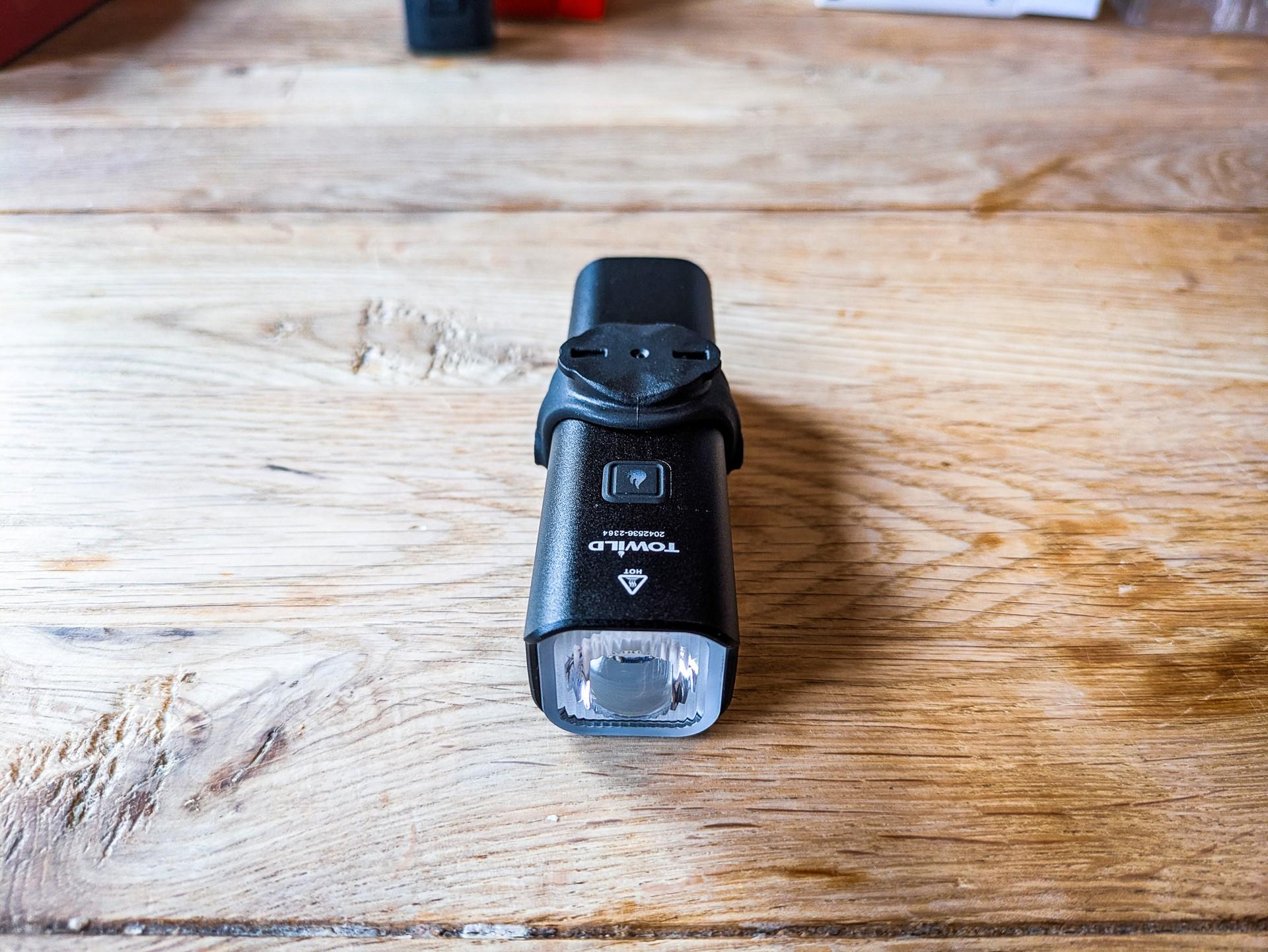
The CL1200 follows a familiar torch layout: a single metal barrel with the LED and lens at one end and a rubberised USB-C port cover at the other. Picked up alongside the other lights in the test, it feels heavy for its size, and weighs 176g on our scales. The body has no seams to flex, the port seal is firm and the whole unit feels like it would survive being dropped on a garage floor.
Build quality is slightly below that of the Magicshine HORI 1300 but comfortably in the same bracket. The HORI is the better-looking light of the two; the Towild is plain without being ugly. The single push button has a positive click, and cycling through the modes is intuitive without consulting the manual.
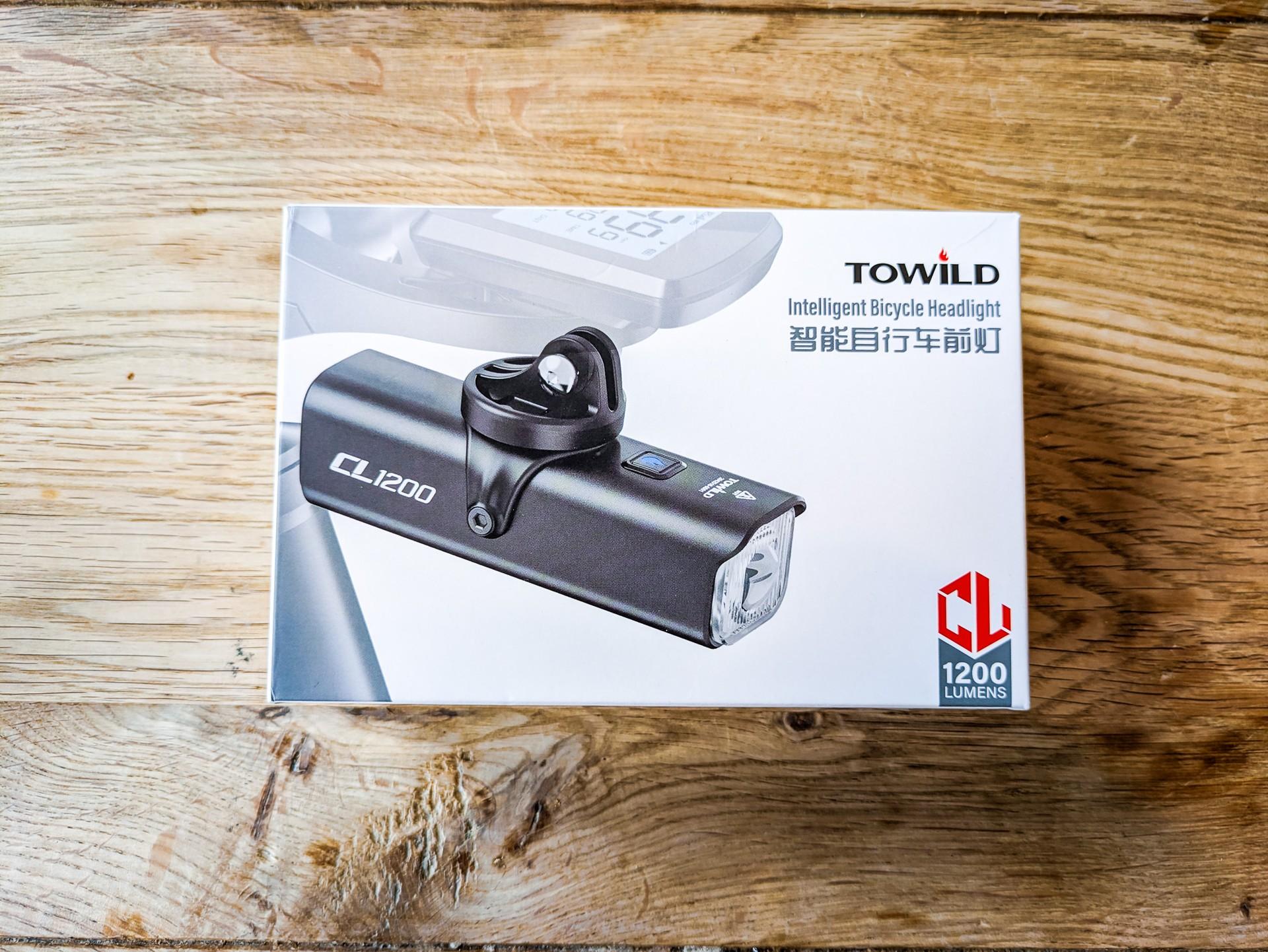
Mounting uses the quarter-turn Garmin interface that most computer mounts and out-front brackets now accept, so it can hang beneath a head unit or sit on a bar clamp. A GoPro adapter is supplied for under-mounting, and Towild says the body can be inverted with the cut-off beam still oriented correctly.
The package included the handlebar mount, USB-C cable, GoPro adapter and a discharge adapter that lets the light act as a power bank for a phone or GPS unit. The wireless remote, which enables a 1,500-lumen Turbo setting, is sold separately as an optional accessory.
Pricing and verdict
The Towild CL1200 costs £50 / $56, which is great value for a light capable of proper nighttime riding. For context, the HORI 1300 costs £80 / $85 and has a marginally better beam but worse battery life.
The Towild is the light for the rider whose evening loop runs past two hours, who rides at a steady pace on known lanes, and who would rather leave the light on full and forget about it than manage modes to reach home. Its body is heavier and its beam shorter than its rivals, but both are reasonable trade-offs for a light built to be left alone and keep going.