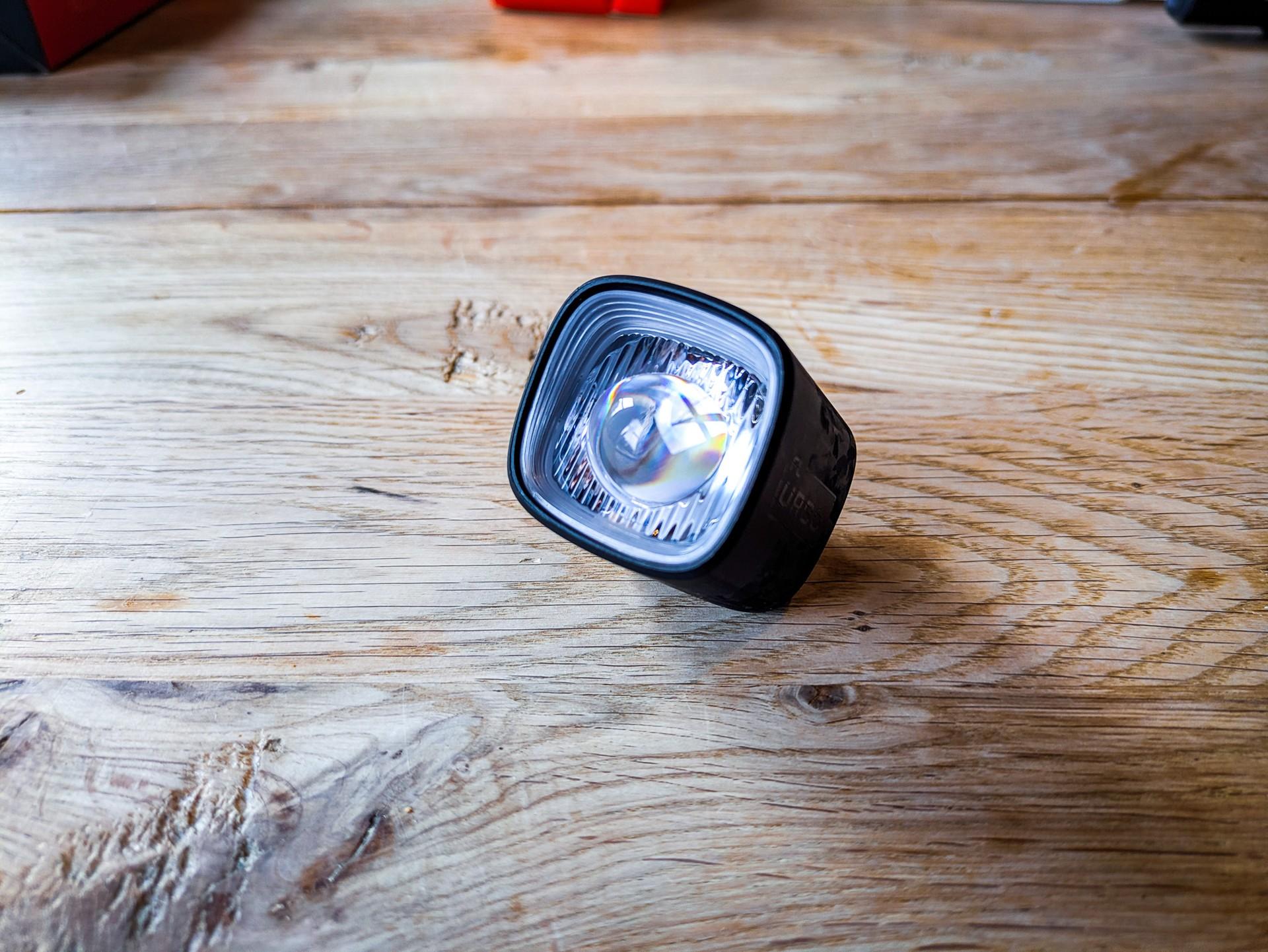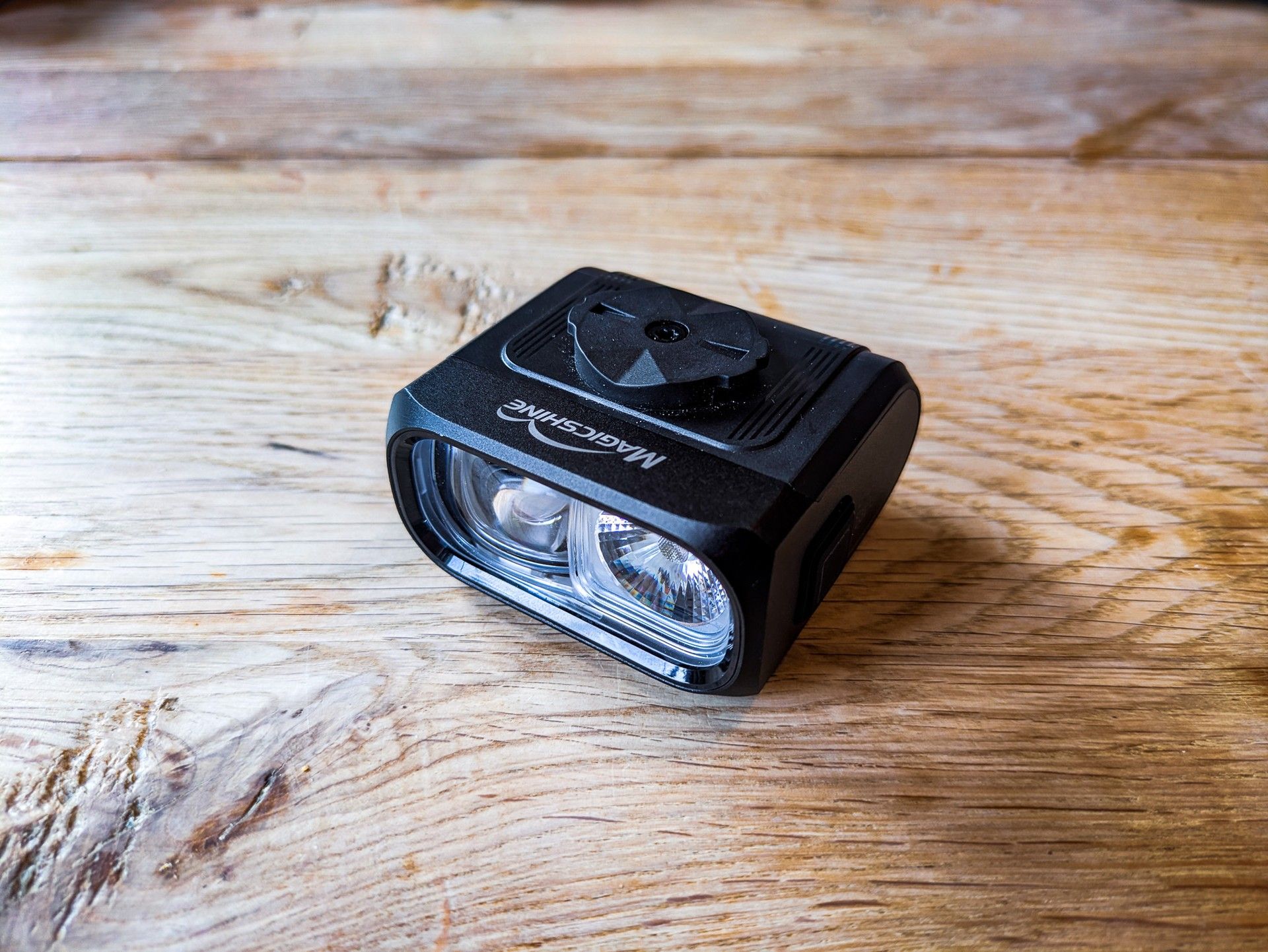
The Magicshine HORI 1300 is a compact dual-lens front light rated at 1,300 lumens, with a Garmin-style quarter-turn interface on one face and GoPro-style attachment tabs on the other. It is aimed at road and gravel riders who want proper night-riding output from a unit small enough to disappear behind a computer bracket.
We tested it as part of our bike light group test, where we compare six highly rated front lights at affordable price points.
Quick verdict
The HORI 1300 is a premium-feeling light with decent performance. Its beam quality was marginally worse than the Ravemen 1100 but still plenty to illuminate the road in front of you. The bar-mounted switch is a neat touch and the ability to mount it with a GoPro mount is a plus (even if the mounting system isn’t included). At £80 / $85, it’s not cheap and has proper competition, but the beam and build quality come close to lights a lot more expensive.
Velora review
Magicshine Hori 1300 Front Light

A dense, premium-feeling 1,300-lumen light with a spot and flood lens combination that projected further down the road than most rivals in our test. Buy it if you already own a Garmin-style mount and do not need to stack a computer on top.
For
- +Second-best beam of the standard-sized lights we tested
- +Solid aluminium and plastic body, good button feel, rubber-sealed USB-C port
- +Garmin-style and GoPro-style mounting on one unit
Against
- –No mount supplied
- –Magicshine says it should not carry a bike computer
- –Two-hour claimed runtime at full output
Beam performance
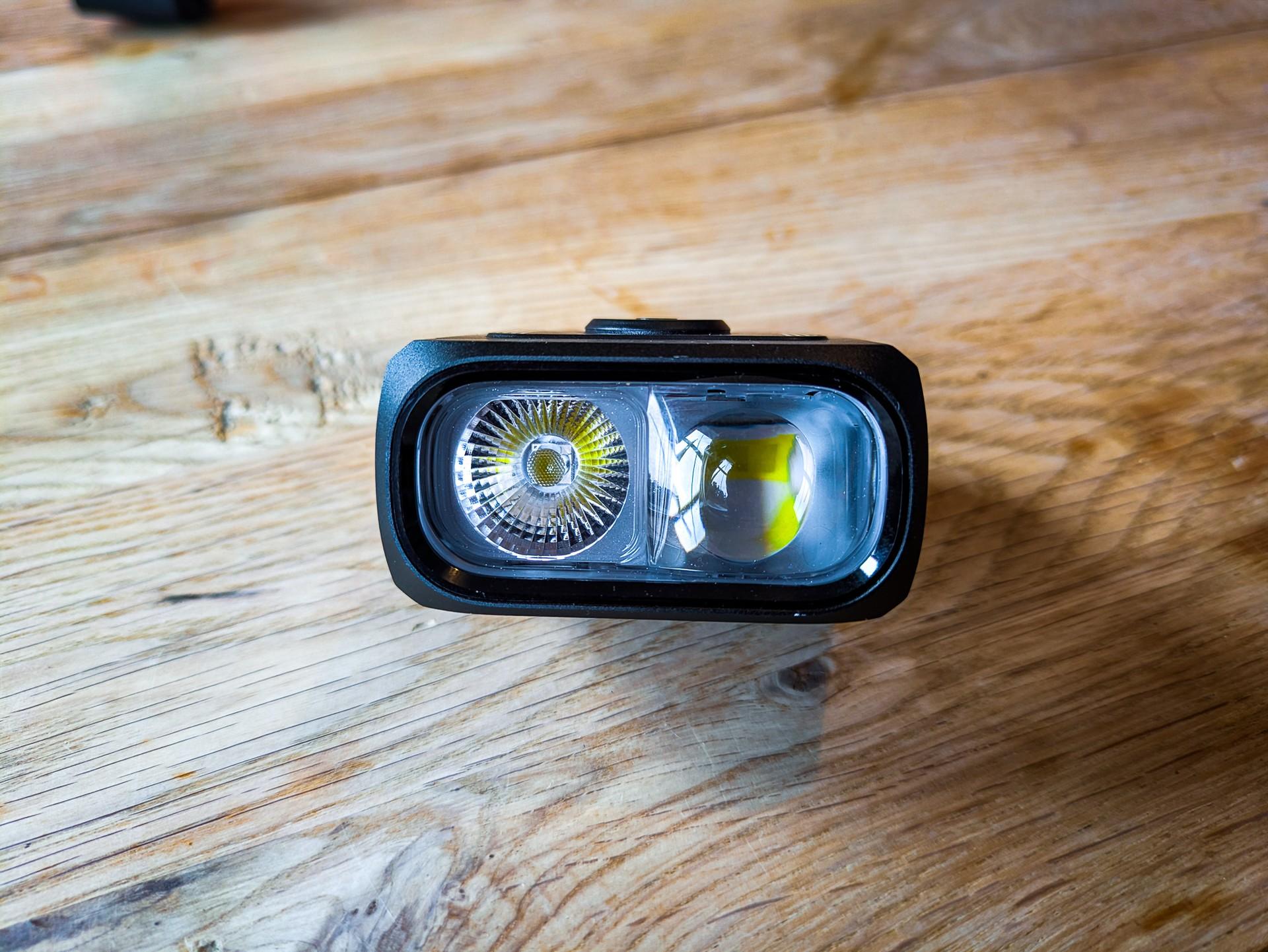
Two separate lens elements sit behind the front glass: one throws a tighter, spot-style beam for distance, the other spreads a broader strip of light across the road surface directly ahead. In use, that combination means you get a well-lit patch under the front wheel without giving up reach.
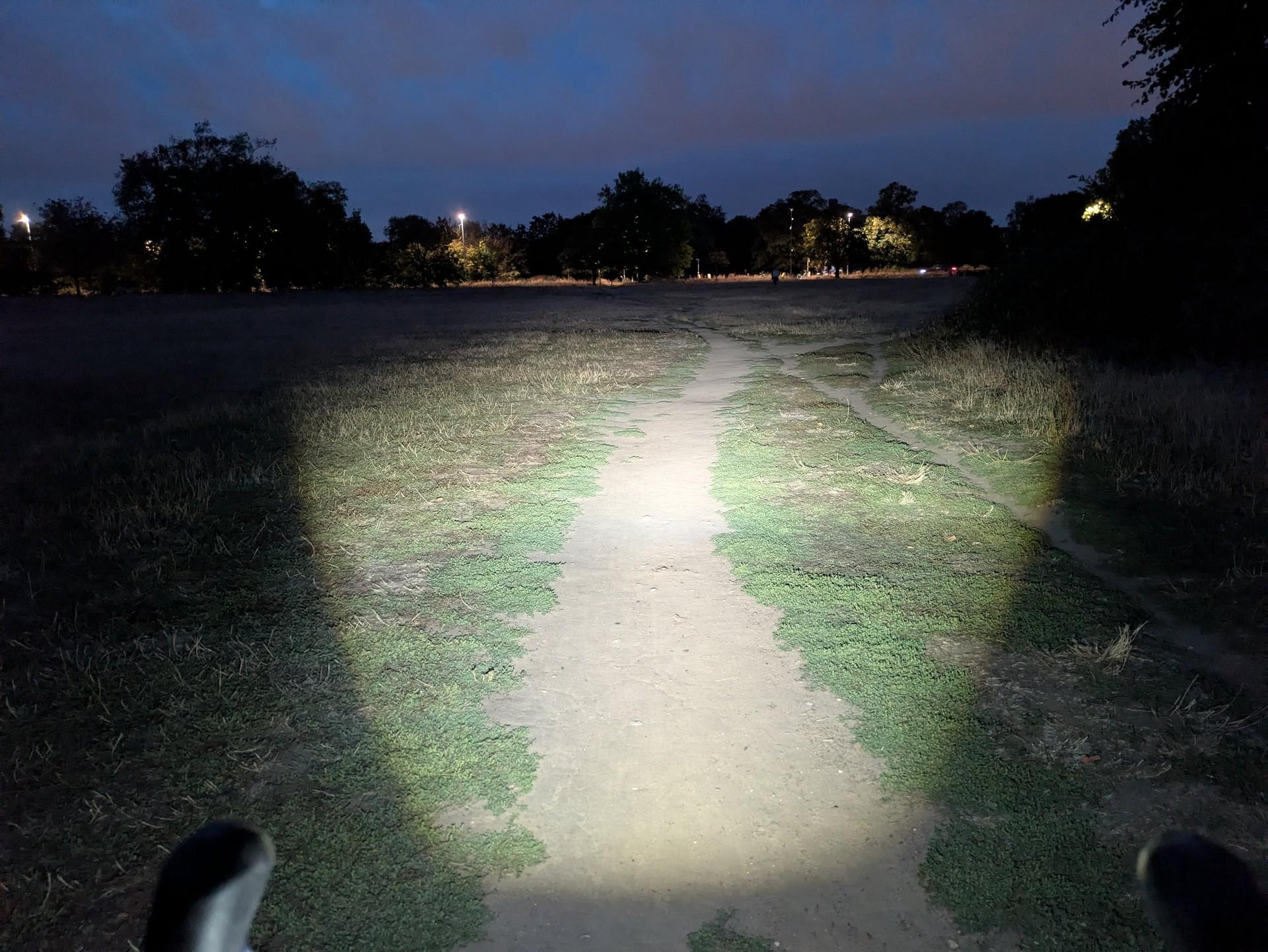
In our side-by-side ranking of the normal-sized lights, excluding the oversized trail lamps, the HORI 1300 took second place. The margins among the HORI, the Ravemen and the Towild were very small, and the Ravemen was slightly better overall. The Towild had quite harsh cut-offs at the edges of its beam, while the HORI did a better job of projecting light far down the track.
I compared all the lights in the test to my trusty Exposure Strada RS, which is a premium front light that I’ve used for various nighttime adventures. Its beam (shown below) is noticeably fuller and higher quality, allowing you to get a better picture of your surroundings. But it does cost four times more so that’s expected.
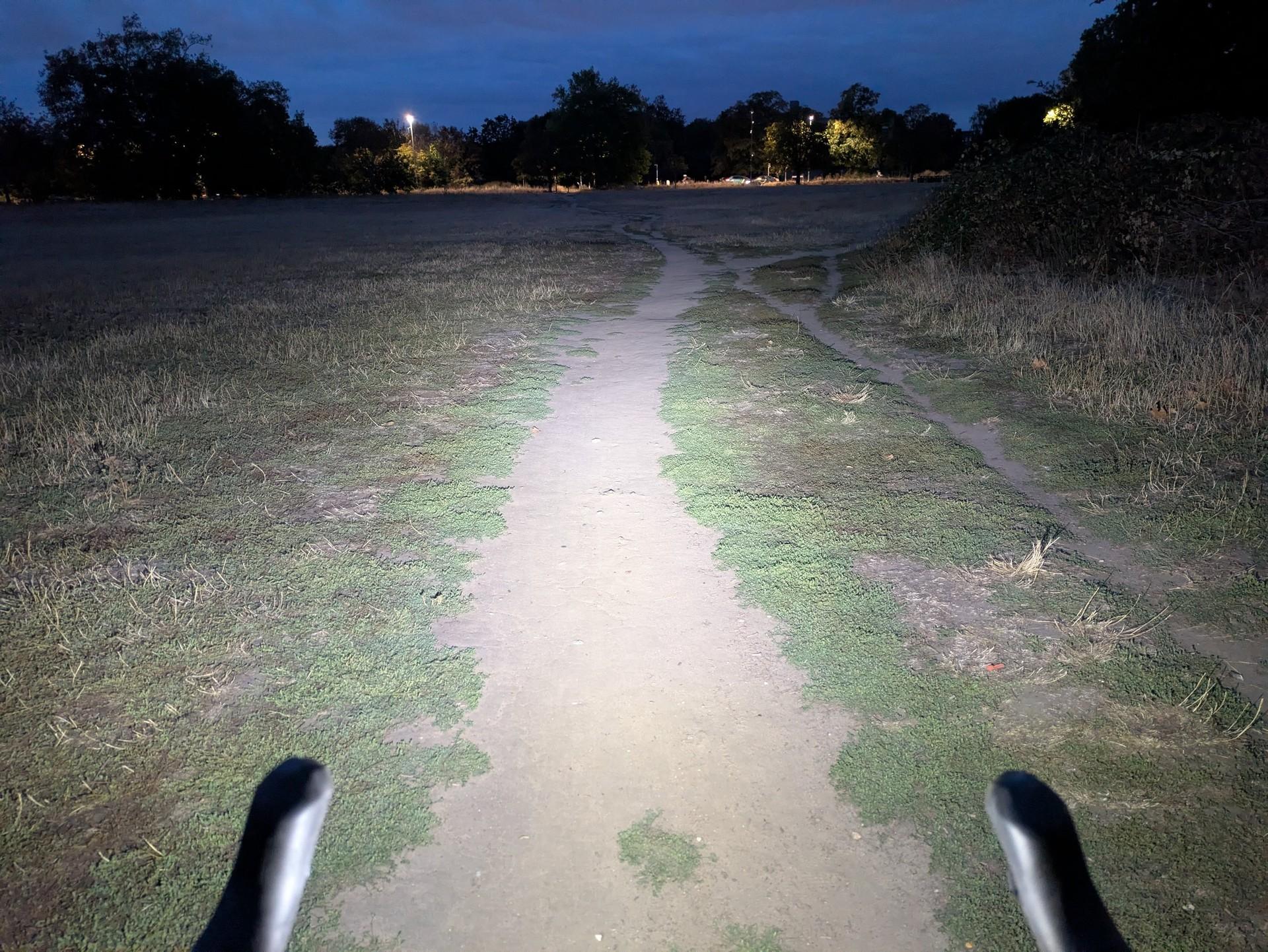
The HORI has a high beam option (shown above) of 1,300 lumens with a two-hour runtime. It also has low-beam options at 900, 400 and 200 lumens.
Build, mounting and controls
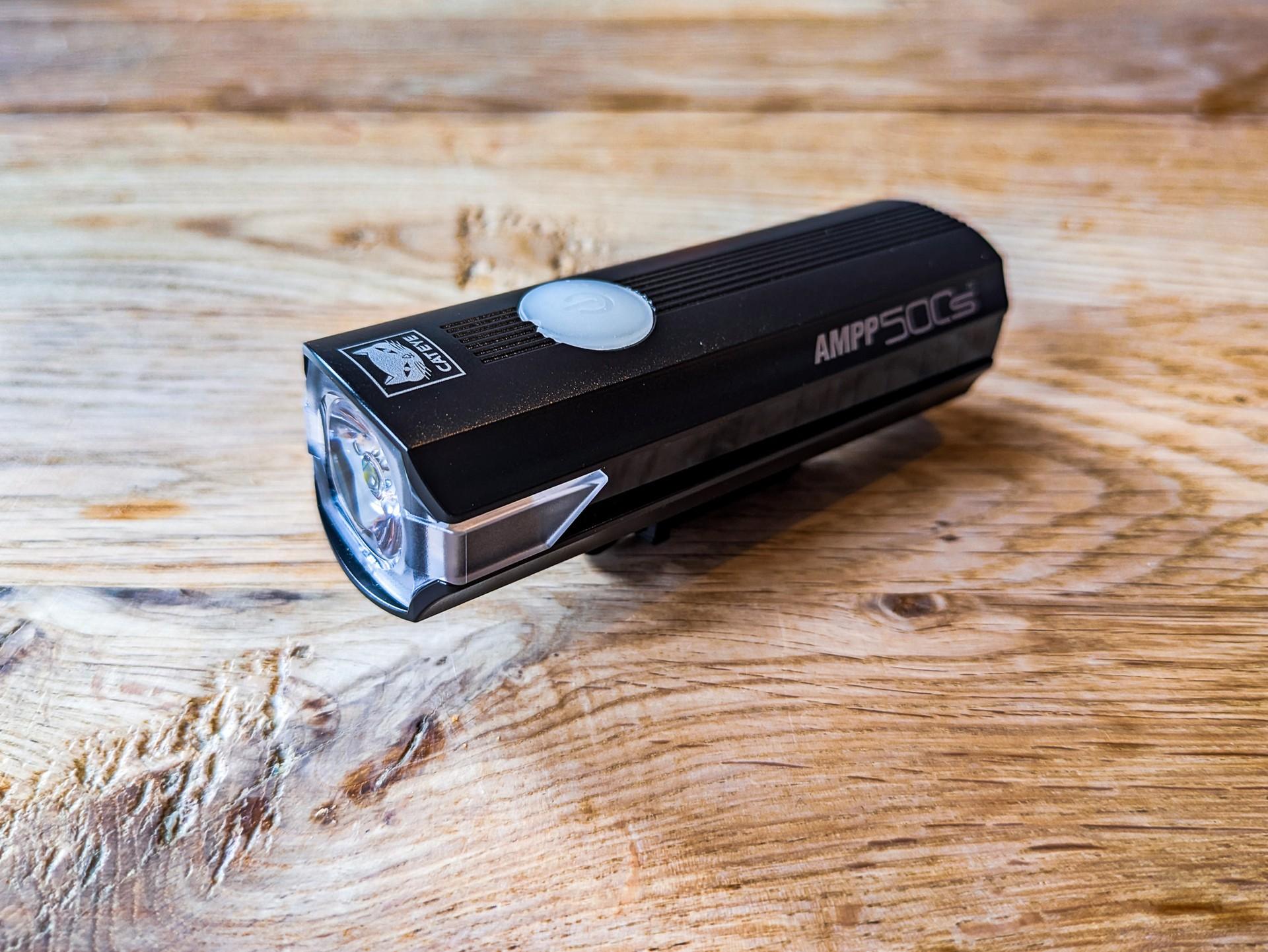
Magicshine lists the HORI 1300 at 151g and 60 × 57 × 37mm and on my scales it weighs 150g. The shell mixes aluminium alloy and plastic, the button presses have a firm, definite action, and the rubber cover over the USB-C port sits flush and seals cleanly. The housing feels premium for the price.
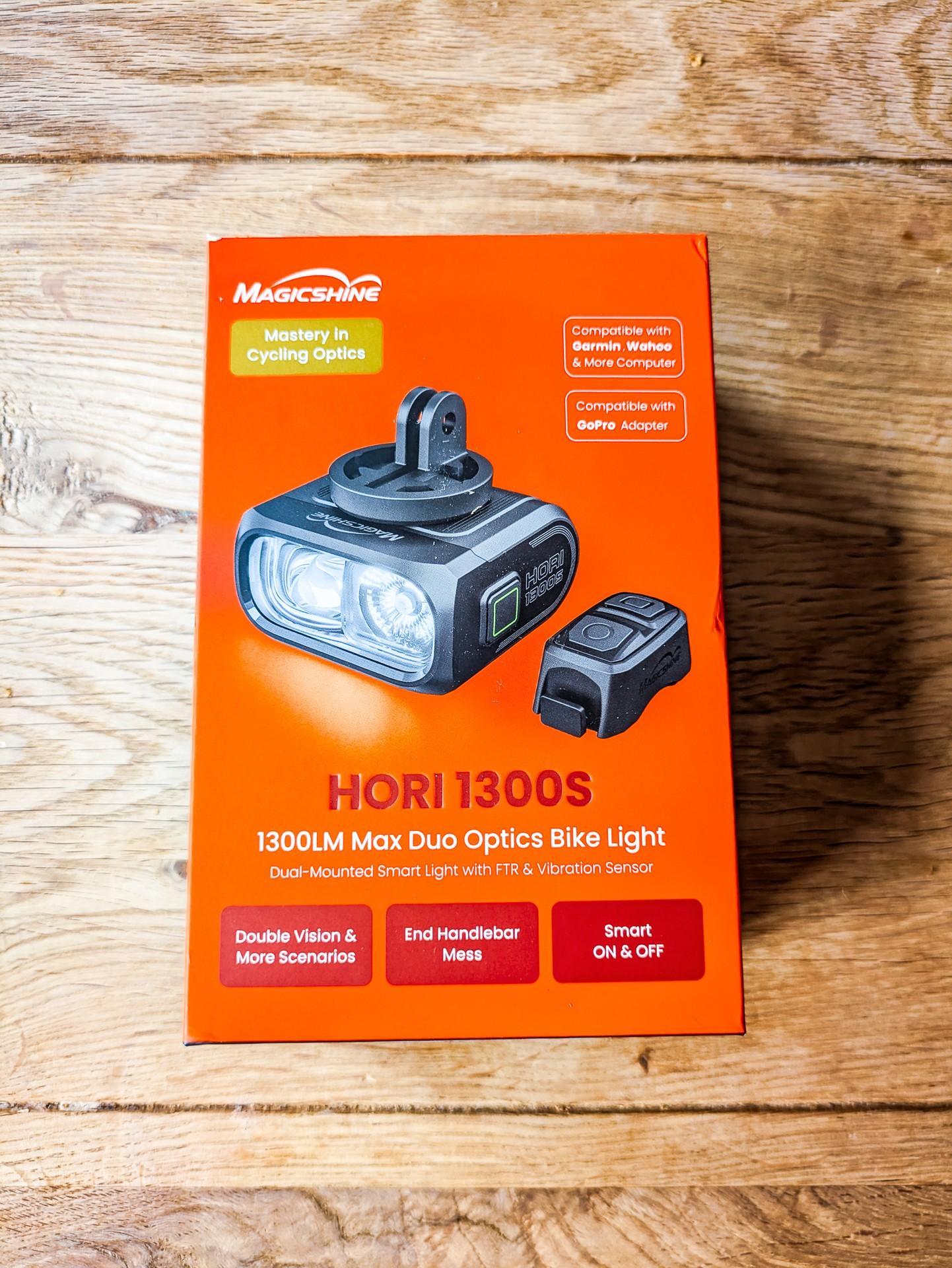
Magicshine sells it as the HORI 1300 Dual-Mount FTR Bike Light. The box contains the light, a GoPro adapter, the MJ-6558 wireless remote with strap, a 3mm Torx key and a USB-C cable. No mounting system is included.
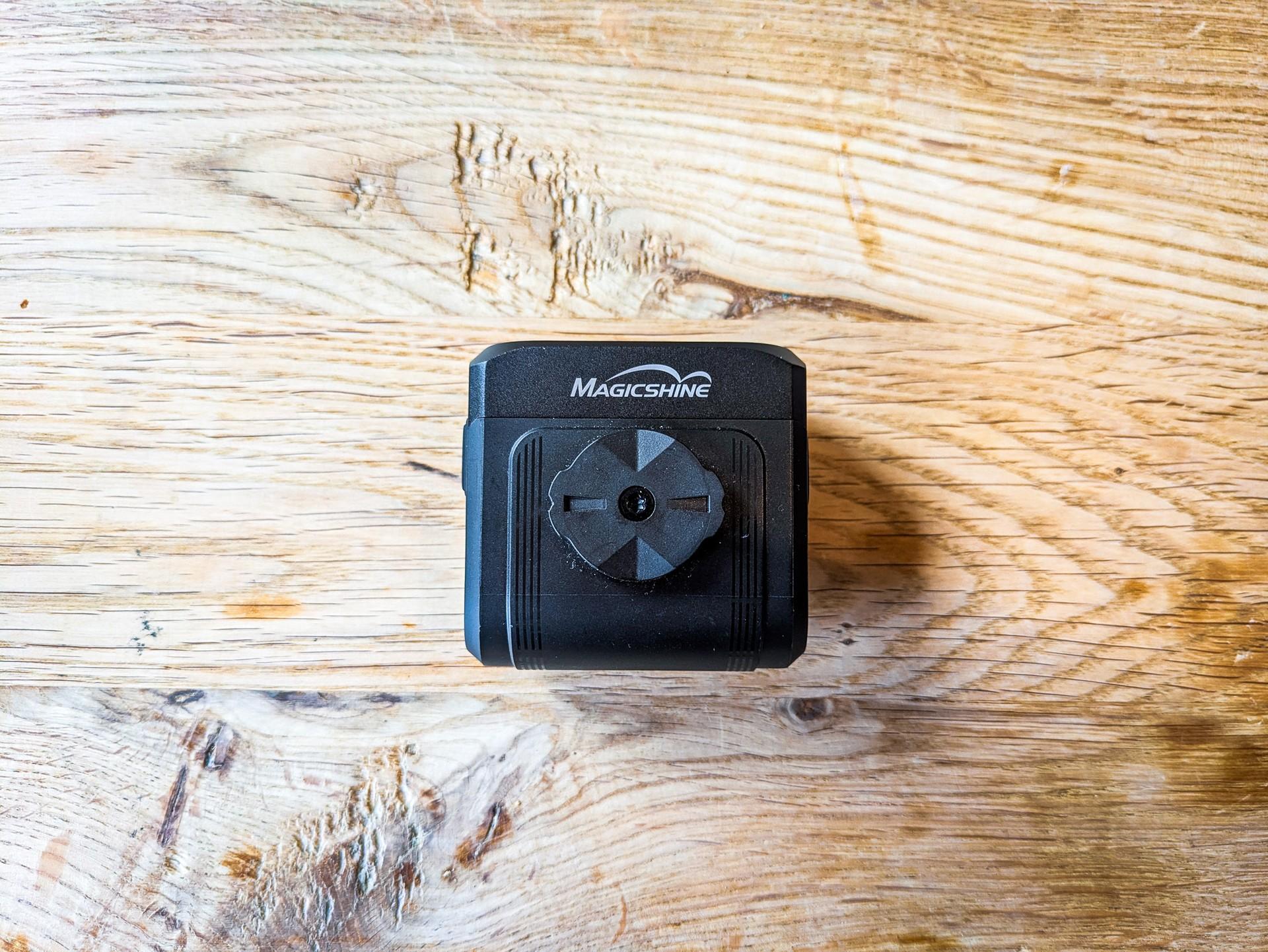
The USB-C charging port lives under its rubber flap on one side and the power button sits on the opposite side. Up top, or underneath depending on how you orient it, is the Garmin/Wahoo-style quarter-turn interface, while the other face carries a GoPro-style screw mount for the supplied adapter.
Magicshine says the HORI 1300 is not designed to support a bike computer directly, because the combined weight could affect mount stability and shift the beam angle, and it points buyers who want a light-under-computer setup to the smaller HORI 900. If your preferred arrangement is a Garmin on top and the light beneath a single bracket, check that your mount is rated for the load or look at the 900.
The included MJ-6558 remote straps to the bars and handles power and mode changes, and the FTR LightSync system lets compatible Magicshine rear lights switch on and off with the front unit. Mode customisation runs through the Magicshine app. The light carries an IPX6 rating and a two-year warranty.
Verdict
At £80 / $85, the HORI 1300 faces proper competition. The Ravemen we tested is a little cheaper and has a marginally better beam, though it doesn’t feel as premium, while the HORI sits a step above the similarly priced Towild. It also gets reasonably close to my Exposure for a fraction of the price, provided peripheral vision isn’t a priority.
This is a strong choice for fast rides on unlit roads, where its compact size and long-reaching beam make the most sense. The hard cut-off at the edges means I wouldn’t choose it for off-road riding, but on tarmac the HORI 1300 is a powerful, polished light that earns its place among the best performers in this test.