I have been a cycling journalist for nearly 20 years, and an audiophile all my life. As a result I’ve had a lot of discussions about the safety aspect of cycling with headphones, and also tried many different headphones on the bike and while training indoors.
Open-ear headphones let you keep listening while still hearing the road around you, and for that reason are the go-to for any audio during serious riding. The bone-conduction sets rest against your cheekbones, sending vibrations through the bone to your inner ear rather than playing sound into your ear canal. The difficulty on a bike is the wind. At speed it competes directly with whatever is playing, even when conducted through your temples, and podcasts suffer first.
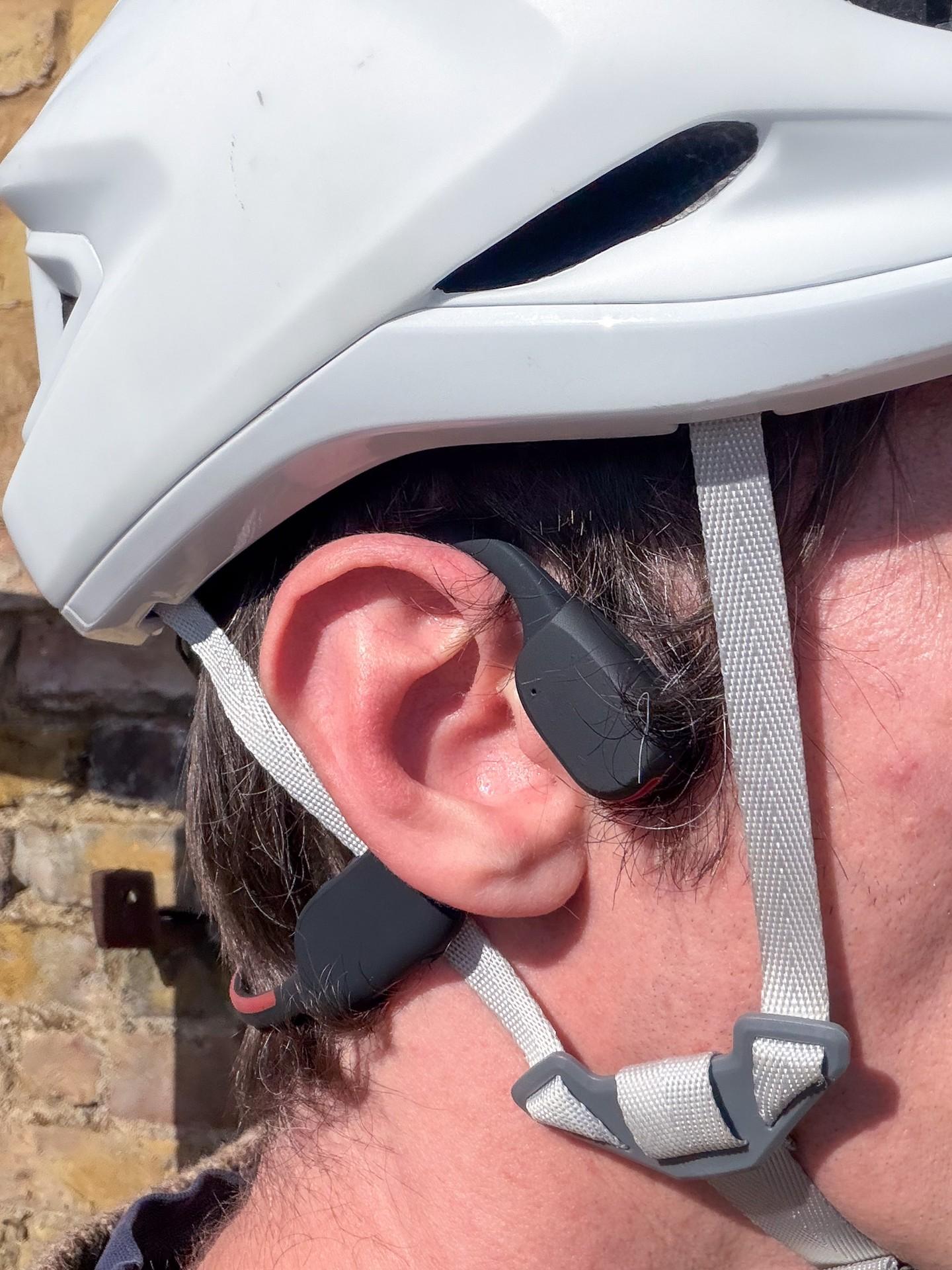
Our recommendations rest on recent testing of the Suunto Wing 2, a budget Zovimax set and Philips' A7607 on the bike. We measured them against the original Shokz OpenRun Pro, which I have owned and ridden with for three to four years. Apple's AirPods Pro 2 are included as the earbud alternative, as I use these every single day, but we consider these a solution for indoor training and commuting rather than serious days out on the bike.
Hearing traffic is a benefit of all of these designs, and I’d argue that not having an object in your ear during heavy workouts is a benefit outside of safety – I use bone conduction headphones for running for this reason too. Bone conduction does not make listening while riding innately safe, and neither bone conduction nor an earbud's Transparency mode guarantees you will hear what matters, but I generally take the view that if we listen to music while driving, it’s only fair to approach cycling the same way.
Quick picks
- Suunto Wing 2: the best-sounding headset on our rides and the value pick at around £149, powerbank included
- Shokz OpenRun Pro (original): the most comfortable over years of use, worth buying at a proper discount to its successor
- Apple AirPods Pro 2: the earbuds I use every day, and my pick for indoor training and commuting rather than long days on the bike
- Zovimax: £35–£40 for easy pairing and good calls, at a large cost in sound quality
- Also tested, Philips A7607: discontinued, heavier and tinny, and not recommended
Buyers guide

Best sound and value | Most comfortable long term | Everyday earbud pick | Budget compromise |
Suunto Wing 2 | Shokz OpenRun Pro (original) | Apple AirPods Pro 2 | Zovimax |
|
|
|
|
|
|
|
|
Price on Amazon | Price on Amazon | Price on Amazon | Price on Amazon |
| Search Amazon | Search Amazon | Search Amazon | Search Amazon |
Suunto Wing 2: best sound on the bike, and the value pick
Velora review
Suunto Wing 2
The most audible open-ear headset on our rides, with a fuller sound than its rivals and a powerbank dock in the box at around £149.
For
- +Rounded, bassy sound
- +More audible on rides than the original OpenRun Pro
- +Tactile controls and immediate pairing
Against
- –Audio less effective around 40km/h
- –Slightly heavier and less comfortable than the original OpenRun Pro
- –Adequate rather than outstanding voice pickup on calls
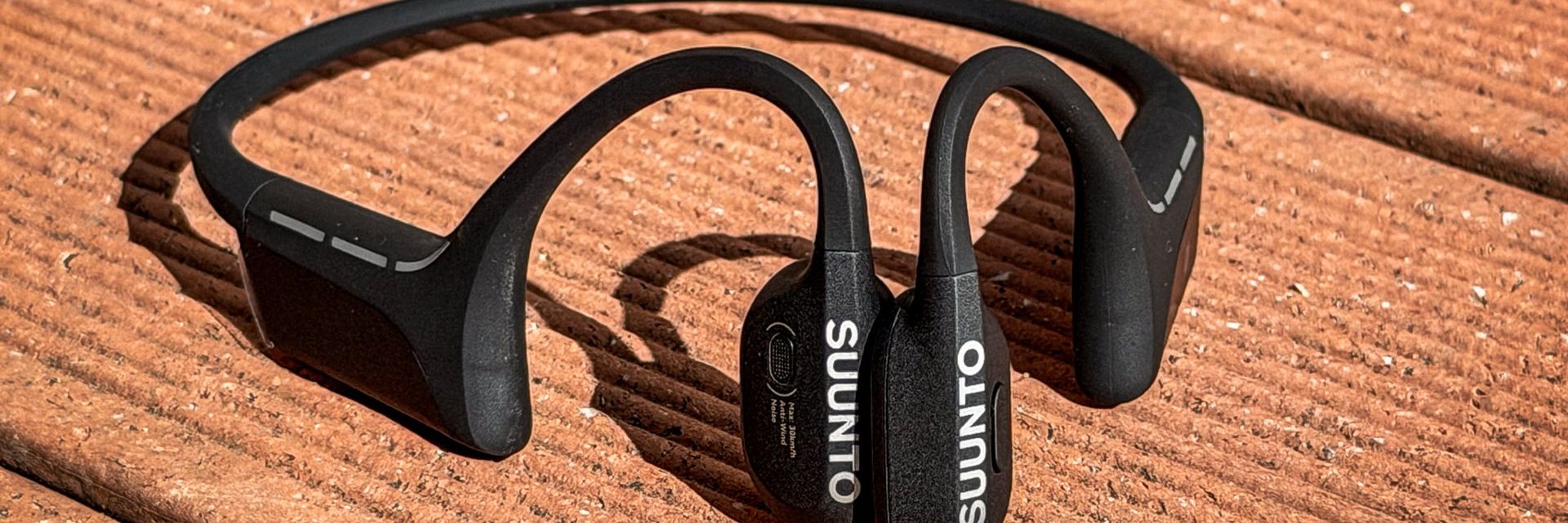
The Wing 2 sits against your cheekbones and sends sound through the bone, leaving your ears open. I listened to Fleet Foxes, slowcore, shoegaze, rock and podcasts (all quite an ask for clarity and audibility while riding), and the sound was rounder and bassier than expected from the format. On the same commutes and training rides, it was more audible than the original OpenRun Pro.
I enjoyed the bassy sound for music, and could hear podcasts clearly enough to make them worth listening to on slower rides.
At low speeds, music and podcasts both worked fairly well. At around 40km/h, listening became less effective. Suunto advertises microphone wind-noise reduction up to 30km/h, but that applies to calls, not playback. On calls it worked surprisingly well, though the microphone picked up my voice reasonably well rather than brilliantly.
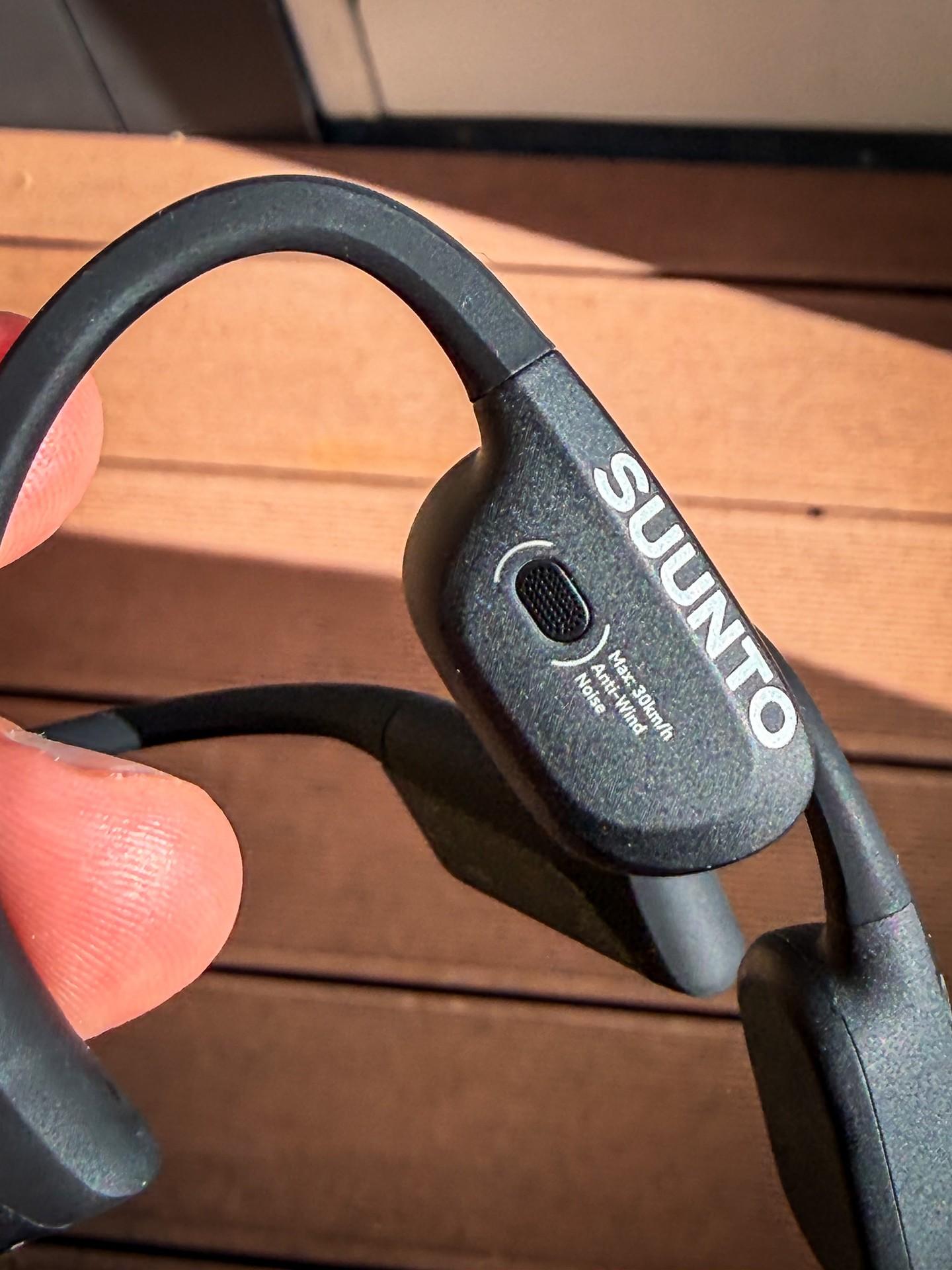
Pairing was immediate and the physical buttons are tactile. Suunto claims 12 hours of music from the headset and another 24 hours from the powerbank, plus a one-hour full charge. Playback and charge time both matched those figures in testing. In practice that meant charging after every third long ride, or about once a week when commuting.
The headset charges from the supplied USB cable or by slotting into the powerbank, which doubles as a dock and itself charges over USB-C. It is rated IP66.
The Wing 2 is listed at 35g, against roughly 28g for the original OpenRun Pro. It felt slightly heavier and a little less comfortable, though never uncomfortable. Buy it if audible music and podcasts on steadier rides matter most. If weight and comfort come first, as well as true bomb-proof resilience, look at the Shokz. The full test is in our Suunto Wing 2 review.
Shokz OpenRun Pro (original): most comfortable over the long term
Velora review
Shokz OpenRun Pro (original)
Three to four years of riding with it make this our comfort benchmark, but only buy the original at a worthwhile discount to the OpenRun Pro 2.
For
- +Light, secure fit with little pressure on the head
- +Stayed in good condition over three to four years
- +Battery life held up throughout ownership
Against
- –Wind overwhelms playback, especially podcasts
- –Proprietary magnetic charging cable
- –No automatic power-off
I bought the original OpenRun Pro after reviewing a set of their headphones and have used it regularly for three to four years. That covers commutes, long solo rides, runs and turbo sessions. The wraparound titanium band puts little pressure on the ears or head and stays in place without repeated adjustment. These have been an absolute workhorse set and the headset is still in good condition.
The broken casing pictured in our long-term OpenRun Pro review belongs to an older AfterShokz Aeropex, not the OpenRun Pro, but I was very impressed with Shokz replacing these free of charge. Shokz also sells the original in a Mini size, with a band 21mm shorter.
Wind and surrounding noise can overwhelm playback, and podcasts are particularly hard to follow at cycling speeds.
I found them excellent commuting companions, provided hearing every word is less important than keeping your ears open.
Shokz claims 10 hours of music and calls, and 90 minutes of listening from a five-minute charge. Battery life has held up well throughout my ownership and remains a strength after several years.
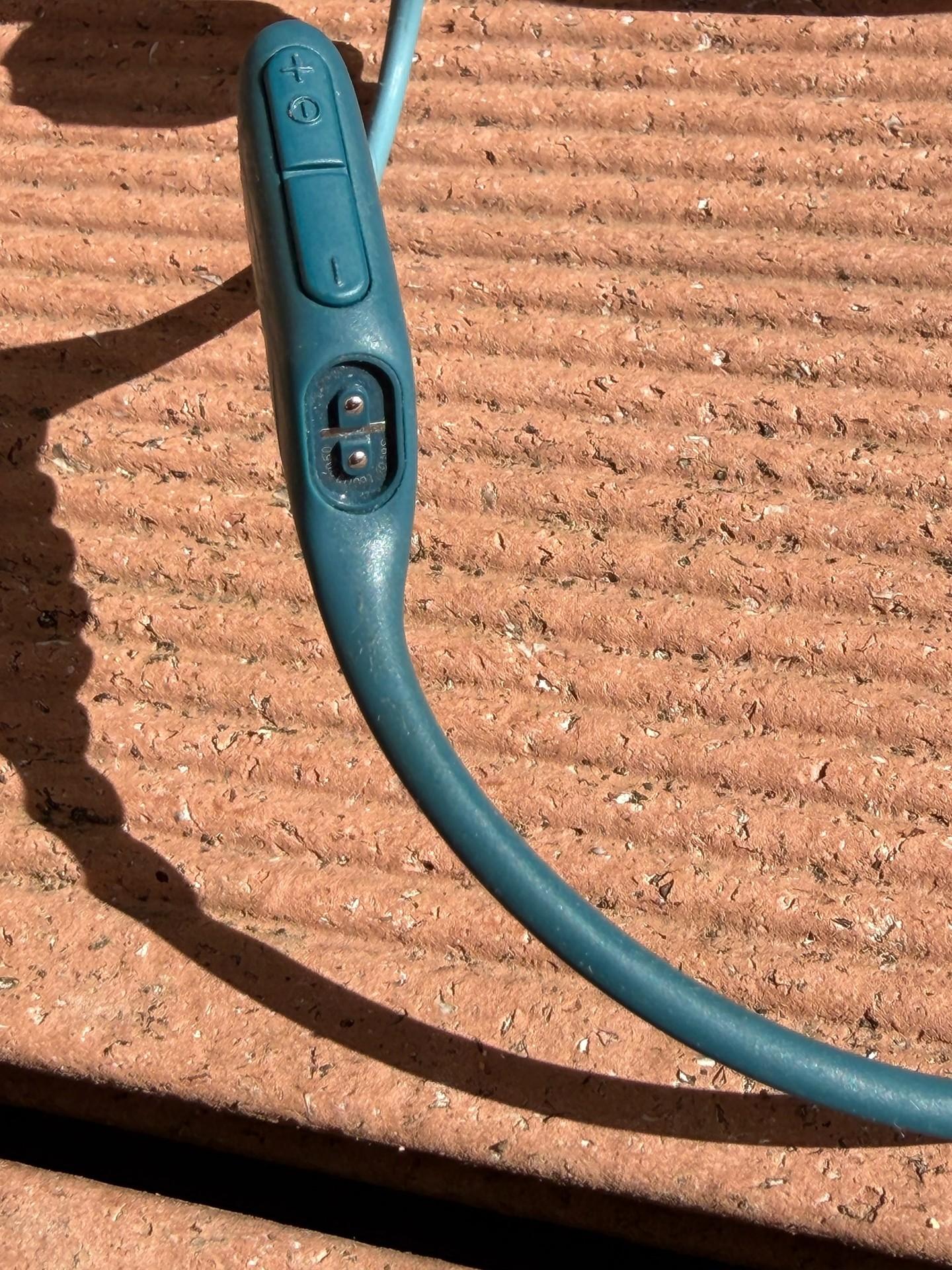
Charging uses a proprietary magnetic cable and the headset is rated IP55. There is no automatic power-off, so phone or watch audio was sometimes still going to the headset after I had walked away from it.
The original launched at about £160 and has been succeeded by the OpenRun Pro 2. That is a separate model with bone- and air-conduction drivers, USB-C charging and a claimed 12 hours of playback, and our long-term verdict covers the original only. Buy the original if you find it at a worthwhile discount against the Pro 2. The Pro 2 often drops below the Wing 2's price in sales, which makes the choice harder.
Apple AirPods Pro 2: the earbuds I use every day
Velora review
Apple AirPods Pro 2
The earbuds I use every day. I consider them a solution for indoor training and commuting rather than serious days out on the bike.
For
- +Transparency mode lets outside sound in
- +My pick for indoor training and commuting
Against
- –Earbuds sit in the ear canal
- –Not my choice for long days on the bike
For me, the AirPods Pro 2 are about as good as headphones get in technical terms. They are in-ear earbuds rather than open-ear headphones, with noise cancellation when you want to shut the world out and an optional Transparency mode when you want to hear what's going on around you. For commuting, Transparency is the mode to use, though it doesn't guarantee you'll hear everything that matters.
Conversely, though, on the turbo I’ve found the noise cancellation to do wonders for isolating the outside world and helping me really tune into a Zwift session.
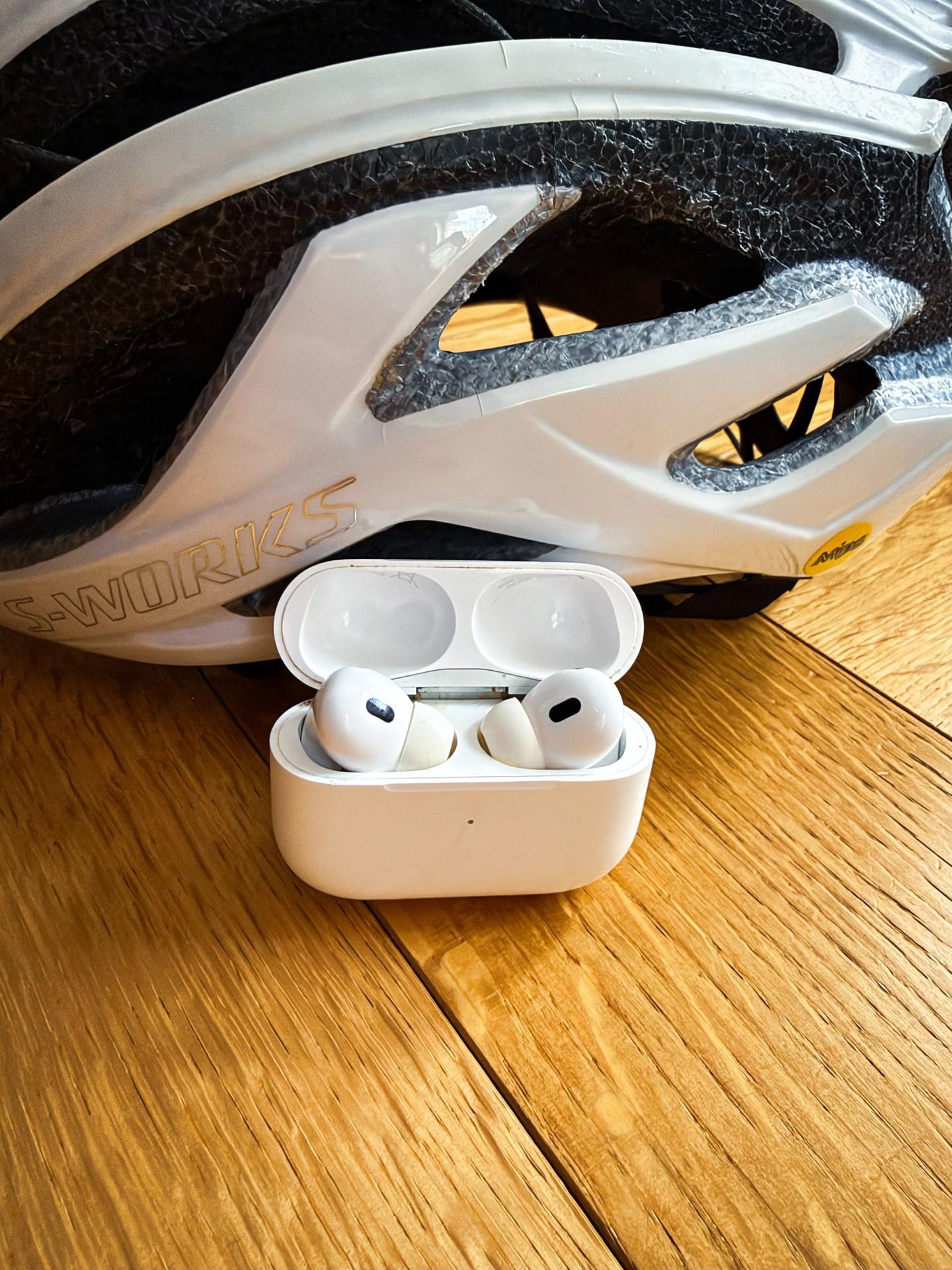
I use these headphones every single day, but for cycling, I see them as a solution for indoor training and commuting rather than serious days out on the bike.
Zovimax: a budget compromise
Velora review
Zovimax
A cheap way into open-ear headphones, with straightforward setup and good calls. The very tinny sound makes them hard to recommend for music.
For
- +Very easy pairing
- +Lightweight and comfortable under a helmet
- +Surprisingly good call performance
Against
- –Tinniest sound in our selection
- –Custom charging point rather than USB-C
The Zovimax set has typically sold for £35–£40, well below the other open-ear sets here. It connects easily, feels light and sat comfortably under my large helmet. Despite its cheap-and-cheerful look, it felt sturdy enough and showed no damage or wear during testing. Calls worked surprisingly well.
Zovimax advertises Bluetooth 6.0, up to 12 hours of battery life and IPX7 water resistance. The battery lived up to expectations, though charging uses a custom connector rather than USB-C. A small LED display shows battery and status information, which added little over a phone's battery widget.
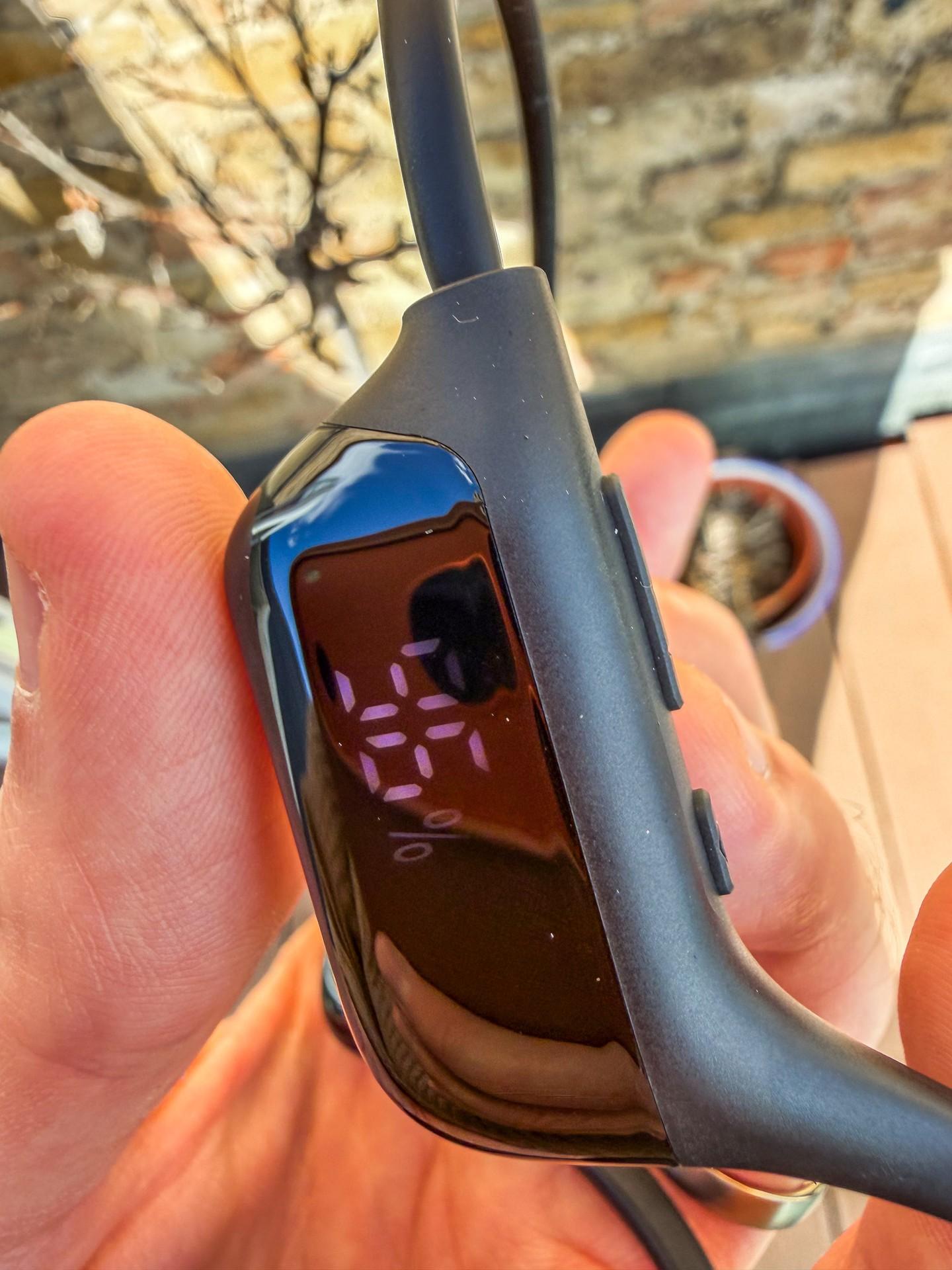
It was the tinniest of all the headphones we tested.
If you are buying primarily for music, I would put the money towards a better-sounding pair: the tinny sound is too hard to ignore. That said, if you're safety conscious and want access to a set of bone conduction headphones at a more accessible price, and music quality is secondary to general listening, then these could be a solution.
The full test is in our Zovimax review.
Also tested: Philips A7607
Velora review
Philips Open-ear wireless sports headphones TAA7607BK/00
A well-equipped headset with a rear LED and proper buttons, let down by a heavy, clunky fit and thin, tinny sound.
For
- +Rear LED with four modes
- +Physical buttons work well with gloves
- +IP66 protection and multipoint pairing
Against
- –Heavy, loose fixed-size band
- –Tinny sound with little bass
- –Proprietary magnetic charging cable
Philips' open-ear sports headphones, model TAA7607BK/00 and also sold as the GO A7607, launched in the UK at £169.99. Philips now lists them as discontinued in the UK. They are still common at retailers, including Amazon, and available second-hand and as imports.
The unusual feature is a red LED strip across the back of the neckband. It has slow-flashing, fast-flashing, steady and off modes, set in the Philips Headphones app. In my riding position it was hidden by hair, jacket collar and helmet, so it suits runners better, and it is no substitute for a rear light.
The physical buttons were easier to use with gloves than touch controls. You can pair two devices at once, though only one can play audio at a time. The IP66-rated headset handled heavy rain and a sweaty head without trouble.
The rest falls short of the Wing 2. At a listed 38g the Philips felt heavier and clunkier, and the fixed-size band cannot be adjusted. I have a wide 58cm head and found it loose.
The band is also surprisingly heavy, and for me felt loose when cycling or running. The quality is much lower than the Wing 2's and much more tinny.
The advertised wind-noise reduction applies only to calls. It uses a bone-conduction microphone to pick up your voice. With that mode active, you hear the caller through the left headphone only.
Philips claims nine hours of music, a two-hour full charge and an hour of playback from a 15-minute quick charge. Charging uses a proprietary magnetic cable, which I’m increasingly turning against. The full test is in our Philips A7607 review.
How to choose cycling headphones
How we tested
I tested the Wing 2, Zovimax and Philips A7607 alongside each other in recent weeks. The Wing 2 went on commutes and longer training rides, with listening across music and podcasts at low speeds and around 40km/h. The Philips was worn for cycling and running.
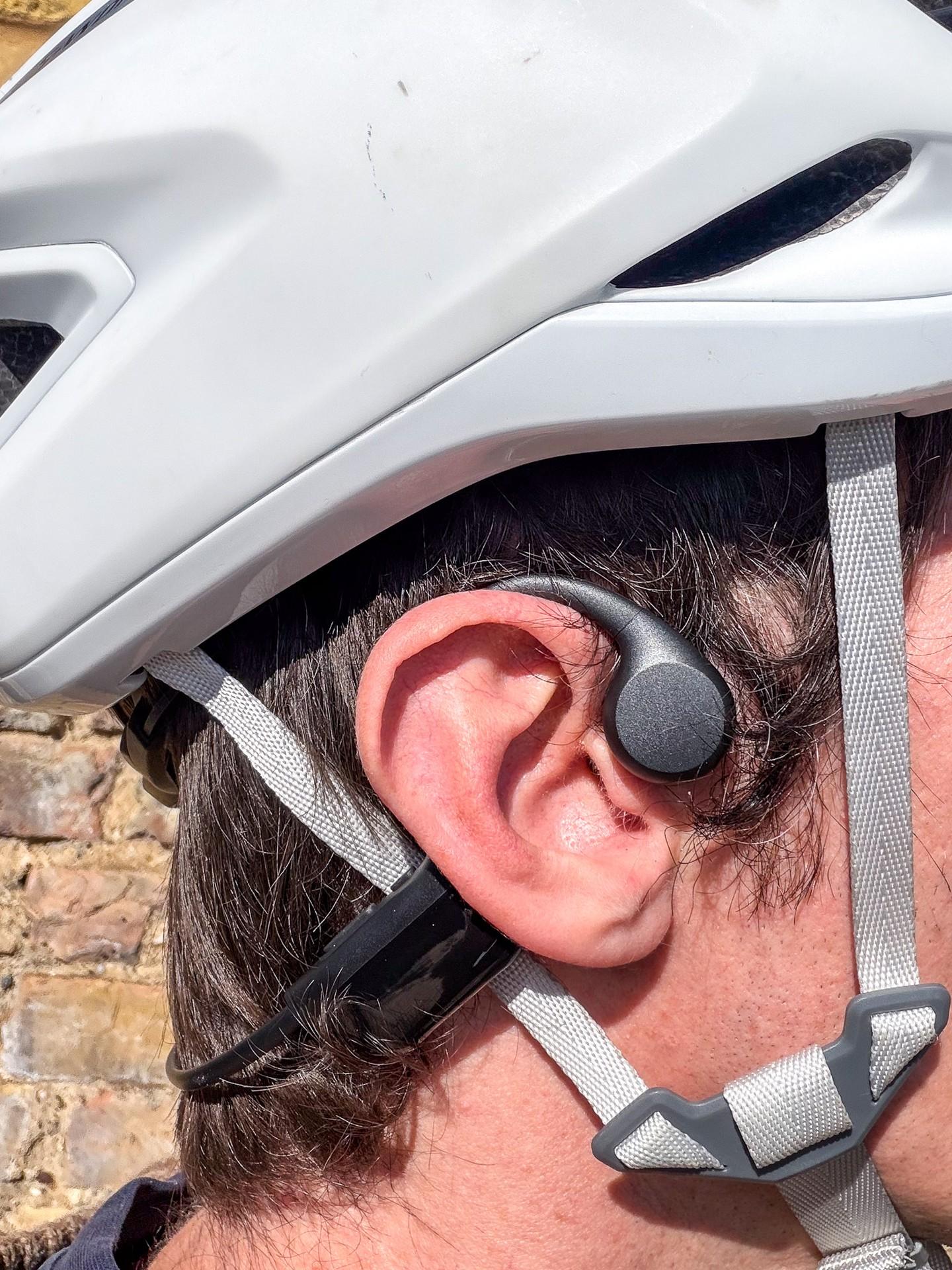
Across the three we assessed:
- helmet fit and comfort
- pairing and controls
- call quality
- charging against the makers' claims
- for the Philips, wet-weather use and how visible its rear LED stays in a riding position
The benchmark was my own original Shokz OpenRun Pro, bought after reviewing headphones and used for three to four years on commutes, long solo rides, runs and turbo sessions. The Wing 2 was compared with it directly on the same rides. Those years of use are what I'm judging the OpenRun Pro's comfort, durability and battery life on. With the other sets, I've had weeks rather than years. The AirPods Pro 2 are my own pair, which I use every day. I consider them a solution for indoor training and commuting rather than serious days out on the bike.