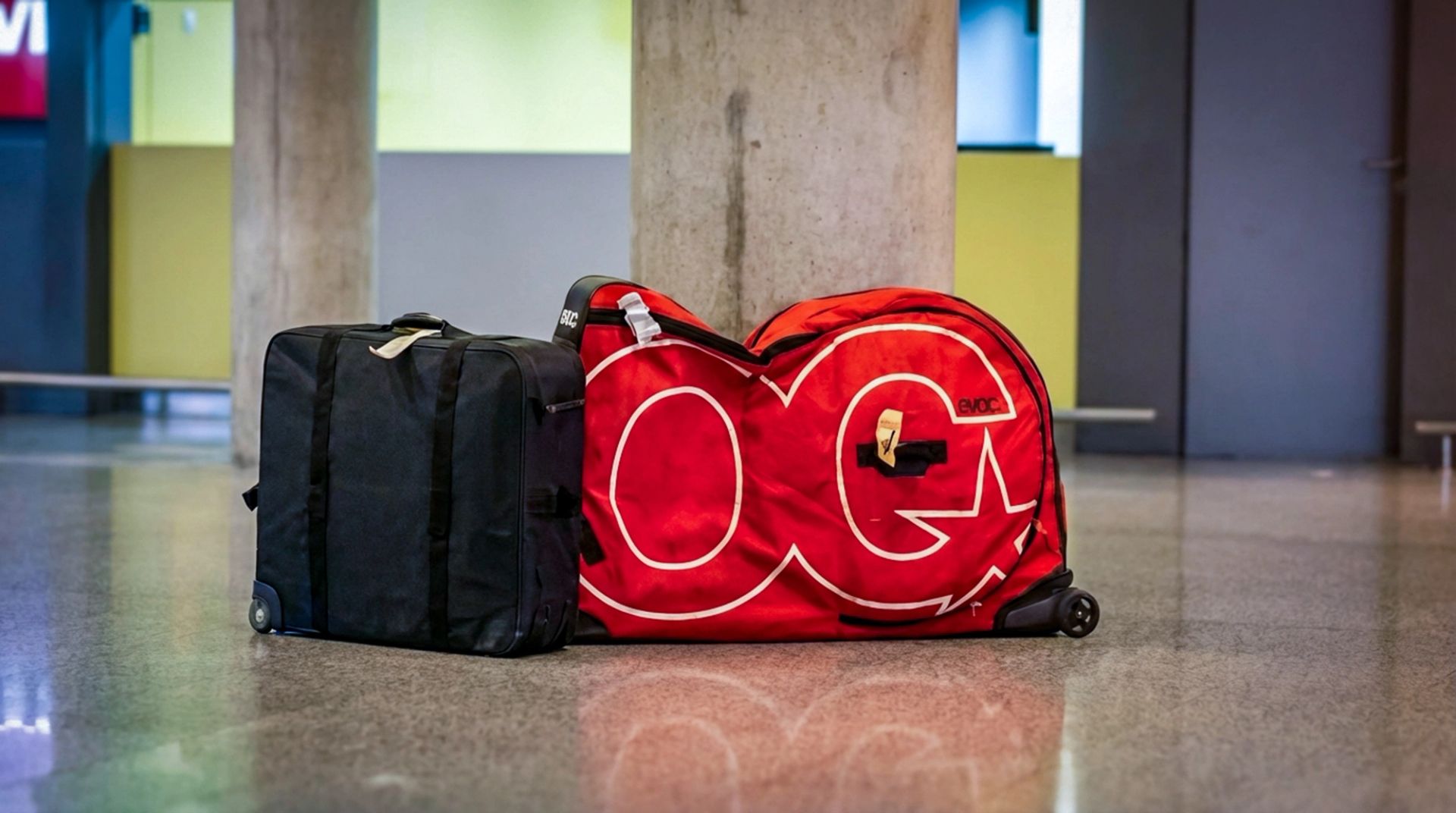
When I stopped counting how many times I’d flown with a bike, the number was somewhere around 40, and I was a much younger journalist.
In my first decade writing about cyclotourism I ended up learning the realities of bike travel the hard way: airport floors, odd hire cars, hotel rooms that barely fit a suitcase, and the quiet dread of waiting at oversized baggage.
It’s given me a few insights I’m happy to share, and a couple of cautionary tales you can avoid entirely.
Below is our regularly updated guide to the very best travel cases for bikes.
Related – Flying with a bike in 2026: The best airlines by region, price and weight policy
Buyers guide

Best for MTB/29er
Bike Travel Bag Pro
Evoc

- +Hybrid roll-cage
- +Fits 130cm wheelbase
- +10.0kg empty
Best value
Bike Travel Bag
Evoc

- +Collapses flat
- +126cm wheelbase
- +8.6-9.1kg empty
Best for aero bikes
SciCon AeroComfort 3.1 XP Bike Travel Bag
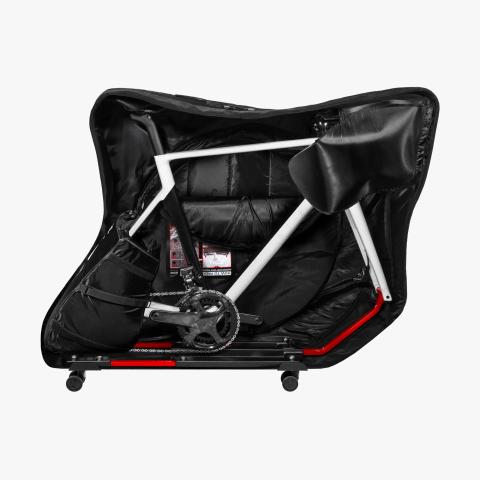
- +Frame Defender stand + Durashield panels
- +No bar removal for integrated cockpits
- +~12.8kg empty
Best compact hard
Pakgo X Bicycle Travel Case
TOPEAK
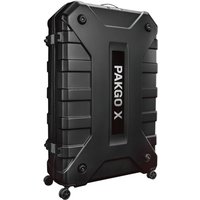
- +Makrolon shell
- +112cm wheelbase
- +9.3kg empty
Best alternative to Evoc
Thule RoundTrip Pro XT
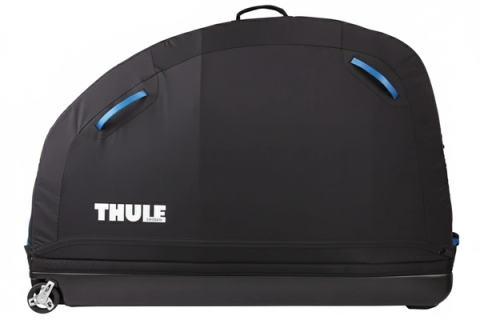
- +Integrated internal stand
- +Structured base with smooth-rolling wheels
- +Collapsible design
Best protection
BuxumBox Tourmalet
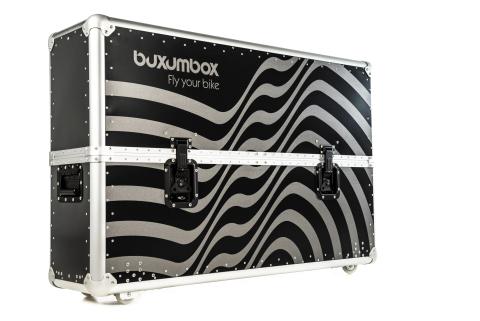
- +Aluminium flight-case construction
- +Secure internal mounting points
- +Premium, serviceable hardware
What to consider before you buy
The big question - hard vs soft bike travel case
If you take one decision from this guide, make it this one. Most bike travel cases sit on a spectrum between hard shells and soft or hybrid bags, and each is making a trade-off.
A hard case is about one thing above all: crush resistance. If your bike ends up at the bottom of a huge pile of luggage, or pinned under a suitcase corner, a rigid shell does the best job of spreading that load. The trade-off is obvious the moment you lift it. Hard cases are usually heavier, often bulkier to store, and they typically demand more disassembly and more careful packing.
A soft bag (or most “semi-soft” bags) is almost the opposite. It’s usually lighter, often easier to manoeuvre, and far more liveable at home (or your hotel when you arrive at your cycling destination) because it can fold or collapse down. The compromise is that fabric doesn’t stop serious lateral crushing on its own. Soft bags can be brilliantly protective against scuffs, smaller knocks and the day-to-day chaos of airports, but they need help when things get properly heavy.
That’s where hybrids earn their keep. A good hybrid bag is essentially a soft case with a rigid spine: internal rails, a stand or roll-cage, and proper bracing that keeps the bike from being squeezed from the sides. Done well, that’s enough protection for the majority of airline travel while staying far more practical than a full hard shell.
One more nuance: carbon doesn’t become invincible just because it’s inside a hard case. Hard shells resist crushing, but if the bike isn’t well supported internally, an impact can still jolt the frame in the wrong place. Conversely, a braced hybrid can protect extremely well in real-world travel, even if it isn’t the best answer for worst-case stacking.
What to look for (the tell-tales):
- Internal aluminium rails, anti-crush poles or sacrificial plastic components
- A frame stand/chassis that holds the bike securely so it can’t flex inside the bag
- Proper wheel pockets and rotor protection, because that’s where damage often starts
A simple rule of thumb:
If you travel a lot, care about weight limits, or need something that won’t dominate your hallway, a good hybrid is usually the sweet spot. If you fly rarely but want maximum peace of mind against stacking and heavy handling, a hard case is still the safest bet.
My advice
There’s no denying a hard shell offers the highest ceiling of protection. The problem is that it also comes with the highest ongoing cost in real life: weight, storage, and hassle. I live in a small London flat. By square foot, a full-size hard case is basically a minor property purchase.
Then there’s the travel reality: the car isn’t the car you booked, the hotel room isn’t as big as the photos, and you’ll nearly always want to stuff extra kit around the bike. Hard cases are less forgiving on all three.
That’s why I’ve always favoured a proper hybrid: structured protection where it counts, with the flexibility and storability you actually need. I’ve still been burnt, but it’s been specific to certain designs, and I’ll call those out below.
Why it matters: Your empty case weight plus bike and kit often hits 23kg. Fees are real. If you fly once or twice a year, accept a 9.0 to 11.0kg case. If you fly frequently, aim for under 9.0kg empty so a typical 10.5kg bike plus gear stays below 23kg.
Actionable tip: Do a mock pack at home and weigh it on a luggage scale. If you want peace of mind, choose a case under 9kg.
Why it matters: Wheelbase and tyre width decide whether you need to strip the bike. 29ers and plus tyres need more room. Look at the product wheelbase or max length spec.
Benchmarks: For modern 29er MTBs pick cases rated to 130cm wheelbase (EVOC Pro). For most road/gravel bikes a 112cm to 126cm limit is common.
Actionable tip: Measure hub-to-hub wheelbase and the widest tyre diameter on the bike with mudguards if applicable.
Hard shells resist crush; hybrids use rails/stands to do the same while staying lighter. Carbon frames need an internal anti-crush rail or a hard shell. Rotor sleeves and chain guards are non-negotiable for disc bikes.
Why it matters: Wheel-on bags save 10 to 20 minutes. Full disassembly adds 20 to 40 minutes per trip.
Actionable tip: If you travel weekly or race often, pick a wheel-on hybrid like SciCon AeroComfort 3.1 XP or EVOC Bike Travel Bag. If you travel rarely and want maximum protection, use a hard-shell like Topeak PakGo X.
Why it matters: Wheels, rotors and derailleurs are common damage points. Look for padded rotor sleeves, chain dog covers and wheel pockets. Also check wheel materials for skate wheels that survive kerbs.
Benchmarks: 600D minimum fabric for soft bags; 1680D and steel/aluminium frames for high-use bags. Hard shells are often polycarbonate/Makrolon.
Actionable tip: Inspect wheel pockets and rotor sleeves before you buy. If they are missing, add your own pads.
Special mention: split-frame bikes
If you travel constantly, a good split-frame (Ritchey Breakaway-style) is genuinely brilliant engineering. The trade-off is weight, complexity, and the fact that some airlines will still insist it’s “a bike” even when it’s in a normal suitcase. I’ve had that argument at a check-in desk.
If you’re the kind of rider doing multiple flights a month, though, it’s one of the few solutions that can change the economics of travel.
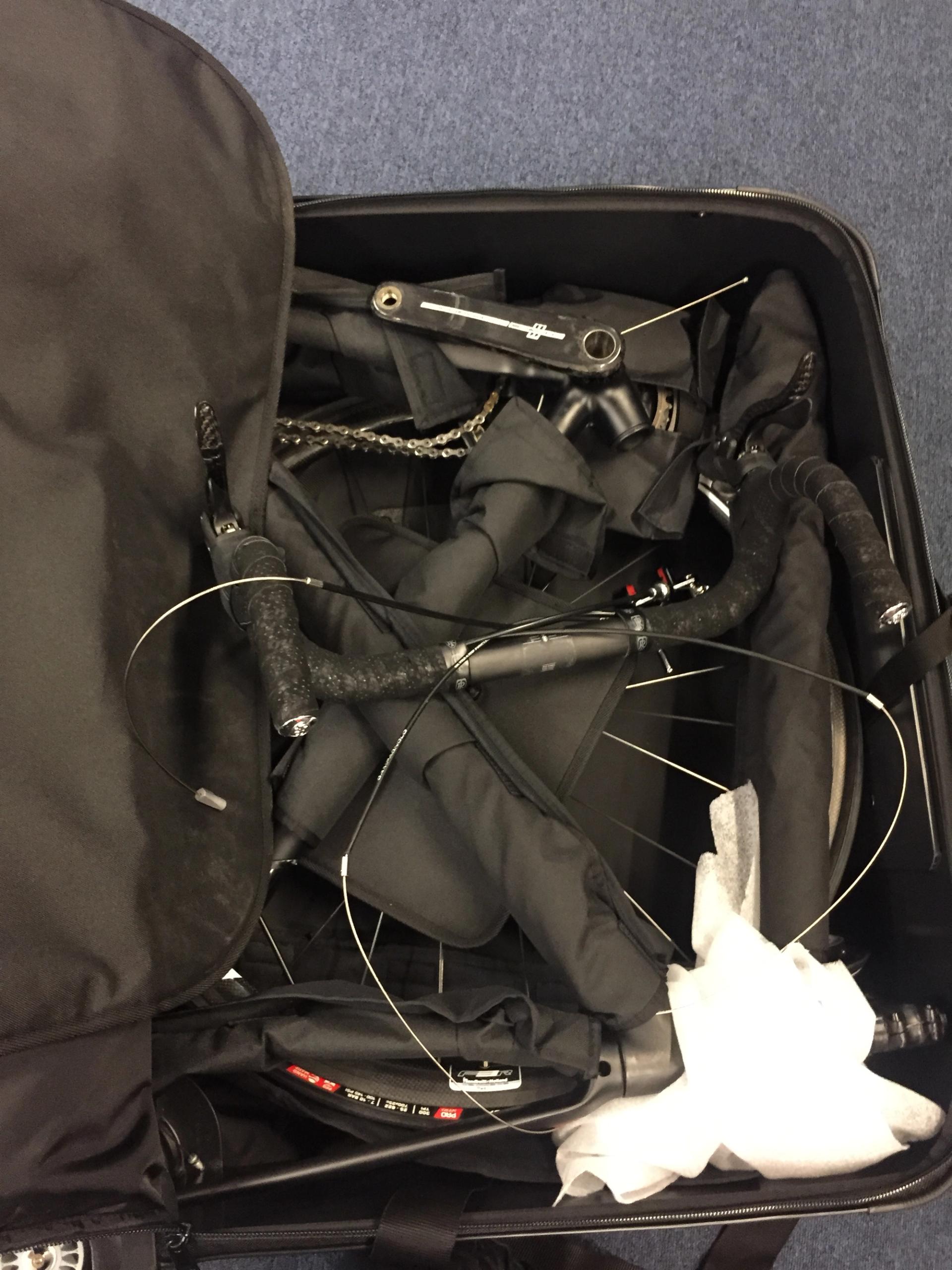
A Ritchey Breakaway carbon packed in a normal-sized suitcase
Price tiers at a glance
$0 - $350
Basic padded wheel-on bags or thin soft covers. Good for one-off short trips but expect limited protection and short-lived wheels.
$350 - $850
This is where the benchmark hybrids live (EVOC Standard, SciCon, Thule). You get proper internal structures, dedicated wheel protection, and materials that last for years. For 90% of riders, this is the diminishing returns point.
$850+
The no-compromise zone. Here you'll find premium offerings such as the Buxumbox and Topeak PakGo X. 'Buy and forget' territory for the travel itself, though with the hard shell options, you certainly won't forget the furniture-sized box sharing your living space.
The travel bags I recommend
Below are the six models I consider to be the best on the market in 2026.
EVOC Bike Travel Bag
Velora review
EVOC Bike Travel Bag (best for road/MTB wheel-on)
Wheel-on option with roll-cage. 8.6-9.1kg empty, fits up to 126cm wheelbase and collapses flat. Good drivetrain protection and room for kit.
For
- +Lower empty weight than Pro
- +Collapses flat for storage
- +Good protection for wheel-on packing
Against
- –Two-wheel roll means frequent tilting
- –Less anti-crush protection than Pro
- –Stand is optional extra
The pragmatic wheel-on hybrid I keep coming back to, and the one I trust most for real-world travel. It hits that rare balance between protection, packing speed and liveability. Empty weight typically sits around 8.6 to 9.1kg, it accepts bikes up to roughly a 126cm wheelbase, and it collapses flat when you’re home – which matters more than most people admit, especially if you don’t have a garage.
I’ve taken this bag all over the world and it’s the best endorsement I can give: aside from a few superficial scrapes on the bag itself, it’s never cost me any bike damage. The protection is smart and subtle rather than bulky – a roll-cage structure, padded wheel pockets, and drivetrain coverage that deals with the common failure points – and the whole thing is simply easy to live with. It packs quickly, it rolls predictably through airports, and it doesn’t punish you for owning a normal-sized hallway.
What makes it worth buying: If you want one bag that balances protection with day-to-day practicality, this is it. Fast packing, sensible weight, folds away, and the internal design is genuinely well judged. It has smart internal plastic rods that sit on the outside of the separated wheel compartments. Alongside the wheel's own protection of the frame, it leaves the frame itself insulated from all but the most extreme impacts.
Why it might not be for you: It’s still a two-wheel roller, so you’ll often be tilting it through terminals. And while it handles knocks brilliantly, it can’t match a true hard case for worst-case stacking and lateral crushing.
EVOC Bike Travel Bag Pro
Velora review
EVOC Bike Travel Bag Pro (best for MTB/29er all-round)
Hybrid bag for big MTBs. 10.0kg empty, fits 130cm wheelbase and 29x3.5" tyres. Internal aluminium rails and Bike Stand Pro chassis protect against side crush while folding for storage.
For
- +Fits 29er and plus tyres up to 130cm wheelbase
- +Internal rails and stand give strong anti-crush security
- +Robust wheels and molded base for airport rolling
Against
- –Heavy at 10.0kg empty
- –Premium price ($795 MSRP)
- –Some reports of seat-stay stress on tight packing
The one you buy when you need a 29er-friendly, airport-proof hybrid. It has internal aluminium rails and a Bike Stand Pro chassis that prevents lateral collapse. At 10.0kg empty and $795 MSRP, it fits 130cm wheelbase bikes and 29 x 3.5" tyres. The stand and wide skate wheels make rolling through big airports painless.
What makes it worth buying: If your rig is a 29er, plus-tyre MTB or a bike with a long wheelbase, the EVOC Pro buys you fit and peace of mind without completely committing to a heavy hard-case.
Why it might not be for you: Price is premium. At 10.0kg empty it uses a big chunk of your airline allowance.
SciCon AeroComfort 3.1 XP
Velora review
SciCon AeroComfort 3.1 XP Bike Travel Bag
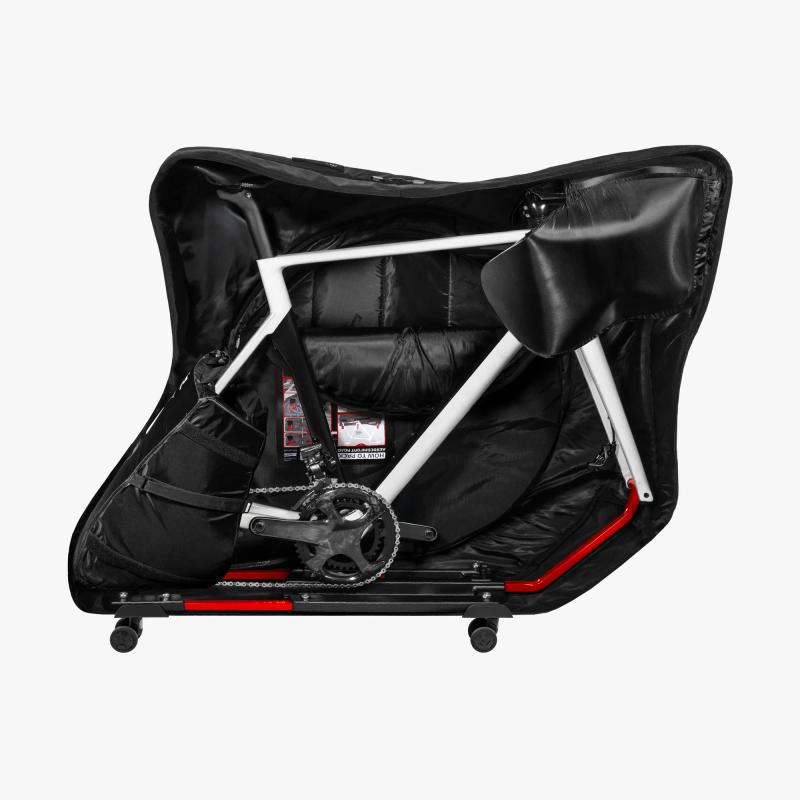
Hybrid travel bag with Frame Defender internal stand, Durashield armour panels and bundled protection kit. About 12.8kg empty. Designed for integrated aero cockpits that benefit from no-bar-removal mounting.
For
- +Significantly improved structural protection over previous AeroComfort designs
- +No bar removal needed — ideal for integrated cockpits
- +Frame Defender stand plus Durashield external armour panels
Against
- –Heavier than previous AeroComfort models at ~12.8kg
- –Bike travels upright — can cause issues at oversized luggage scanners
- –Extra protections (handlebar shield etc.) are add-ons — expensive overall
The AeroComfort has always been the convenience benchmark: fast packing, stable rolling, and minimal dismantling for modern integrated cockpits. For some time I’ve been a skeptic, as I had several bouts of lever damage over the several years I used the AeroComfort 2.0.
The 3.0 introduced new protections, but the brand new 3.1 XP pushes the design further toward a true hybrid, adding more structural protection without abandoning the easy no bar-removal mounting. For increasingly integrated aero bikes that’s an increasingly big sell.
At the centre of the update is SciCon’s Frame Defender internal stand, which now works alongside external Durashield armour panels and a bundled protection kit covering the derailleur, rear triangle and handlebar. The result is a noticeably more structured system than previous AeroComfort generations, aimed squarely at reducing lateral flex and impact risk during handling.
The trade-off is that the bike still travels in an upright configuration is still there, and more than once I struggled to get the older AeroComfort through the normal oversized luggage scanner without removing wheels and even entirely unzipping the bike on one occasion (spilling my rulebreaking packed cycling gear out for all the world to see).
At around 12.8kg, the 3.1 XP is heavier than earlier AeroComfort models and now sits closer to structured hybrid bags in airline weight calculations. That added mass reflects the additional reinforcement, but it does reduce one of the historic advantages of the design.
This is SciCon’s newest offering and as a result I’m yet to test this specific model (though have requested one). I’m including it here on this list, though, as the previous iteration was let down by lack of protection, and as that’s solved in this new update I decided to list the better of the two.
Note that the extra bike protections such as the Handlebar shield are included as standard rather than add-ons, that's great for protection but as a result this is not a cheap option.
What makes it worth buying: Fast, repeatable packing with significantly improved structural protection compared to earlier AeroComfort designs. Particularly appealing for integrated cockpits and race travel.
Why it might not be for you: Heavier than previous AeroComfort versions, and still not as fully enclosed as the best hybrid or hard-shell options for worst-case baggage stacking. Expensive with the add-ons.
Topeak PakGo X Bicycle Travel Case
Velora review
Topeak Pakgo X Bicycle Travel Case
Compact hard-shell with Makrolon polycarbonate. Around 9.3kg empty, internal BB foam and integrated workstand. Best for compact road wheel-off packing.
For
- +Strong hard-shell protection
- +Relatively compact footprint
- +Integrated workstand
Against
- –Not suitable for 29er or plus tyres
- –Heavy and full disassembly required
- –Limited storage for extra kit
Compact hard-case with a Makrolon shell and internal BB foam for solid crush protection. Empty weight about 9.3kg. Designed for road bikes with wheelbase limits near 112cm and includes an integrated workstand.
What makes it worth buying: Strong shell in a smaller footprint for travellers who want rigid protection and compact storage in cars.
Why it might not be for you: Not suitable for 29er or plus tyres; heavy and requires full wheel-off packing.
Thule RoundTrip Pro XT
Velora review
Thule RoundTrip Pro XT
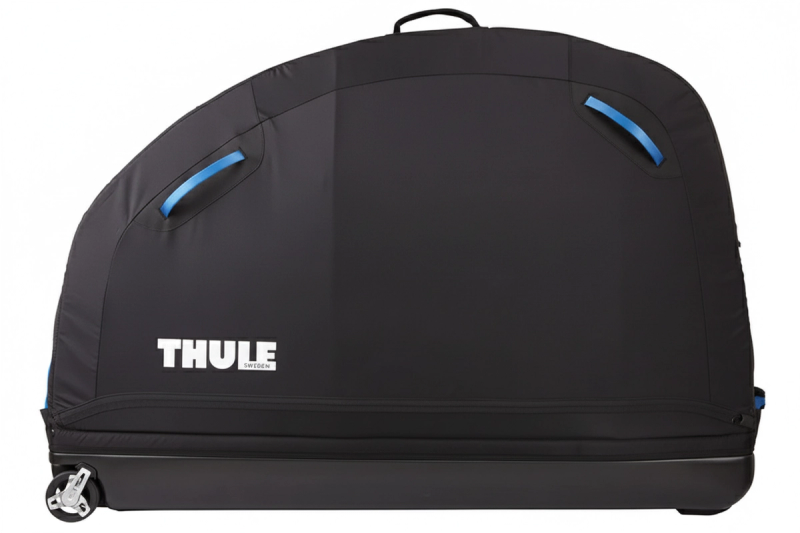
A premium structured soft case that prioritises repeatable packing and real-world practicality. The internal stand keeps the bike stable, rolling is easy, and it collapses for storage at home.
For
- +Internal stand makes packing stable and predictable
- +Good balance of protection, usability and storability
- +Easier to live with than a hard case between trips
Against
- –Not a full hard shell: less protection from extreme stacking
- –Can be tight depending on bike size/cockpit shape
- –Around 9.5kg empty, so weight planning still matters
A premium soft shell with a proper internal stand, built for people who travel often and want a repeatable, low-stress pack routine. The bag weighs about 9.5kg, rolls well on a rigid base, and has enough internal volume for everything from aero road to many 29ers. It also collapses down for storage, which is the unglamorous detail that matters if you live in a normal-sized home.
What makes it worth buying: It hits the sweet spot for frequent flyers – structured protection, predictable packing, good wheels, and far less “where do I keep this thing?” pain than a hard case.
Why it might not be for you: Still not a full hard shell. If you’re regularly doing long-haul flights with heavy stacking risk, you may want a true hard case, even if it’s heavier and more awkward.
Buxumbox Tourmalet Bike Box
Velora review
BuxumBox Tourmalet
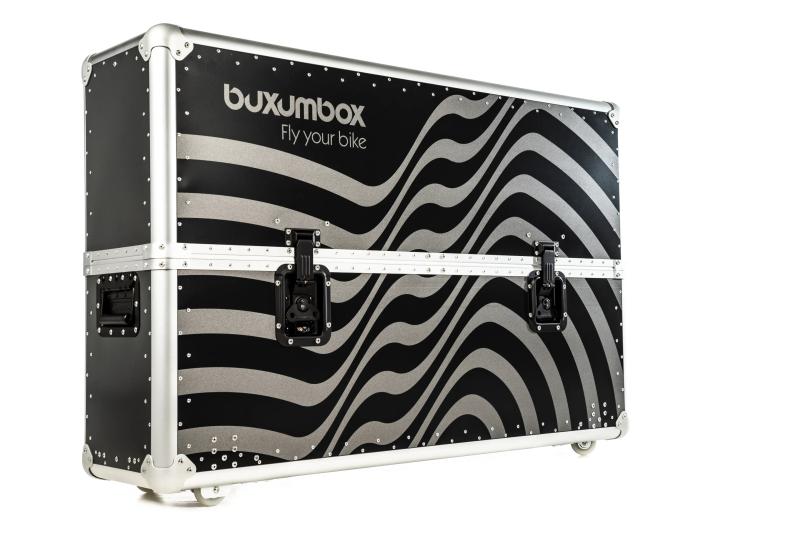
A no-compromise aluminium flight case built for riders who want maximum crush resistance and long-term durability. The Tourmalet is effectively a transport crate for your bike: secure mounting, rigid protection, and a premium finish.
For
- +Maximum crush protection and structural rigidity
- +Built to last: robust materials, fittings, longevity
- +Calmest option for long-haul flights and expensive bikes
Against
- –Heavy: eats into airline weight allowances fast
- –Bulky to store and awkward in small cars/hotels
- –Expensive, firmly in “lifetime buy” territory
The no-price-barred, lifetime-buy aluminium flight case. It’s built from high-grade aluminium with bespoke mounts, and it’s the closest thing here to a purpose-built transport crate. Net weight starts around 12.5kg (size dependent), which tells you exactly what kind of product it is: maximum security, minimum compromise, and zero concern for being “light”.
What makes it worth buying: If you’re travelling with an expensive bike and you want the most robust option short of shipping it as freight, this is the calmest way to fly.
Why it might not be for you: The weight is the trade. It’s a big bite out of airline limits before you’ve packed a single jersey, and it’s hard-case living in every sense – storage, handling, and logistics.
How I recommend you choose
Best overall for big bikes and frequent flyers: EVOC Bike Travel Bag Pro
Why: The most confidence-inspiring hybrid here for long wheelbases and bigger tyres, with real internal structure and a chassis that resists lateral squeeze.
Who should buy it: 29er and plus-tyre MTB riders, or anyone flying frequently with a long, expensive bike and wanting one “do-it-all” solution.
Trade-off: Expensive and heavy. At around 10kg empty it eats into airline limits fast.
Best value (and the one I’d buy again): EVOC Bike Travel Bag (standard)
Why: The best mix of protection, packing speed and storability for most riders, at a weight that doesn’t make the 23kg allowance a constant stress. It’s my personal all-time favourite for a reason.
Who should buy it: Road and gravel riders who fly a few times a year and want a bag that doesn’t dominate the rest of their life between trips.
Trade-off: Less crush resistance than the Pro or a true hard case.
Best compact hard case for road: Topeak PakGo X
Why: Proper shell protection in a smaller footprint, with sensible internal support. Great if you want hard-case peace of mind without going full flight crate.
Who should buy it: Road riders who prefer wheel-off packing and want maximum shell protection in a case that’s easier to store and move than the biggest boxes.
Trade-off: Limited clearance for bigger bikes and tyres. Heavier and less forgiving on airline weights than a hybrid bag.
Best for aero bikes: SciCon AeroComfort 3.1 XP
Why: The most packing-friendly option here for modern integrated cockpits, with significantly improved structural protection over earlier AeroComfort designs. No bar removal keeps the routine fast and repeatable.
Who should buy it: Riders with integrated aero setups who travel regularly and want speed of packing without dismantling their cockpit. Also worth a look for race travel where time at each end matters.
Trade-off: Heavier than previous AeroComfort models, and still not as fully enclosed as the best hybrid or hard-shell options. The upright bike configuration can cause issues at oversized luggage scanners. SciCon’s Triathlon 3.0 remains a more targeted option for dedicated tri and TT bikes with aerobars.
Best alternative to EVOC: Thule RoundTrip Pro XT
Why: Stand-based packing with real structure, without hard-case living.
Who should buy it: Frequent flyers who want predictability and storage-friendly practicality.
Trade-off: Still not a full hard shell.
Best money-no-object option: Buxumbox Tourmalet Bike Box
Why: The closest thing here to a true flight crate. Aluminium construction and a rigid, secure interior mean maximum crush resistance and long-term durability, especially on long-haul routes where stacking and rough handling are more likely.
Who should buy it: Riders travelling with very expensive bikes who want the calmest possible airport experience, don’t want to gamble on a soft case, and are willing to trade convenience for absolute protection.
Trade-off: Heavy and bulky. It eats into airline weight limits before you’ve packed any kit, and hard-case living is real: storage at home, car compatibility, and general hassle between trips.
Practical packing checklist before any flight
- Remove pedals, deflate tyres slightly and pad through-axles.
- Use rotor sleeves and a chain guard.
- Do a mock pack and weigh it; aim under 23kg total.
- Photograph packing for insurance claims.
Final thoughts
In a perfect world we’d all fly with a hard case, a roomy hire car, and a hotel room with a spare cupboard. In the real world, you’re hauling a bike through a cramped terminal, cramming it into whatever vehicle turns up, and trying not to annoy everyone in a small room while you rebuild it.
That’s why I keep coming back to a good hybrid bag. For most riders it’s the best blend of protection, weight and storability, and it makes the whole trip less of a logistical exercise.
If you’re flying long-haul with a very expensive bike and you’re worried about stacking and crushing, that’s where hard cases and alloy flight boxes earn their keep. But for everyone else, the biggest wins come from picking a well-braced bag and packing like you mean it: protect the rotors, support the rear mech, brace the frame, and keep the small parts from becoming the weak point.
Choose the case that fits your bike and the way you actually travel, not the one that sounds toughest in a product description.
If your bike is aluminum or steel, a mid-range soft-hybrid gives plenty of protection. If your bike is carbon, has an integrated cockpit or you expect heavy stacking in cargo holds, choose a hard-shell or a hybrid with internal rails and a stand.
Measure hub-to-hub wheelbase and the widest tyre diameter mounted on the bike. Compare the numbers to the published wheelbase or max length spec from the manufacturer. If your numbers exceed the published limit, plan for extra disassembly.
Lateral crush from heavy stacking, exposed rotors and derailleurs, and poor internal bracing. Missing rotor sleeves and no chain/derailleur protection cause most rotor bends and drivetrain damage. Consider removing your rear derailleur from the hanger so that it isn't exposed.
Many wheel-on bags keep handlebars and aerobars largely intact, though many need the bars to be turned. Pedals often come off to reduce width. For tight fits or hard-shells, remove aerobars and pedals – consult your case's manual.
Budget options ($150–$350) are basic soft bags or generic hard cases that can work for flying if you’re packing non-carbon frames and don’t mind adding your own padding. The real sweet spot for most riders is $400–$800, where hybrid designs from EVOC, SciCon and Thule offer structure, wheel protection and materials that survive repeated airport handling. Above $900 you’re into premium territory: hard shells, oversized pro bags and metal crates built for maximum crush resistance and long-term durability.
Aim for a lighter empty case under 9kg. Remove pedals and seatpost if possible, and repack clothes into the bike bag rather than a separate checked bag. Always weigh a mock-packed bag before you leave home.