A floor pump is one of cycling's great equalisers. Whether it's your first bike or the crown jewel of your race fleet, the pump can deliver effortless inflation or torment you with fiddly heads, vague gauges and slow, joyless strokes.
Most of us start with whatever cheap pump was on sale, then realise later that our tyres are 15 PSI off, the gauge is a lie, and the head leaks unless we hold it at a weird angle. The budget buy can quickly become a burden, and a blemish on your stunning cycling paraphernalia.
The upside: once you buy a genuinely good floor pump, you stop thinking about it. Press the head on, pump 10 strokes, glance at the gauge, done. No drama, no mystery pressures.
While it's not realistic to call myself a floor pump sommelier, it's not far off. I have used virtually every floor pump in existence, and in my near twenty years in cycling journalism I've had to inflate virtually every valve variety in almost every scenario.
This guide walks through what actually matters when you pick a pump, how much you really need to spend, and where each of these five models fits: from budget commuters to obsessive road racers and tubeless tinkerers.
Related - The best TPU inner tubes in 2026
Buyers guide

Editor's Choice | Best Overall |
|
| Best Value |
Topeak Joeblow Sport III | Superpista Digital | Pressure Over Drive Digital | Joeblow Tubi 2Stage | Airkompressor 12.0 |
| Silca | LEZYNE | TOPEAK | Sks |
 |  |  |  |  |
|
|
|
|
|
Price on Amazon | £289.00 | £139.99 £175.00-20% | £94.99 £130.00-27% | £31.00 £38.00-18% |
| Search Amazon | View deal | View deal | View deal | View deal |
Buying factors that actually matter
These are things you need to consider.
Pump type: high volume vs high pressure
Get it wrong and every inflation feels like a workout you did not sign up for.
High pressure pumps use a narrower barrel, so each stroke moves less air but gets you to 100+ PSI without feeling like you are jumping on the handle. These suit road and track tyres in the 80 to 120 PSI range and are fine for commuting hybrids.
High-volume pumps have a wider barrel. Each stroke moves far more air and fills big MTB or gravel tyres quickly, but pushing past 70 PSI can feel like hitting a 15% ramp in entirely the wrong chainring.
Valve head (chuck) compatibility and quality
If the head leaks, everything else is irrelevant.
You need a chuck that works with Presta (the skinny road style) and Schrader (car style). Most decent pumps do this, but the details matter: some have dual heads, some have a smart head that auto adjusts, some require you to flip a tiny internal gasket.
Avoid anything that makes you pull rubber bits out to swap between valves unless you never touch Schrader. It is annoying in the moment and easy to lose parts.
Look for a secure lever lock or a well designed thread on chuck. A good head should lock without a fight, not hiss, and come off without yanking the valve core or dumping half your pressure.
Gauge accuracy and readability
Gauge accuracy is the difference between confident setup and "that feels squishy, I guess".
Most analog gauges on budget pumps are optimistic at best, especially below about 40 PSI. That is a problem for MTB and gravel riders, where 2 to 3 PSI can change how the bike feels on trail.
Big wins here:
- Large gauge face, not a tiny dial buried on the base
- Preferably mounted high on the barrel or near the handle so you are not bending to the floor every time
- Digital if you really care about precision or run low pressures
If you ride trail or gravel, a low pressure focused scale (0 to 60 PSI with widely spaced markings) is far better than a 0 to 220 PSI dial where all the interesting numbers are crammed into one tiny corner.
Build quality and base stability
A flimsy pump wastes your effort and eventually cracks right when you are trying to leave for a ride.
A good floor pump feels planted. The base is wide and heavy, usually steel or thick composite. The barrel is steel or aluminium, not thin plastic. The handle is comfortable to grab and does not flex side to side.
You will feel this difference most at high pressure. A stiff barrel and solid base turn each stroke into pressure instead of wobble. Bonus points if the brand sells rebuild kits for seals and hoses so you can keep it going for a decade.
Tubeless capability
If you run tubeless and you like to swap tyres or experiment with different casings, this matters a lot.
To seat a stubborn tubeless bead, you need a big, fast hit of air. That is what a tubeless booster pump does: you pump up a separate chamber, then dump that stored air into the tyres in one hit.
Without a booster or a compressor, you can sometimes seat tyres, but you will be swearing more often. If you are only topping up already seated tubeless tyres, any decent pump will do. If you are mounting fresh rubber regularly, get a booster style pump and thank yourself later.
Ergonomics, hose length, and little details
Small details change how pleasant a pump is to live with.
A long hose lets you inflate a bike on a repair stand or with the wheel in a tight rack. A smooth stroke keeps your shoulders happy when you are taking tyres from flat to 100 PSI. A handle that feels like a tool, not a toy, makes it something you do not mind grabbing every ride.
Look for:
- Hose long enough to reach a bike in a stand
- Smooth, not jerky, stroke
- A neatly integrated place to park the chuck so it is not flopping on the floor
Price ranges: what you really get at each level
Under $40
Under roughly 40 dollars you are in basic territory. You get a mostly plastic pump, a small analog gauge on the base, and a workable but not amazing head. For commuters who check pressure occasionally, that is fine. Precision and longevity are not the strengths here.
$40 - $100
Between about 40 and 100 dollars is the sweet spot for most riders. You start seeing sturdy steel or aluminum barrels, wider and heavier bases, nicer dual heads that just work with both valve types, and big gauges you can read without glasses. For a regular road or MTB rider, this tier is usually enough.
$100+
Above 100 dollars you are paying for either heirloom grade construction, extreme gauge accuracy, tubeless booster features, or all three. This is where the Silca and Lezyne pumps live. The jump in feel and precision is real, but so are diminishing returns if you just want to top up commuter tyres.
If you ride a lot, own multiple bikes, or are picky about pressure, investing once in a genuinely good pump makes sense. If not, aim for a solid mid range model and spend the savings on tyres.
The best floor pumps
Here's the top floor pumps on the market right now.
The best for most people:
Velora review
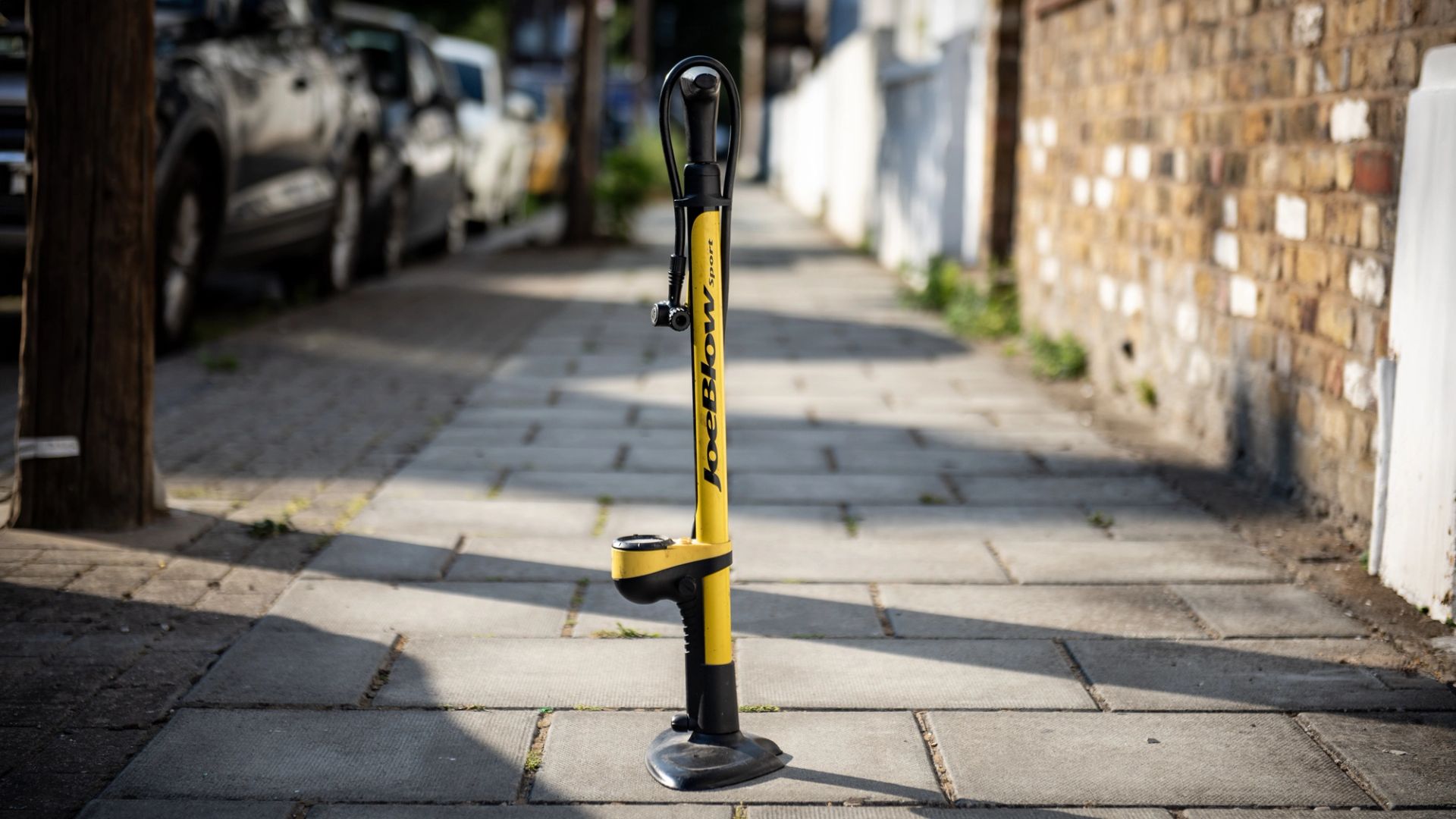
Topeak Joeblow Sport III
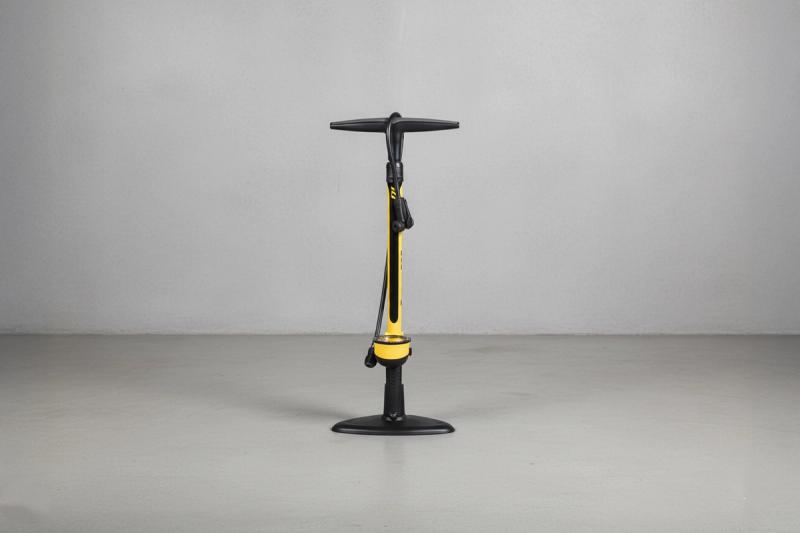
The floor pump I would tell most riders to buy if they want something good without going down the rabbit hole. It's a personal favourite and a long-term life companion.
The Topeak JoeBlow Sport sits squarely in the high value, mid range bracket, combining solid construction with enough max PSI and volume to serve everything from commuter hybrids to road bikes and many gravel setups. It stands out as the value leader, offering strong performance and durability for a price typically under 70 dollars.
You do not get digital readouts or fancy woods and leathers here, but you do get a dependable all rounder that just works. It will get road tyres up to typical 90 to 110 PSI territory without drama, and it moves enough air to be acceptable on wider tyres, even if it is not a dedicated high volume MTB unit.
Of course, it is not rebuildable in the heirloom sense like the Silca, and the analog gauge will not match a top shelf digital unit for precision, especially down at MTB pressures.
If you want a single, sensible pump for a mixed household of bikes, or you are just getting into more serious riding and upgrading from a supermarket pump, this is a very hard option to argue against.
The best if money is no object:
Velora review
Silca Superpista Digital
What you buy when you want your floor pump to be an adornment to your cycling collection. This is the gold-standard premium floor pump.
It is a full metal, rebuildable, lifetime kind of tool, with an ash wood handle, alloy barrel, aluminium base, and a leather piston that gives the stroke a very smooth, almost hydraulic feel. The star is the top mounted digital gauge, accurate to about 1 percent with 0.5 PSI resolution, which is genuinely useful if you fine tune road or gravel pressures.
The gauge sits right under your hands, so you can watch it climb without crouching to the floor. At up to 220 PSI, it has more than enough range for any road or track use, and the long hose plus Hiro locking chuck let you reach bikes in stands easily. Once you get the knack of the chuck, it seals very securely on Presta, with a Schrader option via adapter.
On the downside, it is expensive, around $330 at last check. That is several times the cost of a perfectly decent mid range pump, and some riders do find the Hiro chuck a bit finicky to remove without losing a whisper of air.
This is not the right choice if you want a cheap garage pump or you mainly ride low pressure MTB. It is ideal for serious road, track, and gravel riders who actually notice the difference between 68 and 70 PSI and want a pump that will likely outlast a couple of bike builds.
The best for frequent tubeless setup:
Velora review
Lezyne Pressure Over Drive Digital
Combines a sturdy metal floor pump with an integrated secondary tank that you charge by pumping, then release with a foot lever for a compressor like blast.
Construction is classic Lezyne: steel barrel and piston, aluminium base, wood handle, and a long braided hose that feels like it will survive years of abuse. The top mounted digital gauge is large and easy to read, and max pressure of 220 PSI means it also covers all the road and track territory you will ever need.
There are trade offs. Because you are filling the tank as well as the tyre, regular day to day top ups are slower and take more strokes than a standard pump. The thread on ABS 1 Pro chuck is secure, but it can occasionally unscrew a loose valve core when you remove it, which is maddening when it happens.
If you only inflate already seated tyres and just want quick road top ups, this is overkill and a bit frustrating. If you build and swap tubeless setups on MTB, gravel, or road, it is a very smart two in one solution that saves space and eliminates the need for a separate inflator.
The best versatile tubeless pick:
Velora review
Topeak Joeblow Tubi 2Stage
The Topeak JoeBlow Tubi 2Stage is built specifically for riders who live in tubeless world and want one pump that can both move a lot of air and deliver a seating burst.
Topeak JoeBlow is not just a floor pump, but a dynasty in air inflation. I have owned a classic JoeBlow for more than 15 years - affectionately named 'Old Yeller'.
Instead of a separate compressor style tank like the Lezyne, it uses a two stage system that lets you switch between high volume and high pressure modes. In practice, that means you can quickly fill big MTB or gravel tyres, then swap to a higher pressure setting to top them off or handle road tyres, with a dedicated burst function to help seat beads.
Looking at wider customer reviews rather than just my own JoeBlow experiences, reviewers consistently praise its tubeless performance, especially for riders who mount and remount tyres regularly at home. It is a thoughtful middle ground: more focused on pump usability than a pure "booster first, pump second" design, yet still able to give that extra hit of air when needed.
The main drawback is complexity. There is a bit of a learning curve to using the two stage system efficiently. It also lacks the heirloom materials and digital readout of the Silca.
If you want a dedicated tubeless capable pump, but you also care about how fast it fills tyres day to day, this is a great fit. It suits MTB and gravel riders who like tinkering and do not mind learning a slightly more involved routine in exchange for versatility.
The best budget option:
Velora review
SKS Airkompressor 12.0
The budget pick for riders who want something better than throwaway quality but are very price conscious. It's widely available and commonly recommended as a low cost floor pump that just gets the job done.
Positioned as the price leader in this group, it is a clear step up from the flimsiest no name pumps, while still staying in the entry level cost bracket.
For commuters, city bikes, and occasional riders topping up once a week, that is exactly what you need: a stable base, an OK gauge, and a head that seals well enough not to drive you nuts. The Airkompressor 12.0 fits that role nicely without asking you to spend mid range money.
The compromises show up in refinement and precision. Build quality is lower tier than the higher priced options, and the gauge is likely less accurate, especially at the low pressures that serious MTB and gravel riders care about.
If you ride high mileage, juggle multiple bikes, or obsess about perfect tyres pressure, this is not the tool for you. If you just want an affordable, functional pump for a hybrid, commuter, or kids bikes, it is a sensible, wallet friendly choice.
Best of the rest
Beyond the main five, a handful of pumps are still well worth a look if none of the picks above appeal, or are in stock. The SKS Rennkompressor NXT is the obvious one for traditionalists: the original Rennkompressor was an all-steel, made in Germany classic that has barely changed in decades, fully rebuildable and tall enough to reach road pressures without stooping. This newly updated version keeps that DNA but modernises the details that used to grate – it now has more volume, a rubberised, non-slip cast aluminium base and pressure up to 16 bar now reads clearly off a large gauge rather than squinting at floor level.
If your riding leans towards gravel or tubeless MTB, the Silca Terra is the one to covet (as opposed to our listed SuperPista). It brings the same premium heirloom quality as the SuperPista, ash handle and rebuildable internals included, but its gauge is tuned for the low pressure world where a road pump's needle barely moves, so it stays accurate down at the 20 something PSI that wide tyres actually run.
And for anyone who just wants simplicity, the Cannondale Precise is a smart everyday option. Its flip lock smart head seals on both Presta and Schrader without swapping parts or hunting for adapters. It is not an heirloom or a tubeless booster, but as an affordable pump for a mixed household of bikes it is one of the easiest to recommend.
Conclusion
The clearest split in this lineup is between precision road pumps and tubeless-focused tools.
For pure road and track performance, the Silca SuperPista Digital sits at the top. Its 1% accurate digital gauge and 220 PSI capacity are in a different league – if you run 90–110 PSI and care about repeatable pressures, nothing else here touches it.
On the tubeless side, the Lezyne Pressure Over Drive Digital prioritises a dedicated tank that behaves almost like a compressor for seating, while the Topeak JoeBlow Tubi 2Stage offers a two-stage system that's more convenient for regular use while still delivering that extra burst when needed.
For most riders, the Topeak JoeBlow Sport hits the best balance of price and performance – it's our value leader for good reason. The SKS Airkompressor 12.0 serves as the true budget gateway for commuters and occasional riders.
Whatever you choose, match the pump to your main bike, value a good chuck and readable gauge, and treat it as a tool you'll use for years. Your riding will feel better for it.
FAQs
The Silca SuperPista Digital is the best floor pump for road bikes, offering a digital gauge accurate to 1% with 0.5 PSI resolution and a maximum pressure of 220 PSI. For riders seeking excellent value, the Topeak JoeBlow Sport III delivers reliable performance at a fraction of the price.
High-pressure pumps use a narrower barrel, moving less air per stroke but reaching 100+ PSI easily—ideal for road and track tyres. High-volume pumps have a wider barrel that moves more air quickly, filling MTB and gravel tyres faster but struggling above 70 PSI. Choose based on your tyre type.
Between £40–£100 is the sweet spot for most cyclists, offering sturdy steel or aluminium construction, reliable dual-valve heads, and accurate gauges. Under £40 works for occasional commuters, while £100+ buys premium features like digital gauges, tubeless boosters, or heirloom-grade construction.
For seating tubeless tyres at home, a pump with a built-in air chamber or booster function helps significantly. The Lezyne Pressure Over Drive Digital and Topeak JoeBlow Tubi 2Stage are designed specifically for this, delivering a compressor-like burst of air to seat beads without needing a separate inflator.
Budget pump gauges are often inaccurate by 10–15 PSI due to lower-quality components. Analog gauges also lose accuracy over time. For precise readings, choose a pump with a digital gauge like the Silca SuperPista Digital or Lezyne Pressure Over Drive Digital, which offer accuracy within 1%.
The SKS Airkompressor 12.0 is the best budget bike pump, offering a stable base, functional gauge, and reliable valve head for around £30–£38. It's a clear step up from disposable pumps and ideal for commuters, city bikes, and occasional riders who don't need precision pressure control.
Presta valves are narrower and found on most road, gravel, and performance bikes—they require unscrewing a small locknut before inflating. Schrader valves are wider, the same as car tyres, and common on commuter bikes, hybrids, and children's bikes. Most quality floor pumps include a dual-head or switchable chuck that works with both valve types, so you won't need separate pumps.