There was a time, not too long ago, when spending £3,000 on a bicycle felt like a genuine indulgence.
Today, in a world where flagship superbikes regularly tick over the five-figure mark, that same budget has become the ultimate battleground for value. I've spent nearly 20 years reviewing bikes across cycling media, and there has always been a nexus point where a bike is priced to hit performance criteria that put it in touch of a WorldTour race but fall short of seeping into the diminishing returns of luxury performance bikes.
Put very simply, this is how much you can expect to pay for a very good bike. When I started out that turning point was probably £2,000, but today I would put it at squarely £3,000. The spec that budget buys has changed more than the price has.
There is still one major consumer decision at this point – as while this is squarely in performance bike territory, a carbon bike is not necessarily the default choice. These are high-performance aluminium frames that use advanced welding to mimic carbon's lines while often packing better components for the same price. We also include a titanium option in our list, but in pure performance terms titanium and steel both struggle to compete with high-end aluminium or carbon.
Between us, the Velora team has ridden multiple iterations of all the bikes in our list, and we link out to our more in-depth reviews on Velora within the article. Whether you want the plush, all-day comfort of the redesigned Scott Addict or the aggressive, wind-cheating geometry of the Specialized Allez Sprint, we hope our guide offers a perfect match for your riding needs.
Buyers guide

Best Overall
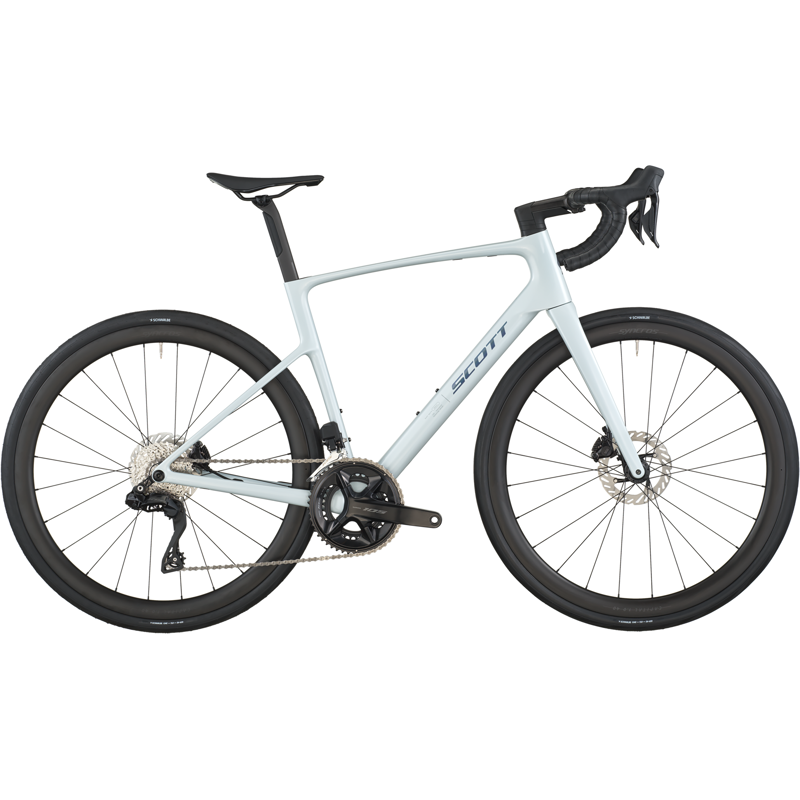
Addict 30 Road Bike 2026
Scott
- +105 Di2 Electronic Shifting
- +38mm Max Tyre Clearance
- +HMF Carbon Frame
Best Value
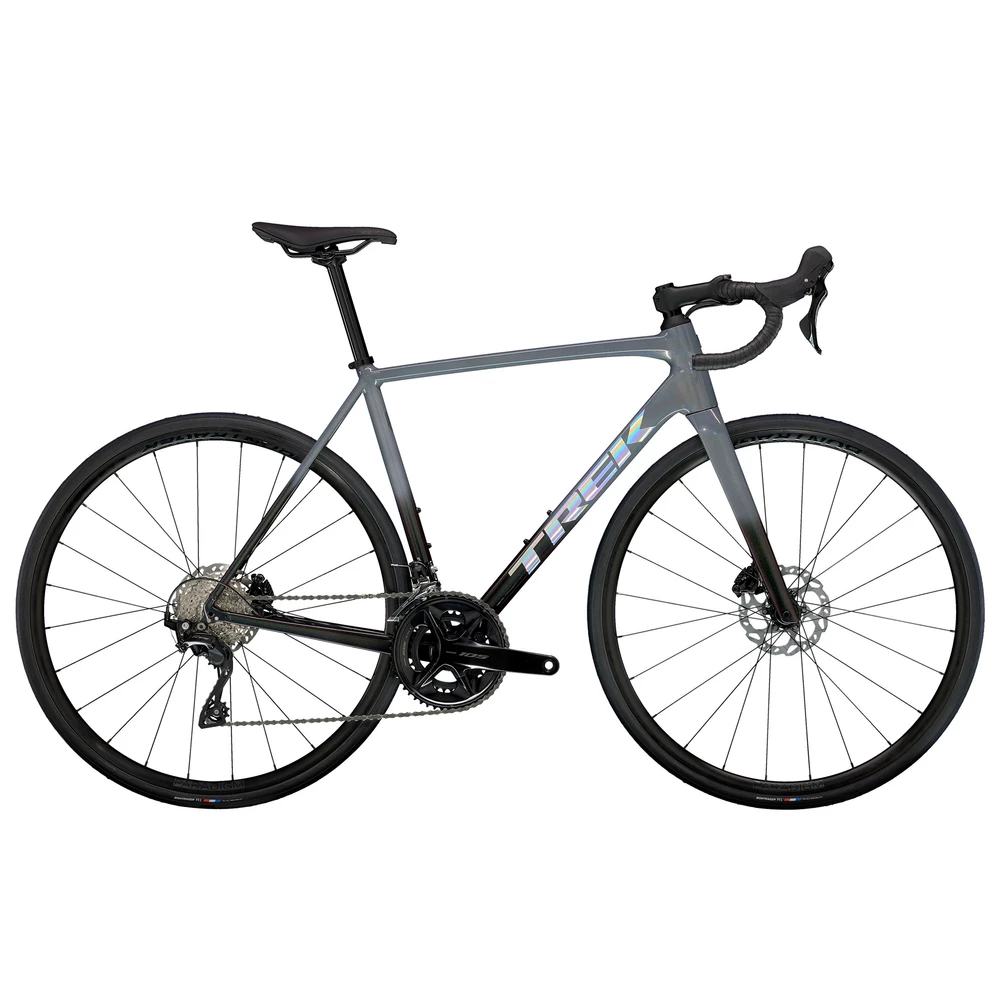
Emonda ALR 5 105 Road Bike
Trek
- +300 Alpha Aluminium
- +H1.5 Race Geometry
- +T47 Threaded BB
Best for Racing
Allez Sprint Comp Road Bike 2026
Specialized

- +Smartweld Aluminium Frame
- +Tarmac SL7 Aero DNA
- +FACT Carbon Fork
Best All-Rounder
Giant TCR Advanced 2 Road Bike 2025
- +Advanced-Grade Carbon
- +33mm Tyre Clearance
- +OverDrive Aero Integration
Best for Adventure
CGR Ti 105 Mechanical
Ribble
- +Grade 9 Titanium Frame
- +47mm Tyre Clearance
- +Bi-Ovalized Tubing
Best for Climbing
Orbea Orca M30 Road Bike
- +OMR Carbon Layup
- +1030g Frame Weight
- +7.3kg Total Weight
Best for Comfort
Canyon Endurace CF 7
- +Newmen Carbon Wheels
- +38mm Max Tyre Clearance
- +8.4kg Total Weight
What Actually Matters When You Spend £3,000
As cycling journalists often spend time testing bikes used in the WorldTour, £3,000 can seem like an entry point, but this is still very much a big purchase and one you should be picky about.
You need to consider how the bike will feel two hours into a rainy Sunday ride when your legs are screaming and the tarmac looks like it has been shelled.
Geometry defines how the bike handles and how you fit on it. Race geometry (like the Trek Emonda) is low and aggressive for speed. Endurance geometry (like the Scott Addict) is more upright, reducing strain on your back and neck during long rides. Choose based on your flexibility and goals.
Carbon isn't always king. A high-end alloy frame (Trek ALR or Specialized Allez) is often lighter than a budget carbon frame. Carbon excels at dampening vibrations, and having more specific rigidity designed in, and at the high level is certainly technically superior. But if you want the best parts for your money, alloy often wins.
Titanium and steel are more artisan options, but can win out when it comes to durability.
At £3000, 12-speed is the standard. You will choose between Mechanical 105 (reliable, cheaper) and 105 Di2 (electronic, precise, zero cable stretch). For most riders, 105 Di2 is the single biggest upgrade you can make for a more enjoyable ride experience.
Wider is faster and more comfortable. Modern road bikes now clear 30mm to 38mm tyres. Larger volume allows for lower pressures, which increases grip and smooths out rough UK tarmac. If you want a versatile bike for all weather and roads, look for at least 32mm clearance.
Navigating the Price Points
It is helpful to think of the sub-£3,000 market in three distinct jumps. You are not just paying for a better, lighter frame as the price goes up, but a gradual escalation in wider spec and overall system quality.
Under £1500
Expect reliable aluminum frames, mechanical 11-speed or 12-speed groupsets, and basic alloy wheels. Perfect for commuting and getting into club riding without a massive investment.
£1500 - £2500
This is where you find high-end 'Super Alloy' frames or mid-range carbon. You'll get 12-speed Shimano 105 mechanical shifting and better finishing kits. This is the best value for serious enthusiasts.
£2500 - £3000
The jump to electronic shifting (105 Di2) or lightweight climbing carbon frames happens here. You start seeing fully integrated cables and carbon seatposts. Diminishing returns start beyond this point.
The Top Road Bikes Under £3000 Reviewed
Velora review
Bike SCOTT Addict 30 | XS black

A comfort-first carbon machine that brings electronic shifting to the masses. Ideal for long days and rough roads.
For
- +Electronic 105 Di2 groupset
- +Huge 38mm tire clearance
- +Exceptionally compliant frame
Against
- –Not as agile as race models
- –Internal routing adds maintenance cost
Size
The Addict 30 started a conversation about price before anyone even rode it – as outlined by Sam Gupta in his full review for Velora Cycling – and the riding only strengthens the argument. Scott has repositioned the Addict as a dedicated endurance platform, mechanically calm in nature: stable, composed, and happiest holding speed over distance.
The frame is 25% more compliant than the Addict RC through flexing seat stays, a tuned top tube, and a comfort seatpost fitted as standard across the range. The 34mm Schwalbe Ones handle rough roads with minimal fuss, with clearance for up to 38mm. Shimano 105 Di2 on a carbon frame for £3,299 is aggressively positioned – and listed here as it's now available for under £3k at most retailers – undercutting or matching Canyon and Giant despite Scott selling through a dealer network. Geometry is 5mm higher in stack and shorter in reach than the RC, delivering a relaxed position without stacking spacers.
It loses marks for wheel weight dulling acceleration and a missing computer mount, but for long-day comfort at this price, it is very hard to look past.
Read our full Scott Addict review here.
Velora review
Trek Emonda ALR 5 105 Road Bike
A lightweight aluminum racer that looks and performs like a carbon bike for a fraction of the price.
For
- +Stiff, responsive race geometry
- +T47 threaded bottom bracket
- +Classic carbon-like aesthetics
Against
- –Narrow 28mm tyre clearance
- –Heavy stock wheelset
Size
The Émonda ALR is the wildcard in this group – the only aluminium frame here – but the data justifies its inclusion. At 1,257g for a size 56, the frame sits just 12 grams heavier than Trek's own mid-tier carbon Émonda SL at less than half the price. Trek's Invisible Weld Technology and Kammtail tube shaping close the visual gap to carbon, and the H1.5 race geometry is shared directly with the carbon range.
Sam Gupta's verdict in his review for Velora Cycling after 5,000 miles as a daily rider is that it climbs crisply, descends with composure, and is one of the most consistently enjoyable bikes he has ridden. The T47 threaded bottom bracket is a home mechanic's advantage over the press-fit systems on several carbon rivals in this list. At £1,900 complete, it frees up over £1,000 compared to the carbon options here – enough for a serious wheel upgrade that transforms the ride.
Official tyre clearance is 28mm, though 30–32c fits in practice. Stock wheels dull its liveliness, but that is a solvable problem on a frameset this good.
Read our full Trek Emonda ALR review here.
Velora review
Specialized Allez Sprint Comp Road Bike 2026
The 'Alloy Superbike'. Incredibly stiff and aerodynamically optimized for criteriums and short, fast efforts.
For
- +World-class handling
- +Tarmac SL7 aero DNA
- +Ruthless power transfer
Against
- –Stock tyres lack grip
- –Press-fit BB can be prone to creaks
Size
The Specialized Allez is a dynasty in cycling – most cyclists will know someone who has owned one, if they haven't themselves. One of my favourite bikes of all time was the short-lived S-Works Allez, the Californian brand's luxury high performance version of the aluminium workhorse popular across the world. The same hydroforming philosophy went into the Allez Sprint, which positions itself as an alloy superbike. This bike is essentially an aluminium version of the Tarmac SL7, the bike that has won countless professional races.
It uses a unique welding process called Smartweld that moves joints away from high-stress areas. This allows Specialized to use thinner, more aerodynamic tubes that make the bike incredibly fast on flat ground. They claim it is 41 seconds faster over 40km than the previous version.
This is a pure racing tool. It is stiff, it is loud, and it is very fast. The front end uses the same FACT carbon fork found on the Tarmac SL7, which gives it exceptional handling.
However, it is not a bike for the faint of heart or the inflexible. The geometry is aggressive, and the ride is firm. If you spend your time doing relaxed coffee rides, look elsewhere. But if you want a bike for crit racing or setting personal bests on your local segments, the Allez Sprint is a weapon that punches way above its weight class.
Velora review
Giant TCR Advanced 2 Road Bike 2025
The gold standard for balanced road bikes. Light enough to climb, stiff enough to sprint, and reliable as they come.
For
- +Excellent stiffness-to-weight
- +Modern integrated cockpit
- +Proven all-round performance
Against
- –Stock tires lack grip
- –Press-fit BB can be prone to creaks
The Giant TCR is a legend in the cycling world, I've ridden half a dozen iterations of the TCR and even convinced my wife to buy one – which she has consistently loved for nearly a decade, riding crits, sportives and multi-day events across three continents.
The 2026 version is the most refined yet. Giant is one of the few brands that actually makes their own carbon fibre frames in-house, and that leads to both a very impressive production understanding and economies of scale in price terms.
The TCR Advanced 2 is the quintessential all-rounder. It is light enough to be a great climber, stiff enough for sprinting, and comfortable enough for long days. It is the bike you buy when you want to do a bit of everything.
One minor gripe is the stock Giant Gavia tyres. They are tubeless, which is a positive, but Giant hasn't caught up with Vittoria or Continental in pure tyre quality terms yet. It is the first thing I would upgrade. Once you swap those out, you have a bike that handles beautifully and can take tires up to 33mm. It is a reliable, high-performance partner that never feels out of its depth.
Velora review
Ribble CGR Ti 105 Mechanical
A titanium all-roader that blends artisan durability with genuine versatility. Huge tyre clearance opens up roads most race bikes cannot follow.
For
- +Grade 9 titanium frame built to last
- +47mm tyre clearance for all-road riding
- +Bespoke titanium quality at a fraction of the cost
Against
- –Mechanical shifting only at this price
- –Ride can feel harsh without wider tyres
Ribble's CGR is a bike I first reviewed in 2020, when working for Cyclist magazine. Since then, the frame has remained unchanged, but I consider that a strength, not a detraction.
Titanium has come on technologically in the last 30 years, and wider tube shapes have hugely increased stiffness while not compromising ride quality or weight.
The CGR Ti offers bags of tyre clearance – 47mm for 700c tyres – opening up a world of all-road riding possibilities.
Ribble's CGR uses triple-butted 3AL2.5V (grade 9) throughout, which could make for a stiff ride, but Ribble designed the bike with bi-ovalized tubing to help control the compliance. That means the tube starts as a vertical oval shape at the head tube before curving into a horizontal oval at the bottom bracket, and when I tested the bike I found it struck an impressive balance between stiffness and comfort. If anything, it eschewed titanium's soft reputation and edged on the harsher side at times – offset nicely by the wider tyres.
At this price point you'll get mechanical Shimano 105. That's a very capable and durable partner – as is the Mavic Allroad 1 wheelset.
The general appeal of the CGR Ti at this price point is an opportunity to own a titanium frame with many of the same ride and durability benefits of bespoke titanium artisan creation at a quarter of the cost.
Velora review
Orbea Orca M30 Road Bike
A lightweight climbing specialist that prioritizes road feel and agility over aerodynamic numbers.
For
- +Light 1030g carbon frame
- +Fun, playful handling
- +Beautiful, customizable design
Against
- –Lacks aero efficiency on flats
- –Mechanical shifting only at this price
The Orbea Orca M30 is a love letter to the mountains. While many brands are trying to make their climbing bikes more aerodynamic, Orbea has doubled down on lightness and ride feel. The Orca M30 uses the OMR carbon layup, which incorporates more elastic fibres. This makes the bike slightly more forgiving than the pro-level OMX version, which is a blessing for those of us who don't have professional-grade lower backs.
The Orca M30 has a short wheelbase and responsive steering that makes it a joy to flick through technical descents. At 1030g, the frame is very light for this price bracket. You can really feel that lack of mass when the gradient kicks up into double digits.
As with most of this list, the 105 mechanical groupset is workhorse-reliable, and the internal cable routing through the stem keeps the lines clean without making the bike a nightmare to work on. It might not be the fastest bike on a flat, windy road, but if your idea of a perfect Saturday involves 2,000 meters of climbing, the Orca is your best friend.
Velora review
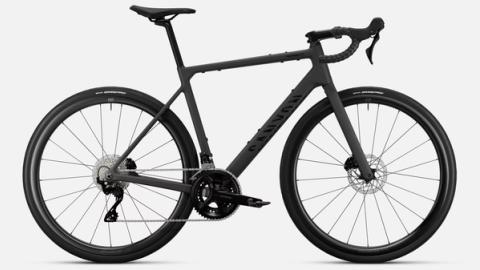
Canyon Endurace CF 7
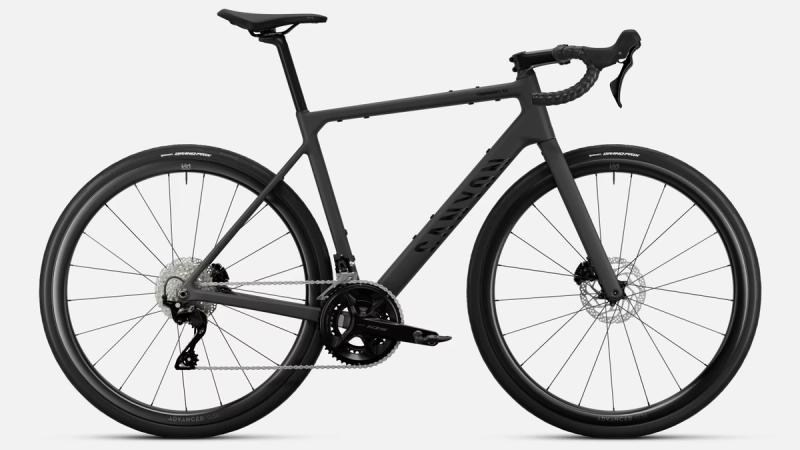
A carbon endurance bike with carbon wheels at a price nobody else is matching. Built for long-distance comfort rather than sharp handling, and all the better for knowing it.
For
- +Exceptional comfort over long distances
- +Carbon frame and carbon wheels for £2,199
- +Mounts and finishing kit built for real-world riding
Against
- –Ride character politely declines aggression
- –Direct-to-consumer only, so no test rides at a dealer
The Endurace CF 7 makes the strongest pure spec-sheet argument in this list. A 1,080g carbon frame, hydraulic 12-speed Shimano 105 and – the headline act – Newmen carbon wheels with a generous 25mm inner width, all for £2,199. Carbon hoops at this price are a serious flex, and as Sam Gupta found in his review for Velora Cycling, they were flawless over two months of testing on Surrey's worst tarmac.
Comfort is what the bike is actually about, though. The 32mm Continentals sit beautifully wide on those rims, and the whole package is one of the smoothest-riding bikes we’ve tested at any price. Canyon has also made genuinely progressive fit choices across the new Endurace range – narrower bars and shorter cranks as standard – though smaller riders should note Sam found the 160mm cranks on the XS sizes a step too far.
The honesty required here is the same as with the Scott Addict: this is a bike that rewards patience over aggression. Ask it for a sprint or an attack up a climb and it settles you back into the saddle rather than leaping forward. Sam’s verdict was that he came away respecting it more than he enjoyed it – but if long, comfortable days are your riding, there is nothing at this price that does it better, and the £1,100 you save over the Addict 30 buys a lot of race entries and coffee.
Read our full Canyon Endurace CF 7 review here.
The Final Verdict: Which One Should You Buy?
Choosing between these seven is about being honest with yourself. How do you actually ride? If you spend most of your time on long solo adventures or challenging sportives, the Scott Addict 30 is the clear winner. The combination of the more compliant frame and the world-class shifting of 105 Di2 makes it the best overall package for the majority of riders. You are trading off a bit of 'snap' for all-day comfort, and in my experience, that is a trade worth making.
The Canyon Endurace CF 7 complicates the Scott's win. If comfort and outright spec for your pound are what you're after, the Canyon is the stronger buy – carbon wheels and a carbon frame for £2,199 is unanswerable. The Scott holds the top spot because of its electronic shifting and a ride with a little more character, but if your budget stops at £2,500, buy the Canyon and don't look back. Also worth a look in this territory is Van Rysel's more utility-focussed EDR CF range, available in multiple tiers below £3,000 – you can see our review of the top-tier Van Rysel EDR here.
For those on a tighter budget, the Trek Emonda ALR 5 offers incredible value. At around £1,900, it gives you a pro-level race geometry and a frame that is lighter than many carbon competitors. It is the best choice for someone who wants a high-quality frame they can upgrade with better wheels down the line. You save over £1,000 compared to some carbon models, which buys a lot of race entries and coffee.
If your heart is set on racing, the Specialized Allez Sprint Comp is the specialist's choice. It is unapologetically stiff and built for speed. It is the perfect crit bike because if you do crash it in a race, an alloy frame is often more resilient than carbon. If, like most, crit racing isn't your regular scene it is nonetheless a Strava PB smashing monster.
On the other hand, the Giant TCR Advanced 2 remains the safest bet for the rider who doesn't want to be pigeonholed. It does everything well and has a pedigree that few bikes can match.
For those who want a road bike with a bit of adventure, then the Ribble CGR 105 is the bike which will take you onto the path less travelled.
Not necessarily. At this price point, a high-end aluminum frame (like the Trek Emonda ALR) is often lighter and stiffer than a budget carbon frame. You also usually get better components (gears and wheels) for the same price. If you want pure speed and value, alloy is often the smarter choice.
If you can afford it, yes. Electronic shifting is faster, more precise, and requires less maintenance because there are no cables to stretch or fray. It is a 'set and forget' system that makes every ride feel a bit more premium. The Scott Addict 30 is one of the best ways to get this tech under £3000.
The Scott Addict 30 and Giant TCR have generous tyre clearance (38mm and 33mm respectively) that can handle smooth gravel paths. However, these are still road bikes. If you plan on riding more than 20% gravel, you should look at a dedicated gravel bike with wider tyres and different gearing.
Integrated cable routing looks clean and saves a few watts of aerodynamic drag. The downside is that it makes simple tasks, like changing your stem height or replacing a headset bearing, much more complicated and expensive at a bike shop. It is a trade-off between aesthetics and ease of maintenance.
Tyres. Manufacturers often save money by fitting cheaper, heavier tyres. Swapping the stock rubber for something like a Continental GP5000 or Schwalbe Pro One will immediately make the bike feel faster, more comfortable, and more secure in corners. It is the best bang-for-your-buck upgrade available.
If you are spending £3000, a bike fit is highly recommended. These bikes have different geometries; a Specialized Allez Sprint is much more 'aggressive' than a Scott Addict. A pro fit ensures you are buying the right size and that your contact points (saddle, bars, pedals) are set up to prevent injury.