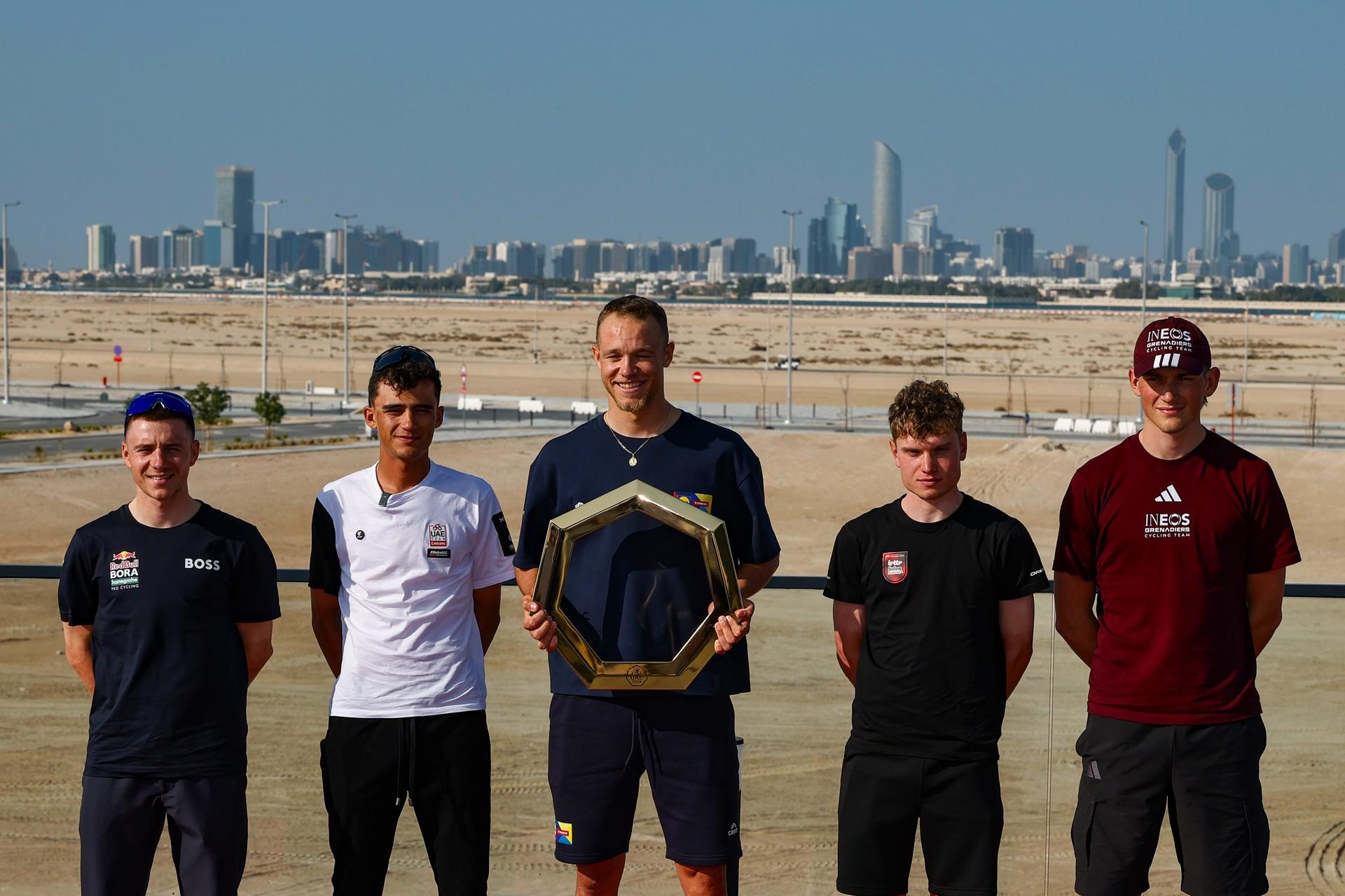
Remco Evenepoel (Red Bull-BORA-hansgrohe) will start as the clear favourite at next week's UAE Tour, the only UCI WorldTour race in the Middle East, as the organisers introduce a new summit finish on Jebel Mobrah that is expected to reshape the general classification battle.
The 2026 edition runs from February 16 to 22, covering 1,004.2 kilometres across seven stages. Four likely sprint finishes, a 12.2km individual time trial and two mountain-top finishes make up a varied route.
Neither Tadej Pogačar nor Jonas Vingegaard will be on the start line. Pogačar is managing his schedule for a later-season peak, while Vingegaard was officially withdrawn on February 6 following a training crash near Malaga and a subsequent illness that further delayed his preparation. The absences remove the two riders who have dominated WorldTour stage racing for three seasons, leaving Evenepoel as the main GC favourite.
The full UAE Tour startlist was released on Sunday evening and you can see in more detail here.
Route
7 Stages • 1,004.2km total

| Stage | Date | Route | Distance | Type |
|---|---|---|---|---|
| 1 | Feb 16 | Madinat Zayed Majlis - Liwa Palace | 144 km | Road Stage |
| 2 | Feb 17 | Al Hudayriyat Island | 12.2 km | Time Trial |
| 3 | Feb 18 | Umm Al Quwain - Jebel Mobrah | 183 km | Road Stage |
| 4 | Feb 19 | Fujairah | 182 km | Road Stage |
| 5 | Feb 20 | Dubai Al Mamzar Park - Hamdan Bin Mohammed Smart University | 166 km | Road Stage |
| 6 | Feb 21 | Al Ain Museum - Jebel Hafeet | 168 km | Road Stage |
| 7 | Feb 22 | Zayed National Museum - Abu Dhabi Breakwater | 149 km | Road Stage |
Route analysis: where the race will be decided
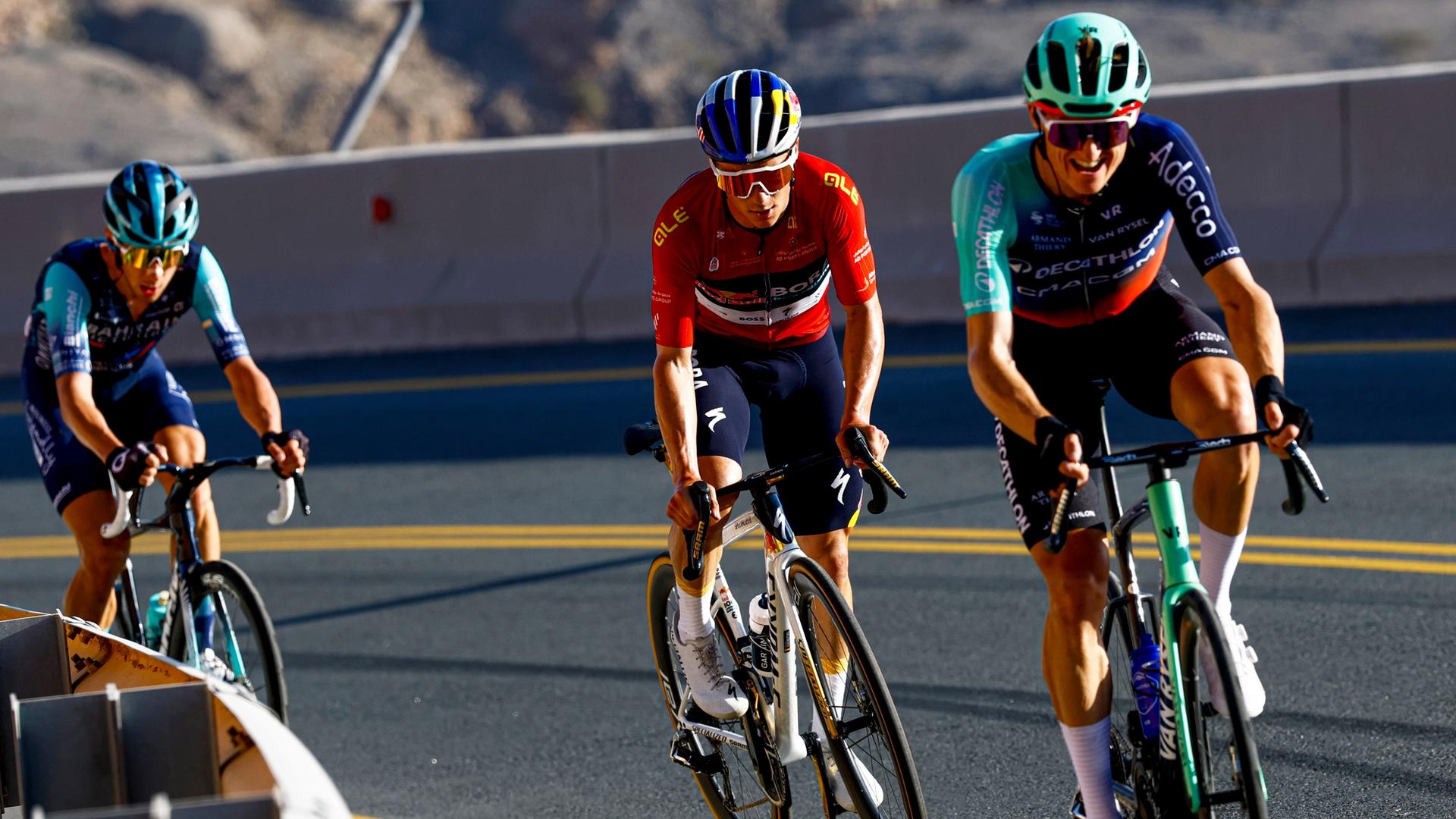
The main route change is the introduction of Jebel Mobrah on Stage 3. The 15km ascent begins with an average of around 7% for the opening half before a short plateau. The final six kilometres average approximately 12%, with maximum ramps reaching 17–20%. Those gradients are significantly steeper than anything Jebel Hafeet has offered in previous editions.
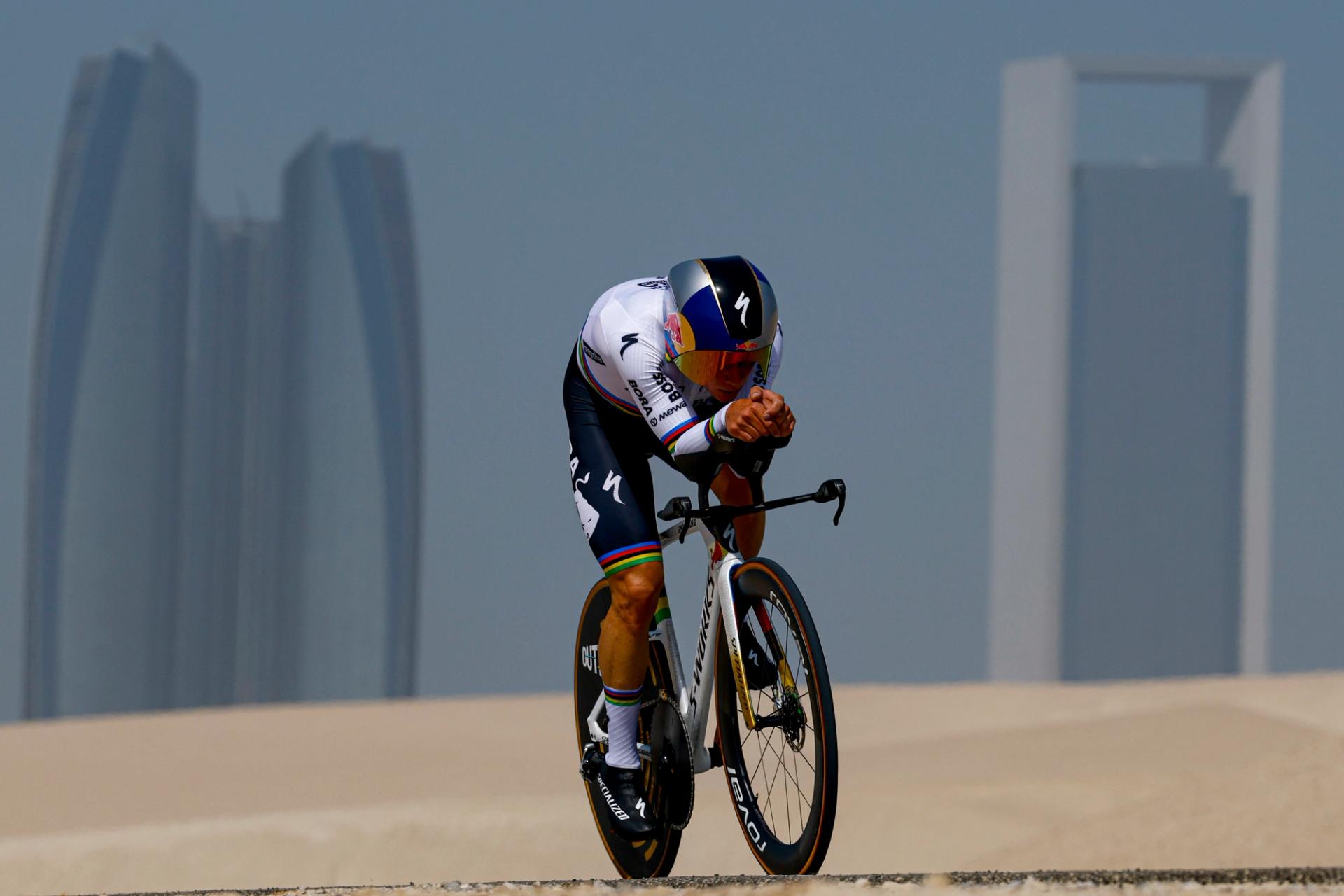
Stage 2's 12.2km pan-flat time trial on Al Hudayriat Island precedes the mountains, offering time-trial specialists an early buffer. The course is non-technical, featuring only two U-turns and a handful of right-angle corners on wide roads, rewarding sustained power output over bike-handling skill.
Jebel Hafeet returns on Stage 6 as a 10km climb averaging 8–9% with a maximum of 11%. Its sweeping hairpin bends and more consistent gradient favour repeated accelerations and late tactical moves rather than sheer climbing power, making it a different test to Mobrah's steep ramps.
Among the flatter stages, Stage 1's uphill finish at Liwa Palace is deceptive. The 5% drag in the final straight typically reduces the bunch and favours powerful sprinters over pure top-end speedsters. Stages 4, 5 and 7 are nominally flat, but the open desert sections on Stages 4 and 5 carry significant crosswind risk. At the recent AlUla Tour, echelons split the peloton and caught several GC contenders off guard. Teams with disciplined positioning, particularly Lidl-Trek and Red Bull-BORA-hansgrohe, demonstrated high proficiency in exploiting those conditions.
GC contenders
Evenepoel, the 2023 UAE Tour winner, arrives with six victories from eight days of racing in 2026, including the overall title at the Volta a la Comunitat Valenciana. The short time trial plays directly to his strengths, giving him a platform to establish a 10–20-second cushion before the mountains. As arguably the strongest climber in the field, an initial ITT advantage is likely to be extended by disciplined mountain riding – putting him in a strong position to defend the leader's jersey.
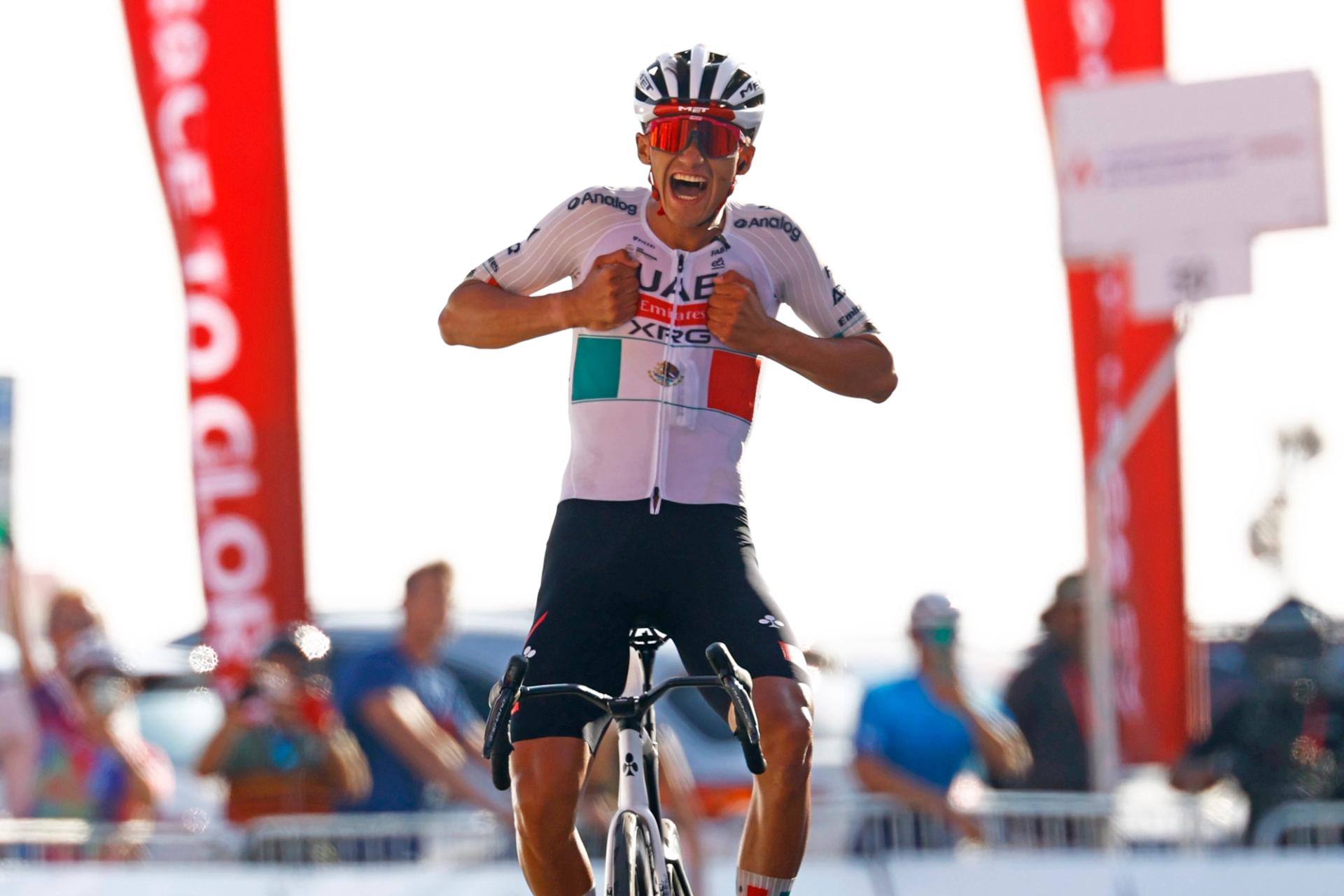
The most credible challenge comes from UAE Team Emirates-XRG, who split leadership between Isaac del Toro and Adam Yates in the absence of Pogačar. Del Toro (UAE Team Emirates-XRG), the 21-year-old Mexican who amassed 18 victories in 2025 and has already won the Mexican national time trial and road race titles for 2026, has reconnoitred both summit finishes ahead of the race, according to the team. His explosive climbing ability suits Jebel Mobrah's steep closing ramps, though the ITT will test whether he can stay close enough to Evenepoel before the mountains arrive.
Yates provides experience alongside del Toro's raw talent. A former UAE Tour winner in 2020, the Briton is a proven performer on Jebel Hafeet and a specialist on sustained steep gradients. Having the tactical flexibility to attack across two summit finishes with two protected riders gives the home team more tactical options than most rivals.
Lennert Van Eetvelt (Lotto-Intermarché), the 2024 winner, returns as a pure climbing threat who must contain his time-trial losses to remain in contention. His ability to accelerate on steep ramps makes him particularly dangerous on Stage 3. Antonio Tiberi (Bahrain Victorious) showed significant growth in 2025 and arrives with veteran support from Damiano Caruso. David Gaudu (Groupama-FDJ) is a strong climber who faces the same structural problem: he does not possess the time-trialling capacity to match Evenepoel on Stage 2, meaning they need to gain significant time on the two summit finishes. Felix Gall (Decathlon CMA CGM) is among the most aggressive climbers in the field and could animate the mountain stages without necessarily threatening the overall podium.
Finn Fisher-Black (Red Bull-BORA-hansgrohe) is Evenepoel's key domestique and a potential Plan B if the team needs to change leaders.
Sprint stages
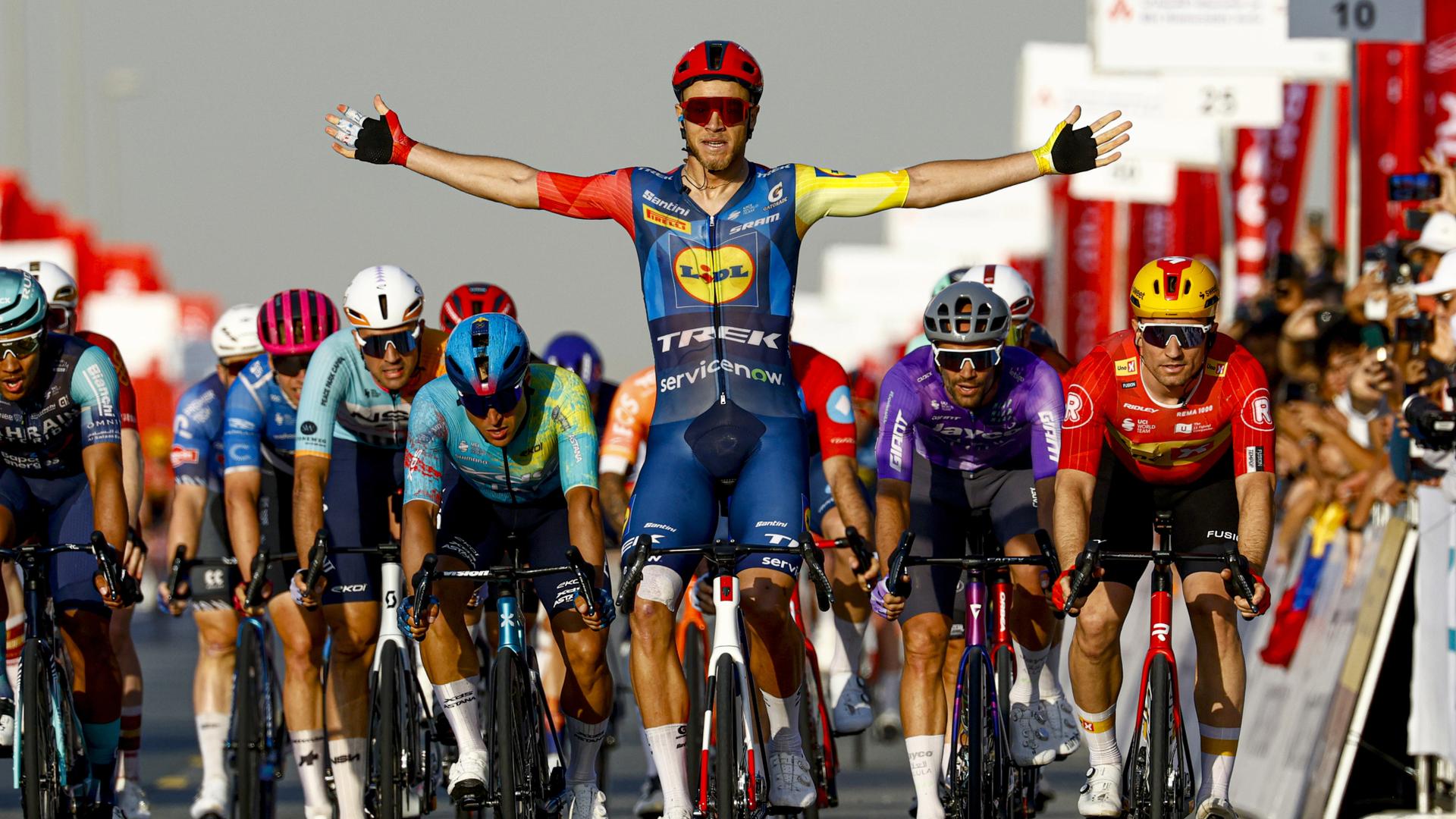
The absence of Tim Merlier (Soudal-QuickStep), the dominant sprint finisher of the last two editions, opens the field across four likely bunch finishes.
Jonathan Milan (Lidl-Trek) is the clear sprint favourite. Back-to-back stage victories at the AlUla Tour. Milan's raw power output also suits the uphill drag on Stage 1.
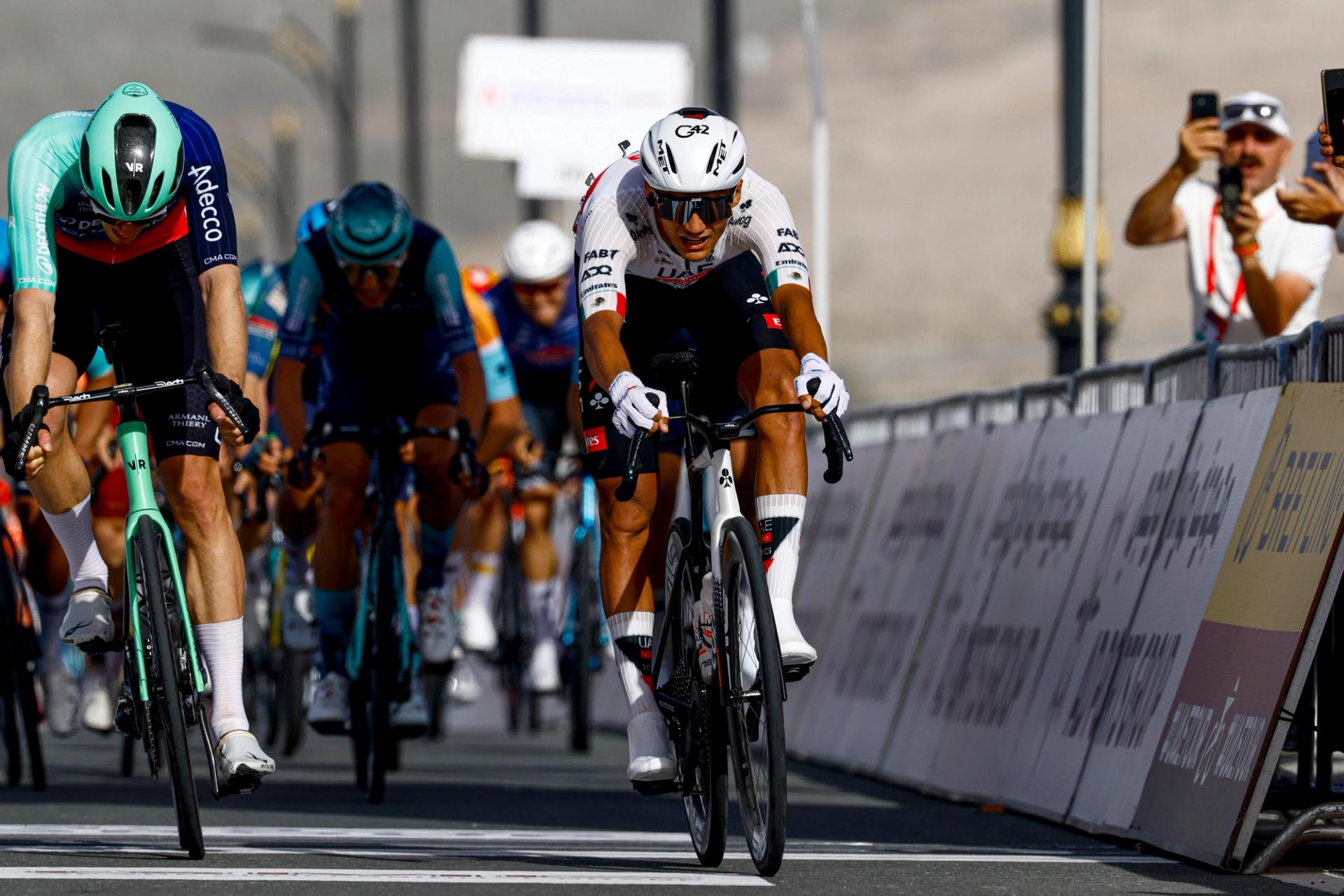
Fabio Jakobsen (Picnic PostNL) has the top-end speed to win on the flat finishes of Stages 5 and 7 but arrives with a question mark after hamstring cramps disrupted his AlUla Tour. Sebastián Molano (UAE Team Emirates-XRG) carries the home team's sprint ambitions and enters with confidence after a stage victory at the Tour of Oman.
Conditions and context
The forecast indicates daytime temperatures around 25°C with low humidity between 28% and 40%, reducing heat stress compared to later-season Middle Eastern racing. However, consistent desert winds remain the primary tactical variable. Moderate crosswinds on the exposed sections of Stages 4 and 5 can split the peloton without warning, turning nominal sprint days into GC hazards.
Prediction
Evenepoel's combination of time-trial dominance and climbing resilience makes him the likeliest winner. The ITT arrives early enough to establish control, and his Valenciana form suggests a rider already operating near peak condition. Del Toro and Yates, working in tandem, represent the strongest collective threat, with Del Toro the more likely to take time on Jebel Mobrah's steep ramps. Van Eetvelt's explosiveness on Stage 3 could see him reach the podium if he rides a disciplined time trial.
Predicted podium: Evenepoel, Del Toro, Van Eetvelt. Milan for the points classification.