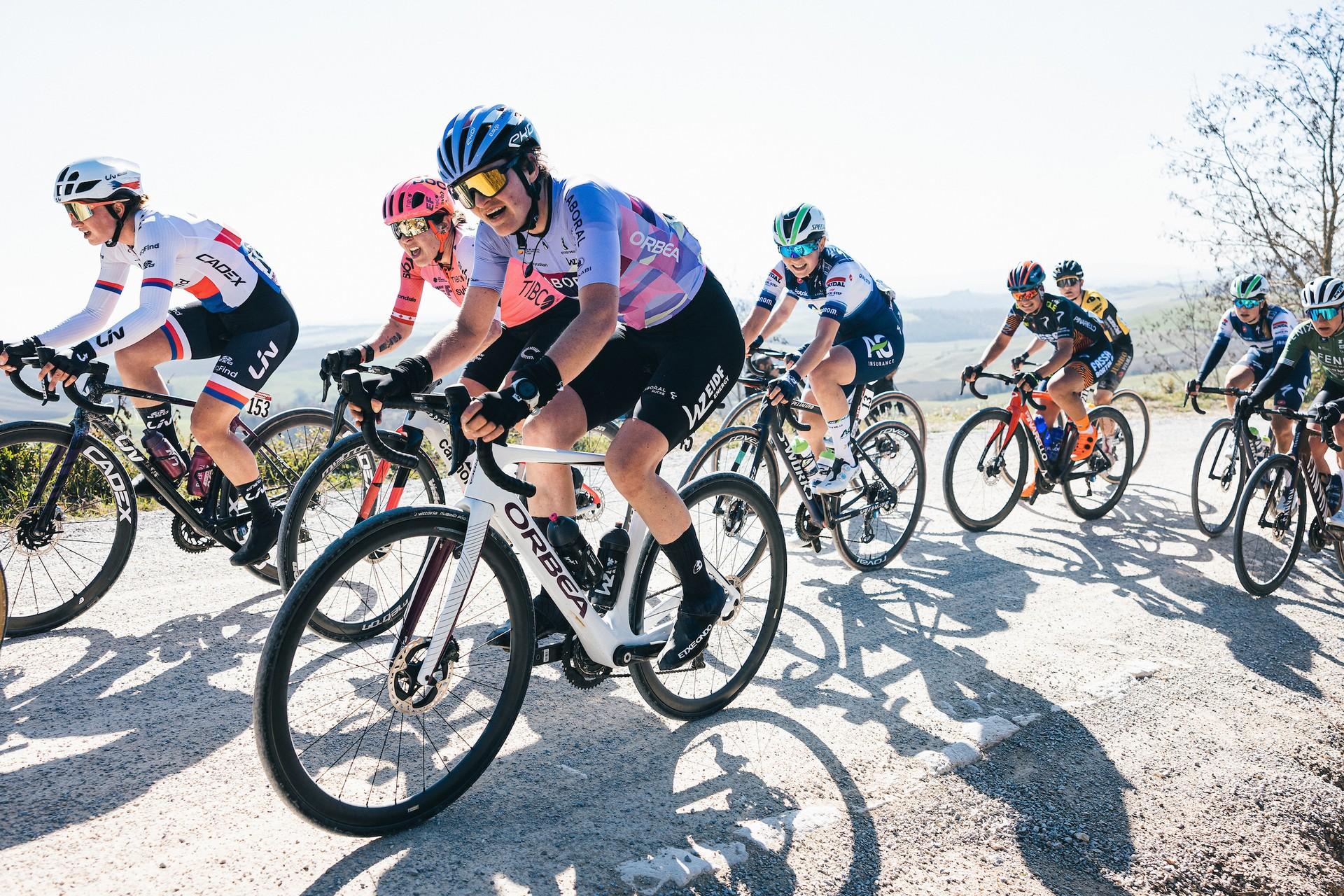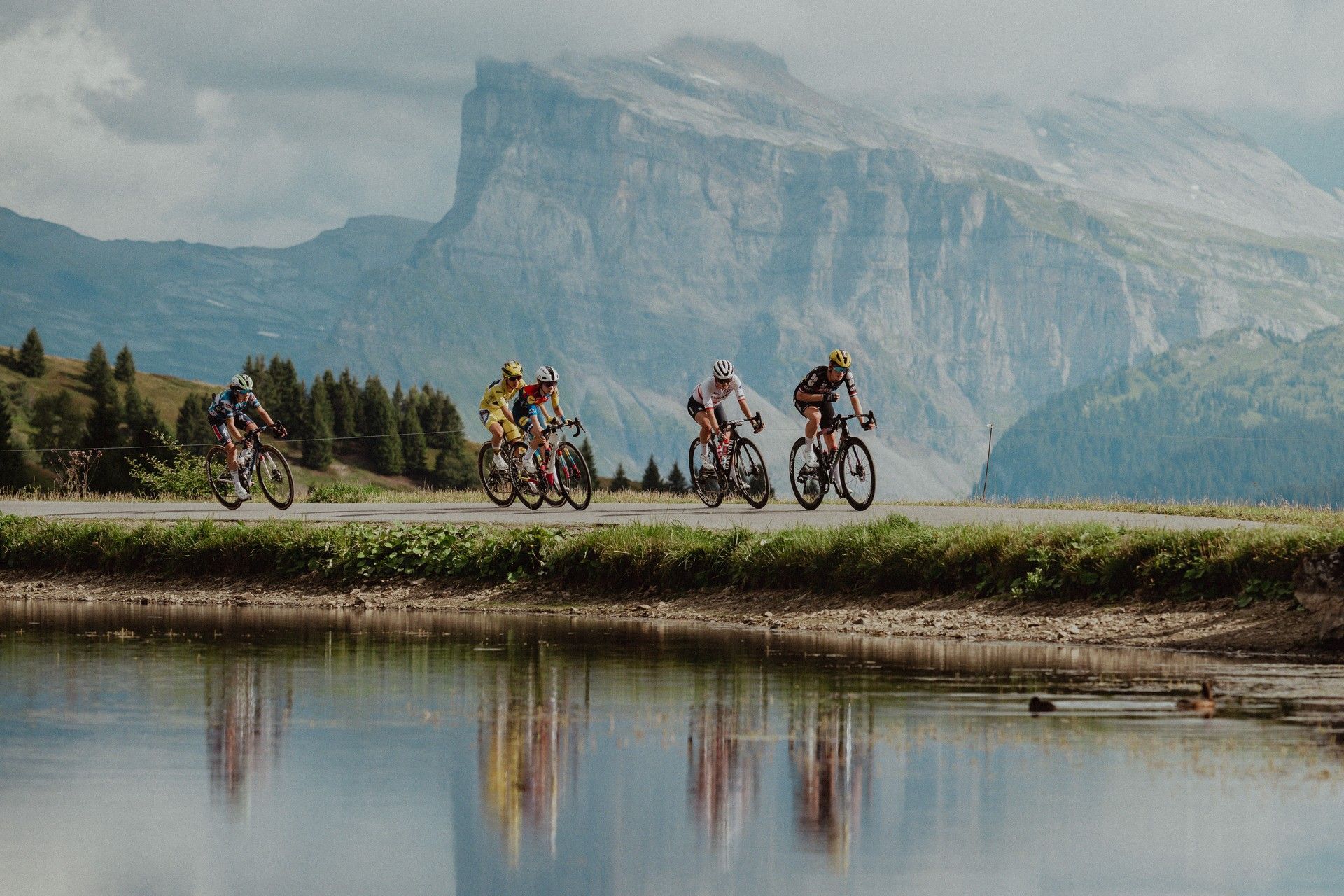
The fifth Tour de France Femmes runs from August 1 to 9, crossing from Switzerland into France over nine stages and a record distance of 1,175km. Its 18,795 metres of climbing are spread across the Jura and Massif Central before the decisive Alpine stages.
Mont Ventoux is the biggest summit finish, though the race may be shaped earlier. A 21km time trial into Dijon rewards aerodynamic efficiency, while the narrow Beaujolais roads on stage 5 create substantial positioning risks.
If you’d like to see our interactive map graphics of the race and the basic road book stats, head to our race hub here. Below, though, I’ve really dived into the detail of the route and how it will favour or play against the major contenders, and so we have only used route maps and profiles selectively. The road descriptions show where width, surface and repeated bends could matter: stage 5 is dominated by narrow lanes, stage 7 begins on rough asphalt before finishing on Ventoux, and stage 9 climbs the Col d’Èze four times.
The interactive tool below converts the race's key viewing windows into your local timezone, stage by stage.
Every stage, climb and finish
Stage 1, Lausanne to Lausanne, 138km
Stage 1 starts and finishes in Lausanne, the Swiss city in the French-speaking canton of Vaud on the shores of Lake Geneva.
The stage is a tricky way to start the 2026 Tour as it takes on four categorised climbs, including one to the finish. The first climb is the rather twisty Côte de Châbles. The approach is two lanes wide, with beautifully smooth Swiss asphalt, but a very tight right-hand switchback leads onto the climb. The road sweeps its way up the climb with views over Lake Neuchâtel before hitting another hairpin around a third of the way up.
After a little more wiggling, the road straightens out towards Châbles. After this it is the 4km climb to Villars-le-Comte which comes almost 30km after the first climb, with the intermediate sprint of Villeneuve in the gap, the road lazily meanders out of Lucens and starts heading towards the climb. It is a narrower road but nothing too difficult with the usual smooth surface. The climb itself is rather twisty, though. It starts in woodland before opening onto plains flanked by sunflower fields. As the race heads south towards Lake Geneva, the riders reach the climb in Vulliens, the narrowest of the day. The 3km climb is a mixture of twisty bends and straights, mostly straight, though. It also has the roughest surface of the day’s climbs.
From there it is down to Lake Geneva with a couple of very sharp hairpins before riding along the shore and back into Lausanne. After leaving the lakeside the road heads up to the finish through the city's wide and heavily built-up streets until reaching the finish in the centre of Lausanne. The climb itself is 2.6km long with an average gradient of 4.6% on wide city roads and lots of space for teams to move.
Prediction
The finish could suit Marianne Vos (Visma-Lease a Bike), Lorena Wiebes (SD Worx-Protime), Lotte Kopecky (SD Worx-Protime), Kim Le Court (AG Insurance-Soudal) and Puck Pieterse (Fenix-Premier Tech). Vos is the pick for the stage win and first yellow jersey.
Stage 2, Aigle to Geneva, 147.9km
Staying in Switzerland the day starts in Aigle and heads to Geneva on a 147.9km course. It is a day for the sprinters but does have five categorised climbs on the menu. The first climb 3.2km to Chexbres takes the riders off the road that runs alongside Lake Geneva and up through vineyards on a narrow road flanked, for the most part, by a low wall. The road rises with an average gradient of 5.6% and gives stunning views over the lake. The road is fairly simple, with gently sweeping bends all the way up. Two switchbacks follow immediately after the climb as the route heads away from the lake.
The riders head to the superbly named town of Le Pigeon before riding through Savigny and riding up the main road out of the town on a 2.5km climb at 5% which is on a two lane road that is in good condition. After about 30km of mostly descending the riders make it to the third climb, the Cote de Cossonay. This 2km climb has an average gradient of 6% and starts down in the town of Penthalaz rising out of an industrial looking part of the area with a steep bank to the right. The two-lane road looks old but remains in good condition. The riders will leave the buildings behind as the road opens out just before the first right hand hairpin.
After this it becomes much more wooded, although the trees do not provide shade if the sun is shining. Just before the top the road heads into the rather pretty Cossonay, which apparently has Roman ruins. The riders leave Cossonay and head in the direction of Lavigny for the intermediate sprint. After that the riders have an unclassified hill that takes them to the penultimate climb of the day, the Cote de Bougy-Villars. The 900 metre climb kicks up steeply and has an average gradient of 10.4%. Back in the vineyards and with a view of the lake the road is wide heading to the climb but a sharp right bend changes things with the road becoming just the one lane. Walls line both sides of the climb with the road kicking up to Bougy-Villars. After that, the road drops down to the main road again.
They are not on there for long, however, as they take a very sharp hairpin right and onto the hillside again for the 2.3km Cote de Mont-sur-Rolle that has an average gradient of 6.5%. This is a far more straightforward climb on wide roads with large long sweeping bends through the vineyards. The summit marks the end of the day’s classified climbing. With around 48km left to race, this should be set up for a bunch sprint. The finish is at the western end of the lake in Geneva, on a wide, smooth road.
Prediction
It would be daft to look beyond Wiebes here, but Chiara Consonni (Canyon-SRAM), Elisa Balsamo (Lidl-Trek), Charlotte Kool (Fenix-Premier Tech) and the rest will still try their absolute best.

Photo credit: A.S.O./Thomas Maheux
Stage 3, Geneva to Poligny, 156.5km
The race waves goodbye to Switzerland and Lake Geneva with the third stage starting in the city. Almost immediately after starting, the riders will be in France and head through Gex. This marks roughly the start of the first category 1 climb of the race, the Col de la Faucille. 11.4km climb at 6.3%, which is on varying levels of asphalt but pretty simple and wide.
After that opener topping out after just 24km there is a brief descent to Mijoux where the climb to Lajoux begins. 3.6km at 5.6% tells half the story. The riders head into the department of the Jura and immediately into beautiful woodland and five switchbacks, but on rather wide roads. The race then heads largely downhill for roughly 40km where the next climb starts. The cat 2 Col de la Savide which is 5.6km at 5.1% on rather technical urban roads.
30km of almost all downhill follow to the intermediate sprint on Champagnole and then it is very undulating terrain for 40km. Nearing the end of this is the cat 4 climb of the Cote de Chaux-Champagny at 1.8km and an average gradient of 6.4% this climb also comes with 6, 4 and 2 bonus seconds sprint immediately after the QoM sprint. This climb is extremely narrow. The road starts with the riders turning left off the main road and onto what can only be described as a farm track. The riders rise up the hill immediately with a very rough and rutted asphalt as the surface.
Positioning will be vital for this climb as the peloton will be bunched right up, with moving up a near-impossibility. After the climb it does get a little bit wider but not by much for the bonus sprint. It is then a fast descent to Arbois and completely flat 15km to the finish in Poligny with an arrow-straight final kilometre or so.
Prediction
I think a day like this will still go to the sprinters despite all the climbs. Wiebes is still a fantastic rider for punchy short climbs and will be keen to add to her list of wins at this race.
Stage 4, Gevrey-Chambertin to Dijon, 21km
The individual time trial is interrupted by the rise towards Corcelles-les-Monts before descending into Dijon. The climb is on generally good roads before the course descends into Dijon, where riders face the usual complications of racing through a city. The finish is close to the centre. It is a course that should suit Marlen Reusser, while Anna van der Breggen should also relish the test.
Prediction
I think Reusser will be the rider to beat here with the GC race behind her being led in by the likes of Vollering, Van der Breggen and potentially Paula Blasi (UAE Team L’IMAD) who has impressed with her skills against the clock.
Stage 5, Mâcon to Belleville-en-Beaujolais, 140km
A day famed for wine. Starting in Mâcon and taking on a 140km route over eight classified climbs to Belleville-en-Beaujolais, from Burgundy to the Rhône regions. The opening climb is the 9.6km at 4.4% cat 1 climb of the Cote de Cenves. This climb starts almost immediately after kilometre zero and starts on a very very narrow road. This widens out a little bit after a junction around the famous Mâcon vineyards. However, after another junction the road tightens again on very narrow single track.
This sets the tone for the day as the next climb, the cat 4 Col de la Croix de l'Orme is a 2.1km at 5.5% climb also on very narrow, albeit well laid, roads. Same again for the next climb that comes in quick succession all day, the cat 4 Cote de Saint-Christophe is a 2.7km at 4.5% and is also on these very narrow roads. Fortunately, the roads widen a bit to two lanes for the intermediate sprint in Monsols (Deaux-Grosnes). But, the roads never get wider than this.
For the next climb that tops out with 86km to go is the Col de Fontmartin, a 3.6km climb at 5.7% and classified as a cat 3. Once again, a very narrow road. The roads actually get narrower again after this with the run to Émeringes. Onto the 4.6km at 6.5% cat 2 climb of the Col de Gerbet it is the same story as the rest. Extremely narrow roads with the racing expected to be very very stressful all day long. A very fast but dangerously narrow descent follows to the Cote de Pruzilly, the cat 4 1.6km at 6.6% climb that, unsurprisingly, continues the trend of the day.
There is around 30km between the summit and the next climb, all on the usual narrow roads. The penultimate climb, the cat 3 Col de Durbize is a 3.6km climb at 5.8%. Narrow roads continue as the race will challenge technical ability as well as climbing strength. The riders do eventually get the relief of two lanes again as they head towards the final climb of the day.
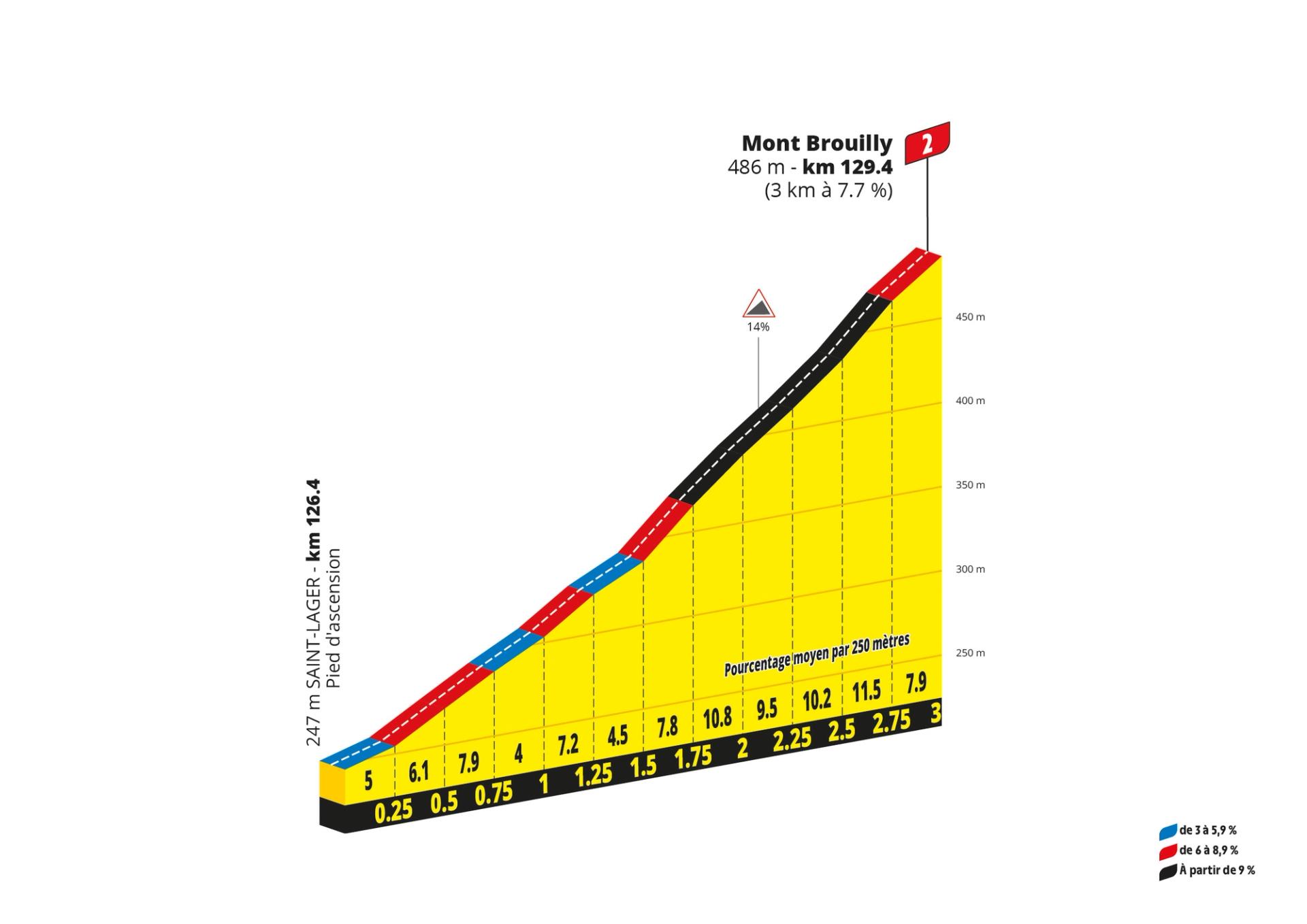
Before then, they have the bonus sprint in Saint-Lager and then onto the final climb, the cat 2 3km climb at 7.7% and one of the most narrow roads of the whole day. This is a real test that will split the race even more than already. It tops out at the Pays des Brouilly with stunning views over the area. A rapid descent follows on terrifyingly narrow roads. The widest point of the entire day is the last tiny little bit before the finish. A race that could actually catch a lot of riders out and shape the GC more than maybe the final stages around Nice.
Prediction
This is a brutal day of racing and one that may see a group no bigger than five riders come to the line. I think an opportunistic move could take the day with a rider like Cedrine Kerbaol (EF Education-Oatly) or Reusser stealing a march on the rest to solo to the win. Otherwise, a sprint from Vollering or Le Court seems likely.
Stage 6, Montbrison to Tournon-sur-Rhône, 153.4km
The sixth day of racing is another day of brutal climbing all day with six categorised climbs between Montbrison and Tournon-sur-Rhone with the first climb of the cat 4 Cote de Perigneux at 1.4km at 6.2% but, by contrast to stage 5, the road is much wider.
After that climb they continue and almost immediately start the cat 4 Cote de la Prunerie 2.9km at 4.9%. The road narrows back down again to single lane in woodland. Roughly 15km pass until the next climb of the Cote d'Aurec a cat 3 of 3.3km at 6.1% on rough asphalt but reasonably wide road but does narrow a bit after that climb.
The intermediate sprint follows in Flaminges (Saint-Pal-de-Mons) and then straight onto the cat 4 Cote de Praneuf of 1.2km at 6.5% on pretty wide roads. Two lane and plenty of space to move. After that the road is on false flat before dropping down to the biggest climb of the day, the cat 2 Col de Lalouvesc 8.6km at 5% and this is very different to the previous climbs. Very narrow road that will stretch the peloton right out and give a chance for teams to split the race.
From then the roads aren't exactly wide but they're pretty standard and simple to race on. The riders descend to the Col de Boucieu-le-Roi 3.8km at 5.7% and a return to tough narrower roads. Over the top the road slightly dips downhill to a bonus sprint in Saint-Barthélemy-le-Plain and then a fast descent to the finish in Tournon-sur-Rhone. A day that should see further splits.
Prediction
A day that should draw out the big GC names and split the race further. I think this could be a great day for a rider like Vollering to win from a reduced group.
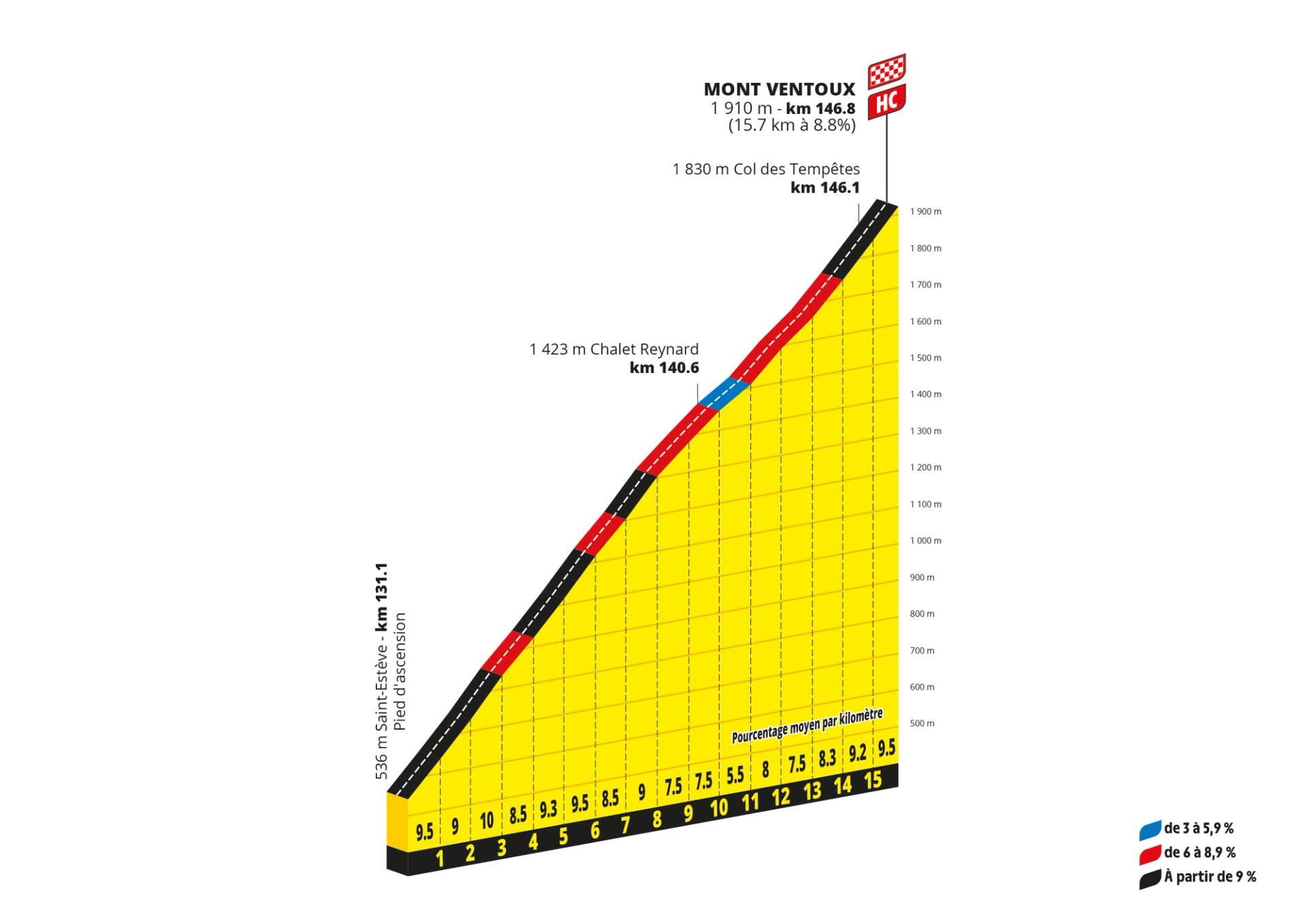
Stage 7, La Voulte-sur-Rhône to Mont Ventoux, 146.8km
Second-category Col de la Grande Limite begins early, climbing 6.6km at 5% on rough asphalt with potholes and loose material near the edges. The third-category Col du Colombier is 3.2km at 6.4%, with at least 11 turns on a two-lane road.
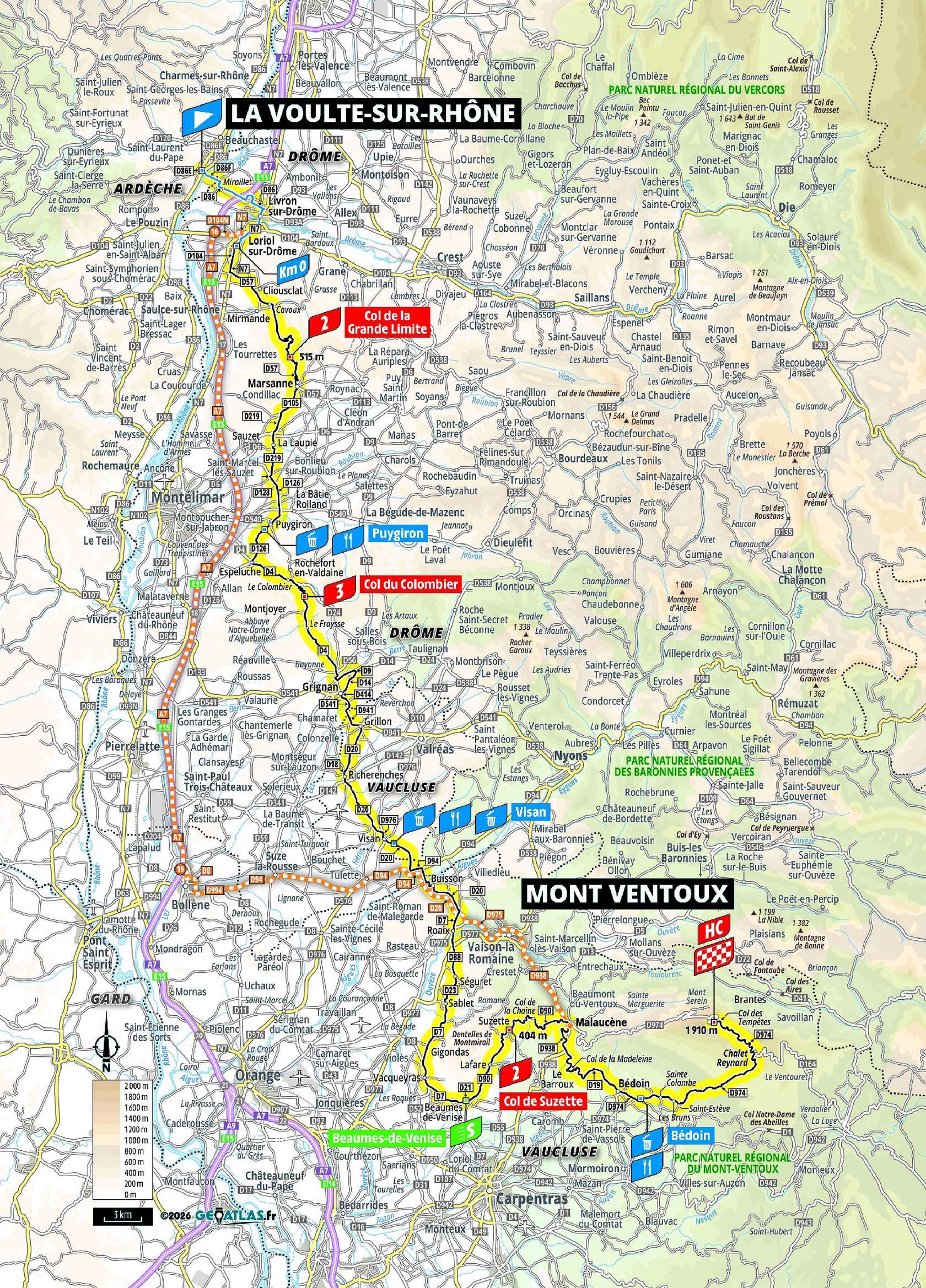
The full route of the Tour de France Femmes' Queen stage
The baseline route then uses the second-category Col de Suzette, 3.9km at 6.4%, on a single-lane road through rocky woodland. Wildfire damage may prompt a diversion through Caromb and Modène. That change remains provisional; the Mont Ventoux summit finish remains on the published route.
Ventoux begins on a generally good road through the forest above Bédoin. The trees give way to scrub before Chalet Reynard, where the mountain’s exposed, lunar upper landscape begins. The summit at 1,910 metres carries the super-category points scale and is likely to be the main GC decider.
Prediction
Looking at this it is about the pure climbers. Defending champion Pauline Ferrand-Prévot (Visma-Lease a Bike) showed that she was by far the best climber last year, but where is her form at? Away from her, Blasi and Vollering are the obvious riders to focus on for the top positions. I will go for the Spaniard.
Stage 8, Sisteron to Nice, 171.9km
The penultimate day at the Tour de France Femmes is a tough one to say what it will be. Starting in Sisteron and taking on a 171.9km route to Nice with four cat 4 climbs on the day.
The first comes after 60km of racing with the Col de Robines which is 2.6km at 4.6%, this is on a nice wide road. It is much the same for the next climb coming around 8km later on the Col de Toutes Aures 6.4km at 3.1%. It is a descent down to the intermediate sprint in Puget-Thenieres.
After that is false flat downhill for 45km to the penultimate climb, the 1.4km at 5.4% Cote de Colomars which is super twisty but reasonably wide and easy to manage on slightly rough asphalt. Much the same sort of thing for the final climb, the Cote de la Ginestiere 2.5km at 4.4%. It is then a fast descent down to the Promenade des Anglais and the finish on the sea front in Nice.
Prediction
Perhaps a chance for a hat-trick at the race for Wiebes? But how much will the final climbs change things? If she is not there then Lotte Kopecky (SD Worx-Protime) will be keen to show her sprinting form.
Stage 9, Nice to Nice, 99.2km
Just 99.2km of racing remain and it takes place around just one climb with four ascents of the Col d'Eze. However, the first three ascents are different to the final ascent.
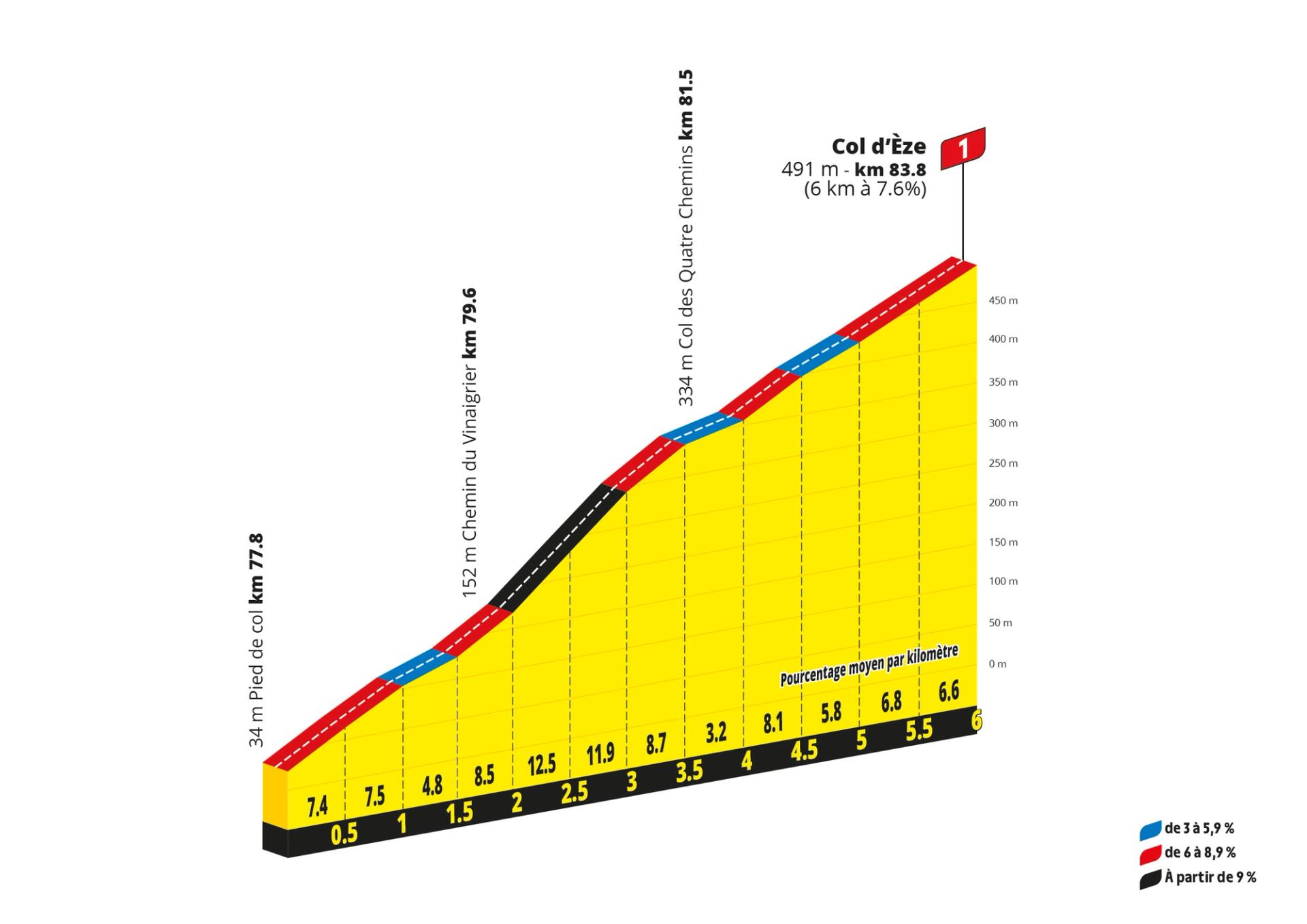
The first three ascents on the cat 2 part is 7.7km at 5.9% and it is on the two lane road that is so well used in the early sprint for the men's Paris-Nice. After the first climb there is the intermediate sprint in Nice near the finish line but not going through.
The final climb is much harder, the cat 1 6km at 7.6% on narrower roads and steeper gradients before joining the same road around a kilometre near the top and then the rapid descent down to the Promenade des Anglais and the finish to decide who takes the stage, yellow, green, polka dots and white.
Prediction
The final day should solidify what we already know, but nothing should be taken for granted. Riders could go all out with massive early attacks to split things up. I think a rider like Elisa Longo-Borghini (UAE Team L’IMAD) would be perfect for a day like this one.
Yellow, green, polka dots and white contenders
Yellow jersey
- Demi Vollering (FDJ United-Suez): The favourite after winning the 2026 Giro d’Italia Women. Ventoux and the final Col d’Èze give her two clear opportunities to distance the time-trial specialists while also packing a very good TT herself.
- Paula Blasi (UAE Team L’IMAD): Victories at La Vuelta Femenina, the Tour des Pyrénées and Volta a Catalunya followed her solo Amstel Gold Race win. Stage 5 and stage 9 suit her repeated climbing strength.
- Anna van der Breggen (SD Worx-Protime): Third at the Giro after leading through stage 8. Dijon and the steady slopes of Ventoux fit her strengths, although stage 5 presents a greater positioning test.
- Elisa Longo Borghini (UAE Team L’IMAD): Fourth at the Giro and winner of its final stage. Her handling and tactical range suit the narrow stages, although UAE must define leadership with Blasi.
- Kasia Niewiadoma-Phinney (Canyon-SRAM): A threat on Col d’Èze and the repeated Beaujolais climbs. Limiting losses in Dijon is essential.
- Marlen Reusser (Movistar): The leading candidate to take substantial time in Dijon, but she needs a buffer before Ventoux and stage 9.
- Pauline Ferrand-Prévot (Visma-Lease a Bike): The defending champion showed strength at Paris-Roubaix, although limited racing elsewhere makes her stage-race form harder to judge.
- Isabella Holmgren (Lidl-Trek): Seventh at the Giro and second on its shortened queen stage, making her a credible outsider for both GC and white.
Green jersey: Marianne Vos (Visma-Lease a Bike) ranks first because she can score in Geneva and Nice while also contesting Lausanne and intermediate sprints. Lorena Wiebes (SD Worx-Protime) is second and has the strongest sprint and may also push Vos on the hillier days. Chiara Consonni (Canyon-SRAM), Elisa Balsamo (Lidl-Trek) and Charlotte Kool (Fenix-Premier Tech) complete the shortlist.
Polka-dot jersey: Vollering leads the prediction because Ventoux offers 15 points and the final Col d’Èze carries first-category points. Niewiadoma-Phinney ranks second, followed by Blasi, Holmgren and Longo Borghini. A non-GC breakaway rider could overturn that order by collecting points across stages 5 and 6 with someone like Maeva Squiban (UAE Team L’IMAD) and Yara Kastelijn (Fenix-Premier Tech) being prime examples.
White jersey: Eligibility is restricted to riders born on or after January 1, 2003. Subject to the final start list, Blasi and Holmgren head the shortlist ahead of Marion Bunel (Visma-Lease a Bike) and Antonia Niedermaier (Canyon-SRAM). Others involved may be Celia Gery (FDJ United-Suez), Nienke Vinke (SD Worx-Protime), Lore De Schepper (AG Insurance-Soudal), Eleonora Ciabocco (Picnic-PostNL) and Clemence Latimier (Ma Petite Enterprise).
Final predictions
GC (yellow)
- Demi Vollering (FDJ United-Suez)
- Paula Blasi (UAE Team L’IMAD)
- Pauline Ferrand-Prévot (Visma-Lease a Bike)
Green (points)
Marianne Vos (Visma-Lease a Bike)
Polka dots (QOM)
Demi Vollering (FDJ United-Suez)
White (young rider)
Paula Blasi (UAE Team L’IMAD)