The Ravemen FR 1100 SE is a 1,100-lumen front light designed to sit beneath a bike computer on a single out-front mount, and it was one of six affordable lights I rode side by side on the same unlit route. Of the standard-sized lights in that group, it produced the best beam, and it is the one I would pick for riding on unlit roads in full darkness. Its 1.8-hour runtime at full output and the mounting options are the only real downsides.
Quick verdict
The FR 1100 SE gets the part that matters most right: a broad, even flood with good depth and no hard edges, which made for the most comfortable riding experience of the standard-sized lights tested. It gives up ground on finish, where the body feels more plastic than several rivals, and on battery life, where 1.8 hours at 1,100 lumens rules it out for long night rides unless you drop to a lower mode for most of the way. Riders who already own a compatible out-front computer mount and mostly ride shorter distances in the dark will get the most from it.
Velora review
Ravemen FR1100 Out Front Light


The most even, usable beam of the normal-sized lights in our six-light test, packaged in a flat body that stacks under your computer on one mount. Best for shorter rides in full darkness.
For
- +Broad, even beam with useful depth and no hard cut-offs
- +Stacks under a Garmin, Wahoo or Bryton computer on a single mount
- +USB-C charging and emergency power output for a computer
Against
- –Only 1.8 hours at the full 1,100 lumens
- –Plastic-heavy finish and cheap-looking LED surround
- –IPX4 rating, not recommended for heavy rain
Beam quality and runtime
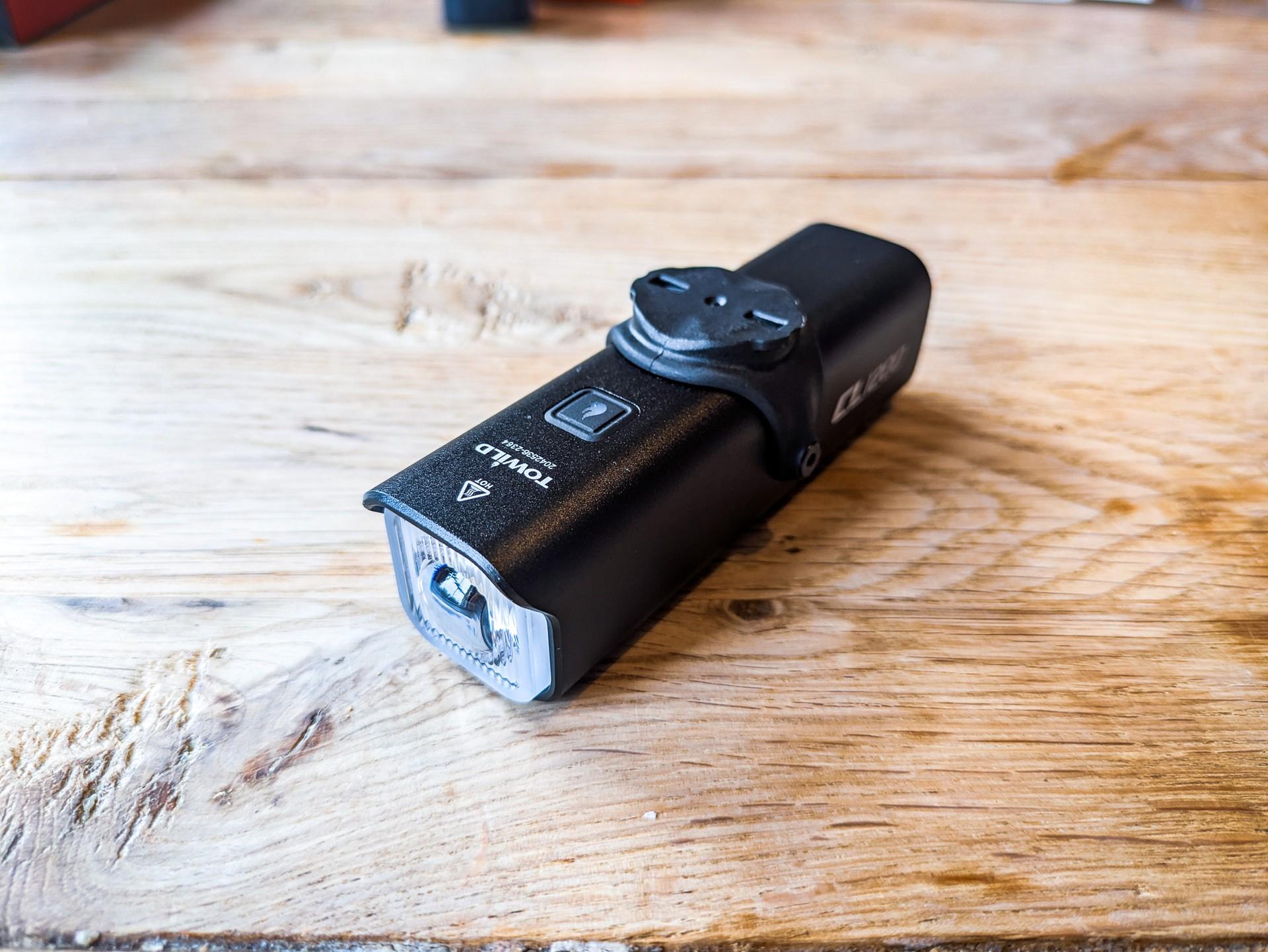
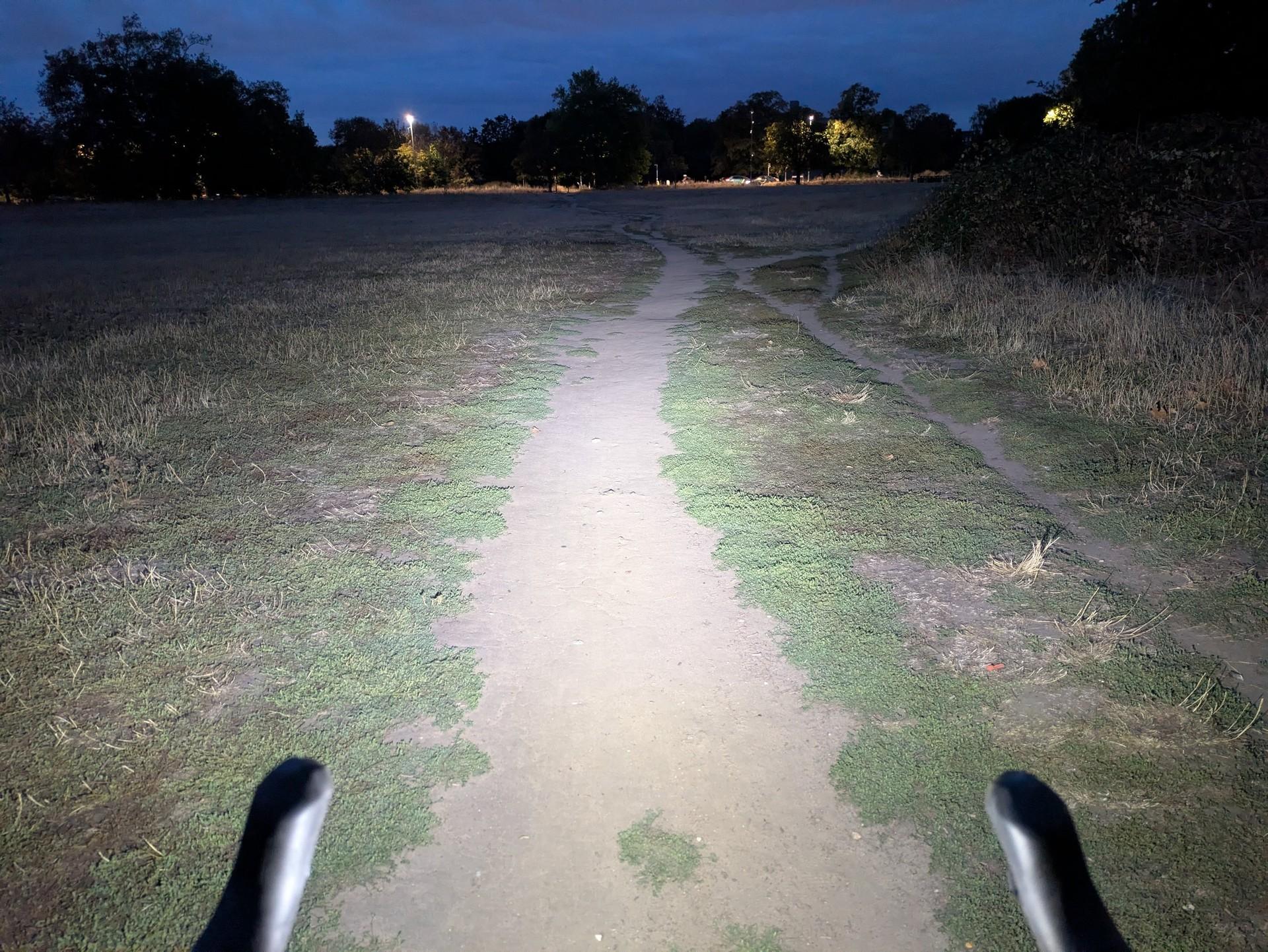
On the road the FR 1100 SE separated itself from the other standard-sized lights on quality rather than raw strength. Against the Magicshine HORI 1300 and Towild CL1200 the three felt about equal in power, and their lumen ratings back that up. But the Ravemen spread its light more evenly from side to side and from near to far, with no abrupt cut-offs at the edges. The beam depth was enough to read the road surface well ahead at typical night-riding speeds.
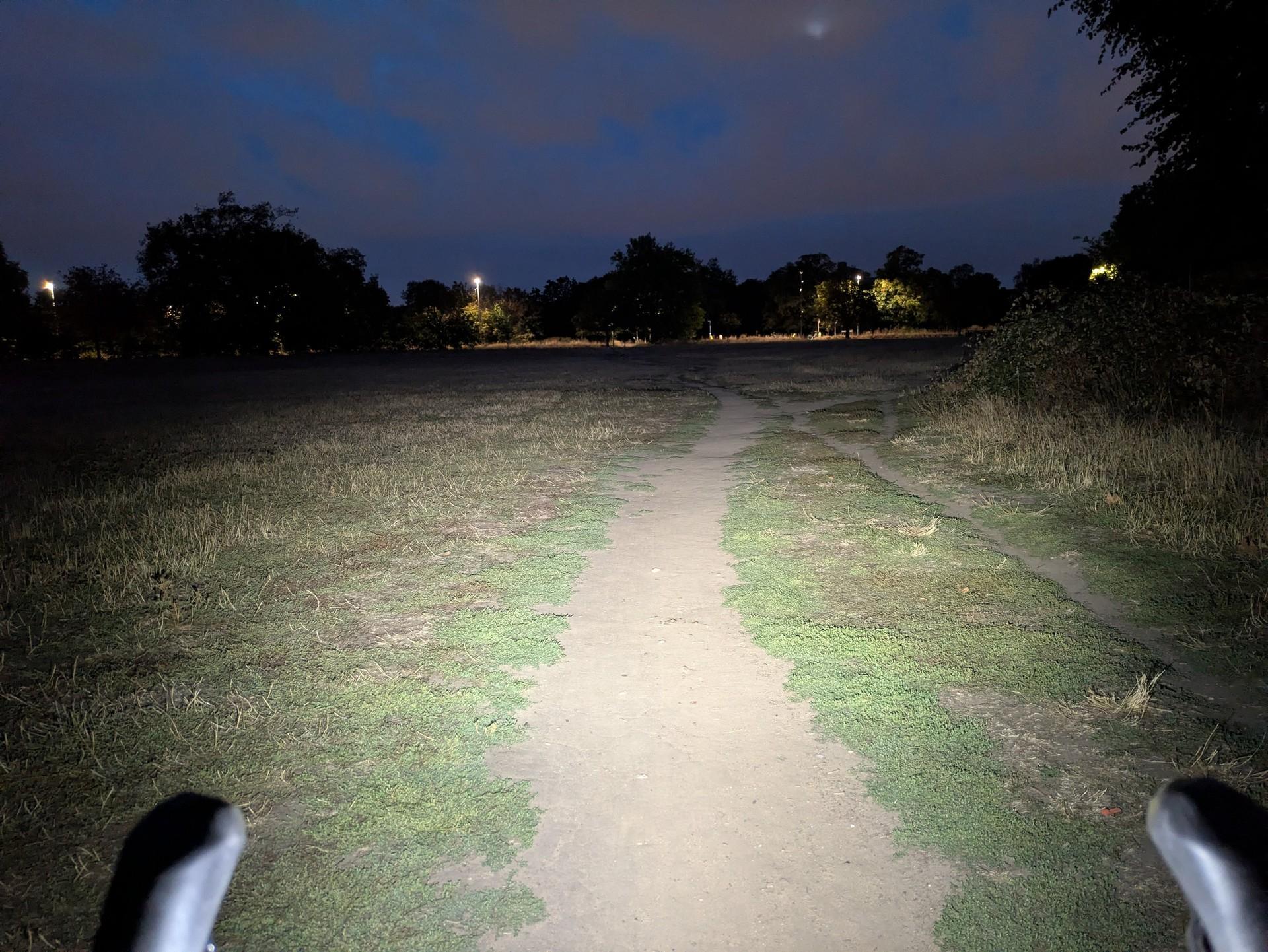
My long-term benchmark is the Exposure Strada RS (beam below), which costs roughly four times as much as most of the lights in this group. The beam quality is close enough to make the comparison worthwhile, despite the Ravemen's much lower price.
The 2,500mAh battery gives 1.8 hours at the full 1,100 lumens, which covers a short evening loop but not a long winter ride at full power. The medium mode runs at 500 lumens for 3.5 hours and the low mode at 250 lumens for 7.5 hours, so the light can go the distance if you treat 1,100 lumens as a descent-and-fast-section setting rather than the default.
The light switches off after two minutes without movement and back on when it detects vibration, and a single indicator shows battery state: green from 40 to 100 per cent, red below that and flashing red under 5 per cent. The USB-C port can also push emergency charge into a bike computer, though it is meant for low-draw devices rather than devices such as phones.
Design, build and the stacked mount
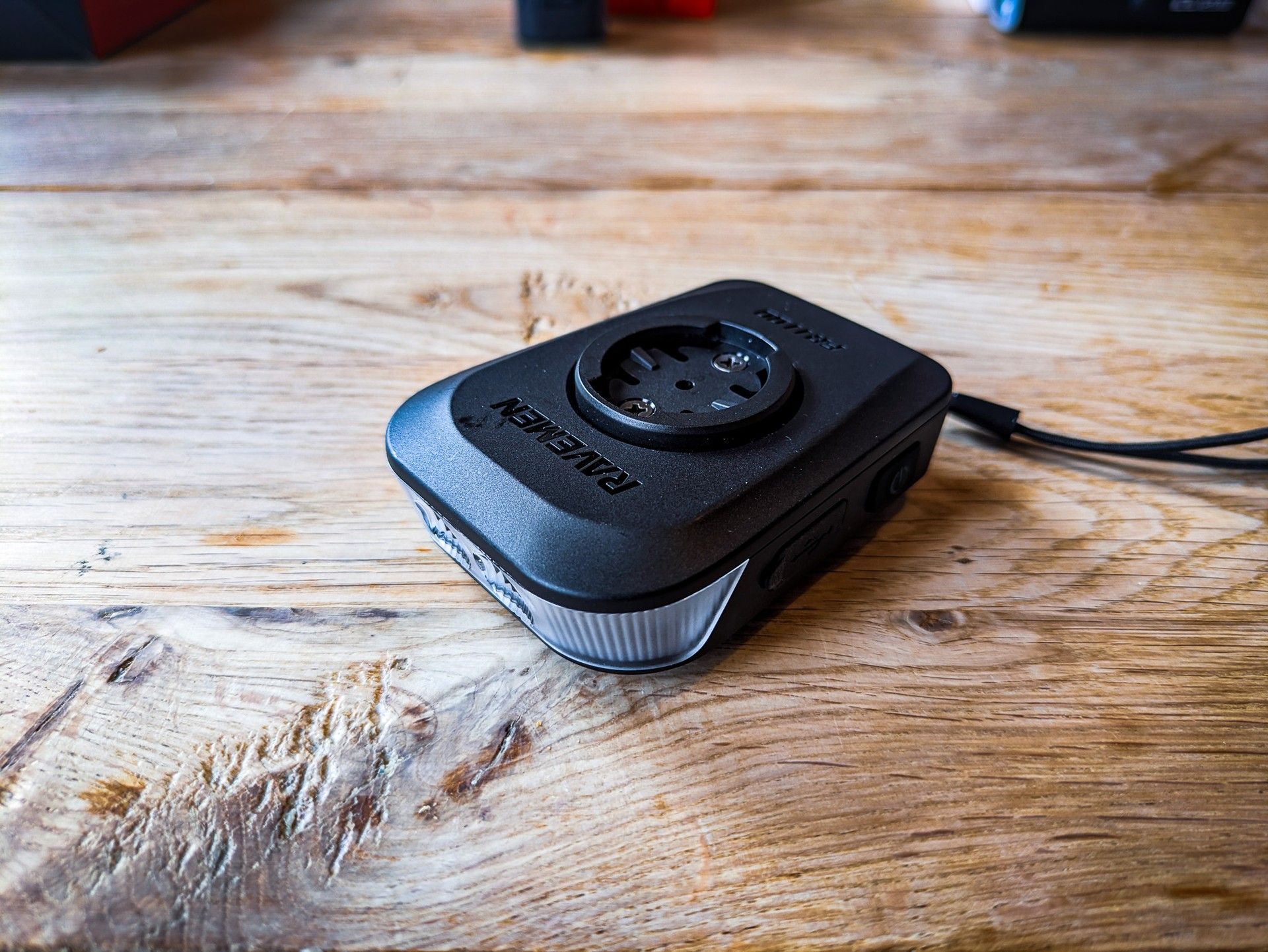
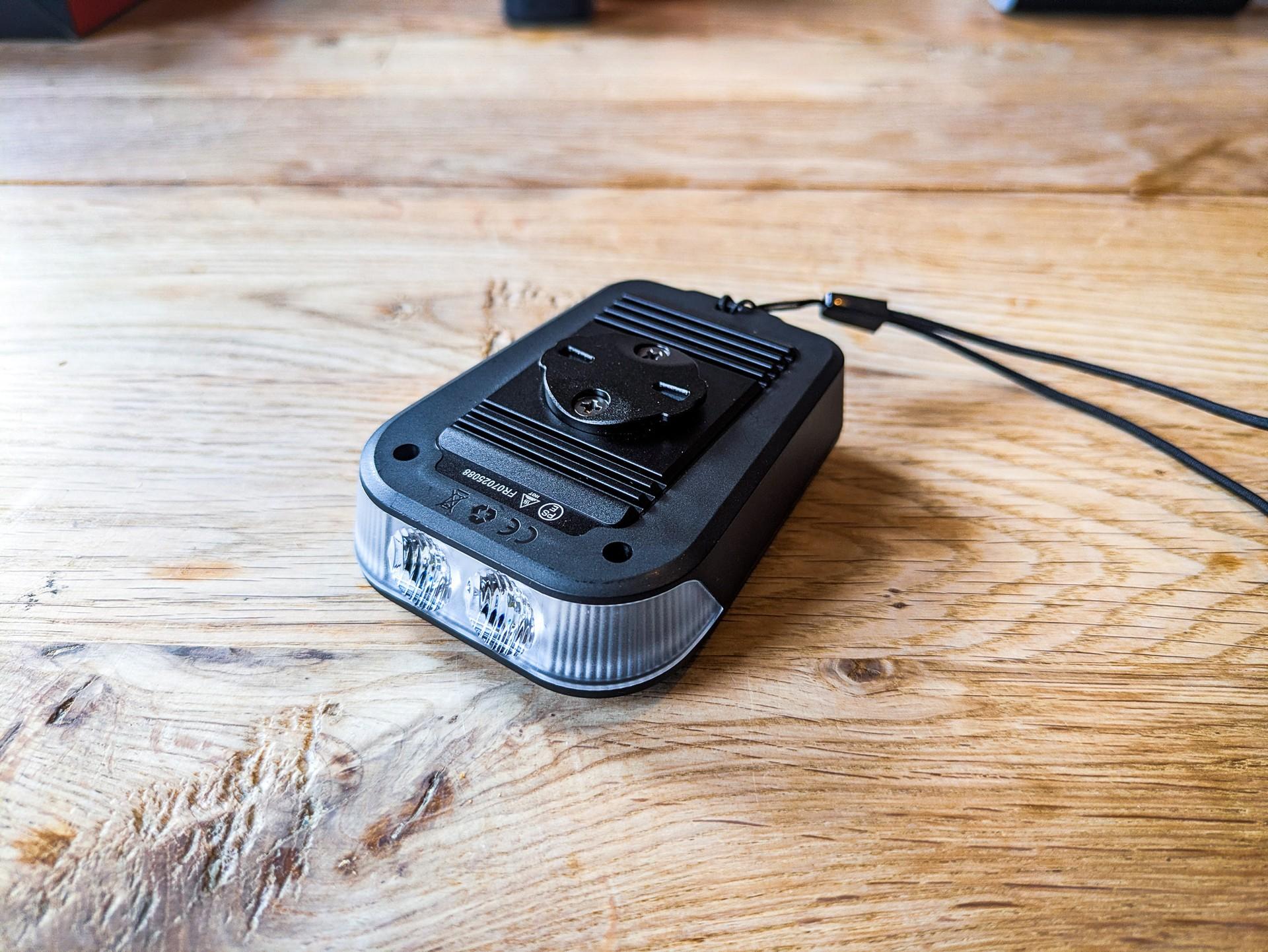
The FR 1100 SE looks unlike anything else in the test. The body is very flat and almost square, measuring 82 × 61 × 25.4mm and weighing 119g on our scales. It’s built around a Garmin-style quarter-turn fitting on the underside with a matching female mount on top. You lock the light into your existing out-front mount, then lock your computer into the light. Ravemen supplies adapter inserts for Wahoo and Bryton computers.
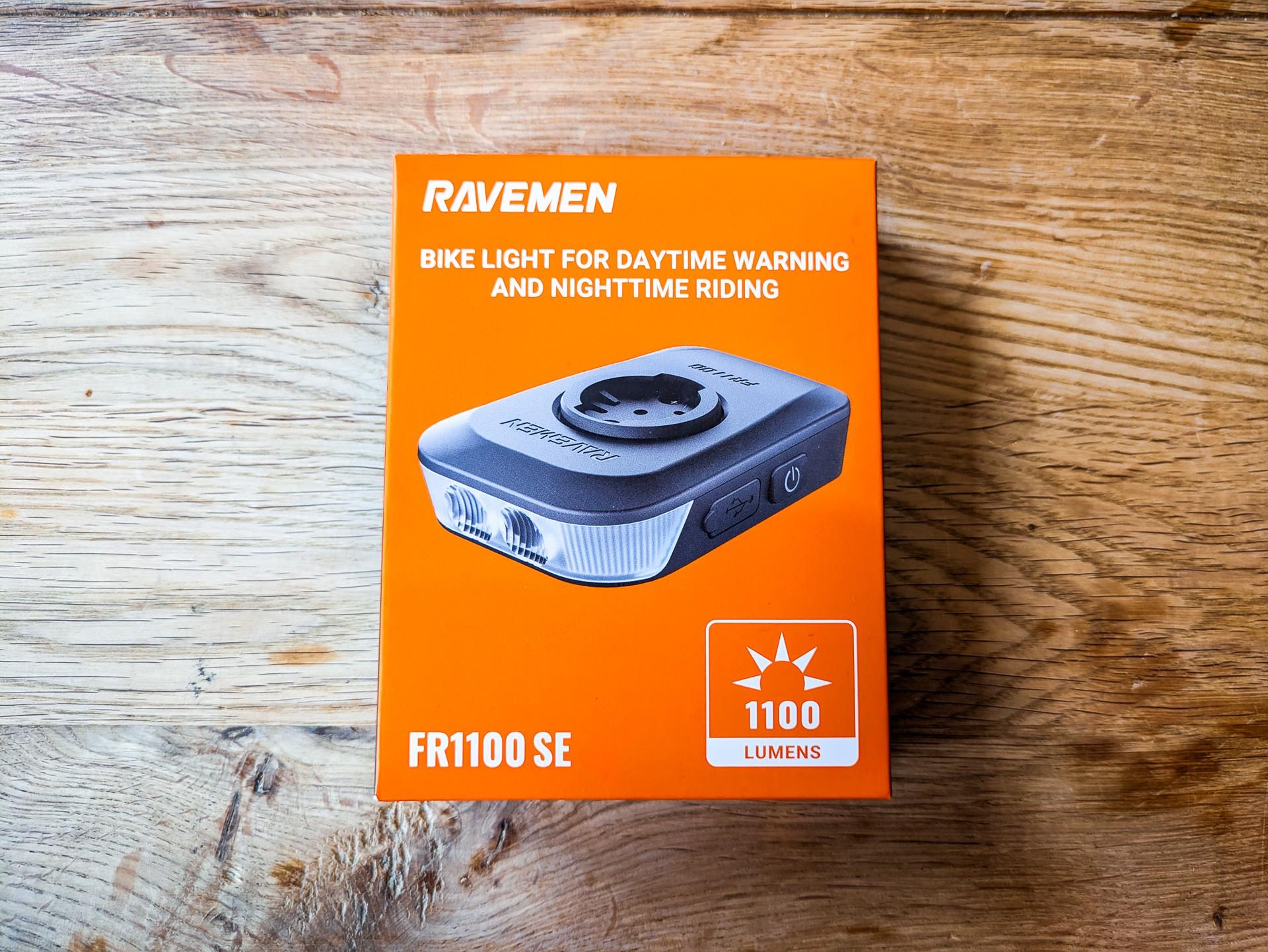
The standard FR1100 includes Ravemen's AOM05 out-front mount, while the SE does not, so it is intended for riders who already have a compatible mount on the bar. That saves buying hardware you don’t need, but it also means the whole stack of light and computer hangs off the strength and fit of whatever mount you already own.
My first reaction to the stacking concept was doubt. A light normally wants to point slightly down at the road, while a computer wants to point up at your face, and a single rigid stack can’t do both. Ravemen has obviously thought about this, because the beam is angled down so that it projects correctly when the unit is tilted up towards the rider.
In the hand it feels less premium than most of the other lights in the test. The housing uses an aluminium alloy with a copper base plate and airflow grooves to shed heat at high output, but the visible surfaces read as plastic, and the clear section around the two LEDs has a cheap look to it even though it is sturdy enough.
The USB-C port and power button sit on the same side. The button works fine but is not as pleasing to press as the Magicshine units. Ravemen rates the light IPX4 and says it is not recommended for heavy rain or storms, which is worth knowing before a winter commute.
Price, rivals and who should buy it
The Ravemen FR 1100 SE comes in at £73 / $65, which is on par with or slightly cheaper than its rivals. The Magicshine HORI 1300 is slightly more expensive and didn’t have as good a beam, although it felt like a more premium product.
The FR 1100 SE suits a road or gravel rider who already runs a Garmin-style out-front mount, rides in full darkness over shorter distances, and values a clean bar over a premium feel. Anyone regularly out for more than two hours at night will need to live in the 500-lumen mode for most of the ride, and anyone riding through heavy rain should look at the IPX4 rating first. For the rest, it produced the most usable beam of the ordinary-sized lights I tested.