The 2026 Giro d’Italia Women is here, and covers 1,177.7km across nine stages from 30 May to 7 June, starting in Cesenatico and finishing in Saluzzo.
The women’s Giro sits at the pinnacle of the women’s calendar, tied only by Le Tour de France Femmes avec Zwift. The route includes two flat stages, three medium-mountain stages, two high-mountain stages and a 12.7km individual time trial. Two stages stand above the rest on paper: the Nevegal uphill time trial on Stage 4 and the Colle delle Finestre to Sestriere mountain stage on Stage 8.
Not every day will move the overall classification. If you can only tune in for a handful of windows across the nine days, these are the stages that should reward the commitment, and here’s why each one matters.
We spent a few days going through the course in detail to understand when the key moments will fall, and when you should tune in to watch them. We build the interactive tool below to show those in your own timezone.
Stage by stage
Stage 1, 30 May: Cesenatico to Ravenna (139km, flat)
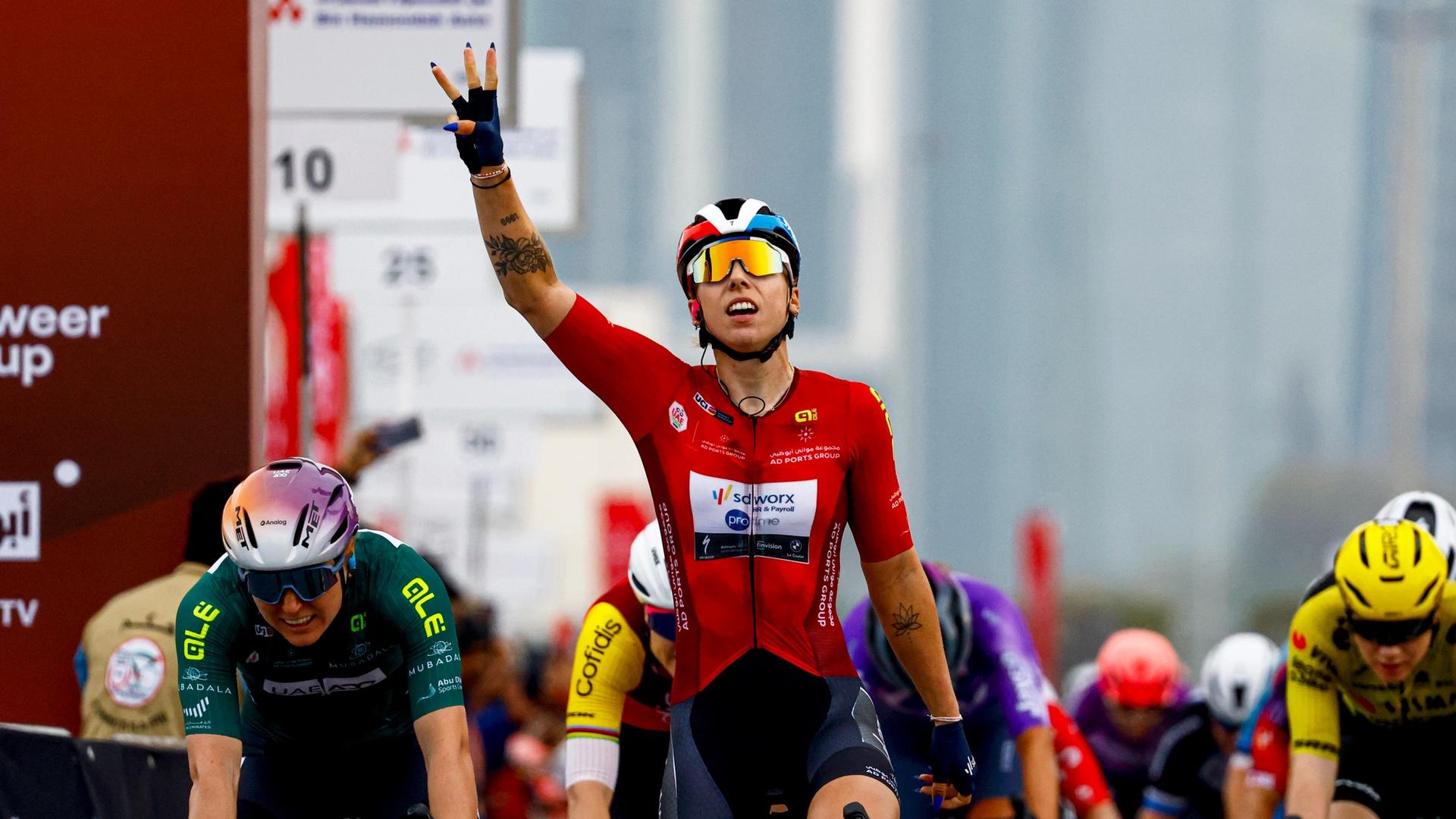
A completely flat opening day from Cesenatico to Ravenna. The route heads north through the Romagna plain before entering a 13.2km urban circuit through Ravenna’s old town, covered three times. Roundabouts, speed bumps and traffic islands keep the peloton attentive through the laps. The question is whether Lorena Wiebes can stamp her authority on the race from day one, or whether Charlotte Kool and Elisa Balsamo can disrupt the SD Worx lead-out on a technical circuit. The first maglia rosa goes to the fastest wheel. Tune in from 17:40 CEST.
Stage 2, 31 May: Roncade to Caorle (156km, hilly)
The race’s longest stage runs from Treviso province through the Veneto, and the only real obstacle is the Muro di Ca’ del Poggio at km 66.9: just 1.1km long but at 12.3% average with ramps touching 19%. It is a Flemish-style wall that will blow the peloton apart mid-race, but with 90km still to ride on wide, straight roads to the Adriatic coast, the sprint teams have time to chase back.
The tactical question: do the sprint squads commit riders to the chase and arrive at Caorle weakened, or does the Muro cause enough attrition to turn this into a reduced-group finish that suits a puncheur like Elisa Balsamo? Tune in from 12:30 CEST.
Stage 3, 1 June: Bibione to Buja (156km, hilly)
From the coast at Bibione, the route crosses the Friuli plain before entering a punchy 43km finishing circuit. Two categorised climbs sit on the circuit: the Moruzzo (cat 4, km 95.6) at around 16:06 CEST, then the Montenars (cat 3, 388m, km 134.7) at roughly 17:08 CEST.
The Montenars is short (1.9km) but vicious, averaging 9.1% with a maximum of 16%, and arrives roughly 20km from the finish. The drama here is whether the GC riders use Montenars to test each other three days before the time trial, or whether they sit tight and let a reduced sprint play out. If Elisa Longo Borghini or Demi Vollering attacks on those gradients, it signals intent for the rest of the week. Tune in from 16:30 CEST.
Stage 4, 2 June: Belluno to Nevegal ITT (12.7km, uphill time trial)
The race’s only time trial, and it is all uphill: 12.7km from Belluno to the summit of Nevegal at 1,047m. The road kicks up through Caleipo and San Mamante before a sustained final ramp past the Santuario di Maria Immacolata. Gradients stay in single digits for most of the climb but touch 11% near the top, with a 5% ramp to the finish line itself.
A cobbled section early on adds a twist. The first rider leaves at 13:20 CEST, the last finishes around 16:30. This is where the overall classification takes shape. The central question is the margin: if one rider takes 30 or 40 seconds, the mountains become about defence. If the top four or five stay within 15 seconds of each other, the Dolomites and Finestre become open contests. Marlen Reusser (Movistar Team) and Anna van der Breggen combine climbing and time-trialling in a way that makes this their biggest opportunity. Tune in from 15:30 CEST.
Stage 5, 3 June: Longarone to Santo Stefano di Cadore (146km, mountain)
The first full mountain stage, and it packs the biggest vertical gain of the race at 3,200m of climbing. From Longarone the road heads into the Dolomites via the Passo Tre Croci (cat 1, 1,805m, 7.9km at 7.2% with a max of 12%), reached around 14:56 CEST. After the descent, the Passo di Sant’Antonio (cat 1, 1,476m) follows at km 92.4, estimated at 16:03.
The finale is a 23.2km circuit through Santo Stefano di Cadore that includes the Costa climb (cat 3, 1,346m) tackled twice, at 16:31 and 17:13. The tactical thread is team strength: the squad with the most climbing domestiques can set a pace over five hours of Dolomite climbing that slowly strips rivals of support. This stage reveals whether the time trial created a genuine hierarchy or just shuffled the top five into a tighter cluster. Tune in from 14:30 CEST for the full mountain day, or from 16:00 for the circuit.
Stage 6, 4 June: Ala to Brescello (160km, flat)
A transition stage and the longest road stage at 160km, running south from the Trentino mountains through Verona, along the shores of Lake Garda, and out across the Po plain to Brescello. There is no categorised climbing. A clear recovery day for the GC riders, and the sprint teams’ chance to reassert control after three days where the climbers dictated terms. Can Wiebes take a second win, or has the first week’s attrition weakened her lead-out train enough for Kool or Balsamo to pounce? Tune in from 16:40 CEST.
Stage 7, 5 June: Sorbolo Mezzani to Salice Terme (159km, hilly)
The Apennine crossing. The first half rolls through the flatlands of Parma and Piacenza before the route turns south into the hills. The only categorised climb is the Pietragavina (cat 3, 727m, 7.9km at 3.2% average with a max of 8%), reached at km 132.1, around 16:33 CEST. It sits 27km from the finish: far enough for a chase group to organise, but close enough for a strong rider to stay away. The day’s intrigue is whether a breakaway specialist like Lucinda Brand or Silvia Persico (UAE Team ADQ) can exploit the gap between the sprint teams losing interest and the GC teams not yet caring. Tune in from 16:00 CEST.
Stage 8, 6 June: Rivoli to Sestriere (106km, mountain)
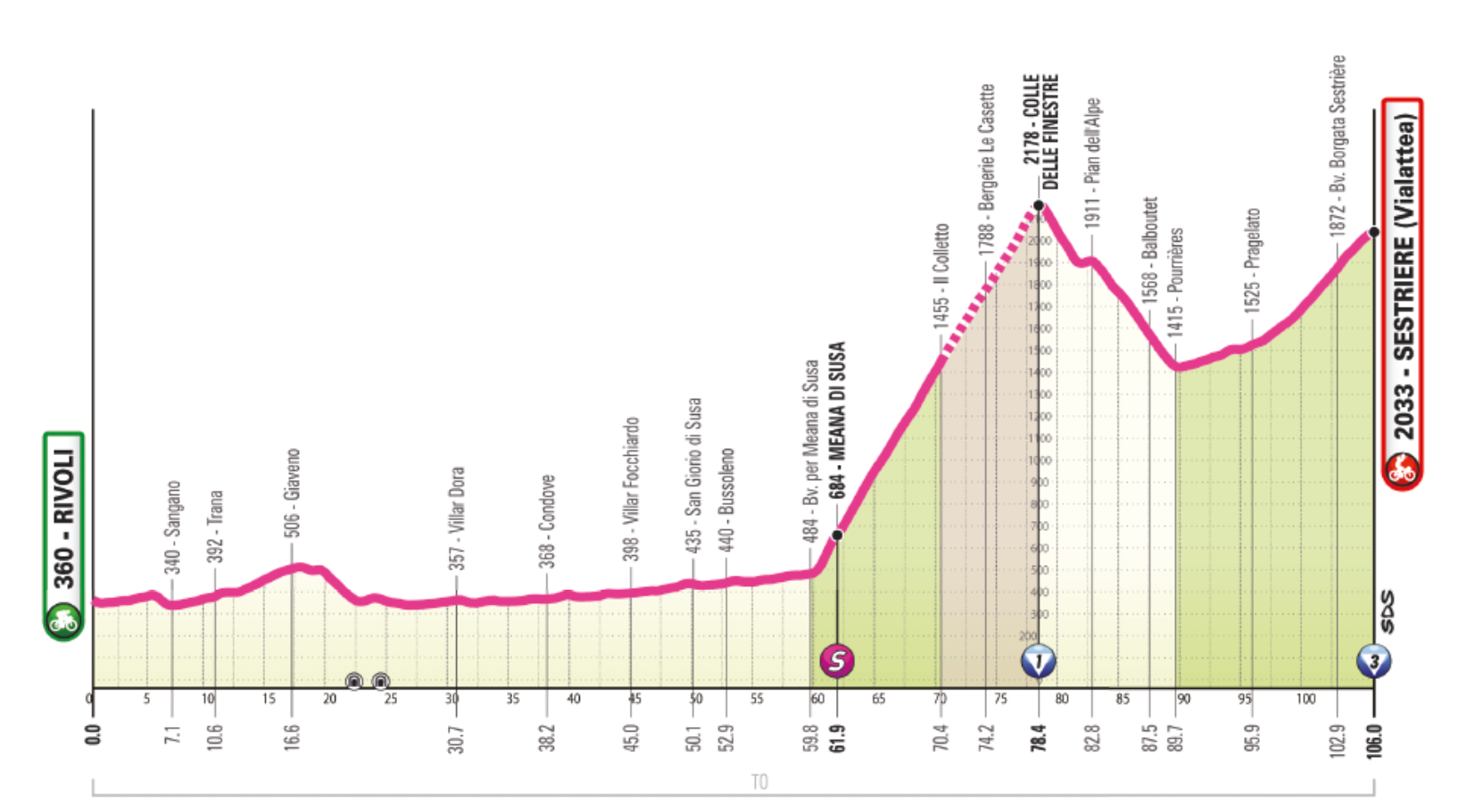
The queen stage. At just 106km it is the shortest road stage, but with roughly 3,000m of climbing it is far and away the hardest. The first half rolls through the Susa Valley, passing through Condove, Bussoleno and Meana di Susa (intermediate sprint at km 61.9, around 15:42). Then the road tilts upward and does not stop.
The Colle delle Finestre (cat 1, Cima Alfonsina Strada, 2,178m) is 18.5km at 9.2% average. The lower slopes are paved, but from Il Colletto (km 70.4, around 16:12) the road turns to gravel for the final 9km to the summit, reached at approximately 16:40 CEST. It is the highest point of the entire race. After the descent, the road rises again to the summit finish at Sestriere (2,033m), expected around 17:31 CEST.
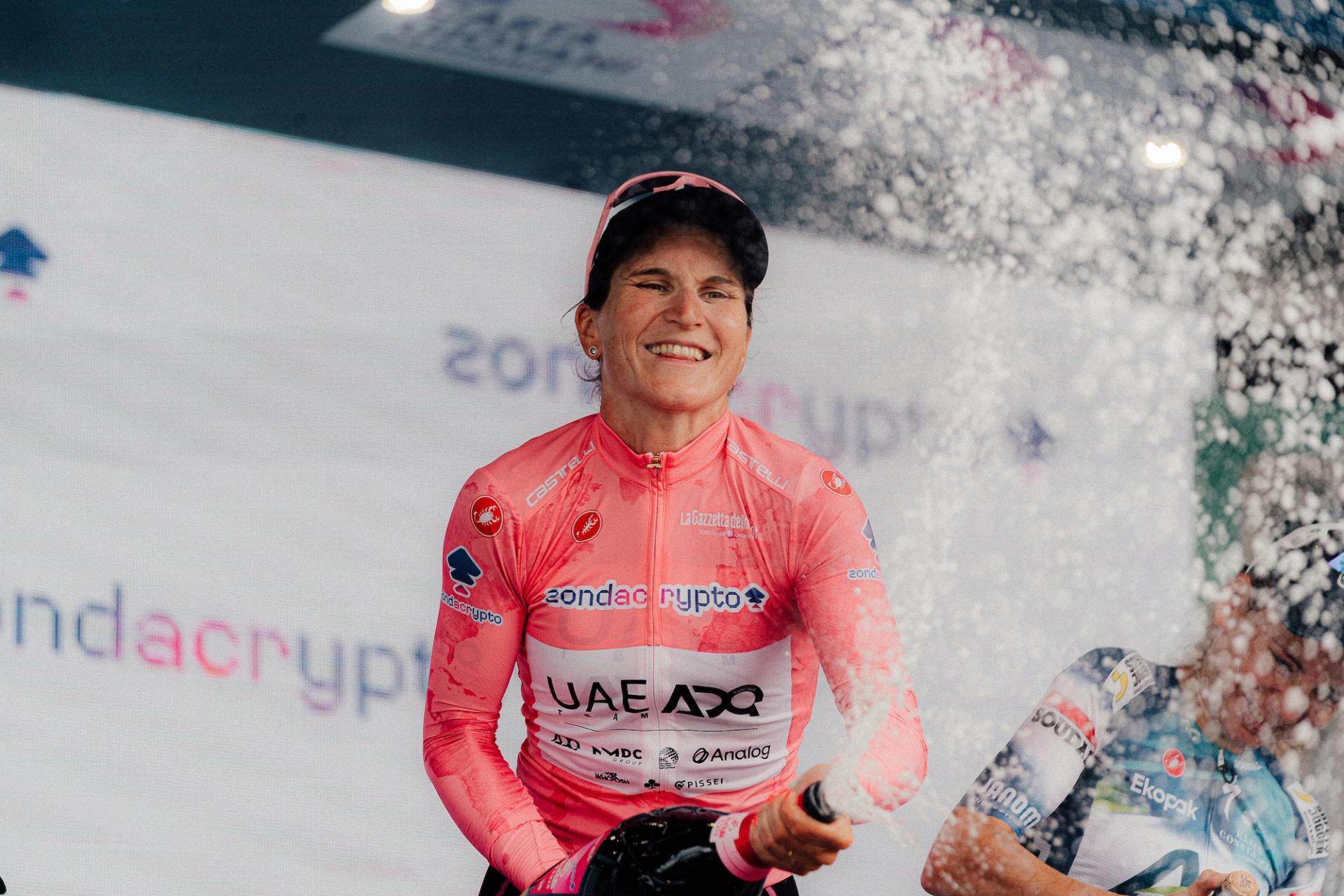
The gravel on the Finestre changes everything: bike handling, tyre choice and confidence on loose surfaces all matter alongside pure climbing power. Teams will burn domestiques on the lower slopes, leaving GC leaders isolated well before the gradient and gravel bite hardest. A gap opened over the Finestre can be defended or extended on the final climb to Sestriere rather than neutralised on a flat run to the line. This is the day that will decide the maglia rosa. Tune in from 15:30 CEST.
Stage 9, 7 June: Saluzzo to Saluzzo (145km, mountain)
The final stage, and it is no procession. A 145km loop from Saluzzo through the hills of Cuneo and Piedmont with three categorised climbs and 2,800m of elevation gain. The route heads west immediately, hitting the Montoso (cat 1, 1,254m) at km 54.2, estimated around 15:03 CEST. It is 8.9km at 9.4% average with ramps of 14%, the most relentless gradient profile of the entire race. After the descent, the Colletta di Paesana (cat 3, 607m, km 73.7) provides a brief reprieve before the Colletta di Brondello (cat 2, 818m, km 106.6), reached around 16:33 CEST. That is 6.9km at 6.5% with a maximum of 14%, and the last real climbing before the slightly downhill run back to Saluzzo.
The tactical drama depends entirely on the GC situation. If the race is decided, the maglia rosa’s team controls the tempo and this becomes a coronation ride punctuated by breakaway attempts. If the gaps are tight after Finestre, the Montoso’s savage gradients offer one last chance to crack a rival, and the Colletta di Brondello at km 106 becomes the final battleground. Tune in from 14:30 CEST.
Travelling during the Giro d'Italia Women?
Three weeks is a long window, and most readers will be away from home for at least one of the stages above. A VPN lets you keep using your usual broadcaster's stream while abroad, on official, paid services only.
Velora never endorses bypassing broadcast rights. A VPN should only be used to access official services, whether paid or free-to-air, while abroad.
Who to watch
The GC battle centres on Demi Vollering, Elisa Longo Borghini, Marlen Reusser and Anna van der Breggen, with Niamh Fisher-Black as a potential disruptor in the mountains. On sprint days, Lorena Wiebes is the fastest finisher, with Charlotte Kool and Elisa Balsamo her main rivals. Lucinda Brand and Silvia Persico are the names to track on breakaway-friendly stages.