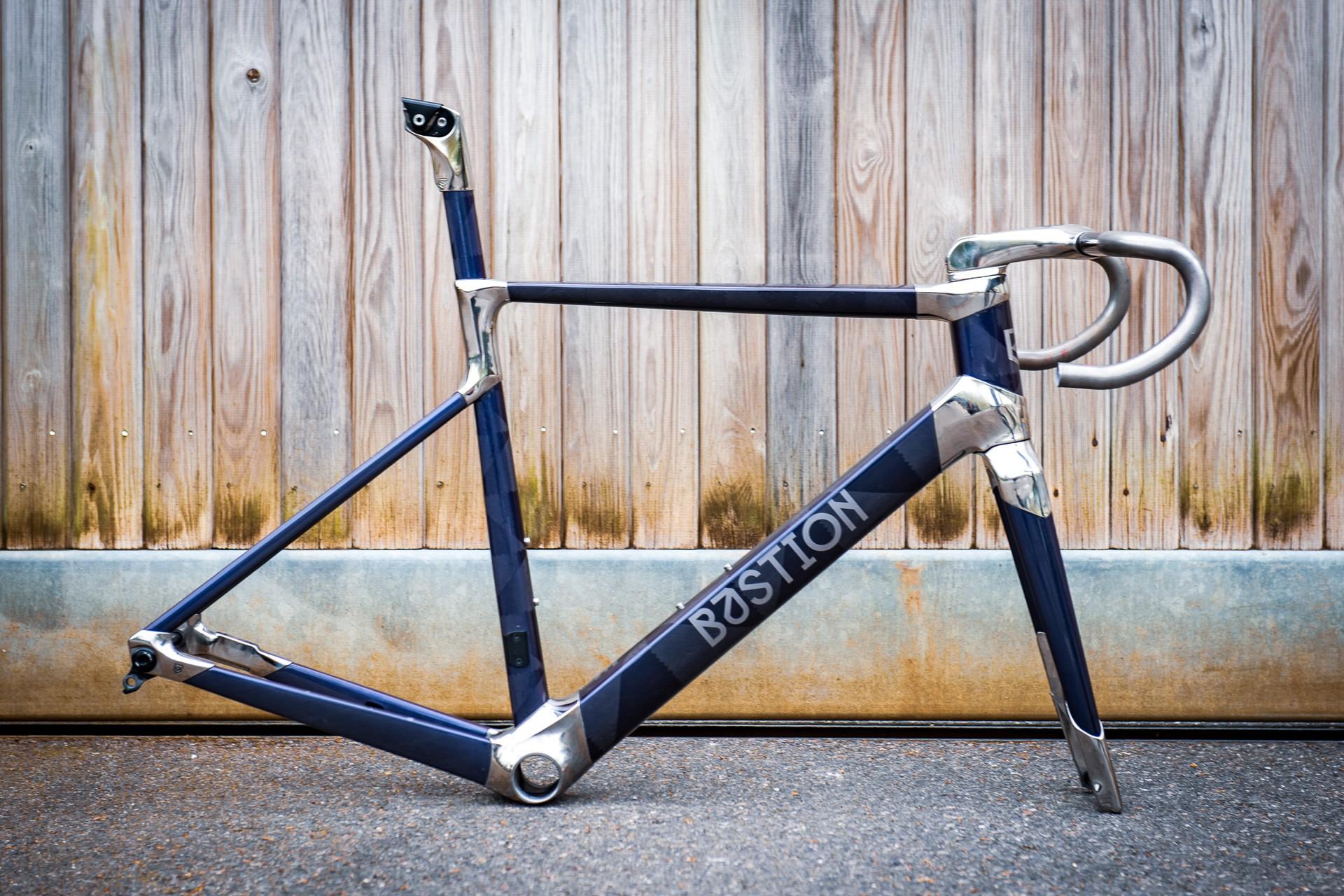
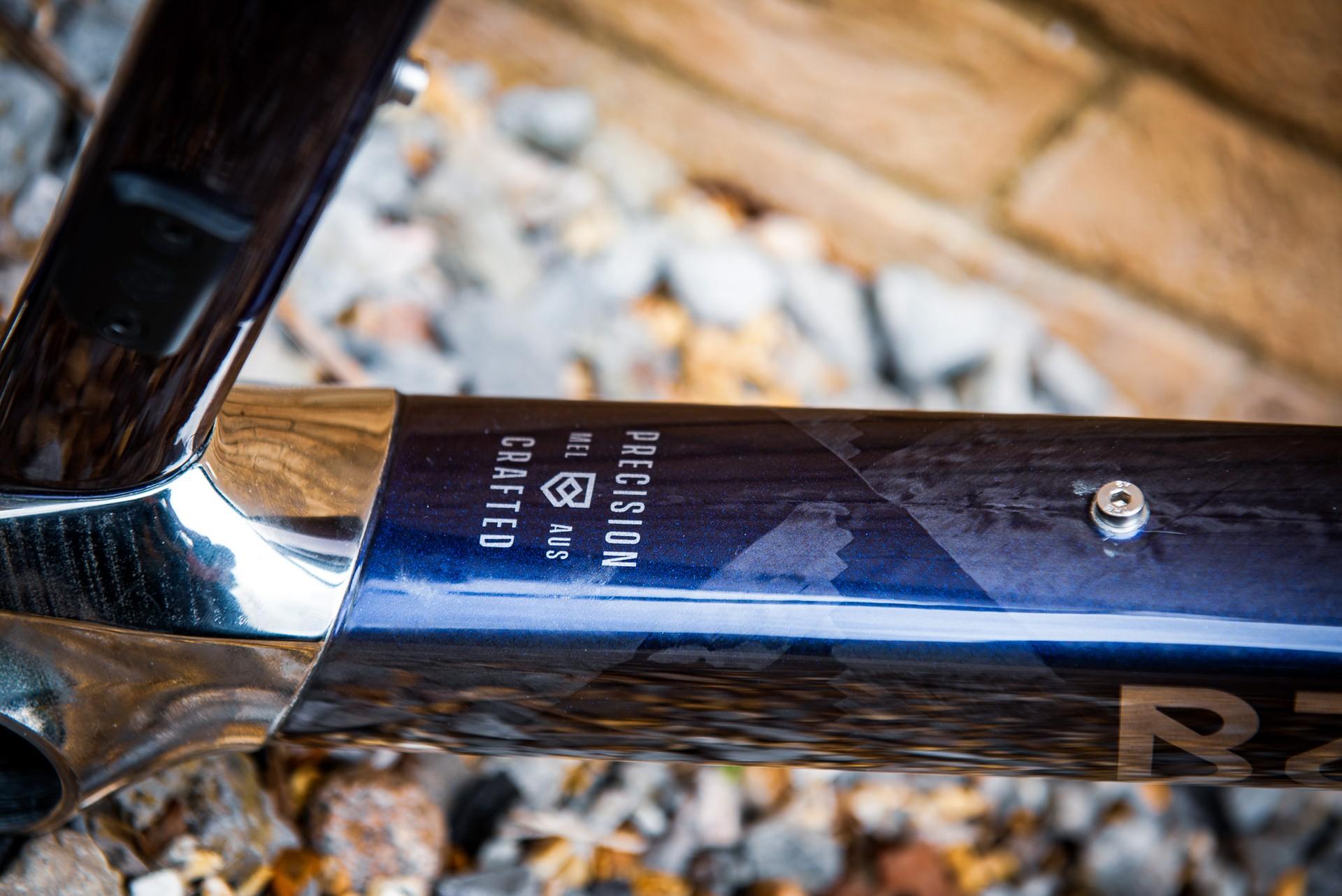
There is almost nothing else on the market built like a Bastion Archetype. Where most performance bikes are moulded carbon monocoques, the Archetype is an intricate hybrid of metal and carbon: 3D-printed titanium lugs, grown layer by layer in a laser powder bed fusion machine, joined to filament-wound carbon fibre tubes.
Each frame is made to fully custom geometry and layup, with the lugs printed to the rider's dimensions, and takes over 70 hours of hand craftsmanship and 130 hours of machine time. Only 606 will ever be produced and complete builds start from USD $20,000.
The Melbourne company's reasoning for the unusual construction goes beyond aesthetics, although co-founder Ben Schultz is happy to admit the titanium lattice "looks amazing as well." A true one-piece monocoque is, in his words, the gold standard for composites, but almost nobody actually makes one; getting good compaction where the chainstays, seat tube, and down tube converge at the bottom bracket is notoriously difficult, and most "monocoque" frames are really two or three mouldings joined together.
Bastion's view is that the resin-heavy joints this produces add hysteresis to a frame (energy lost as the structure responds to high-frequency inputs) and that a titanium-lugged construction absorbs road buzz in a way a full-carbon frame can't. Having ridden the original Bastion Road a decade ago, and with it still sitting in my own personal top three bikes ever ridden, it's a claim I find hard to argue with.
The Archetype is the company's first new platform in ten years. It pairs that construction philosophy with a NACA-profiled aero design the company says saves 18–25 watts over its predecessor at 50 km/h, validated at the Silverstone Sports Engineering Hub. Bastion describes the result as "Ascendant Complexity."
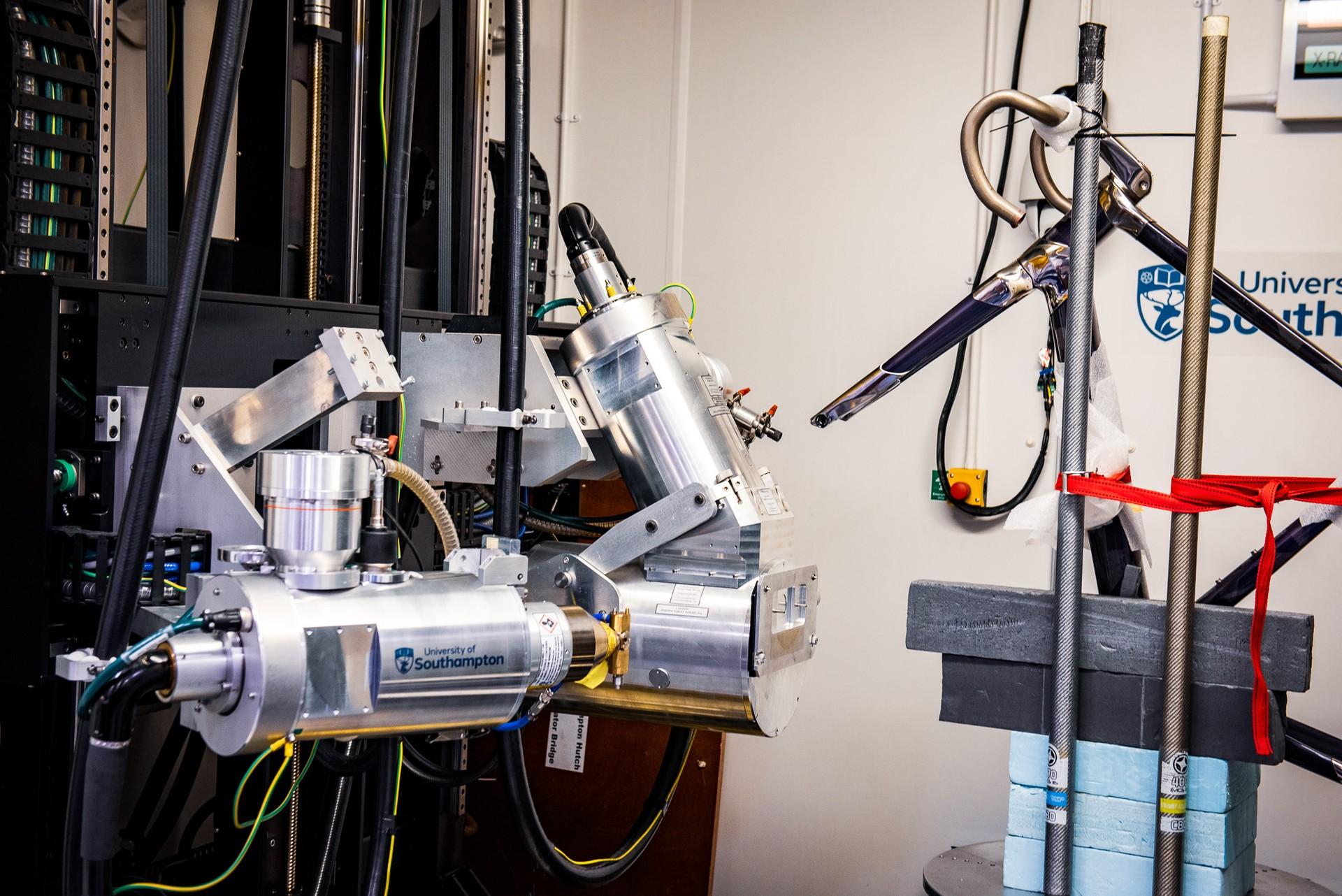
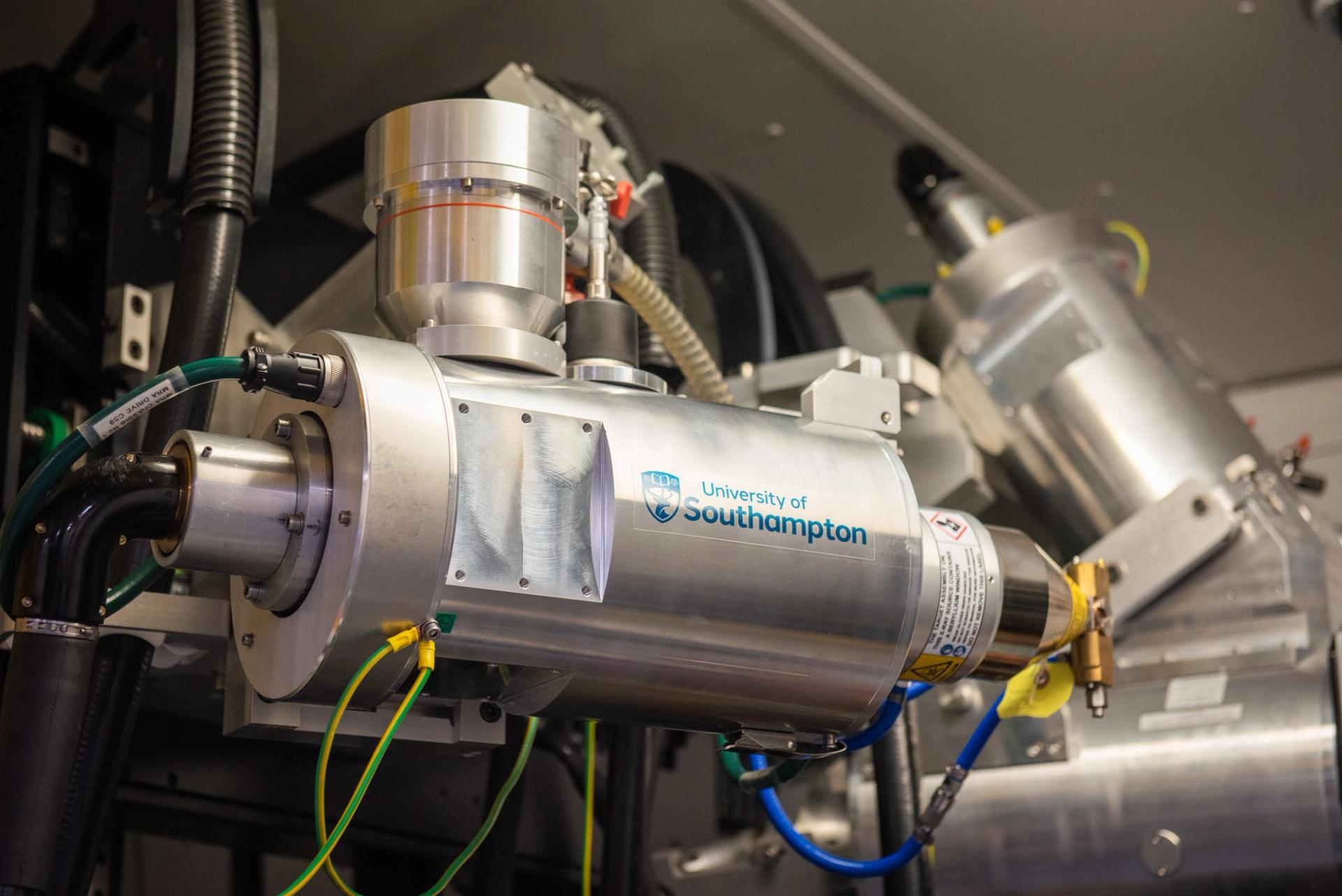
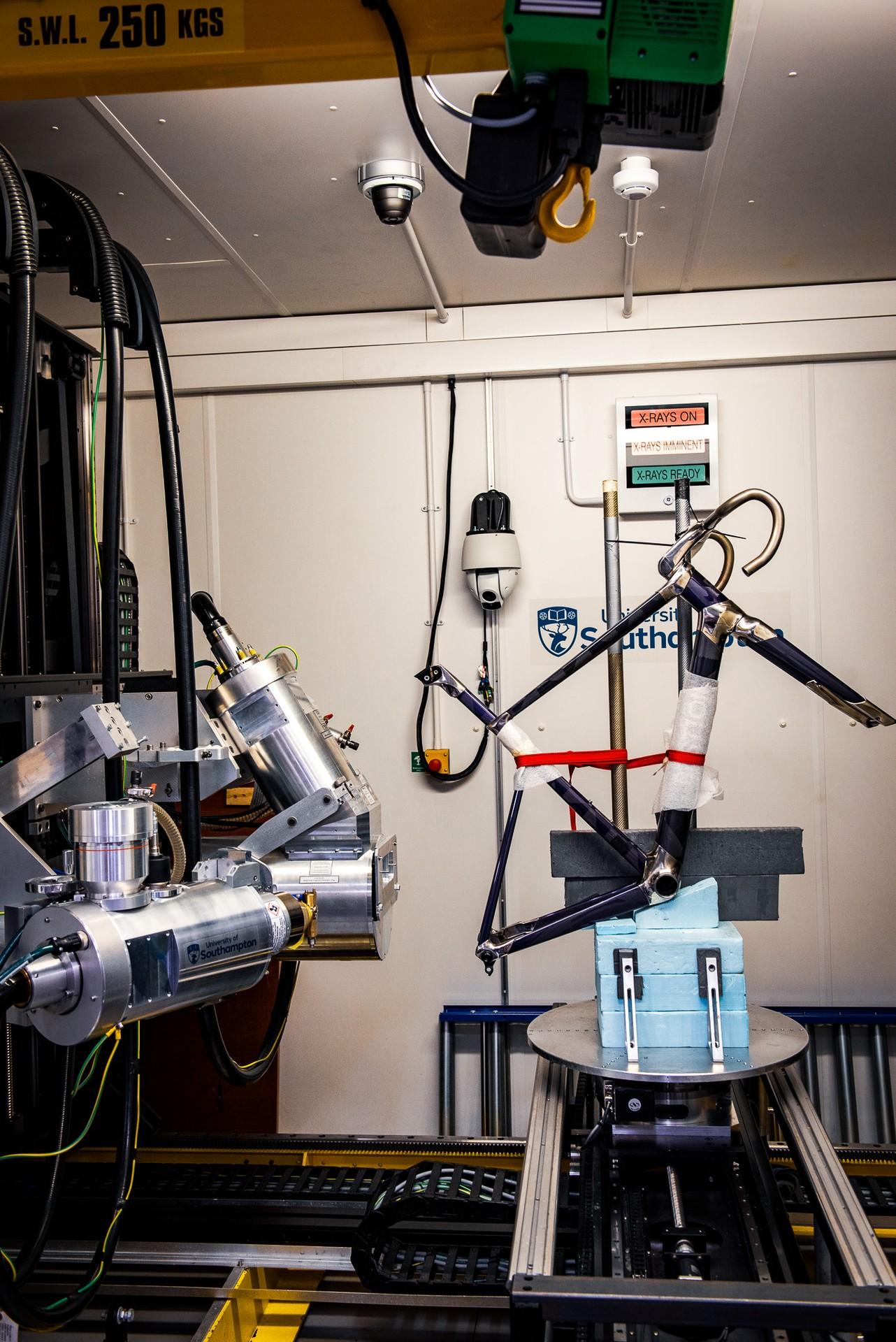
We wanted to see what that complexity actually looks like. So we applied for a grant and took an Archetype frame to the μ-VIS X-Ray Imaging Centre at the University of Southampton. The University is home to what is believed to be the largest CT scanner in the country, hidden behind a shield door that weighs several tonnes. There we had it scanned at roughly 80–86 microns per voxel. Capturing the frame took six individual scan volumes, stitched together into a dataset exceeding 50 gigabytes, rendered on a workstation stacked with GPUs.
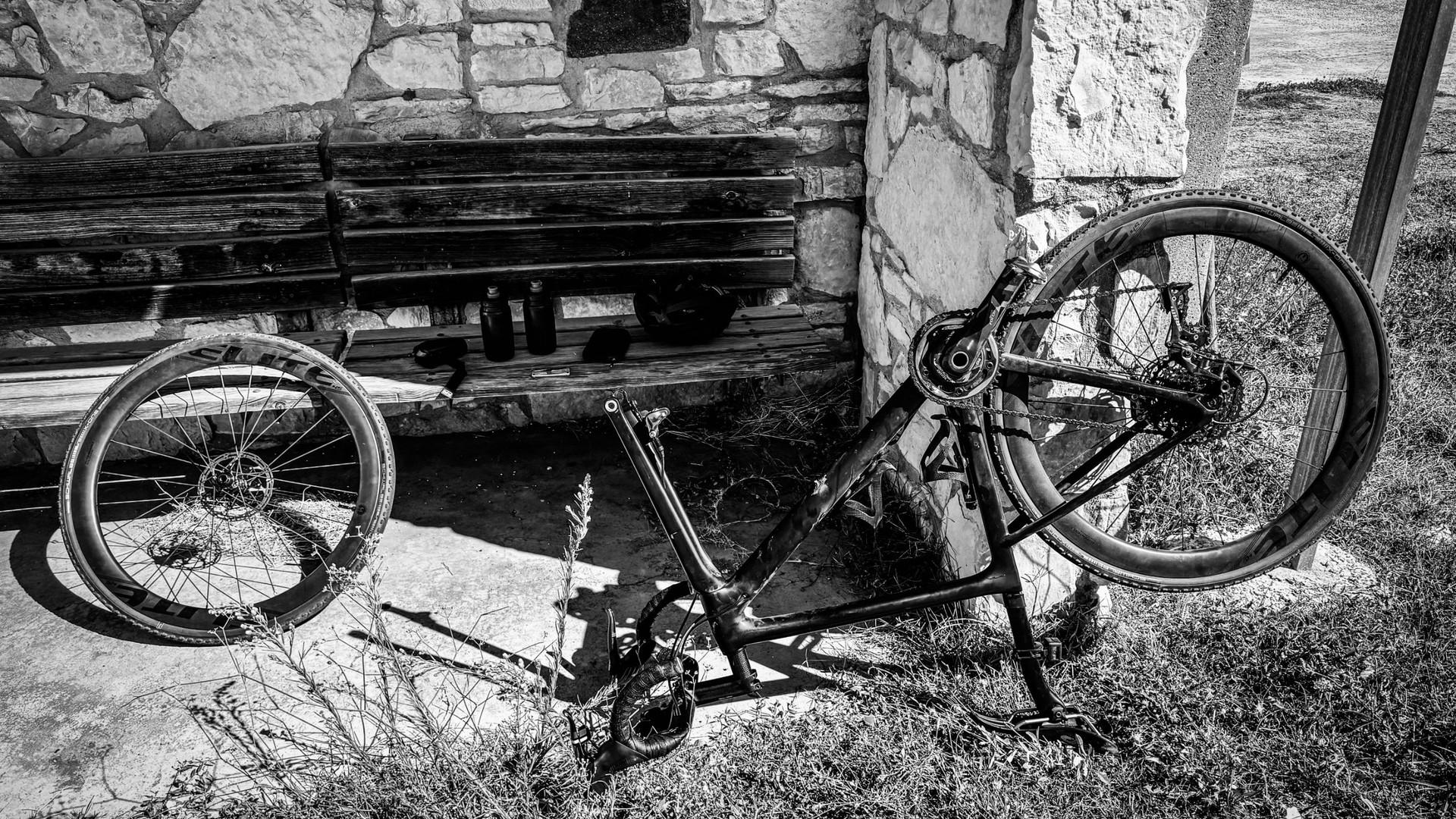
The frame itself was an early prototype that had previously been out for a ride review, so it carried some real-world history, which, as it turned out, made the scan more interesting, not less.
Bastion provided the frame completely voluntarily. Bastion and UK distributor Velo Atelier covered the cost of transport, disassembly and assembly, but otherwise Velora received no payment or financial support for the project from Bastion. In turn, Bastion has exerted no editorial control over our process, findings or our write-up.
The view inside
The first thing that strikes you in the scan data is the titanium lattice. Inside every lug, where the eye sees only a smooth printed surface, the CT reveals an intricate internal lattice structure – and scrolling through the cross-sections is genuinely mesmerising, a field of star-like cells that bloom and vanish as the slice plane moves through the frame.
Across all six scan volumes, the lattice was remarkably consistent. Where you might expect a 3D-printed structure to show fumbled or misaligned cells somewhere in hundreds of thousands of struts, it didn't. The only variation we found was deliberate: around cable outlets and functional features, the weave of the lattice visibly changes shape, because Bastion controls it parametrically – cell size, cell type, rod diameter, even the aspect ratio of individual cells – depending on whether a region is structural, supporting, or simply there to let unfused powder escape after printing.
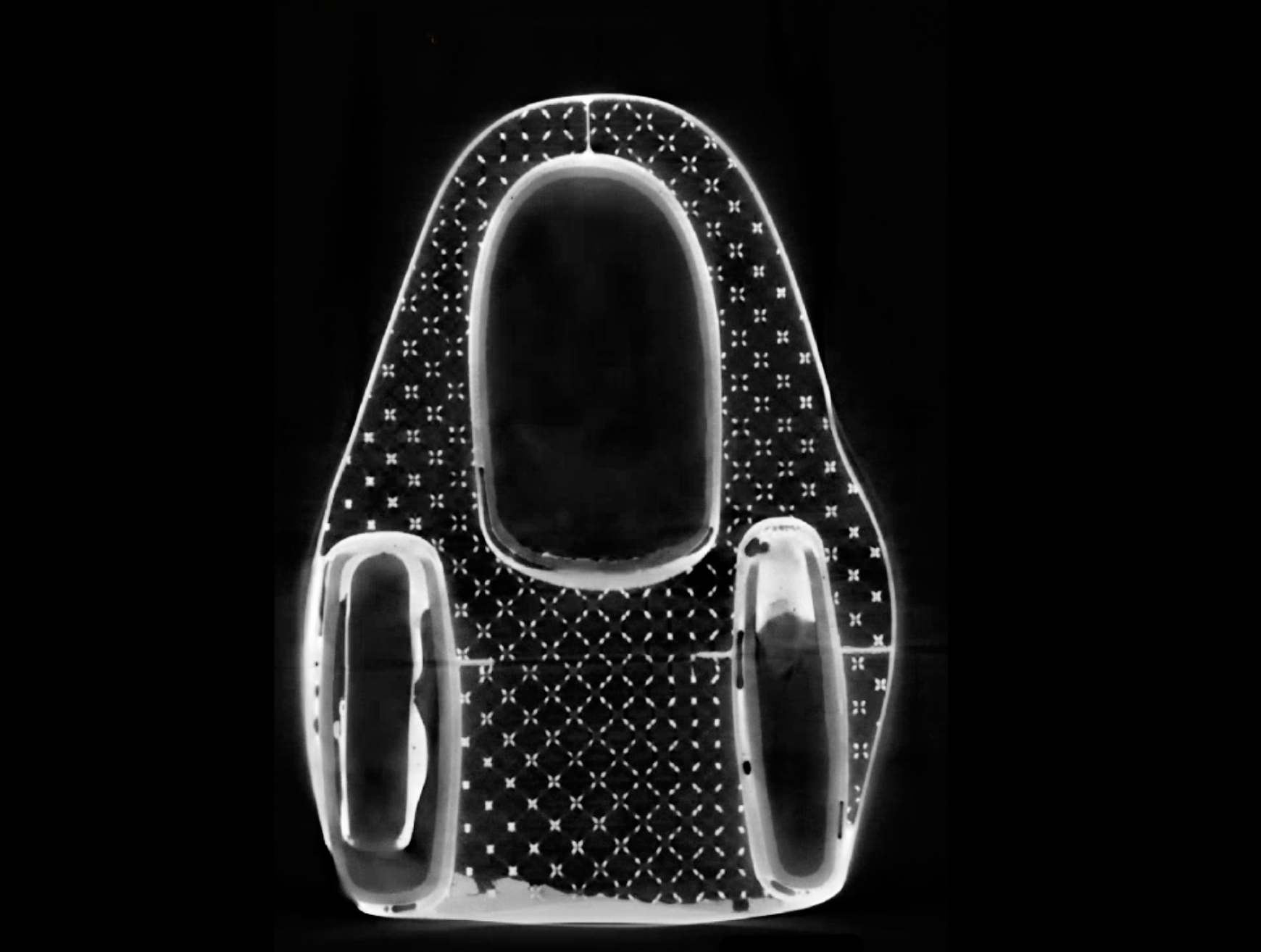
Fernando Alvarez-Borges, the Senior Research Fellow at μ-VIS who led the scanning, has seen plenty of additive manufacturing pass through the facility. "Occasionally I've seen some latticework become a bit fumbled, twisted, or out of alignment in some builds," he said. "This one looks okay." That's understatement of a very academic kind; elsewhere the team's reaction to the printing quality was straightforwardly impressed.
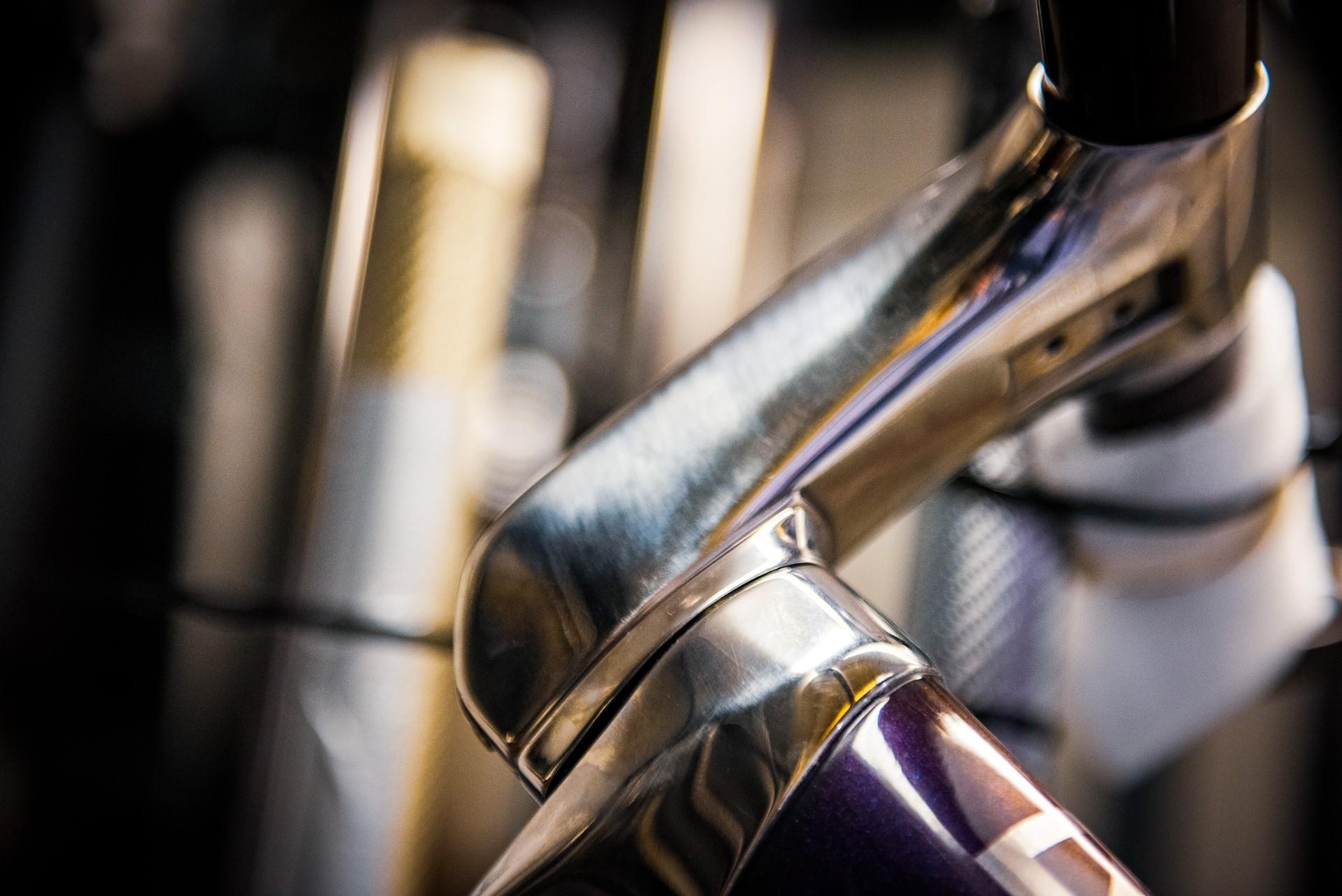
The scan also revealed things you simply cannot know about a bike from the outside. The one-piece printed handlebar – a component with a fraught history in cycling generally – turned out to contain far more lattice reinforcement than expected. "That's a lot of lattice work in there," was the team's observation, followed by: "I think you should be glad that it's in there."
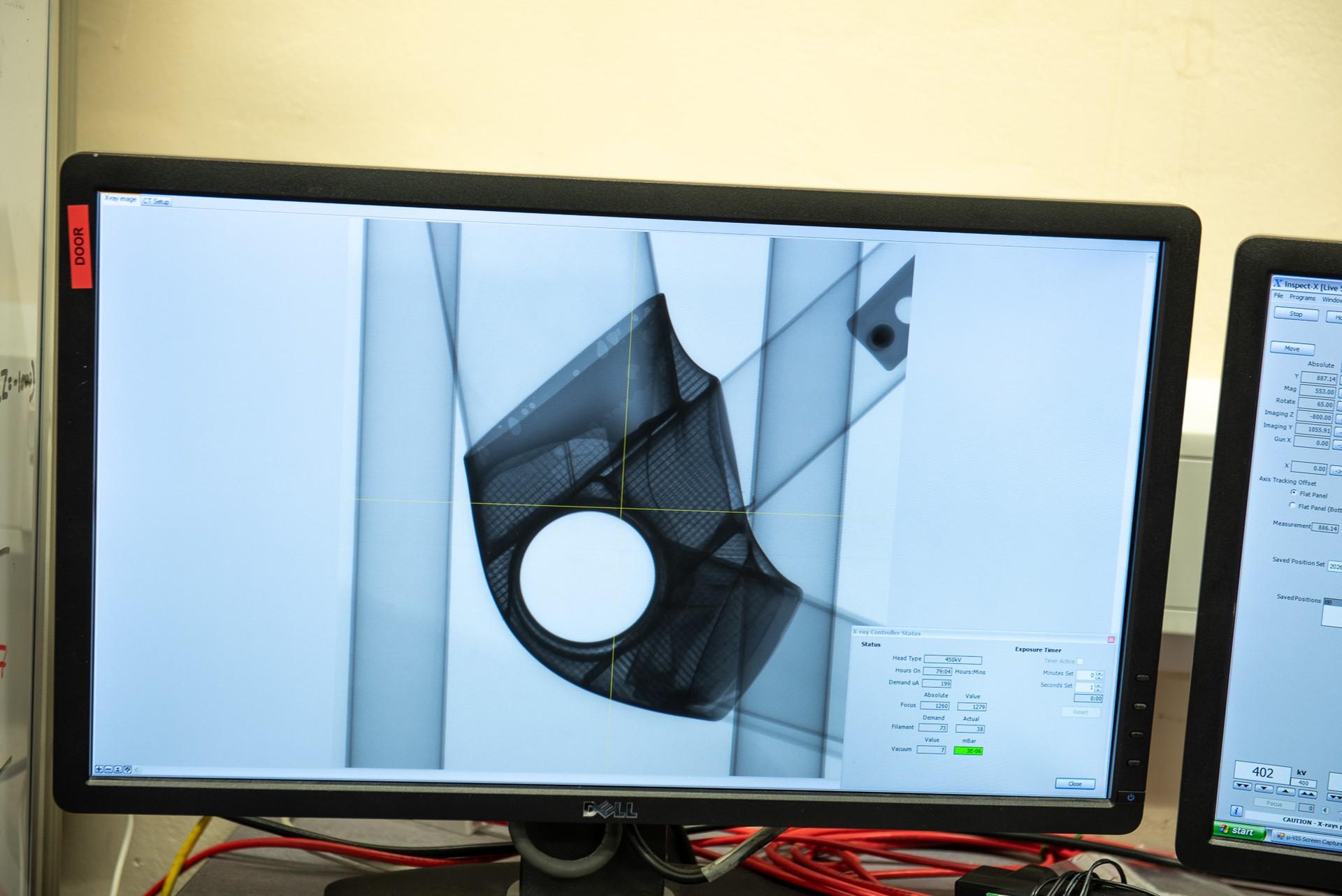
Then there's the steerer tube. Most of the industry has migrated to bulbous 1¼-inch upper headset bearings so that hydraulic hoses can route internally past a round steerer. Bastion refused, keeping the slimmer 1⅛-inch bearing for the sake of the bike's front-end profile – "the top end of our bike is stunning compared to everyone else's," as Schultz put it. The solution, hidden inside the head tube, is a steerer that isn't round at all: it's a D-shape, with the flat face creating space for the brake hoses to pass, and noticeably thicker carbon walls on the chopped side compensating for the stiffness lost by cutting away part of the circle.
While easily visible by pulling the fork, it's a piece that is hidden from view during use. The Southampton team spent a moment puzzling over the cross-section before the penny dropped, and their first reaction was surprise at how slender it was.
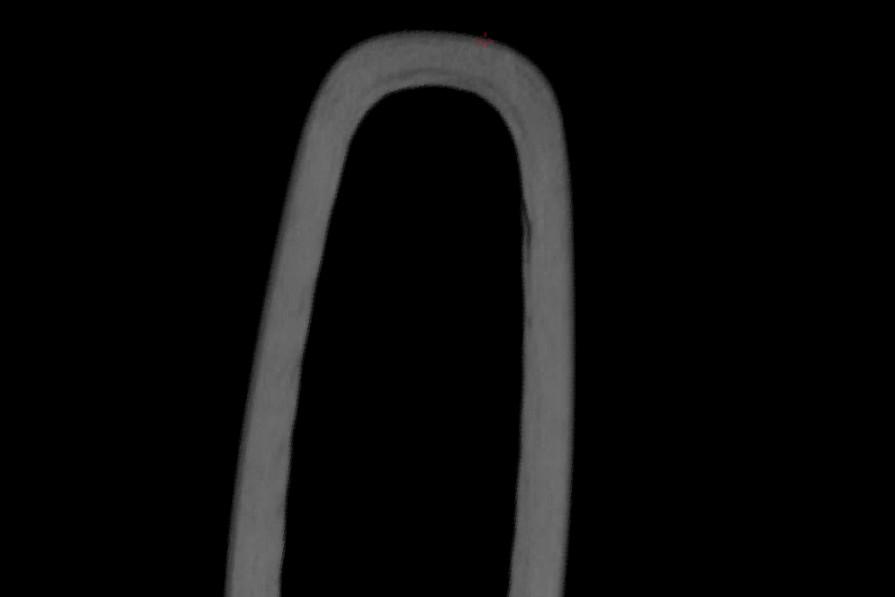
The scan also found something in the steerer no disassembly would ever show: a small void in the carbon itself, measured live on screen at roughly 0.78 mm by 0.2 mm. "That's quite a big void," was the initial reaction in the room, before Alvarez-Borges immediately tempered it: "Before we say that this absolutely disqualifies this as a premium bicycle, we don't know how other bicycles look like... it could be that comparatively speaking this is amazing CFRP work."

A tiny void within the steerer tube carbon wall
It's a notable place to find one, given – as one of the team observed – this is the one component on a bike you really, really don't want to fail. Bastion's R&D director Ethan was unconcerned when we put it to him: voids of that size have the potential to occur in any carbon part, and because the steerer's manufacturing process has been validated through parts that passed testing with the same process controls, a void on that scale sits below the threshold of anything critical. "I think that one probably falls within what you'd expect as a reasonable tolerance," he said. Still: a sub-millimetre bubble, buried in the most safety-critical tube on the bike, findable only with several million pounds' worth of X-ray equipment was a thought-provoking discovery.
The frame of reference
Some context is worth establishing here. The μ-VIS team's day job is scanning aerospace and military composites, where tolerances are unforgiving. Their reference points for consumer carbon fibre are things like fishing rods and surfboards, and, in one previous case, another carbon bicycle frame, a mountain bike scanned a few years earlier.
Against that backdrop, their assessment of the Bastion was that it sat in a completely different league from the leisure-grade composites they'd seen, and the comparison with the previously scanned mountain bike was stark: that frame was, in their words, much worse construction quality, and they were surprised by how tidy the Archetype was by comparison.

Slight pooling of glue at the bottom of the tube joint
Alvarez-Borges was careful about the limits of any single scan, noting that without scans of other bicycles to compare against, the imperfections the team found can neither condemn nor flatter the frame – a caution that cuts both ways, since nobody has a library of superbike CT scans to rank against.
But the direction of the team's surprise was consistent: for hand-built sporting goods, this was unusually clean work.
What handmade really means
That's not to say the scan showed perfection. It showed something more interesting: what elite-level, mixed-material manufacturing actually produces, and the tolerances it deliberately works within.

The most conspicuous finding was at the bond lines, where carbon tubes insert into titanium lugs. Several joints showed clusters of small voids and bubbles in the adhesive layer – regions where, as Alvarez-Borges put it after correcting his own terminology, the surfaces were never bonded in the first place. "Let's call it unbonded. Partial bonding."
Whether that matters depends entirely on the engineering margins. "It could be that if only you manage to bond 20% of the real area, you are achieving an area that is as big as your minimum area," Alvarez-Borges said. "It's very hard to say, oh, this is a problem. It might not be." He drew the obvious line: "If it was something that's going to fly, and carry people, we might say, are you sure this is okay? For the kind of loads that the frame would take, it might be okay."
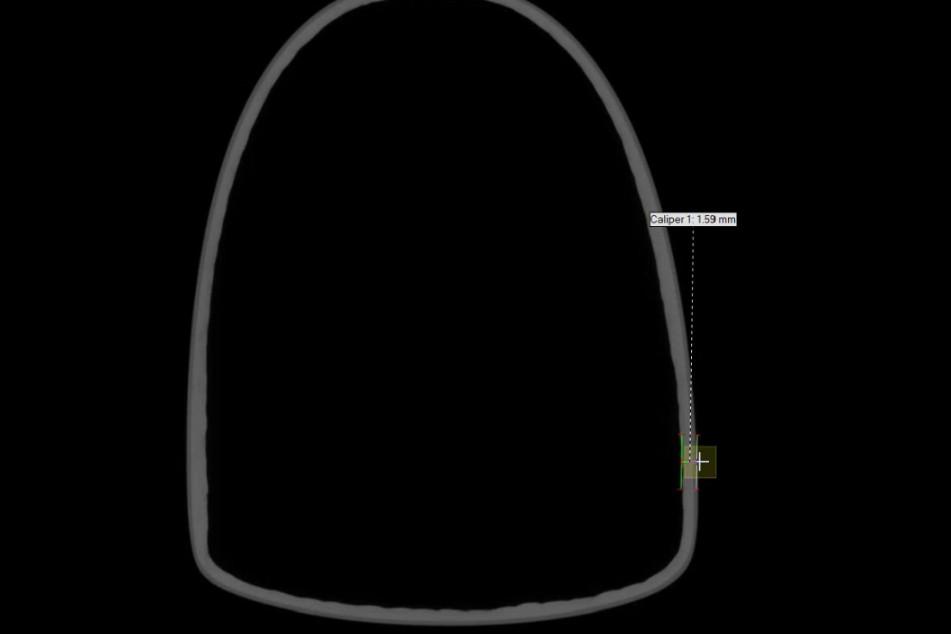
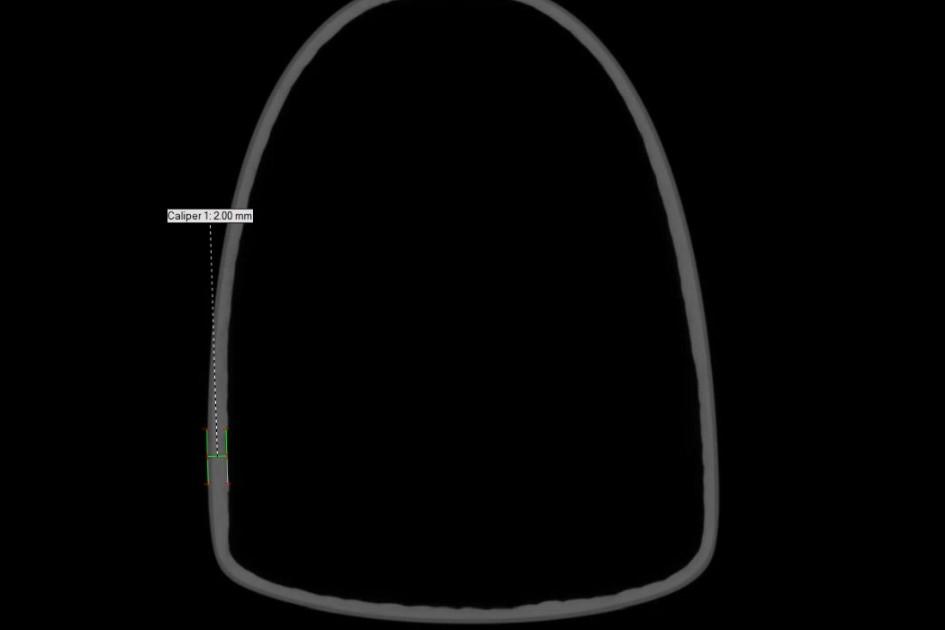
The minute wall thickness variation, in this instance reflecting design around asymmetrical load
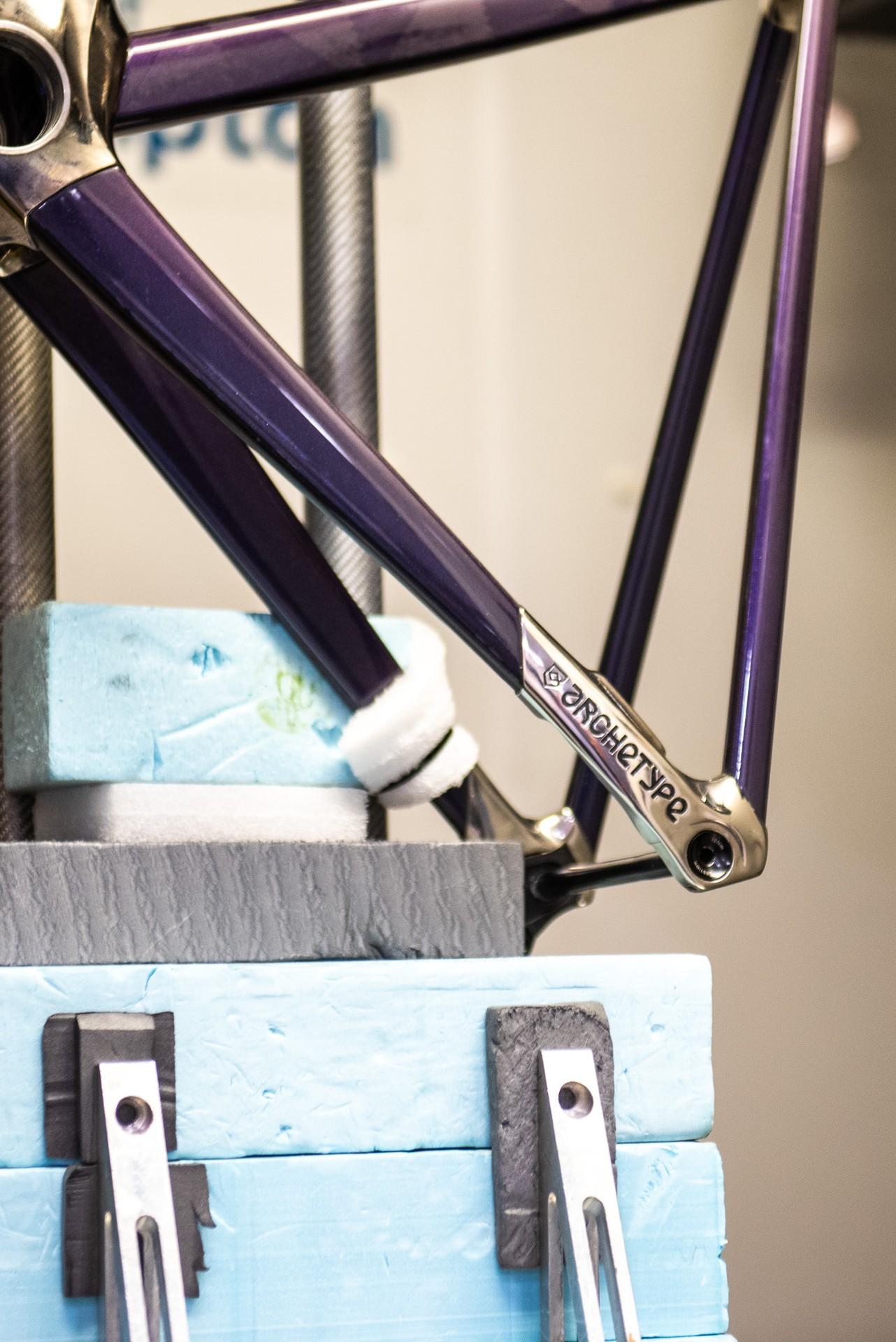
Bastion's answer came with unusual candour. The scanned frame was the very first prototype bonded on the Archetype platform: the first attempt at a new internal-spigot design, where tubes slide into the lugs rather than over them. "The glue would not have been as evenly applied. The production ones would be a lot better," Schultz said. "But that being said, that bike has still passed durability testing."
Ethan, Bastion's R&D director, explained the mechanism with the kind of detail you rarely get from a bike brand. The target bond gap is 0.3 to 0.4 mm radially. If the gap isn't uniform and the tube isn't inserted perfectly along its axis, it can scrape adhesive off one side as it slides in, leaving voids on the other.
Since this prototype, the company has made numerous changes to print orientation and support structures to produce more accurate lug openings. And the margins are generous to begin with: the Archetype's seat tube to bottom bracket joint has roughly 240% more bond area than the previous platform.
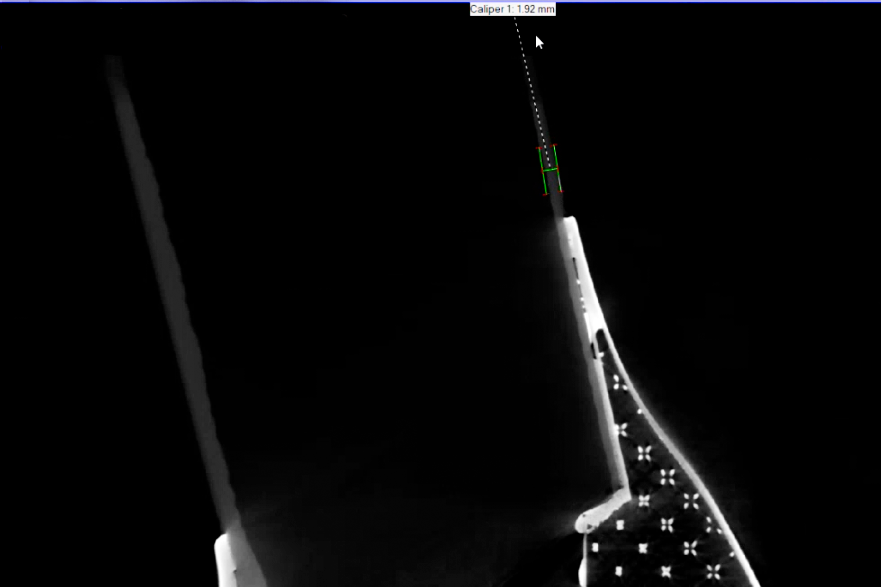
Small glue voids, against striking latticework
The same logic applies to the wall thickness variation visible in the scans – readings like 2.2 mm tapering to 1.5 mm along the down tube. The front triangle tubes are made by wrapping base plies around a mandrel, filament-winding over the top, and curing in a hard mould with an expanding silicone pressure booster. The overlap where base plies meet creates inherent thickness variation, which Bastion designs around and validates by destructively cutting up test frames. "Cut sections, microscope, that kind of thing," Ethan said. It's lumpy because that's what the process produces, and the process is validated as a whole, not measured against an imaginary ideal of perfect uniformity.
One caveat applies throughout: at 80 microns per voxel, the scan resolves bond lines, wall thickness, and gross structure, but not individual carbon plies or microscopic voids. "We're not saying they're not there," Alvarez-Borges said. "It's just that if they're there, they are not detectable at the voxel size that we use."
The detective story on the chainstay
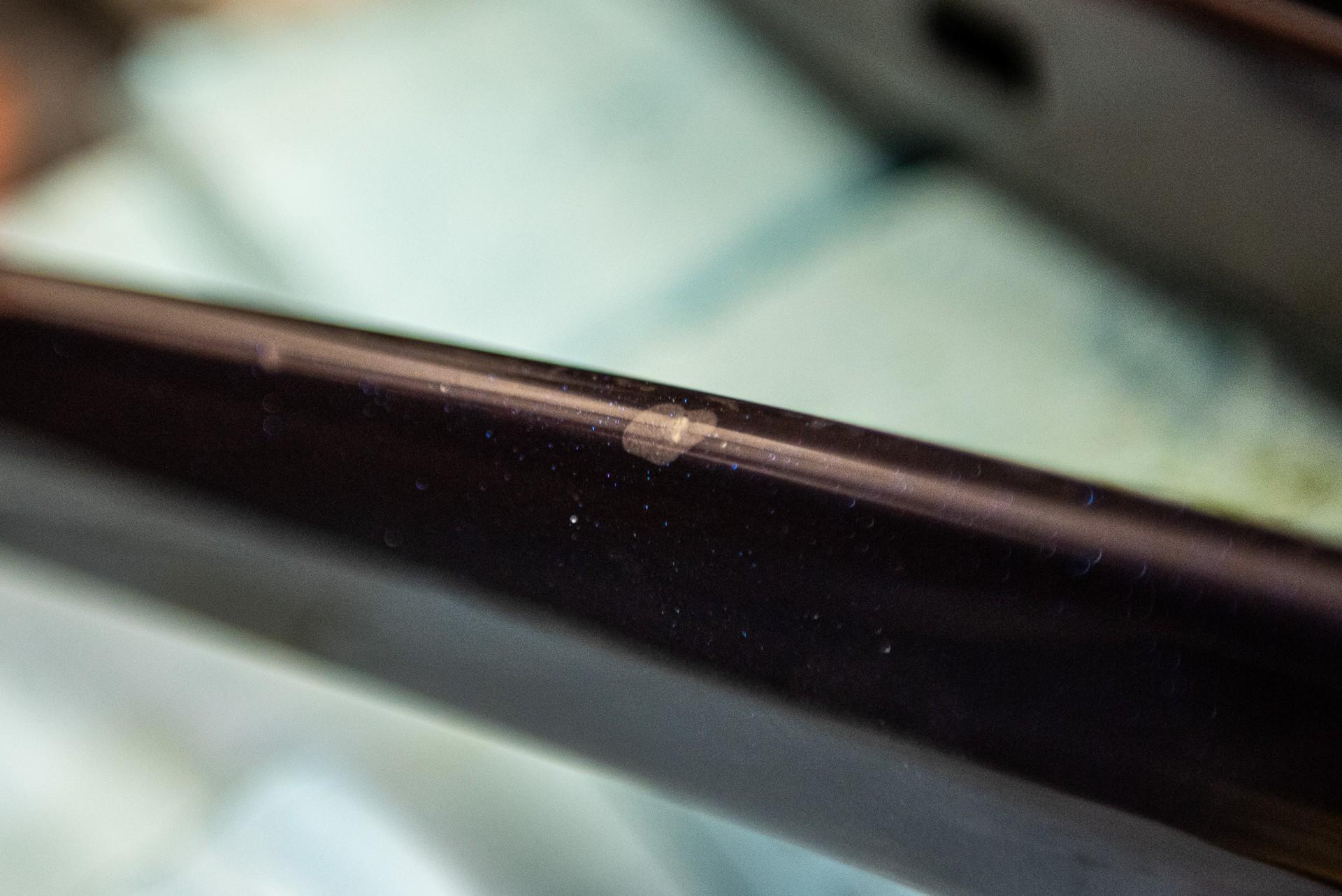
The most compelling single image from the entire dataset came from a chainstay. On the outside, the frame carried a tiny chip – the kind of blemish a previous reviewer's chain drop might leave, small enough that most owners would dismiss it on sight. I did exactly that when I first saw it.
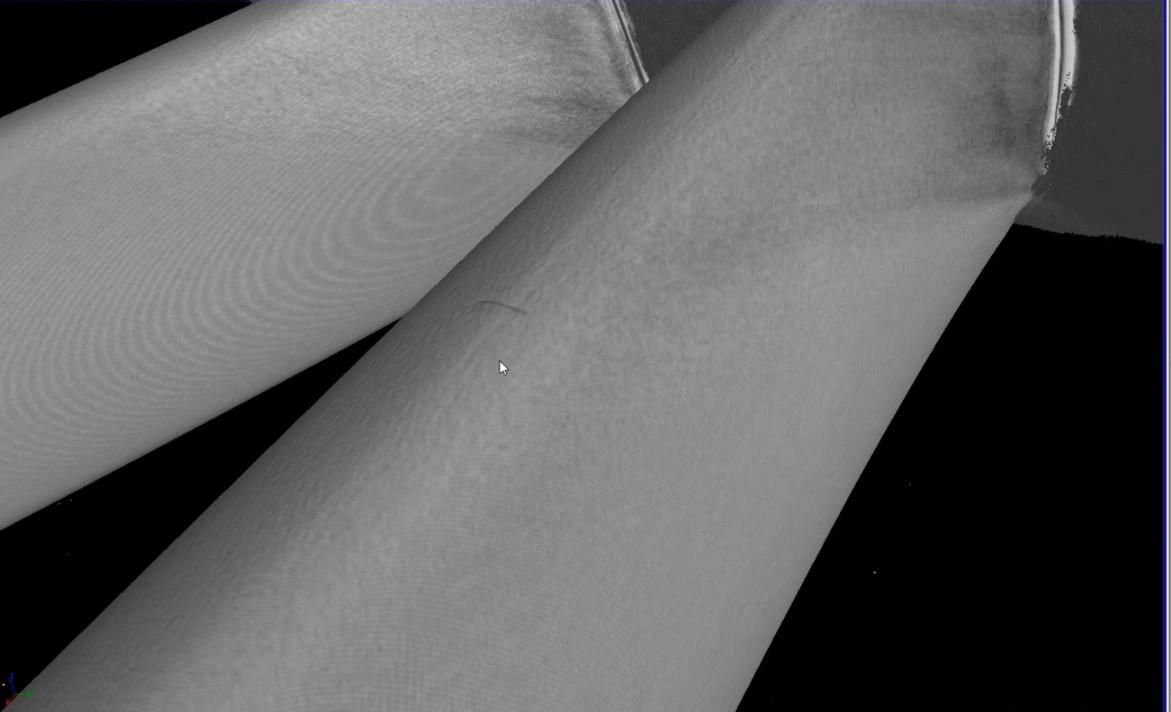
The scan told a different story. Directly beneath the chip, the CT revealed an internal discontinuity: a dark fringe running along the inner wall of the tube, a potential delamination or crack invisible from outside. The Southampton team debated its origin live over the scan data – one composites specialist leaned towards a manufacturing feature, another towards impact damage, and the truth is genuinely unknowable without cutting the tube open. Whether such a feature would ever propagate depends on crack-tip geometry and loading conditions, the kind of question that needs simulation rather than a glance.
Bastion, for its part, stressed it hadn't had control of the frame during its months in Europe and couldn't determine the cause without testing the frame. But the broader lesson stands regardless of origin, and it's one of the most practically useful things the scan produced: the long-running pub debate about whether superficial chips on carbon frames "mean anything" turns out to have a genuinely unsatisfying answer. Sometimes a cosmetic chip is just a cosmetic chip. And sometimes, beneath an almost invisible blemish, there's something going on that no visual inspection will ever find.
Precision, in context
So what does a $20,000 bike look like on the inside? Not like a jet engine – and that's the point.
Schultz frames the difference with an engineer's risk matrix: detection, occurrence, severity. "If a frame cracks, you're probably going to hear something or see something," he said. "If something happens in a plane, no one's going to see it happening, and 300, 400, 500 people will lose their lives."

Aerospace manufacturers CT-scan critical parts at 100% rates and never blend titanium powder between batches because traceability must be absolute. "They spend far more time checking the parts than they do making them, and that's why they're so expensive," Schultz said. "But I would say we're closer in our checks to aerospace than any of the carbon fibre manufacturers in some other places of the world."
The scan data backs that up. Every print plate Bastion runs includes tensile test specimens for material verification – over 1,400 prints across seven years of accumulated process knowledge.
The imperfections the scan found are the honest signature of handmade, mixed-material construction: bond lines with some bubbles, wall thickness that breathes with the process, internal geometry shaped by cable routing as much as structural logic, a little leftover print powder glittering in the lattice cavities. None of the experts involved suggested any of it compromised the frame.
I've spent nearly twenty years reviewing bikes, and I've delved into long discussions about modulus, lay-up, resins, FEA analysis and even taken bikes to a wind-tunnel. Before our trip to Southampton, though, I'd never seen the material science of bike design played out so vividly in front of me. What stuck with me was the combination of intricate engineering detail and the gap between cycling's marketing language and aerospace-tier reality.
Our test was limited to a single sample, and we have to commend Bastion for allowing us to test a uniquely expensive sample with no conditions on the work we published. We hope to find the opportunity and funding to complement this test with more frame samples: a production Archetype against this prototype, or, the question that most animated the room at Southampton, a five or six-year-old frame that's been ridden hard, to see whether years of real-world loading leave a signature the scanner can read. Either could help form a picture of the engineering reality behind the best bikes in the industry.
For now, it was simply a rare pleasure to see one of cycling's most luxurious frames from the one angle its owners never will.
Special thanks to Bastion for the sample frame, and to Lee Prescott of Velo Atelier, Bastion's longest-standing European partner, for extensive logistical help.
Thank you to Fernando Alvarez Borges, Mark Mavrogordato and Katy Rankin from the µ-VIS X-ray Imaging Centre for their assistance in securing funding and excellent attention during the scan process.