Paris-Roubaix Femmes on Sunday, April 12, will cover 143.1km from Denain to the Roubaix velodrome over 33.7km of pavé spread across 20 sectors, the highest cobbled total in the race's five-year history.
Three new sectors have been added, the old opening loops around Denain have been stripped out, and the women's race will run on the same day as the men's for the first time, meaning the peloton will hit roads already churned by a full men's convoy.
Race schedule
Sunday 12 April 2026

Paris-Roubaix Femmes route
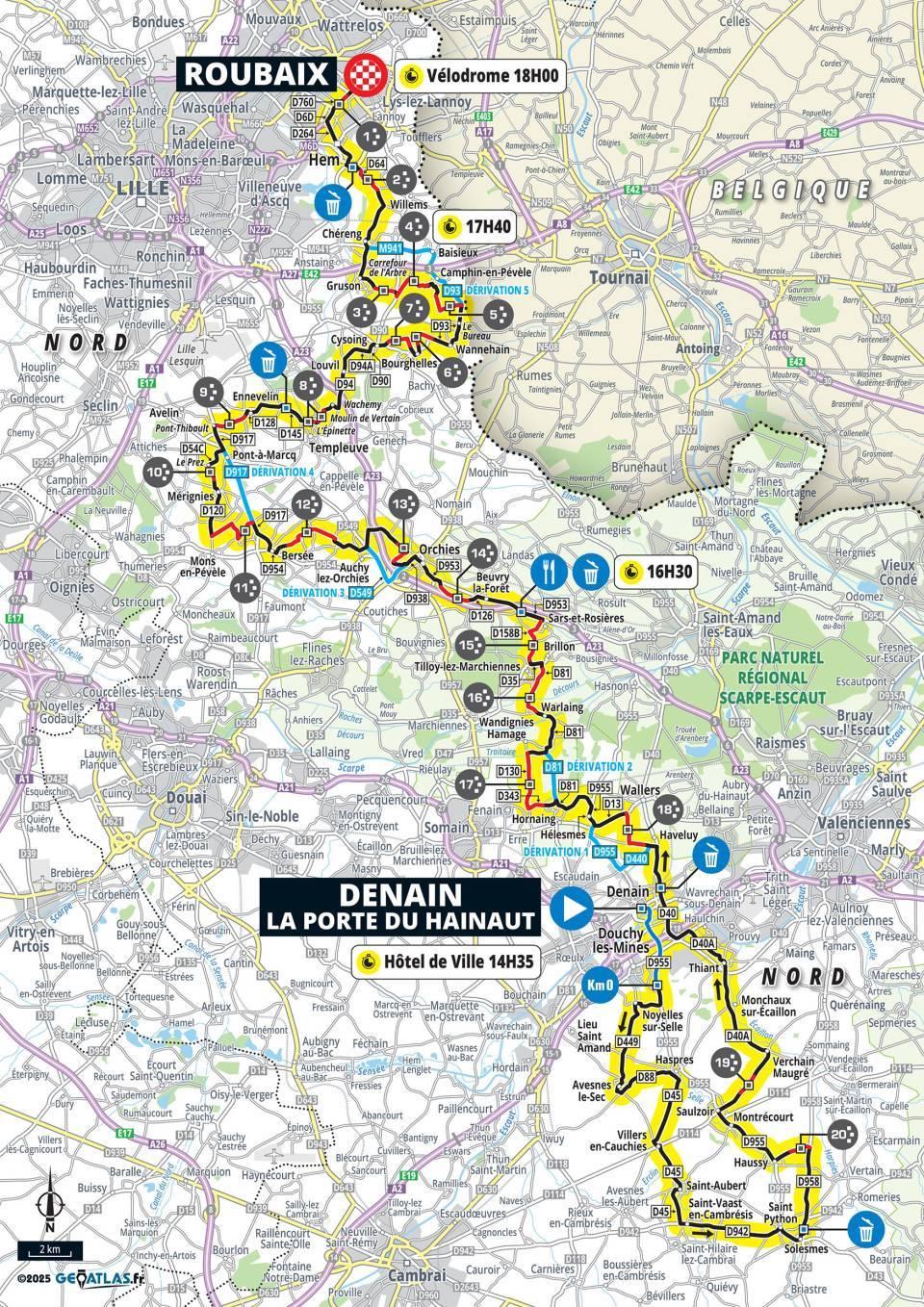
The route redesign is the central story. Last year's edition included 29.2km of cobbles; this year adds 4.5km more and, just as importantly, places the first serious sector earlier in the race. Haveluy à Wallers, a four-star, 2.5km sector at around kilometre 52, features a sharp 90-degree bend midway through that will force the bunch to concertina. At that point in the race, riders may not yet be committed to full attacks, but the sector is rough enough to create the first real selection, and anyone who loses 15 positions through a bad line or hesitation will spend costly energy chasing back.
Two further additions, at Haussy and Saulzoir, increase the accumulated stress before the peloton reaches the familiar final 17 sectors from 2025. The late-race geography remains intact: Hornaing à Wandignies, Mons-en-Pévèle, Camphin-en-Pévèle and Carrefour de l'Arbre are still the places where the race will most likely be won or lost. The tactical consequence of the longer route is that teams cannot sit in and control the pace until the final hour. Domestiques will be spent earlier, and riders who puncture or crash in the first half face a longer, lonelier chase to regain contact.
Contenders shaped by Flanders fallout
Paris-Roubaix Femmes 2026 Startlist
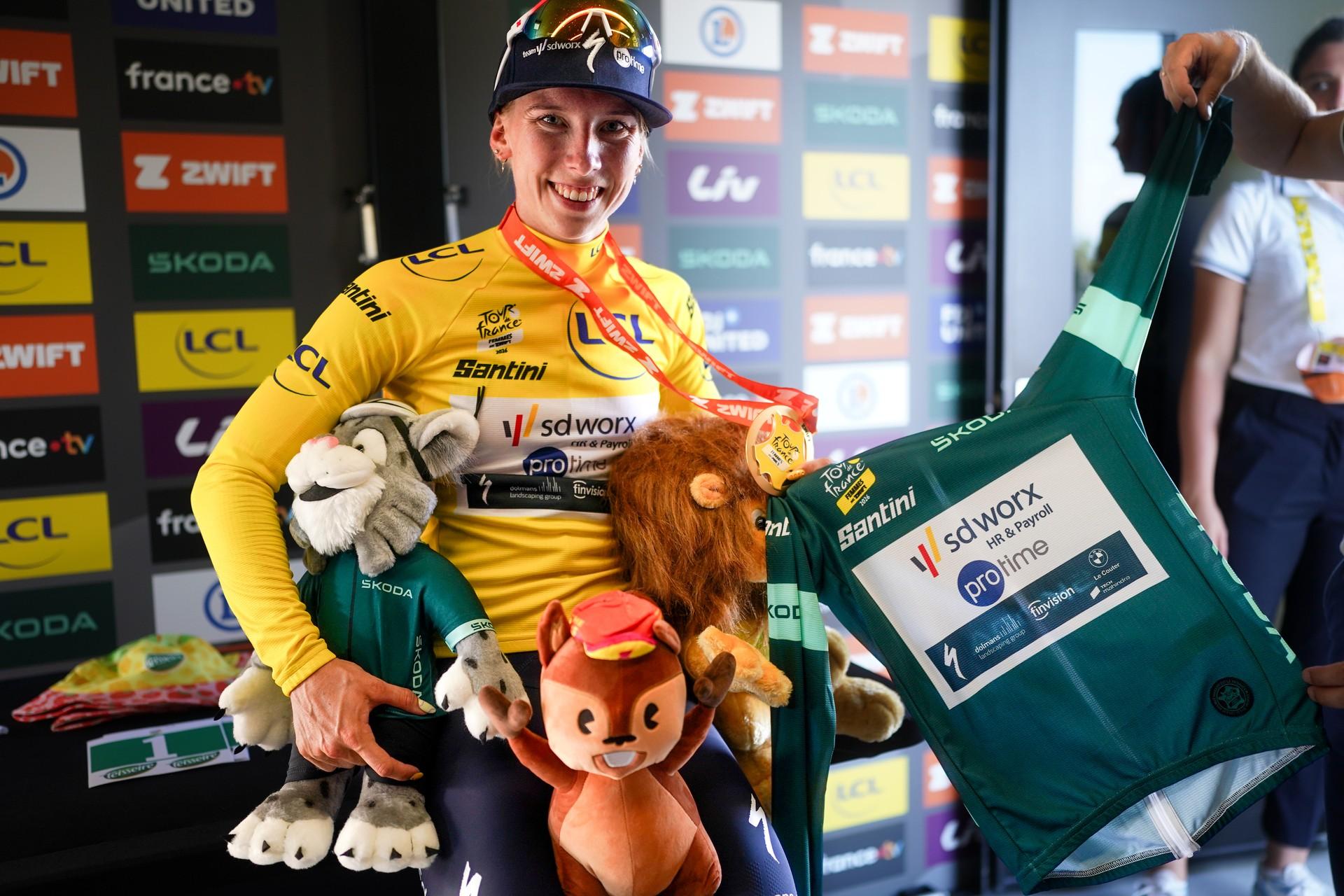
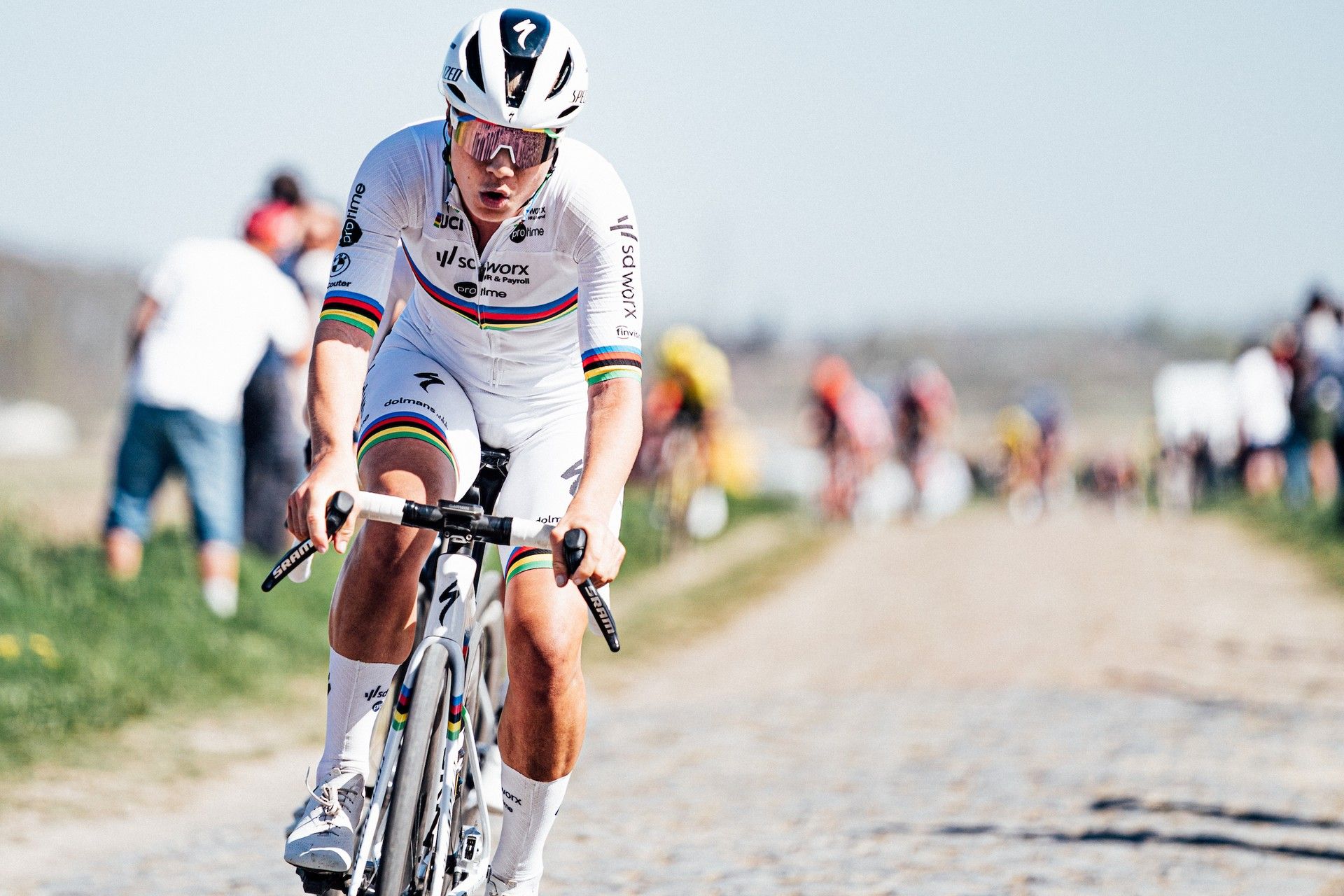
Lotte Kopecky (Team SD Worx-Protime) enters as the clearest favourite. She won Nokere Koerse on March 18, then took [Milano-Sanremo Women] on March 21 from a reduced group after the Poggio, before finishing fourth at the Tour of Flanders on April 5, where she said that "was the best I could aim for" behind a flying Demi Vollering. That sequence shows finishing speed and endurance over rough roads. If the race comes down to a small group in the velodrome, she is the benchmark.
Kopecky also benefits from SD Worx-Protime's squad depth. Lorena Wiebes (Team SD Worx-Protime) crashed twice in Flanders but was reported to have escaped with abrasions and bruising only. If the race somehow compresses into a bunch sprint, Wiebes changes the equation entirely.
Marianne Vos (Team Visma | Lease a Bike Women) brings a different kind of threat, after weeks away from racing with a family issue. Her road season has been steady rather than spectacular, with seventh at Strade Bianche and sixth at Trofeo Alfredo Binda, but Roubaix rewards what Vos does best: read chaos, hold position and survive sector after sector without wasting energy. She has been a constant presence at the front of this race since its inaugural edition and remains a threat if conditions turn messy. Though Vos' participation may be in doubt after her father, Henk, passed away last week.
Pauline Ferrand-Prévot (Team Visma | Lease a Bike) is the defending champion. Her 2025 victory came after a solo attack on the Camphin-en-Pévèle cobbles, the kind of move that only works when a rider combines off-road handling instinct with the power to stay away once clear. If the longer route fragments the race before the final sectors, her ability to exploit gaps and ride alone is an advantage.
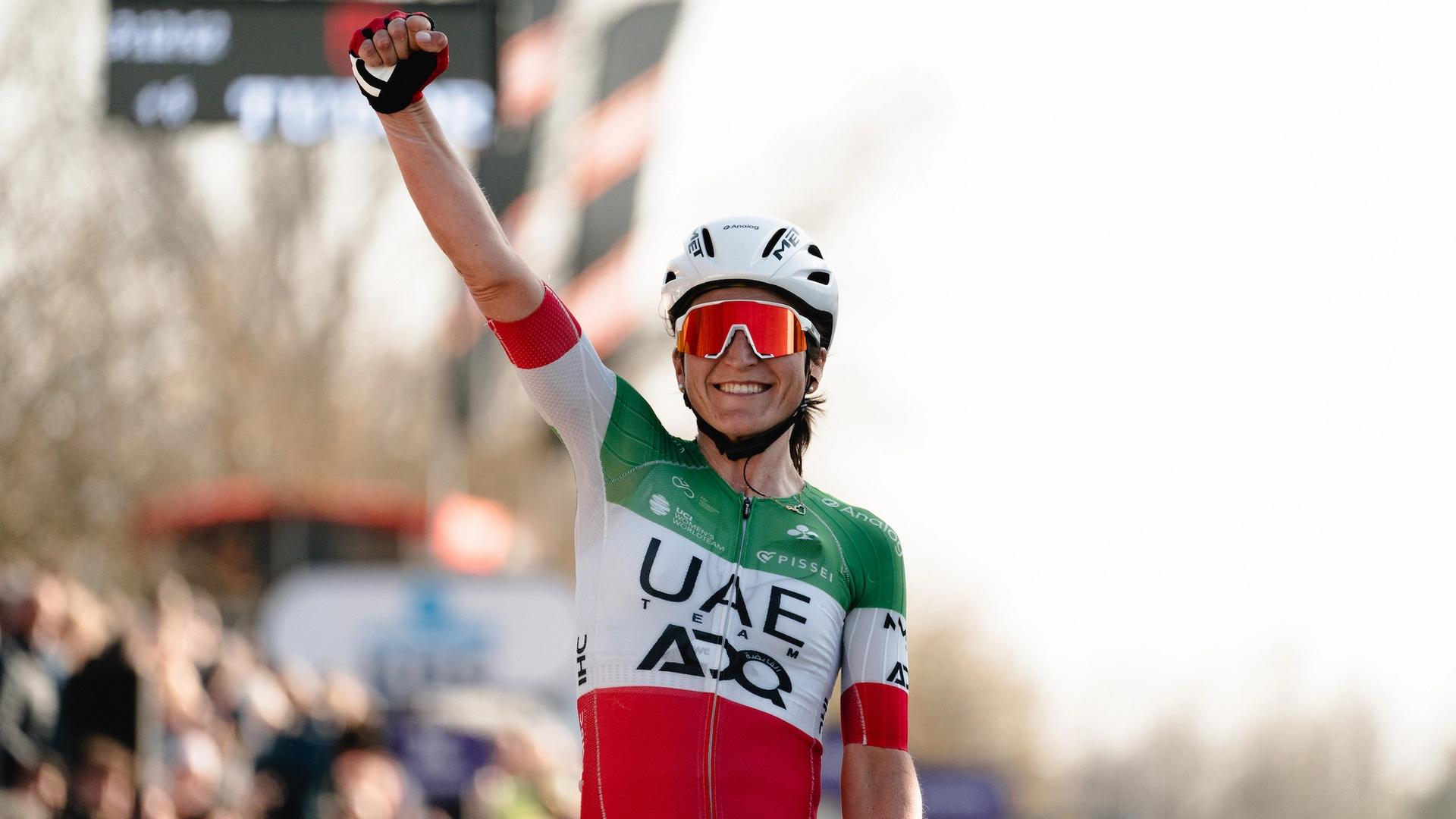
Elisa Longo Borghini (UAE Team ADQ) won this race in 2022 and arrives with form that reads more solid than explosive: a win at Trofeo Oro in Euro on March 8, fourth at Strade Bianche, eighth at Flanders. She has the sustained-power profile that suits a harder Roubaix, and her experience on the velodrome finish is worth something in a confused finale.
Puck Pieterse (Fenix-Premier Tech) made the decisive acceleration on the Poggio at Milano-Sanremo Women before finishing fourth, which demonstrated that she can produce elite efforts in chaotic, selective finales. Her cyclocross background gives her handling confidence on unstable surfaces, and the new, rougher route may suit her better than smoother editions would.
Chloé Dygert (Canyon//SRAM-ZondaCrypto Racing Team) provides power to a squad that also includes Zoe Bäckstedt, another rider with off-road pedigree. That team may lack an obvious sprint finisher but has enough rouleur depth to keep riders in contact through the middle sectors when others are isolated. Bäckstedt also comes into this race off the back of a fifth place in Flanders and fourth in Dwars door Vlaanderen. She has also shown greatly improved sprinting performances at the UAE Tour where she finished third in a bunch sprint.
The field has lost genuine contenders to the Flanders crash carnage. Marlen Reusser (Movistar Team) fractured a lumbar vertebra, and Kim Le Court (AG Insurance-Soudal Team) fractured her wrist and requires surgery. Reusser had won Dwars door Vlaanderen Women days earlier and would have been one of the few riders capable of making the race brutally hard from distance through pure engine power. Le Court's absence removes a rider who could survive attrition and contest a reduced-group sprint. Victoire Berteau (Cofidis) is also out with a fractured radius. Those losses tilt the race slightly towards riders who combine durability with finishing speed, which again points towards Kopecky.
Le Court's absense doesn't mean the end for AG Insurance-Soudal's hopes, though, as last year's runner-up, Letizia Borghesi, lines up for them on the back of a very solid Classics campaign with multiple top 10s. She did crash out of the Ronde but is available to race on Sunday.
Weather and wildcards
Forecasts for northern France on Sunday point to overcast conditions with temperatures around 15–16°C, light south-westerly winds of 10–23 kph depending on gusts, and a small chance of sprinkles rather than sustained rain. Dry cobbles reward speed and precision; even a thin film of moisture makes line choice harder and raises braking risk, which benefits riders with off-road instincts. If the roads stay dry, the race favours the fastest and strongest. If they turn damp, Ferrand-Prévot, Vos and Pieterse gain relative value.
The most likely scenario is a race that fractures before the final 30km, with the hardest cobbled sectors stripping away all but the strongest and best-positioned riders. If that happens, Kopecky's combination of durability, tactical patience and sprint speed should make her the rider to beat inside the velodrome. But this is Roubaix, the race is harder than it has ever been, and a single puncture can rewrite the script.