I’ve been an indoor rider since before the days of virtual riding, and I can honestly say that the modern virtual training environments make a world of difference compared to staring at an increasingly sweaty Garmin head unit with a timer and a power number.
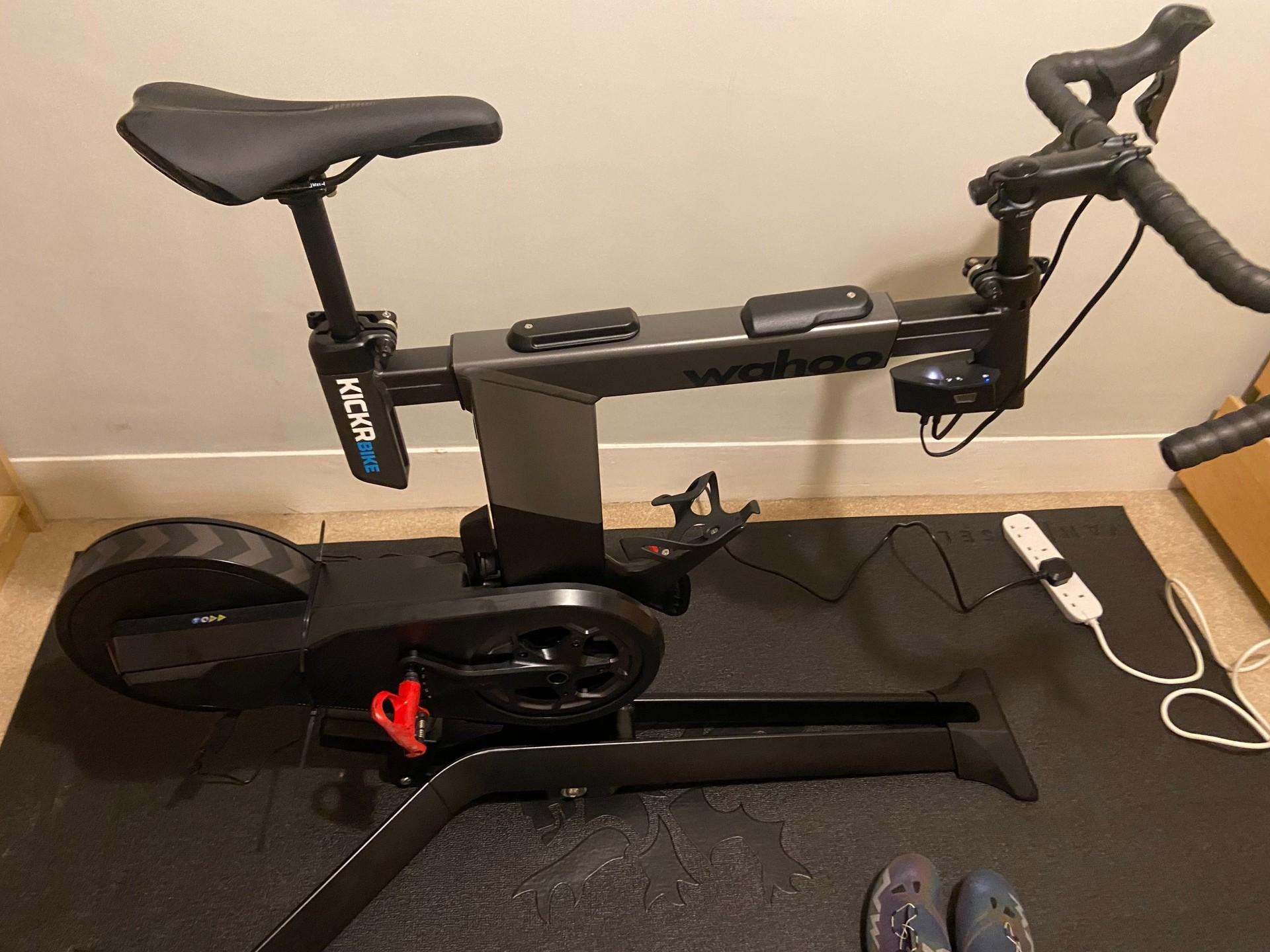
These days I ride indoors on a Wahoo KICKR BIKE, and for years the app running in front of it has been Zwift. Buying the hardware is only the first decision. After that comes the one that keeps costing money every month: which app do you pay for, if any?
The range runs from nothing at all for platforms like MyWhoosh, to £26.99 a month for the new Zwift Plus. The apps also do different jobs. Some put you in a shared virtual world, some play real-road video, and some are so training focussed that they do little more than show you interval targets and tell you what to ride next.
This guide comes from long-term use of Zwift, my recent attempts with MyWhoosh, and my experiments with TrainerRoad, ROUVY and Wahoo SYSTM over the last few years. All prices are current at the time of writing.
Quick picks
Buyers guide

Best for riding with others | Best free option | Best for an adaptive training plan | Best for real roads | Best for training beyond the bike |
Zwift | MyWhoosh | TrainerRoad | ROUVY | Wahoo SYSTM |
|
|
|
|
|
 |  |  |  |  |
|
|
|
|
|
| Check price | Check price | Check price | Check price | Check price |
What matters when choosing an app
The biggest difference between these apps is what is on the screen while you pedal, and that decides whether you keep using it. A game-engine world with other riders, real-road footage and a bare interval graph each suit a different kind of rider – I’ve probably been all three at some point in my cycling life. If you get bored easily, then a plan you never finish is worth less than a ride you actually enjoy.
Training guidance is the second split. Every app here offers structured workouts, but they deliver them differently. Some give you a library and leave you to choose, while the more expensive options build a plan and change it when you miss sessions, ride harder than planned or have less time that week.
Social riding matters if motivation is your weak point. A pace group you can join at any hour removes the effort of organising a ride, and racing gives you a reason to show up. Solo apps take that away entirely, which some riders prefer.
Time affects the choice more than most guides admit. If you ride in a fixed slot, such as a lunch break or before work, you need an app that starts quickly and lets you begin a ride straight away rather than waiting for a scheduled event.
Compatibility is rarely a problem with a modern smart trainer, but it is worth checking two things. The first is the device the app runs on, because some have heavier hardware demands than others. The second is virtual shifting. On a smart bike like mine, the gearing is built into the bike and configured through Wahoo, with Shimano-, SRAM- and Campagnolo-style shifting and selectable cassettes, so app-side shifting matters less. If your trainer has a single cog, like the Zwift Cog, the app's own virtual shifting decides how natural a free ride feels. In ERG mode none of this matters, because the trainer maintains your target power whatever gear you select.
On price, the paid tiers sit fairly close together. Most single-rider subscriptions cost around £18 or $18–22 a month. The jump to £26.99 for Zwift Plus buys coaching and video rather than anything you need to ride, and free is a real option.
Indoor cycling app subscription prices
Direct subscriptions as of November 6, 2026
App | Monthly | Annual | Trial |
|---|---|---|---|
| MyWhoosh | Free | Free | Not needed |
| ROUVY Duo (two riders) | £26.99 / US$29.99 / €29.99 | £229.99 / US$249.99 / €249.99 | Seven days |
| ROUVY Group (up to five) | £53.99 / US$59.99 / €59.99 | £449.99 / US$499.99 / €499.99 | Seven days |
| ROUVY Single | £17.99 / US$19.99 / €19.99 | £159.99 / US$179.99 / €179.99 | Seven days |
| TrainerRoad | US$21.99 | US$209.99 | 30-day money-back guarantee |
| Wahoo Pro (includes SYSTM) | US$17.99 | US$179.99 | 14 days |
| Zwift | £17.99 / US$19.99 / €19.99 | Available; 30-day refund for first-time annual subscribers | 14 days for eligible new monthly subscribers |
| Zwift Plus | £26.99 / US$29.99 / €29.99 | Available | Monthly trial includes Plus features |
Velora review
Zwift
The app I've used for years. The worlds are engaging, there is always a pace group to join and the community keeps me riding.
For
- +24/7 RoboPacer groups at 14 paces from 0.8 to 4.2W/kg
- +Game-style worlds that make indoor riding engaging
- +Runs on Windows, macOS, iOS, Android and Apple TV
Against
- –Coaching and video routes cost extra through Zwift Plus
- –Not the cheapest paid option
- –Annual memberships have no free trial
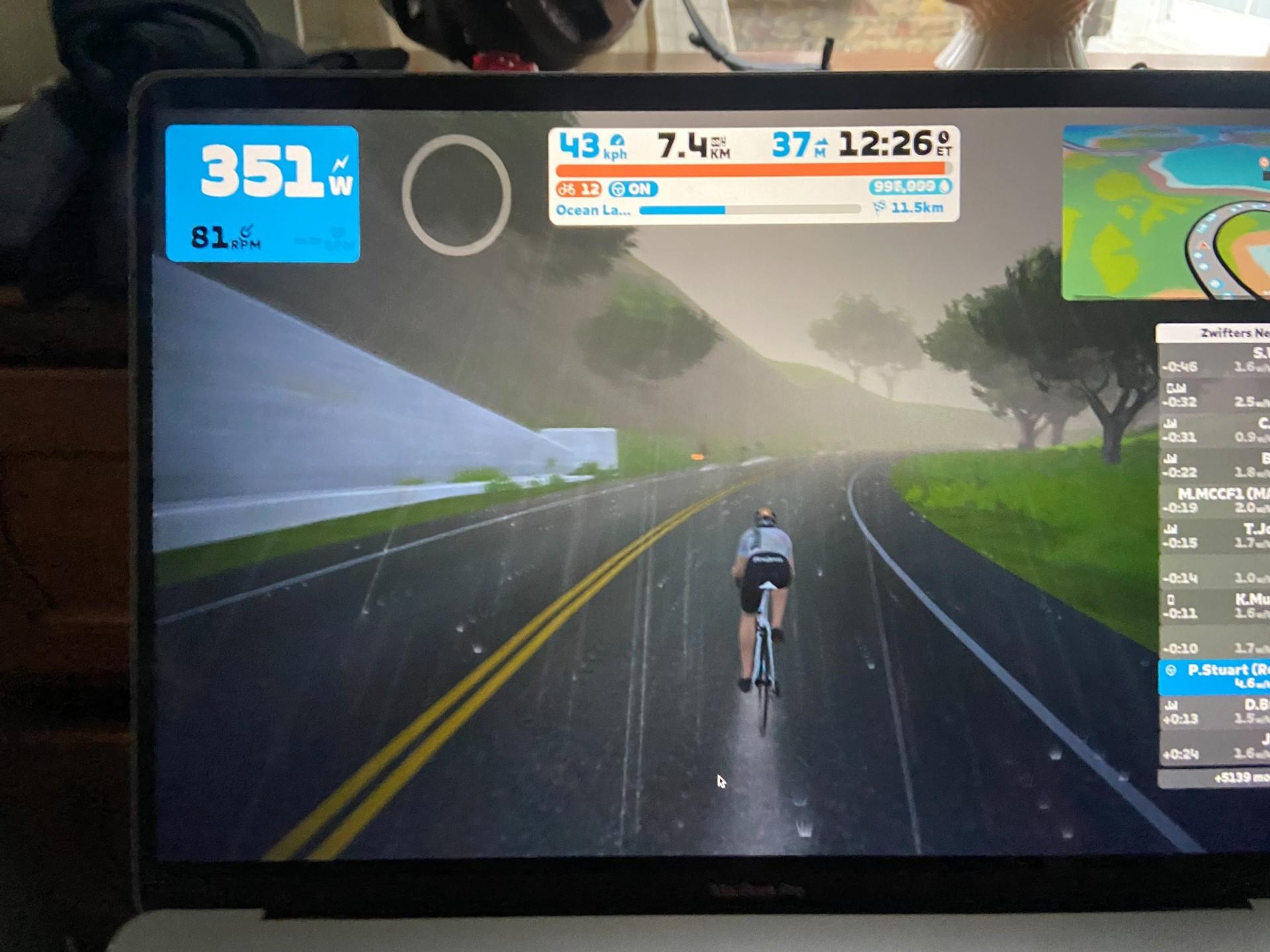
I've used Zwift for years, and the reason I keep paying is how engaging it is. The worlds are built like a game, with progression to chase, and that matters on a turbo, where boredom is usually what ends a session early. The community is the main reason I stay. Whenever I log on there is a pace group I'm happy to jump into, which means I can ride with other people without planning anything.
Those always-on groups are Zwift's RoboPacers, bot-led rides you can join from the home screen at any time. Following a September 21 update, the regular lineup covers 14 paces from 0.8W/kg to 4.2W/kg, all in Watopia, on routes with a preference for flatter ground; the routes change two times per week, on Mondays and Fridays at 07:00 UTC. For a rider with a lunchtime slot, that is a group ride available whenever the slot opens.
The base membership includes 12 virtual worlds, more than 1,000 workouts, training plans and racing. Zwift has also improved its feedback over the past year, adding a live draft indicator and a revised Progress Report that tracks power bests, FTP, Racing Score and fitness.
The bigger recent change is Zwift Plus, launched on October 29 at £26.99 a month. Zwift Coach builds a personalised plan from your goals, schedule, experience, recent fitness and ride preferences, and it can prescribe routes, RoboPacer rides and events as well as ERG workouts. It also suggests changes when you miss a session, add an unplanned ride or go harder than planned. Zwift Video adds real-road footage, launching with 21 routes totalling 385km across six countries, while keeping game features such as PowerUps, segment leaderboards and pack dynamics.
The main downside is cost, and Plus exacerbates that. If you want structured guidance that reacts to your week, Zwift now charges £9 a month more for it. Video also has practical requirements: Zwift specifies at least 50Mbps download speed for smooth playback and 7–8GB of free storage – that can be a bit of an ask for those running it on a phone or older tablet. The 14-day trial is for eligible new monthly subscribers, needs a payment method and converts automatically unless you cancel. First-time annual subscribers can get a full refund within 30 days, but returning customers and monthly members switching to annual billing are excluded.
Zwift has been a longtime companion of mine, and it played a big part in helping me tolerate the COVID-19 lockdown. I’ve always loved the creativity of Watopia and the wider riding worlds, and the challenge of spectacles like Alpe du Zwift. That said, it has become expensive, and costs more than most streaming platforms for what at its heart is a very sophisticated video game.
My advice would be to buy Zwift if riding with other people and the positive social signals are what gets you on the bike, or if you want one subscription that covers training, group riding and racing. Skip it if you train alone with headphones on and only want a plan to follow.
Velora review
MyWhoosh
Worlds, workouts, plans, group rides, racing and virtual shifting with no subscription. My own setup and update times have been the sticking point.
For
- +No subscription fee
- +More than 700 workouts with TrainingPeaks import
- +MyShift virtual shifting works on single-cog trainers
Against
- –In my experience, setup and updates have sometimes taken more than 30 minutes
- –The community has felt quieter to me than Zwift's
- –Higher device demands for the HD version
MyWhoosh asks for no subscription, and it is a full platform: virtual worlds inspired by real locations, structured training, group rides and racing. MyWhoosh says it aims to generate revenue through in-app purchases, advertising and brand partnerships rather than subscriptions. Unusually for a free platform, it also offers cash prizes in its racing leagues, which leaves us to guess that it's largely funded by investment from its parent company Abu Dhabi-based Avrioc Technologies. It counts more than 700 workouts and over 1,000km of routes, and workouts can be filtered by duration and intensity, created on the website or imported from TrainingPeaks.
My own experience has been mixed, and timing is the problem. In my attempts, setup and updates have sometimes taken more than 30 minutes. When I'm riding at lunchtime, that can use up the whole window before I've turned a pedal. That is my experience on my setup, and it may be that the platform has made improvements since my last attempt to use it, but if your riding time is fixed I'd open the app well before you plan to ride.
I've also found the community quieter. MyWhoosh has fewer riders than Zwift, and that has been noticeable in the group riding. The community is what keeps me on Zwift, but if you ride solo it will matter much less.
The platform does cover the social basics. Its MyBunches are bot-led rides that depart every 30 minutes with nine pace choices, alongside daily social rides and community rides requested by users. Cash-prize racing is available but comes with verification, and higher categories require dual power measurement and specified power meters.
Rides continue offline after an internet drop, ride data can be recovered from its servers after a crash, missed workouts can be rescheduled in its calendar, and the MyWhoosh Link app can control workouts. Its MyShift virtual shifting gives you 30 virtual gears through Link, touchscreen controls or the I and K keys on a keyboard, starting in gear 15. MyWhoosh says it works on its supported smart trainers, including single-cog setups.
Check your device before you commit. The published requirements for Windows start at Windows 10 64-bit, a sixth-generation Intel Core i3 or Ryzen 3 3000-series processor, 8GB of RAM and 8GB of free storage. macOS needs Sonoma 14.5 or later with 8GB of RAM, and Apple TV needs the second-generation 4K model from 2021 or later. The HD version for Windows asks for much more powerful hardware.
Download MyWhoosh if budget is the deciding factor, or as a second app alongside a paid one. Be wary if your rides happen in short, fixed windows, or if you want a busy community around you.
Velora review
TrainerRoad
A training system rather than a game. It plans your sessions, then re-plans them around what you actually ride.
For
- +Plans adjust after every session or calendar change
- +Outdoor rides count towards your training picture
- +Workouts can be ridden inside Zwift
Against
- –No virtual world, route video or e-racing
- –Pairing it with Zwift means two subscriptions
- –Refund guarantee rather than a free trial
TrainerRoad is for riders who want to be told what to do. Its plans run through Base, Build and Specialty phases and start at around three hours a week, which suits riders with limited time. TrainerRoad says its system simulates four weeks of upcoming training and re-runs that simulation after every completed session or calendar edit, drawing on training history, power, heart rate where available, perceived effort, the rider's timetable, recovery requirements and what they are working toward.
If you don't want a fixed plan, it will recommend a session on the day, with alternatives that match the session, reduce or raise its difficulty, or take less or more time. Outdoor rides feed into the same analysis, and outdoor workouts can be sent to Garmin, Wahoo and Hammerhead head units. It runs on Windows, macOS, iOS and Android.
What you see while riding is interval targets and metrics. There is no virtual world, no route video and no e-racing, though group workouts are available. You have to supply your own motivation, or your own entertainment.
TrainerRoad tackles the entertainment gap through integrations with Zwift and ROUVY. Planned indoor workouts or recommended sessions can appear in either app, letting you follow TrainerRoad's targets in a virtual world or against real-road video. You only need the riding app running, but you'll pay for TrainerRoad and your chosen platform. That does dampen the appeal for those who want indoor training but don’t want the specific benefits of TrainerRoad’s integrated training tools, as it makes for a chunky monthly cost.
At US$21.99 a month or US$209.99 a year, with a 30-day money-back guarantee instead of a trial, TrainerRoad is for the rider who wants measurable progress and is happy to train against a graph. Skip it if you need something to look at or someone to ride with.
Velora review
ROUVY
Real-road video with avatars and augmented-reality objects, plus the most flexible pricing for households and part-time indoor riders.
For
- +Duo and Group plans for up to five riders
- +Pause for up to 180 days, with a free 20km a month
- +Downloadable route videos and detailed route filters
Against
- –Seven-day trial, then full billing
- –Virtual shifting needs Bluetooth or Wi-Fi, not ANT+
- –No shared game world in the Zwift mould
ROUVY puts you on real roads, which is a big benefit for those who don’t like the gamification of indoor training. Its routes are filmed footage, with rider avatars and augmented-reality objects added, and you can narrow the library by route length, time and steepest gradient. FTP-based workouts and plans can be ridden against route video, and you can build or import your own sessions. Group rides, races, other riders on the same route and ghost riders give it a social side. Route videos can be downloaded, and it runs on Windows, macOS, iOS, Android and Apple TV.
For me this fills a bit of a gap left by the closure of a few other platforms which offered real-world riding. I was a fan of RGT for that reason – it always felt special to revisit favourite routes like Col de Formentor – though it also suffered from the network effect as I usually found few other riders using the routes I was on.
ROUVY’s pricing is the most flexible here. A single rider pays £17.99 a month or £159.99 a year. Duo covers two riders for £26.99 a month, and Group covers up to five for £53.99. You can pause for up to 180 days, which suits riders who only train indoors in winter, and the free allowance is 20km a month, with a Daily Pass for full access. The trial is seven days, after which full monthly or annual billing starts.
ROUVY's virtual shifting needs a compatible trainer or smart bike on current firmware, connected by Bluetooth or Wi-Fi, because ANT+ does not carry the shifting commands. The default range is a 1×24 Mixed Terrain setup, with alternatives modelled on 53/39 with 10–28, 48/35 with 10–33 and 43/30 with 10–36. Shimano-style controller layouts need two shift buttons on each side, and generic controllers and keyboards shift sequentially.
Zwift completed its acquisition of ROUVY on April 29 and committed to keeping separate subscriptions and development roadmaps, along with compatibility for Zwift Ready trainers and Zwift Ride frames on ROUVY.
Choose ROUVY if you want scenery from real places, are preparing for a specific event route, or are sharing a trainer with a partner or family.
Velora review
Wahoo SYSTM
Structured sessions with filmed video, plus strength, yoga, mobility and mental training in one Wahoo Pro membership.
For
- +4DP profile measures four types of effort, not just FTP
- +Strength, yoga, mobility and mental training included
- +14-day trial
Against
- –Solo format with no avatar peloton or racing
- –Full SYSTM access needs Pro, not Core
- –Annual billing through Wahoo's website or Account Portal
Wahoo SYSTM is a solo training app built around Four-Dimensional Power, or 4DP. It carries on The Sufferfest's video-workout legacy, which I particularly like as this was my first gateway into virtual training. The Sufferfest library is also still available inside SYSTM.
The point of 4DP is that two riders with the same FTP can have very different sprint and short-effort power. The Full Frontal test measures efforts of five seconds, one minute, five minutes and 20 minutes, so SYSTM can tailor targets for different types of interval to your profile rather than calculating everything as a percentage of FTP. That’s a more nuanced approach to indoor training than we see from some rivals.
Sessions are supported by race footage, filmed rides and inspirational cycling videos.
Wahoo has split its software. The Wahoo App interprets your data and recommends training using Fitness Score, Training Capacity and recent load. The SYSTM App is where you ride the sessions. Full SYSTM access only comes with Wahoo Pro, at US$17.99 a month or US$179.99 a year with a 14-day trial. The US$4.99 Core tier and the free Base tier do not include the SYSTM library, so check which one you are buying.
Pro also includes strength, yoga, mobility, recovery and mental training, which none of the other apps here bundle in. SYSTM runs on Windows, macOS, iOS and Android but has no interactive avatar peloton, no e-racing and no virtual shifting of its own. Subscriptions bought through Apple or Google are monthly only, in local currency, with an app-store exchange fee, so annual billing has to go through Wahoo's website.
Owning Wahoo hardware like my KICKR BIKE does not make SYSTM the default choice, because every app here supports Wahoo's trainers, and Zwift’s integrations are deep – with shifting, gradient tilt and steering all available. Choose it if you want your cycling and off-bike work planned together. Skip it if you need other riders around you.
Which app should you pay for?
- If riding with others keeps you motivated: Zwift. Years in, the always-available pace groups and the community are still why I pay. Add Plus only if you want Coach adjusting your week or real-road video.
- If budget comes first: MyWhoosh. It costs nothing and covers training, group rides and racing, but in my experience allow extra time for setup and updates, and expect a quieter community.
- If you want a plan that adapts to your life: TrainerRoad, from around three hours a week. If interval graphs aren't enough to keep you going, its workouts can run inside Zwift, at the cost of two subscriptions.
- If you want real roads, or share your trainer: ROUVY, with Duo and Group plans and the option to pause during the outdoor season.
- If you want strength and mobility planned alongside cycling: Wahoo SYSTM, through Wahoo Pro.
Time matters as well as money. For short lunchtime or early-morning sessions, the best app is one you can start immediately. Zwift's RoboPacers and MyWhoosh's half-hourly MyBunches both give you a group to join without waiting for an event, provided the app is ready when you are.
FAQ
Can I use TrainerRoad workouts inside Zwift?
Yes. Planned indoor workouts and the recommended workout of the day sync to Zwift, and only Zwift needs to be running. Outdoor workouts and general calendar items don't sync, and you'll need both subscriptions.
Do I need virtual shifting?
On a single-cog trainer it makes free riding far more natural. MyWhoosh and ROUVY both document their own systems. On a smart bike such as the KICKR BIKE, the gearing is built into the bike. In ERG workouts, gears have no effect.
Is MyWhoosh really free?
There is no subscription fee for riding, workouts and plans. The company earns money through in-app purchases and advertising, and higher-category prize racing requires specific power-measurement equipment.
Can a household share one subscription?
ROUVY is the only one here with multi-rider plans: Duo for two riders and Group for up to five.
Does Zwift owning ROUVY change anything?
Subscriptions remain separate, but Zwift Ready trainers and Zwift Ride frames now work with ROUVY. Zwift committed to separate subscriptions and development roadmaps for the two platforms when the acquisition completed.