Scott has launched a redesigned Addict Gravel, a new platform built around 57mm tyre clearance, a driveside chainstay that slims to 8.5mm at its narrowest point, a claimed 7.8kg weight for the top build and a riding position intended to mirror the Addict road bike. The bike completes a three-model Addict family alongside the Addict RC race bike and the endurance-focused Addict, and Scott says it is designed to cover everything from short after-work loops to multi-day bikepacking trips.
Scott has spent the past few years overhauling the Addict range, and the gravel model is better understood as a new platform than a development of its predecessor, although the 425mm chainstay length remains. I rode the Addict Gravel 10 for two days in Germany's Black Forest ahead of launch at Scott's invitation. The company did not pay for this coverage and had no say over what follows, and two days is a first ride rather than a full review.
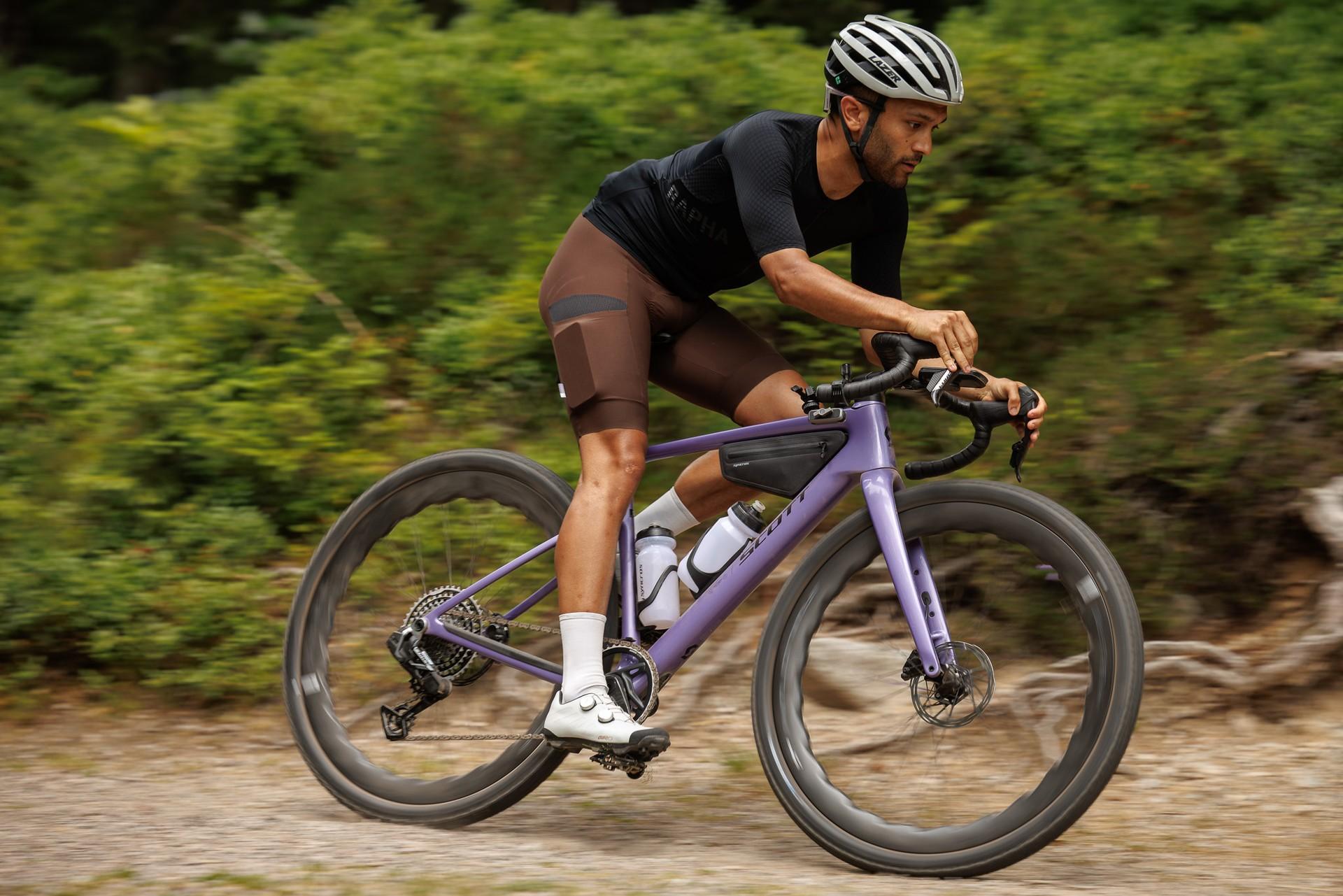
Tyre clearance is the headline feature: the frame accepts tyres up to 57mm wide, ships with 50mm Schwalbe G-One RX Pro rubber on every build, and Scott says it will also take 2.2in mountain bike tyres. To make room without stretching the rear end, Scott lowered the bottom bracket and increased fork rake to 60mm, which pushes the front wheel further in front of the rider. Stack is 10mm higher and reach 10mm longer than the previous generation, with a 10mm shorter cockpit to compensate, and the head angle sits at 70 degrees across all seven sizes from XXS to XXL.
The result is a position that felt close to the Addict road bike, which is the intention. Scott places both models in its "Ride" category, and as we found in our review of the Addict 10, that platform prioritises comfort and stability over race-bike aggression.
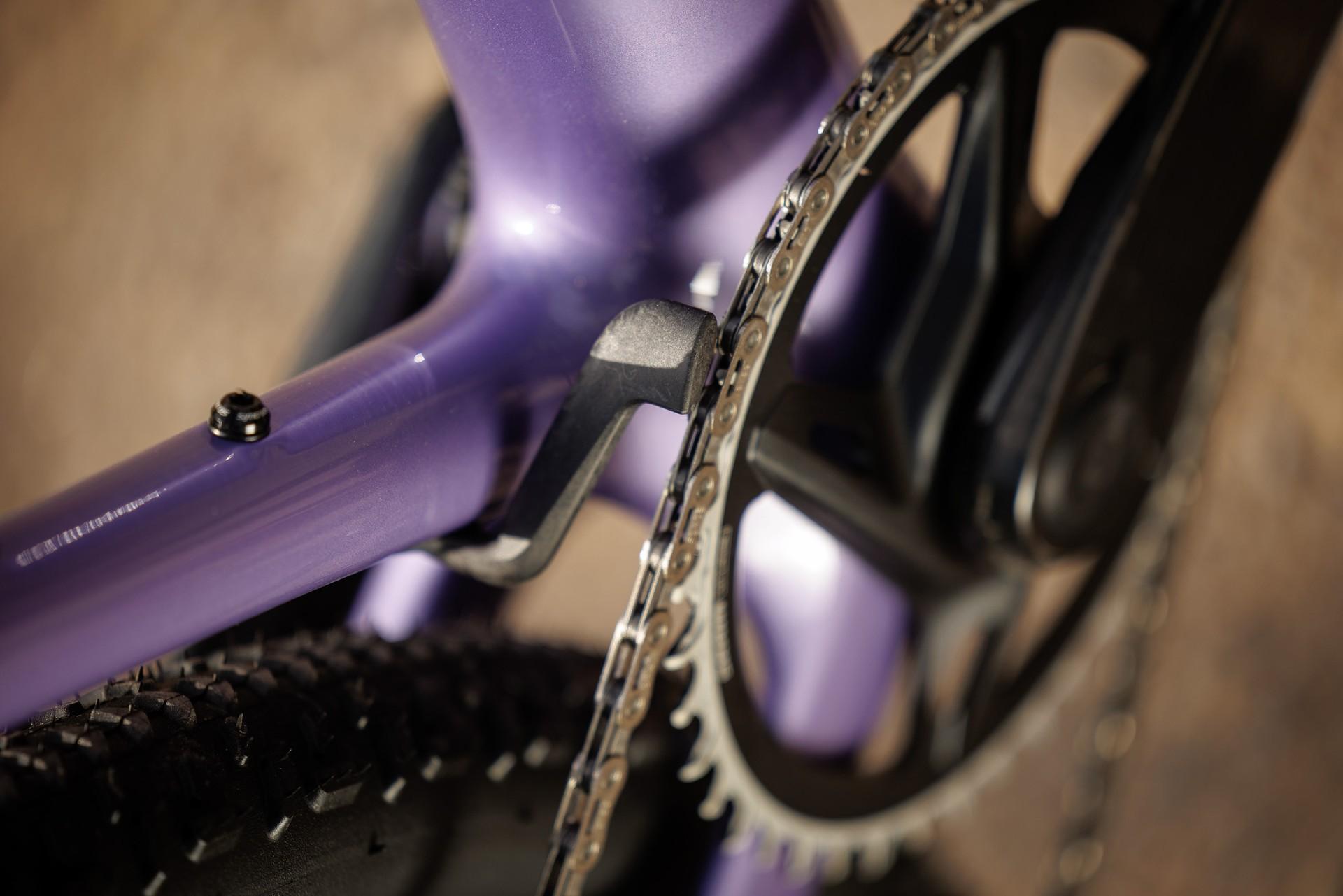
The driveside chainstay was the most striking frame detail in the presentation. Keeping the chainstay at 425mm while clearing a 57mm tyre and a chainring leaves very little space at the bottom bracket. Many brands solve this with a dropped stay. Scott instead narrowed the stay to 8.5mm at its thinnest section, wide enough for carbon reinforcement and an internal gear cable, and nothing more.
Compliance claims and how they felt on the trail
Scott claims a 60% improvement in rear-end compliance over the old Addict Gravel, achieved through dropped seatstays designed to flex outwards, a top tube that deflects slightly upwards and a reduced lower seat-tube section that permits extra movement. During the launch presentation the company ran a rig that put 80kg through the seat tube, and the outward flex of the seatstays was visible. That 60% figure applies with the rigid seatpost; riders using Scott's cut-out comfort seatpost get a claimed 25% gain because the old post was already doing some of the work.
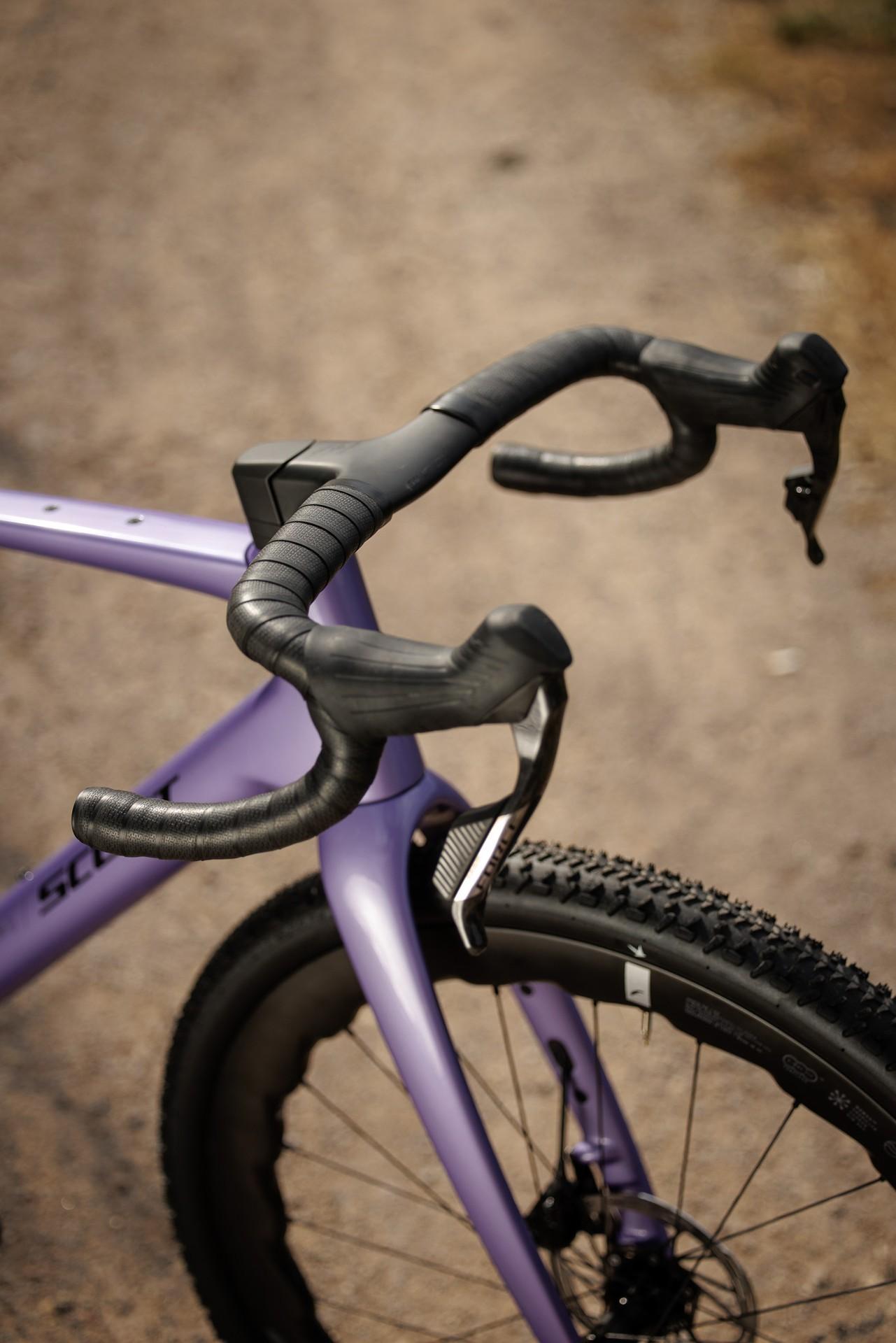
The front end gets similar treatment. Bowed fork legs, a 27.2mm eccentric carbon steerer and a new cockpit interface are claimed to add 30% more front compliance. Scott also says it deliberately reduced overall frame stiffness compared with a road frame to improve traction, though it puts the difference at under 5%. All of these are manufacturer figures, and Scott has not published the underlying test data.
On the bike, the rear compliance was the easiest claim to check. Riding seated across lumpy gravel, the seatpost and rear triangle produced a plush ride that was obvious within the first few kilometres. Whether the frame or the 50mm tyres deserve more credit is hard to separate on a first ride, but the combination worked.
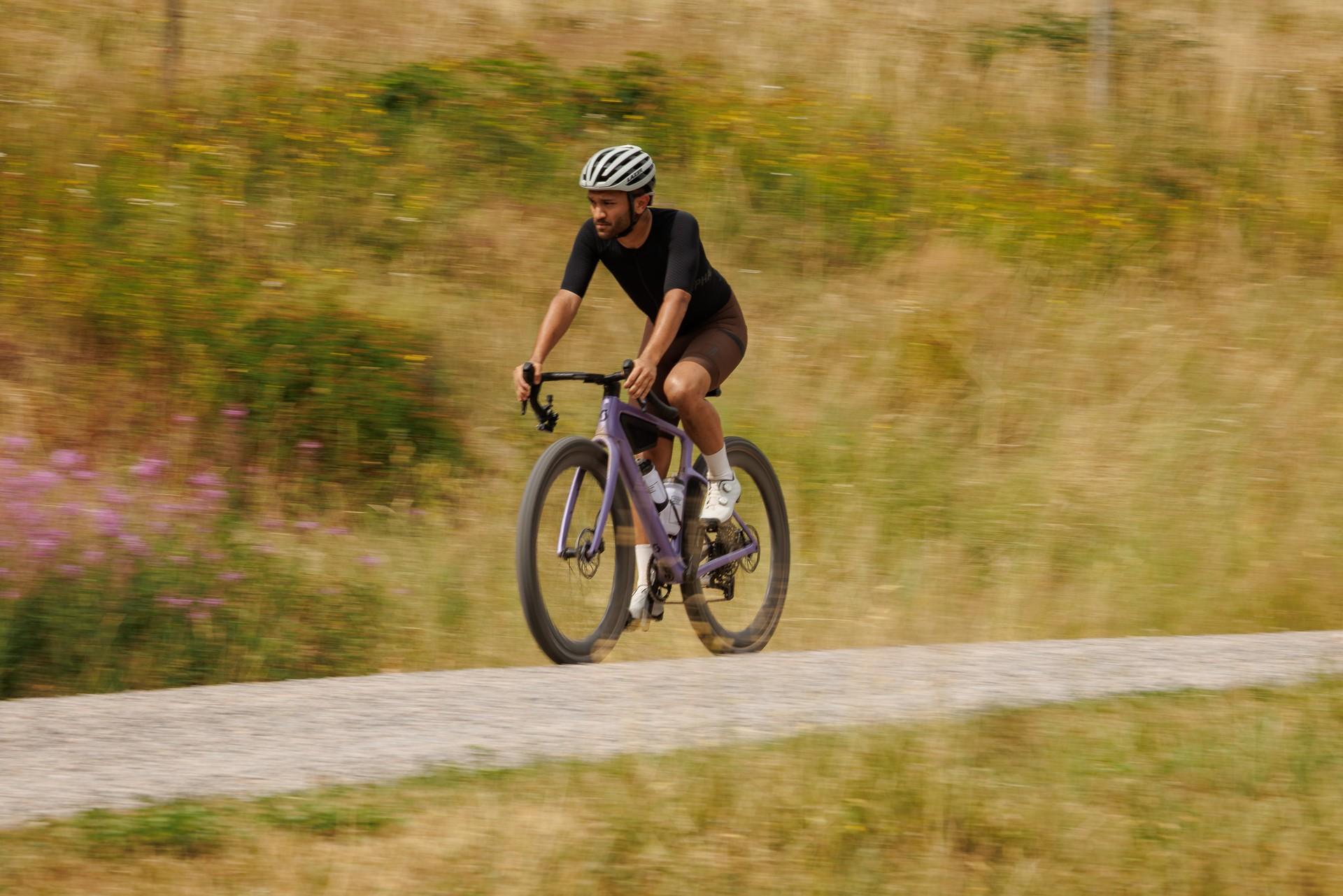
I should be clear about my own level. I am an average gravel rider who prefers fast, flowing surfaces to rock gardens and steep, broken descents. The Black Forest routes served up all of it: hard climbs, fast and technical descents, wide open gravel roads and a few stretches of connecting tarmac. The bike kept me upright through several sections where I expected to crash.
The tyres deserve a share of that. The 50mm G-Ones gave a lot of grip and absorbed a lot of punishment. The position felt natural and predictable rather than daunting, and the SRAM Force brakes offered good modulation with no fade on prolonged steep descents. Climbing, the frame felt stiff and the short chainstays kept the bike lively. Some ramps were steep enough that I had to throw my weight over the front wheel and spin the 10-46T XPLR cassette, but I got up every one. On the flat sections the bike behaved like a road bike with extra grip and cushioning.
It is less suited to serious gravel racers. The position is comparatively relaxed, and the design favours comfort and carrying capacity over a low, aggressive setup.
Mounts, cockpit and the five-bike range
Scott has added bottle mounts to the fork blades, which is common enough, but positioned them on the inner surfaces of the legs with custom brackets that hold bottles closer to the steering axis. Scott claims this cuts steering inertia by 35% compared with a conventional fork-mounted bottle, which should reduce the vague front-end feel that loaded forks usually produce. It is also a way to sell accessories, but the repositioned mounts represent a real functional change rather than a cosmetic one.
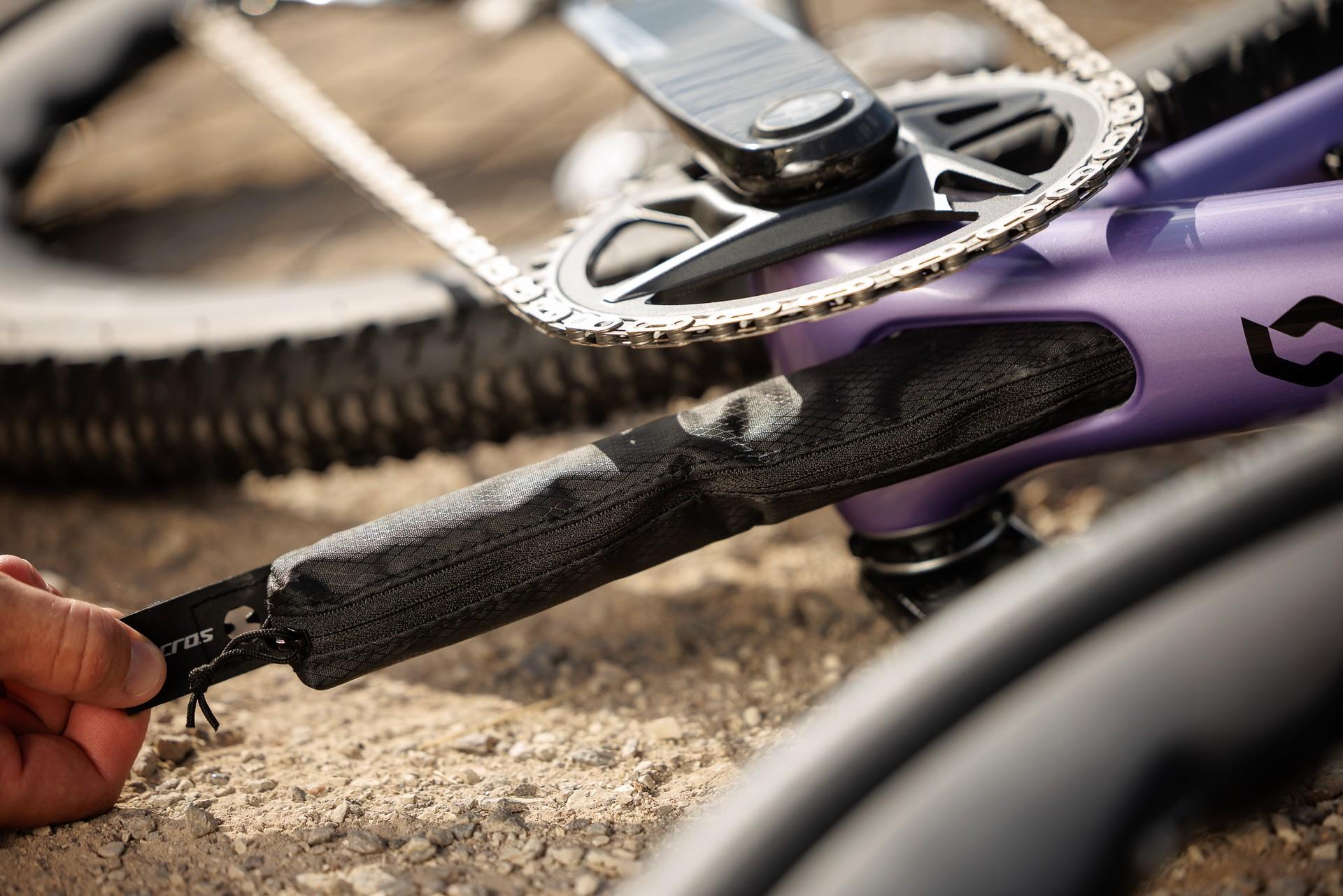
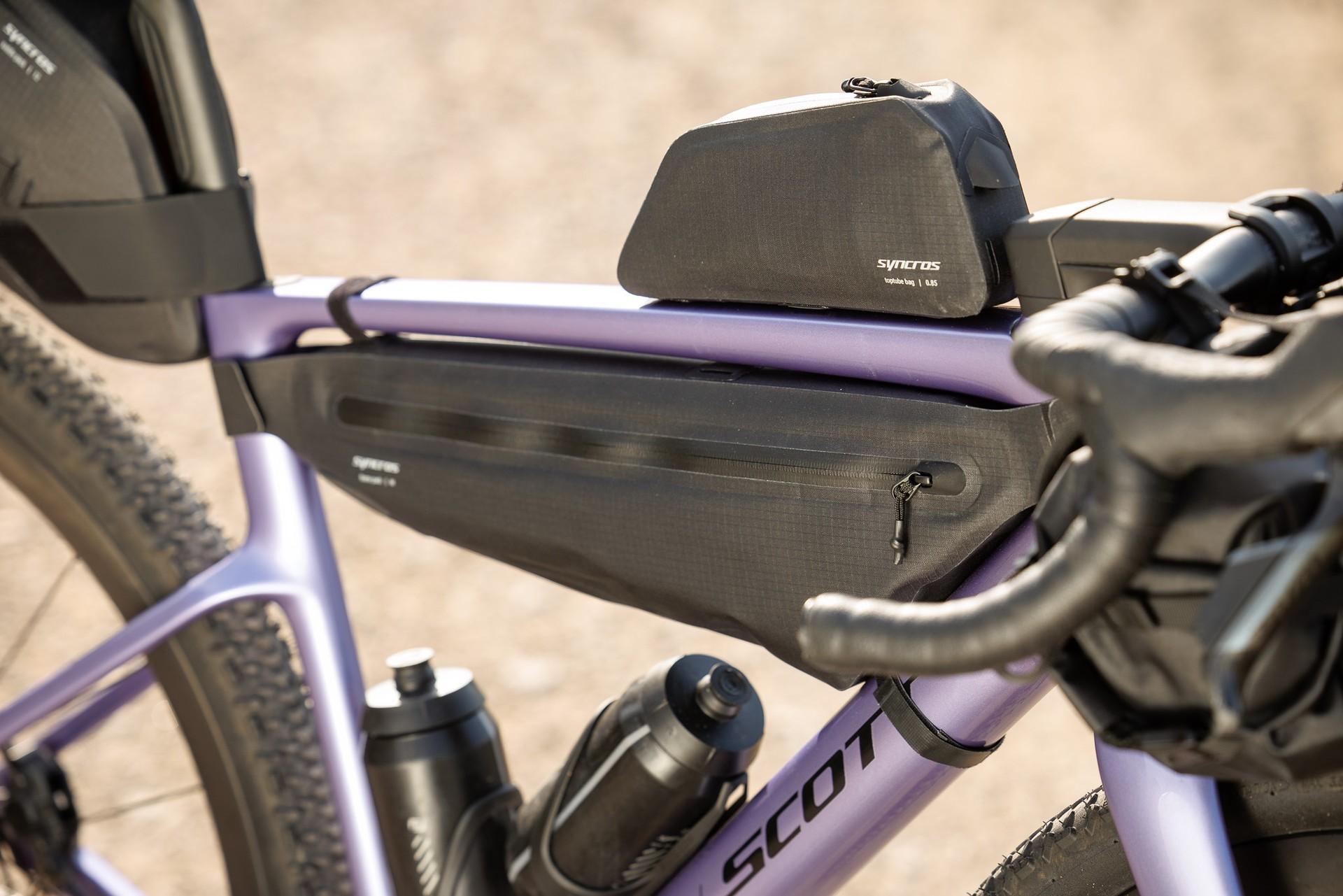
The rest of the mounting points, including two bottle-cage positions, an extra down-tube mount for a bottle or tool box and a bolt-on top-tube bag mount, are recessed flush with the frame. The down-tube storage compartment returns from the Addict with added weather resistance, and the Syncros Save the Day kit, holding an inner tube, tyre levers and a mini-pump, lives inside it on the top three builds. A T25 key and 6mm hex tool hide in the handlebar drops, covering every bolt on the bike and the thru-axles respectively, and some builds add a tubeless plug kit on the opposite side.
Syncros has built a new gravel cockpit for the bike. The shifters sit on a short vertical section before the flare begins, so the levers stay aligned with the drops rather than pointing outward. Reach has been reduced to make the move from tops to hoods less pronounced, forward sweep has been increased for wrist clearance in corners, and the drops have been reshaped for more palm support. The Premium and Addict Gravel 10 get this as a one-piece carbon combo; the other three builds use a separate alloy bar and stem. Stems, spacers and stem covers are cross-compatible across the Addict, Addict RC and Addict Gravel, so an RC bar will fit the gravel bike.
Five builds are offered, all in seven sizes. The Premium and the 10 use Scott's HMX carbon layup, claimed at 794g for the frame, a 75g saving over the previous generation. The remaining three use the HMF layup at a claimed 990g, 25g lighter than before.
Scott Addict Gravel range
Claimed weights from Scott, tubeless setup, without Save the Day kit. All builds run 700x50C Schwalbe G-One RX Pro tyres.

Model | Frame | Drivetrain | Cockpit_wheels | Claimed_weight |
|---|---|---|---|---|
| Addict Gravel 10 | HMX | SRAM Force XPLR AXS 13-speed, power meter | Carbon combo cockpit; Fulcrum Soniq GR Carbon | 8.2kg |
| Addict Gravel 20 | HMF | SRAM Force XPLR AXS 13-speed, power meter | Alloy bar and stem; Fulcrum Soniq GR Carbon | 8.6kg |
| Addict Gravel 30 | HMF | SRAM Rival XPLR AXS 13-speed | Alloy bar and stem; Syncros Capital GR 35 CF II carbon | 8.7kg |
| Addict Gravel 40 | HMF | Shimano GRX 12-speed mechanical | Alloy bar and stem; Syncros Capital GR 25 AL II alloy | 9.4kg |
| Addict Gravel Premium | HMX | SRAM Red XPLR AXS 13-speed, power meter | Carbon combo cockpit; Fulcrum Sharq GR Cult Carbon | 7.8kg |
Scott's individual spec sheets give higher approximate weights, including 8.4kg for the Premium and 9.7kg for the 40. Scott had not confirmed pricing in the launch material supplied to us.
My choice would come down to two bikes. For performance, the Addict Gravel 10 in Blaze Purple gives you the HMX frame, the carbon cockpit and the full set of extras with SRAM Force XPLR. The Premium saves a claimed 400g by moving to SRAM Red and Fulcrum's Sharq wheels, which is a real amount, but outside of racing I do not think it justifies the step up. For value, the Addict Gravel 30 in Agate Grey is worth the stretch over the 40: it swaps mechanical GRX for Rival AXS XPLR, moves from alloy to carbon Syncros wheels and sheds a claimed 700g, and that gap is not something to ignore.
After two days in the Black Forest, the Addict Gravel had handled technical descents, steep climbs and fast gravel confidently. It combined the stiffness expected of a bike weighing around 8kg with the feel of a road bike on faster surfaces. I want to spend a winter on it over muddier, more familiar ground before calling it a review, but the first impression is positive.