The new Scott Addict landed in September and immediately started a conversation that had very little to do with frame stiffness or carbon layup. It was about price. Specifically, how a premium brand managed to undercut virtually every major competitor at equivalent spec levels while delivering a bike that, on paper at least, has no business being this affordable.
I've spent the past few weeks riding the Addict 10 on every ride I've done, and I can now tell you whether the numbers translate to the road.
What Scott actually built
First, some context. The Addict is not the Addict RC – Scott's sub-6kg race weapon launched in 2024. This is the endurance counterpart: relaxed geometry, wider tyre clearance (up to 38mm, from 32mm on the outgoing model), and a frame engineered for compliance rather than outright stiffness. Scott claims the new HMX frame is 25% more compliant than the RC while maintaining identical bottom bracket and head tube stiffness. The HMF carbon used on the mid-range builds (Addict 20, 30, 40) sheds 70g over the previous generation.
The Scott Addict Gravel 30 already features in our guide to the best bikes with low gearing.
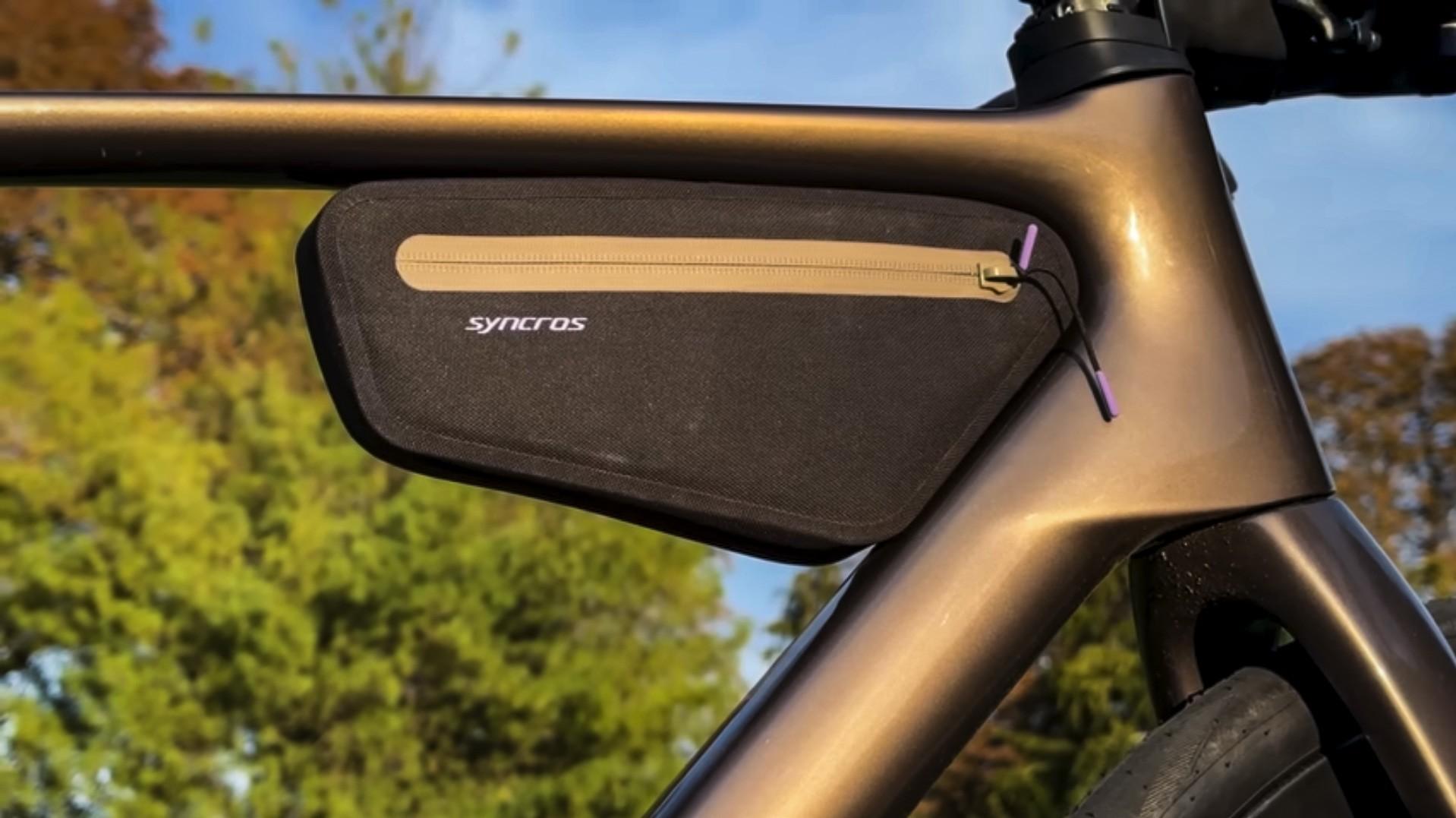
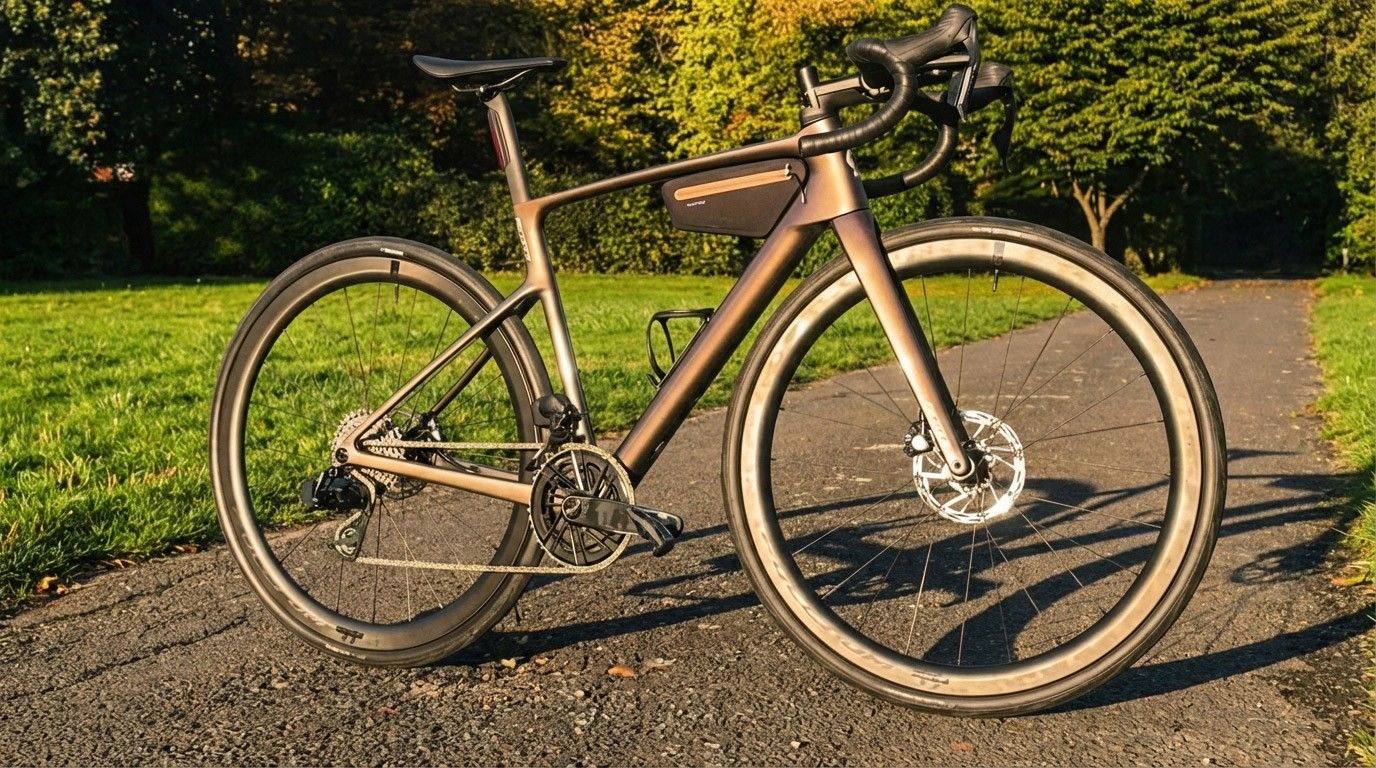
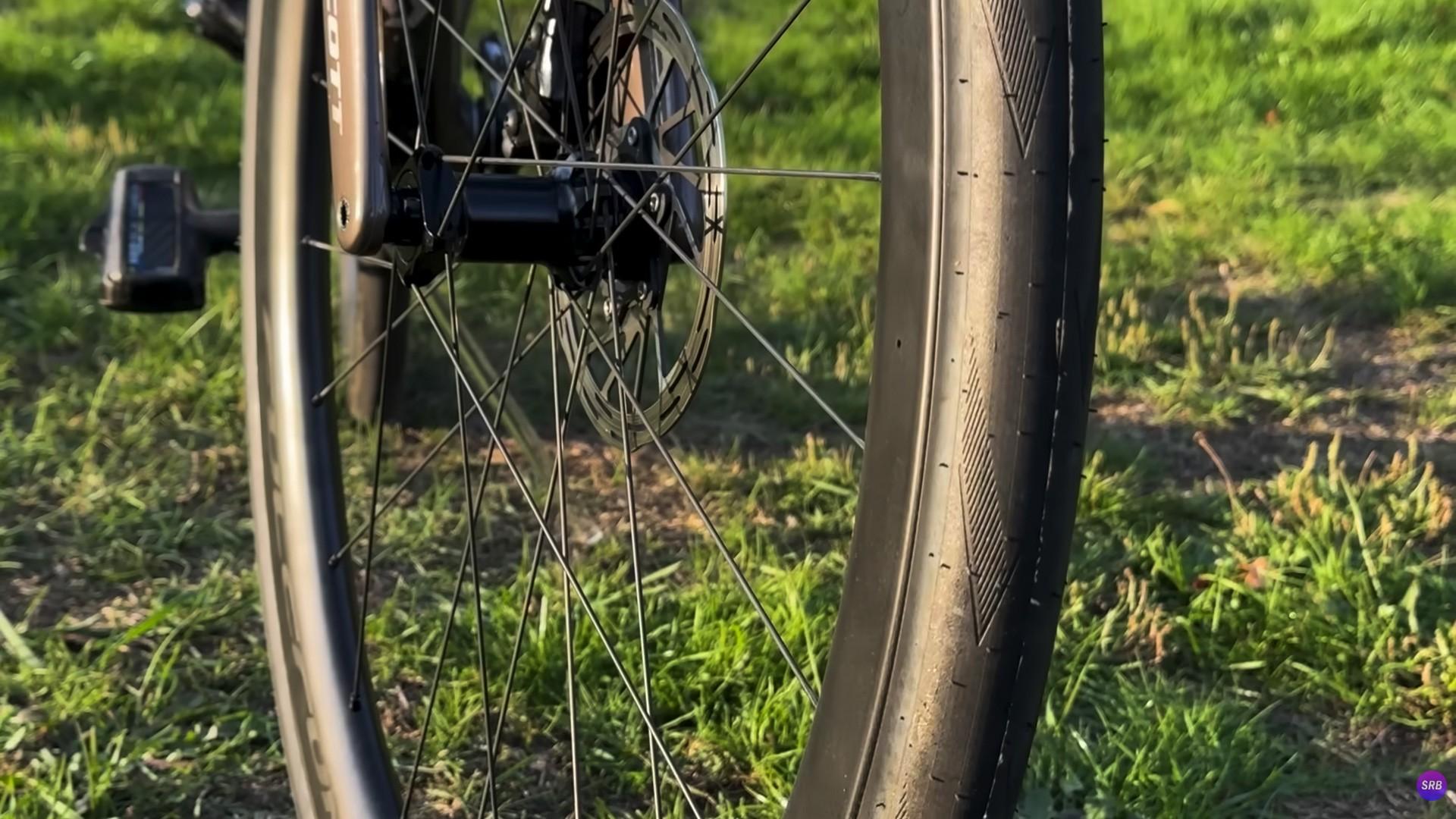
The bike I was sent – the Addict 10 – sits near the top of the range. It runs a SRAM Force AXS groupset, Fulcrum Wind 42 carbon wheels, and 34mm Schwalbe One tyres on the HMX frame. Claimed weight is around 7.5kg. It arrived with every optional accessory fitted: the integrated downtube storage bag, the magnetic rear light that slots into the seatpost, and the bar-end multi-tool. This matters, and I'll come back to it.
Aesthetics
A quick word on looks, because it's worth addressing. The Addict in person matches the pictures – no surprises either way, which is unusual for carbon bikes that often photograph differently to how they appear in the flesh. The gloss paint on the Addict 10 is a practical win: easier to clean, easier to keep looking sharp after months of use. Frame lines are clean and smooth without being controversial – mass market appeal, done well.
My one gripe is the branding. Scott has gone extremely muted across its road range, and while some people will see that as quiet luxury, I think the Addict crosses into feeling borderline unbranded. There's no name on the downtube. For a bike with this much going for it, I'd like it to be a little more willing to announce itself. Not garish – just present.
On the road
Sam's video review from Sam Rates Bikes
The Addict's defining characteristic is something I'd describe as mechanical calm. Once you have it up to speed, it wants to stay there. The wide tyres and relaxed geometry create a bike that absorbs road imperfections. I spent a good portion of my rides deliberately steering into cracks, rough patches, and shallow potholes just to see how it would respond. Every time, it simply rolled through and carried on. No twitchiness, no unpredictable feedback through the bars.
Descending is where this composure really pays off. The Addict tracks beautifully through corners, predictable and stable in a way that builds confidence rather than testing it. The subtle flare in the drops helps here, and the relatively short bar reach keeps you in a position that feels relaxed rather than committed. At lower speeds, the manoeuvrability is surprisingly sharp given the longer wheelbase – tight turns through villages and around parked cars presented no issues.
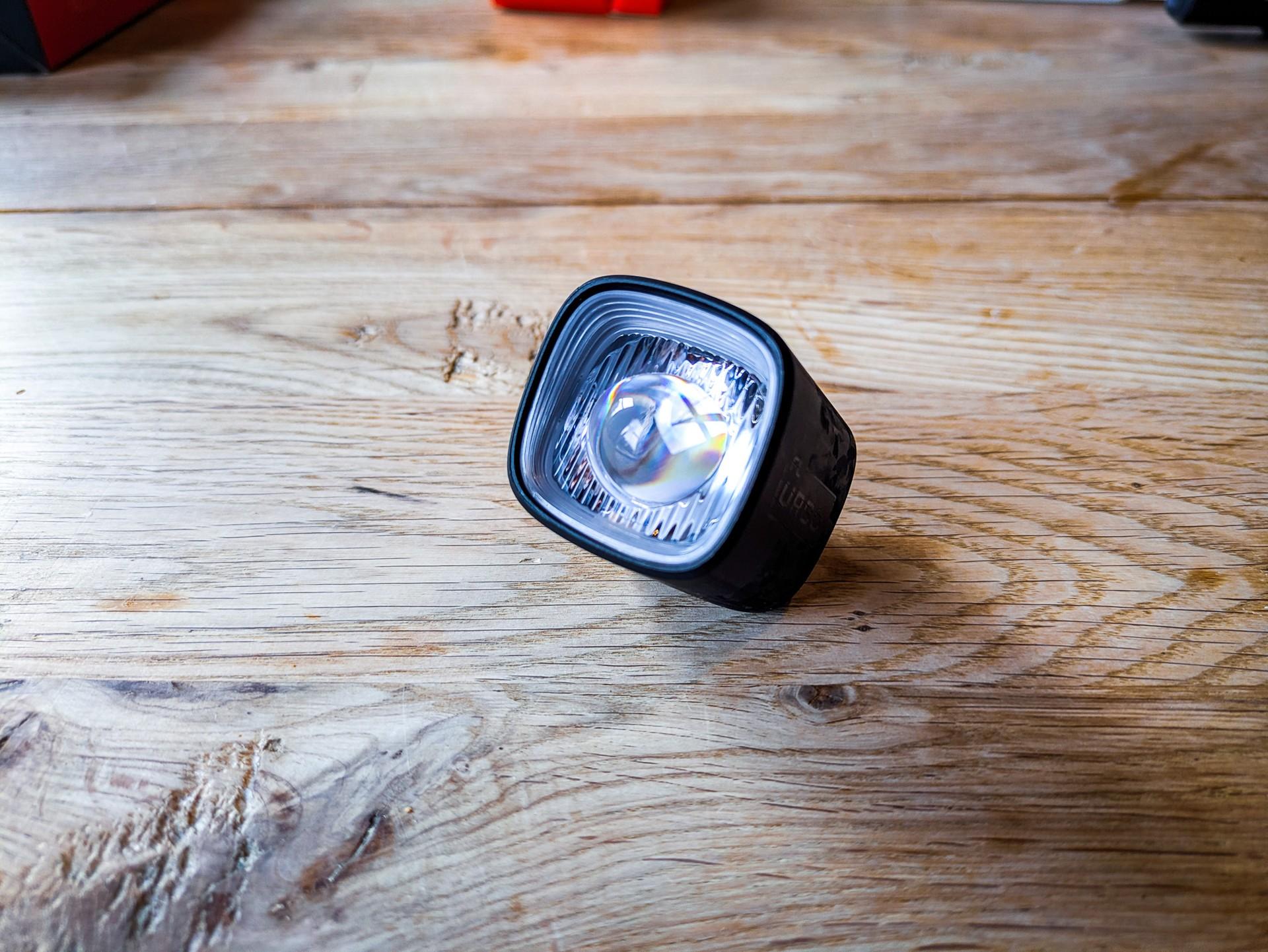
The integrated storage deserves more than a passing mention. Most brands that offer downtube storage place the access port under a bottle cage where it's impossible to miss. Scott hid its under the downtube itself, preserving the bike's clean lines – and more importantly, you forget it's there until you need it. I rode every outing with nothing in my jersey pockets: phone in the frame bag, tools in the bar ends, tube and repair kit in the downtube. The comfort gain from riding unburdened is real. The magnetic rear light adds to this – reaching down to detach it, switch modes, and reattach while riding is genuinely simple, and once you've used it, rubber bound mounts feel absurd.
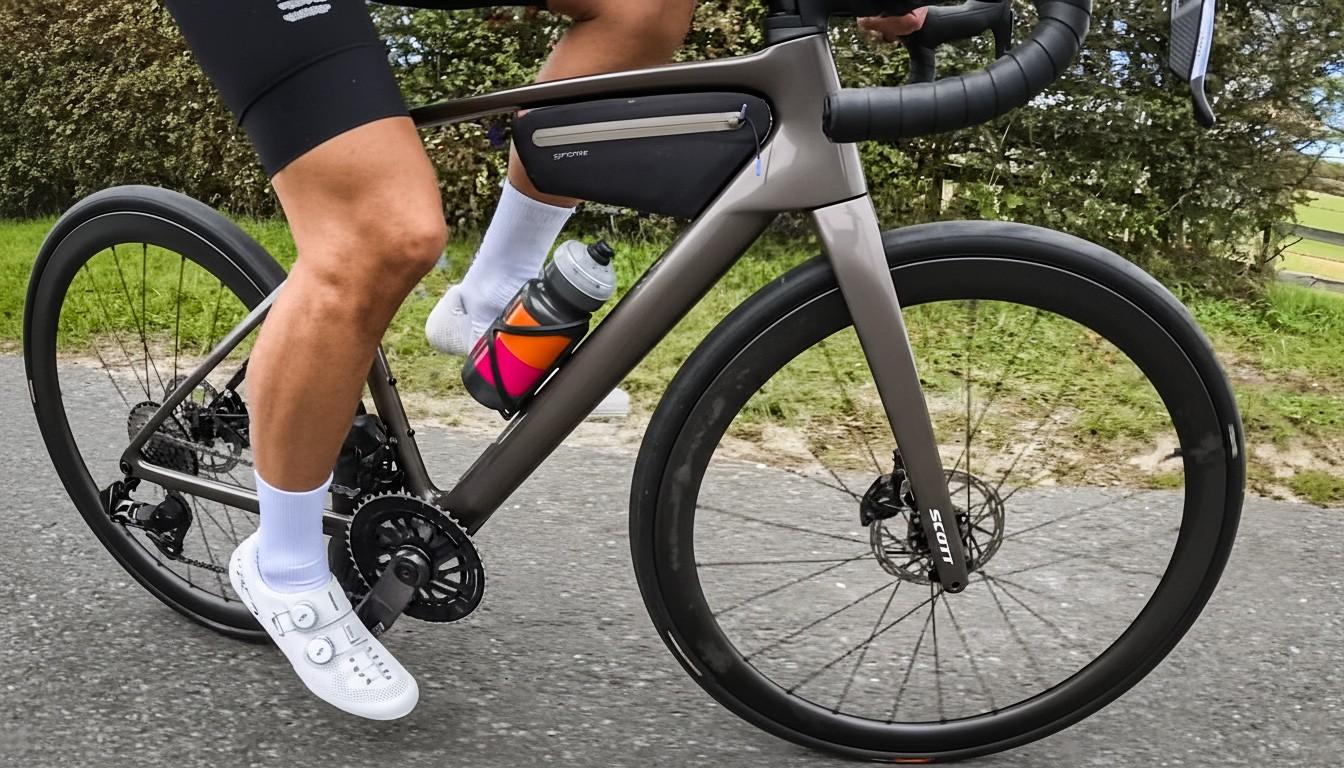
One final note on the cockpit: I like that this build doesn't use an integrated one-piece carbon bar and stem. The ability to adjust handlebar angle and stem height independently is exactly right for a bike aimed at riders who prioritise comfort and are still dialling in their position. Once you've found what works, have the steerer tube cut – the uncut setup with spacers stacked high looks untidy and undermines the effort Scott has put into the rest of the bike's clean aesthetics.
Where it falls short
The Addict does not want to sprint. Get out of the saddle and push hard, and you can feel the wheelbase asking why you're bothering. Endurance geometry and wide tyres are inherently less dynamic under hard acceleration – anyone buying this bike expecting race bike snap has misunderstood the brief. But the Fulcrum Wind 42 wheels compound the issue. They carry meaningful rotating weight, which dulls acceleration: heavier wheels take longer to spin up but hold speed well once there. It's the flywheel effect, and it's why the Addict is so good at cruising but less convincing when you need to punch over a short climb.
The tyres contribute to this. The Schwalbe Ones are wide, durable, and perfectly fine for their purpose, but they're not light. Swapping to a Continental GP5000 in summer would make the ride noticeably more responsive. This is the single change I'd make to the bike as delivered.
I also want a computer mount. The Addict's bar shape means most third-party mounts don't sit well, and Scott's decision to omit a dedicated mount on a bike at this price point is a miss. It's a small omission, but it's the kind of detail that matters on a bike otherwise defined by thoughtful integration.
The saddle didn't suit me, but that's personal preference and barely worth mentioning – the chances of any stock saddle being right for you are slim regardless of brand.
The price argument
This is where the Addict's case becomes difficult to argue against. Here's the full range:
A Dura-Ace endurance bike for six and a half grand, and a 105 Di2 bike with carbon wheels for £3,299 from a brand that isn't direct-to-consumer are both hard pricepoints to ignore.
Canyon and Giant have structural pricing advantages through their distribution models, which makes it remarkable that Scott – selling through a traditional dealer network – can compete at this level. But the Addict doesn't just compete on price. Against its closest rival, the Canyon Endurace, the Addict offers meaningful spec advantages across the range: integrated downtube storage on all builds (not just top-tier), 38mm tyre clearance versus the Endurace's 35mm, and the flex seatpost fitted as standard on every model rather than reserved for the more expensive options. The bar-end multi-tool and magnetic light compatibility are included across the board too.
Scott Addict 2026 range specs

Build | Groupset | Wheels | Weight | UK Price | USD Price |
|---|---|---|---|---|---|
| Addict 10 | SRAM Force AXS | Fulcrum Wind 42 (carbon) | 7.8kg | £5,499 | $6,699 |
| Addict 20 | Shimano Ultegra Di2 | Fulcrum Wind 42 (carbon) | 8.2kg | £4,299 | $5,499 |
| Addict 30 | Shimano 105 Di2 | Syncros Capital 1.0 (carbon) | 8.5kg | £3,299 | $3,999 |
| Addict 50 | Shimano 105 (mechanical) | Alloy | 8.9kg | £2,249 | $2,799 |
| Addict 40 | Shimano 105 Di2 | Syncros RP2.0 (alloy) | 8.8kg | £2,749 | $3,399 |
| Addict Premium | Shimano Dura-Ace Di2 | Fulcrum Wind 42 (carbon) | 7.4kg | £6,499 | $7,699 |
Against the broader field – Specialized Roubaix, Trek Domane, Cannondale Synapse, Giant Defy – the Addict sits in gold or silver position on price at virtually every groupset tier. The gaps aren't marginal either. We're talking hundreds of pounds at some spec levels.
One wheel detail worth noting: the Syncros Capital 1.0 carbon wheels on the Addict 30 are hookless with a 25mm internal width and 40mm depth, and are a claimed 30g lighter than the Fulcrum Wind 42s fitted to the more expensive builds. The Fulcrums are hooked with a 23mm internal width and 42mm depth. Depending on your priorities – wider tyre support and weight versus hooked rim compatibility – you might actually prefer the wheels on the cheaper bike.
A note on timing
The range is heavily Shimano-weighted, and that's worth flagging. Dura-Ace and Ultegra are both likely to be refreshed within the next twelve months. If having the latest groupset matters to you, that's a reason to either wait or to opt for the SRAM Force-equipped Addict 10 – SRAM has just delivered its new generation, so those components won't be superseded for years. The current Ultegra and Dura-Ace remain excellent groupsets and won't stop working when replacements arrive, but it's the kind of thing that's worth being aware of before committing at the higher price points.
For my money, the Addict 30 at £3,299 is the sweet spot – 105 Di2 is proven and unlikely to feel outdated any time soon, the carbon wheels are genuinely good, and the weight penalty over the Ultegra build is just 300g. It's the build I'd buy, and with the Addict 30 frequently discounted below £3,000 at UK dealers, it qualifies for our guide to the best road bikes under £3,000.
Verdict
Velora review
Scott Addict 10 Road Bike 2026
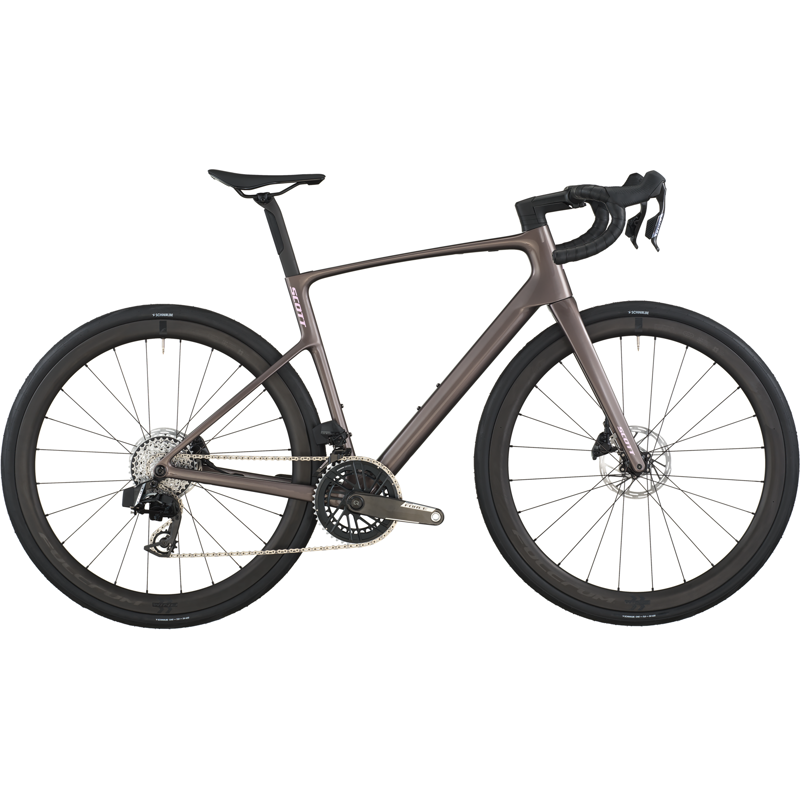
Premium endurance road bike delivering exceptional comfort, stability and integrated features at a price that undercuts most rivals.
For
- +Exceptional comfort and stability
- +Integrated storage and accessories
- +Outstanding value for spec
Against
- –Dull acceleration under hard effort
- –Heavy wheels and tyres as standard
- –Muted, minimal branding
Size
The Scott Addict does exactly what an endurance bike should do. It keeps you comfortable over long distances, handles predictably in all conditions, and integrates practical features that genuinely improve the riding experience rather than just adding to the spec sheet. It is not a bike that will excite you out of the saddle or make you feel fast on a short climb, but it was never supposed to be. The tyres and wheels dull some of its potential, and the missing computer mount is an oversight, but these are fixable problems on a bike whose fundamentals are sound and whose pricing is, in the current market, borderline disruptive.
I'd give it a 9 out of 10. The mark it loses is for the rotating weight issue and the mount omission – both solvable, neither deal-breaking. If you're in the market for an endurance bike in the next six to twelve months and you don't buy a Canyon Endurace, I'm struggling to see why you'd look past this.
Scott provided the test bike on loan for this review; no payment was received and the bike has been returned.