At first glance, the spec sheet for a standard 2026 road bike at the sub-£3,000 mark looks like a downgrade from 2016.
Where Ultegra might have once appeared across the entire groupset, 105 now sits. That alone might suggest the consumer is getting less for their money. But technology has come a long way in that time, and the question is whether the technological progression has eclipsed the traditional spec hierarchy. Is today's 105 superior to the Ultegra, or even Dura-Ace, of years past?
And how does that extend to the other tech on a bike at this price?
Ultimately what matters is whether the bike beneath you is functionally better. So this is an attempt to answer that question as precisely as possible.
The bike we're going to look at is Giant's TCR, specifically the Giant TCR Advanced Pro 1 (2016) at £2,599 versus the Giant TCR Advanced 1 (2026) at £2,799. It's not a perfect like-for-like, the 'Pro' designation shifted between generations, but both were consistently considered amongst the best road bikes under £3,000.
Giant TCR: 2016 vs 2026 at ~£2,700
Price up £200; parts budget completely rearranged

Spec | Giant TCR Adv Pro 1 (2016) | Giant TCR Advanced 1 (2026) |
|---|---|---|
| Brakes | Shimano Ultegra rim caliper | Shimano 105 hydraulic disc, 160/140mm |
| Cassette | Shimano Ultegra, 11-28t, 11-speed | Shimano 105, 11-34t, 12-speed |
| Crankset | Shimano Ultegra, 36/52t | Shimano 105, 36/52t |
| Max tyre clearance | ~25mm | 33mm |
| Price | £2,599 | £2,799 |
| Shifters | Shimano Ultegra 6800, 2x11 mechanical | Shimano 105 Di2 R7150, 2x12 electronic |
| Tyres | Giant P-SL1, 700x23c clincher | Giant Gavia Course 0, 700x28c tubeless |
| Wheels | Giant SLR 1 carbon composite | Giant P-R1 alloy disc, 30mm |
Three areas account for almost all of the meaningful change. Each one can be quantified to some degree, which is more useful than just listing what is different.
Is the 'lower' drivetrain actually worse?
The short answer is no, and it is not particularly close.
The 2016 Giant TCR Advanced Pro 1 ran a complete Shimano Ultegra 6800 groupset: shifters, derailleurs, crankset and cassette. At £2,599, it was an honest build with no hidden compromises. Every drivetrain component carried the Ultegra name, and the mechanical shifting was excellent. Ultegra 6800 was widely considered the sweet spot of Shimano's road range: 90% of Dura-Ace's performance at a fraction of the weight penalty.
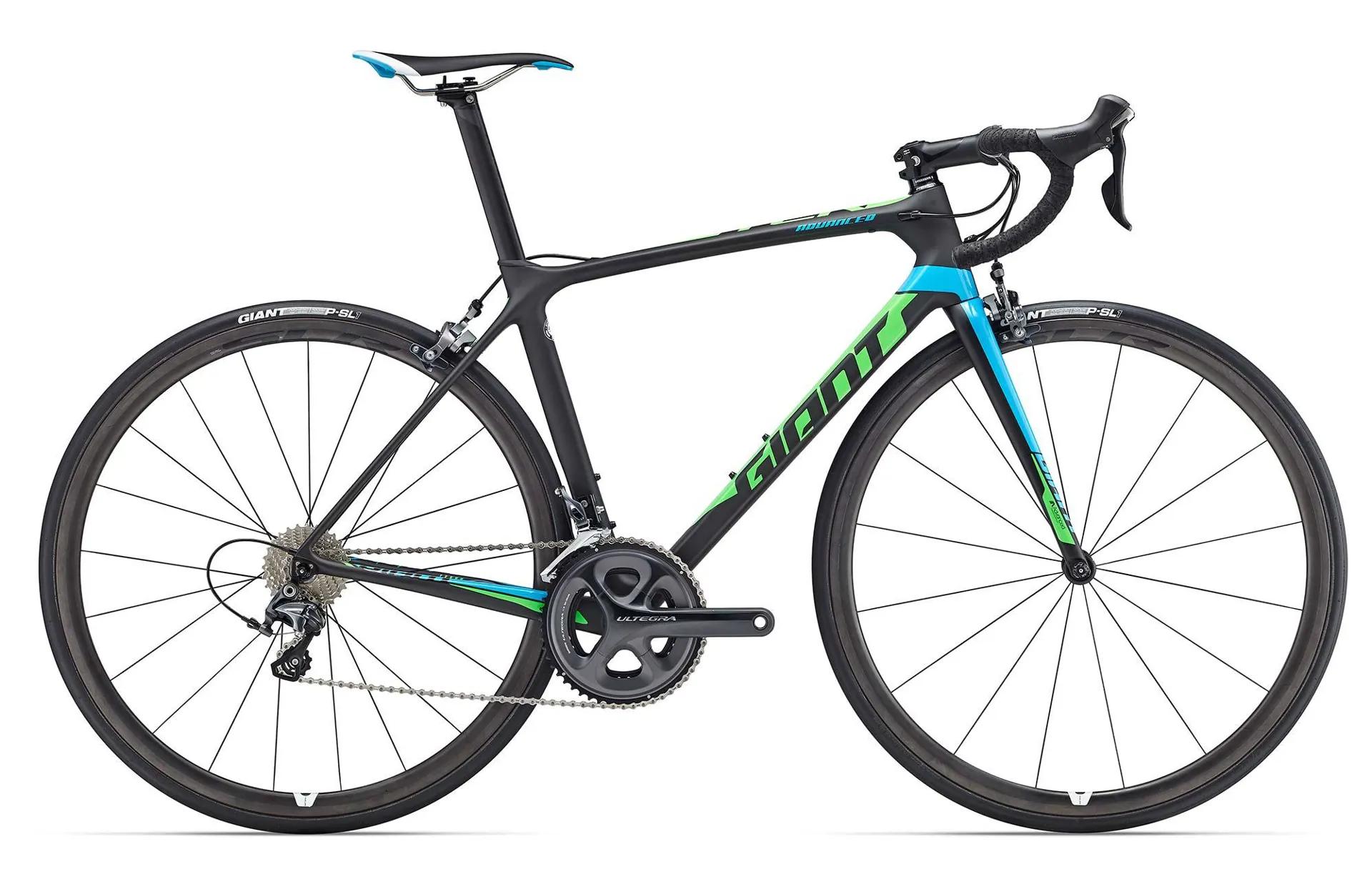
2016 Giant TCR Advanced Pro 1
The 2026 Giant TCR Advanced 1 runs Shimano 105 Di2 throughout: FD-R7150, RD-R7150, 105 crankset, 105 cassette. It is a 12-speed electronic groupset with semi-wireless communication between shifters and derailleurs. A decade ago, electronic shifting at this price was rare.
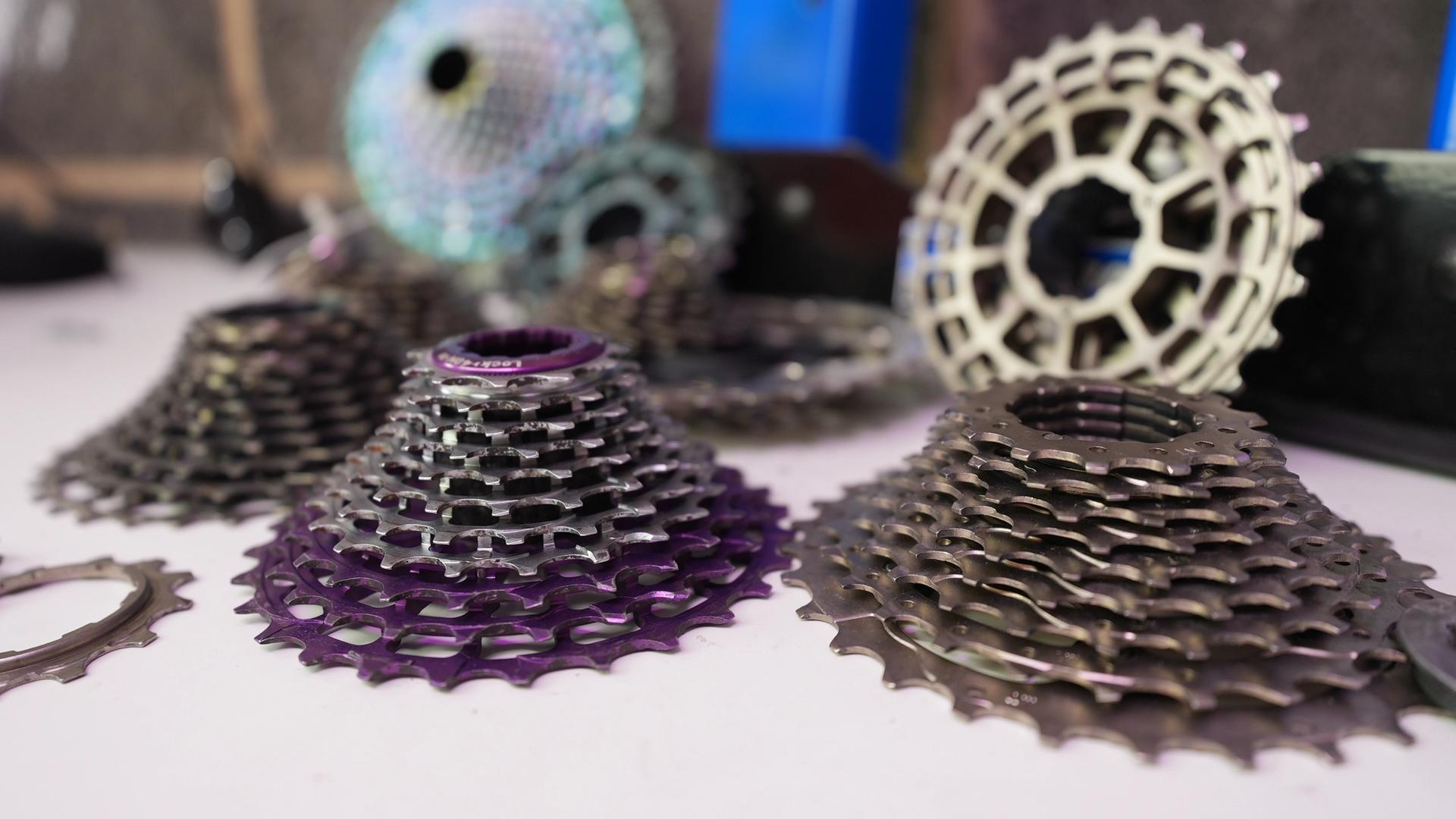
The 2026 105 cassette offers 11-34t against 11-28t on the 2016 bike, a 21% increase in total gear range. That's more than a marginal gain. It is the difference between grinding up a steep climb in a gear that is too hard and having a bail-out ratio that lets you spin. The 2026 bike also has 24 gear combinations against 22, with better spacing across the cassette thanks to the extra sprocket.
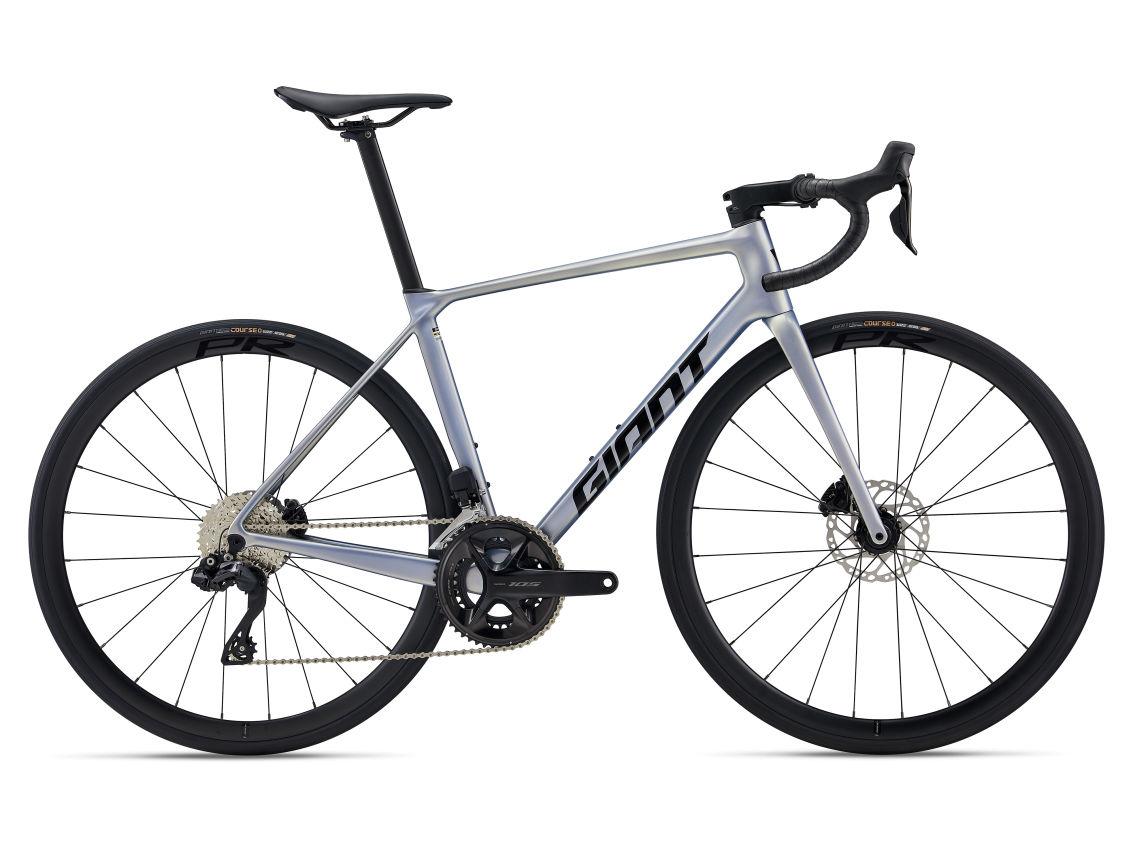
2026 Giant TCR Advanced 1
The 2016 TCR had mechanical Ultegra, requiring periodic adjustment, and relying on the rider to match shift timing to pedal load. The 2026 105 Di2 is fully electronic: instant, consistent, and self-adjusting. The jump from mechanical to electronic is arguably a bigger functional upgrade than the drop from Ultegra to 105 was a downgrade.
If you scored each drivetrain on gear range, number of ratios, shift consistency and shift speed, the 2026 105 Di2 build wins on every axis except the name on the lever. The consumer is getting a functionally superior drivetrain for £200 more.
Is the bike faster and safer where it touches the road?
Tyres and brakes are really two halves of the same question: how does the bike interact with the surface beneath it?
Tyres
The 2016 Giant TCR came with Giant P-SL1 tyres in 700x23c — a width that was already conservative even by 2016 standards. The frame had limited clearance, maxing out at around 25mm. The 2026 TCR runs Giant Gavia Course 0 700x28c tubeless tyres with frame clearance up to 33mm.
That's a big jump, and the rolling resistance implications are not what you might expect. In general, a wider tyre of the same construction will roll faster at the same pressure than its narrower equivalent. The wider contact patch is shorter and broader, which reduces casing deformation per revolution. Aerodynamic drag does begin to penalise wider tyres at higher speeds, but for the vast majority of riding, the rolling resistance advantage holds.
Wider tyre also offer substantially better comfort and grip when run at lower pressures. On anything other than perfectly smooth tarmac, the wider tyre conforms to surface irregularities rather than deflecting off them, which means less energy lost to vibration.
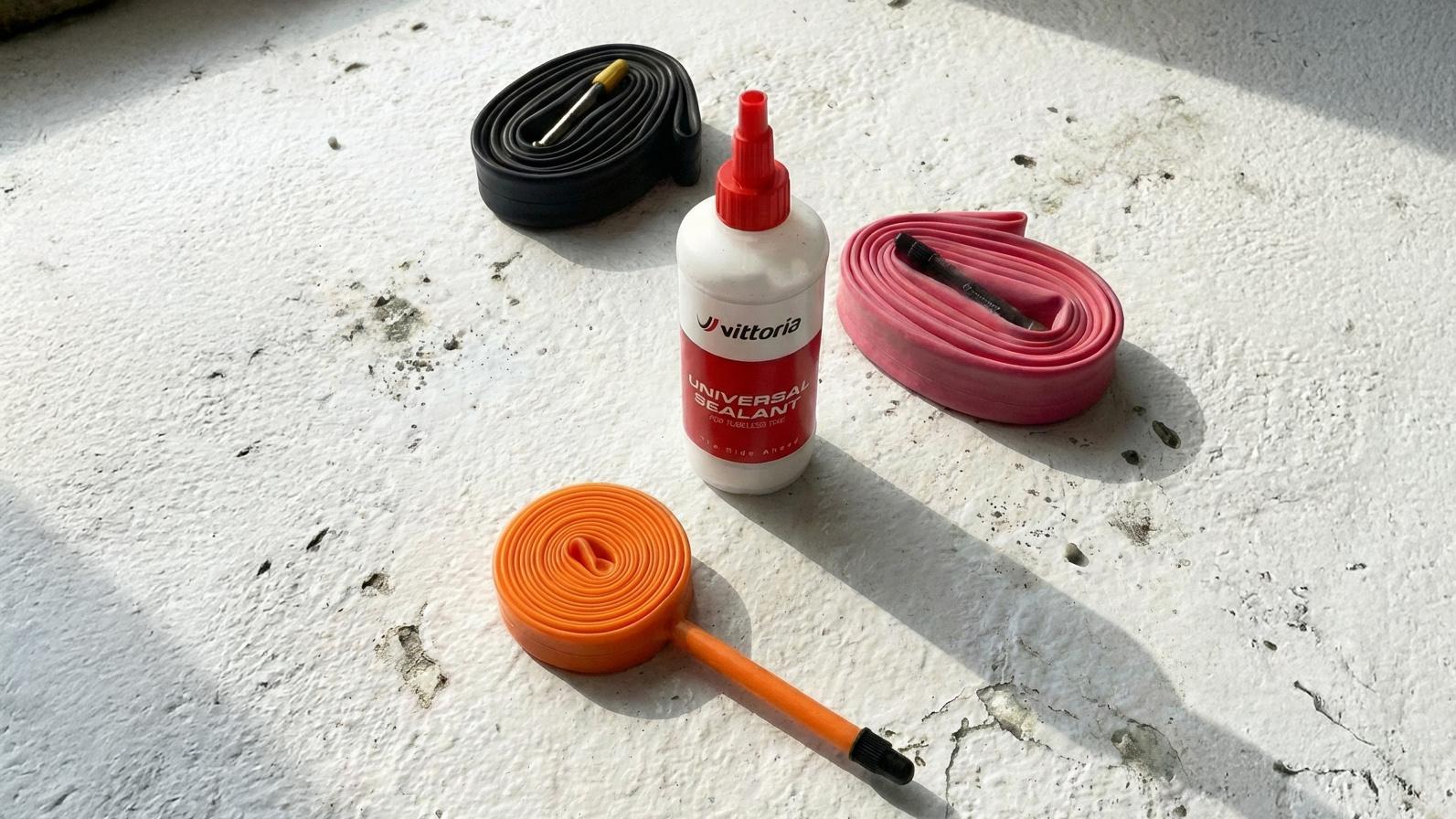
The tubeless factor adds another layer. Tubeless tyres can run lower pressures without risking pinch flats, which further improves both comfort and rolling resistance on imperfect roads. The 2016 bikes required inner tubes; the 2026 bikes are tubeless-ready from the box. I switched my road tyres to tubeless around 2019 and will definitely not be switching back.
So is the 2026 bike faster where it touches the road? On a smooth velodrome, probably not. The narrower tyre with its smaller frontal area would have an edge (we won't get into the more complex territory of rim-tyre aerodynamic interaction…). On any public road with surface variation, patches, cracks, or damp, the wider tubeless tyre is likely both faster and more forgiving - check out the brilliant work by Bicycle Rolling Resistance if you want to really delve into the detail there. Given that almost nobody buying a sub-£3,000 road bike is racing on glass-smooth circuits, the 2026 setup is the better for most riders.
Brakes
The 2016 TCR ran Shimano Ultegra rim calipers, which were excellent rim brakes by any standard. The 2026 version runs Shimano 105 hydraulic discs with 160mm front and 140mm rear rotors.
The performance gap between rim and disc brakes is well established and doesn't need much argument. Disc brakes offer more consistent stopping power in wet conditions, require less lever force for the same deceleration, and are not affected by rim wear or heating on long descents. For a rider who ever descends in the rain, or who rides in British conditions generally, the upgrade from rim to disc is a significant change. Especially if you ride carbon rims.
In 2016, disc brakes on a road bike at this price were still unusual. By 2026, they are the only option. The current 105 Di2 groupset doesn't offer a rim-brake version at all. The industry has virtually removed the option of rim brakes on bikes at this price point. Some will argue this was purely driven by profit. And it's true that disc brakes are more expensive. But I'd argue that you end up with a much better and safer product.
Where did the money actually go?
This is the economic question at the heart of the comparison, and it is worth being specific about it.
In 2016, the parts budget at this price point was concentrated on the drivetrain and wheels. The Ultegra name appeared on every moving part, and the Giant SLR 1 carbon wheelset, with composite rims and aero profile, was a genuine performance wheel. The trade-off was everything else: rim brakes, narrow clincher tyres, and a frame designed around the constraints of calliper mounting.
In 2026, the budget is distributed differently. The TCR Advanced 1 runs electronic shifting, hydraulic disc brakes, tubeless tyres, thru-axle frame and fork, and internal cable routing. But the wheels are Giant's P-R1 alloy set — a clear step down from the 2016 bike's carbon SLR 1s. The money that once went into wheel material now goes into electronics and braking hardware.
Across all major bike brands there has been a move to more package integration. Brands spec their own wheels, and finishing kits that have been designed, in part, to complement that bike. I'd argue this is a blessing and a curse. Certainly the off-the-peg bike is functionally better now. And if a rider just wants to pay their money and ride then they are in a better position. But if you're someone who is picky about which components they want to use, it can feel like a waste if a brand has allocated budget to a part that you won't be using anyway.
Where the 2016 bike still wins
Not everything got better
| Weight | Wheels | |
|---|---|---|
| 2016 | Sub-7kg | Giant SLR 1 carbon composite |
| 2026 | ~8kg | Giant P-R1 alloy, 30mm |
Factor | 2016 | 2026 |
|---|---|---|
| Weight | Sub-7kg | ~8kg |
| Wheels | Giant SLR 1 carbon composite | Giant P-R1 alloy, 30mm |
A kilo matters on long climbs, and the 2016 bike's carbon SLR 1 wheelset would cost £800+ to replace today. These are real losses. But they are also the price of admission for disc brakes, electronic shifting, tubeless compatibility and thru-axle stiffness — none of which existed at this price point a decade ago.
The verdict for the 2026 buyer
The 2026 consumer is getting a functionally superior bike, despite what the spec sheet says. The drivetrain has more range, more ratios and electronic shifting as standard. The tyres are wider, tubeless-ready and, on most real roads, likely faster. The brakes are hydraulic disc rather than rim caliper. And the overall system, from thru-axles to integrated power meters, reflects a budget that has been spread across the whole bike rather than concentrated on the groupset badge.
By contrast, 2016 was still a period in which weight was a major selling point – often at the detriment of everyday usability (as anyone who saw their brakes wear through a set of carbon rims will know). The 2016 TCR Advanced Pro 1 was a remarkably light bike, under 7kg in some builds. The 2026 TCR Advanced 1, with its disc hardware, wider rubber, and alloy wheels, comes in heavier. The 2016 carbon wheels were also an impressive spec, and fast to ride.
But for almost every other measurable dimension of performance the newer bike wins.
Cover image - A 2016 Giant Defy (not TCR) - credit: Peter Stuart/ Velora Cycling