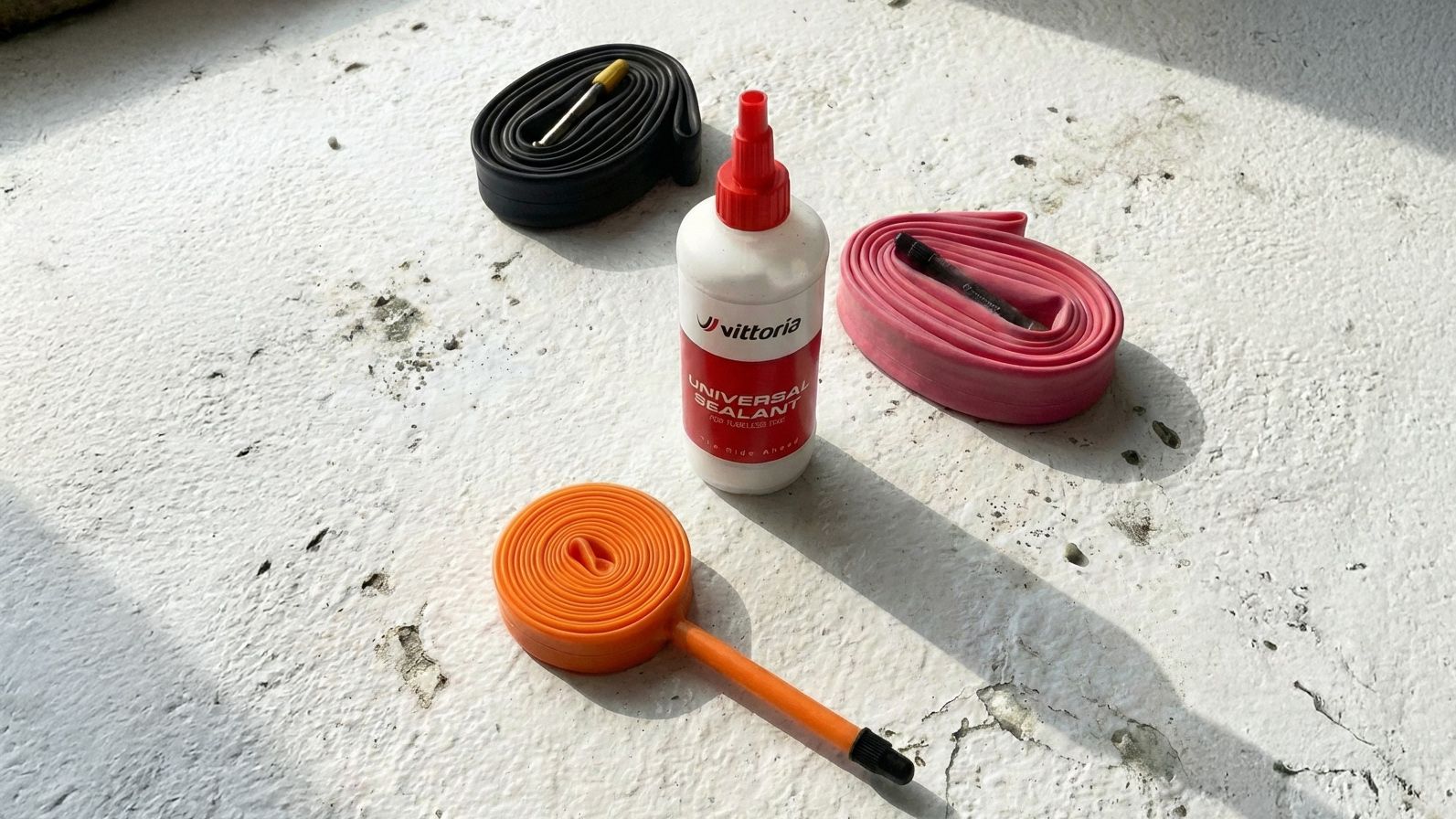
There used to just be two options. You could either use a butyl inner tube in a clincher tyre, or a butyl inner tube in a tubular tyre. And, once in a blue moon, perhaps a latex inner tube in a tubular tyre when the occasion called for it. Things are not quite so simple today.
The choice between inner tube materials and tubeless systems has become more complex over the past five years. Where riders once chose between standard butyl tubes and the racing elite's latex, the emergence of thermoplastic polyurethane (TPU) and the refinement of tubeless sealants mean there is no single obvious solution for all riders and all riding.
The decision now depends on a trade-off between rolling efficiency, weight, puncture protection, maintenance demands and, in some configurations, safety. We've broken down the four main options and mapped them to specific rider profiles.
The key metrics
Rolling resistance, the energy lost as a tyre deforms on the road surface, is the primary efficiency measure in laboratory testing. The friction occurs not only within the tyre casing but also between the tyre and any inner tube.
Rotating mass is also important. Mechanical engineering lore stipulates that reducing weight at the outer diameter of a wheel, where tubes sit, has a greater effect on acceleration and responsiveness than removing equivalent grams from the frame.
Air retention and puncture behaviour are also key factors. Some materials hold pressure for weeks; others lose 10–15 PSI overnight. Some seal small holes automatically; others require roadside repairs.
Butyl: the reliable default
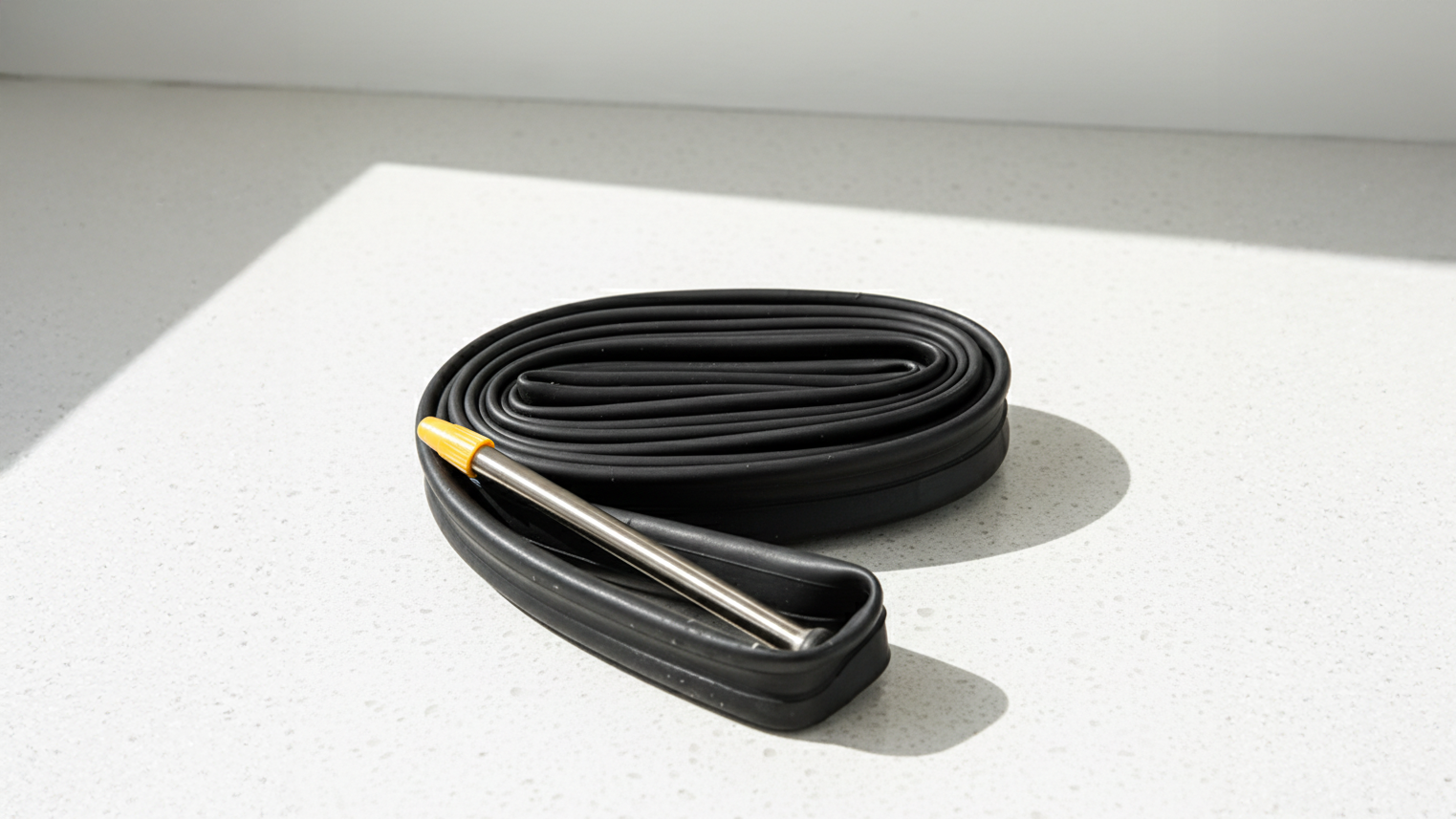
Standard butyl tubes, made from synthetic isobutylene isoprene rubber, remain the most common option due to cost and convenience.
They typically weigh 100–125g per tube for road sizes and generate rolling resistance in the range of 13–15 Watts per tyre at 80 PSI, according to Bicycle Rolling Resistance testing. That figure is notably higher than latex or TPU.
Butyl holds air for weeks, can be patched with basic vulcanising cement, and costs between $5 and $10 per tube.
Butyl is best suited to commuting, winter training and riders who prioritise reliability over marginal performance gains.
Latex: the speed benchmark
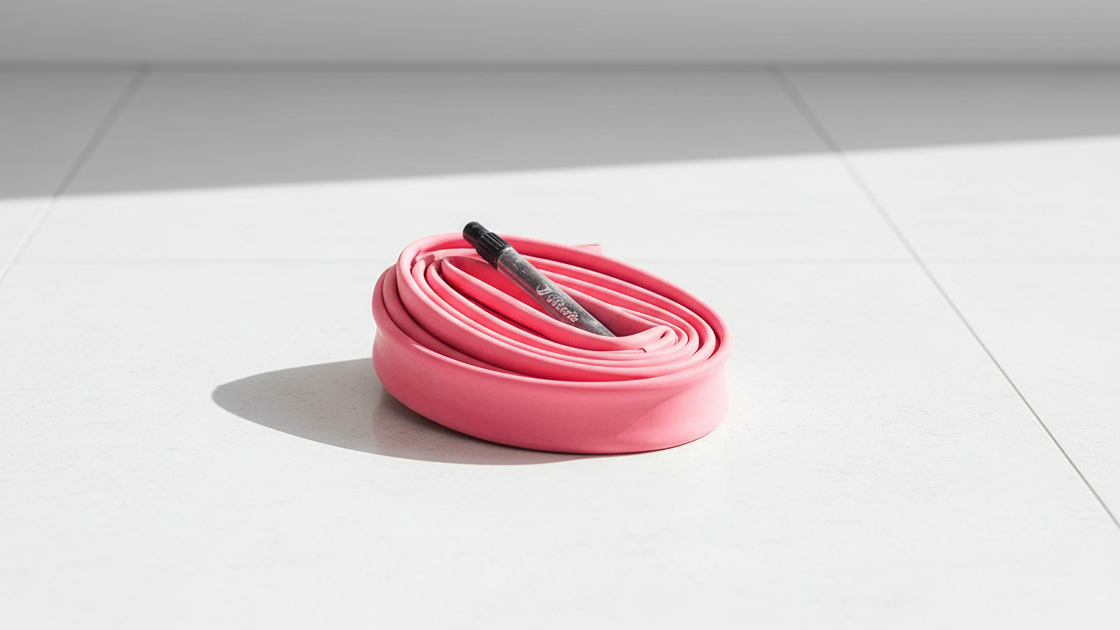
Latex tubes, made from natural rubber, have long been widely used for racing.
Their high elasticity and low hysteresis loss translate to rolling resistance figures of 7–8 Watts per tyre, roughly half that of butyl. Rather than dissipating vibration as heat, latex allows the tyre to conform more easily to the road surface, which riders perceive as a smoother, more “supple” ride.
The drawback is porosity. Latex commonly loses 5–15 PSI over 24 hours, requiring inflation before every ride. The material is also vulnerable to pinch flats and can tear rather than puncture slowly.
Latex works best for time trials and dedicated road racing on flat or rolling terrain, where the performance advantage outweighs the maintenance burden.
TPU: the weight leader
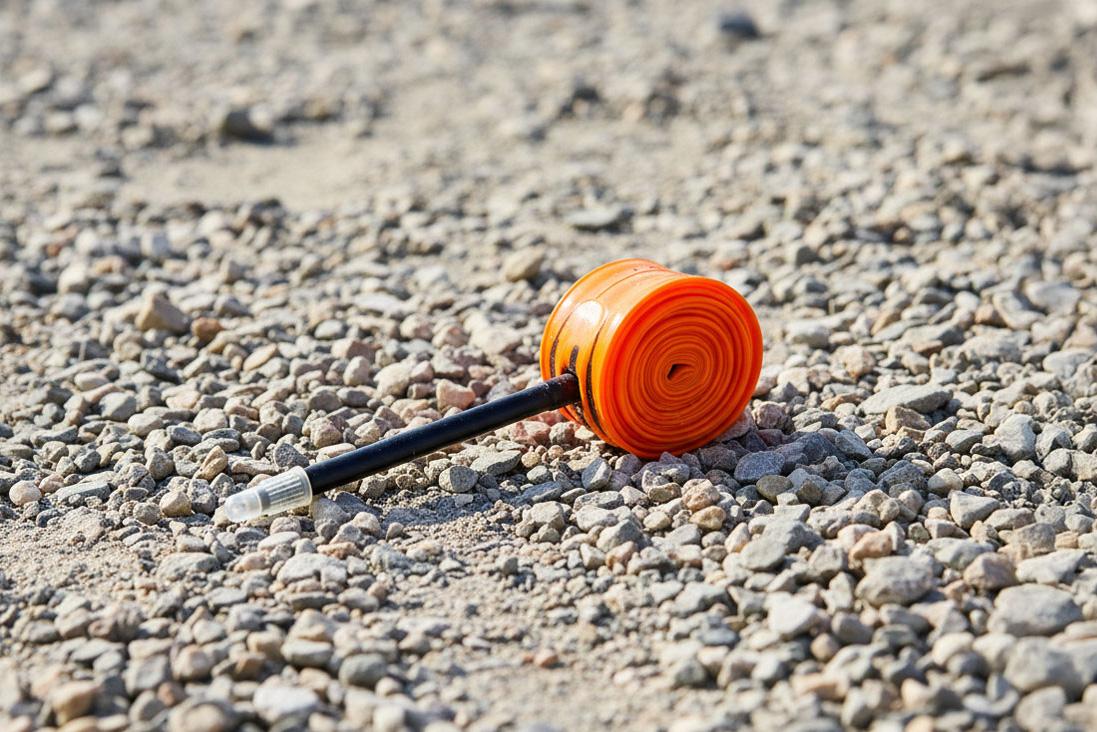
TPU tubes are made from thermoplastic polyurethane, a plastic that combines strength with elasticity. The material has matured significantly since early iterations in 2020.
Modern TPU tubes, such as the Schwalbe Aerothan or Pirelli SmarTube, weigh as little as 25–45g for road sizes, reducing rotating mass by 150–200g compared to butyl. Rolling resistance now falls within 7.5–9 Watts per tyre, closing much of the gap to latex, according to Bicycle Rolling Resistance data.
TPU folds to roughly one quarter the size of a butyl tube, making it a compact spare. The material resists punctures from sharp objects more effectively than butyl of similar thickness, according to Schwalbe's technical documentation.
However, TPU is sensitive to installation errors. Manufacturers advise against inflating TPU tubes outside the tyre, as free expansion can permanently deform the material. Repairs also require TPU-specific adhesive patches rather than standard vulcanising cement. Plastic valve stems can also be fragile.
The best TPU inner tubes suit weight-conscious climbers, racers who dislike tubeless maintenance, and anyone who values a minimal saddle bag.
Tubeless: the efficiency leader
Tubeless systems eliminate the inner tube entirely, relying on liquid sealant to create an airtight seal between rim and tyre.
By removing tube-to-casing friction, tubeless offers the lowest rolling resistance currently available, with Bicycle Rolling Resistance recording figures of 6.5–7.5 Watts per tyre. The absence of a tube also makes the system much less susceptible to pinch flats, allowing riders to run significantly lower pressures for improved grip and comfort.
Modern high-fibre sealants, such as those from Silca, can seal punctures up to 6mm in real time, often without the rider noticing.
The maintenance burden is the primary drawback. Sealant dries out every 3–6 months, faster in hot climates, and must be replenished. Coagulated clumps, sometimes called latex monsters, can form inside the tyre and require removal.
Tubeless is widely used for gravel and mountain biking, where low pressures are essential, and suits high-performance road riders who accept the maintenance trade-off.
Related: How to keep your bike out of the workshop – 11 rules from a bike mechanic
Safety and compatibility
Certain equipment combinations create specific risks.
Rim brakes and heat: Sustained braking on long descents generates significant heat on carbon rims. Latex is extremely heat-sensitive and can fail catastrophically under these conditions. Schwalbe claims its Aerothan TPU is heat-resistant, but many other TPU manufacturers advise against rim-brake use on mountain descents. Butyl remains the safest choice for rim-brake wheels in mountainous terrain.
Hookless rims: These rims, common on modern tubeless wheelsets, lack the internal bead hook of traditional designs. Only tubeless-ready tyres with specific bead strengths should be used. If running a tube on hookless rims in an emergency, the tyre must still be a tubeless-rated model. Using a non-tubeless tyre on a hookless rim risks the tyre blowing off.
CO2 and sealants: Some sealants, particularly those using natural latex, coagulate when exposed to the freezing temperature of CO2 canisters. Riders should verify their sealant is CO2-compatible before relying on canisters for emergency inflation.
Recommendations by rider profile
Which inner tube is best for you?

Rider type | Recommended system | Reason |
|---|---|---|
| Commuter | Butyl | Reliability and weeks of air retention |
| Gravel and MTB | Tubeless | Low pressures impossible with tubes |
| Performance road racer | Tubeless or TPU | Self-healing or near-tubeless speed without sealant |
| Rim-brake user | Butyl or latex | Heat safety; latex for flat courses only |
| Weight-focused climber | TPU | Removes 150–200g of rotating mass |
The bottom line
In practice, the “right” system depends on what kind of riding you actually do. A commuter or winter trainer will benefit most from butyl’s durability and air retention. A time triallist or criterium racer still gains a measurable edge from latex. Weight-focused climbers and racers who want to avoid sealant mess are well served by modern TPU tubes. Gravel riders and high-performance road cyclists willing to manage sealant and tyre setup will extract the most efficiency from tubeless.
The technology has diversified, not converged. Instead of one dominant solution, riders now have four distinct tools – each optimised for a different balance of speed, weight, reliability and upkeep.