Most cyclists traveling with bikes face excess baggage fees if their packed bike exceeds airline weight limits.
The good news for 2026: in much of the world, airlines really have become friendlier to bikes. The bad news: the details still matter, and the wrong carrier, fare or case can easily add a couple of hundred to the cost of a trip.
The key numbers to keep in your head are 23kg and 32kg. Twenty-three kilos (50lb) is the widely recommended limit for an individual checked bag. Thirty-two kilos (70lb) is the maximum permitted weight for one checked bag in many regions, including the EU and United States, although each airline’s conditions still apply. How your airline treats a bike between those two numbers is what separates “no problem” from “why did I book this?”
Below, we rate the main airlines in North America, Europe and Australia on two axes that actually matter to cyclists: price (what you pay if you pack sensibly) and weight policy (how forgiving they are once your hard case, disc rotors and spare tyres hit the scales).
Article and interactive guide last updated September 30, 2026.
North America: from punitive to pretty generous
North American carriers have changed their policies significantly over the past decade. Most big U.S. carriers now treat a bike box as regular checked baggage: no special “sports equipment” surcharge, no oversize penalty, as long as you behave on weight.
Best overall: Alaska Airlines
Alaska remains the benchmark. A bike counts as a normal checked bag, with oversize and overweight fees waived for approved sporting equipment. The normal checked-bag fee can still apply, but if your fare, status or co-branded card includes a bag, the bike can travel at no extra cost.
Very good: Delta, American, United
The big three legacy carriers broadly treat a properly packed bike as checked baggage rather than charging a dedicated bicycle tariff. Ordinary checked-bag and overweight fees can still apply, while oversize charges are waived under the relevant bicycle policies.
American and Delta currently publish a maximum of 292cm total, or 115 linear inches, for this kind of equipment. That still covers many modern bike cases, but it is less generous than American’s former 322cm limit. Check the operating carrier as well as the airline selling the ticket, especially on regional and codeshare flights.
Specialist pick: Air Canada
Air Canada charges a CA/US$50–60 bicycle handling fee each way, even when a fare includes checked baggage. In return, bicycles can weigh up to 32kg without an overweight or oversize charge. Sports equipment must be registered at least 24 hours before departure, and acceptance remains subject to space.
If you’re hauling a downhill bike, a heavy travel case or plenty of spares, that extra 9kg of headroom may still cost less than another carrier’s overweight charge.
Check your case size: JetBlue
JetBlue has dropped its old US$100 bicycle fee: a bike in a hard-sided, padded case now counts as one ordinary checked bag. The catch is size. JetBlue refuses bags over 80 linear inches (203cm), which rules out most bike cases, so confirm yours will be accepted before you book.
North America verdict
Alaska has one of the strongest policies where a bike is included within the traveller’s checked-bag entitlement. Below 23kg, Delta, American and United are competitive where the fare includes a bag or the ordinary checked-bag charge is modest. Air Canada is worth pricing for heavy cases, while JetBlue’s 80in bag limit rules out most bike cases.
Europe: legacy value vs low‑cost sting
Europe is more fragmented, and the gap between national carriers and low‑cost operators is still huge. A €19.99 headline fare can cost significantly more once you add the bike.
Best for most riders: British Airways
BA’s policy is refreshingly simple: a bike is just another checked bag. If it’s under 23kg and within 190×95×65cm, it comes out of your standard allowance. No sports surcharge, no drama. On long‑haul or premium‑economy tickets with generous baggage included, that often means the bike travels for free.
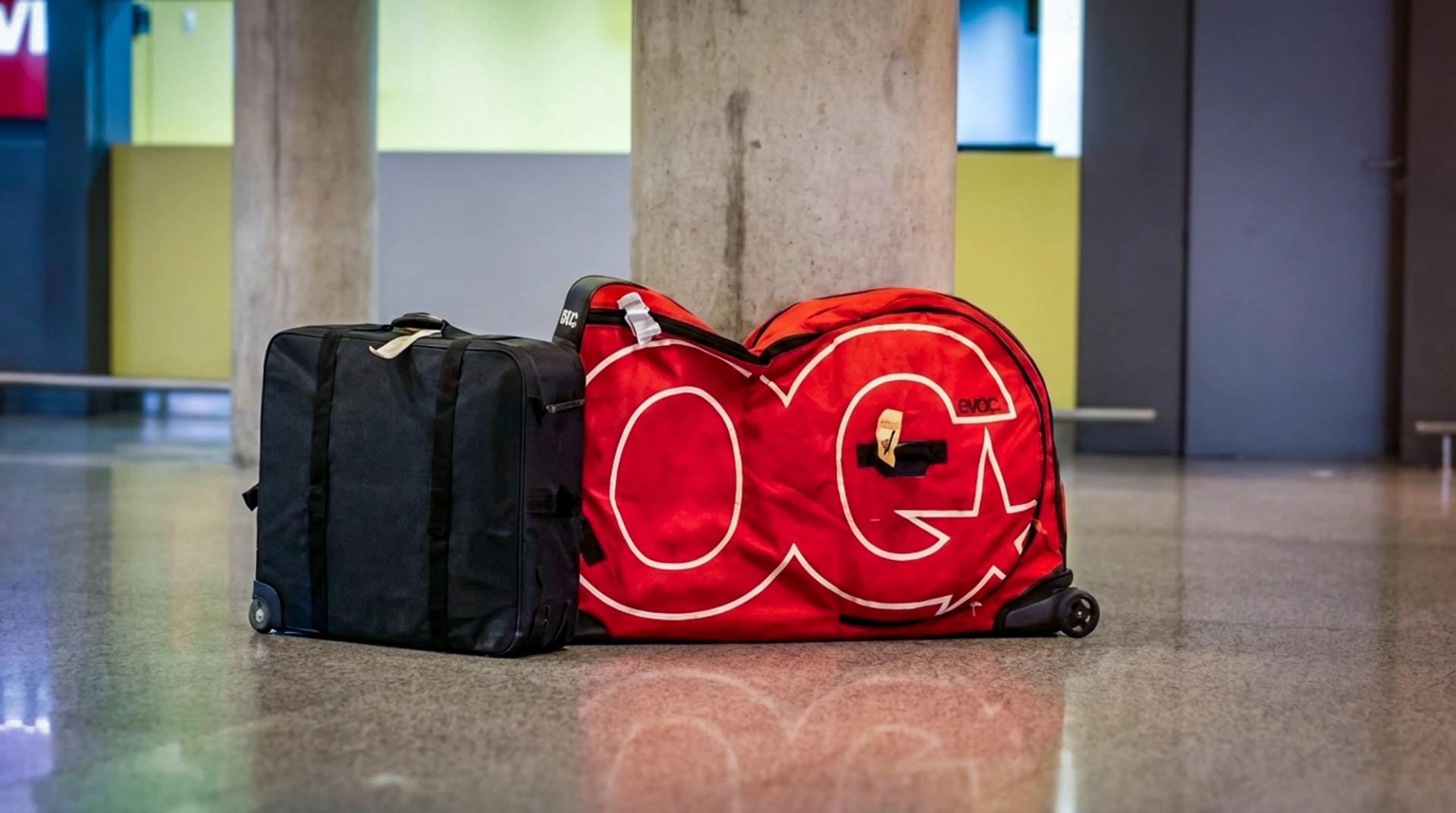
For European trips with a race bike in a soft case under 23kg, BA often has no additional bike fee when the route is available.
Flexible but fiddly: KLM
KLM charges a route-dependent fee for a bicycle or tandem. Reserve it as early as possible and no later than 48 hours before departure; My Trip shows the price and transport requirements. Do not assume a bike can simply replace a standard checked bag.
Check your allowance: Lufthansa
Lufthansa may count a bike within the free baggage allowance if the number of pieces and weight fit the ticket’s allowance; this does not apply to Economy Light. If it exceeds the allowance, a sports-equipment charge may apply. Check the price in Lufthansa’s baggage calculator, and register the bike no later than 72 hours before departure. It must be confirmed in the booking, and the packed bike must fit within 280cm in total dimensions.
Route-dependent: Iberia
Iberia does not have one fixed worldwide bike price: check the applicable fee for the journey rather than assuming a flat €50 charge. It accepts single-seat, non-motorised bikes, packed with the pedals removed, handlebars secured to the sides and tyres deflated.
Low-cost reality: easyJet and Ryanair
Both charge separately for a bicycle:
- easyJet lists bicycles as large sports equipment, with a 32kg maximum. Its sports-equipment weight cannot be pooled with purchased hold-luggage weight. The bike must travel in a bike box or bag, without other items packed alongside it.
- Ryanair allows a bike weighing up to 30kg per one-way flight. Check its fee when booking each leg rather than relying on a single price.
On a single short hop, those fees can be tolerable. Link two or three legs, or travel as a group, and the maths often flips in favour of a supposedly expensive legacy carrier with bikes inside the allowance.
Europe verdict
British Airways can be good value when the bike fits its size limit and your fare includes checked baggage. Lufthansa may also count a bike within the allowance on eligible fares. KLM charges a route-dependent bicycle fee; Iberia, easyJet and Ryanair all need an itinerary-specific price check. Compare the total cost, not just the ticket price.
Australia: generous allowances, with a budget catch
Australia’s two full-service carriers remain broadly cyclist-friendly, while Jetstar separates the oversized-item fee from the weight allowance.
Best overall: Virgin Australia
Virgin treats a bicycle as one piece of checked baggage. It must be packed in a manufactured hard or soft bike box and counts against the fare’s baggage allowance. Equipment over 23kg attracts an overweight charge, and no individual piece may exceed 32kg.
Great, with a packing requirement: Qantas
Qantas includes sporting equipment within the applicable checked-baggage allowance. The bike must travel securely packed in a bike box, and if the bike itself is longer than 140cm, the front wheel must be removed and fixed beside the rear wheel inside the box.
The 32kg figure is the maximum accepted weight for any single piece, not a universal economy allowance. Your included allowance still depends on the route, cabin and fare, with extra charges applying if the bike takes you beyond it.
Budget catch: Jetstar
Jetstar does not levy one universal dedicated bicycle tariff. Instead, a packed bike with any side longer than 1m attracts an oversized-item handling fee, paid in addition to the checked-baggage weight allowance. On Jetstar Airways domestic flights, the current oversized fee is around AUD/NZD30 online or AUD/NZD35 at the airport, per item and flight; other routes and Jetstar-branded carriers have their own charges.
Buy enough checked weight before travelling. Airport excess-baggage charges can be much higher than pre-purchased weight, so there is no reliable worked example without specifying the route, fare and allowance already bought.
Australia verdict
Virgin Australia and Qantas can carry a bike within the checked allowance, although overweight charges and fare-specific limits still matter. Jetstar may remain cheaper, but only after adding both the checked weight and oversized-item fee for every flight.
So which airline should you actually book?
Most full‑service carriers in North America, Europe and Australia now treat bikes under 23kg as standard checked baggage. If you can hit that magic 23kg number with a sensibly‑sized case, your bike often travels as cheaply as a normal suitcase.
Weight above 23kg changes the calculation. Heavy bikes and overbuilt cases favour airlines that accept up to 32kg without an overweight charge, notably Air Canada and Alaska, but the ordinary bag fee and fare allowance still matter.
For low-cost carriers, calculate the base fare plus the equipment fee for every flight, the required weight allowance and any airport excess charge. A full-service fare can be cheaper once all four are included.
Two final rules for 2026: check the airline’s e-bike policy before booking, because most will not carry a standard e-bike battery in either the cabin or hold; and treat 32kg as the practical maximum for one bag across the EU and United States. A battery-free e-bike may be accepted by some carriers, but the battery will usually need to travel separately by an approved shipping method. Case dimensions, packing instructions and CO2-cartridge rules also vary, so check the operating carrier rather than relying only on the airline named on the ticket.
If you weigh your packed bike box before you book, and then book with that number front‑of‑mind, the check‑in scale stops being a slot machine and becomes just another part of the race‑week routine you’ve already planned for.