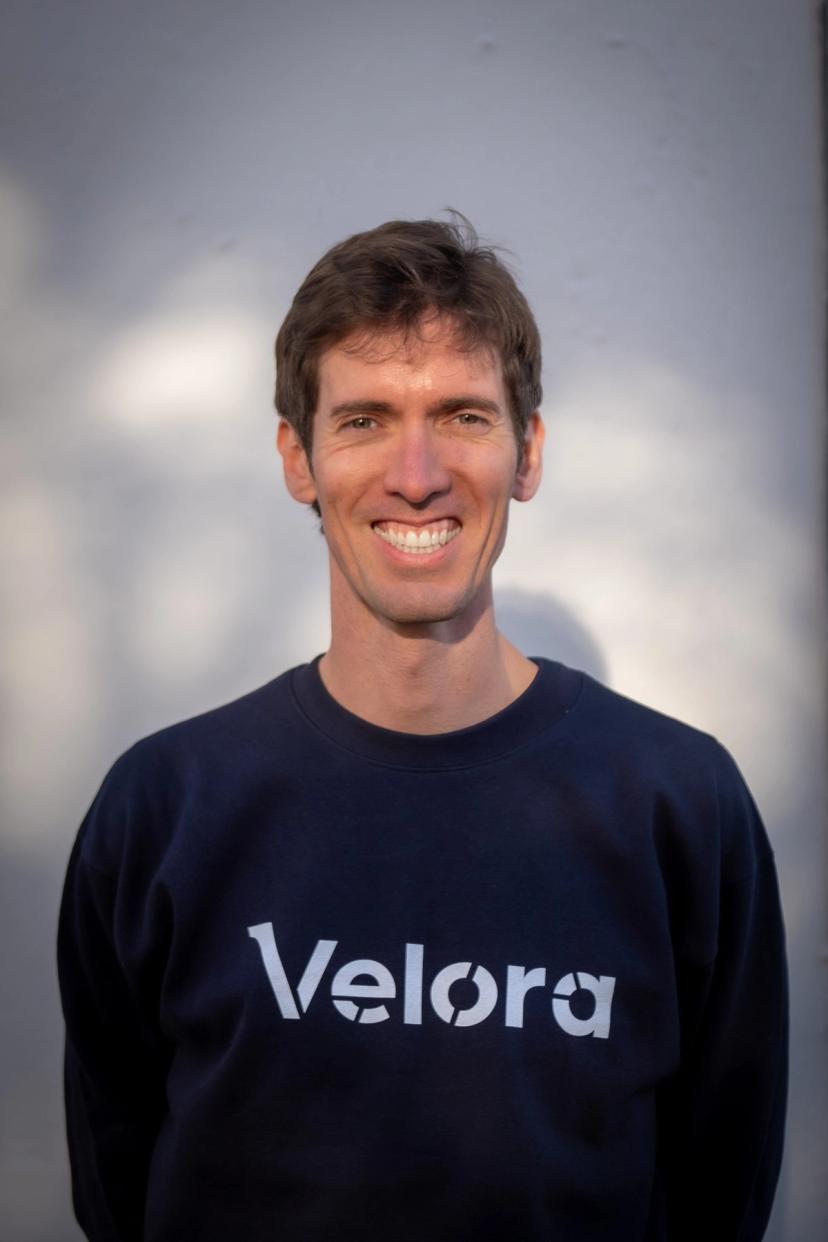
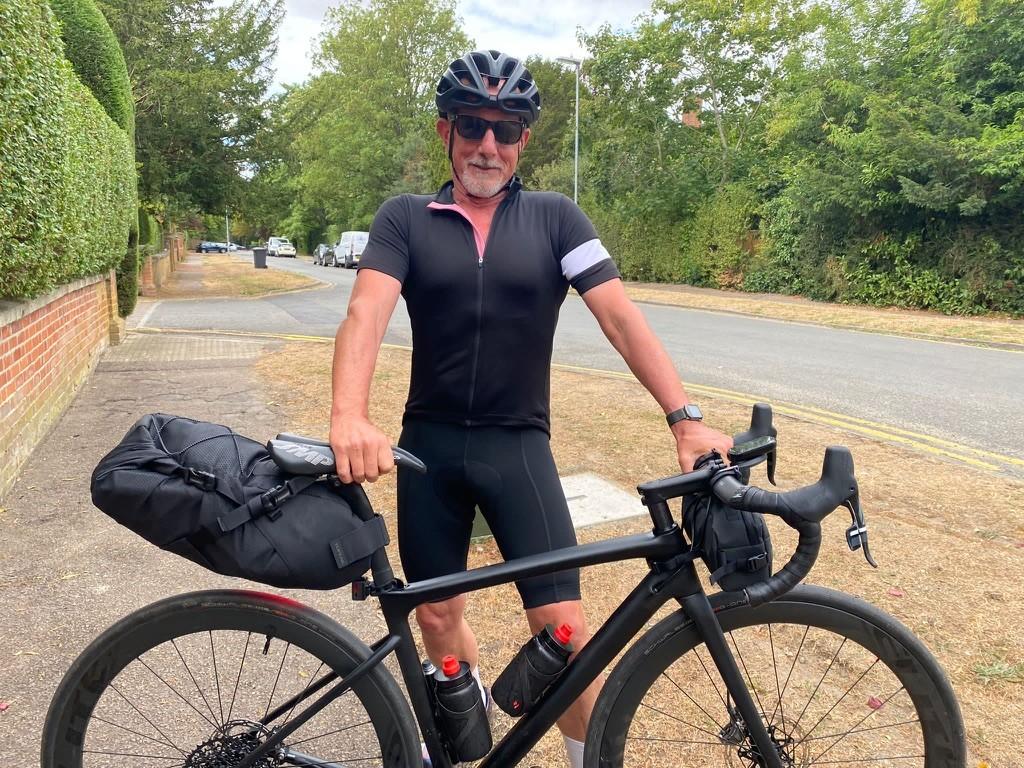
Ewan Kirk knows what he likes in cycling kit: black Rapha bib shorts and a black merino top. He has worn the same combination, from the same brand, for much of his cycling life. Some of his kit has spent so long in the sun on rides through the Balkans that it has bleached brown on the back.
"I have worn that basically my entire cycling career because it just fits me. It's just great," he told Velora in an interview in late September.
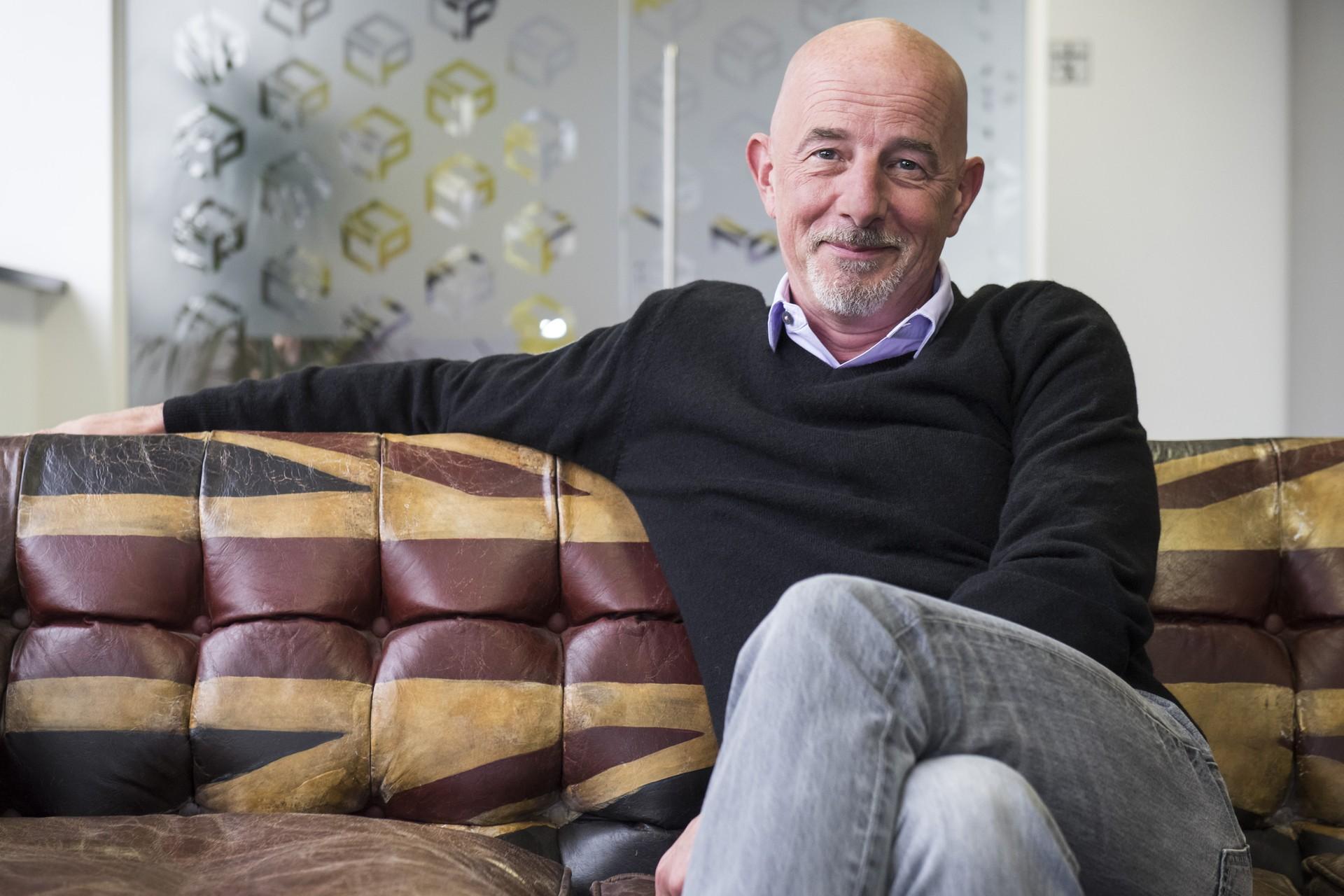
Kirk is an investment entrepreneur who built his career applying mathematics and computing to financial markets. At Goldman Sachs, he headed the quantitative technology group, leading more than 120 mathematicians, scientists and statisticians developing systematic investment strategies. In 2006, he founded Cantab Capital Partners in Cambridge. When GAM acquired it in 2016, the firm managed $4.1 billion and employed 55 people. Kirk now chairs Deeptech Labs, an accelerator that invests in early-stage technology companies.
A mathematician and programmer by background, he spends much of his working life with computers. Cycling supplies numbers to analyse, machines to repair and journeys whose daily decisions belong to him – as is the case for many minds fond of stats, cycling can be a healthy addiction.
That enthusiasm also gives him pause as an investor: loving a bike or a piece of kit is not the same as knowing it makes a sound business, and has a sharp insight on the cycling sector broadly, which we’ll come to later. But the appeal of cycling itself is easier for him to explain: the data, the hands-on work and the freedom to explore.
Numbers, spanners and the open road
Kirk calls himself "a very quantitative person", and he does not pretend the Strava and Garmin numbers leave him cold. "Because there's so much data and it's so accessible for a certain type of person, analysing that data and understanding it is a thing," he said. The analysis is part of the attraction in its own right: he sees the same appetite for numbers in running and swimming, not just cycling.
"I am much more in that zone now where I train hard so that I don't get worse, not that I'm going to get better," he said. He does not expect to impress anyone with a time up Alpe d'Huez.
Kirk spends his working days on computers, and so did his staff at Cantab. "One of the ways we solved that at the hedge fund is we used to spend about £1,000 a month on Lego," he said. "Everyone's working on computers. I'm working on computers. I'm a computer programmer, I'm a mathematician, I spend all day doing that stuff."
As a young man he was "as poor as a church mouse" and had to take the engine out of his Citroën 2CV to fix it, because he could not pay anyone else to. Modern cars, mostly electric in his case, give him nothing to tinker with. The exception is his 1942 Willys Jeep, where the carburettor and distributor are still within reach. Bikes give him the same work.
"There's something satisfying about doing something physical, and there's something unbelievably satisfying about stripping down a bike, finding out what the problem is, putting it back together. And it working," he said. "I think it's a particular trait of sort of type A people."
"Your bike's completely silent because you've spent ages making sure that the indexing's correct and the wheels are right and there's no rubbing or anything," he said. "And that is just a lovely feeling, it really is."
The third draw is travel on his own terms. Kirk's original plan for the gravel bike was to ride it, self-supported, to Moscow. After 2022 that was impossible, so he rode from Cambridge to Warsaw alone instead, booking hostels and hotels rather than camping.
For Kirk, the appeal is choosing the journey himself rather than signing up for someone else's challenge. "If I want to do it, I want to pick things I want to do," he said.
London to Stockholm came next, then Budapest to the Black Sea, which he said was much harder than the others. He ran into 45°C heat on the Romanian plains, and the lorries nearly killed him. "I got chased out of a village in Romania at knife point," he said. "I mean, it was properly scary."
Each evening he wrote a daily blog entry. He calls himself "a sort of frustrated writer" who can produce 800 words on demand, and touring gives him material. "It's at that pace where you travel far enough that you see things change," he said.
He rides the Mallorca 312 persistently, though he missed this year's edition after breaking his foot two days before. He enjoys being part of it, but he has no interest in races such as the Transcontinental or in following set routes. "I like the exploratory aspect of it," he said. "I'm just not a very clubbable kind of guy, so I'd much rather do something myself, particularly also because you can just stop or you can keep going. You just do it at your own pace and get it done."
"I'm never going to be fast up hills. I'm never going to look like a Rapha model, but at least I can get a little bit of chapeau for doing long-distance cycling, which is something, right?" he said.
Lately the touring has been shared. His wife began riding more seriously around 2011. "Somewhat depressingly, she kicks my arse on the hills," Kirk said. Back then, he said, "it was hard to get a bike to fit, but then it was also hard to just find kit that a woman would actually want to wear". In Mallorca, where they have a home 10km from the Tramuntana mountain range and around 10 bikes, he sees that groups on the roads are far more gender-balanced than a decade ago.
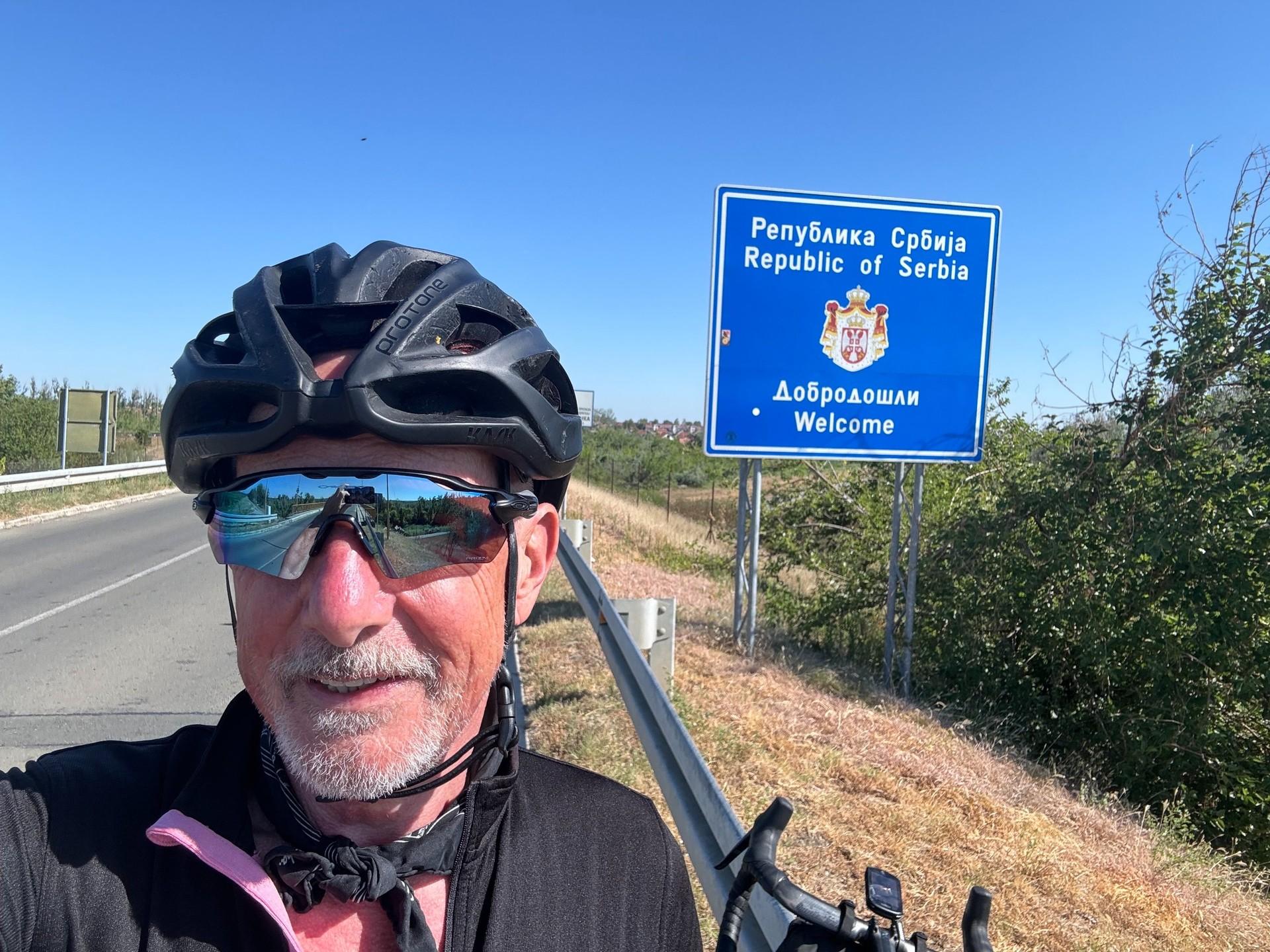
In 2025 the pair rode down the Rhine from its source near Andermatt back to Cambridge, a trip of about 1,600km. For Kirk, sharing those journeys is another draw of cycling. "And it's something you can do with your partner, which I think is a good thing, right?" he said.
This summer's Danube ride followed. "We're not divorced," Kirk said cheerfully. "It's rare that you spend 16 hours a day with your partner sort of doing something. And the fact that we could is nice."
From the shipyard to a sub-£1,000 build
The habit runs back to Glasgow. Kirk's grandfather was a shipbuilder and a member of the Glasgow Wheelers.
"For them, Saturday afternoon was you clock off on Saturday afternoon, you get on your bike and you cycle up to Loch Lomond or through the Trossachs or whatever on your fixed-wheel steel-framed bike," Kirk said. "You take your tea with you, all of that kind of thing."
When the young Kirk got his first racing bike, with five gears and drop handlebars, his grandfather's verdict was "soft, it's got gears". "It turns out, of course, he was probably right," Kirk said.
He rode a little at university, then stopped. Work, a partner and children left no room for rides that, like golf, eat into a weekend. "If you're going to go out for a ride, it's probably going to be three hours, and can you really justify that?" he said.
He came back once his children were older and Cantab was up and running. His chief operating officer, a big endurance cyclist, asked whether he had thought about cycling. Kirk went to his local bike shop and bought a LeMond with an aluminium frame, carbon fork and Ultegra, "back when Ultegra was something you could afford". He did not know how indexed shifting worked. "I just fell in love with it," he said. On a family holiday to Mallorca, his wife, who had done adventure cycling in Vietnam and China, got a bike too.
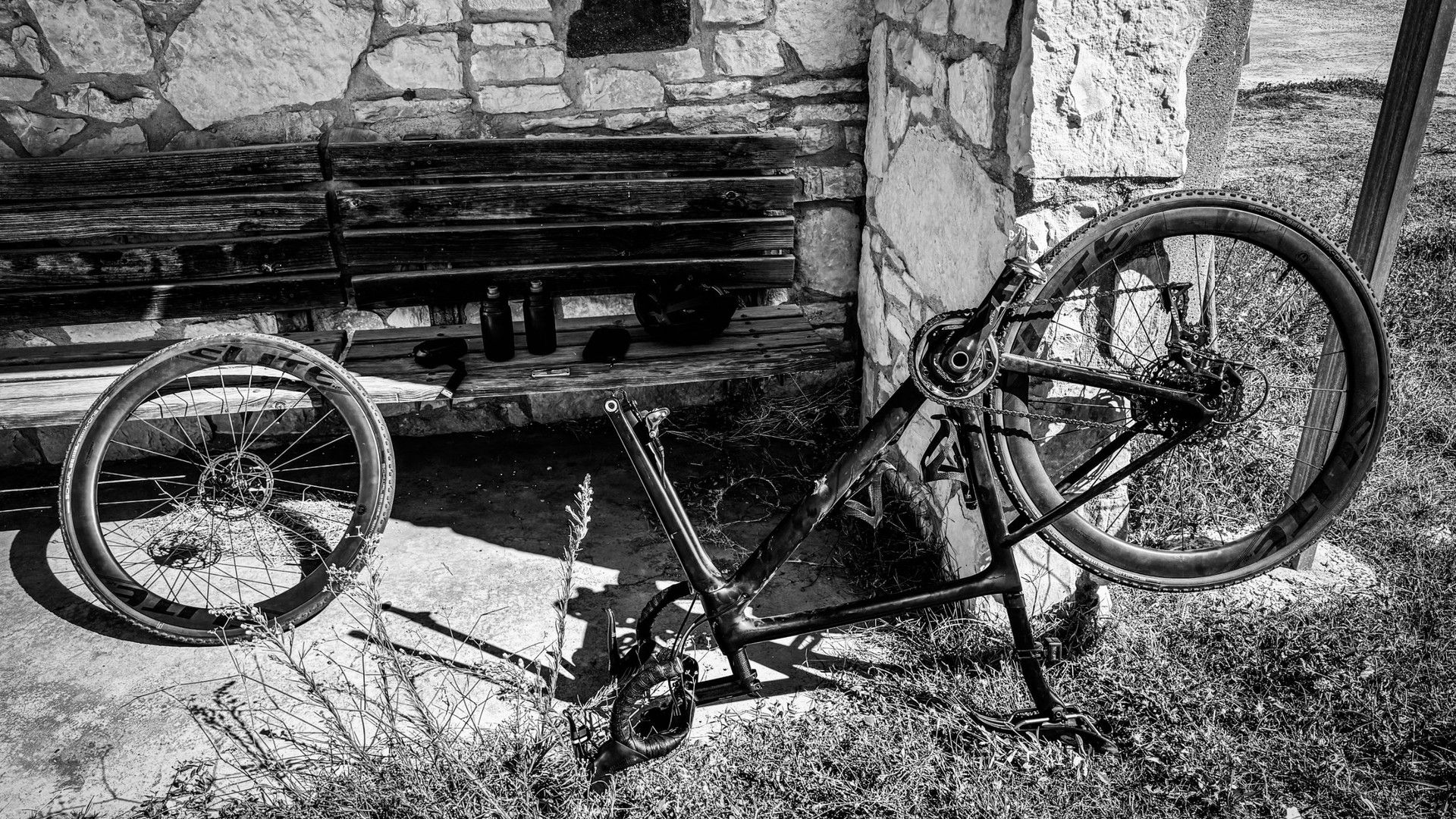
Lockdown turned him into a mechanic. Kirk fettled all of his own bikes, then his friends' bikes, then recabled a tandem, and was still bored. So he set himself what he calls "a completely arbitrary goal" to build a gravel bike for less than £1,000.
"I could just go out and buy any gravel bike I want," he said. "But there was something special about that."
He wrote Python scripts while working out the 1x drivetrain he wanted. He described the finished bike as having a SRAM Force 1x groupset, hydraulic brakes and tubeless tyres. Pop over to his blog for a much more granular account of the cost. The first build used a carbon frame and wheels sourced from China and a cheap 1x12 groupset, but the shifting and cable disc brakes were poor. Over the following months he swapped in second-hand Force 1 parts and hydraulic brakes. He wrote that he could only persuade himself the bike came in under £1,000 by leaving out his own labour and the original groupset. When the bike was stolen in late 2021, he rebuilt it during the supply-chain crisis, and the replacement groupset alone cost more than the whole first bike had.
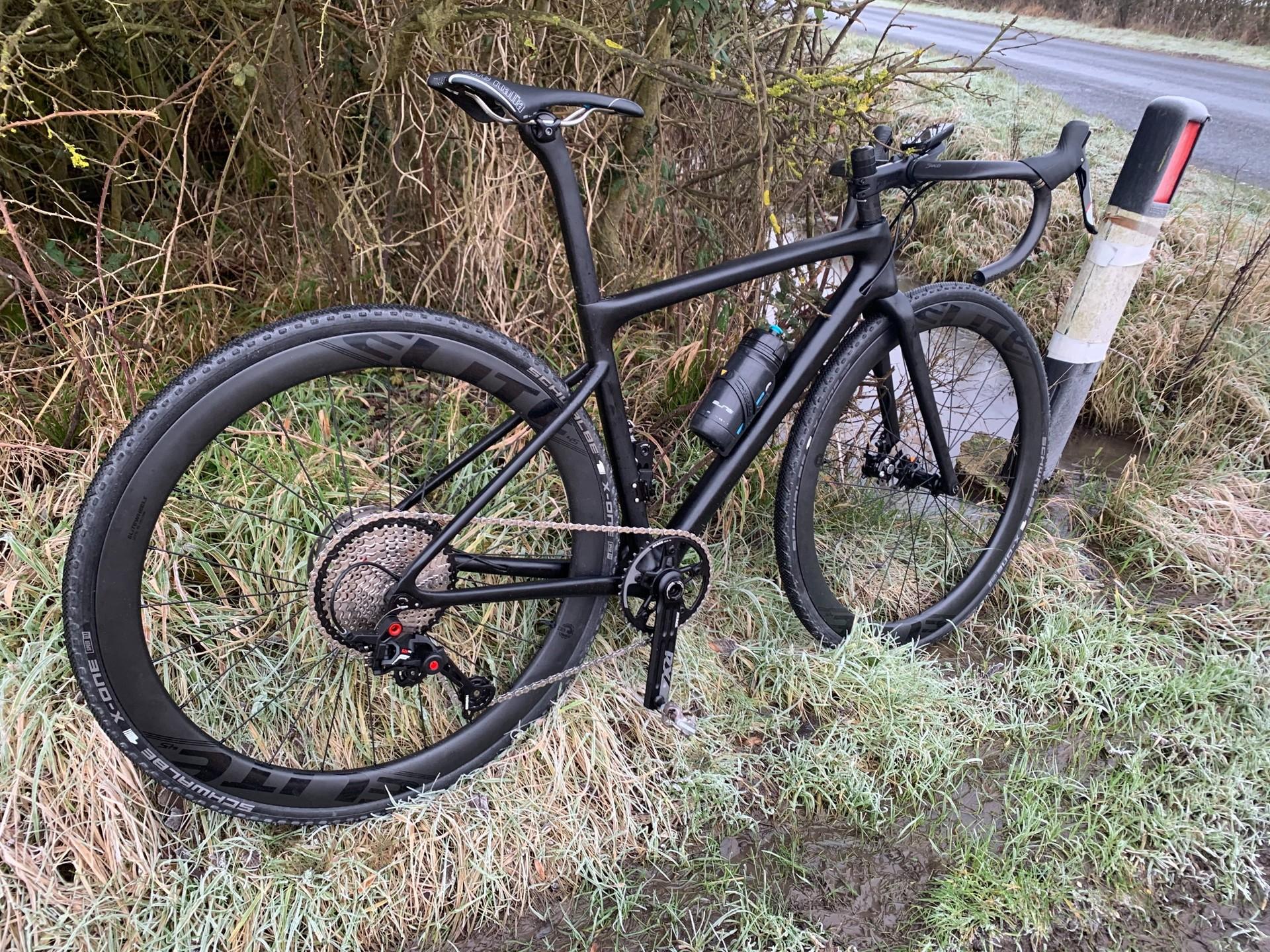
He has since ridden it more than 12,000km and built an identical one for his wife, who has covered more than 3,000km on hers.
"I love that bike," Kirk said. "Every single bolt, every bearing, everything on it, and I can take it to pieces and put it back together again."
"Apart from the one I made myself, I think all of my bikes are about 10 years old," he said. Of his Pinarello: "Absolutely fine. There's nothing wrong with it. So the thing about bikes is that you can buy them and you don't need another one."
He has little time for the upgrade cycle. "Much as a cycling journalist or as GCN tells you, you need the latest this or you need the latest that, or you can save yourself, I don't know, 50 grams," he said. "Trust me, I'm carrying an awful lot more than 50 grams around my waist, and there's a lot easier way and a lot cheaper way to get rid of that."
Kirk puts much of the industry's current difficulty down to the Covid hangover, when people bought bikes they now have no need to replace. For the view from inside the supply chain, our interview with Madison chief executive Dominic Langan explores cycling’s slump and uneven recovery.
Kirk sees cheap Chinese manufacturing as a benefit to riders more than a threat. Most components are already made in China, he said, and "if the Chinese can build a decent bike for a grand, that's good for everyone". A €70 bike from Decathlon, he said, "still works" and still gets someone from A to B.
"The thing that made cycling the sport of poor people was the fact that once you got your bike, you then saved up for two months and you bought a new back wheel," Kirk said. "And then you saved another month and you bought a new bottom bracket and you did that whole Ship of Theseus thing where over time you could make your bike better by buying lighter wheels or a better saddle."
The same instincts make him a cautious investor in the sector. He has worn Rapha's classic black bib shorts and merino tops for most of his riding life, but he regards the brand as "not really a cycling business, it's a clothing business". The company reported a £25.3 million net loss for the year to January 2026.
"Cycling is a really hard business," Kirk said. He listed the strain of managing inventory and supply, and the dominance of Shimano: "They dictate everything, how it all works." Zwift, which he has used for as long as it has existed, he counts as a software business rather than a cycling one.
He has watched "a fantastic tradition of wealthy or semi-wealthy middle-aged men and women, I guess, investing in cycle startups" because they love a frame, a wheel or an accessory, "and it never works". In his view, investors back people rather than products, and enthusiasm for a product proves very little.
"It's too easy to see something that you pretend you personally like and you go, oh, that's a great thing, I wish I could buy that thing," he said. Then you forget, he said, that "the team that's doing it has to deliver it, and more importantly, there has to be a market that's outside the market of you, which is just one person, and that's very difficult to do."
Kirk is in negotiations over a possible investment in the sector, which he said he could not discuss. "The niggle at the back of my mind is I'm just going to lose my money," he said.
There is less doubt about what cycling has given him: something to work on with his hands, a way to disconnect from the world, but also a useful preoccupation for a quantitative mind.
There is a long way between his grandfather clocking off at the shipyard and Kirk choosing a bike from his collection in Mallorca. That love of riding, though, really speaks to something that transcends career success, lifestyle or cost.
"It's a nice day, get out on your bike, and that moment when you go around the first corner and it's like sweeping around a corner when you were seven on a bike," he said.