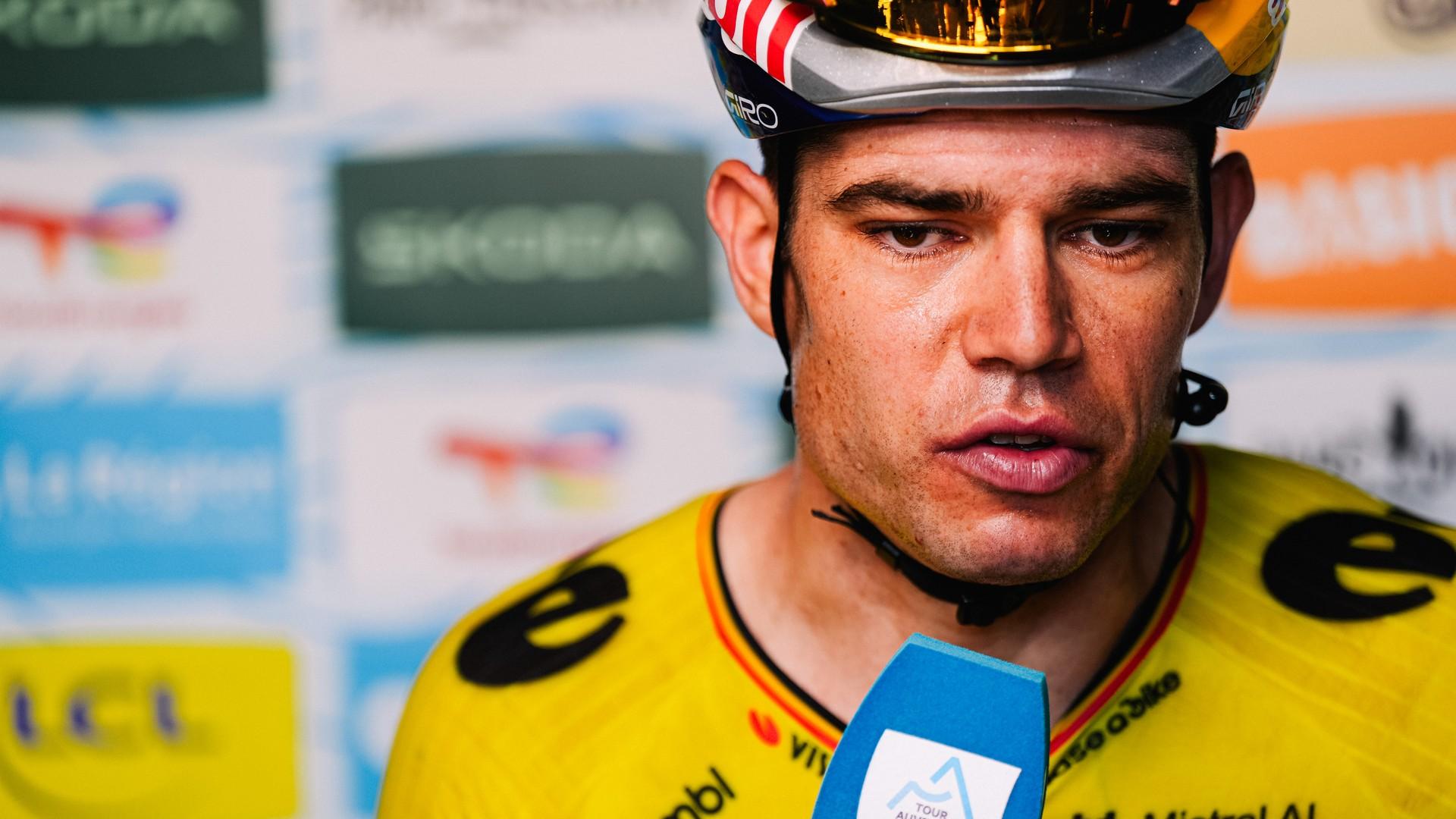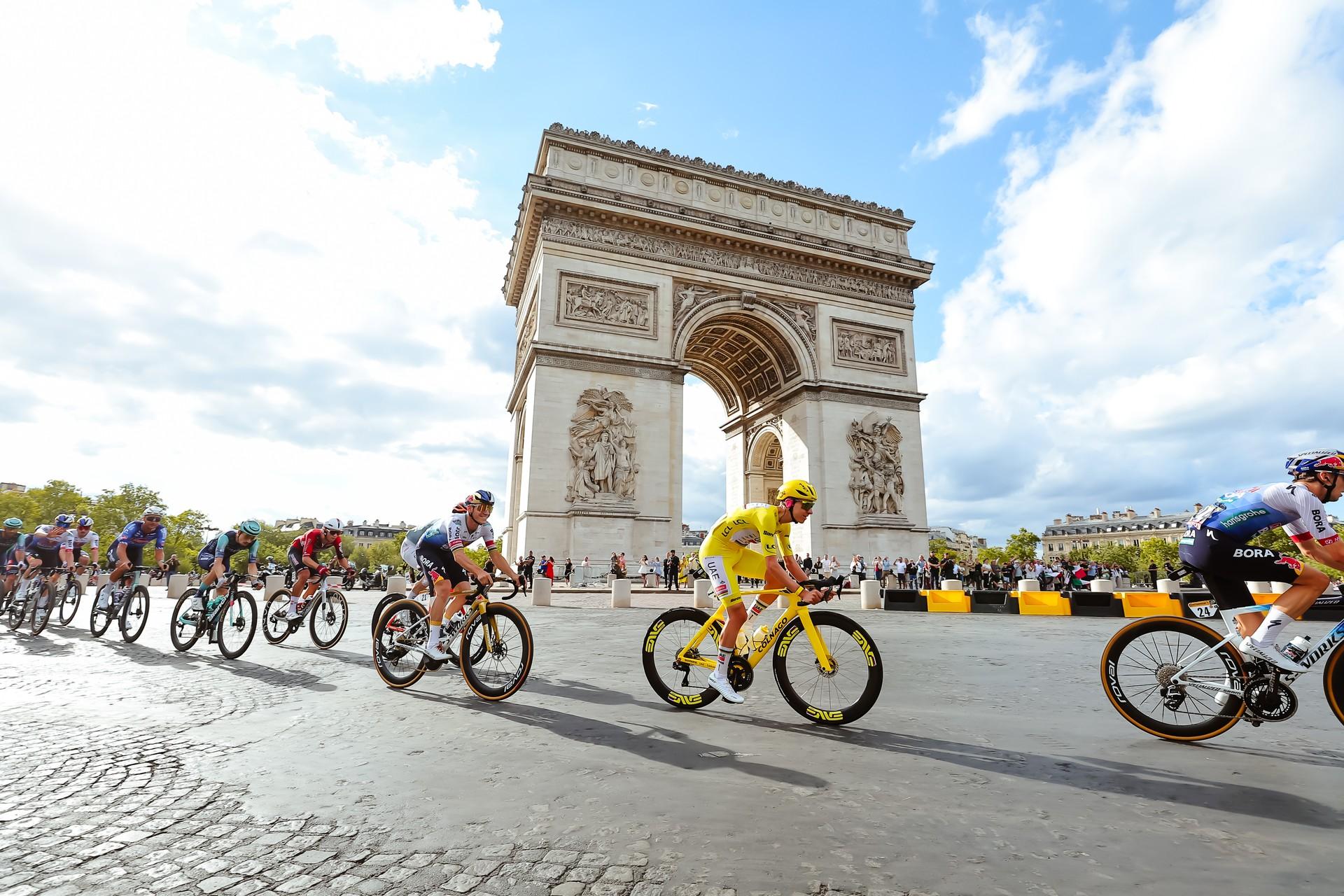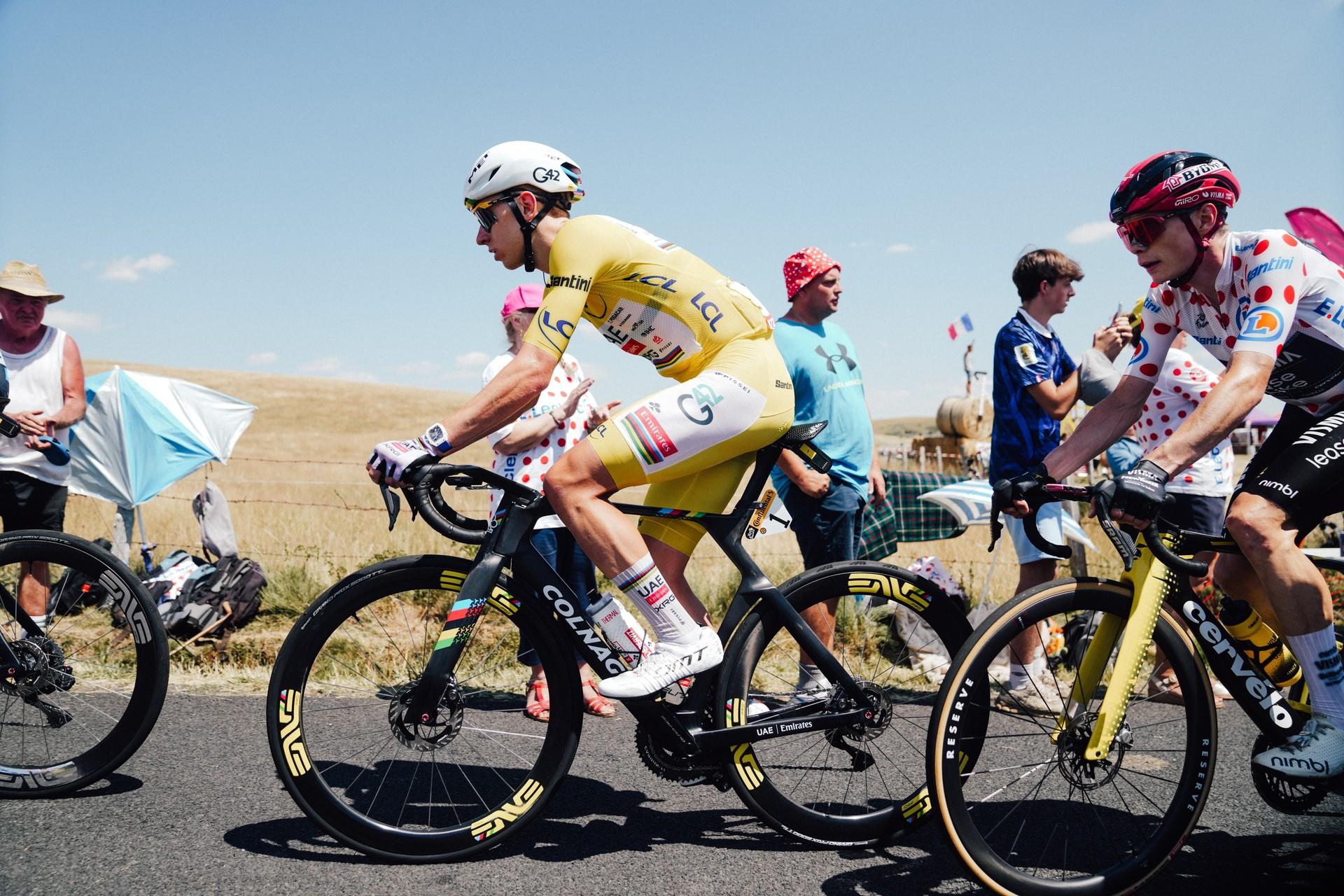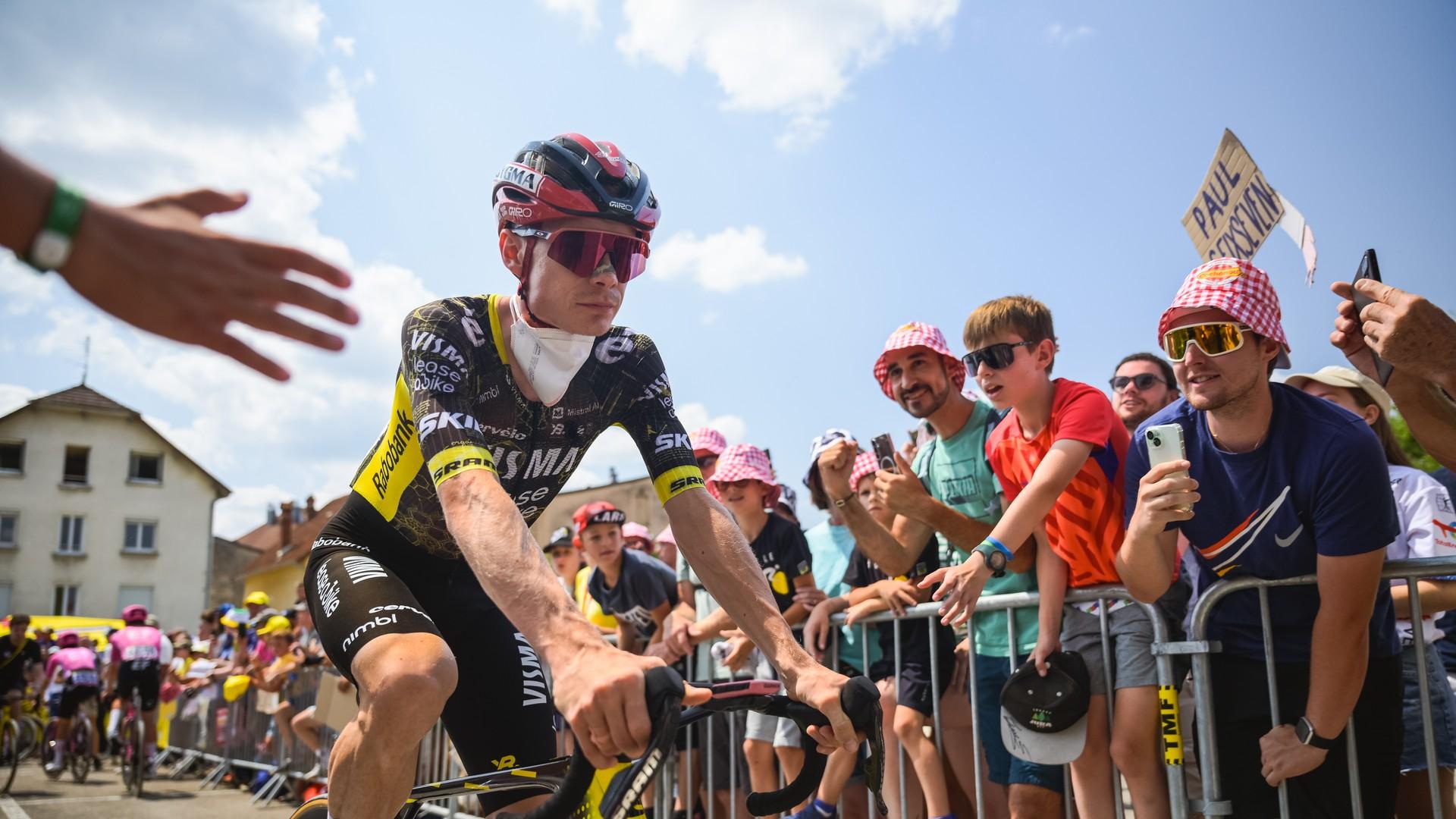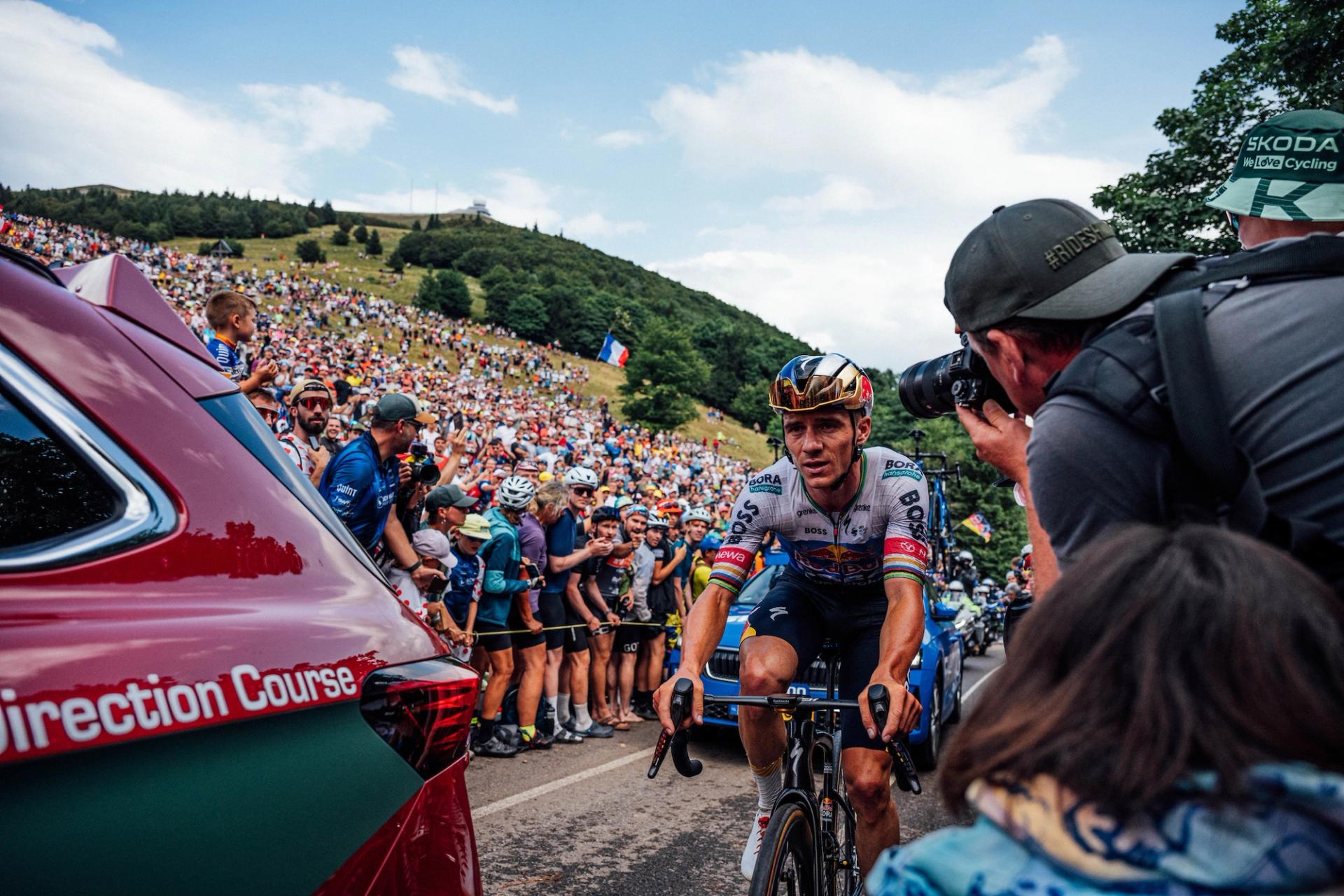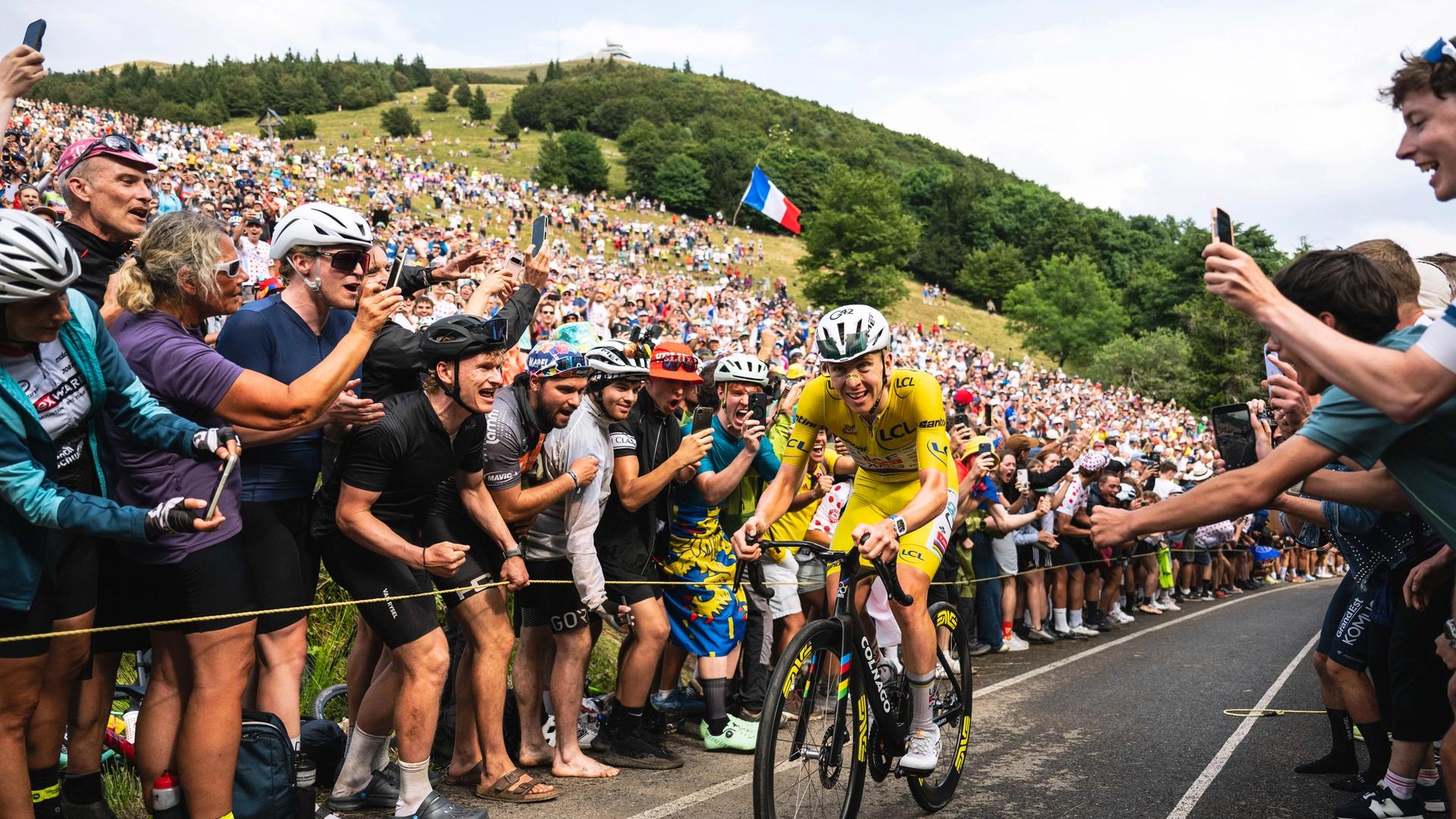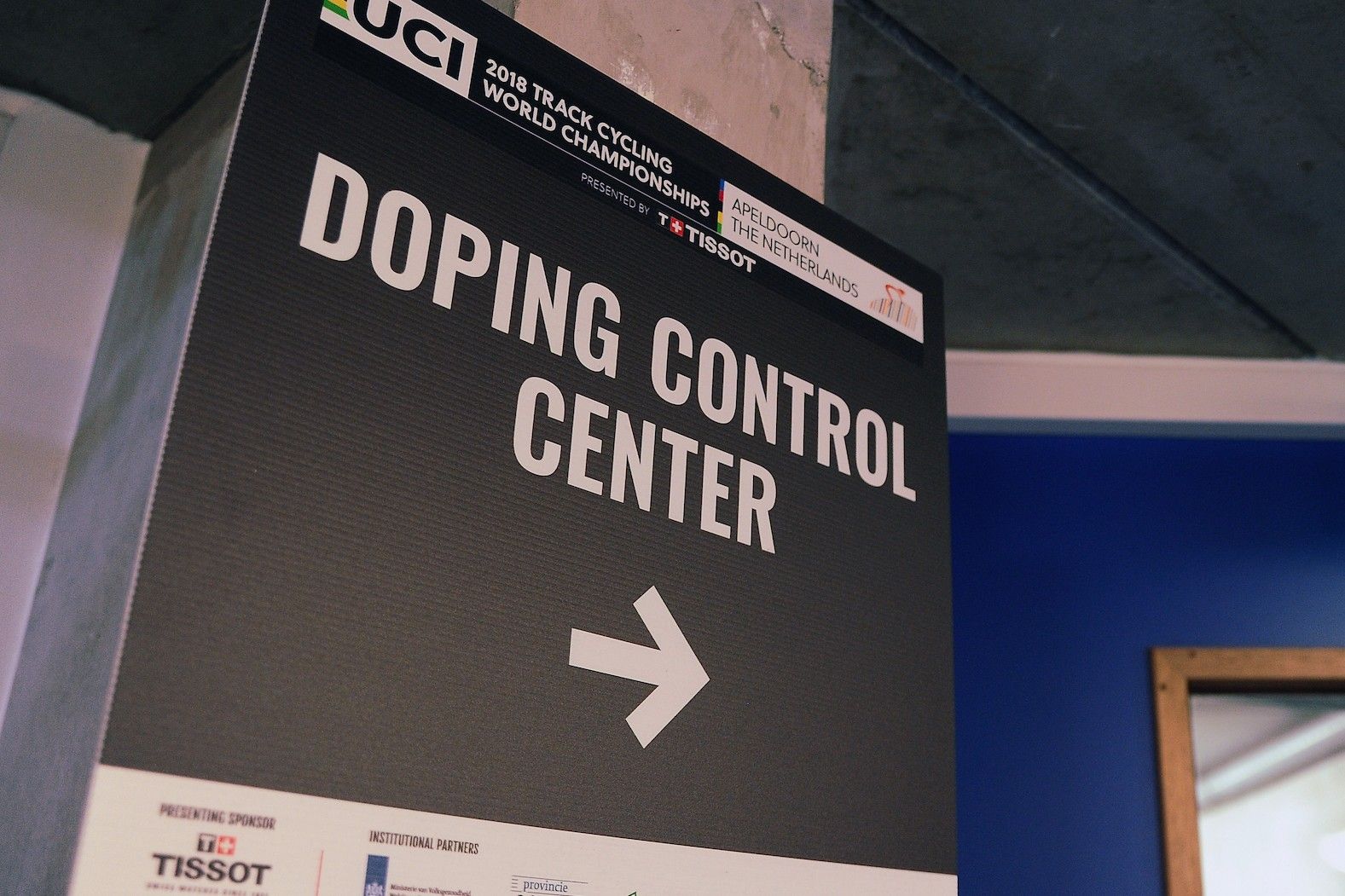
Tadej Pogačar (UAE Team Emirates XRG) and Jonas Vingegaard (Team Visma-Lease a Bike) were woken for unannounced anti-doping controls at 5am and 2am respectively before stage 15 of the Tour de France on Sunday, July 19, in a move that was heavily criticised across the peloton and sport, and which preceded Vingegaard crashing out of the race.
The International Testing Agency, which has run the UCI's anti-doping programme independently since 2021, confirmed it conducted the overnight controls. No adverse analytical finding has been reported for either rider.
Vingegaard said the collection took about 40 minutes. Pogačar said he managed four hours' sleep, could not drop off again, and passed the pre-dawn hours listening to old Eminem tracks and drinking coffee. "I feel pretty good, but I just didn't have a good night," Vingegaard said in comments made to Eurosport. "I had a doping test at 2:00 in the morning. That was not the ideal time. At first I thought it wasn't allowed, but apparently it is allowed according to the rules."
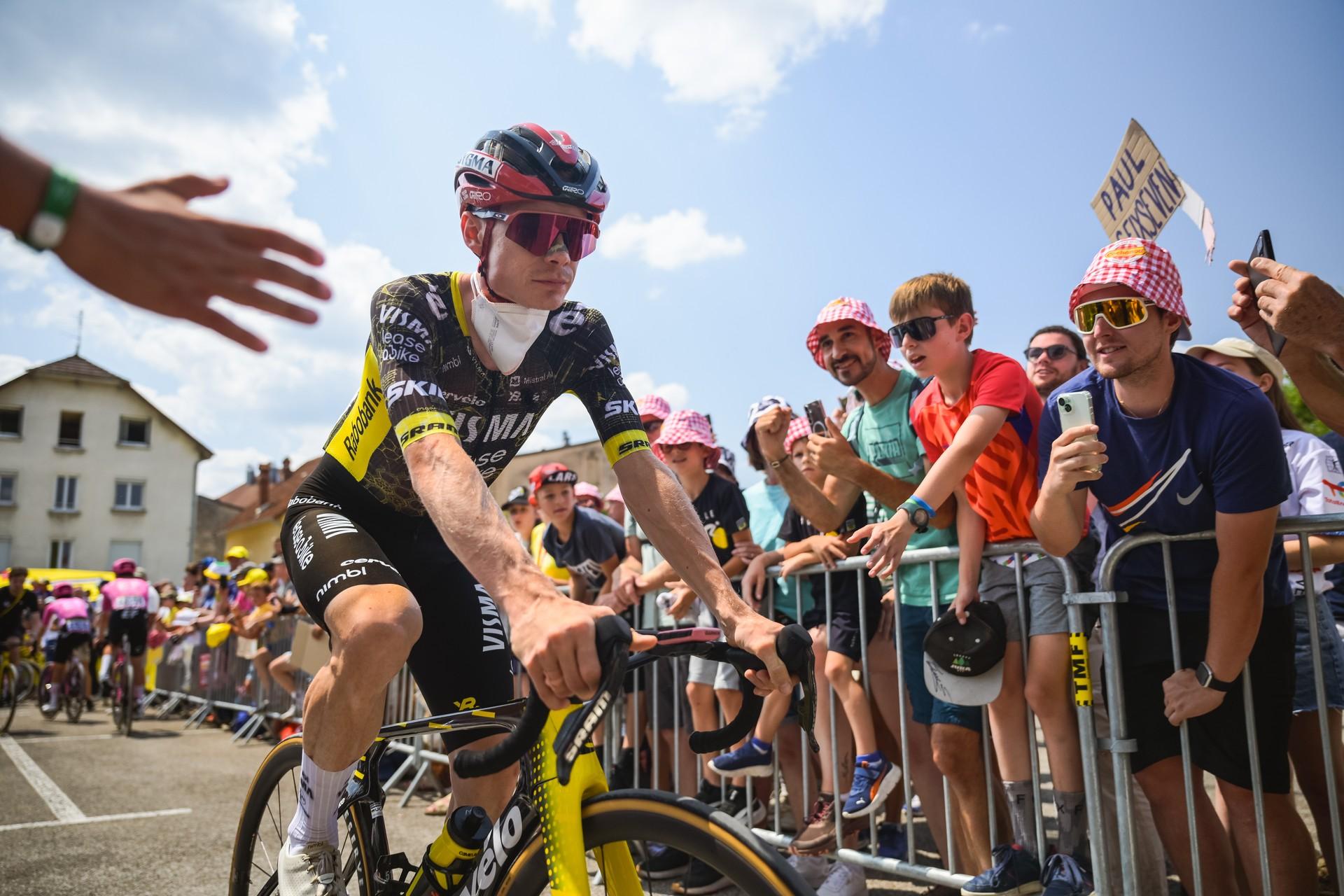
But “allowed” undersells it. The regulatory framework sets out several reasons why such an unconventional control may be conducted, although the ITA has not disclosed which applied here.
The rule is not one rule
The starting point in both the UCI Anti-Doping Rules and WADA's International Standard for Testing and Investigations (ISTI) is deliberately absolute. A rider can be tested at any time: a rider under an organisation's authority "may be required to provide a Sample at any time and at any place." There is no default off-switch for the night.
But overnight testing is subject to additional safeguards. Under the comment to Article 5.2.2 of the UCI rules, unless a rider has identified a 60-minute testing slot between 11pm and 6am, or otherwise consented, the UCI “will not test a Rider during that period unless it has a serious and specific suspicion that the Rider may be engaged in doping.”
Article 4.5.5 of WADA’s ISTI similarly says testing should generally take place between 6am and 11pm, although a rider may nominate a 60-minute slot beginning as early as 5am. Outside such a slot, overnight testing requires “valid grounds.”
It has not been disclosed whether Pogačar had nominated a 5am slot. If he had, his control would fall within the ordinary whereabouts framework. If he had not, both his 5am test and Vingegaard’s 2am test took place inside the protected overnight period and required additional justification.
That does not mean anti-doping authorities need reasonable suspicion simply to select a rider for testing. Article 4.5.1 of the ISTI states that the World Anti-Doping Code imposes no reasonable-suspicion or probable-cause requirement for Target Testing. The threshold for selecting a rider is therefore low – the higher threshold applies to conducting that test during the protected overnight window.
Nor can a rider safely refuse the test while disputing whether those grounds existed. The UCI rules state that a challenge to whether sufficient suspicion existed “shall not be a defense to an anti-doping rule violation based on such test or attempted test.” Refusing the sample can therefore constitute a separate violation, regardless of what the sample itself might have shown.
The specific grounds relied on in this case, and the evidence supporting them, have not been made public.
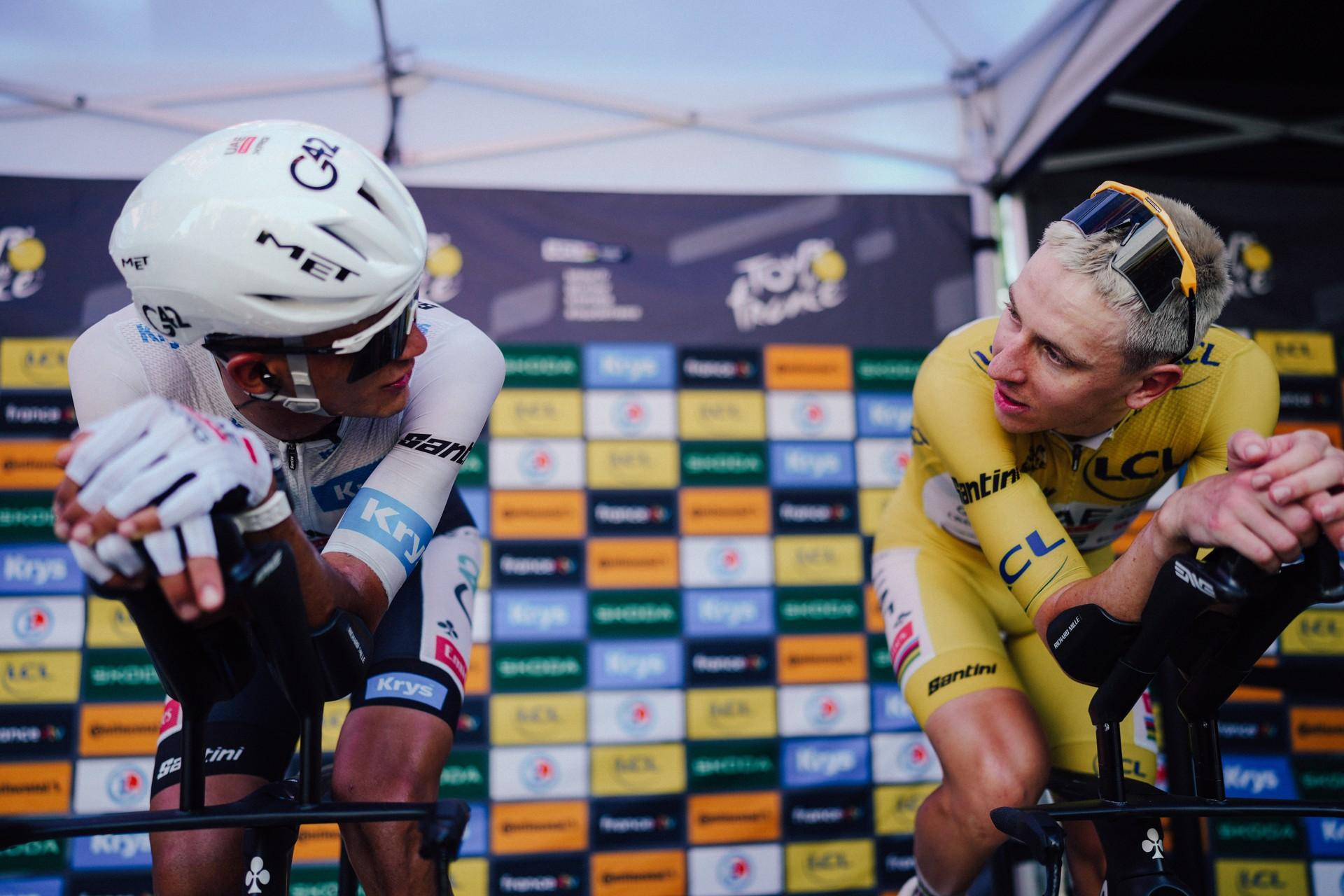
In France, a judge has to authorise it
The sport's own rulebook is not the whole story. Because these controls happened on French soil in the middle of the night, a further and far higher hurdle applied. Under Article L232-14-4 of the Code du sport, introduced in 2015 to bring French law into line with the World Anti-Doping Code, a night-time doping control cannot go ahead at all unless a judge authorises it in advance.
That is what happened here. As reported by L'Équipe, and confirmed on the record by the Paris prosecutor's office, the ITA petitioned a juge des libertés et de la détention at the Paris tribunal, who authorised the controls carried out on the night of 18 to 19 July. The prosecutor described it as routine for the ITA and the UCI to liaise with the specialist public-health divisions of the Paris and Marseille courts before the Tour.
The standard the judge must apply is a substantial one. The magistrate has to be satisfied that there are "serious and concordant suspicions" that the targeted rider has breached anti-doping rules or is about to, and that there is a risk evidence would otherwise be lost. The operation must meet a test of strict proportionality and is limited to collecting samples and the rider's observations. L'Équipe reports it is believed to be the first use of these provisions, which is why Pogačar told reporters he had not known such a thing was possible.
A judge's authorisation is not a finding that either rider doped. Like a search warrant, it is a one-sided decision, granted on the testing body's application without the rider present to contest it, that the legal threshold for an intrusive measure has been met.
But it changes how the night knock should be read. The question that has driven the debate, whether the testers had a serious and specific basis, was for these controls put to and answered by an independent judge, rather than left to the anti-doping body's own unreviewable discretion.
Why the leaders
Here the rulebook stops being neutral background and starts pointing somewhere specific.
The ISTI does not leave testing to chance. It instructs anti-doping organisations to make Target Testing, the deliberate selection of named athletes, "a priority," with random selection filling the space around it. And it tells them who to target. Article 4.5.2 lists the categories that should be considered first, and at the top, for international federations, are athletes "who compete regularly at the highest level of international Competition (e.g., candidates for Olympic, Paralympic or world championship medals), as determined by rankings or other suitable criteria."
Then Article 4.5.3 sets out a list of individual risk factors. Read them with the Tour's general classification in mind and they're hard to unsee. The factors include a rider's performance pattern and "sustained high performance without a commensurate Testing record"; "association with a third party (such as a team-mate, coach or doctor) with a history of involvement in doping"; and "financial incentives for improved performance, such as prize money or sponsorship opportunities." A first-and-second-placed grand tour rider satisfies "sustained high performances", though "commensurate testing" is relative, before any intelligence is added to the file.
None of this is an allegation against either rider. The criteria describe a profile, not a finding, and the profile is the intended design: the sport's most successful, most scrutinised, most richly rewarded athletes are tested the most. Within that logic, testing the race leaders at 2am is neither disproportionate nor surprising.
Selection is not authorisation, though. Being a testing priority explains why the leaders are examined most often; it is not what permitted a control at 2am, which had to clear the separate and higher threshold above.
Nor should the controls be called random. WADA draws a clean line between random selection and Target Testing driven by performance patterns, biological data, testing history or intelligence, and the ITA has disclosed nothing about the selection basis either way.
"It is known that some Riders Use low doses of EPO during these hours"
The protected-window carve-out exists because of a specific scientific problem, and the source of that problem is nearly two decades old.
In 2006, a team led by Michael Ashenden published a short paper in Haematologica with an alarming finding. Working with two well-trained male endurance athletes, and with WADA's own funding, the researchers first loaded both men with high-dose recombinant EPO to drive haemoglobin up to roughly 170 g/L. Then, for three weeks, they switched to "microdoses", each injection less than 10% of the initial dose, given every two to three days, and watched what the anti-doping test could still see. Haemoglobin stayed elevated, the performance benefit intact. But the window in which the urine test could detect the drug collapsed. Some samples taken just 12 to 18 hours after an injection fell below the threshold then used to declare a positive.
The paper noted, almost in passing, an additional wrinkle: the athletes' own endogenous EPO bands began to reappear during microdosing, which would shrink the detection window further still.
The authors' conclusion is the sentence that reverberates through every 2am knock since. It was "conceivable for athletes to maintain illicit rHuEPO doping even during multiday endurance events when competitors may be tested at the end of each day (ie at 24 hour intervals)." Their prescription: to be effective, "urine tests should be based on out of competition testing."
So, if a microdose is undetectable within 18 hours and a rider is only ever sampled after the stage, the test is beaten before it is taken. The only way to close the gap is to sample at hours the rider cannot predict, including, when justified, the middle of the night. The comment to Article 21.1.2 of the UCI Anti-Doping Rules says as much in plain words: "it is known that some Riders Use low doses of EPO during these hours so that it will be undetectable in the morning."
Even the arrival of the Athlete Biological Passport did not close the gap. Cycling adopted the passport in 2008, monitoring a rider's blood values over time rather than testing for the drug directly, on the theory that doping would surface as an abnormal trend. Ashenden's team returned to the question in a 2011 follow-up. Ten subjects were given twice-weekly intravenous microdoses of EPO for up to 12 weeks, lifting their total haemoglobin mass by around 10%, a gain the researchers likened to reinfusing about two bags of blood. The passport software flagged none of them while they were doping. Because the passport reads long-term trends rather than the substance itself, catching the drug in the body before it clears remains the more definitive test, which is part of why out-of-competition and overnight sampling still matter.
The science has not stood still since 2006. WADA's current EPO Technical Document (TD2024EPO), written by its Science and EPO Working Group, now covers detection of erythropoiesis-stimulating agents not only in urine but in serum, plasma and dried blood spots, the last a newer matrix that widens when and how a sample can be taken. Larger-molecule agents such as CERA and EPO-Fc are, the document notes, more effectively caught in blood than urine. A suspected finding must survive an initial test and a separate confirmation procedure, with two independently selected experts reviewing the data before anything is reported. It hasn't been disclosed whether Pogačar and Vingegaard had blood tests, or just urine tests.
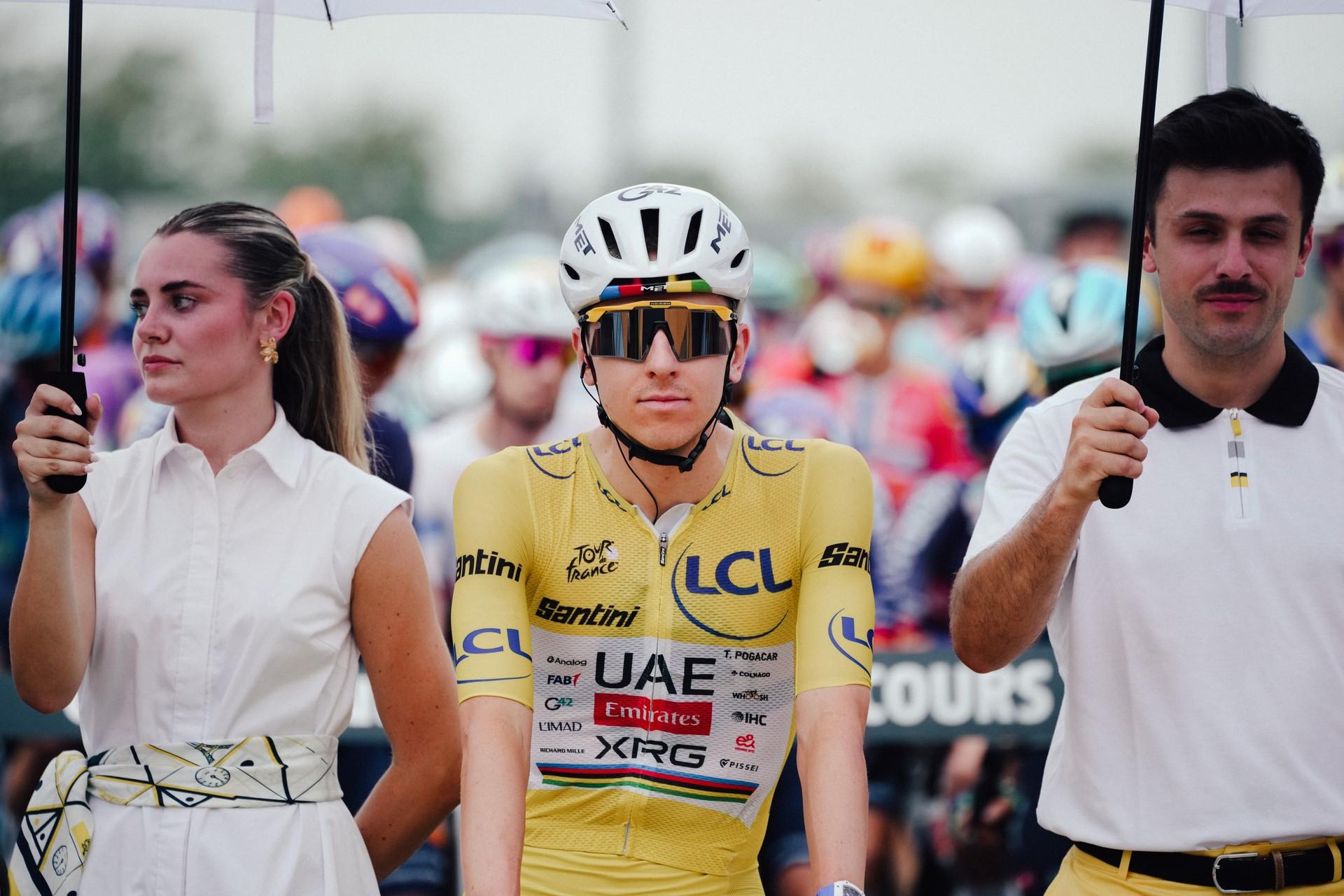
The detection window the 2006 study exposed has also been challenged as detection technology has progressed. In 2021, a study of one epoetin alfa microdosing protocol found that improved blood and urine methods could detect administration at sampling points between 24 and 72 hours. Even so, the underlying logic of unpredictable out-of-competition testing remains: detection varies by dose, substance, sample type, analytical method and the time elapsed since administration.
None of which proves EPO was or was not the target of Sunday's controls. The ITA has not disclosed what samples were taken or what analyses were requested, and the history of EPO microdosing is one justification for night testing among others, not evidence about these riders. But it helps explain why the protected window contains an exception.
The cost, and the balance
The rules also don't pretend the 2am knock is free. Both the UCI and WADA texts frame overnight testing as a balance struck "with due regard to a Rider's human rights and privacy", an acknowledgement, written into the standard itself, that a 40-minute collection at 2am costs a rider real recovery on the eve of a mountain stage.
Vingegaard lost the middle of his night; Pogačar lost the end of his. The framework's answer is that the disruption is permitted only in "limited and justified cases," where effective testing genuinely cannot wait for daylight, and that the Tour operation was conducted, in the ITA's words, in line with its testing strategy and the safeguards set out under the Code, UCI rules and French law.
So this was very likely not a rogue 2am intrusion, but the authorised use of a system built on the premise that, in limited cases, the cost of a broken night is justified by the need to prevent short-lived evidence of doping from disappearing before morning. The rulebook permits the tests, and in this case they were given an even higher threshold of a reported judicial authorisation. Whether fans believe that degree of scrutiny justifies disrupting the race’s natural order reaches into a more existential question about what a clean sport is worth.
This analysis is built on a full working read of the primary documentation: the UCI Anti-Doping Rules, WADA's International Standard for Testing and Investigations, WADA's model anti-doping rules, the current WADA Technical Document on EPO detection (TD2024EPO), and the 2006 study that first exposed the microdosing problem. These documents explain why overnight testing exists and why leading athletes are commonly targeted. They do not reveal why these two controls were ordered, whether either rider was individually suspected, or what substance or method the ITA was testing for.
*This article was updated at 16:30 BST to recognise L'Équipe's breaking development that a French judge had authorised the test.