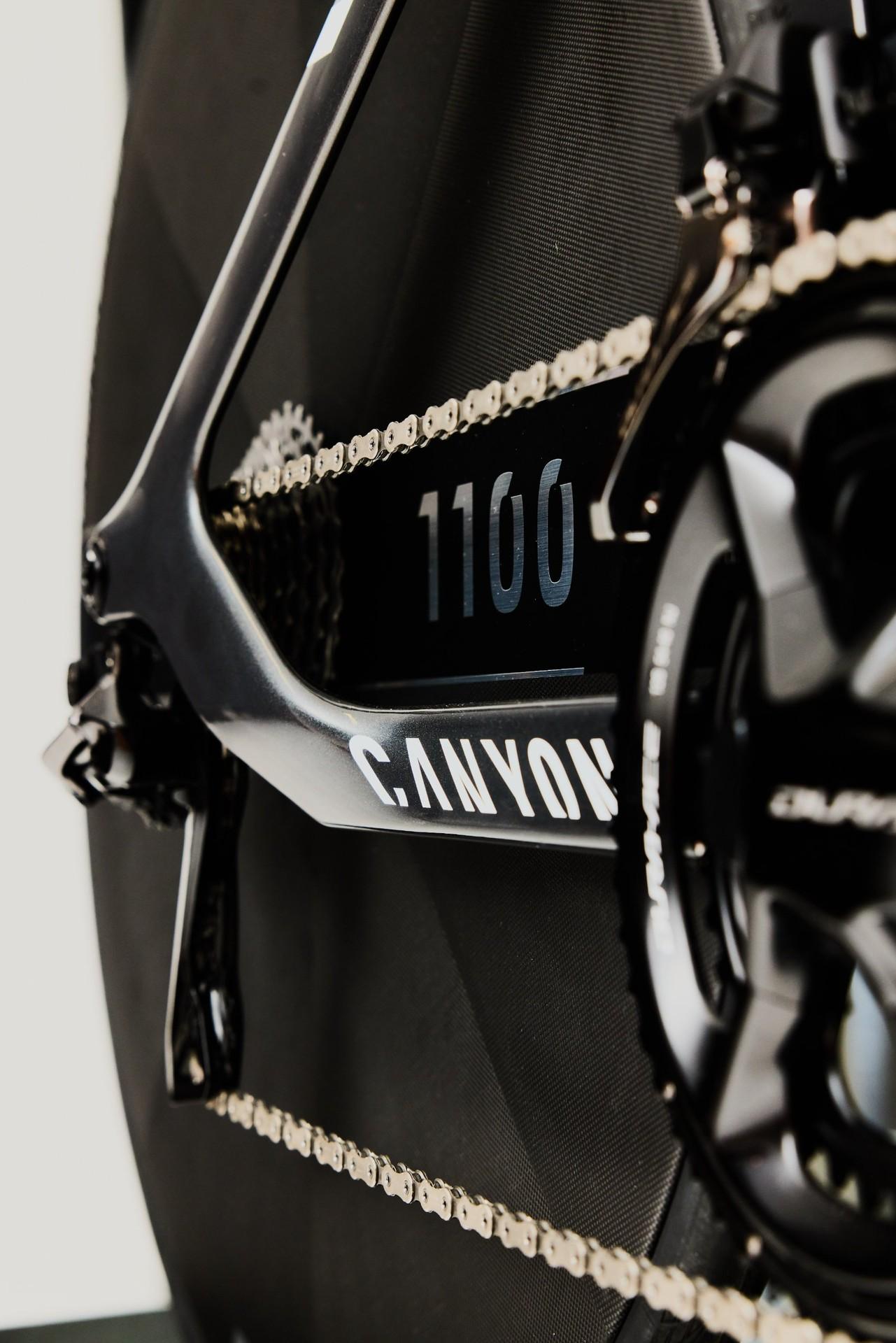
Canyon has teased an unreleased Speedmax CFR TT took gold and silver on its race debut at the elite women’s World Championship time trial in Montréal, with the front end of the resembling the dramatic design of the Hope x Lotus HB.TT in a sign of the German brand pushing serous aerodynamic design.

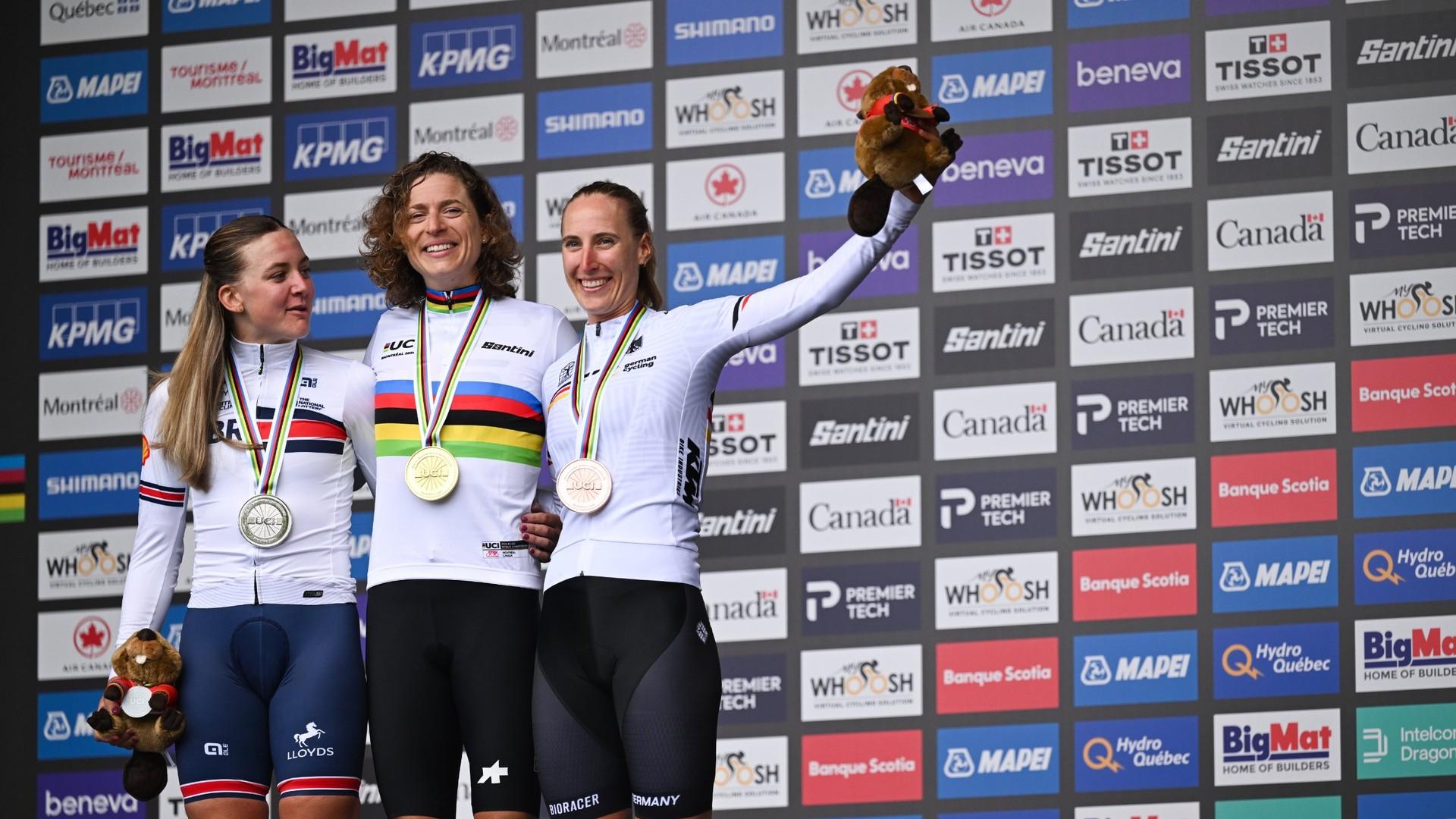
Marlen Reusser (Movistar Team) won the 39.2km race in 50:24 on Sunday, finishing 40 seconds ahead of Zoe Bäckstedt (Canyon//SRAM). Both rode the prototype, which Canyon has confirmed is being developed for a future commercial release. Technical specifications and a launch date have yet to be announced.
Bäckstedt led at the first two checkpoints, holding a three-second advantage over Reusser at the second. The Swiss rider turned that into a 14-second lead by the third check before extending her margin to retain the title on her birthday. Bäckstedt took silver in her first elite Worlds time trial, following her under-23 victory in 2025.
Bäckstedt described the demanding return to the finish in our coverage of the riders’ reactions.
“Don’t get me wrong, I was really tired, and from the U-turn back to the finish, this was such a hard part of the course for me,” she said.
A wide-set fork hints at new aerodynamics
The most conspicuous feature in pre-race images from Montréal is the prototype’s front end. Its widely spaced fork legs appear to extend above the crown, running alongside the head tube towards the base bar. Below the crown, they leave a large gap around the front wheel.
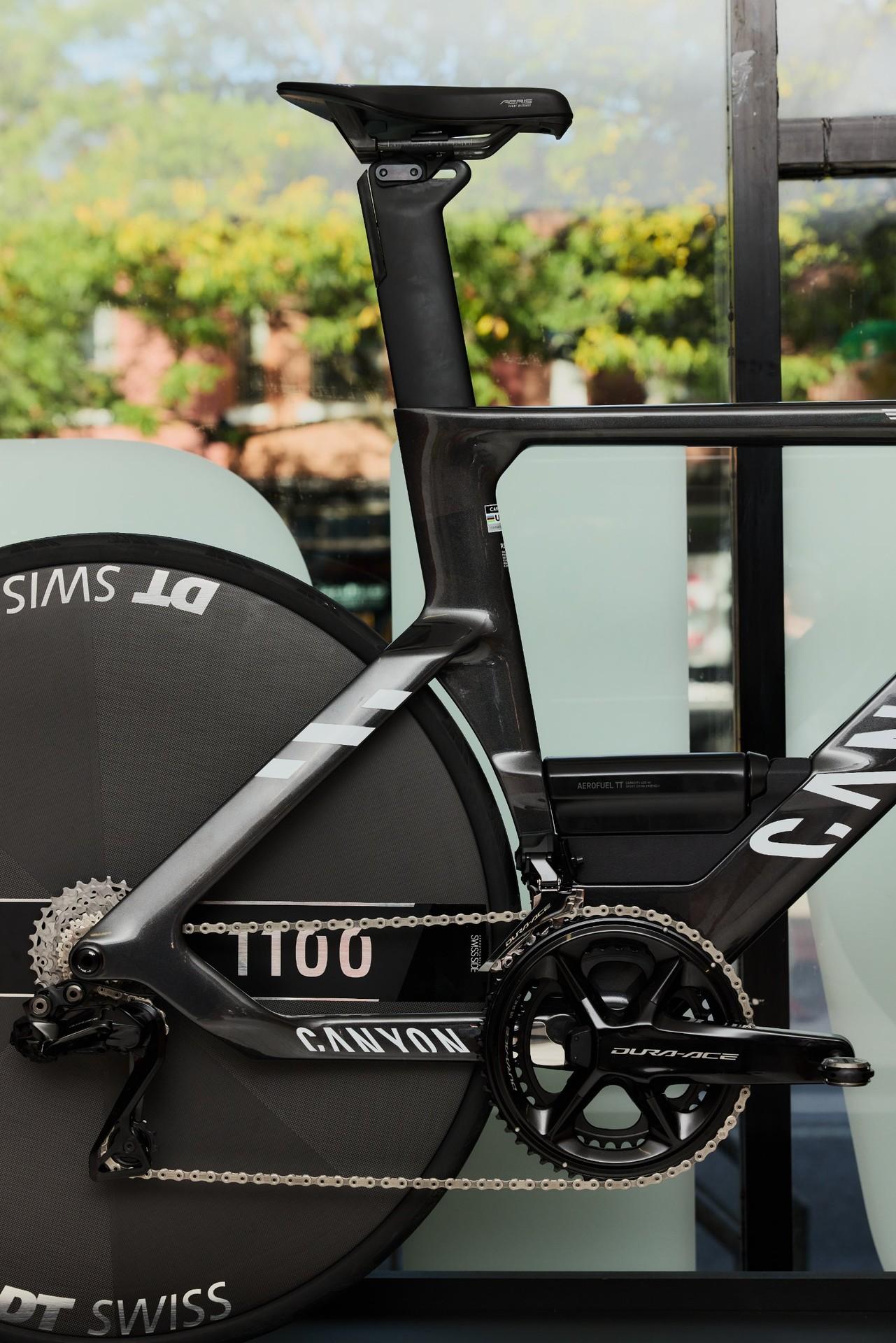
That arrangement differs visibly from Canyon’s Speedmax triathlon bike, released earlier this year. Canyon says the TT prototype draws on that model’s design, although it has not detailed which features transfer to the UCI-legal racing version.
A May image posted by Reusser had already hinted at a possible next-generation Speedmax, showing her on a camouflage-painted TT bike. Its fork crown appeared wider than on the existing model, but the camouflage obscured much of the frame’s detail.
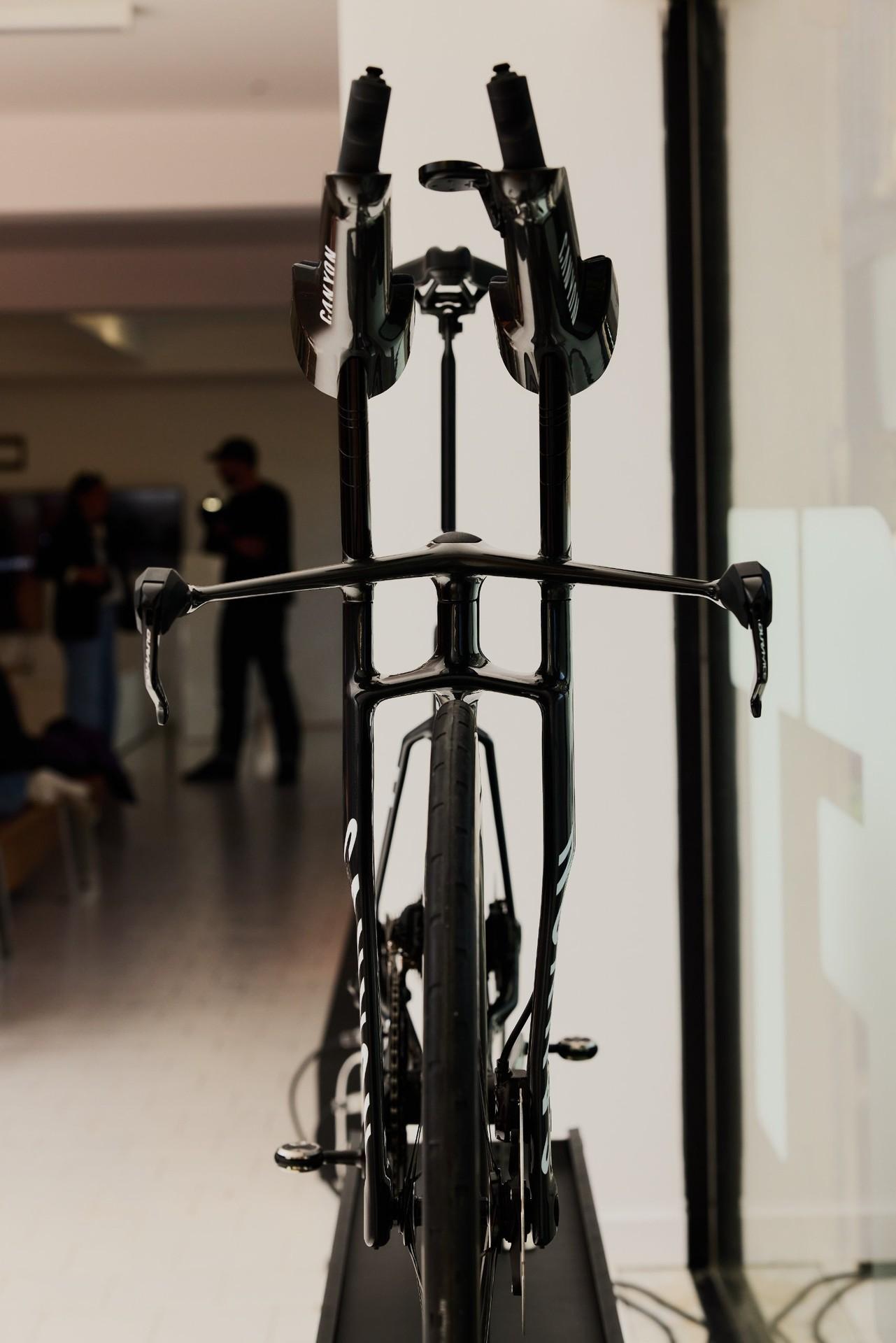
Canyon says the new CFR, or Canyon Factory Racing, platform was engineered at its headquarters in Koblenz, Germany. Its announcement describes aerodynamic efficiency and rider-position customisation among the development aims, without publishing drag measurements or comparative test results.
The Montréal podium offers no empirical data about the bike’s aerodynamics, but taking the top two spots on its race debut is unquestionably a coup for Canyon.
Time trial bikes present an unusually complex design problem, but it’s not uncommon for innovations developed for time trials to cascade down to aerodynamic road bikes. We’ll certainly be watching to see whether any of this technology filters through to the Canyon Aeroad in the seasons to come.