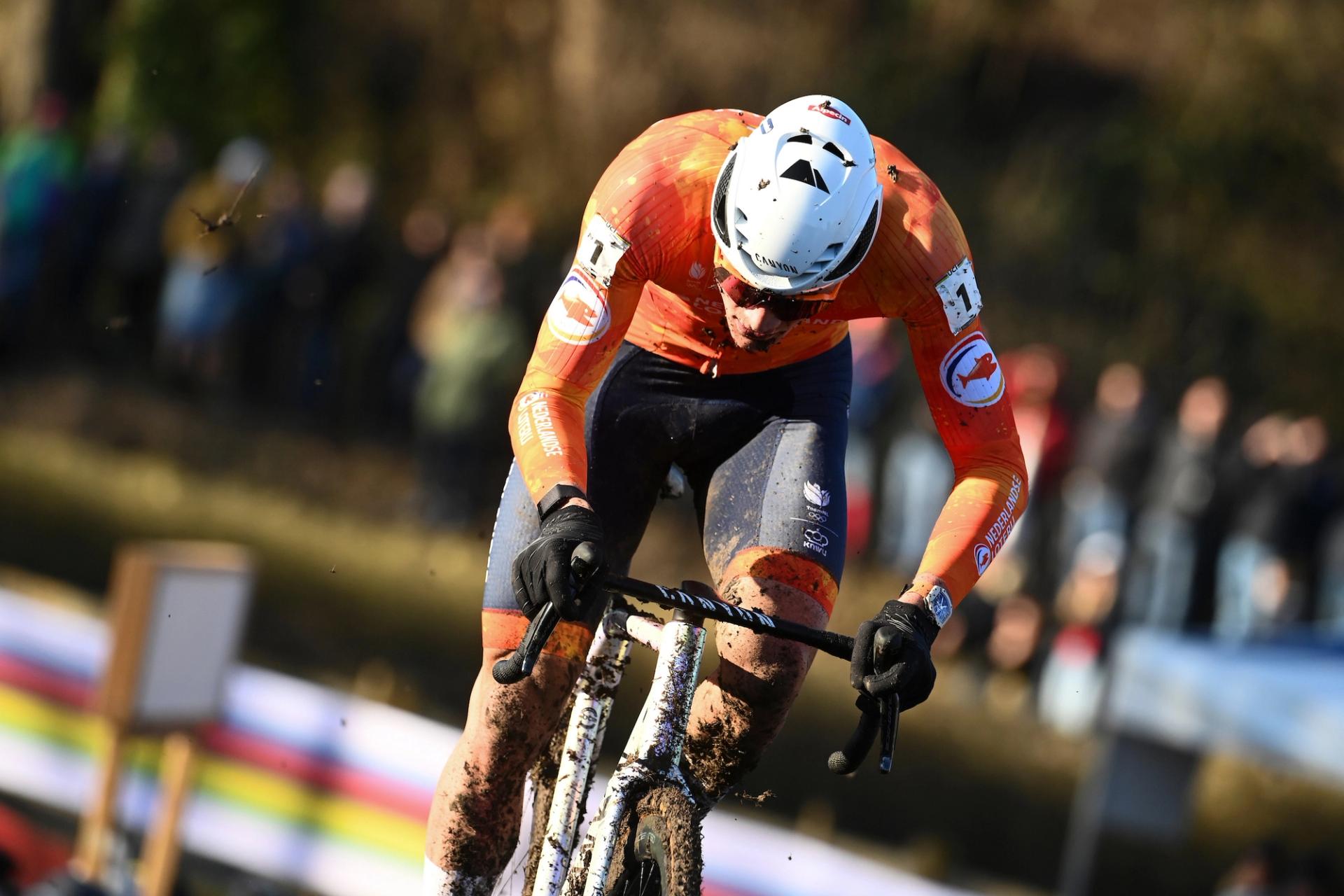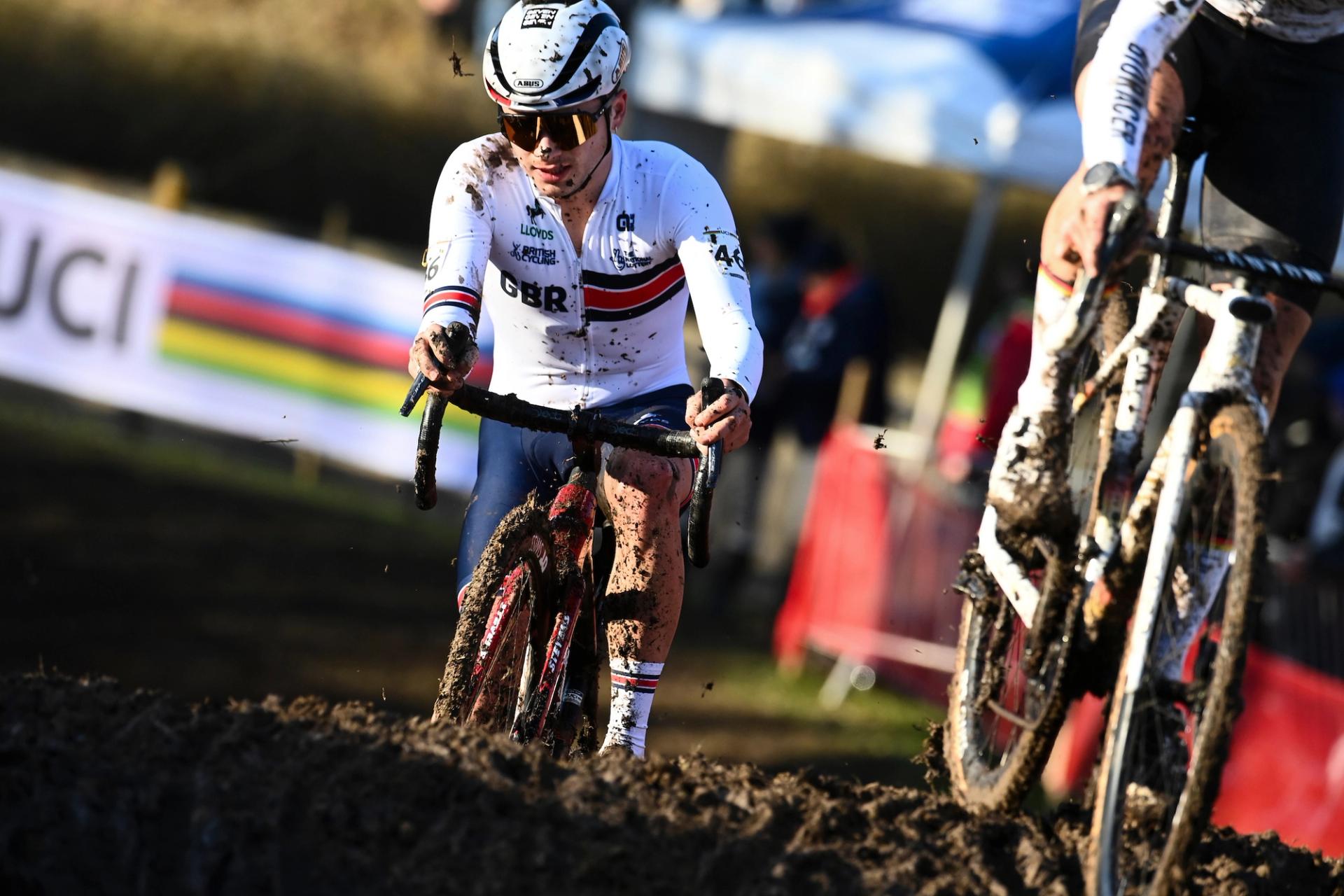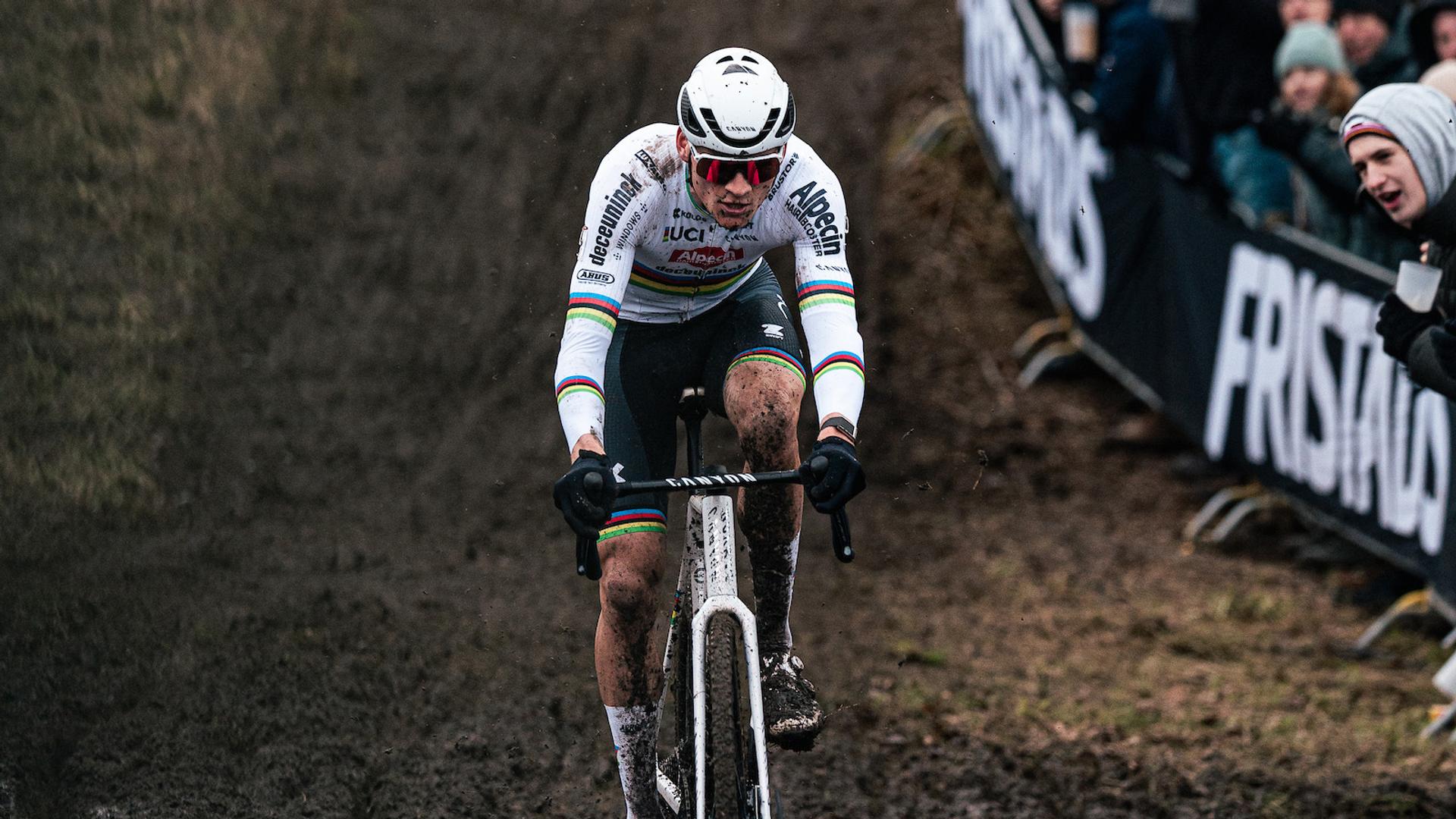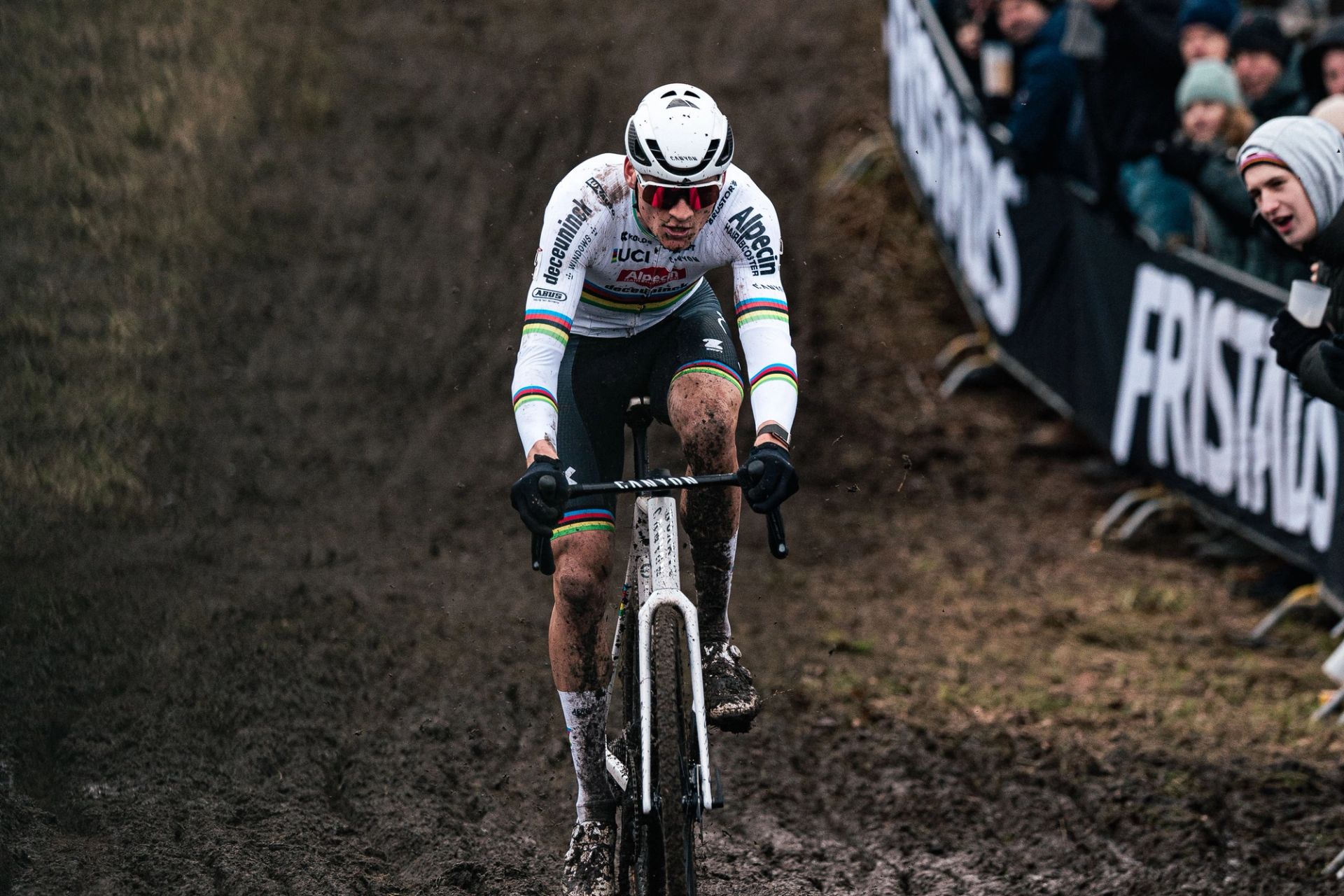
The Kerstperiode moves to its most historic battlefield on Boxing Day as the UCI Cyclo-cross World Cup hits Gavere, a course that usually drowns riders in mud and elevation. In 2025, though, the same hills and cambers will be raced at far higher speed on a frozen, hard-packed surface.
Read our full guide on how to watch World Cup Gavere live here.
The course: elevation, cambers and frozen ruts
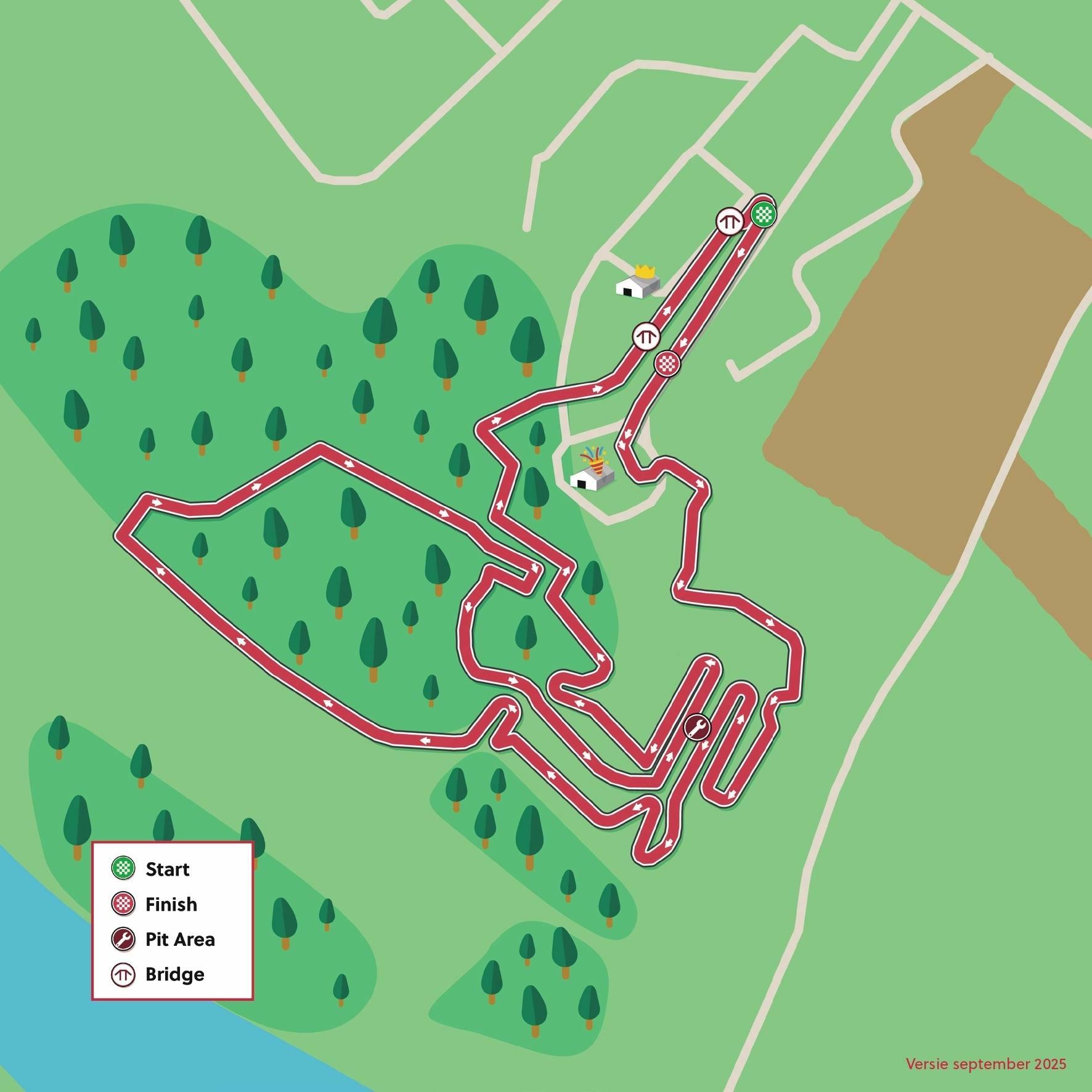
Set on the military domain above the Scheldt and looping around Kasteel Grenier (a well-known castle estate), Gavere remains one of the most physically demanding laps in the sport. With roughly 50 metres of vertical gain per circuit – visible here on Strava – and consistent 15% ramps, it is a nonstop test of climbing on muddy frozen surfaces.
Key features shape the racing:
- The long climb: A drawn-out drag from the lower meadow up towards the castle. In classic mud years it becomes a running sector; in frozen conditions, it turns into a 45–60 second threshold effort where riders are doing 6–7 W/kg just to hold position.
- Kasteel descent: A steep, often rutted chute back towards the valley. On a hard surface, frozen ruts will ride like rails – fast but unforgiving.
- Off‑camber traverses: Several wide, grassy cambers reward those who can keep the bike low and the power on.
- The meadow: Traditionally a gluey slog, this low-lying field still be exposed to wind and small mistakes in the ruts.
With forecasts currently showing overnight lows around -3°C and daytime temperatures barely above freezing, expect a course that starts slick and stiff, then slowly gains grip as it’s carved into frozen ruts. This tilts Gavere away from pure runners and towards riders who can repeat long, high-power efforts while staying clean technically.
Women’s elite: Big engines for big hills
The women’s startlist is stacked with riders tailor-made for this profile.
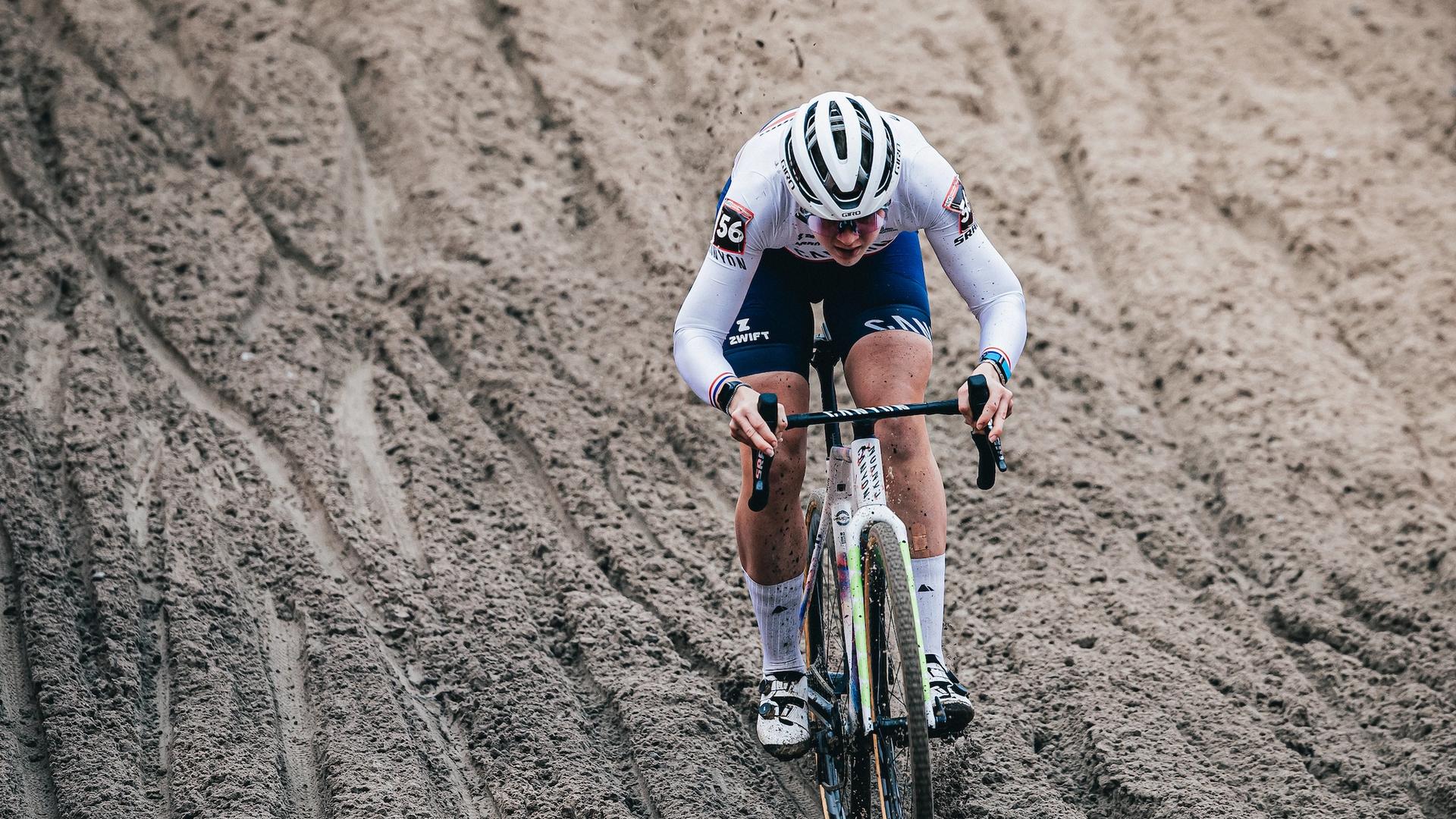
Lucinda Brand (Baloise Glowi Lions) comes in as perhaps the best pure Gavere fit. She has already shown this season that when the course rewards sustained power – notably her sand demolition at Terralba – she can ride the field off her wheel from mid-race. Frozen Gavere removes some of the running she dislikes and amplifies those long, seated efforts where she is relentless.
Ceylin del Carmen Alvarado (Fenix–Deceuninck) has the ability to surf ruts and carry speed through cambers, which could claw back seconds every lap on the descent and technical middle section. But on this version of Gavere she cannot afford to give Brand even half a bike length on the main climb.
Teammate Puck Pieterse adds a third dimension. Having only returned to the CX season at Namur a little over a week ago, she has already shown rapidly improving form. Her explosive punch and willingness to hop or attack through technical zones make her the rider most likely to light the race up early.
Shirin van Anrooij (Baloise Glowi Lions) won’t match Pieterse’s explosiveness but should thrive over the total elevation. If the race becomes a war of attrition in the final two laps, her sustained power makes her a podium contender.
Behind the headline quartet, Inge van der Heijden and Manon Bakker (both Crelan–Corendon) are strong candidates for the top five on this profile, while Leonie Bentveld (Pauwels Sauzen – Altez) and Denise Betsema (De Ceuster – Bouwpunt) bring the kind of sand and power background that transfers well to frozen, draggy climbs.
Men’s elite: Van der Poel versus the World Cup regulars
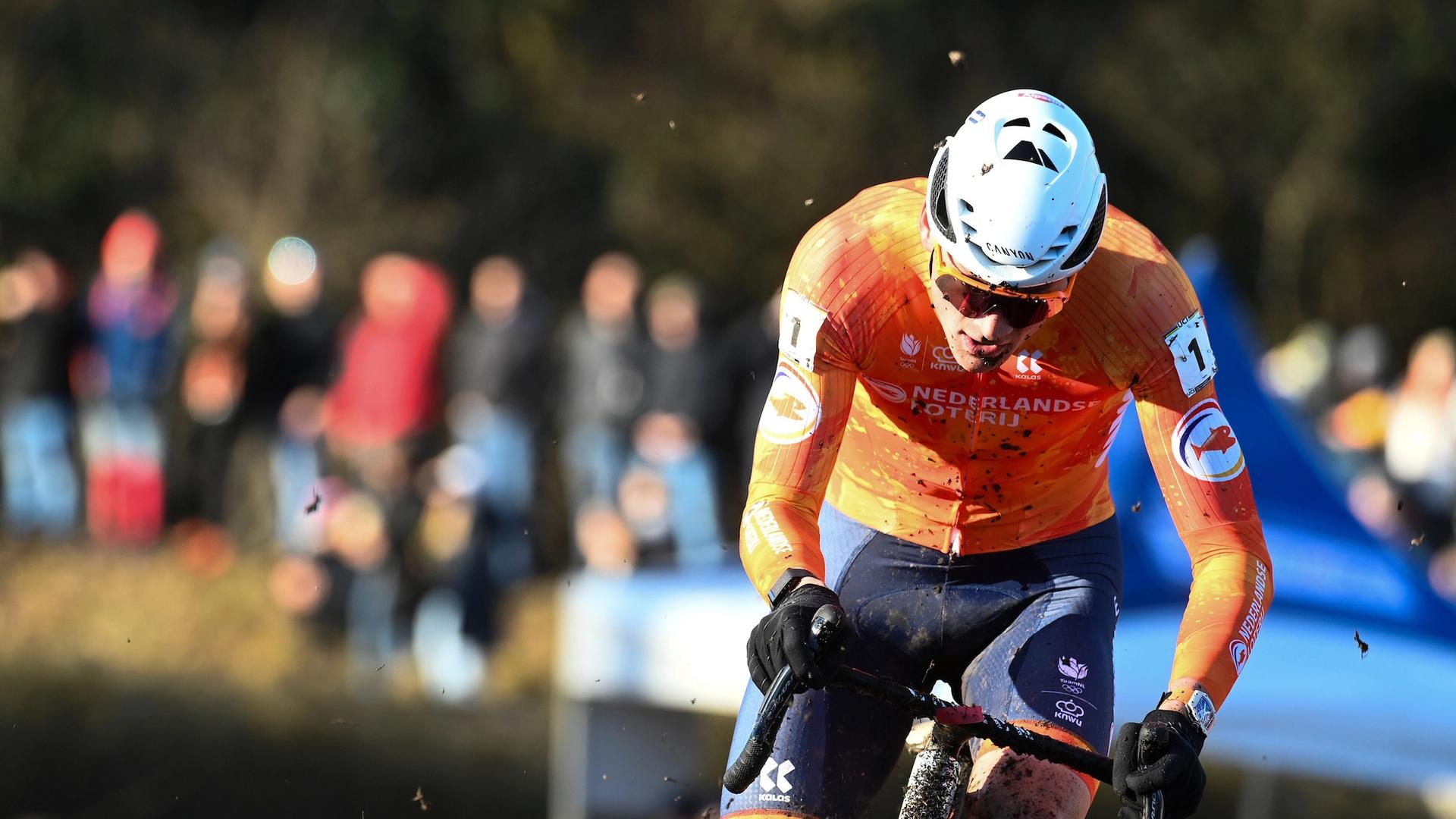
On paper, Mathieu van der Poel (Alpecin–Deceuninck) is the overwhelming favourite - proving near unbeatable in all recent CX races. A hard, fast Gavere minimises the long running sections that sometimes neutralise his power advantage and instead creates repeatable launchpads: the main climb, the approach into the castle descent, and the punch out of the meadow. His ability to do 10–15 seconds above threshold to open a gap, then instantly settle into a smooth tempo, is unmatched.
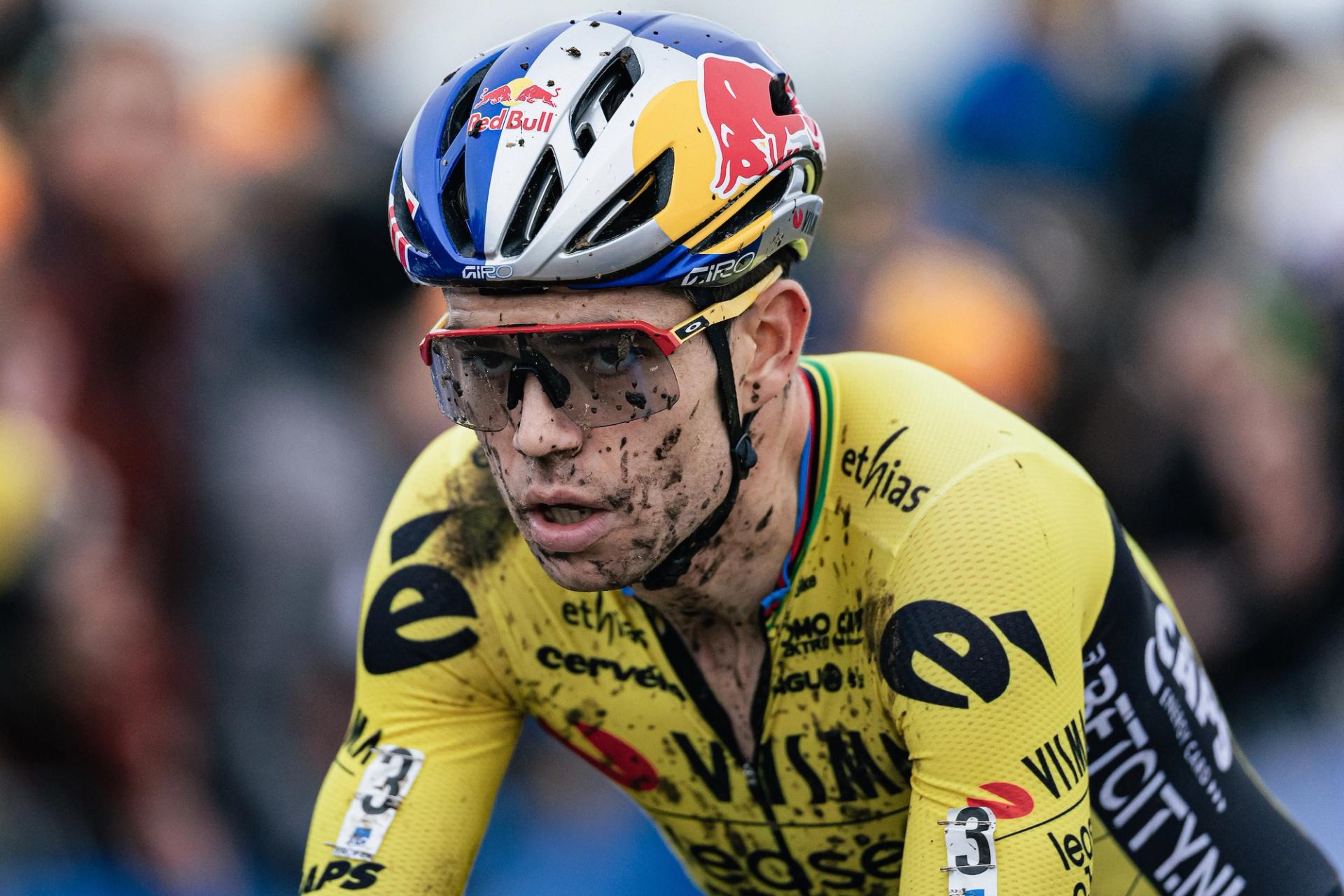
The absence of Wout van Aert – whose eight‑race programme deliberately skips Gavere – further narrows the list of riders who can live with Van der Poel on pure speed. Resistance will come from the World Cup regulars.
Joris Nieuwenhuis (Ridley Racing Team) is the most obvious on-paper challenger. He excels when the course is physically heavy but still largely rideable, as seen in his repeated podiums on hilly layouts. If the climb remains fully rideable from lap one, his raw engine and tidy technique could keep him in contact deep into the race.
The Baloise Glowi Lions trio of Lars van der Haar, Pim Ronhaar and Thibau Nys provide multiple tactical options. Van der Haar’s experience at pacing on climbing circuits means he rarely detonates early; Ronhaar is perhaps the purest climber of the three and will relish the vertical gain. Nys remains uncertain: back problems in Antwerp and a missed Koksijde round interrupted his early-season dominance. His form on Gavere's long, seated efforts will indicate whether he has fully recovered.
For Pauwels Sauzen – Altez, Michael Vanthourenhout is perfectly suited to the off‑camber and technical sections – skills that underpinned his win on another fast, precise circuit at Terralba. If the surface stays slick rather than fully frozen, his ability to ride cambers one gear higher than rivals will be decisive.
Laurens Sweeck (Crelan–Corendon), current World Cup leader, has built his campaign on consistency rather than outright domination. Gavere is not his archetypal sand course, but his improved climbing this winter makes a podium realistic, especially if the favourite overreaches or fumbles in traffic on lap one.
Youngsters Tibor Del Grosso and Jente Michels (both Alpecin structures) are worth watching: the former has the pure power to survive the climb in the top ten, the latter the aggression to exploit any hesitation behind Van der Poel.
Predictions
Women
- Lucinda Brand – sheer climbing power and proven form on heavy, high‑torque circuits.
- Ceylin del Carmen Alvarado – keeps it closest by maximising every technical metre.
- Puck Pieterse – early aggression but may pay for limited cross volume late on.
Men
- Mathieu van der Poel – course and conditions tailor‑made for his high‑speed dominance.
- Joris Nieuwenhuis – the only rider likely to survive nearest on sustained climbs.
- Michael Vanthourenhout – banks time through technical precision as others fade on ruts and cambers.