History, heartbreak and 54.8km of cobbles: Paris-Roubaix 2026 preview
ASO's tightened early cobbled sequence could force a pre-selection before Arenberg as the sport's two biggest one-day engines meet on the pavé. Van der Poel chases a record-equalling run; Pogačar brings unfinished business.
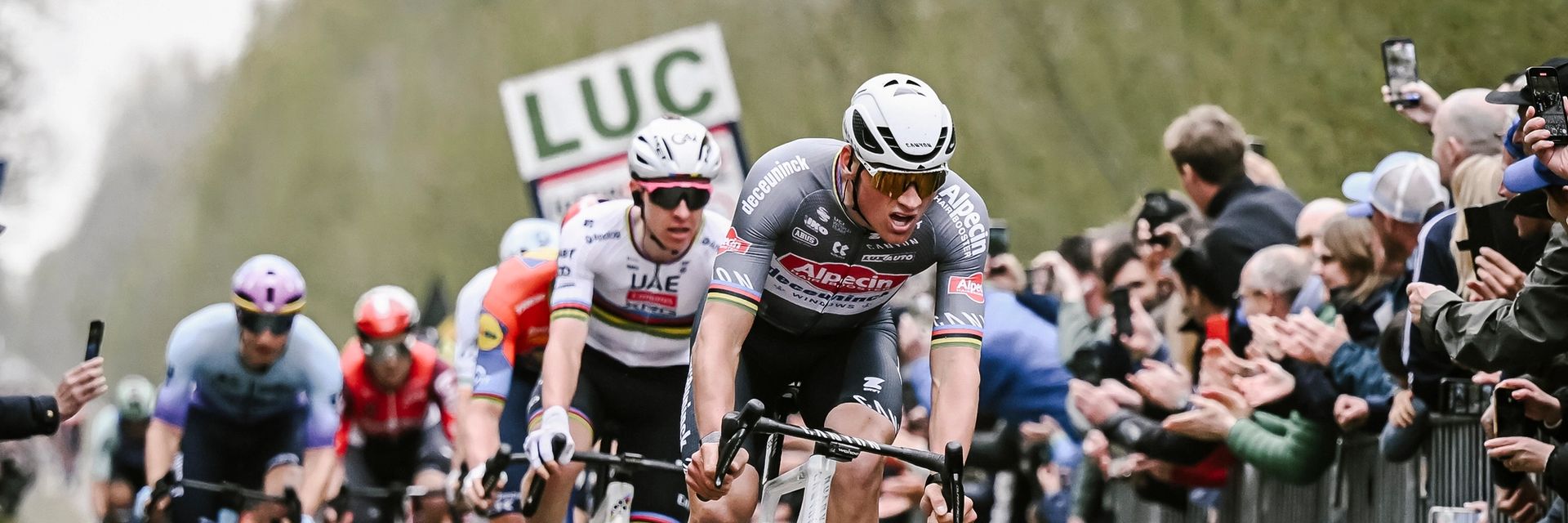
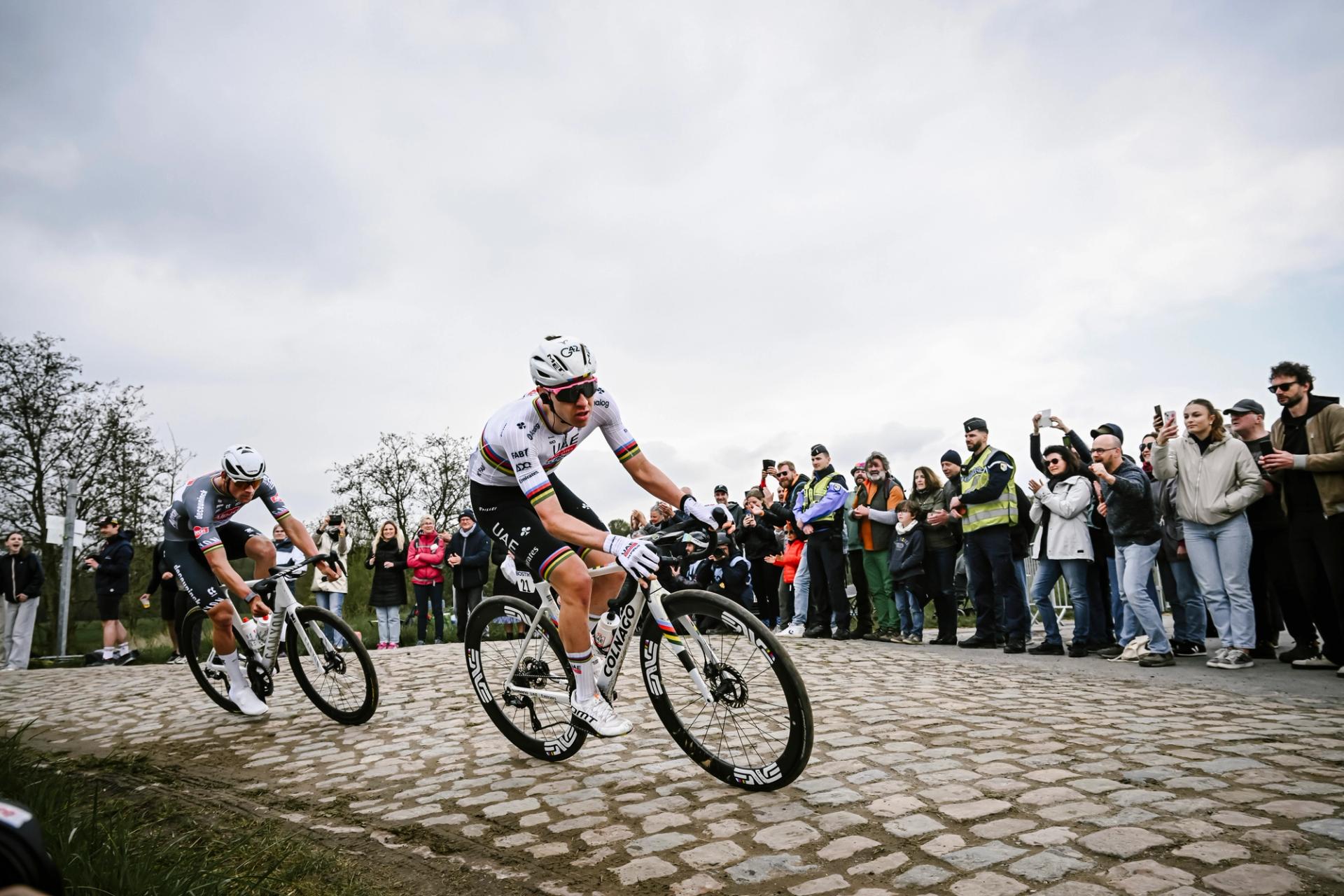
Standing between him and history is the rider who beat him at Tour of Flanders one week ago: Tadej Pogačar (UAE Team Emirates - XRG), who finished second on his Roubaix debut last year.
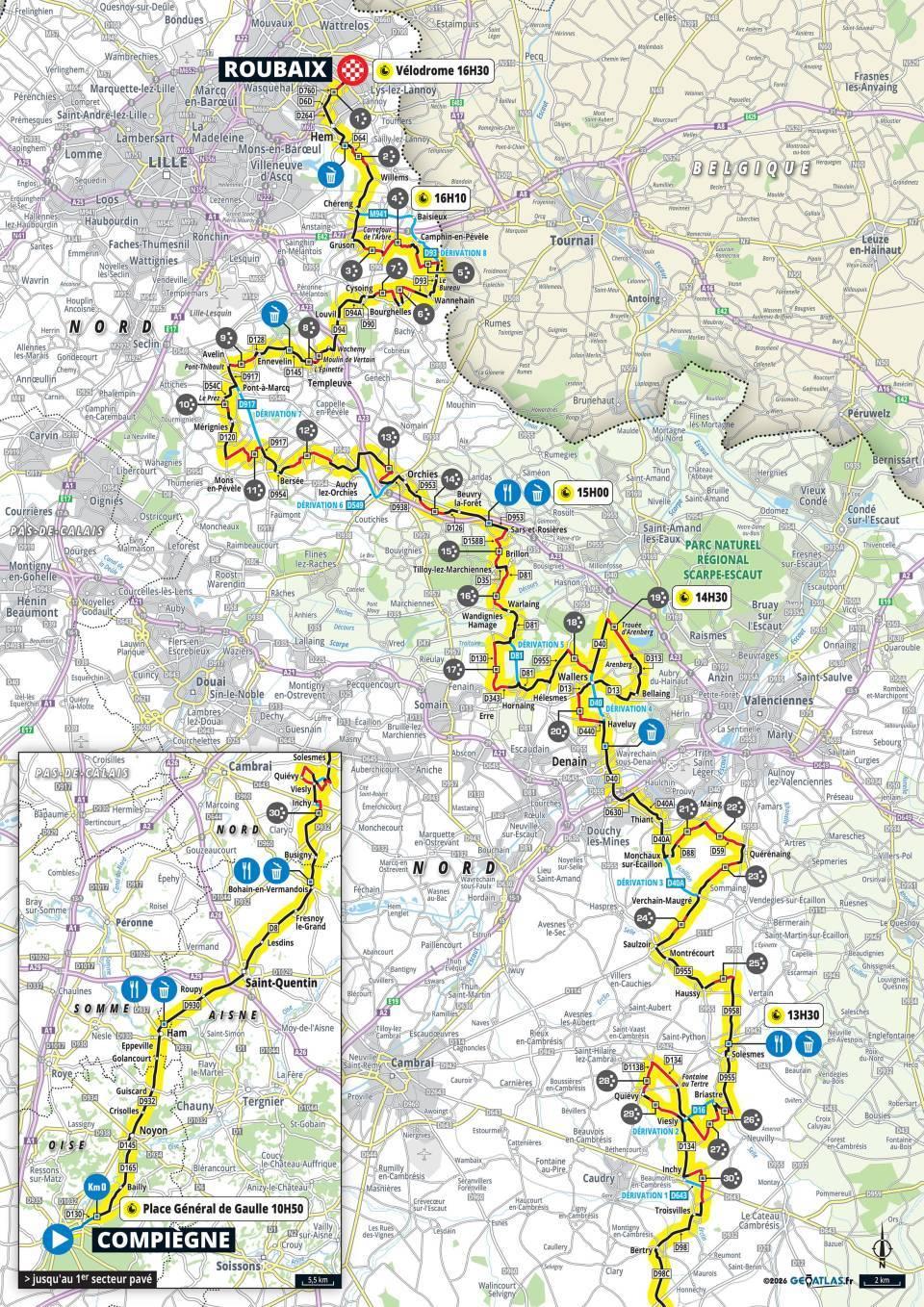
The 123rd edition covers 258.3km from Compiègne to the Roubaix velodrome and includes 30 cobbled sectors totalling 54.8km. ASO has restructured the opening cobbled sequence so the first four sectors arrive in rapid succession with minimal tarmac between them. With the early attacks that have become common across the season, that change could see this Roubaix decided before the Trouée d'Arenberg.
The structural change matters because Roubaix is rarely won by sheer power alone. It rewards the rider who stays in the front group when the race first fractures. By clustering the early sectors more tightly and reinstating sector 26, which includes an 800m climb near Briastre, ASO has moved that fracture point forward. Teams with multiple protected riders can force the pace from the opening pavé and isolate rivals well before the traditional destruction points.
Those destruction points remain unchanged. The five-star Trouée d'Arenberg arrives with roughly 95km to go, Mons-en-Pévèle with 49km remaining and Carrefour de l'Arbre, usually the last decisive sector, at 17km from the velodrome. The four-star Haveluy to Wallers sector at 105km provides the first serious test before the race enters its familiar endgame geography.
Weather forecasts point to light rain into Sunday, leaving the cobbles damp rather than fully soaked for the men's race. Scattered showers are forecast to follow, with a moderate northwest wind around force 3. Damp cobbles are often worse than wet ones: the stones stay slick without washing clean, reducing grip and punishing any lapse in bike handling.
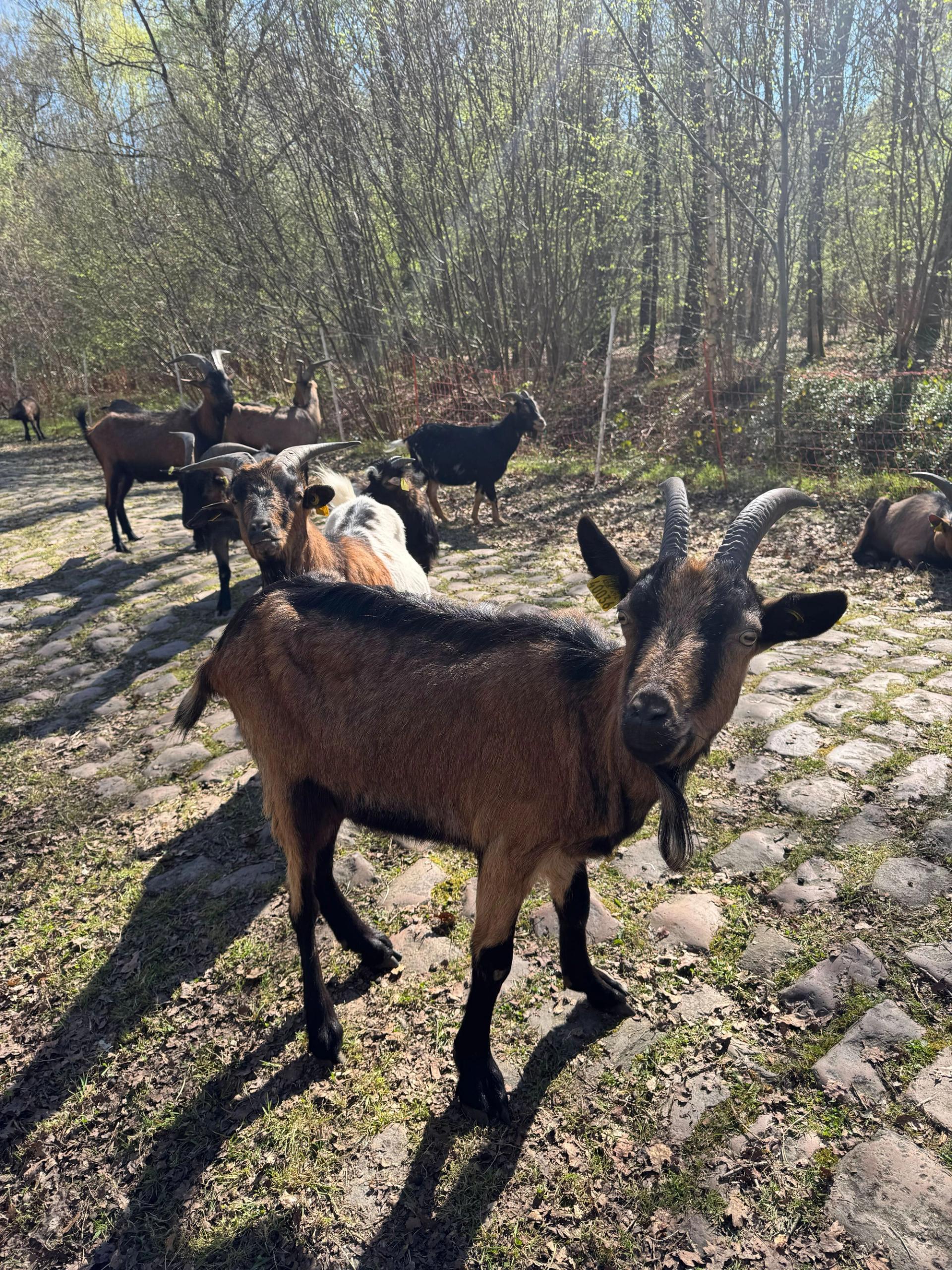
The Paris-Roubaix goats have already done their essential trimming on the Trouée d'Arenberg. Photo: ASO
Paris-Roubaix favourites
Paris-Roubaix 2026 Full Startlist
Mathieu van der Poel
Tibor Del Grosso
Silvan Dillier
Jasper Philipsen
Edward Planckaert
Jonas Rickaert
Florian Sénéchal
Stim Marsman (S)
Oscar Riesebeek (S)
Tadej Pogačar
Mikkel Norsgaard Bjerg
Juan Sebastián Molano
Rui Oliveira
Nils Politt
António Tomás Morgado
Florian Vermeersch
Julius Johansen (S)
Vegard Stake Laengen (S)
Mads Pedersen
Jonathan Milan
Mathias Norsgaard
Jakob Söderqvist
Edward Theuns
Mathias Vacek
Max Walscheid
Søren Kragh Andersen (S)
Tim Torn Teutenberg (S)
Wout van Aert
Edoardo Affini
James Matthew Brennan
Owain Doull
Per Strand Hagenes
Christophe Laporte
Axel Zingle
Pietro Mattio (S)
Stefan Bissegger
Cees Bol
Sander De Pestel
Stan Dewulf
Daan Hoole
Oliver Naesen
Rasmus Pedersen
Andrew Oscar Chamberlain (S)
Gianluca Pollefliet (S)
Jonas Rutsch
Toon Aerts
Huub Artz
Cedric Beullens
Arnaud De Lie
Joshua Giddings
Matys Grisel
Sébastien Grignard (S)
Felix Orn-Kristoff (S)
Filippo Ganna
Kim Alexander Heiduk
Artem Shmidt
Connor Swift
Joshua Tarling
Ben Turner
Sam Welsford
Bob Jungels (S)
Dylan van Baarle
Yves Lampaert
Tim Merlier
Jasper Stuyven
Dries Van Gestel
Bert Van Lerberghe
Jonathan Vervenne
Casper Pedersen (S)
Pepijn Reinderink (S)
John Degenkolb
Frits Biesterbos
Pavel Bittner
Dillon Corkery
Niklas Märkl
Henri François Renard Haquin
Julius van den Berg
Fabio Jakobsen (S)
Oliver Peace (S)
Gianni Vermeersch
Arne Marit
Jordi Meeus
Laurence Pithie
Callum Thornley
Mick van Dijke
Tim van Dijke
Nico Denz (S)
Danny van Poppel (S)
Matej Mohorič
Phil Bauhaus
Alessandro Borgo
Žak Eržen
Matevž Govekar
Kamil Gradek
Alec Segaert
Alberto Bruttomesso (S)
Vlad Van Mechelen (S)
Thibaud Gruel
Cyril Barthe
Titouan Fontaine
Axel Huens
Johan Jacobs
Clément Russo
Bastien Tronchon
Lewis Bower (S)
Valentin Madouas (S)
Jonas Abrahamsen
Sven Erik Byström
Storm Ingebrigtsen
William Levy
Erik Nordsæter Resell
Rasmus Tiller
Søren Wærenskjold
Stian Edvardsen-Fredheim (S)
Markus Hoelgaard (S)
Alexis Renard
Stanisław Aniołkowski
Camille Charret
Clément Izquierdo
Hugo Page
Dylan Teuns
Benjamin Thomas
Edoardo Zamperini (S)
Mike Teunissen
Davide Ballerini
Yevgeniy Fedorov
Aaron Murray Gate
Arjen Livyns
Alessandro Romele
Gleb Syritsa
Alberto Bettiol (S)
Florian Samuel Kajamini (S)
Kasper Asgreen
Luke Lamperti
Alastair Mackellar
Madis Mihkels
Matthias Schwarzbacher
Colby Simmons
Max Walker
Alfred Bruce Noah Hobbs (S)
Michael Valgren (S)
Biniam Girmay
Lewis Askey
Guillaume Boivin
Matis Louvel
Ryan Mullen
Riley Sheehan
Tom Van Asbroeck
Hugo Hofstetter (S)
Floris Van Tricht (S)
Anthony Turgis
Rayan Boulahoite
Alexys Brunel
Florian Dauphin
Sandy Dujardin
Thomas Gachignard
Samuel Leroux
Nicola Marcerou (S)
Pierre Thierry (S)
Luke Durbridge
Dries De Bondt
Dries De Pooter
Robert Donaldson
Hamish McKenzie
Kelland O'Brien
Jasha Sütterlin
Pascal Ackermann (S)
Jelte Krijnsen (S)
Iván García Cortina
Jon Barrenetxea Golzarri
Filip Maciejuk
Lorenzo Milesi
Pavel Novák
Gonzalo Serrano Rodríguez
Albert Torres Barceló
Carlos Canal Blanco (S)
Fred Wright
Aimé De Gendt
Frederik Frison
Emils Liepins
Kamil Małecki
Brent Van Moer
Nickolas Zukowsky
Sam Bennett (S)
Nicolò Parisini (S)
Marco Haller
Petr Kelemen
Sebastian Kolze Changizi
Fabian Lienhard
Marius Mayrhofer
Aivaras Mikutis
Luca Mozzato
Robin Froidevaux (S)
Arthur Kluckers (S)
Lukáš Kubiš
Joren Bloem
Cornelius Tomáš Kopecký
Casper Matyáš Kopecký
Niklas Larsen
Wessel Mouris
Martijn Rasenberg
Ronan Augé (S)
Adam Ťoupalík (S)
Robin Carpenter
Ezra Caudell
Sean Christian
Cole Kessler
Ben Oliver
Riley Pickrell
Mark Stewart
Scott McGill (S)
Hugo Scala Jr. (S)
Brem Deman
Ferre Geeraerts
Jules Hesters
Michiel Lambrecht
Leander Van Hautegem
Noah Vandenbranden
Victor Vercouillie
Nolan Huysmans (S)
Artuur Torney (S)
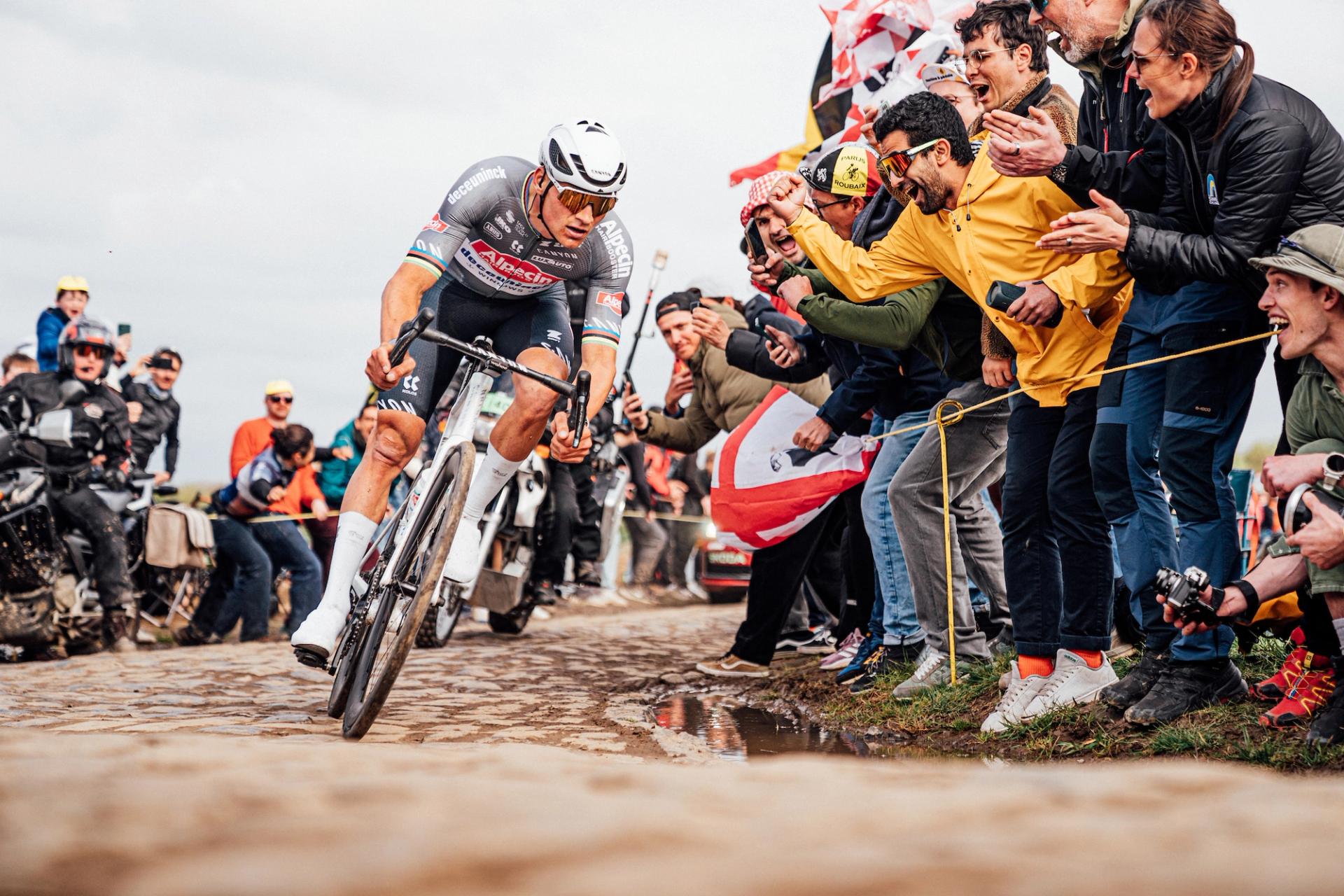
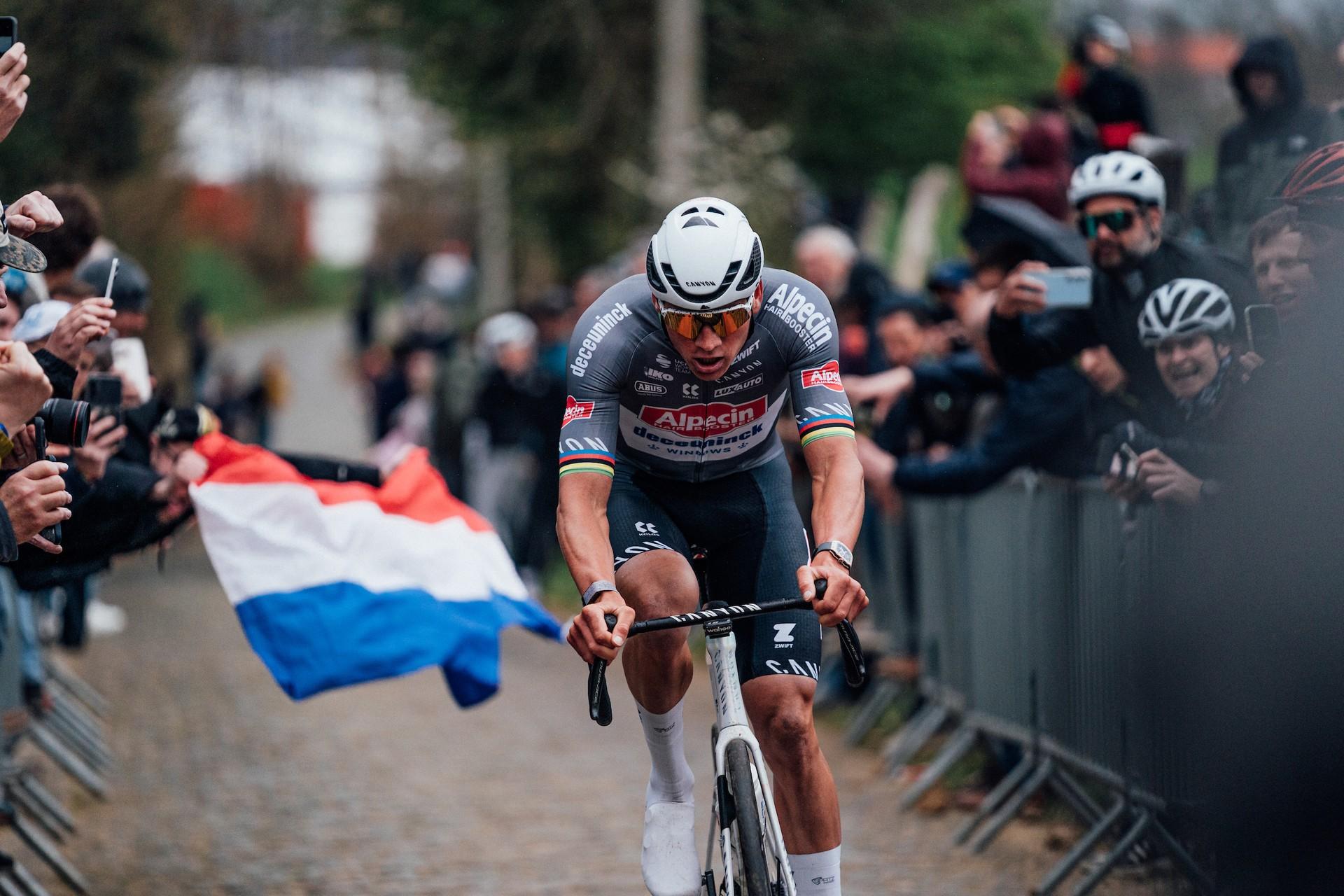
Van der Poel is the safest favourite because his Roubaix toolkit is the most complete in the field. He handles the cobbles better than any active rider, reads the race instinctively, and has a finishing sprint that few can match from a reduced group. His second place at Flanders showed he is close to his best.
Alpecin also start Jasper Philipsen (Alpecin-Premier Tech), arguably the fastest finisher among the likely front group. That gives the team a tactical fork – Van der Poel can attack, and if the race comes back together, Philipsen can finish the job.
Pogačar is the rider most capable of breaking the script. He won Flanders on 5 April by breaking the race on the second Oude Kwaremont and holding off Van der Poel in the finale.
His only Roubaix vulnerability last year was a handling error deep into the race, not a fitness gap. If the tighter early sequence hardens the race sooner and reduces the group before Arenberg, Pogačar's pure power becomes harder to contain. Florian Vermeersch (UAE Team Emirates - XRG), a proven Roubaix specialist, gives the UAE squad a valuable second card.
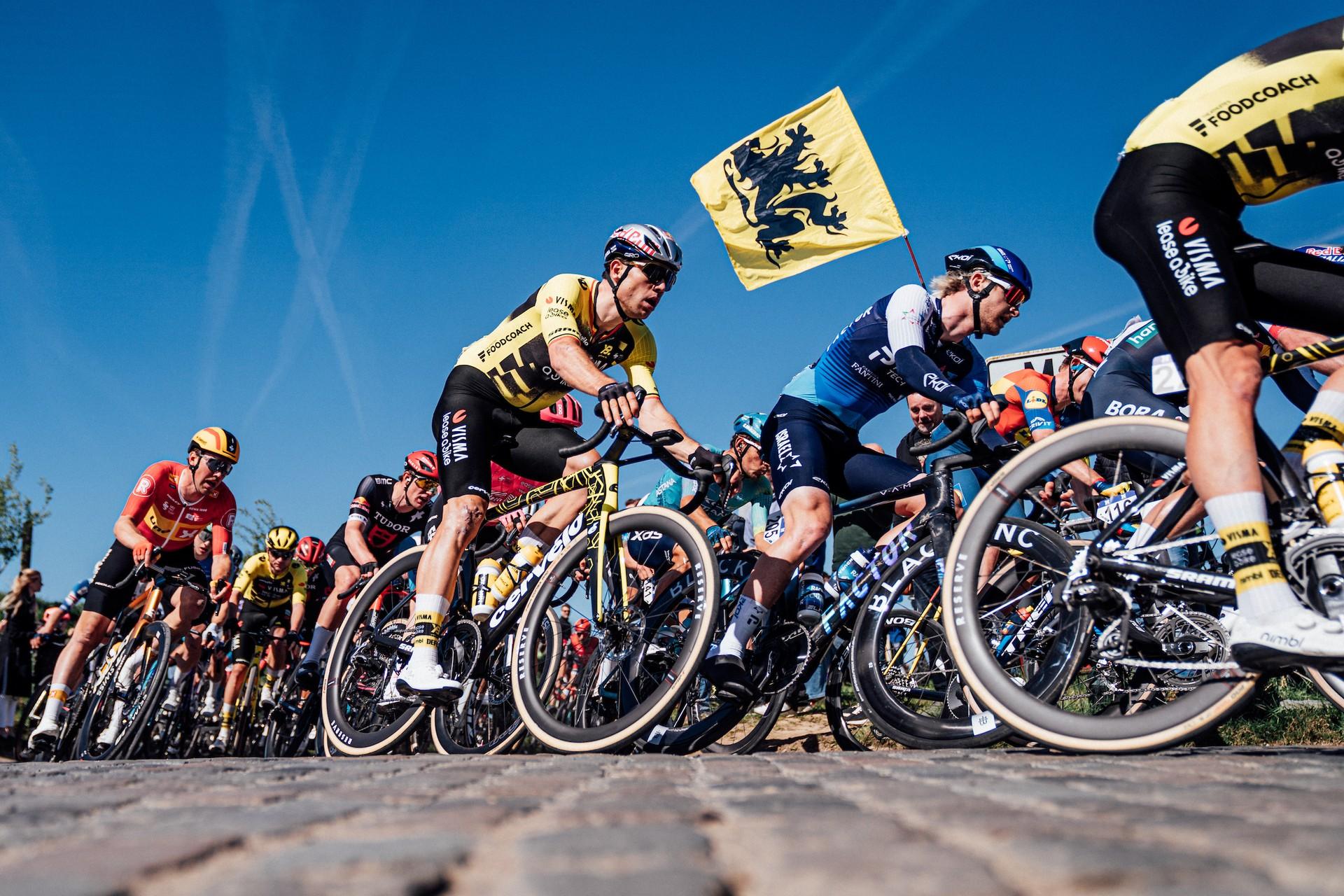
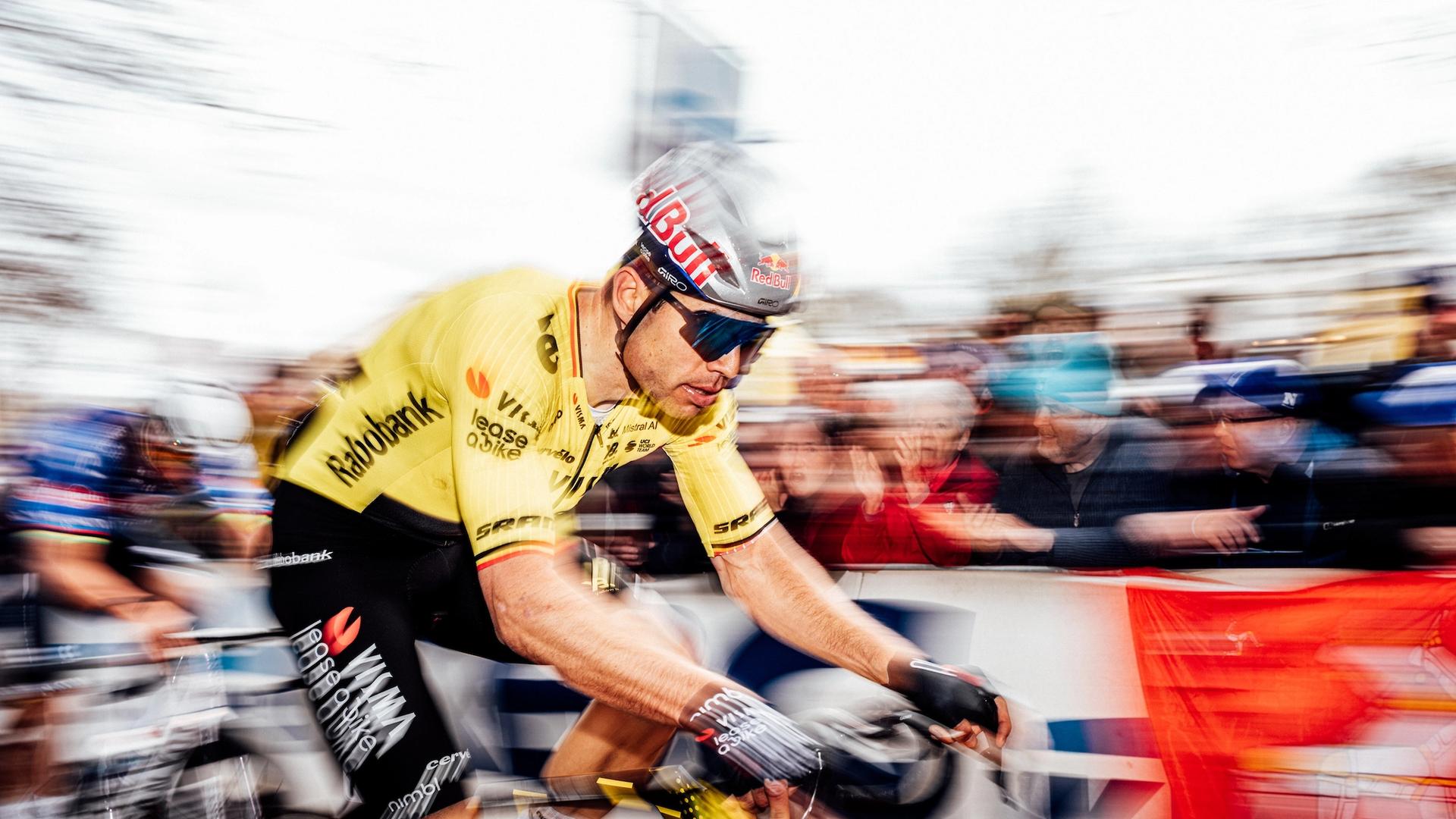
Wout van Aert (Team Visma | Lease a Bike) finished fourth at Flanders. Roubaix gives him more room to use raw power over flat cobbles and less dependence on explosive climbing than Flanders does. With Christophe Laporte (Team Visma | Lease a Bike) as a strong lieutenant, Visma can keep Van Aert protected through the early chaos. This may be the Monument that best suits his remaining ceiling this spring.
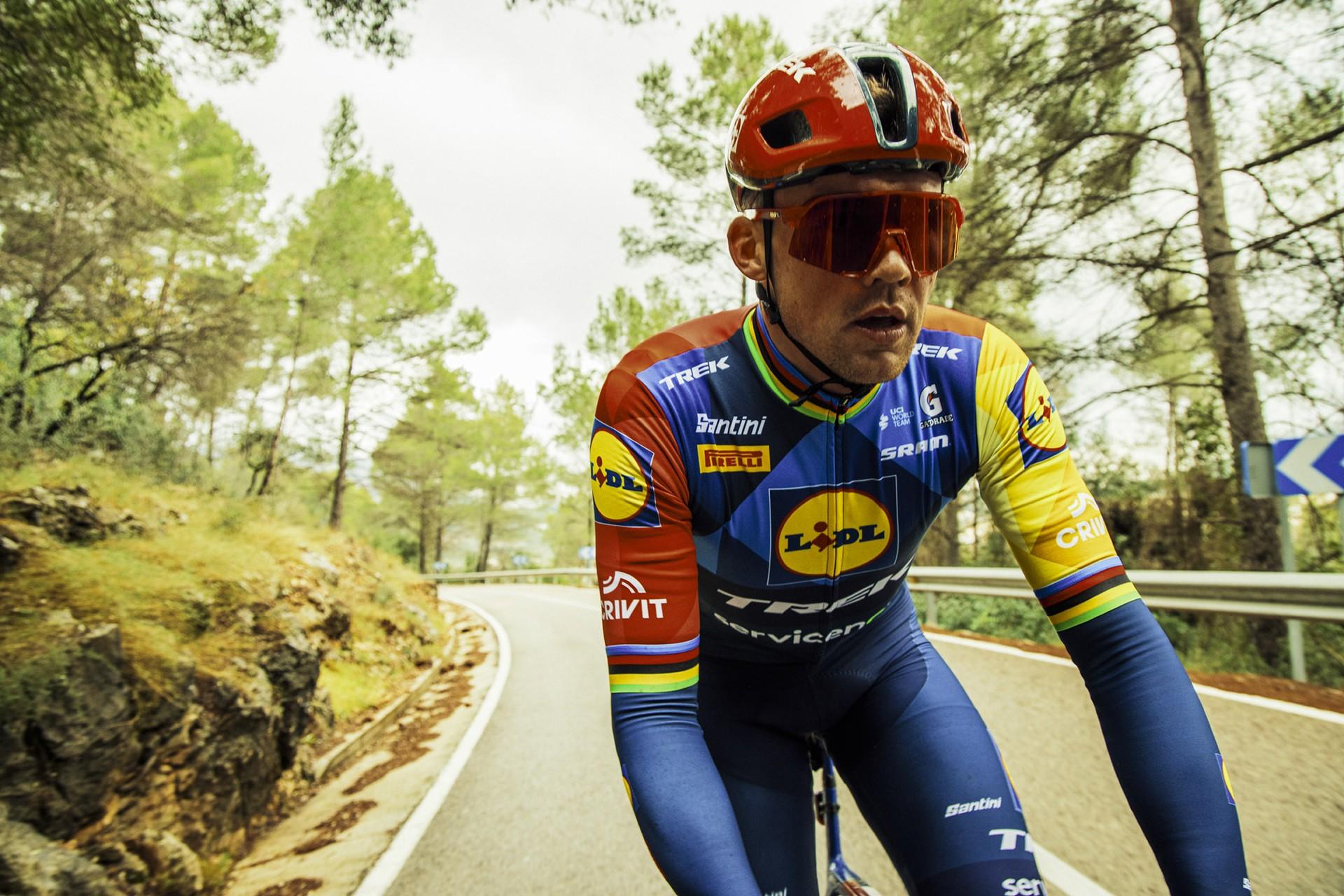
Mads Pedersen (Lidl-Trek) is one of the hardest riders to drop over cobbles and was fifth at Flanders. He lacks the pure acceleration of the top two but compensates with endurance, positioning and a dangerous sprint from a reduced group.
Filippo Ganna (INEOS Grenadiers) offers a different threat entirely: if the race becomes a sustained power contest on damp pavé, few riders in the peloton can match his output. A long, hard, wind-affected Roubaix would suit him.
The most likely scenario is a fast, attritional race that produces a small front group by Mons-en-Pévèle. If Van der Poel and Pogačar both survive to Carrefour de l'Arbre with 17km remaining, the final may come down to whether Pogačar can match Van der Poel's technical handling through the last sectors and into the velodrome. Van der Poel's three-year Roubaix record says he can. Pogačar's Flanders form says he might not need to.
Peter is the editor of Velora and oversees Velora’s editorial strategy and content standards, bringing nearly 20 years of cycling journalism to the site. He was editor of Cyclingnews from 2022, introducing its digital membership strategy and expanding its content pillars. Before that he was digital editor at Cyclist, and then Rouleur. Before joining Cyclist in 2012, he completed freelance work for titles including The Times and The Telegraph. He has reported from Grand Tours and WorldTour races, and previously represented Great Britain as a rower.