Ineos Grenadiers may be cycling’s comeback story of 2026. After a low point in 2024, the once monolithic team seemed to be existentially lost. But in both racing and financial terms, things seem to be turning a corner.
Reports emerged this week that Netcompany, a Copenhagen-based IT services firm, will become title sponsor of Ineos Grenadiers from the 2026 Tour de France in a deal widely reported to be valued at €100 million over five years.
Since Jim Ratcliffe bought the team from Sky in 2019, Ineos has been both owner and title sponsor – a rare arrangement in professional cycling. Most teams operate as independent sporting entities funded by a rotation of sponsors. Bringing Netcompany into the name signals a shift back towards that traditional model. That raises a more fundamental question than the branding change itself: why is Jim Ratcliffe no longer willing to underwrite the project alone?
Netcompany is listed on the Nasdaq Copenhagen with annual turnover of approximately €1 billion. It operates four offices in the UK and recently secured a contract as the primary digital operations partner for Heathrow Airport.
A Danish tech company with British ambitions arriving ahead of the 2027 Tour de France Grand Départ in Britain has a commercial logic that is easy to trace. Whether Netcompany's technical expertise in data and software offers the team anything operationally remains to be seen, but the immediate significance of the deal is financial.
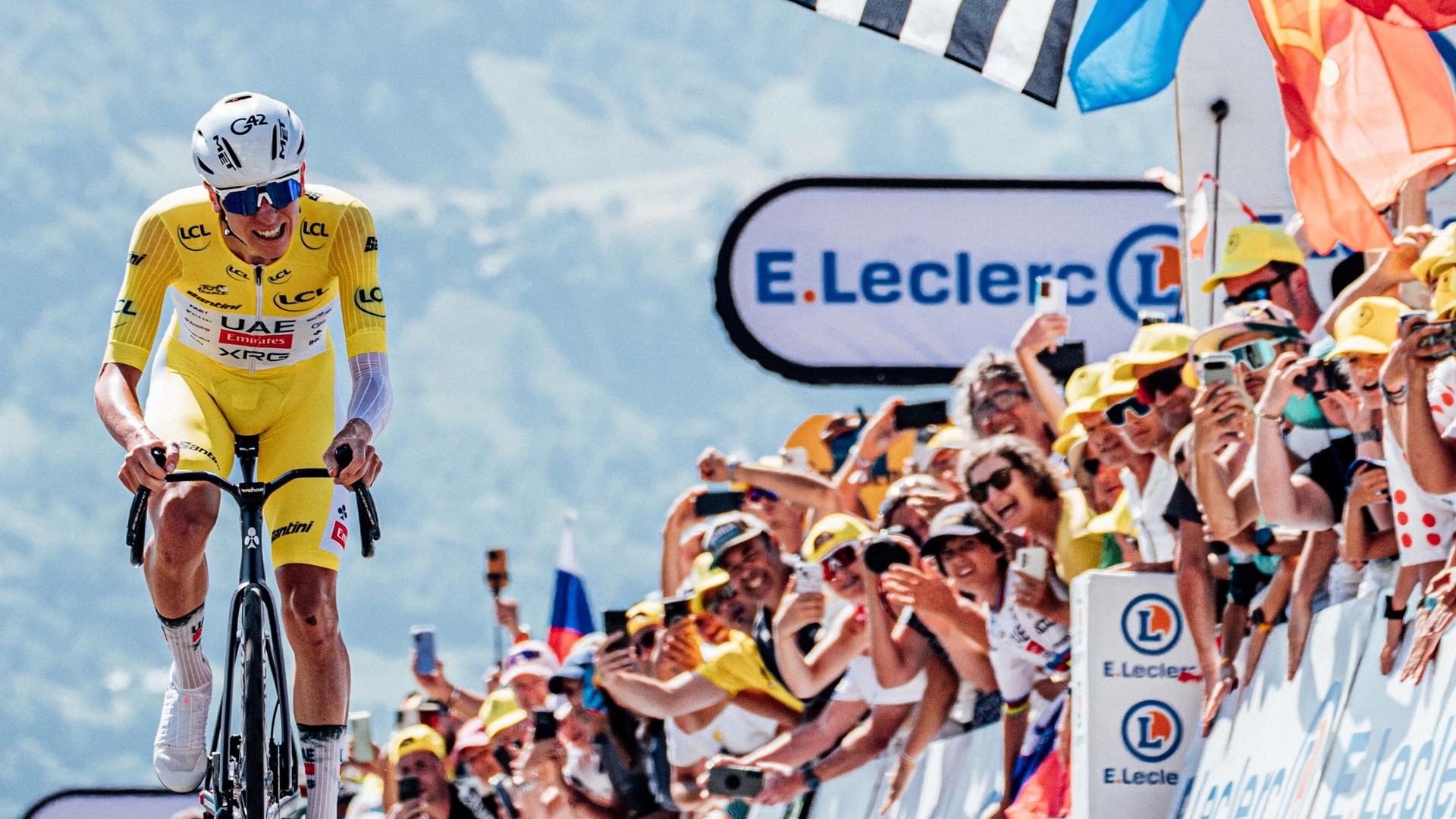
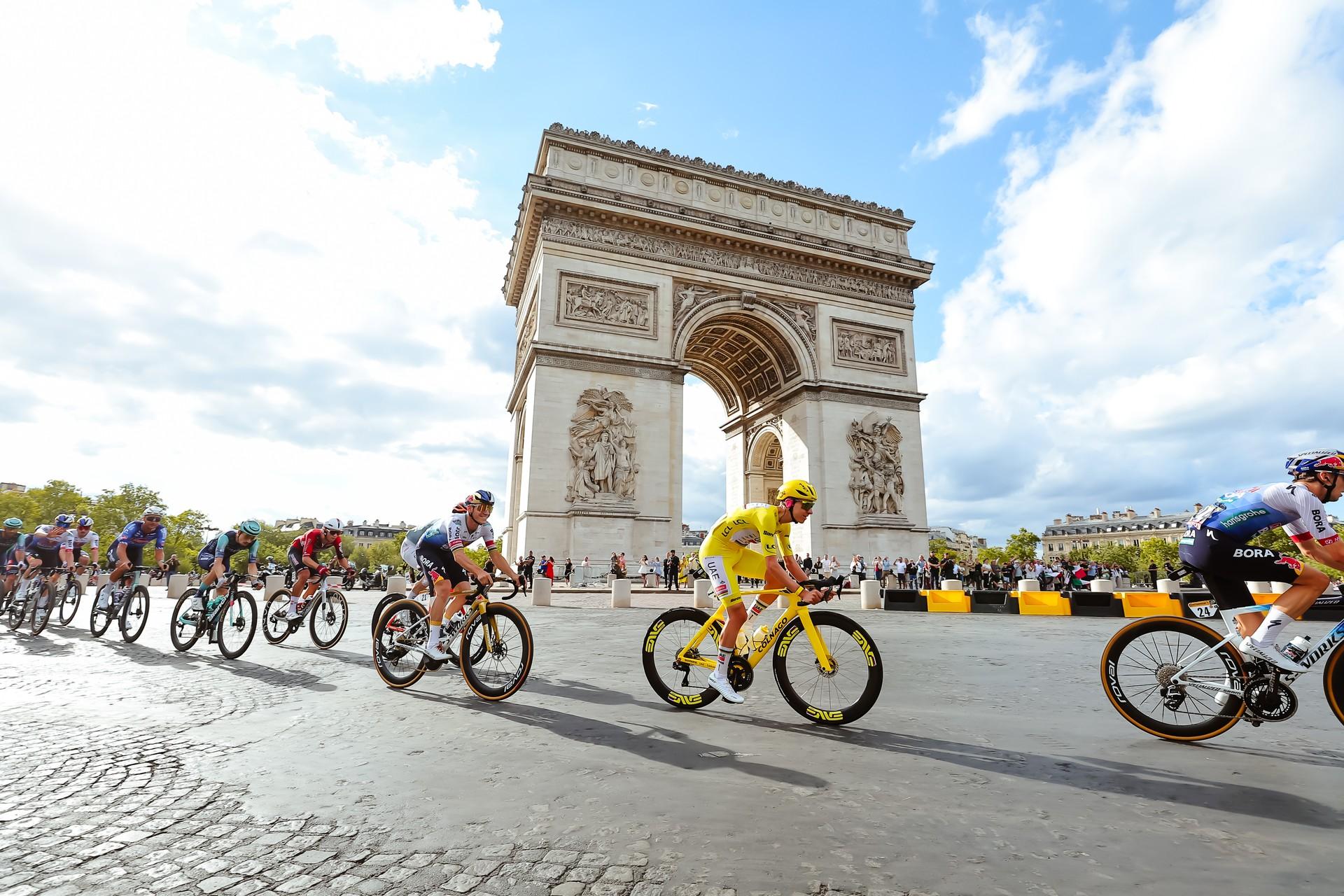
At €20 million per year, the sponsorship represents a substantial injection. Combined with existing support from TotalEnergies and technical partners, the team is reportedly targeting an annual budget of around €50 million. That would be a meaningful uplift from its current estimated spend of €35-40 million. It would also still leave Ineos roughly €10 million short of UAE Team Emirates-XRG, whose annual budget is estimated at close to €60 million.
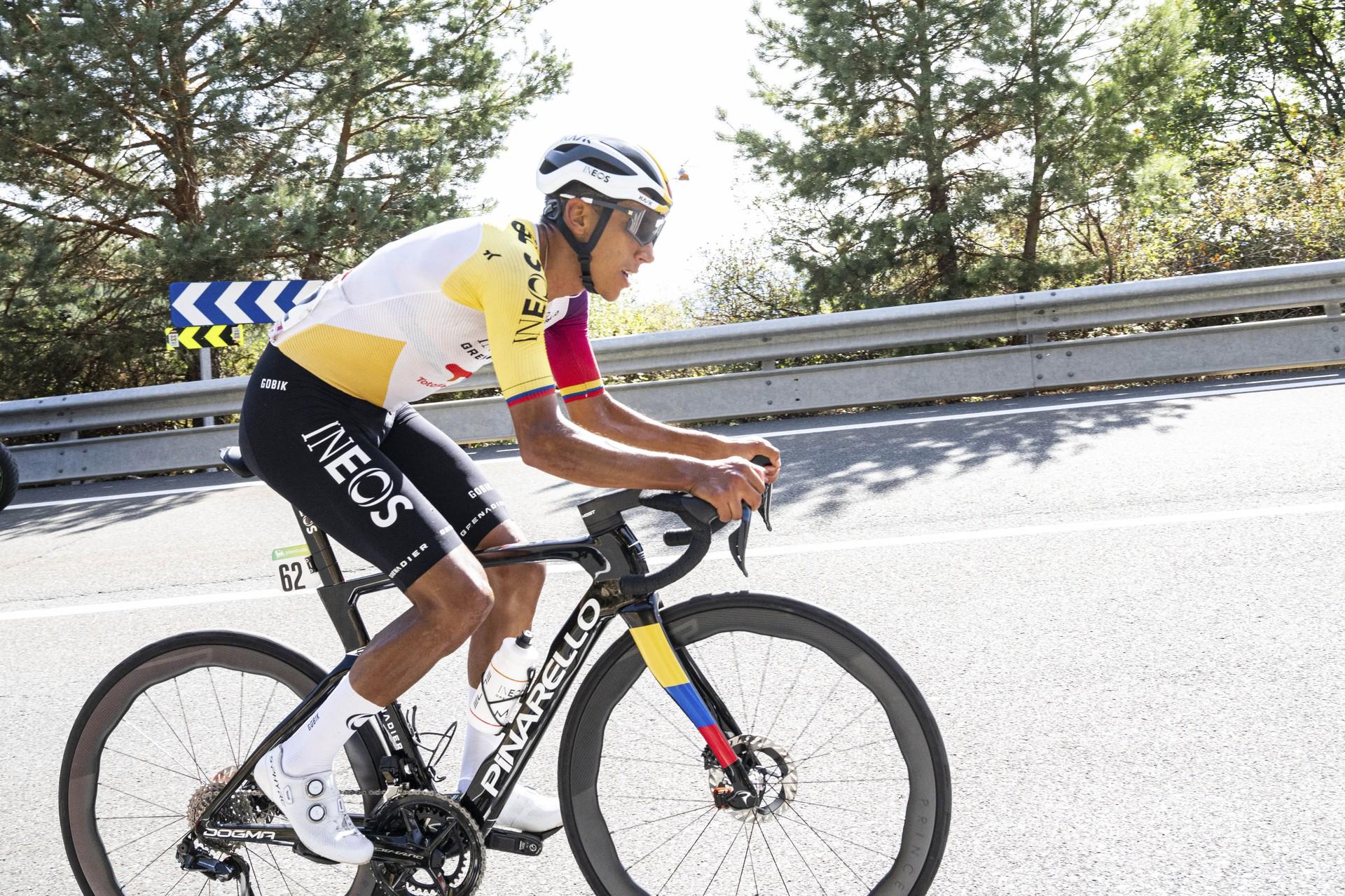 Photo: Antonio Baixauli
For most of the 2010s, Team Sky held the financial advantage in the WorldTour, spending around €40 million when few rivals could match half that figure. The landscape shifted. State-backed investment and consolidated commercial models at UAE Team Emirates-XRG and Visma-Lease a Bike pushed the ceiling higher than Ratcliffe's personal generosity could comfortably follow. Ineos remained rich, but no longer richest.
Follow the money
Team manager John Allert laid out the position in blunt terms. "It's fair to say that Ineos don't want to spend more money," he said on a video call to various media in 2025. "They very clearly do want us to be a super team and they know what it takes to be a super team. I'm not going to put a number on that, but it's a number that's greater than what we're currently spending."
Allert added: "We don't necessarily feel we have to, need to, or want to, go it alone."
The team’s current budget is harder to verify.
Team Ineos historic budget
Based on Companies House filings
Year | Budget / Revenue | Notes |
|---|---|---|
| 2010 | £14.6m | First season of Team Sky |
| 2011 | £16.7m | Early expansion |
| 2012 | £21.4m | First Tour de France win |
| 2013 | £22.1m | Stable growth |
| 2014 | £24.5m | Increasing sponsor base |
| 2015 | £24.4m | Slight plateau |
| 2016 | £31.1m | Major expansion |
| 2017 | £34.5m | Peak Sky era scaling |
| 2018 | £38.0m | Pre-Ineos high point |
| 2019 | £42.9m | Ineos takeover year |
| 2020 | €50.1m (~£45m) | €46.3m cash sponsorship + €3.7m in-kind |
The 2019 and 2020 accounts of Tour Racing Limited - the operating business name of Team Sky and then Ineos during that period - revealed €50,785,000 and €50,107,000 respectively. Cash sponsorship, meaning funding separated from the value of equipment handed over to the team, sat around €46–47m according to the accounts.
After 2021, the accounting reporting changed, and the transparency offered by regular public accounts disappeared. Ratcliffe is currently reported as funding the team to the tune of £30m, which even with supplementary sponsor contributions could suggest a gap even to the 2020 public figures.
So whether TotalEnergies and Netcompany's contribution will offset a step back from Ratcliffe or amplify his majority contribution is likely to only be known to team insiders.
What is clear, though is Ratcliffe is not selling the team. He and Dave Brailsford will retain ownership and control. But by externalising the naming rights, Ratcliffe is capping his personal financial exposure while shifting the team towards a multi-sponsor funding model. The old vanity-sponsorship arrangement, where the billionaire owner also supplied the branding, has become less rational in a market where rivals can outspend even Ineos.
The timing is harder to separate from the fortunes of Ineos Automotive. The Grenadier SUV, which gave the cycling team its name, has endured a turbulent 18 months. Production at the Hambach factory in France halted for four months in late 2024 after seat supplier Recaro filed for bankruptcy. In March 2025, Ineos recalled more than 7,000 vehicles over a faulty door latch mechanism. The launch of the all-electric Fusilier has been pushed back to 2028.
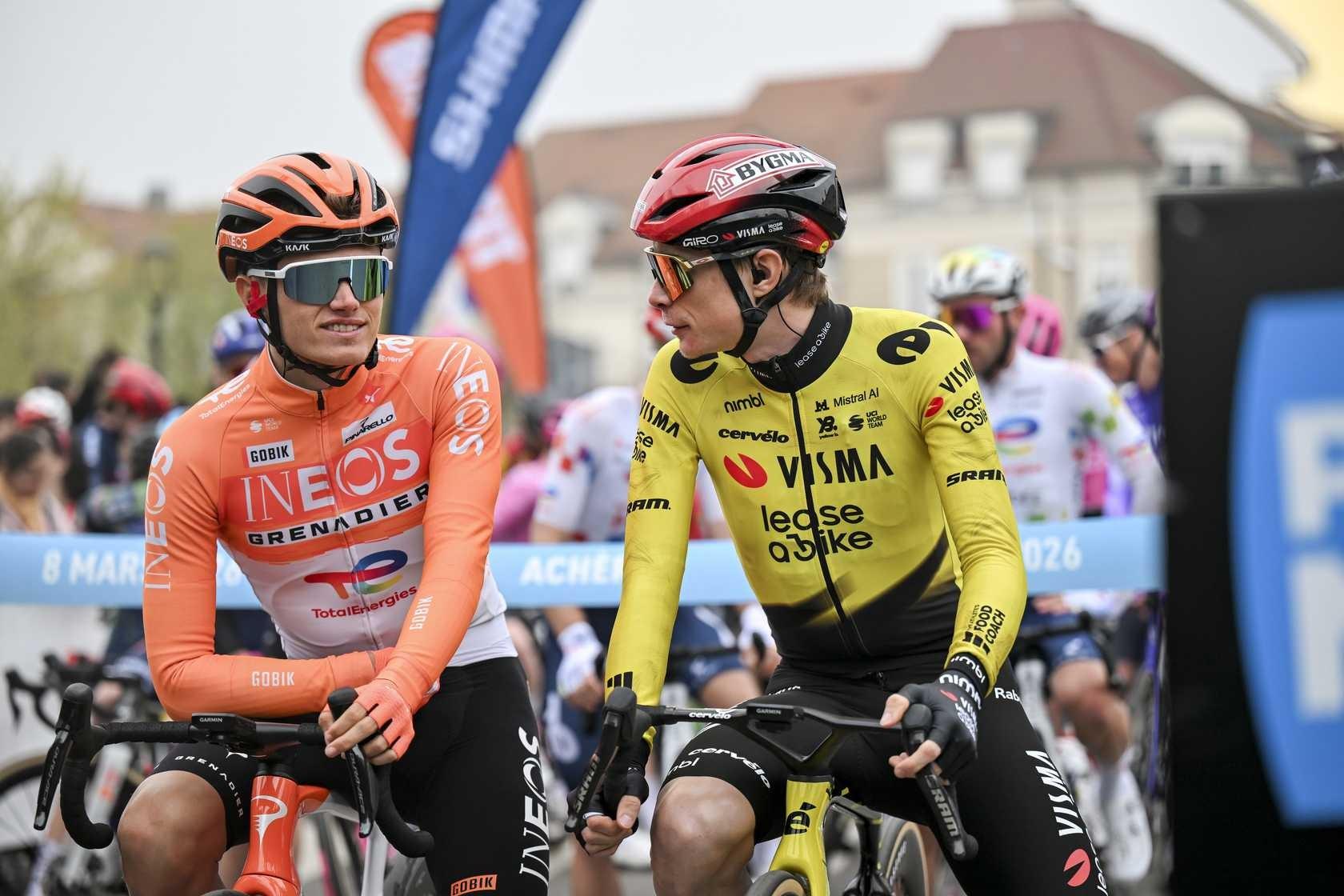 Photo: A.S.O./Billy Ceusters
The signing of Oscar Onley was the major high profile transfer news of 2026
None of this proves the SUV project's difficulties directly caused the sponsorship pivot. Indeed, insiders suggest that the cycling team was always funded at group level, and so the fates of the Grenadier weren't too heavily tied to the team's financial stability. But the broader picture is one of industrial strain across the Ineos empire at a moment when Ratcliffe's attention is also divided by his involvement at Manchester United. Bringing in external title sponsorship reduces the cycling team's dependence on a single owner whose bandwidth and appetite appear to be shifting.
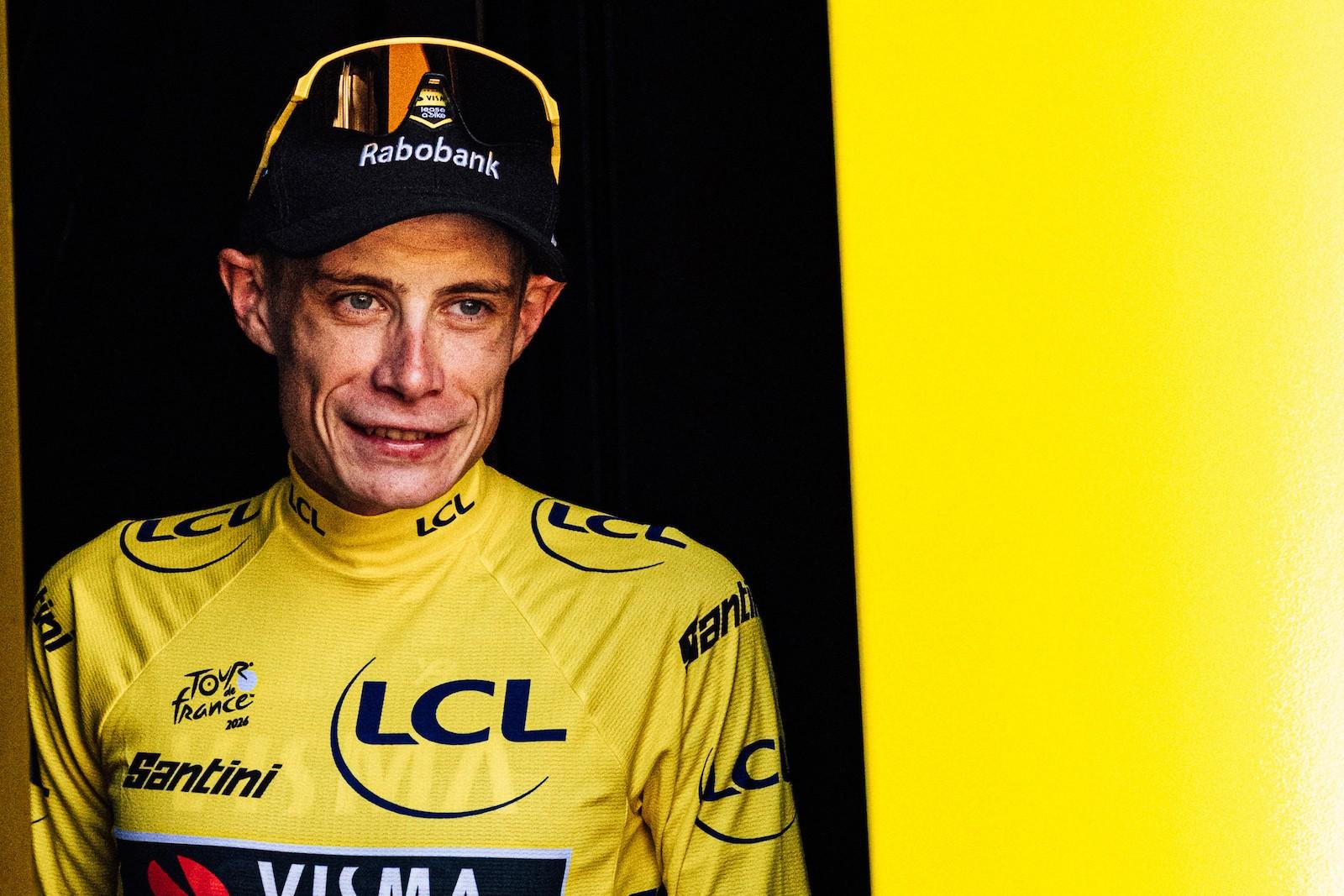
The practical question is whether €20 million a year actually changes what Ineos Grenadiers can do. The answer depends on where the money goes. In the transfer market, the team has struggled in recent seasons to outbid rivals for top-tier talent. Netcompany's cash could restore some of that purchasing power, and the Danish connection offers a natural narrative for pursuing riders like Jonas Vingegaard (Visma-Lease a Bike) or Mads Pedersen (Lidl-Trek), both of whom would carry enormous marketing value for a Danish title sponsor.
The team has constantly vied for major talents to turn its fortunes. In recent years it was Remco Evenepoel, and of course this season was marked by the high profile transfer of Oscar Onley. Rumours suggest Paul Seixas (Decathlon-CMA CGM) may be in Ineos' sights when his current contract expires in 2027. The influx of sponsor money is intended to facilitate an early move for Seixas, the kind of pre-emptive, big-money signing that Ineos has not been positioned to make in recent years.
Whether those ambitions materialise depends partly on what happens in 2027. TotalEnergies currently sits as a jersey partner but cannot take title status while it sponsors a French ProTeam. That agreement expires after 2026, and Ineos management is reportedly pushing for TotalEnergies to match Netcompany's €20 million contribution to create a dual-branded operation. If that comes together, the budget picture changes again, perhaps materially.
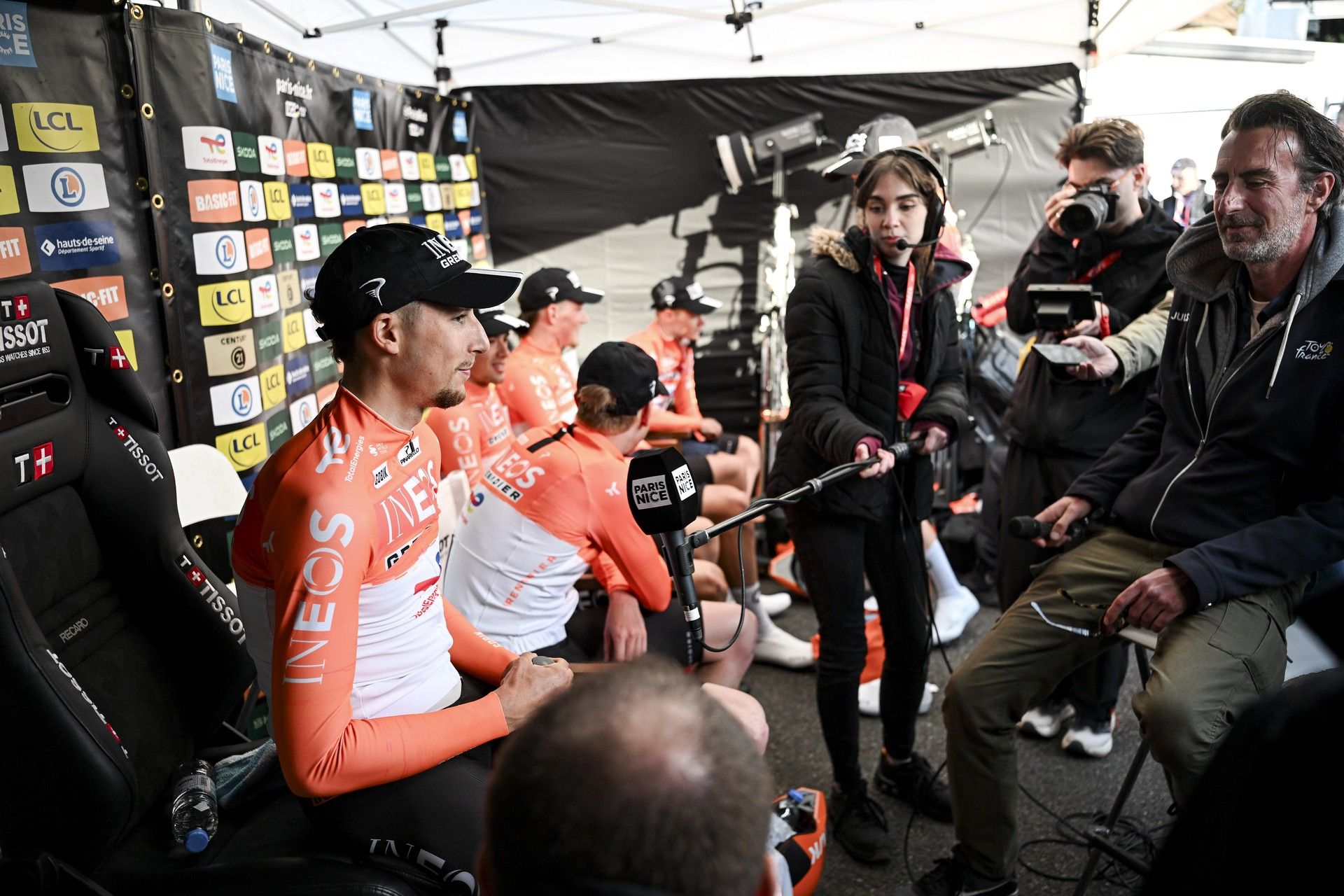
For now, the team is working with what it has. Geraint Thomas, who retired from racing last year and moved into his new role as director of racing, gave an assessment. "We've had a rough couple of years, but we're on the way back," Thomas told the Guardian. "There's still a long way to go, but we've got a great team of riders, of staff, and everyone's motivated, pushing forward."
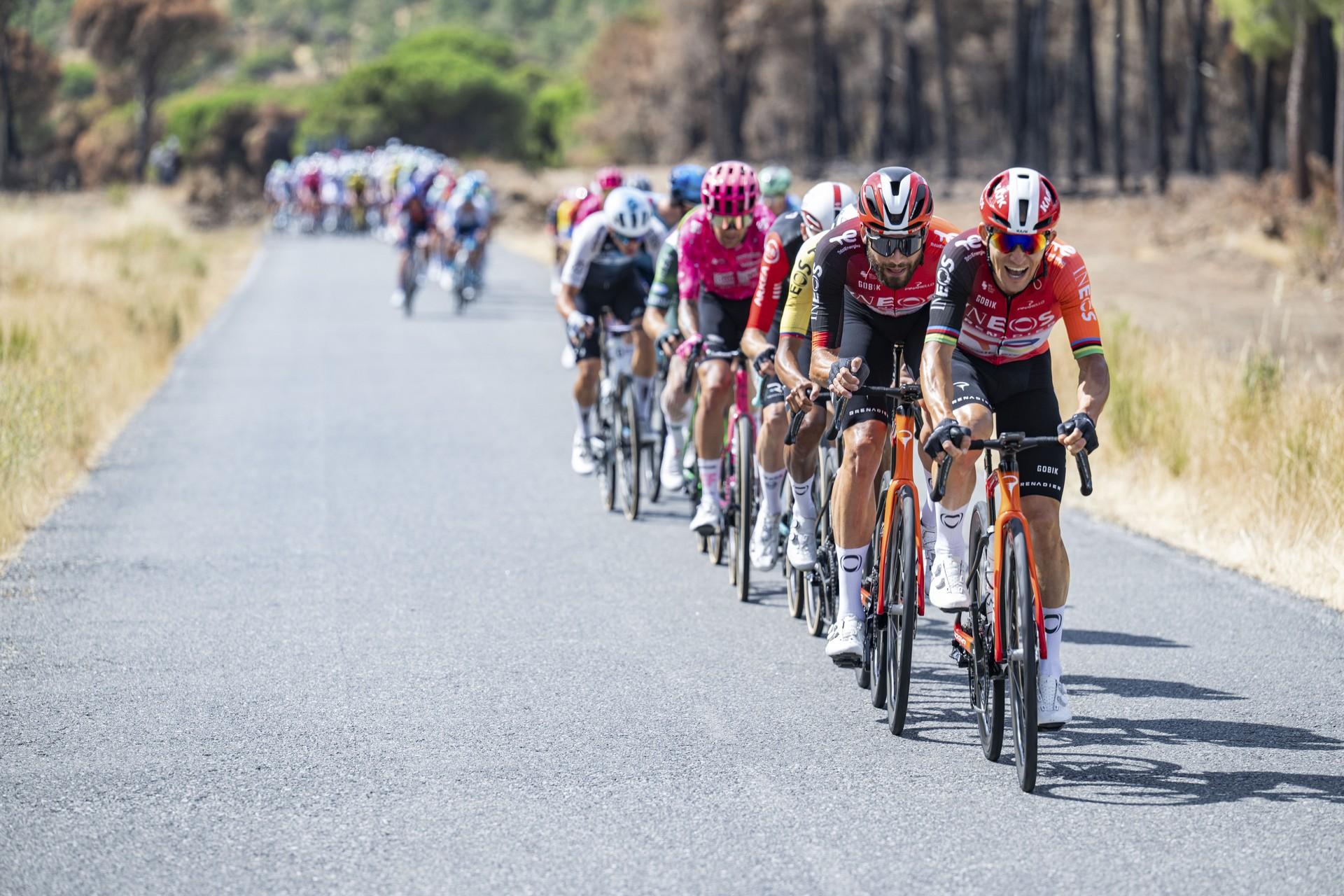 Photo: Antonio Baixauli
The kit will change, reportedly shifting from Ineos's red and black to Netcompany's corporate palette of dark green, white and black. The ownership will not. Ratcliffe remains in place, Brailsford remains in place, and the team retains its WorldTour licence and operational structure.
What has changed is the model. Under Sky, the team existed to deliver measurable marketing value for the broadcaster. Under Ratcliffe, it functioned more like a billionaire-backed sporting project, where the branding benefit was secondary to personal interest.
Netcompany's investment may return the team to the more traditional public pressure of sponsorship, and be the beginning of a more sustainable commercial structure.
Or it may simply be the point at which Ratcliffe decided the return on his investment no longer justified the exposure. The real test is whether external money translates into external results in a landscape where even with more sponsors the team which once comfortably outspent the WorldTour will struggle to even match the gigantic budgets at the top.