Andrew Gold is clearly always on. Amid the busy spring season, he joins a video call from Cape Town on a weekday evening, fresh from a reception for his daughter's school dance and ahead of a trip to a whisky club. Between the two, he talks to Velora for over an hour about fabric waste, sewing machinists, 3D avatars in the time-trial position, and the challenge of selling a South African cycling brand to European consumers.
Gold is the founder of CIOVITA, a cycling apparel company headquartered in Woodstock, the suburb that sits at the foot of Table Mountain – "On the left-hand side as you look up from the V&A Waterfront," Gold tells me. The company employs more than 230 people, designs and manufactures almost everything in-house, and operates its own retail stores in Cape Town, Stellenbosch and Johannesburg. Over the past two years it has pushed into Europe and Australia through store-in-store placements in Amsterdam, Germany and Brisbane.
The ambition, as Gold puts it, is to take the brand "from Woodstock to the world." Whether that works depends on something more than product. It depends on whether the local identity that makes CIOVITA distinctive in South Africa can survive the journey intact.
Gold's route to cycling apparel began in sleeping bags. Born and raised in Cape Town, he left South Africa in 1995 and spent a year and a half in Reading, UK, worked a ski season in Austria, then returned home and joined his father's outdoor manufacturing business, which made down-filled sleeping bags, hiking jackets and rainwear. He studied production management, fashion design, patternmaking and garment construction while working there for roughly 17 years.
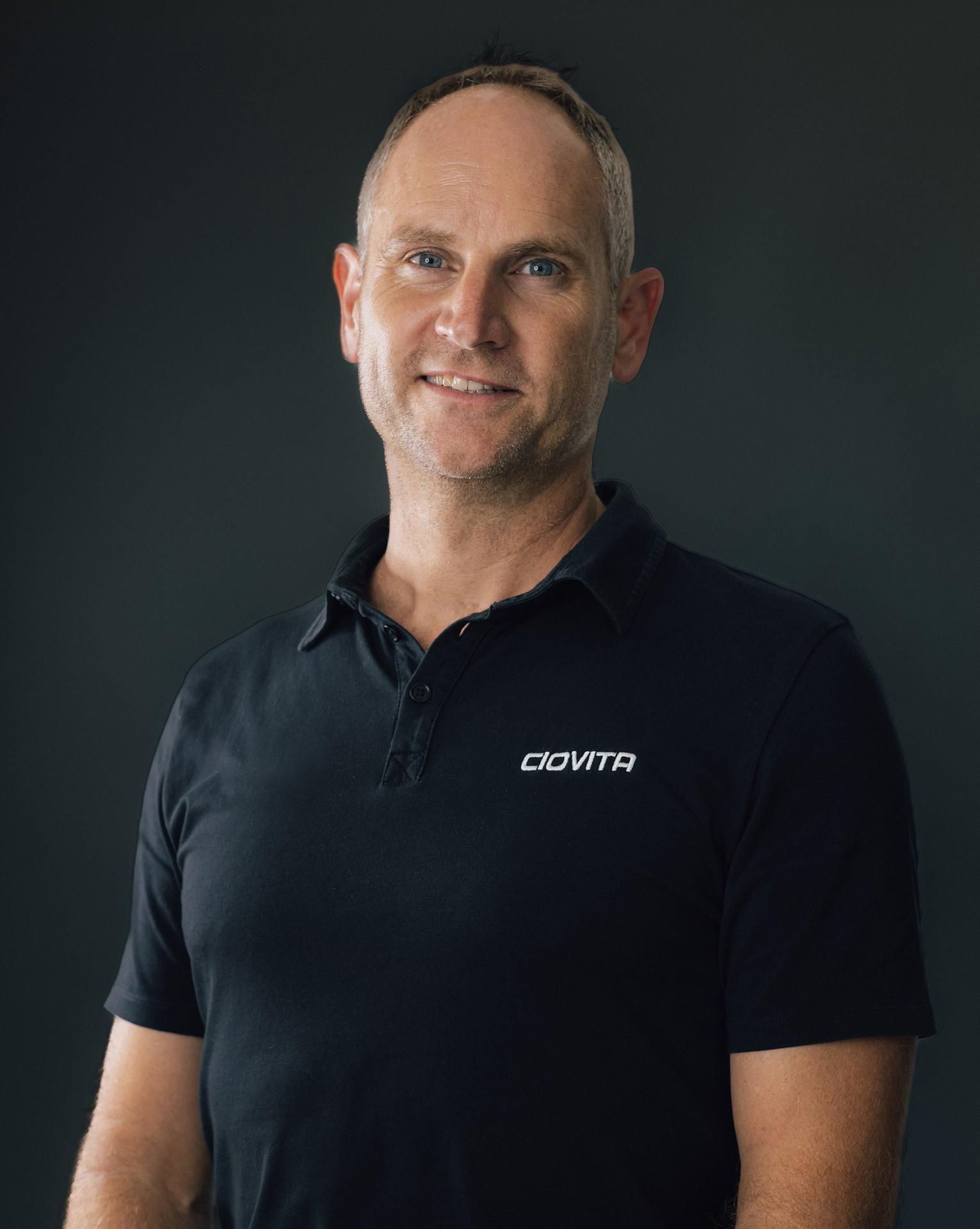 Photo: CIOVITA
CIOVITA CEO Andrew Gold
"At the time we were making down-filled suits to put the guys on the top of Everest," Gold said. "And my thinking was, well, if we could make down-filled suits to put the guys on top of Everest, I'm sure it can't be too hard to make a pair of cycling shorts."
CIOVITA launched at the beginning of 2016. Gold brought in two co-founders from his previous business: Freddie, who handles sales and marketing, and Karlien, who leads design and operations. The name was a deliberate attempt to sidestep what Gold described as a persistent perception that South African brands are inferior to imports. It combines "cio," a Latin root meaning to go or move, with "vita," Italian for life. Together: life in motion.
The factory floor and the training school
The Woodstock factory is central to the company’s identity, and to the jobs it sustains. Gold described the workforce as “a full representation of what South Africa is”, with many sewing machinists the sole breadwinner for families of four or five. Some commute from townships or outlying areas. One employee, Eunice, used to wake at 4am to catch a 4:30am bus from Malmesbury because the later service would get her to work too late. During Covid, CIOVITA began collecting discarded inner tubes from bike shops and set Eunice up working from home, making wallets and other small accessories from recycled tubes – a role she has continued in for the past six years.
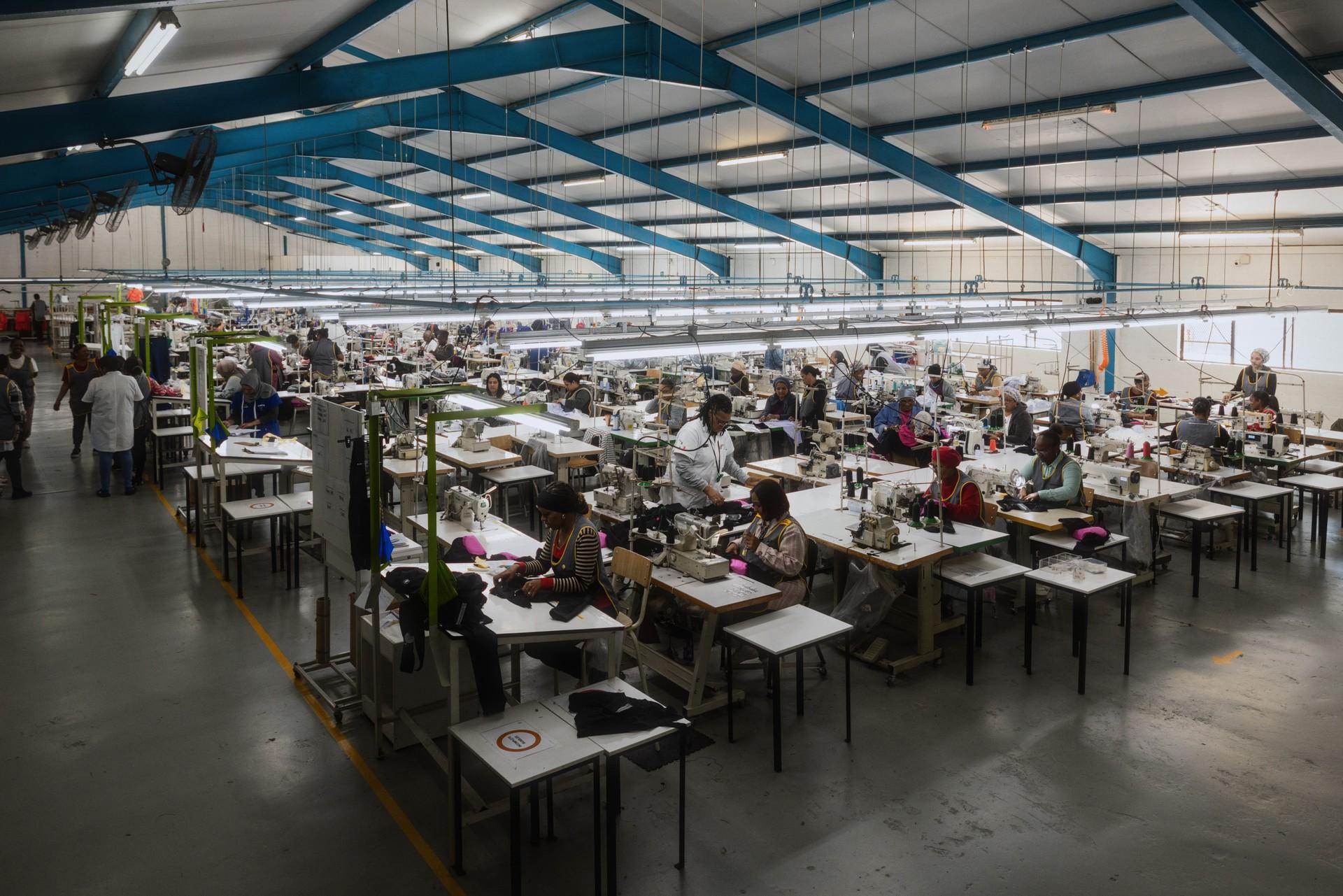 Photo: CIOVITA
Cape Town was once a significant garment manufacturing hub. Gold said the shift of production to China in the late 1990s eroded much of that base, and the sewing skills that sustained it were not passed down. The average age of CIOVITA's sewing machinists is late 40s to early 50s. In its more technology-focused printing and patternmaking departments, the average drops to the late 20s.
That age gap is part of the reason CIOVITA runs a training school inside the factory. The company takes people with no prior industry experience and puts them through a paid 12-week course. Of a typical intake of 12, Gold said about four or five decide to stay. Those who continue are placed in roles matching their aptitude and developed further.
"Without us doing that, there's going to be this natural attrition of the skill that gets lost," Gold said.
The training pipeline serves two purposes simultaneously. It addresses a social need in a country with deep inequality and high unemployment. It also protects the company's own production model. If CIOVITA cannot recruit and develop new machinists locally, its entire proposition, that of a brand built on in-house Cape Town manufacturing, breaks down.
During COVID, the factory pivoted to making masks, and Gold got to know more of his staff personally. It was during that period, for instance, that the inner-tube accessories side project with Eunice began.
The 230-person headcount reflects the breadth of what happens inside the Woodstock precinct. CIOVITA handles design, patternmaking, cutting, printing, sublimation transfer, welding, laser cutting, sewing and distribution. As the company has grown, it has expanded into buildings next door, a floor above and a floor below its original space.
3D simulation and the design workflow
While the workforce and production story offers a unique local appeal for the brand, the technical expertise and process is what allows the brand to position itself among international hitters in a more global market in a way that lots of admirable local brands have never managed. CIOVITA's five-person design team works years ahead of release, currently developing bib shorts for 2028 alongside chamois pad design with predominantly Italian suppliers.
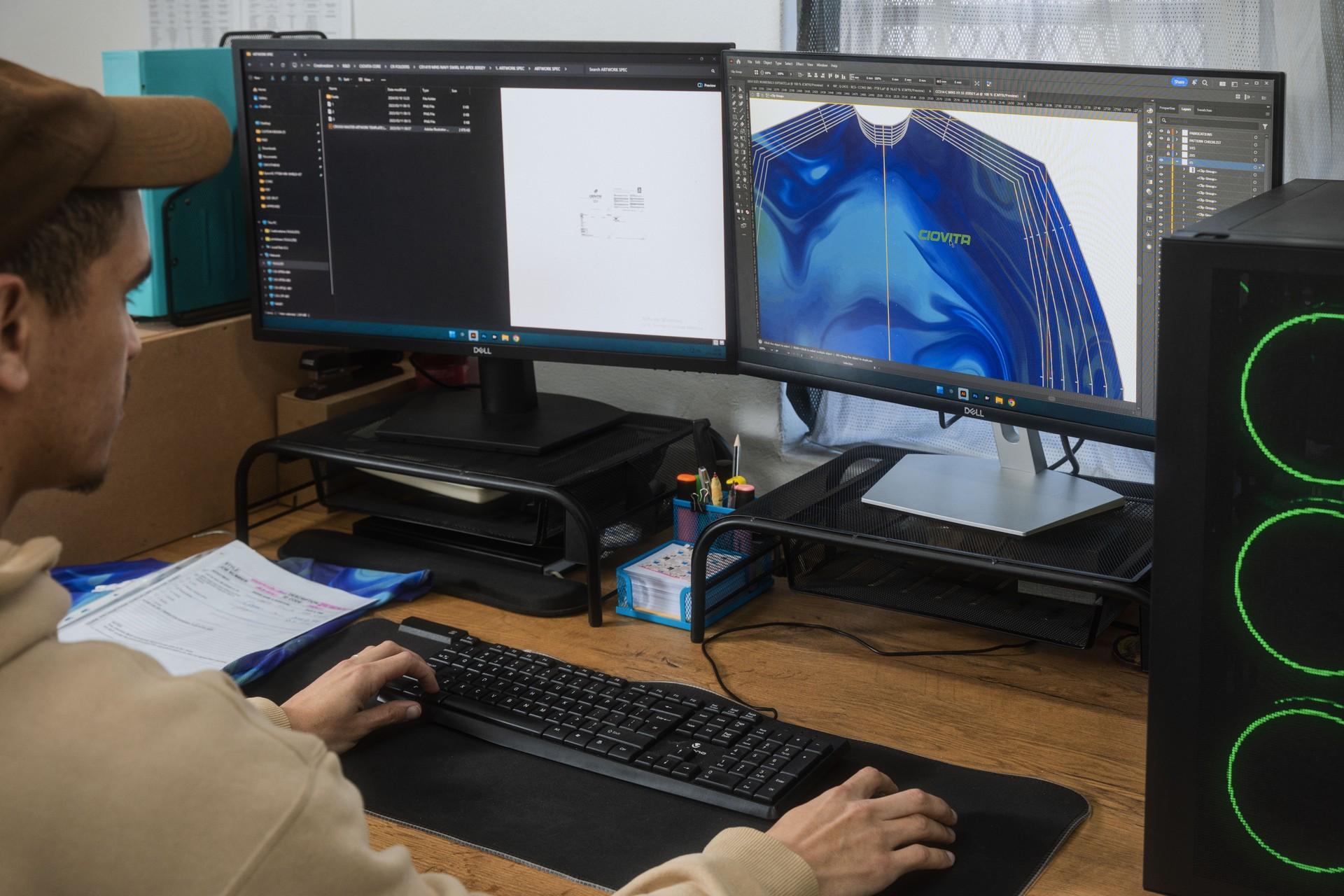 Photo: CIOVITA
The company recently adopted 3D pattern-making software that Gold said has compressed development cycles. In the traditional method, patterns were traced on brown paper, cut from fabric, pinned or sewn together, and fitted on a mannequin through repeated physical iterations. A single product might require six to eight samples before it was right.
The software allows CIOVITA to assemble two-dimensional pattern pieces digitally, assign seam lines, specify which panel connects where, and simulate the garment being sewn on screen. Gold said the company has gone further: all fabrics used from Italian suppliers have been tested and digitally profiled so the software can model how each material behaves under tension.
"I can take your measurements, make a mannequin or an avatar that looks just like you, put you in the riding position, in holding a bike, in the TT position, and I can see how the garment is going to fit on you," Gold said. "I can see where the excess pressure points are going to be based on the fabric that we're using."
The practical result is fewer physical samples, faster iteration and more precise graphic alignment across panels. Gold said the software is the same type used by brands like Rapha, though CIOVITA claims to be the first client of its particular provider to develop products in full 3D simulation. The software is expensive, which Gold described as a barrier to entry for smaller manufacturers.
This technical capability also supports the company's custom division. When the Specialized factory mountain bike team arrived in Cape Town ahead of a World Cup round and discovered their kit hadn't arrived, CIOVITA produced replacement kits in under four days. "We don't like to make kits in three or four days," Gold said. "It puts a lot of pressure on the factory. But it's those things we can do."
Coffee rides and how the community model travels
CIOVITA's local engagement model starts with a simple ritual. Every Wednesday morning, 30 to 40 riders join a coffee ride from the company's Cape Town head office, which has a retail store and café. The same format runs from the Stellenbosch and Johannesburg stores, and the company now counts around 12 or 13 regular group rides worldwide through its retail partners.
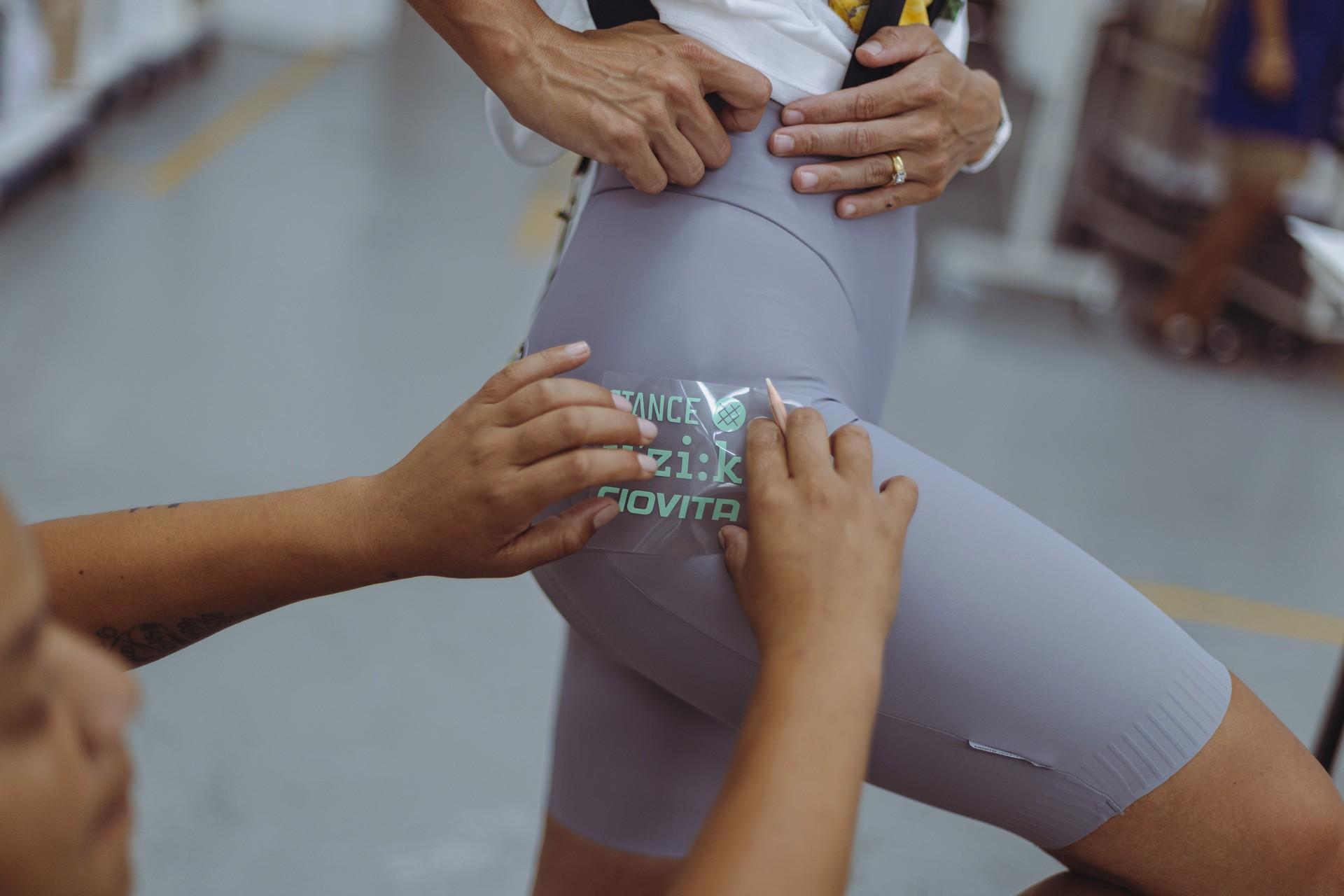 Photo: CIOVITA
That community layer is what CIOVITA is trying to export alongside its product. The store-in-store placements in Amsterdam, Germany and Brisbane are distribution points, but they are also intended as nodes for the same kind of local cycling culture the brand has built in South Africa. Gold said the company originally planned five South African stores but settled on keeping brick-and-mortar presence limited to avoid competing directly with independent retailers who stock the brand.
The company's event partnerships reinforce this proximity to riders. CIOVITA has been the official apparel provider to the Cape Town Cycle Tour, the world's largest timed cycle race, for the past three years, and holds licensing rights with the Absa Cape Epic series. That relationship extends internationally: in the coming months, CIOVITA will be present at the 4 Islands in Croatia, the Andorra Epic and the Swiss Epic.
Gold frames the brand's international challenge in market terms. South Africa represents 0.5% of the global cycling market. "There's so much opportunity, even if there's so much competition overseas," he said.
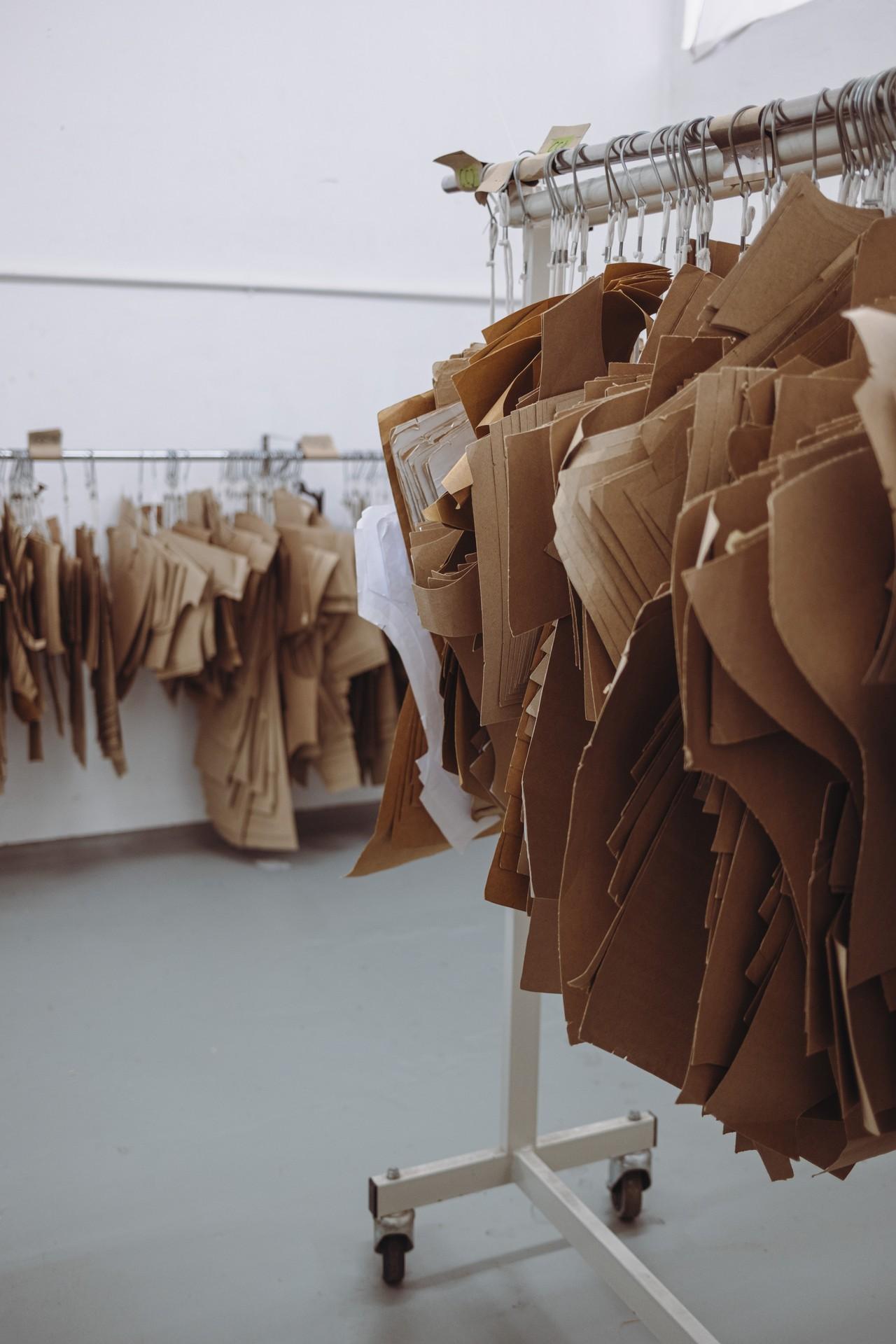 Photo: CIOVITA
The business is structured to absorb volatility. Three revenue channels, retail, custom and event merchandise, balance each other. If one underperforms in a given month, the other two can compensate. Because the company manufactures in-house, it can adjust production at the size level without being locked into orders placed months earlier with overseas factories.
CIOVITA's sustainability practices follow from the same end-to-end control. All bib shorts from the current season use recycled fabrics. Cutting waste is bundled and sent to a facility in Durban that shreds it for reuse in relief blankets or carpet underfelt in low-cost homes. Paper and plastic from the production process are also recycled. Customers can return worn-out garments to CIOVITA's stores for donation or shredding.
Gold is careful not to overclaim. "We're not 100% sustainable," he said. "There's always going to be certain things that you can improve. But from a visibility standpoint, we are very sustainable and we take it very seriously."
CIOVITA's journey out of Woodstock, and into the world, is in many ways a surprising one. South Africa may be a large region, but the cycling world there is famously tightly knit. The initial success of the brand certainly speaks to the increasing hyperlocal focus in cycling. But, at the same time, with cafes across Europe, CIOVITA is increasingly a brand with a global appeal. The latter requires product that speaks for itself.
 Photo: CIOVITA
An Italian chamois supplier who visited the Woodstock factory told Gold his facility "looks like an Italian factory." Staff at the supplier's company, who ride in CIOVITA bib shorts fitted with their own pads, told him it was the best bib short they had ridden in. Gold recalled the moment. The company is not trying to be an Italian brand, or a British one.
It is trying to prove that a factory beneath Table Mountain, staffed by workers who travel from townships and trained through a 12-week school, can stand alongside anyone.