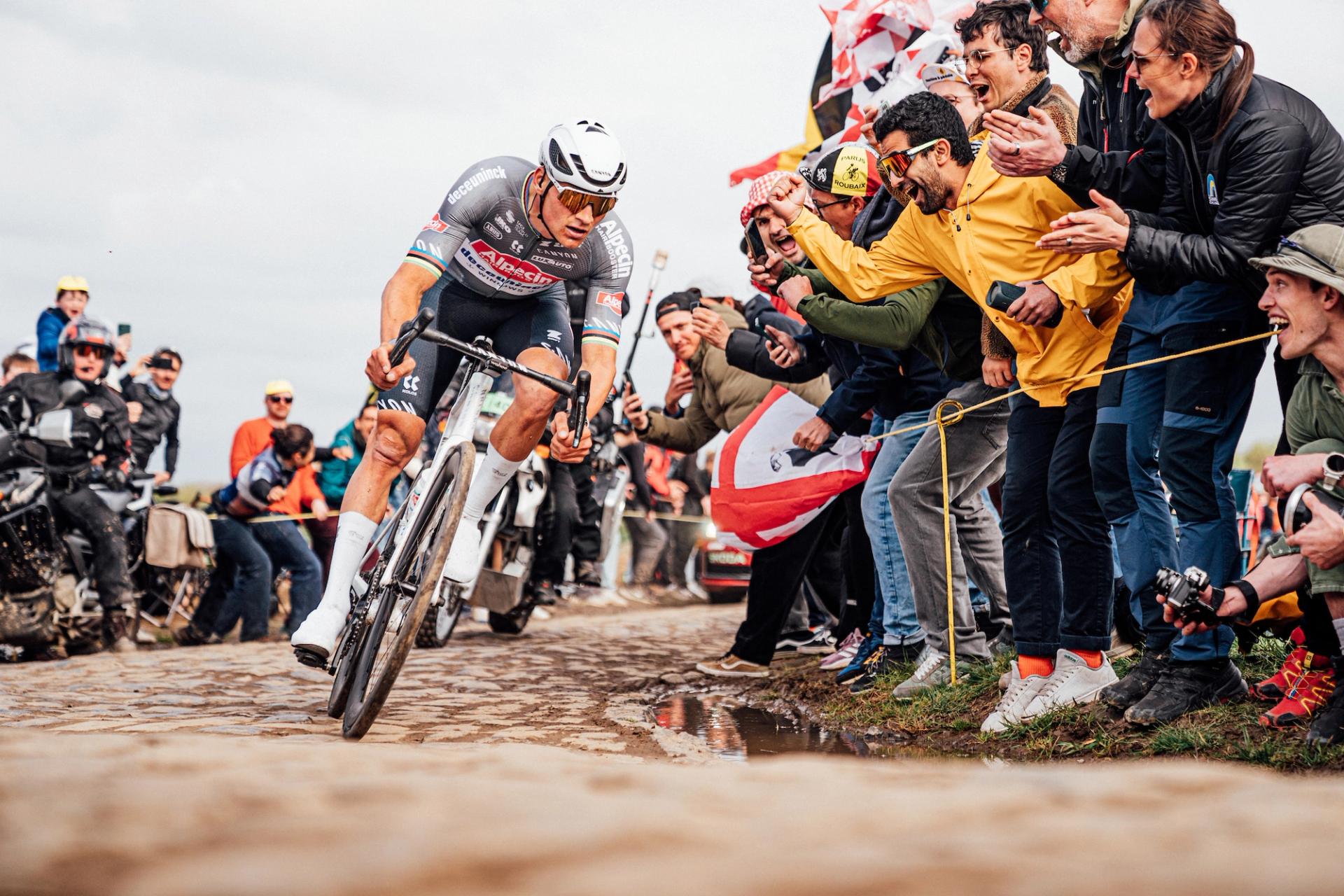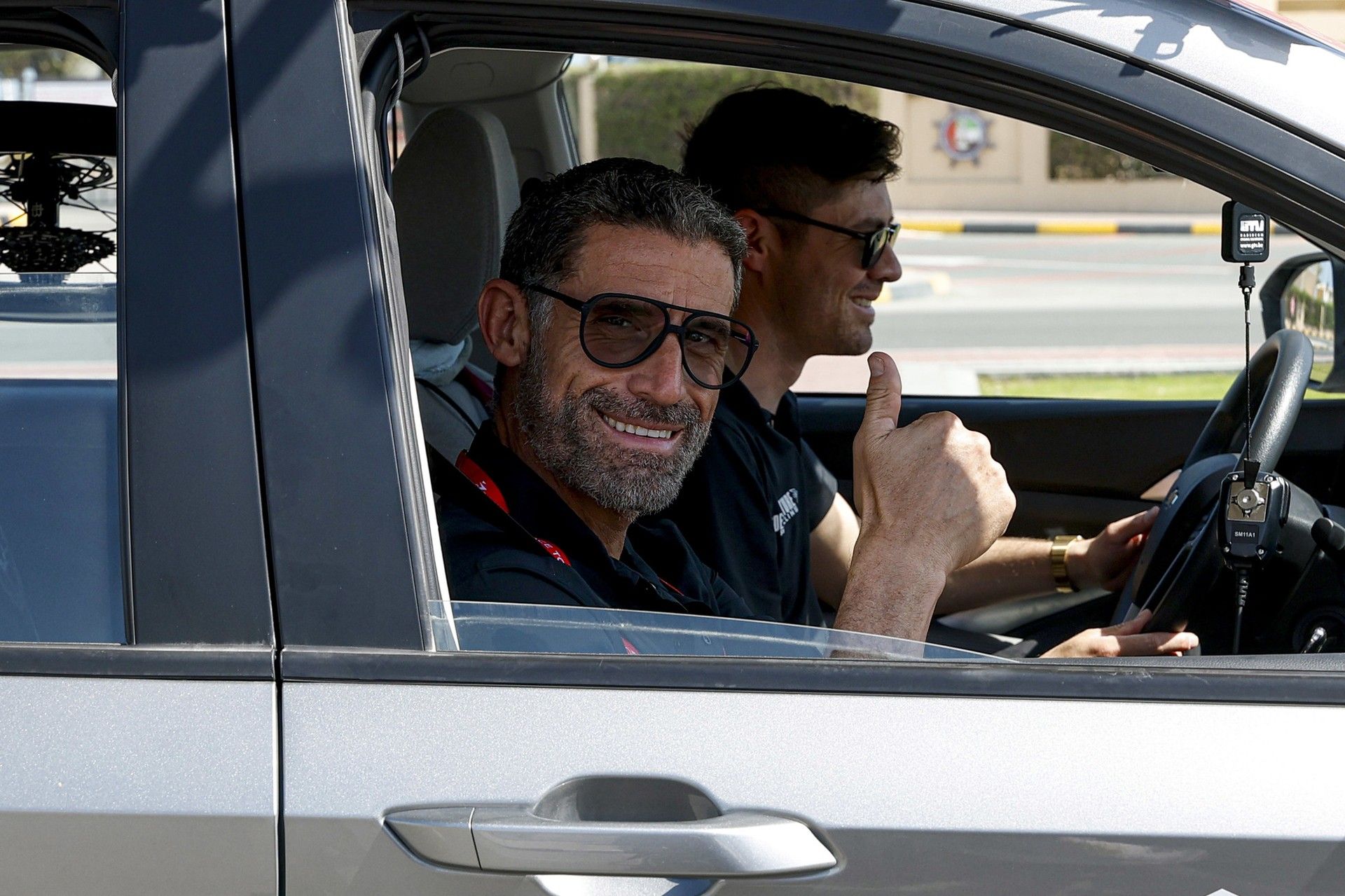
Modern Adventure Pro Cycling landed a wildcard invitation to Paris-Roubaix before the team had completed its second month of racing.
For a first-year American UCI ProTeam bankrolled by a construction executive from the US, Hincapie had not expected the invitation this early.
"I spent a lot of last year going back and forth to Europe, meeting with organisers, meeting with ASO and just pitching them on the vision and the dream for the team," Hincapie said in an exclusive interview with Velora. "We got the invitation to AlUla, and they were like, 'Hey, would you be interested in Roubaix?' Boom, then we got the Roubaix invitation during camp."
Hincapie finished in the top 10 at Paris-Roubaix seven times as a rider, with a best result of second. He knows what that race does to a body. He also knows what it does to a career.
"My first Paris-Roubaix, I finished," he said, seemingly with a lingering sense of relief. "I think only like 50 riders finished that year. It was snowing at the start. But it was a big deal that I finished, and it actually had a major impact on my career." His ambition for his riders at the 2026 edition is similarly simplistic: get to the finish, get into a breakaway if possible, and come away with an experience that accelerates their development.
That restraint is reflective of Modern Adventure's business model, one reliant on patience, infrastructure and a bet on culture above competitive pressure.
Infrastructure first, points later
We're speaking to Hincapie on the morning of Omloop Nieuwsblad, and he confesses logistics across time zones have taken their toll.
"But I have a good balance. I got a great team. I got a great logistics team, um, based out of Girona, where our service course is."
The team's primary investor is Dustin Harder, President and fifth-generation leader of Harder Mechanical Contractors, who has committed funding for six to eight years at the current ProTeam level, Hincapie confirms. This long-term funding provides stability that many new teams lack during their first three seasons.
"My task is also to grow this level by bringing in other sponsors to get to the level of a Tour de France team," Hincapie said. "But we don't have a ton of pressure on us to succeed the first couple of years. For me, it's more about building the team, the infrastructure.
"We're invested in building out our service course in Europe, having a good image behind the team. We have trucks, we have buses. So I'm investing heavily in setting up the infrastructure and the image of the team in the first two years."
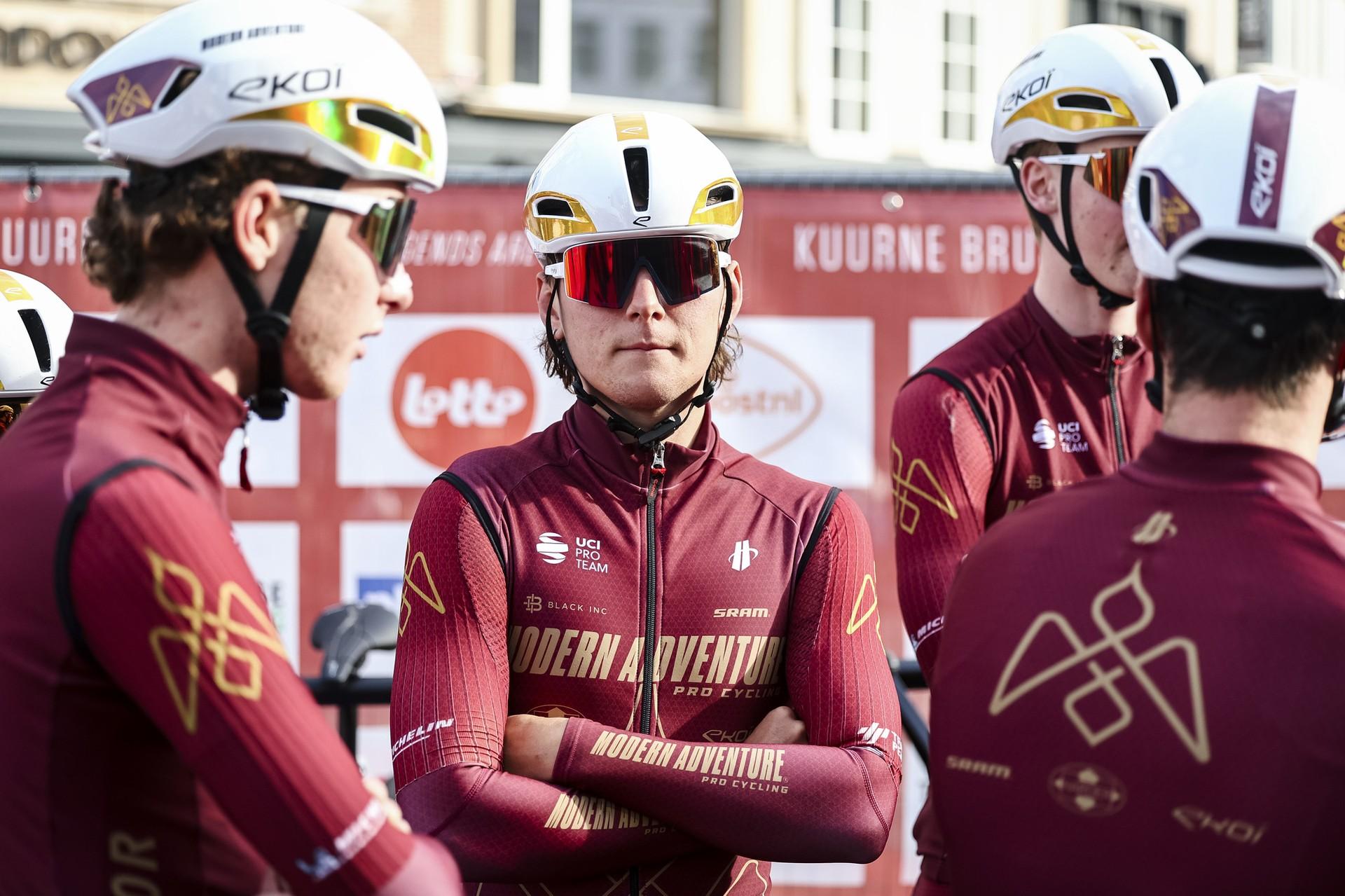
The Girona service course handles European logistics, while a US office manages commercial operations. Directors Joey Rosskopf, Alex Howes and Ty Magner, all former professional riders, run daily race scheduling and training camps. Bobby Julich, the Olympic medallist and former performance manager, leads the performance side. Bikes come from Factor and the team’s kit is supplied by Hincapie Sportswear, the clothing brand founded by Hincapie, which is using the project to re-establish its presence in Europe.
The results timeline is explicitly secondary. "Whatever results and invitations we get in those first two years, it's all about learning," Hincapie said. "After two, three years, then we're going to have to start looking at hiring bigger names and going after more results, going after points. We're not even looking at that right now."
Hincapie knows what the early learning curve in Europe looks like for young riders. When he first arrived in the professional peloton, the reception was far from welcoming.
“When I went to Motorola the first year, I was a young kid getting pushed around the European peloton,” he said. “People yelling at you, like, ‘What are you doing here?’”
That experience has helped him frame Modern Adventure’s first seasons.
“I know a lot of these Americans on my team will get that same sort of reception from the peloton, but it’s part of their personal growth. In many ways I want us to be known as the Bad News Bears. Then all of a sudden we’re getting results here and there, and three, four, five years later we’re in the biggest race in the world – the Tour de France.”
That said, the early returns have outpaced the plan. At the AlUla Tour, Byron Munton took second on Stage 5 and Stefan De Bod (Modern Adventure Pro Cycling) finished fourth overall. In Andalucía, mountain-bike convert Ben Oliver placed third in his first European pro road race. And at the team's debut, Hincapie recalls, 19-year-old Ezra Caudell made every breakaway he targeted at the UAE races. "The fact that they raced without fear is already a big bonus," Hincapie said.
Modern Adventure Pro Cycling, 2026 at a glance
Key facts from the team's debut season

Item | Detail |
|---|---|
| Base and operations | Service course in Girona; office in the US |
| Budget runway | Six to eight years at current level |
| Key early invitations | AlUla Tour, Paris-Roubaix wildcard |
| Key performance sponsors | Factor, Hincapie Sportswear, TrainingPeaks |
| Owner/investor | Dustin Harder (Harder Contracting) |
| Roster policy | Minimum 50% American riders (currently 60%) |
| Team status | UCI ProTeam, debuted 2026 |
Hincapie's team spent six months identifying riders based as much on personality as physiology. "We called around to as many people that knew the particular rider we were talking to and tried to find out what kind of person they were," he said. "We interviewed them on a personal level as well, just to see how we would think they'd fit in with the group."
Having navigated the darkest doping era of the sport – which culminated in his own 2012 confession and suspension – Hincapie now leans on the healthier dynamics he found later in his career at HTC and BMC.
"The most successful teams that I've been on are the teams that you go back in the bus after the worst day of your life, but you're laughing and you're having a good time," he says. "I believe that kind of environment helps create success."
The roster carries a hard rule: a minimum of 50% American riders. The current squad sits at 60%. Before Modern Adventure existed, Hincapie said, the drop between WorldTour Americans and Continental Americans was a chasm. "These kids were not making a living. The sport's hard enough as it is. If they're not even getting paid or they're trying to scrounge together a few dollars to get to races, it's almost impossible to make it. We've actually closed that gap where at least we're paying these guys a decent wage."
Leo Hayter (Modern Adventure Pro Cycling), a two-time British U23 time trial champion who left Ineos Grenadiers after a period of burnout, represents the other side of the recruitment philosophy: reclaiming talent that the traditional system discarded or failed to support.
The American mandate also has a commercial rationale. "The US is arguably one of the biggest markets globally for recreational cyclists," Hincapie said. "There is quite an interest to have more viewership from the US market. I can see why a lot of these promoters would want a US team representing in their race."
With the LA 2028 Olympics approaching and the road race set for the city itself, Hincapie sees a convergence. "Having the Olympic road race right in LA is going to spark a lot of interest. Hopefully it's good timing for my team as well, that we're trying to build up this team at the same time the LA Olympics are popping up."
Domestically, he wants the team's visibility to reinvigorate US road racing, which has contracted since the days of the Tour of Georgia, Tour of Utah and Tour of California. "The gravel scene is doing really well and criteriums are still strong, but we need more of those longer road races for sure," Hincapie said.
We joke about the resurgence of gravel opening up a whole world of dirt climbs which US road races would never have touched a decade ago, but so tightly fit the modern fusion of gravel and road racing. Hincapie advocates the idea: "Less cost probably to close down these gravel roads," he noted.
The catch is whether ambition translates to action from race organisers. Hincapie is optimistic but measured: "hopefully this team can reinvigorate a lot of the organisers."
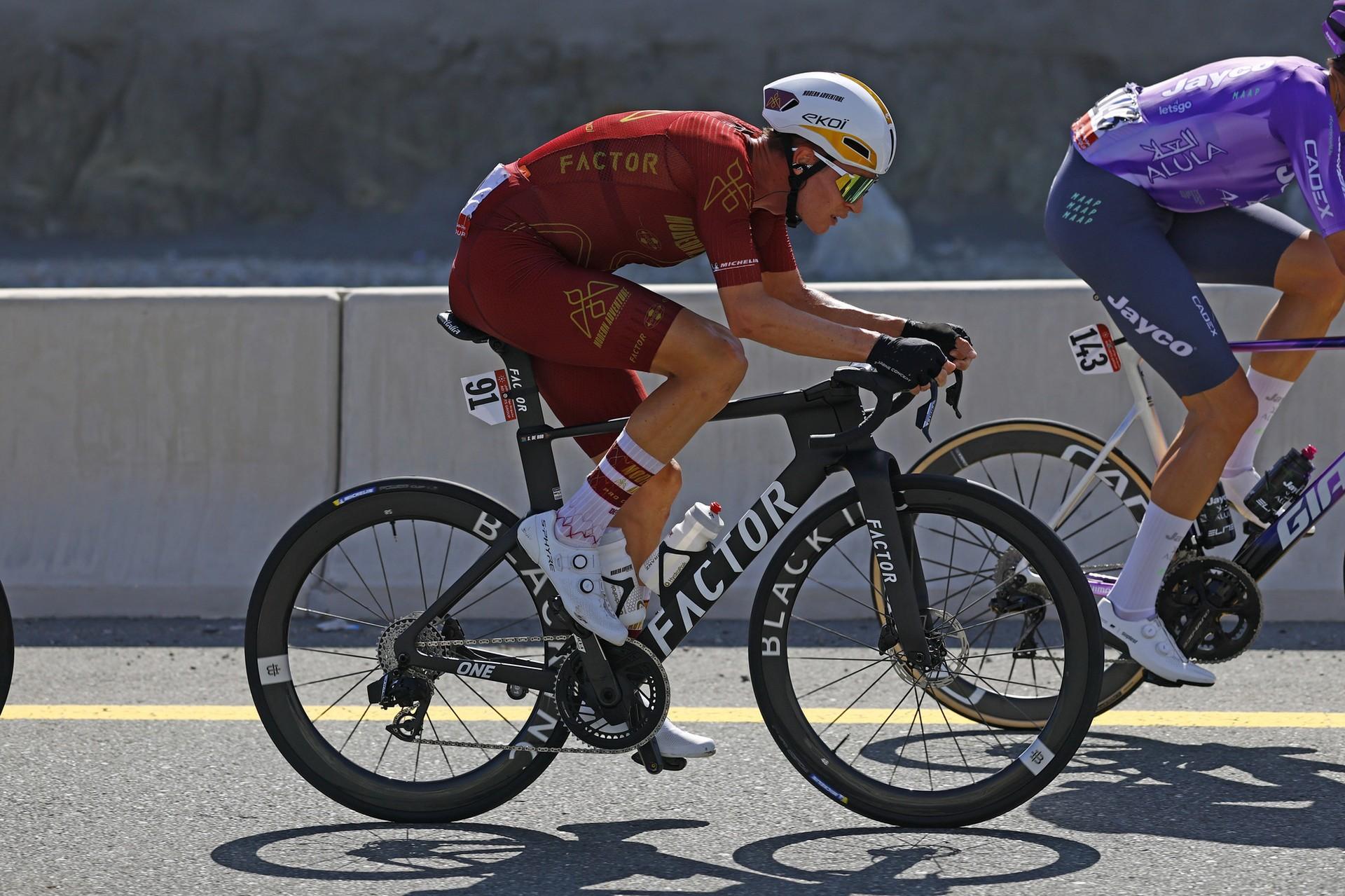
Where the team's approach shifts from cultural to structural is in its use of performance data, and specifically the accessibility of that data to riders who, a generation ago, would have been flying blind.
TrainingPeaks, the performance analysis platform, is a sponsor and works directly with Hincapie's coaching staff to evaluate riders. The partnership goes beyond logo placement. "They work really closely with us to analyse data and help our performance team really evaluate their riders," Hincapie said.
Information and data, Hincapie argues, is one of the the biggest gamechangers since his time racing. "Even my son knows so much more about nutrition and power-to-weight ratio numbers than I ever knew, and he's 17," Hincapie said. "They have the information right on their phones. They study it. Of course you have to do the work, so the end results are going to be the guys that still work the hardest. But the information they have is way more than anything we ever had."
He expects that gap to narrow further with AI-driven tools. "The directors and coaches will have AI evaluations of their riders every morning. Like, 'Hey, this guy is ready to race, this guy's going to have a tough day.' The information they're going to have, and continue to get, and continues to evolve, it's going to be incredible."
For a team without the budget to stockpile depth the way UAE Team Emirates-XRG or Visma-Lease a Bike can, that kind of condition visibility changes daily decision-making. Knowing precisely who is ready, and who is not, reduces wasted effort and keeps a thin roster from burning itself out chasing objectives with the wrong riders on the wrong day.
None of which replaces cobble craft, positioning instinct, or the engine required to survive Paris-Roubaix. Hincapie is deeply grounded about the limits. "It's a dream for many riders to participate in Roubaix," he said. "That dream quickly turns into a war zone as soon as you start."
With these data tools, a 19-year-old neo-pro arriving in 2026 no longer has to guess how much to eat, what wattage he can sustain, or how his body responds to five days of racing. The mystery that once separated WorldTour domestiques from Continental hopefuls is thinner than it has ever been. Modern Adventure's hope is that the narrowing margin will give benefits that don't just stack a roster, but really build a healthy culture.
"We're racing with gratitude now," Hincapie said. "Everything that comes our way is a bonus."
Gratitude is a nice posture for year one. Whether it survives year four, when the points pressure arrives and the bigger names need signing, will determine if this is a team or a story.