Amateur riders will get a brutal taste of the 2026 Tour de France on Sunday 19 July, when L’Étape du Tour recreates Stage 20 from Le Bourg‑d’Oisans to Alpe d’Huez.
At roughly 170km with around 5,400m of climbing, it is firmly in Marmotte territory and stands out as one of the toughest Étapes yet, with 16,000 riders from 79 nations set to take the start on closed Alpine roads.
You can see the full details of the stage as it will be raced by the pros using the interactive map in our Tour de France hub.
Race weekend: the village is open
With the race now just two days away, the event village at Alpe d’Huez has been open since Thursday, marking the official launch of the 34th edition. Some 80 exhibitors, including the event’s official partners and suppliers, are set up in the centre of the resort, with 40,000 visitors expected across the weekend. Entry is free, and the village hosts bib collection, final mechanical checks and brand stands across seven colour-coded zones. Opening hours are 10am to 7pm on Saturday 18 July and 11am to 8.30pm on Sunday 19 July.
Organisers ASO have confirmed the final race details: riders will roll out of Le Bourg-d’Oisans in staggered waves between 6.30am and 8.30am on Sunday, with 120 motorbikes and 300 personnel dedicated to safety on the closed roads. The professional peloton will tackle the identical route six days later, on Saturday 25 July, as Stage 20 of the Tour de France.
In the technical zone, major partner Canyon has a 300m² ‘Canyon Race Bike’ space reserved for owners of the brand’s bikes and is showing the new Aeroad, launched on 25 June with a UDH (Universal Derailleur Hanger) update. Shimano is offering final pre-race bike checks, while Hutchinson is showing its new Blackbird tyres and providing free tubeless fitting plus pressure and wear checks. The French tyre brand will also offer a drink and access to its chill zone to all women who finish Sunday’s race.
“We have signed a four-year partnership. L’Étape du Tour de France, the queen of events, allows us to open up internationally and round out our offering on more classic road bikes, with activations and an approach that are quite disruptive, to give cyclists a great experience,” Simon Dreyer, Canyon’s marketing director for France, said in a statement issued by the race (translated from the original French).
Friends and family can follow riders in real time on Sunday via the race’s Tissot-branded tracking service, provided the rider has registered for it in advance. Out on the route, the final kilometre of the Galibier will host the ‘Kilomètre du Cœur’ fan zone in aid of Mécénat Chirurgie Cardiaque, the charity funding heart surgery for children with cardiac malformations, which has treated more than 5,000 children since its foundation in 1996. Race briefings take place on Saturday from 2pm at the Philippe de Broca cinema in the Agoralp, in English and then French, and Tour de France stages are being shown on a big screen in the village from 3pm to 6pm each day through Sunday.
Route overview
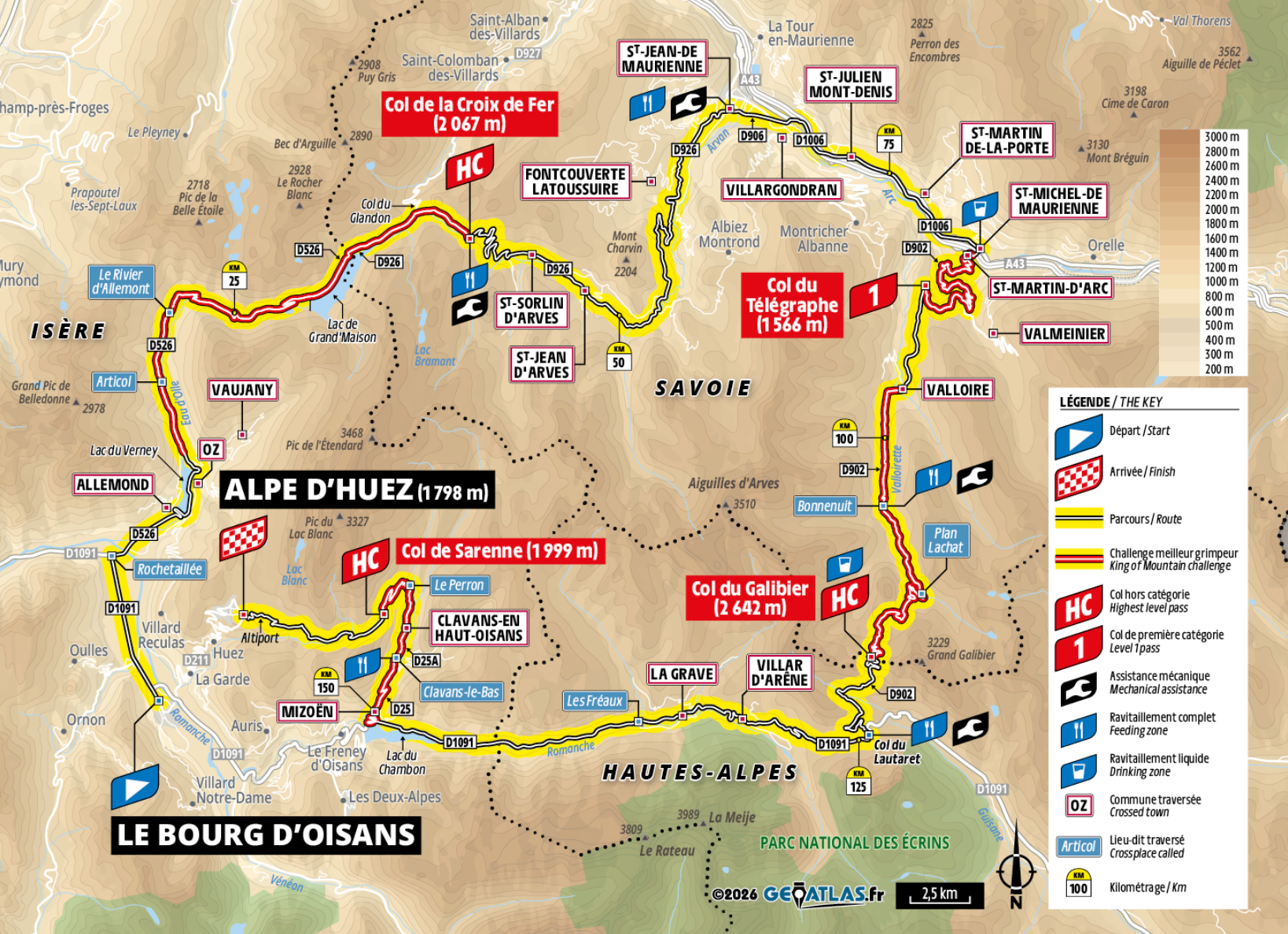
From Le Bourg‑d’Oisans the road heads quickly into the high mountains. The day’s key climbs are:
- Col de la Croix de Fer – a long, grinding ascent with long stretches around 6–7%, enough to bite if you go too hard early.
- Col du Télégraphe – a classic 11.9km climb, with an average gradient of 7.1%, often underestimated but crucial for pacing.
- Col du Galibier – the roof of the 2026 Tour at over 2,600m. The final kilometres steepen and the altitude magnifies every pedal stroke.
- Col de Sarenne → Alpe d’Huez – a rarely used, wilder approach that delivers a sting in the tail before the final ramps above the famous ski resort.
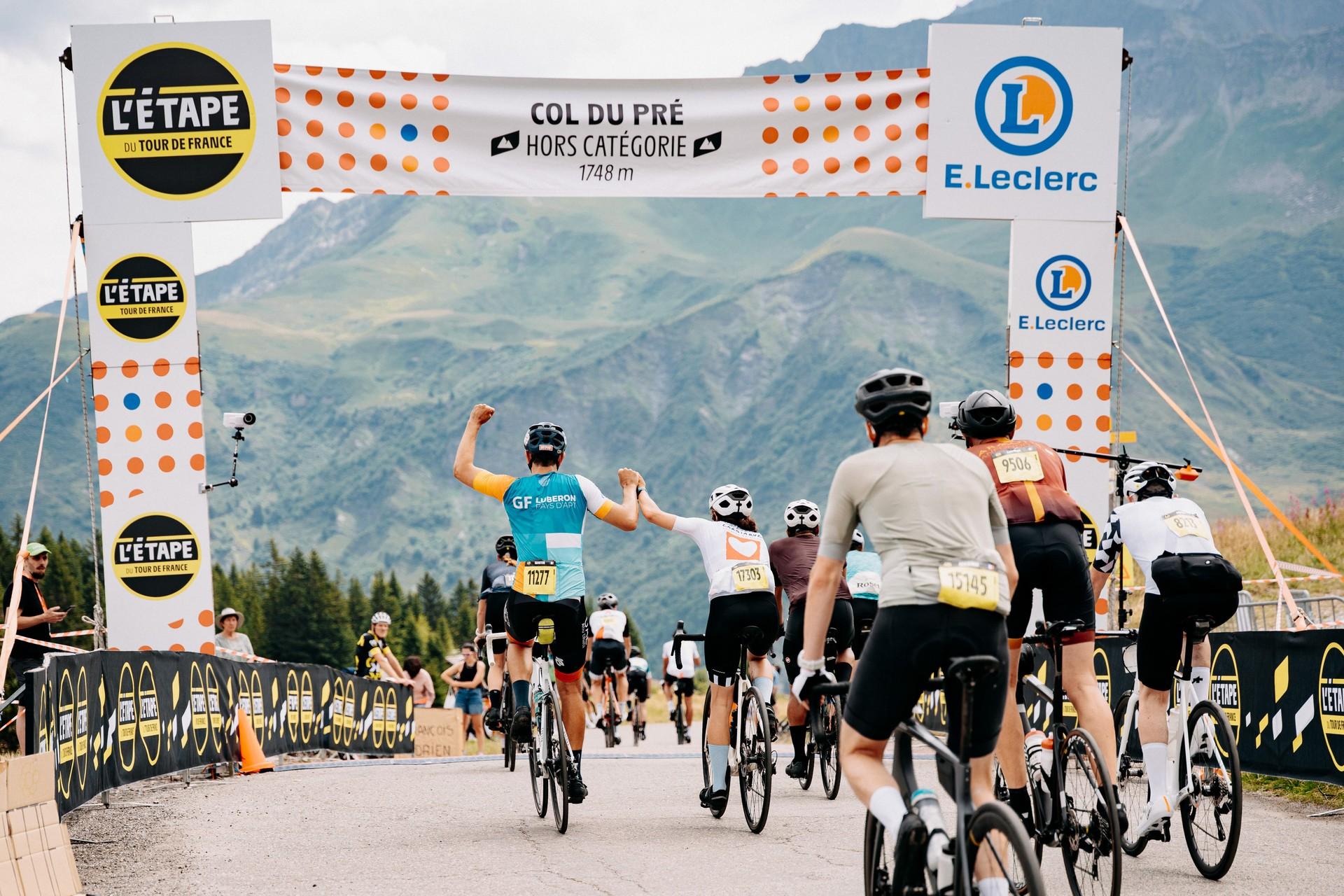
Expect a long Alpine day: big valley transfers between major cols, time cut‑offs at key checkpoints, and long high‑speed descents requiring full concentration.
What makes 2026 especially hard?
Several factors put this Étape a notch above many recent editions:
- Cumulative elevation – 5,400m of climbing is significantly more than the 3,500–4,500m many Gran Fondos offer.
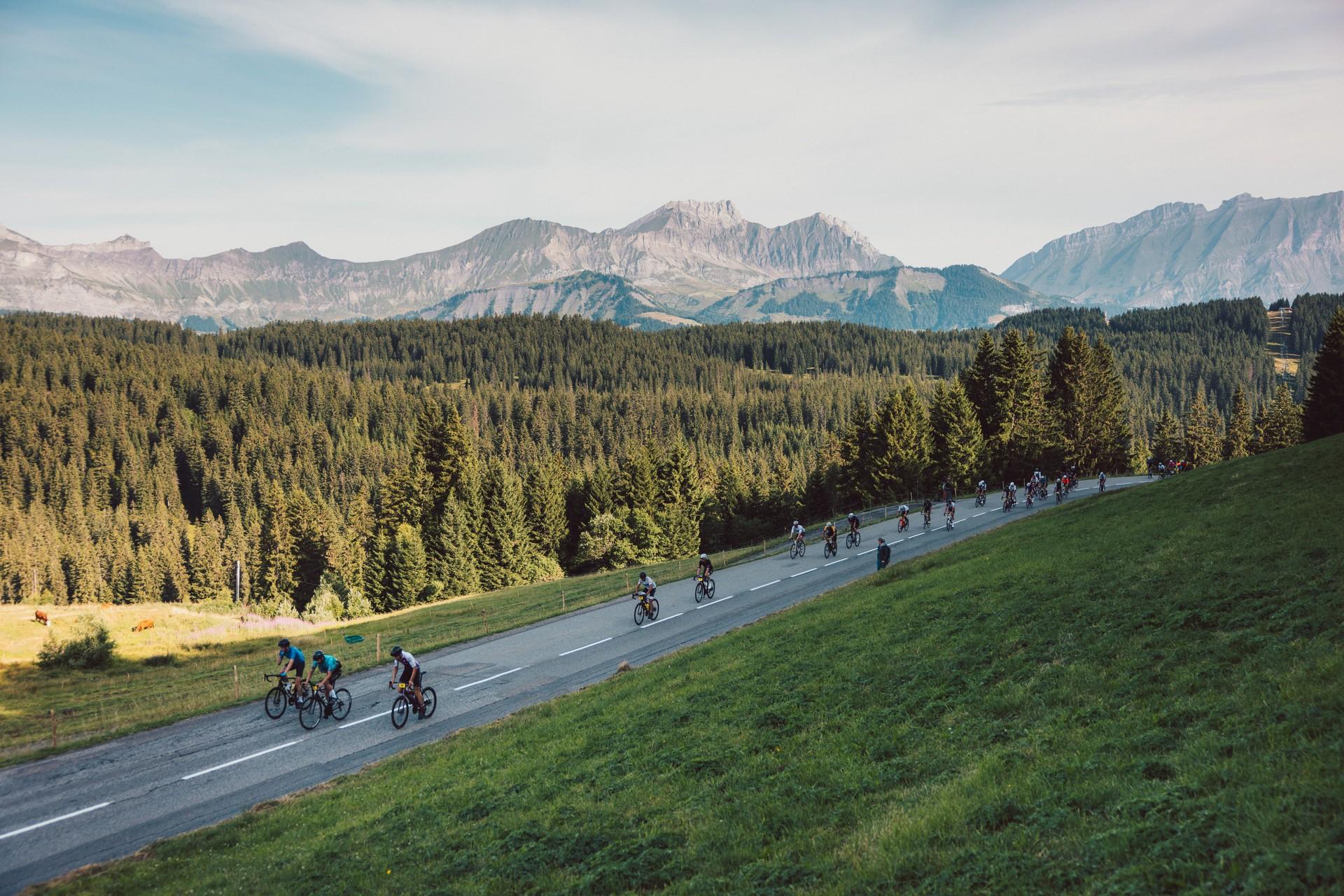
- Altitude exposure – extended time above 2,000m on Galibier brings reduced oxygen and a noticeable power drop for most riders.
- Repeated long climbs – you will tackle multiple 45–90 minute efforts, not just one marquee ascent.
- Technical finishing approach – Col de Sarenne’s narrower, rougher tarmac and the fatigue in your legs before the final ramps demand tidy bike handling and smart pacing.
Think of it as an Étape for riders who relish events like La Marmotte, the Maratona dles Dolomites or the Queen stages of Haute Route.
Rider experience and atmosphere
The Étape combines full Tour‑style road closures, ASO signage, cheering roadside crowds and a genuinely international field. Expect busy but well‑managed start pens in Le Bourg‑d’Oisans, neutralised sections early on, and a constant stream of riders across every climb – you are rarely alone.
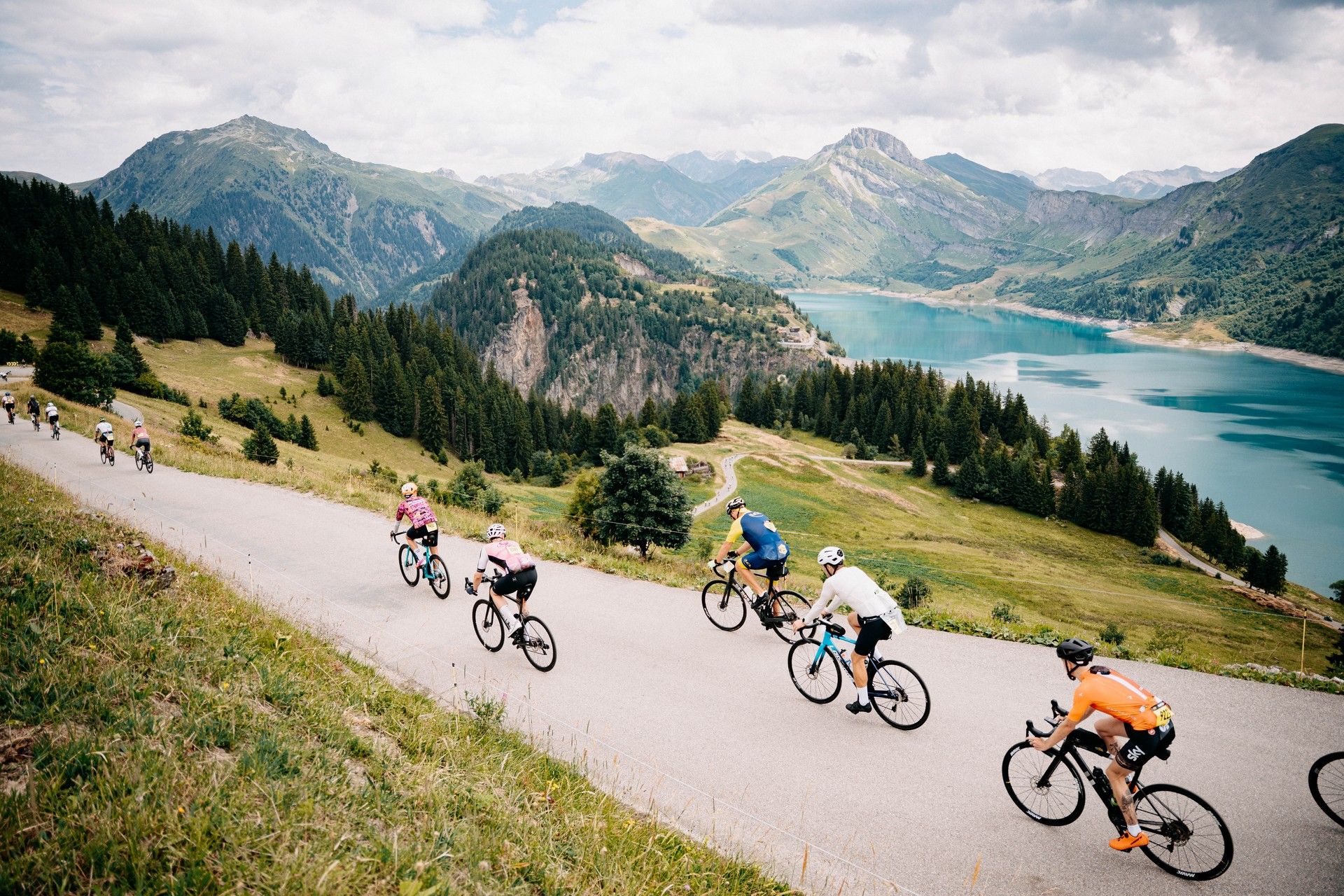
Scenically, it is as good as road cycling gets: huge Alpine vistas from Croix de Fer, the iconic Galibier summit, and a high‑mountain, almost remote feel on Sarenne before the final push above Alpe d’Huez.
Practical considerations and rider tips
Completion times & pacing
Front‑group amateurs will target around 6–7 hours; solid sportive riders should plan for 8–11 hours on the bike. Pacing is everything:
- Ride Croix de Fer and Télégraphe strictly below threshold – if it feels hard here, it will feel impossible on Galibier.
- Treat Galibier as the day’s decisive effort, but not the finish; keep something for Sarenne’s ramps.
- Plan to climb steadily rather than respond to surges in groups.
Gearing and bike setup
- Run a compact or super‑compact chainset (e.g. 50/34 or 48/32) with at least an 11–34, preferably 11–36 cassette.
- Fit 28–30mm tyres, tubeless or robust clinchers, for comfort and grip on long descents.
- Get your brakes freshly serviced; you will spend a lot of time on the levers.
Nutrition and hydration
- Aim for 60–80g of carbohydrate per hour, using a mix of drinks, gels and solid food.
- Drink little and often; Alpine heat in the valleys can be intense even if summit air feels cool.
- Use the official feed stations to refill bottles and pockets, but carry enough between them not to run empty on the long climbs.
Logistics
Registration is via the time‑to platform, with an FFC race licence or accepted medical/“Module Santé” certificate required. Accommodation in Bourg‑d’Oisans and Alpe d’Huez sells out fast, so early booking is essential.
Approach this Étape with respect, structured training and realistic pacing, and it will deliver one of the most memorable days you can have on a road bike.
For those flying to any cycling event, we highly recommend checking out our guide to the best airlines for bikes to help ensure you're not getting stung with heavy carriage fees.