Trek launched the fifth-generation Domane on August 13 without IsoSpeed, removing the compliance mechanism that had defined its endurance road bike since 2012, and it’s a development in bike design that we think speaks to more than just the Domane launch.
I began in cycling journalism in 2011, and so the Domane’s arrival was one of the most distinctive pieces of bike design innovation I came across early in my career. When the Madone 9 Series was launched in 2015, I attended the global launch in Madison – where dozens of cycling journalists were dumbstruck by a seemingly cobble-orientated design feature finding its way to an aero bike frame. At the time, the logic around aero gains needing to marry with system comfort was sound.
In 2026, though, Trek has looked elsewhere for gains. Indeed, instead of boasts about frame compliance, Trek claims the top-level SLR frameset weighs 305g less than its predecessor, while pedalling stiffness has risen by 6%.
Trek says the new bike comes within 5% of the previous Domane’s vibrational energy performance, measured at the saddle and handlebar, but that’s not down to the frame.
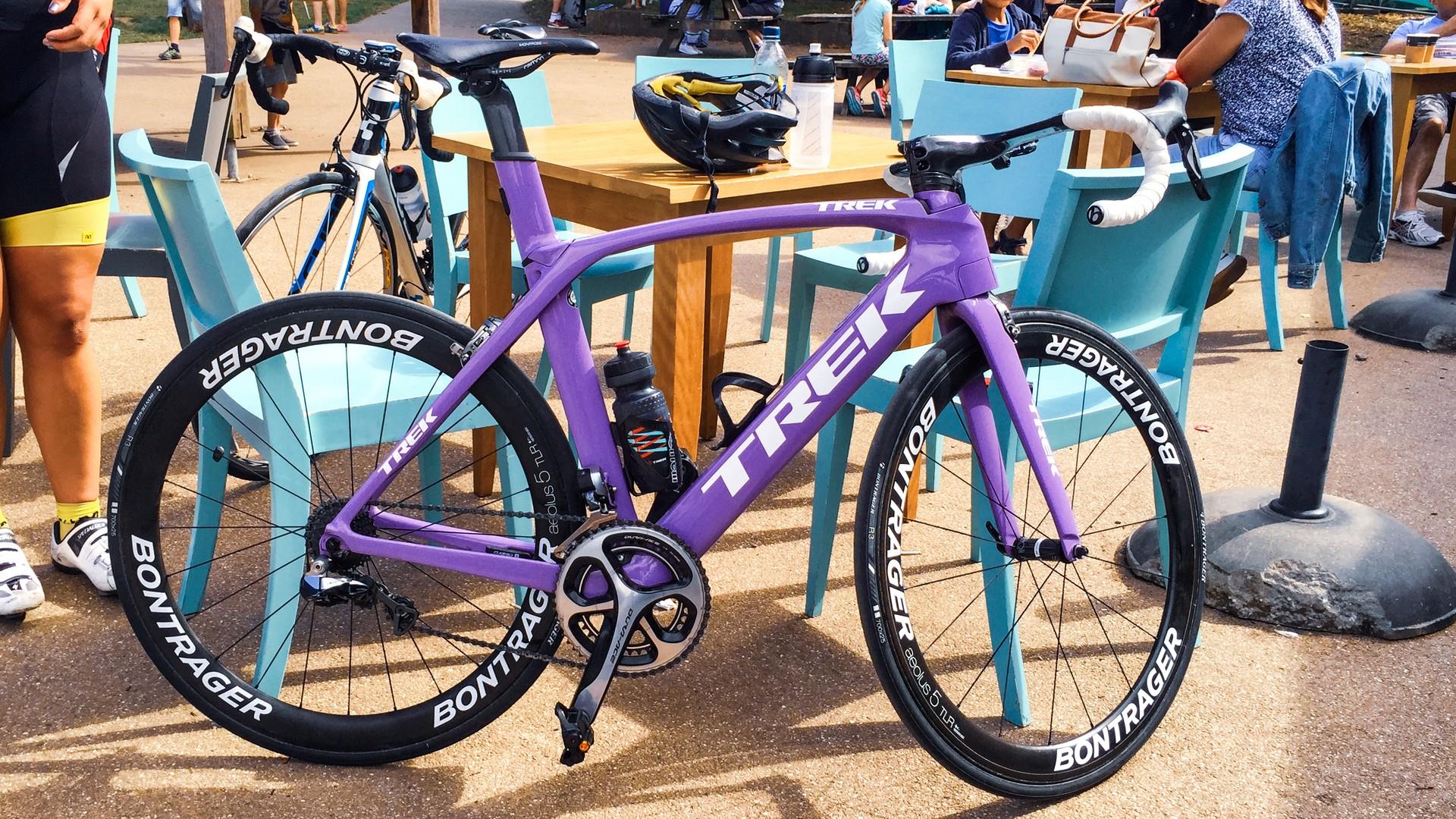
My lairy Trek Madone 9 series test bike back in 2015. Photo: Peter Stuart/ Velora Cycling
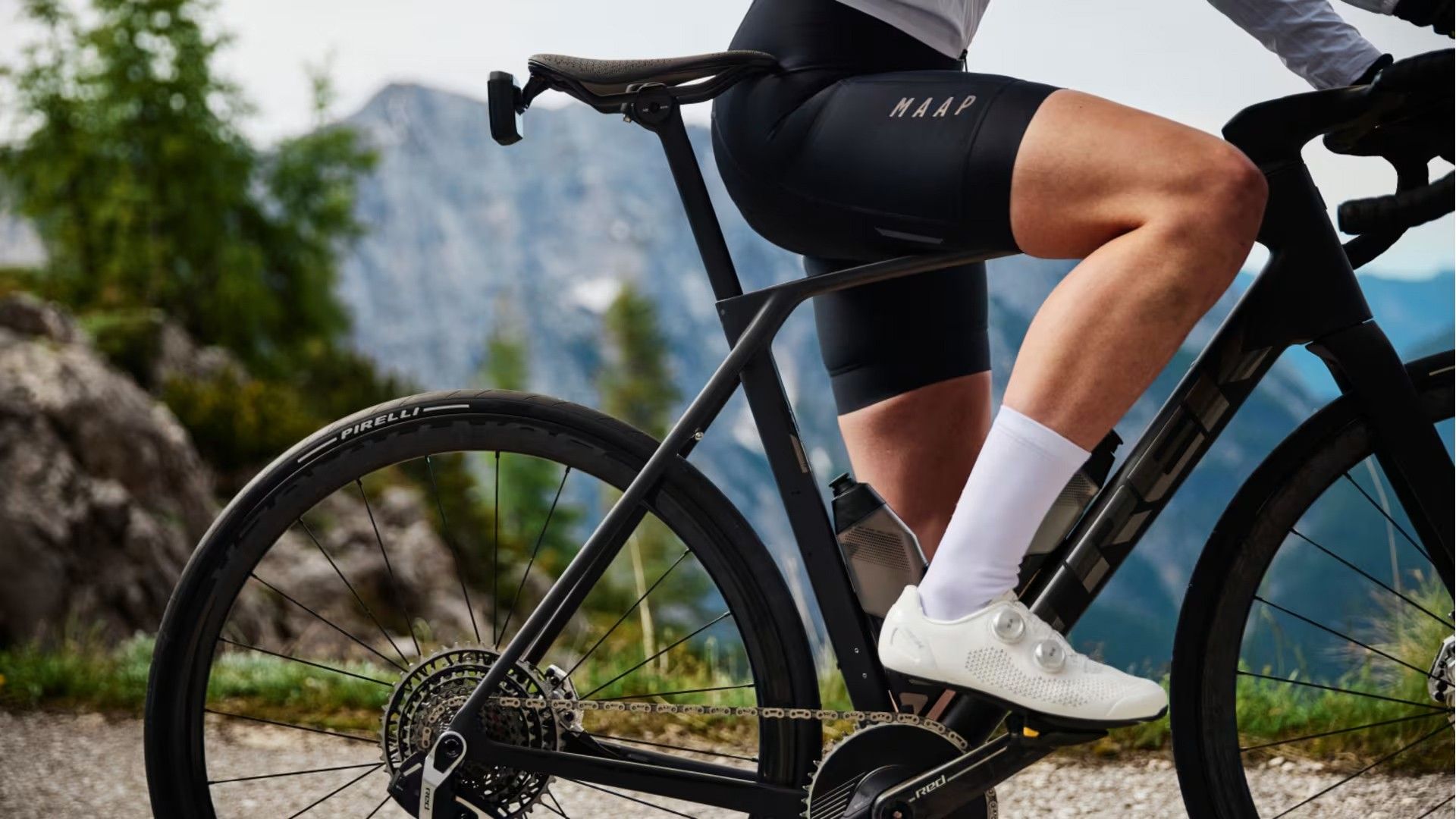
Most Gen 5 models use 35mm tyres, up from 32mm on Gen 4, while maximum clearance has increased from 38mm to 40mm. A flexible 27.2mm seatpost now contributes movement previously provided by the IsoSpeed junction.
IsoSpeed was developed when road bikes used narrow, high-pressure tyres and frame clearance was constrained by rim brakes. Fourteen years later, the tyre has become the first and most adjustable part of the suspension system.
IsoSpeed solved a 25mm-tyre problem
The original Domane was built around 25mm tyres for rough roads and cobbled races. Its rear IsoSpeed decoupler used a pivot and mechanical coupling to let the seat tube move independently of the top tube, allowing more vertical and fore-aft movement while retaining a conventional frame shape.
Trek claimed 35mm of rear movement, compared with 23mm for the contemporary Madone. Fabian Cancellara helped develop the bike for the spring Classics, although he returned to the Madone for the smoother roads of Milan-San Remo. The Domane was a specialised answer to a specific surface problem rather than Trek’s universal race platform.
IsoSpeed subsequently expanded before beginning a gradual retreat. Trek added a front decoupler in 2016, then removed it for Gen 4 in 2022. The adjustable rear system was also replaced by a smaller fixed unit because most riders left it in its softest position.
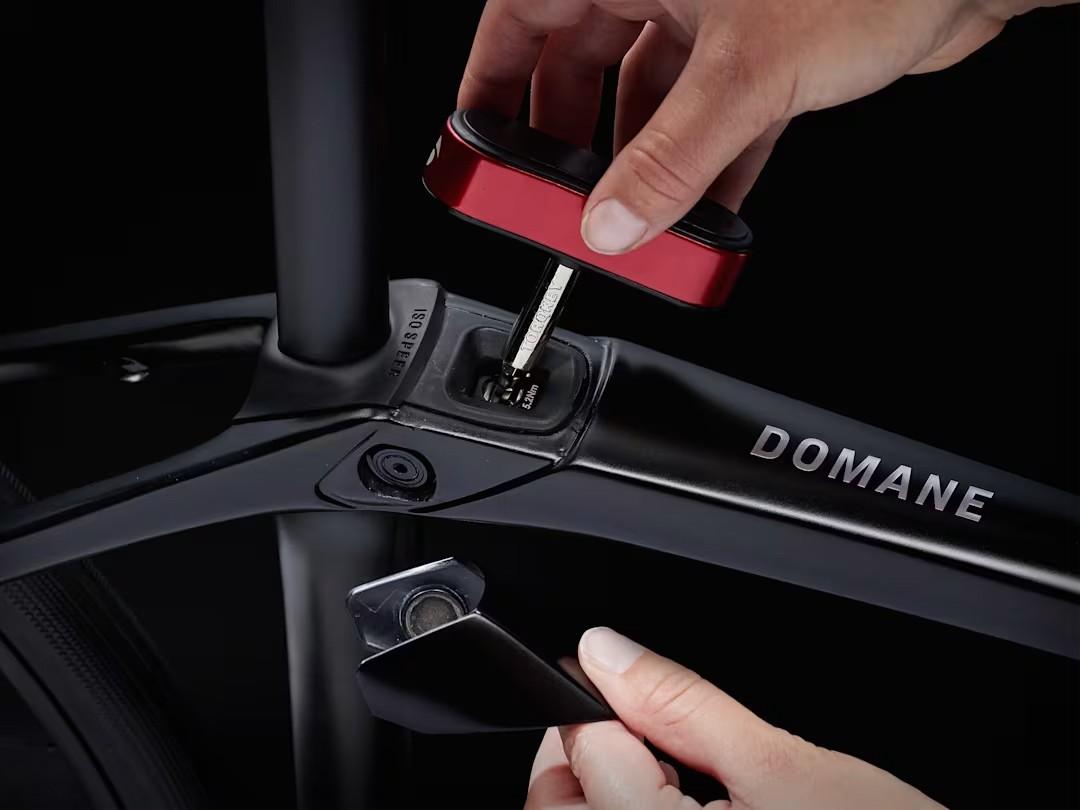
The Madone SLR had already dropped IsoSpeed in 2022, when its seventh generation replaced the adjustable decoupler with Trek’s structural IsoFlow design. This was a move from mechanical flex to structural compliance, but signified that when it came to pure speed, you no longer needed to alter the performance of the carbon alone.
Shifts in tyre width explain the leap in both cases. The Domane Gen 4 arrived with 32mm tyres and space for 38mm rubber. Gen 5 completes the progression by removing the remaining rear mechanism and fitting 35mm tyres as standard.
Comfort has become a system metric
Where 23mm tyres were once the road standard, Tadej Pogačar (UAE Team Emirates-XRG) and Jonas Vingegaard (Visma-Lease a Bike) now race on tyres that can measure around 30mm or more in practice.
Wider tyres can support a rider at lower pressures, allowing the casing to deform around broken surfaces rather than lifting the bicycle and rider over every imperfection. That movement can reduce vibration and rolling losses as well as improve grip. Wider rubber also noticeably improved comfort on rough UK roads in our Trek Émonda ALR review.
Tyre construction and pressure remain decisive. Wider tyres are not automatically faster or softer in every setup. Their advantage comes largely from the lower pressures their greater air volume permits, especially on imperfect surfaces – Trek now includes a pressure guide on its product page that suggests a 160lb rider should be riding at 42 psi as standard.
Trek says moving from a 32mm to a 35mm tyre increases the casing’s internal surface area by about 10%. Reducing pressure by roughly the same percentage keeps the force acting on the casing broadly consistent while providing more volume to absorb road inputs.
According to Trek, the 35mm tyre carries a 0.9W aerodynamic penalty against a 32mm tyre at 20mph, but saves 1.5W in rolling resistance. Those figures support the wider option on rough roads, although the result will change with the casing, rim and inflation pressure, and there’s increasing evidence that in real-world settings you could see overall system gains at dramatically wider widths still.
Trek’s comfort comparison needs qualification: it tested Gen 5 on 35mm tyres against an IsoSpeed-equipped Gen 4 on 32mm tyres, using pressures selected through the Wolf Tooth calculator. The reported 5% difference is a laboratory measure of energy transmitted at the contact points, rather than proof that the bare Gen 5 frame flexes like its predecessor.
The engineering target has therefore moved from maximum frame deflection to whole-bike efficiency. Zipp uses a similar approach in its Total System Efficiency framework, which considers aerodynamic drag alongside rolling and vibration losses rather than optimising each in isolation.
For Trek, the trade produces a simpler frame with a standard seatpost and fewer proprietary parts. The SLR frame is claimed to weigh 835g unpainted in size ML, while the fork weighs 367g. The lightest complete build reaches a claimed 6.63kg, although it uses 28mm tyres and will not provide the same tyre-volume contribution as the standard 35mm setup.
Pricing starts at £2,500 / $2,400 / €2,500, with the $2,400 Tiagra-equipped SL 4 offered only in the US, and rises to £9,000 / $11,499 / €10,499 for the flagship production builds. That lowers the cost of entry compared with the outgoing Domane, although discounted Gen 4 stock may undercut the new bikes; a limited 124-bike Project One edition sits above the regular range at £11,250 / $14,999 / €12,999.
IsoSpeed has not disappeared across Trek’s range. The Checkpoint gravel bike and Procaliber mountain bike retain it, and Trek says existing IsoSpeed-equipped bicycles will continue to be serviced. On the road-going Domane, however, tyre development has made a dedicated pivot harder to justify.
For the foreseeable future, the change raises the question of where road bike design goes if compliance is now focused on the tyre. If a 40mm tyre at, say, 32psi can close the gap to even the most sophisticated micro-suspension units, does bike design only need to focus on stiffness and weight? These trends can be cyclical, but it feels like the trajectory of tyre width is headed in only one direction.