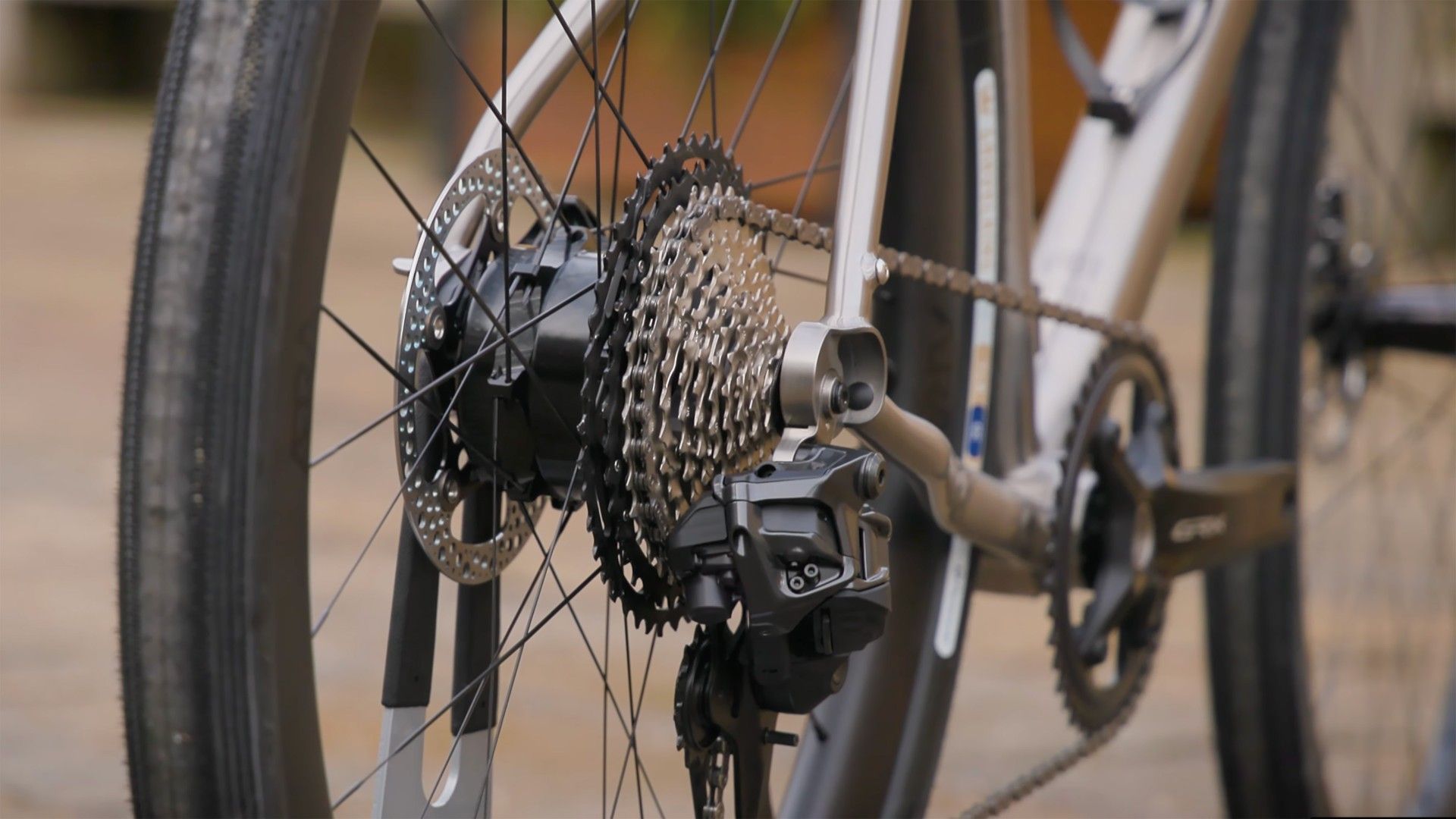
J.Laverack has launched its first e-bikes, adding Mahle's X20 rear-hub assistance system to its bespoke titanium AM64 platform. The first 22 commissions will form a numbered commemorative collection called ELEMENT 22. Complete bikes start at £7,495, and a build slot can be reserved for £500. The pictured PiLOT urban model costs £12,550 as specced.
The collection takes its name from titanium's atomic number (a callout also used by US titanium builder No. 22) and marks the company's move to The Provender Store in Rutland, a Victorian building housing its workshop and a cycling café. Each ELEMENT 22 build includes a bike fit and custom geometry, which J.Laverack values at £500, within the full-build price.
Assistance is available across all five AM64 categories. The R J.ACK is the road bike, the J.ACK is the all-road model and the GRiT is the gravel bike. The CONTOUR is a hardtail, and the PiLOT is a flat-barred urban bike with a relaxed position.
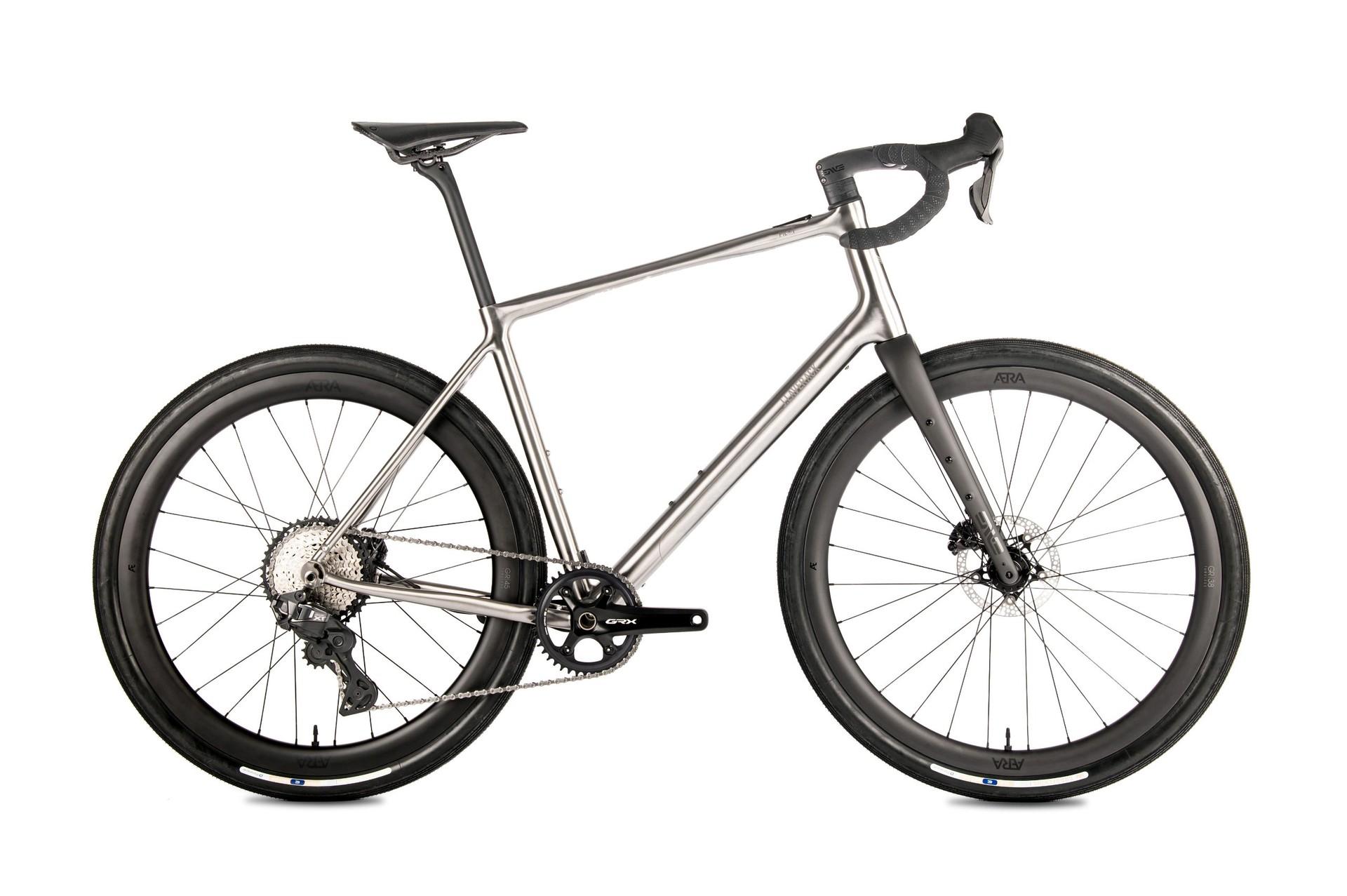
AM64 frames combine titanium tubes that are double-butted with a 3D-printed head tube, bottom bracket, seat lug and dropouts. These parts are designed parametrically, which means each lug can be adjusted after a bike fit. The company said additive manufacturing allowed it to integrate the electrical system precisely while keeping smooth transitions between the lugs and tubes.
The battery sits inside the downtube and is inserted through the T47 bottom bracket shell. A bespoke 3D-printed titanium cover conceals the access point and, the company says, helps protect the system from the elements. The bike's slim profile is intended to make it look unassisted. The platform applies what J.Laverack learned over four years developing the J.Laverack Aston Martin .1R.
Bastion takes a similar approach with printed titanium lugs on its Archetype, though it bonds them to carbon tubes. We CT scanned an Archetype to see the lattice structures inside those lugs.
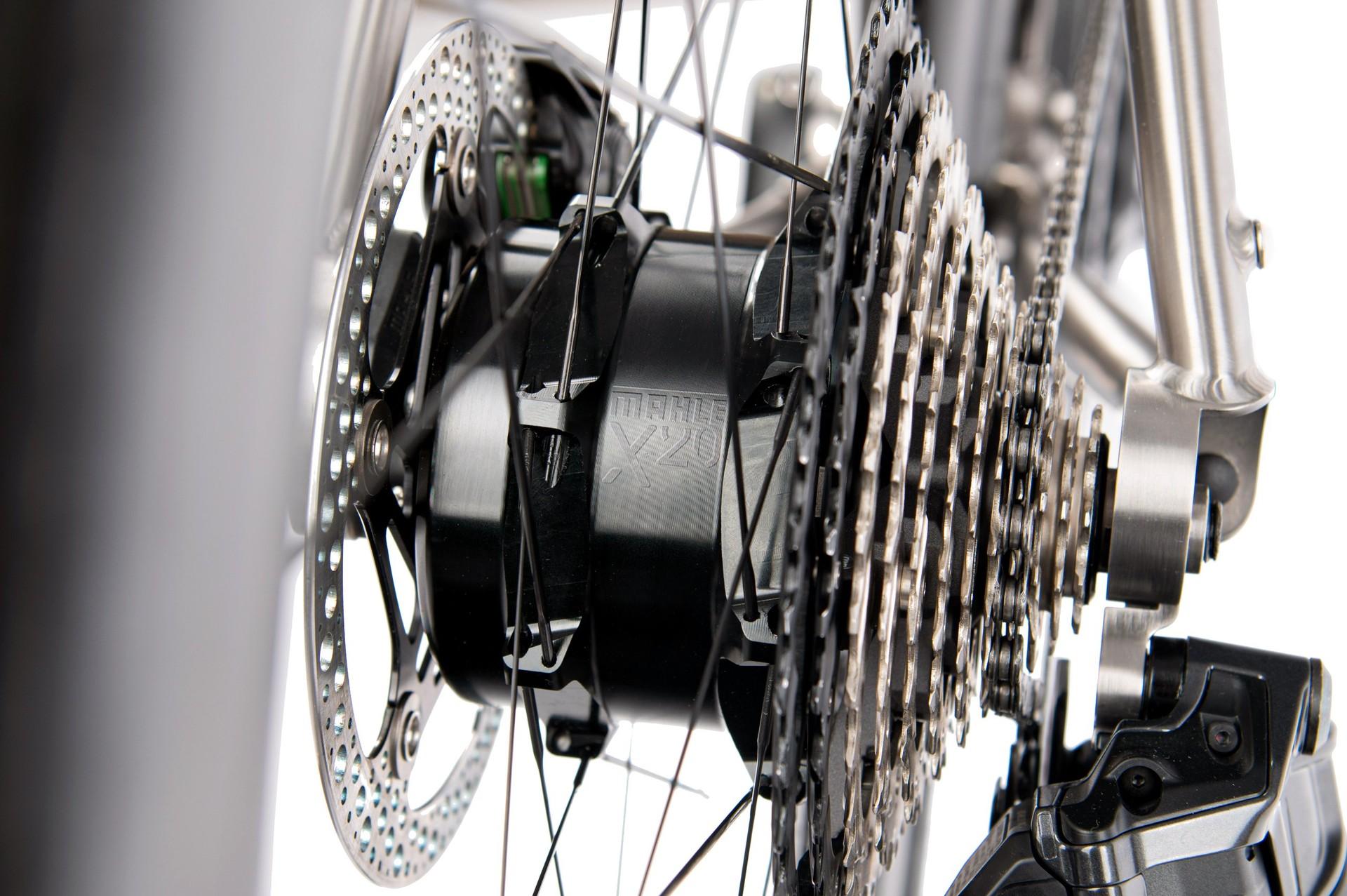
“For us, it was essential that any system we used felt completely natural and integrated seamlessly into our frames. The Mahle X20 allowed us to achieve exactly that,” said co-founder David Clow.
J.Laverack quotes 275W peak power and 65Nm for the X20. Mahle presents the torque figure as a comparison with a 65Nm mid-drive, because a hub motor applies power directly at the wheel rather than through the drivetrain and gears. The rear-hub unit weighs 1.39kg. Riders get three power modes, which can be adjusted through the Mahle app.
The company claims up to 200km of range, plus up to 55km more from an optional bottle-cage range extender. It says a 4A charger takes the battery to 80% in under two hours. For comparison, Mahle's own reference ranges are 40–100km for its 236Wh iX2 internal battery and 60–140km for the 350Wh iX3.
Commissioning a build
Buyers can visit the workshop in Oakham, Rutland, for a consultation covering bike fit, frame design and component specification.
The AM64 e-bike is available with bespoke geometry or in standard sizes from 44cm to 64cm, with customers able to choose finishes as well as components. Those unable to visit can supply detailed measurements or a third-party bike-fit report.
The bike will be on display on stand 376 in the Independent Frame Builders room at Rouleur Live on Thursday, November 12.