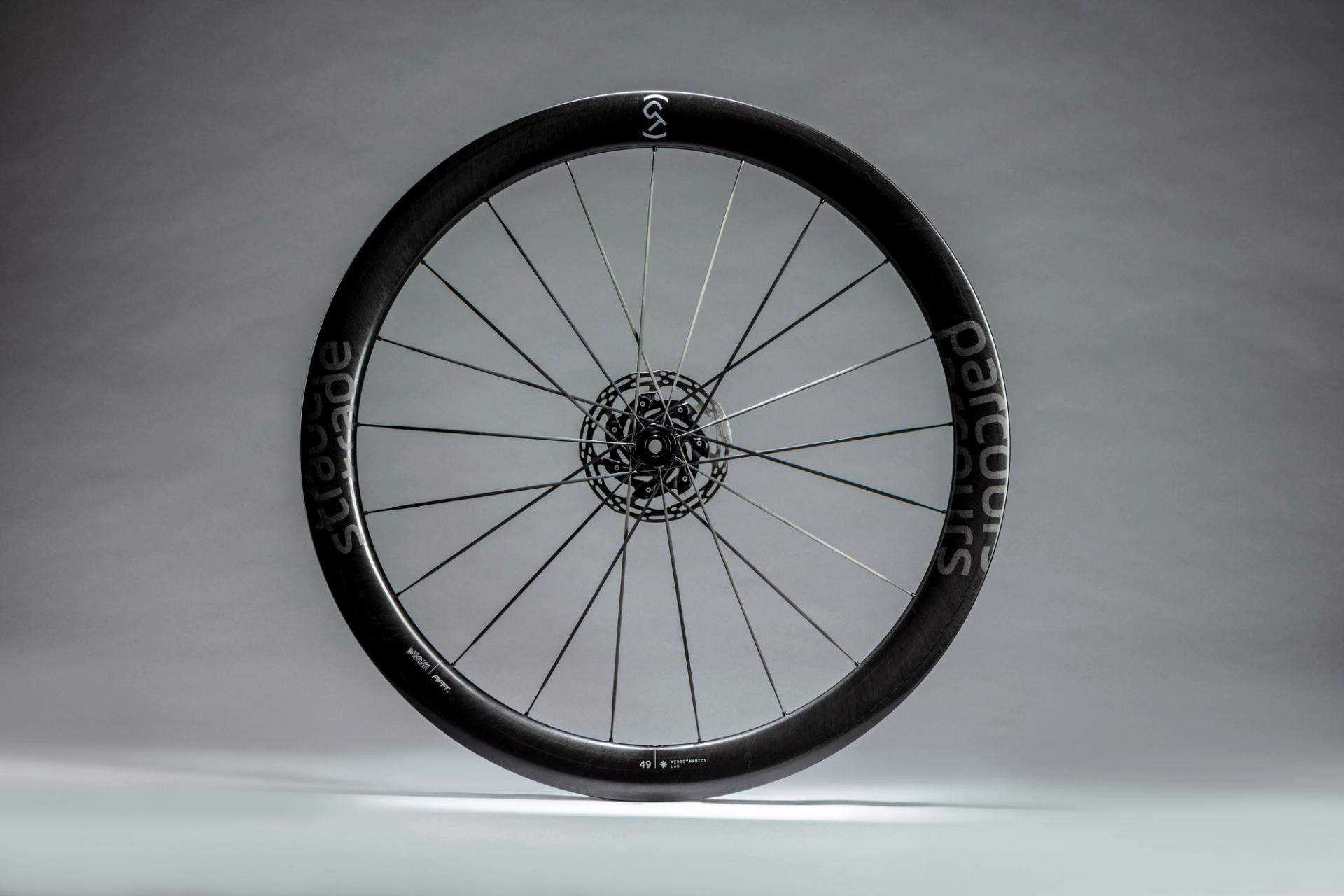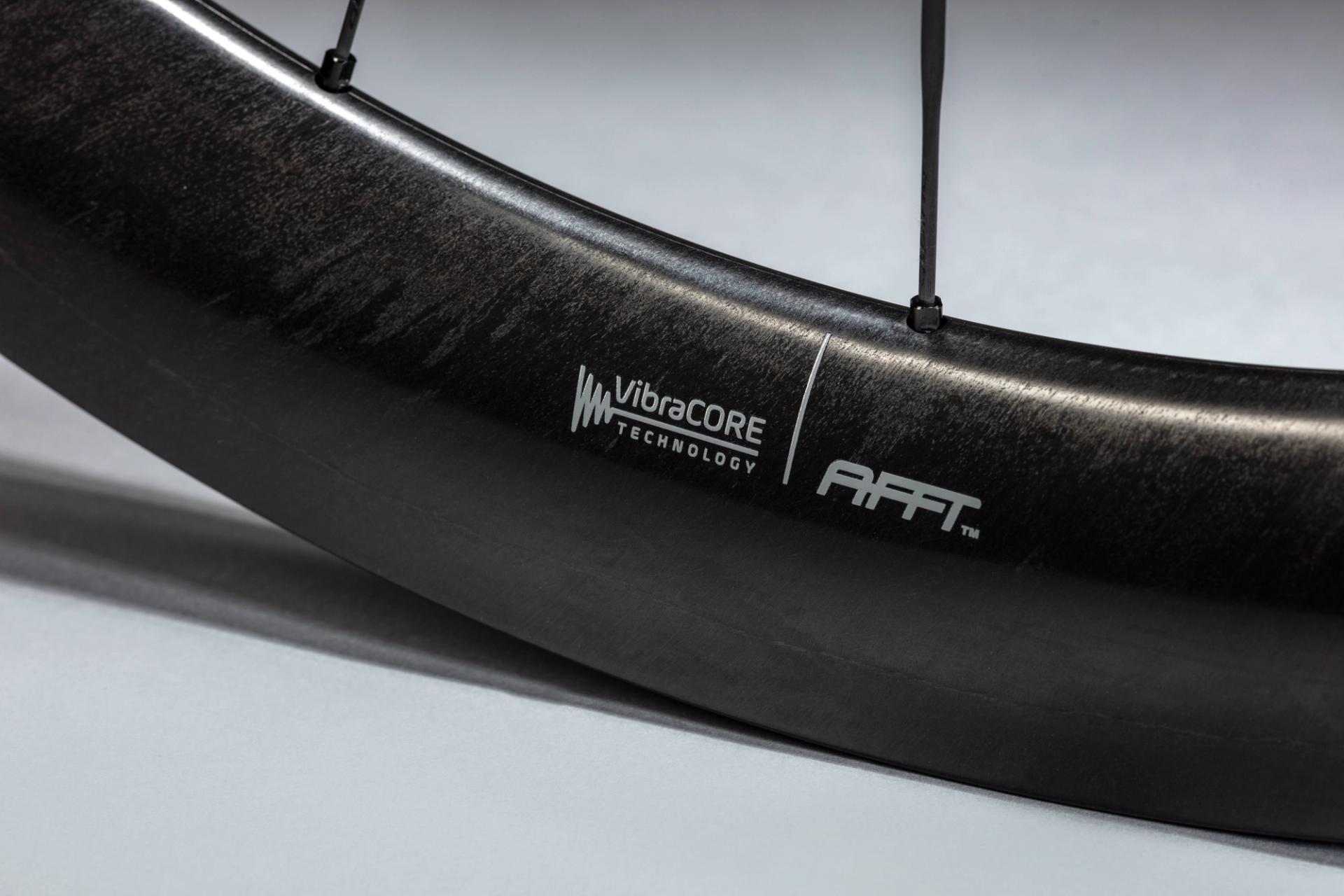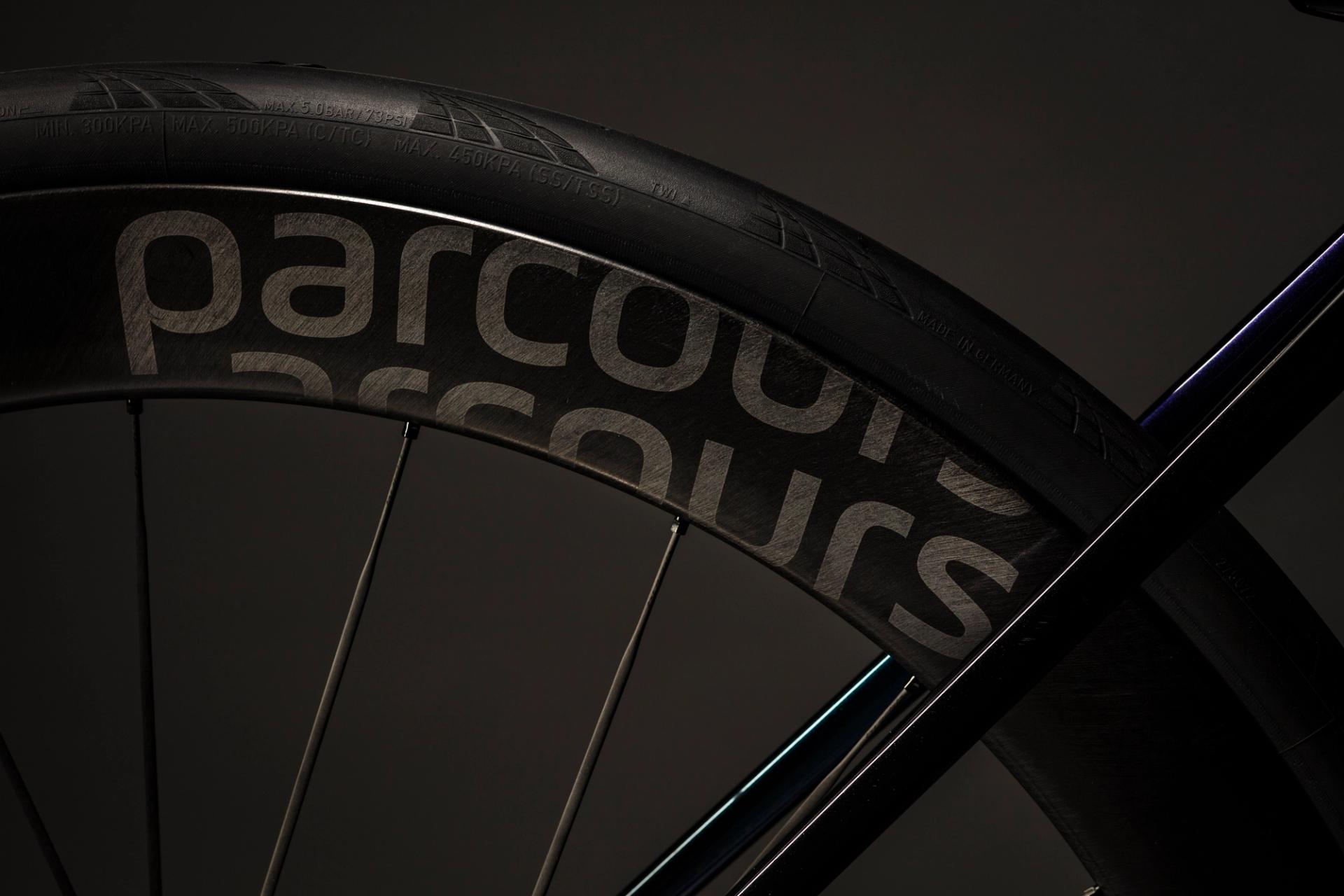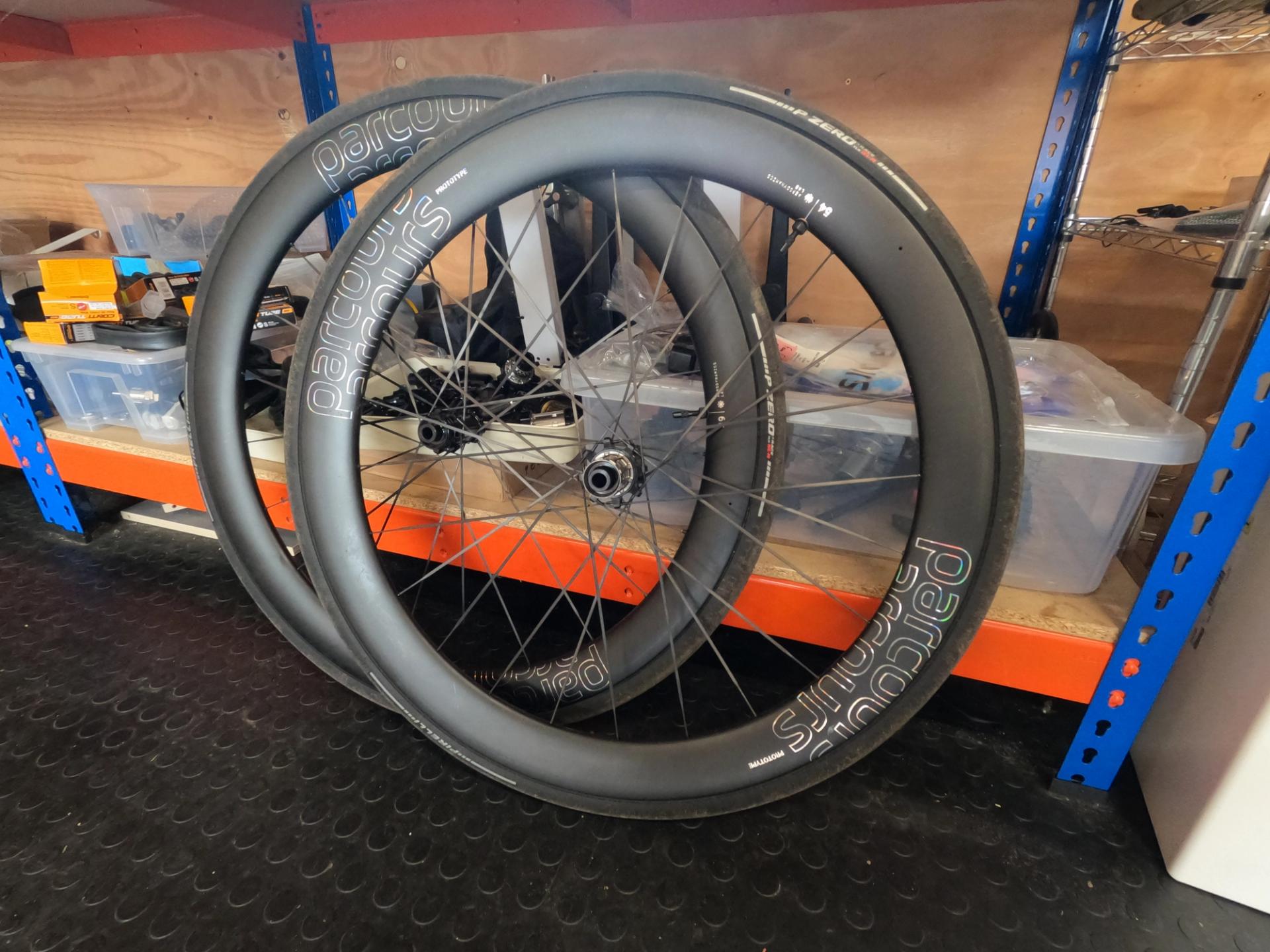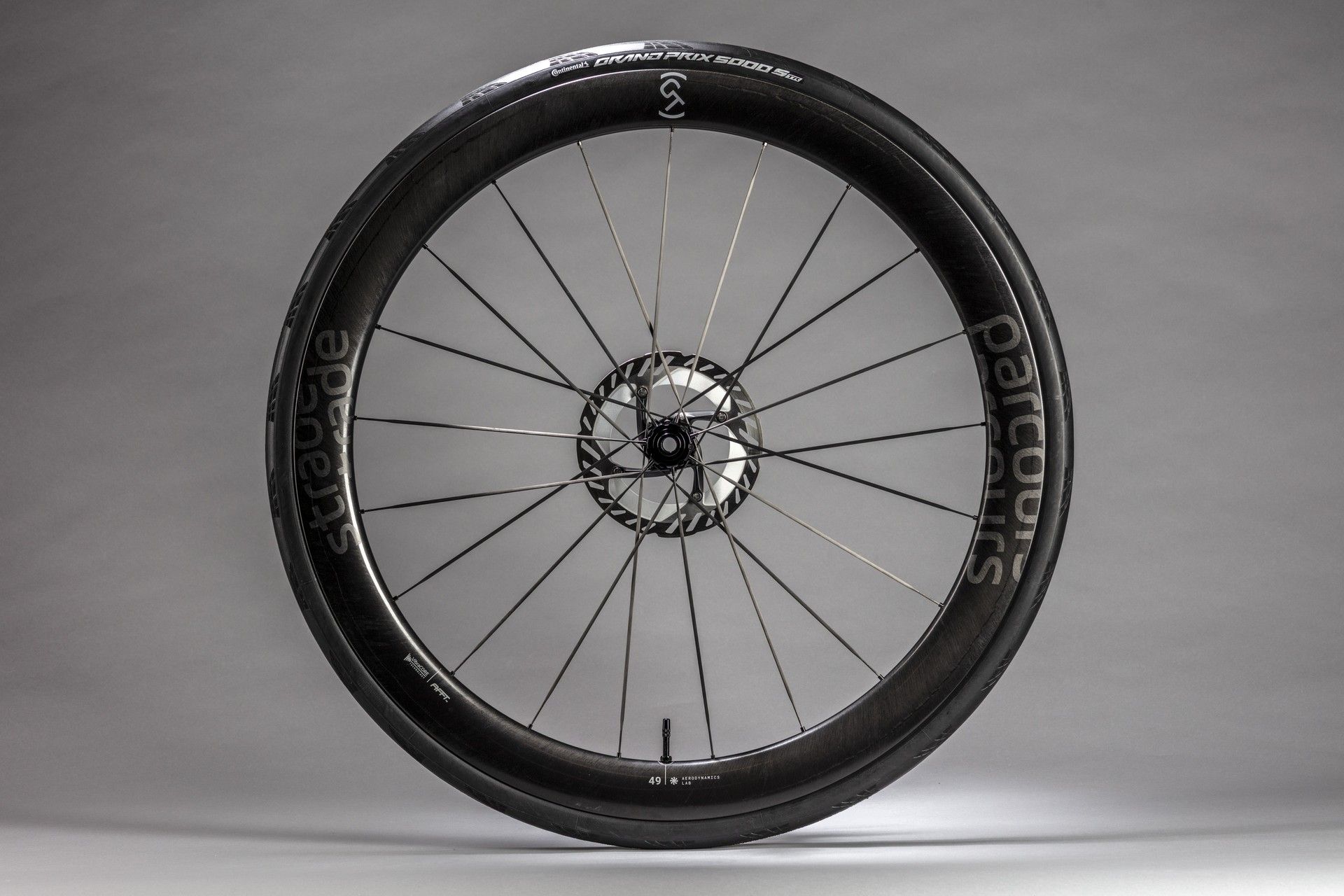
Parcours has launched the Strade GT, a 1,130g wheelset built around a new vibration-damping system called VibraCORE that places recycled carbon fibre inside the rim structure. They claim there are now very limited gains to be made from wheel aerodynamics and weight. With the Strade GT, Parcours are trying to redefine what metrics should be in the wheels performance conversation. Developed over two years with materials company Lineat and tested in partnership with Nottingham Trent University, the wheel is the first in a new premium GT range.
Parcours claims VibraCORE reduces vibration energy by 19–23% compared with an equivalent standard-carbon rim, an effect the brand equates to lowering tyre pressure by around 10–15psi without the associated penalties to rolling efficiency or handling. We visited Parcours HQ last week, heard the engineering case, and rode for an hour on typical British roads to see if you could actually feel the difference.
What VibraCORE does and how Parcours tested it
Parcours claim VibraCORE alters how vibration travels through the rim structure. Lineat's AFFT (Aligned Formable Fibre Technology) takes reclaimed chopped carbon fibres, re-aligns them and combines them with resin to form a new composite tape. Parcours places this material as a layer within the spoke bed of the rim, the zone where road buzz first enters the wheel structure. It accounts for roughly 12–15% of the total rim material by volume, with the rest remaining conventional continuous carbon fibre.
To validate the claim, Parcours ran field testing (detailed in this white paper) using multi-axis vibration sensors mounted at the stem and rear top tube. They analysed the data using power spectral density (PSD), a method that shows how vibrational energy is distributed across frequencies, and RMS (root mean square), which gives the average vibration energy over time.
The results focused on two frequency windows. The 4–12Hz range aligns with the resonant frequency of the seated body, where vibration is amplified through the core and upper body. The 20–50Hz range overlaps with soft-tissue response, where muscles work harder to stabilise against the input. At 60psi, VibraCORE reduced RMS vibration by 23% in the 4–12Hz band and 19% in the 20–50Hz band.
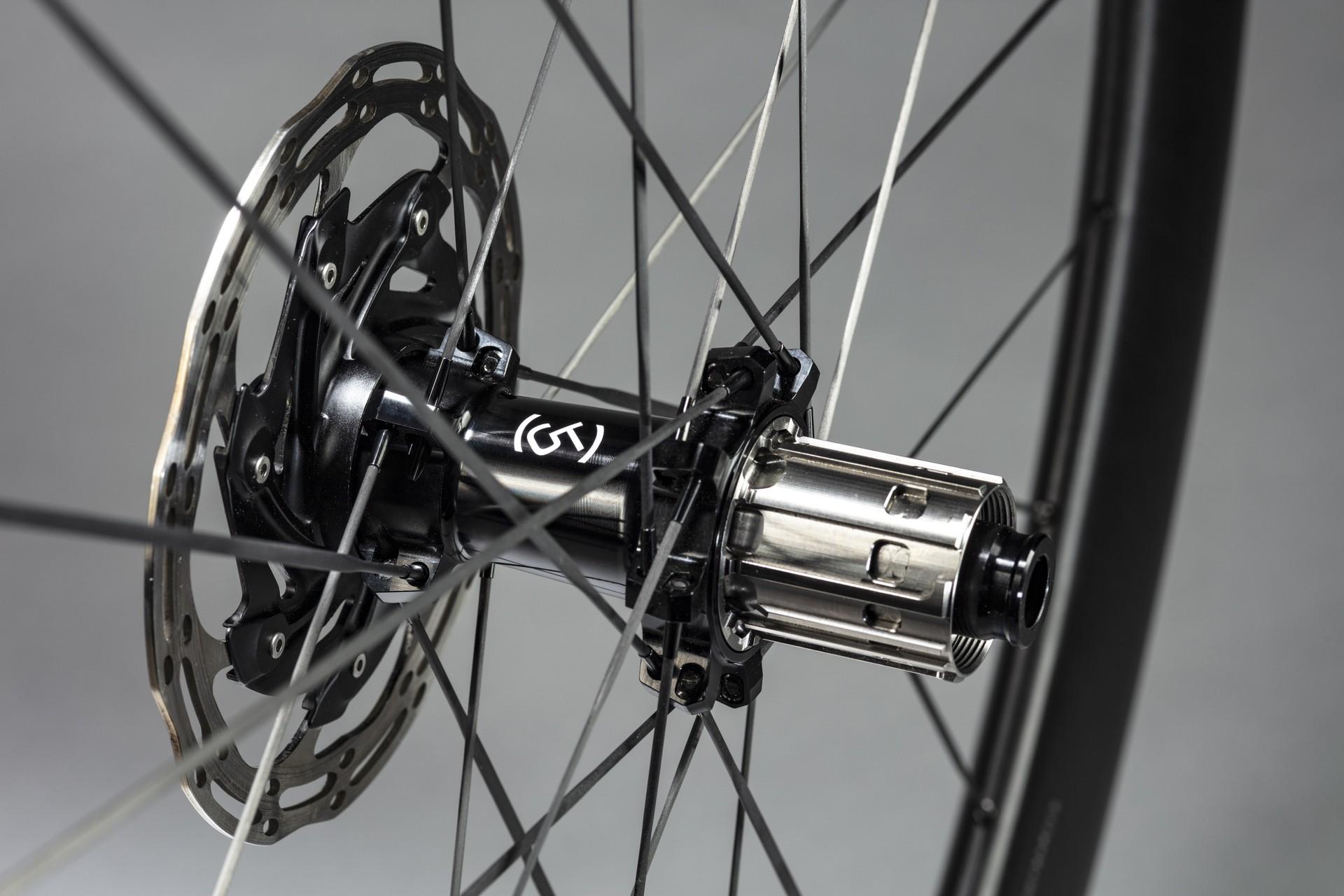
Beyond vibration, the Strade GT posts a 3.2W aerodynamic improvement over the outgoing Strade at 48kph when fitted with a 30mm tyre, and a 15% reduction in sideforce. The rim profile has been optimised around a 23.5mm internal width, still ETRTO-compatible with 28mm tyres. Alpina Carbolite carbon spokes in a 21F/24R configuration keep weight down, and Parcours says their compliance is closer to a bladed steel spoke than the harsher ride carbon spokes sometimes imply. Rim weights are 370g front and 385g rear, down from 470g and 480g on the previous model.
As a secondary benefit, the use of reclaimed carbon opens a pathway Parcours is developing to recycle old rims, including those returned through its Crash Replacement Programme, back into VibraCORE material for future wheels. "The Strade GT is the culmination of two years of R&D, of rethinking wheel performance and offering a new approach to the market," Parcours founder Dov Tate said.
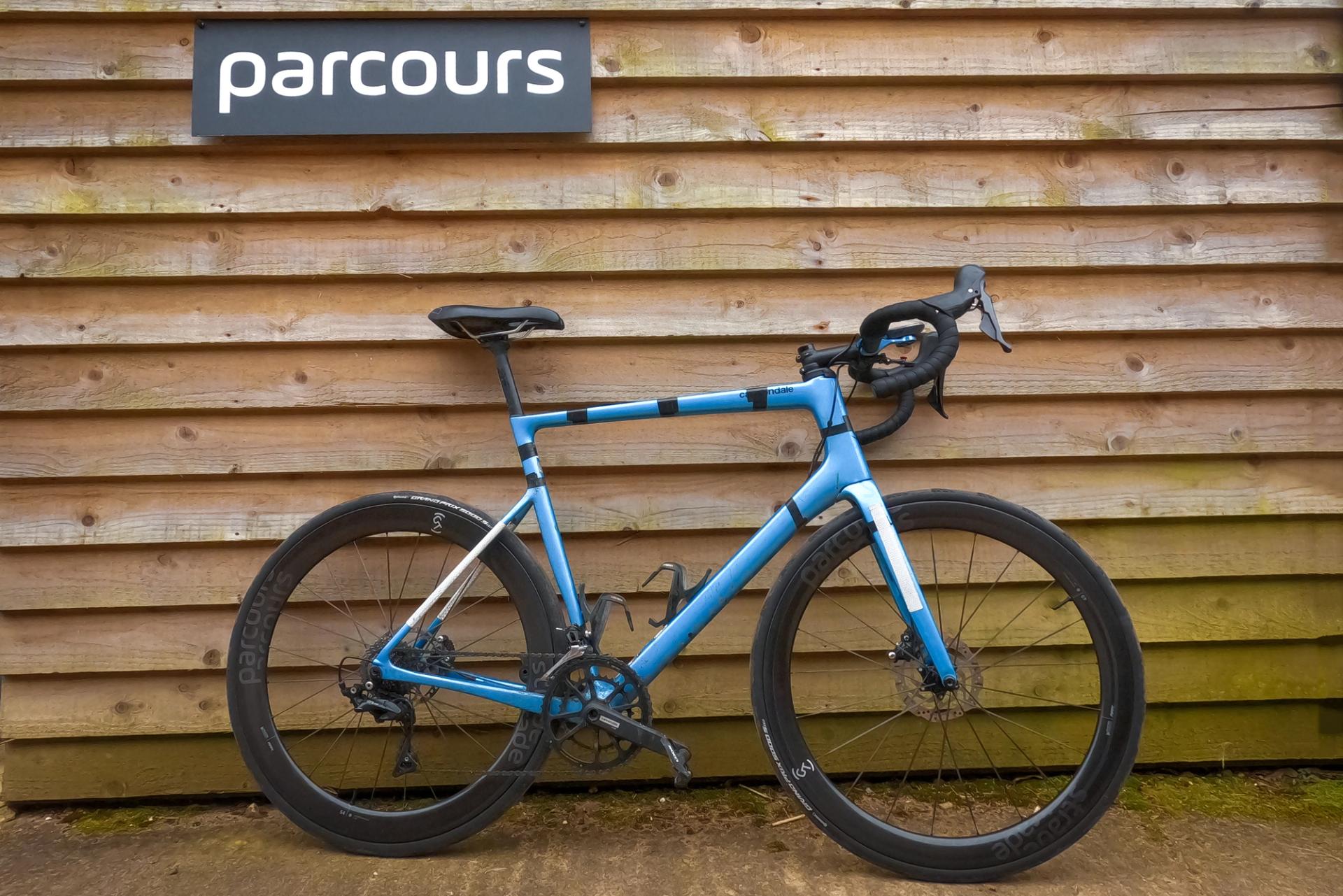
Real-world road feel supports the numbers
On the road, my one-hour ride on British B roads backed up the measured claims.
I can already hear the cynicism – wheel compliance is not something we tend to talk about much in the cycling world. Realistically though, when you compare the constant flex and deformation of wheels and spokes with frames, which are frequently marketed around engineered flex, it becomes clear that the wheelset can be at least as influential in shaping ride feel. And that’s exactly how it feels on the road.
The immediate sensation was a smoother road surface under the tyres, as if someone had taken the edge off the roughness. The wheels felt light and responsive when pressing on, with no obvious loss of stiffness. I would describe the effect as the road feeling calmer than it actually is, which on patchy UK tarmac is a welcome shift. On a perfectly surfaced Swiss alpine road, the difference would likely be harder to detect.
The honest limits of a single hour are worth stating. I can't speak to how the fatigue reduction plays out over four or five hours, which is where Parcours' white paper makes its strongest long-term case. Wind was light, so crosswind stability, another part of the product claim, remains untested. What I can say is that the subjective ride matched the direction of the data.
The Strade GT is priced at £2,499 / $3,299 / €3,199 with steel bearings, or £2,719 / $3,589 / €3,489 with ceramic. This puts it squarely in top-tier territory. I would think about these wheels like this:
- Weight: Extremely light for the depth. At 1,130g these are over 150g lighter than the equivalent Enve SES Pro wheels. We all know that weight isn't everything but there aren't many sets out there that will beat this.
- Aerodynamics: Slightly faster than the previous generation Strade but hard to know how they stack up against similar flagship brands without wind tunnel testing.
- Comfort: Not just marketing. I normally ride very similar depth carbon rims and the road feel on the Strade GT was unquestionably better.
Parcours have developed a fast modern road wheel that makes rough roads feel meaningfully better, and in doing so makes riding your bike more enjoyable. Stock will be limited at launch.