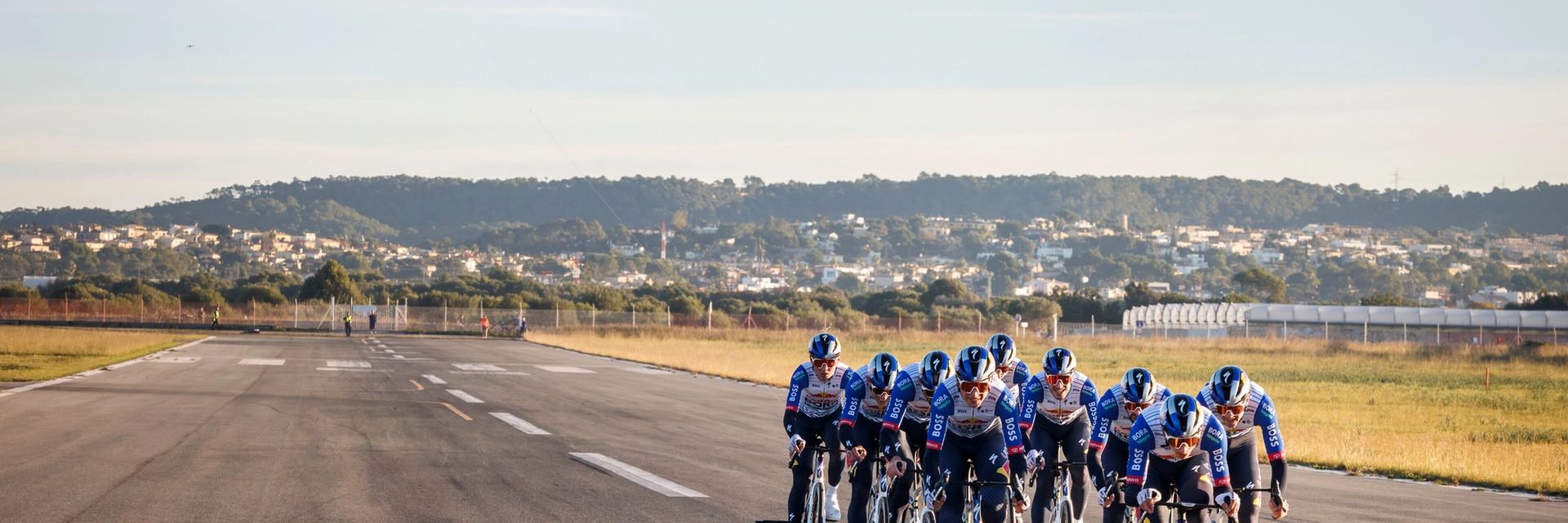
Nine riders from Red Bull‑BORA‑hansgrohe turned a training camp into aviation history on Wednesday, towing a piloted glider to take‑off speed using nothing but leg power on a runway in Mallorca.
At Son Bonet airfield, the group formed a tight paceline in front of the aircraft for the project dubbed "Peloton Takeoff". Linked to the glider by a 150‑metre tether and custom multi‑rider harness, they accelerated along a 1,500‑metre runway to 54 km/h before releasing the tow. The glider then climbed to roughly 100 metres, with organisers describing it as the first documented instance of a road‑cycling peloton launching a piloted aircraft by human power alone.
The numbers behind the stunt were on the level of a race‑deciding effort. The nine riders produced a peak combined output of around 6,500 watts, averaging about 650 watts each for roughly 90 seconds, comfortably above pre‑event modelling that suggested 500 watts per rider would be the minimum required for lift‑off.
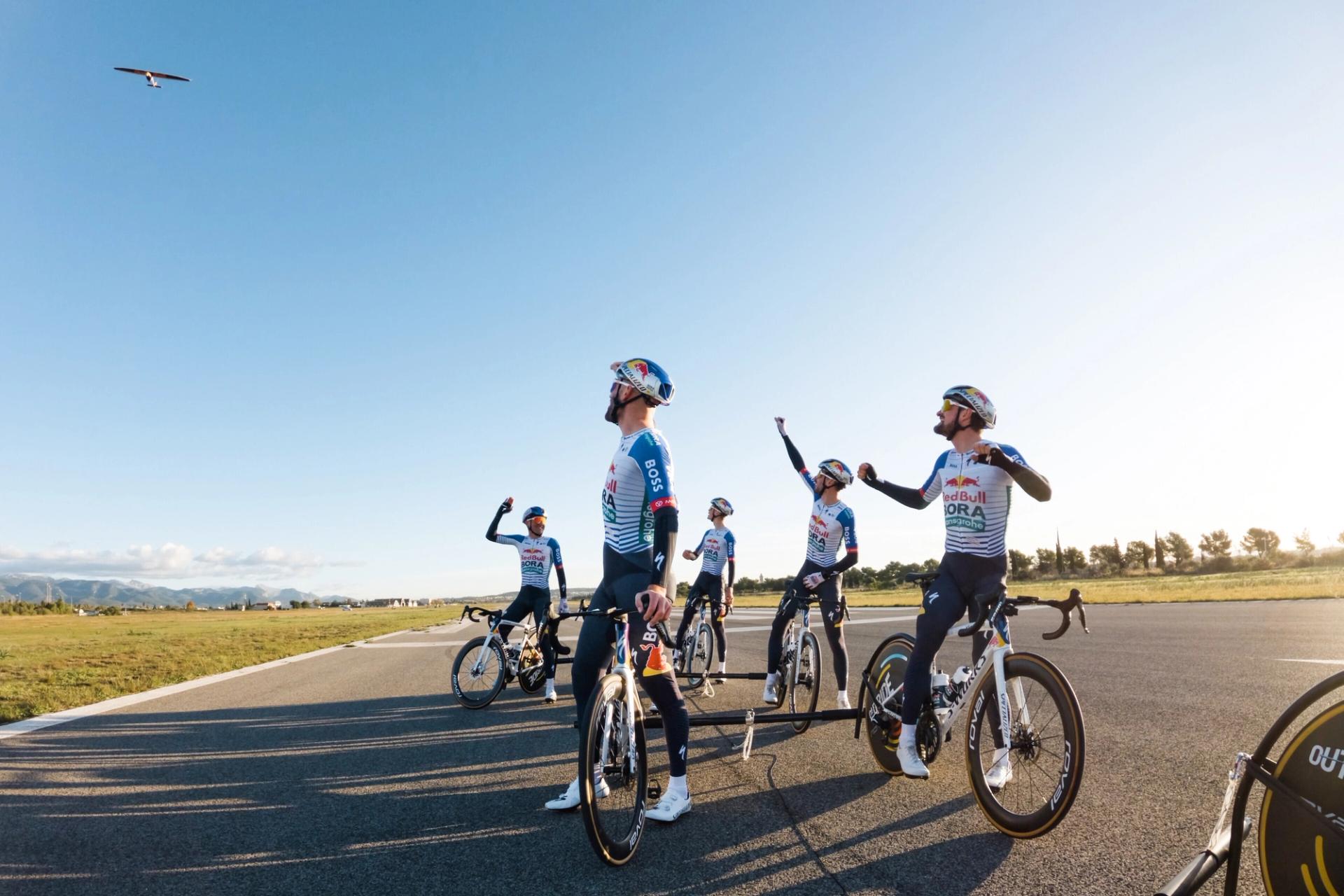
Florian Lipowitz (Red Bull‑BORA‑hansgrohe) headed the on‑bike line‑up, supported by Callum Thornley, Davide Donati, Nico Denz, Jordi Meeus, Tim Van Dijke, Laurence Pithie, Gijs Schoonvelde and Adrien Boichis. In the cockpit was experienced pilot Andy Hediger, who had to fly the glider at near‑minimum speed while maintaining steady tension on the towline.
Harnesses, modelling and race‑level power
Behind the scenes, the project hinged on engineering led by the team’s Head of Engineering Dan Bigham (Red Bull‑BORA‑hansgrohe). A bespoke harness system was created to spread the enormous tensile load safely across nine riders while keeping their position and aerodynamics stable.
Bigham described the harness as "a critical element, something that simply did not exist before", and compared the effort to a "race‑winning move" where, unlike a typical attack, every rider had to deliver almost identical power and torque to keep the glider tracking straight.
After the flight, pilot Hediger reflected, "Being towed by manpower was a special feeling. I’m so happy to finally combine aviation with cycling."
The aviation experiment was shared only hours before Red Bull-BORA-hansgrohe's media day, where Remco Evenepoel revealed his 2026 season.