On Tuesday stage 3 of the Tour Auvergne-Rhône-Alpes, the renamed Critérium du Dauphiné, will include a descent on the 28.4km team time trial course in Perreux that some teams argued is too dangerous to race. The stage is scheduled for June 9, and reported contingency options included racing on road bikes or stopping the clock at the top of the descent and restarting it at the bottom.
The row centres on a 2.5km section between kilometres 8 and 10.5 of the course. Speaking on the *Watts Occurring* podcast on June 5, Geraint Thomas described it as "a tricky little descent" on "a narrow road" where "the tarmac isn't great" and the route is "quite twisty" in a discussion about the stage with Luke Rowe. He said "some teams have just said it's too dangerous to race", prompting what he called "back and forth" between teams and ASO.
Neither alternative has been confirmed, following a directeurs sportifs meeting on Saturday which was expected to address the issue – suggesting the stage will go ahead as a traditional team time trial.
Tour de France rehearsal at stake
The stage carries weight beyond the Dauphiné (or "Aura Tour") itself. The route, announced in January, was framed by organisers as a final rehearsal for the Tour de France, which opens with a team time trial in Barcelona. Team time trials are scarce on the current calendar, and many squads have selected their Dauphiné rosters with the Tour long list in mind. Any format change would alter the value of the exercise.
The stage includes two small climbs, and individual rider times are taken at the finish line, following the Paris-Nice format. French regional newspaper Le Progrès described the course as "technique, spécifique et atypique" before the safety argument surfaced.
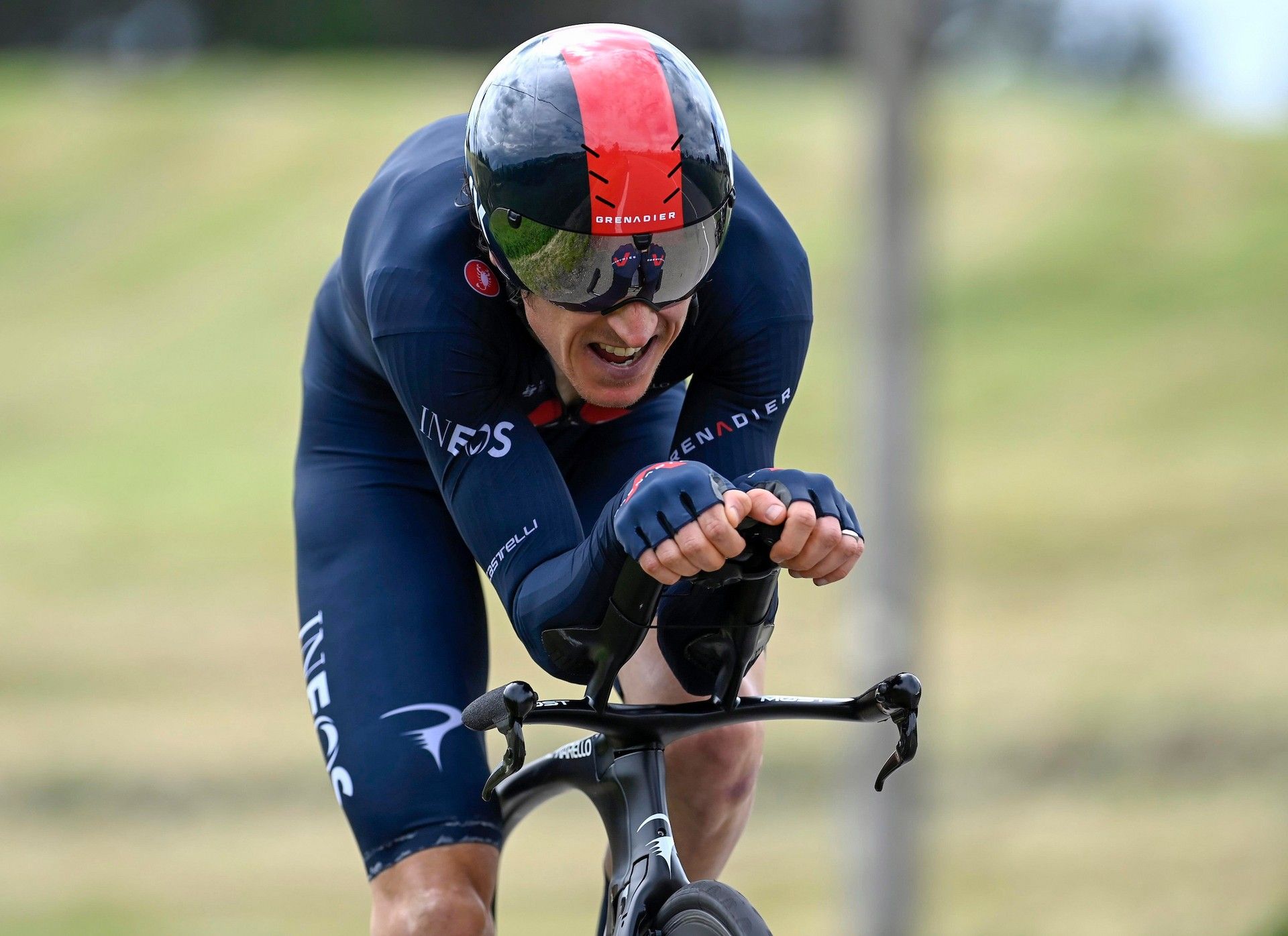
A stop-start timing workaround would change how the stage is raced. Teams would have to manage two separate efforts with a neutralised descent in between, rather than riding a continuous 28.4km race against the clock. Racing on road bikes would remove the handling risks of time trial machines on a technical descent but undermine the stage's purpose as a TT-specific test.
Not all teams share the concern. On the same podcast, Thomas said Netcompany Ineos' position was that the descent was safe enough to race. "If it's just a narrow twisty road, there's only eight boys," he said. "Like just don't be stupid." He argued that any crash on the descent would result from riders going too fast rather than from an inherently unsafe route, and that teams focused on GC could afford to lose a few seconds through that sector given how demanding the race's final three mountain stages are.
Luke Rowe's prediction for the outcome of the debate was blunt: "Nothing."
"A lot of fuss and then on Tuesday they'll all be battering around on TT bikes."
The Dauphiné has previous form for descent-related safety arguments. In 2020, Tom Dumoulin called a descent of the Col de Plan Bois "a disgrace" after Steven Kruijswijk and Emanuel Buchmann crashed out of the race on the same stage.