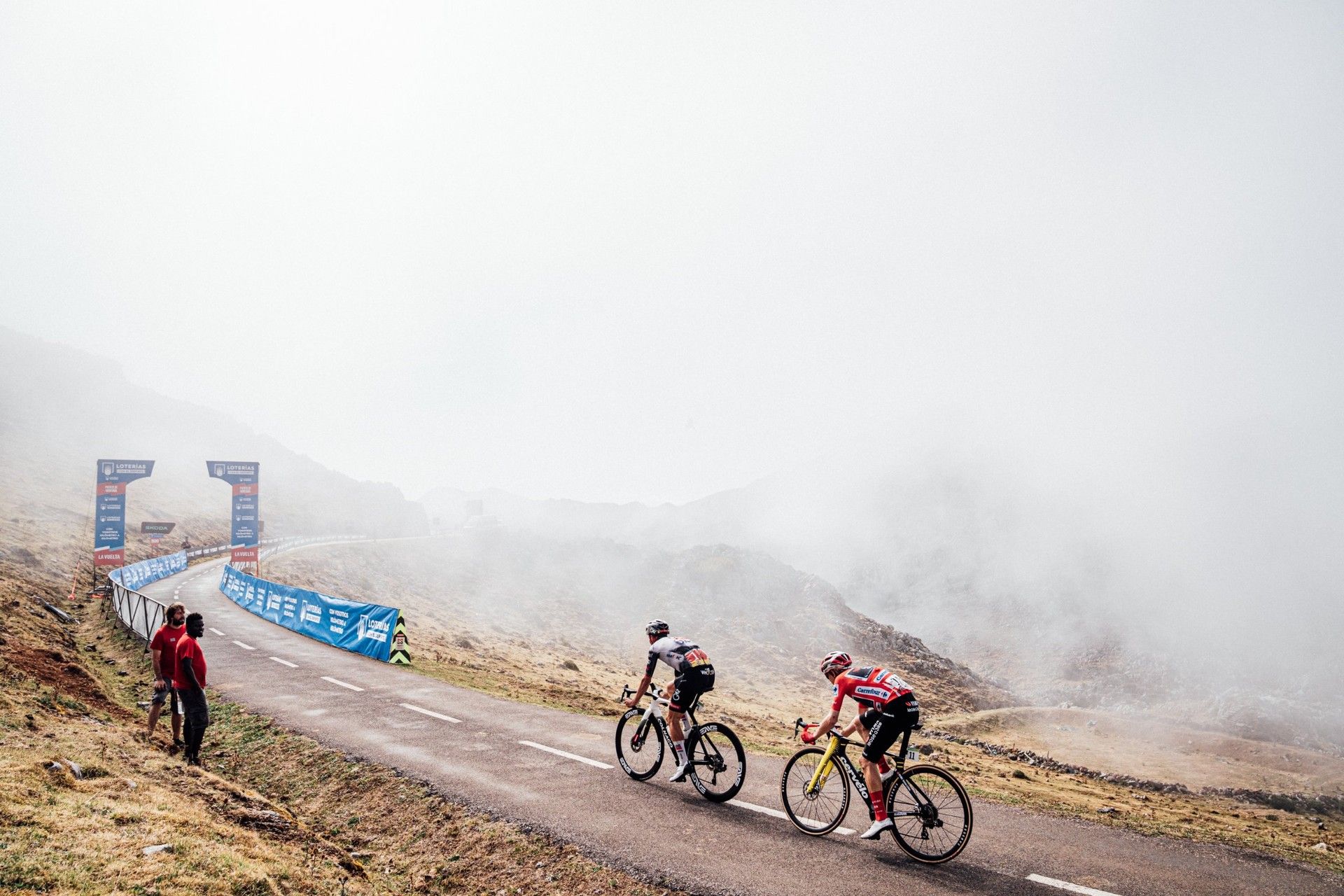
La Vuelta a España enters its final week with six stages left and the fight for the red jersey still open, something we never expected to say when a certain Slovenian started in Monaco a few weeks ago.
A 32.1km individual time trial and back-to-back summit finishes remain before the race concludes in Granada on September 13. Here’s how to watch every remaining stage live and when the general classification battle could turn.
La Vuelta is being broadcast by HBO Max and on TV via TNT Sports in the UK and Ireland, and by Eurosport across most of Europe. In the United States, every stage is available through Peacock. Several broadcasters also offer free coverage in their home countries, with full details below.
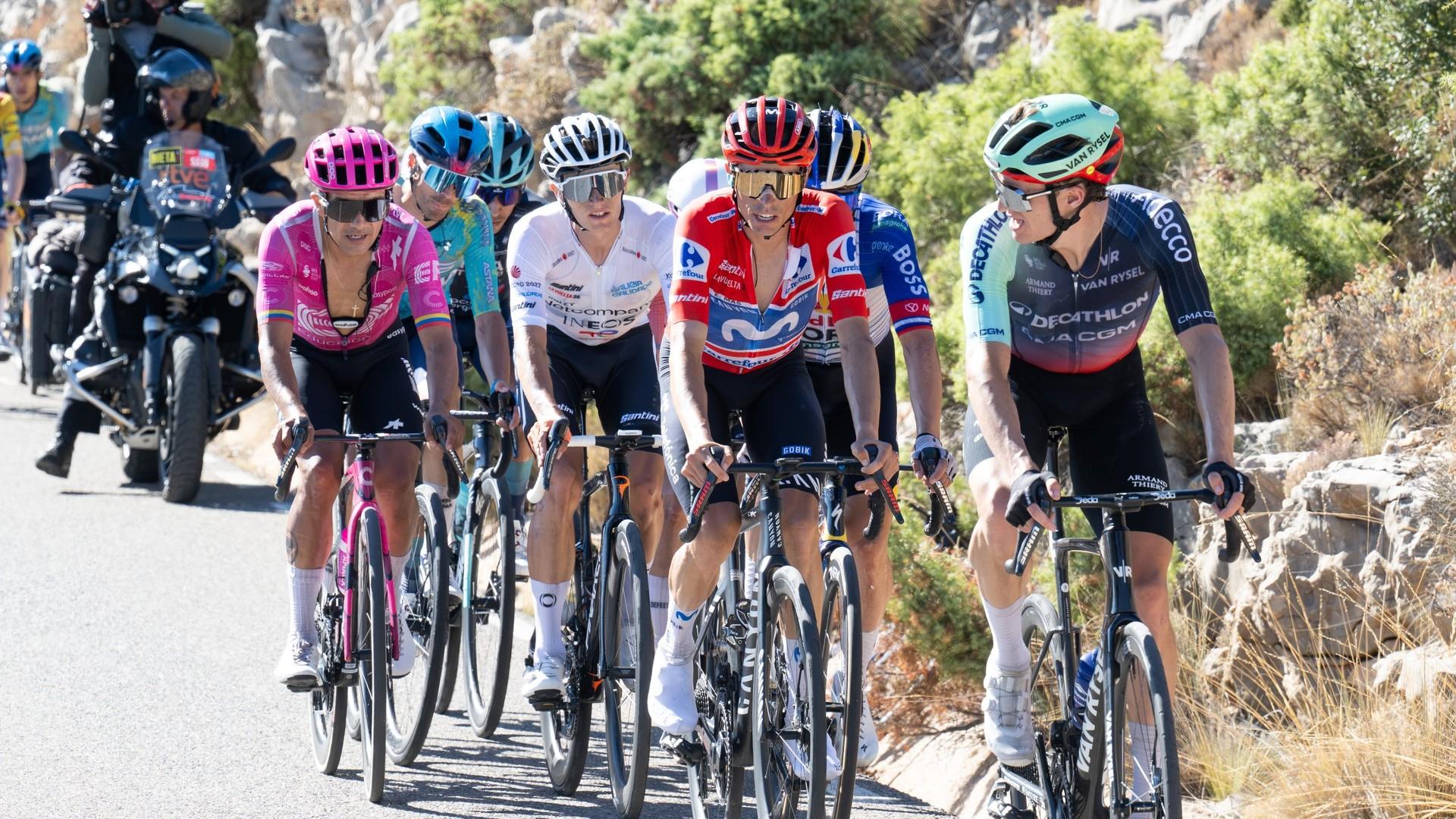
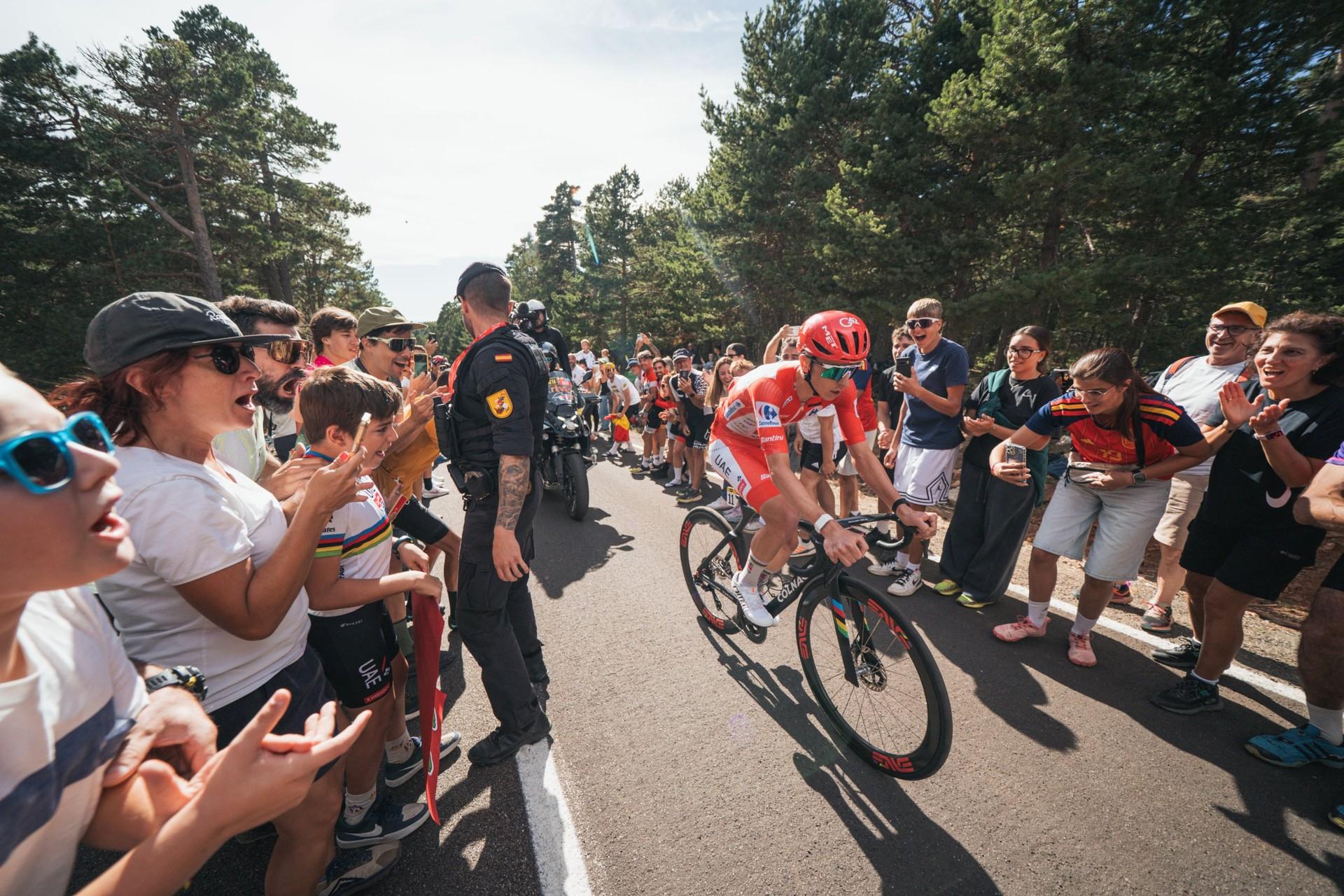
Tadej Pogačar (UAE Team Emirates-XRG) began the race as the overwhelming favourite, but abandoned after crashing on stage 8 while wearing the red jersey. Enric Mas (Movistar Team) now carries red into the final week, leading Felix Gall (Decathlon-CMA CGM) by 2:06 and Primož Roglič (Red Bull-Bora-Hansgrohe) by 2:10. Richard Carapaz (EF Education-EasyPost) is fourth at 4:24, with Oscar Onley (Netcompany-Ineos) fifth at 5:44.
The six Vuelta stages still to come
The race resumes after its second rest day with two stages that offer the sprinters and breakaway riders their best remaining opportunities. Stage 16 runs 181.1km from Cortegana to La Rábida, before stage 17 covers 185km from Dos Hermanas to Seville.
The general classification battle should move to the foreground on stage 18. The 32.1km individual time trial from El Puerto de Santa María to Jerez de la Frontera begins with the first rider at 14:06 local time, while the final rider is scheduled to finish at 17:30.
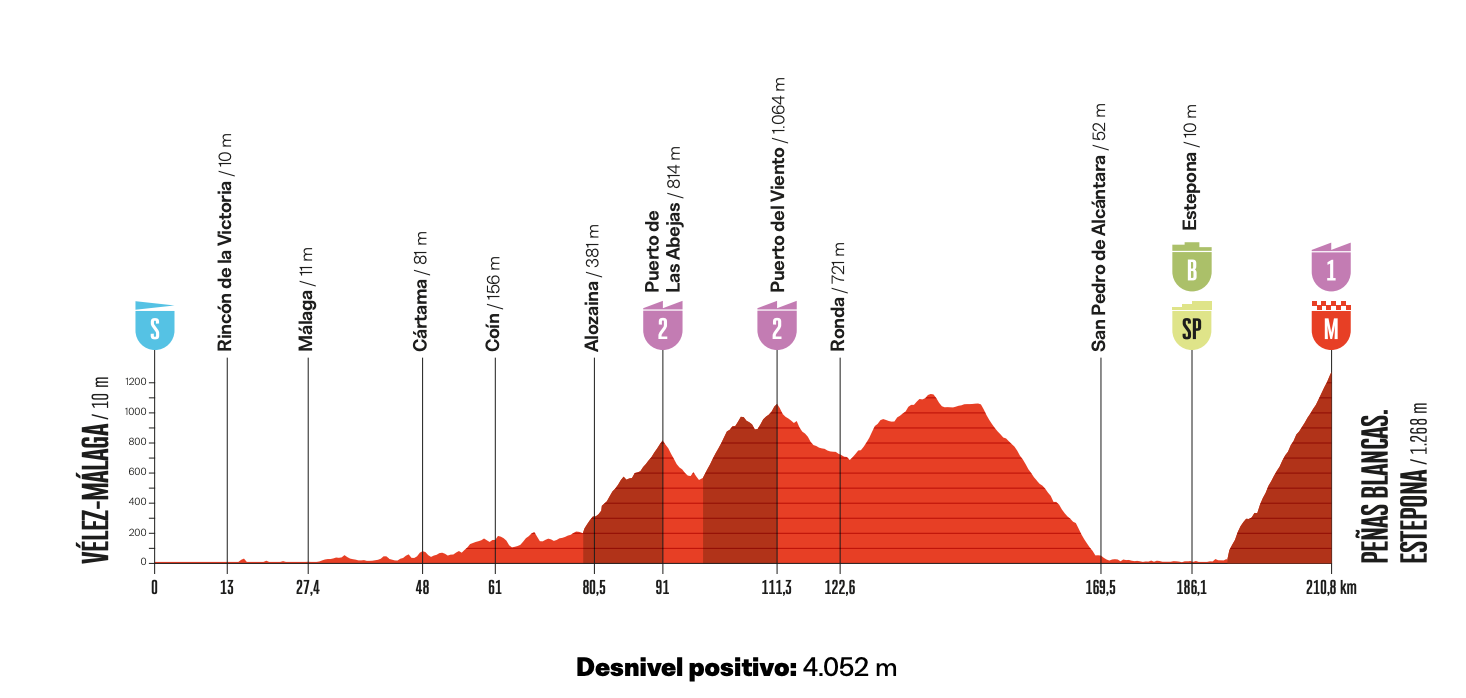
Stage 19 immediately returns the race to climbing. Its 210.8km route from Vélez-Málaga ends on Peñas Blancas, an 18.7km ascent averaging 6.5%. The length of both the stage and its final climb makes it the first of two consecutive opportunities to overturn the GC.
Stage 20 is the last major mountain showdown. The 186.8km route includes two ascents of the first-category Puerto de El Purche, followed by the Puerto de El Duque and a summit finish on Collado del Alguacil. The final climb is 8.3km at an average of 9.8%, providing the final clear opportunity to take substantial time before Granada.
How to watch La Vuelta a España 2026
UK viewers can watch every stage live through TNT Sports, with direct HBO Max access reported being from £25.99 per month. Certain Sky, EE and Virgin Media packages also offer TNT Sports as an add-on. Channel 5 has free daily highlights, but its coverage is not a live alternative.
How to watch

| Region | Broadcaster | Cost | Notes |
|---|---|---|---|
Australia | SBS and SBS On Demand | Free | All 21 stages live on SBS and SBS On Demand. A free account and Australian postcode are required for streaming. |
Spain | RTVE, Teledeporte and RTVE Play | Free | Every stage live on Teledeporte and RTVE Play, with selected finishes on La 1 or La 2. |
United Kingdom | TNT Sports and HBO Max | £25.99/month | Every stage live through TNT Sports. Channel 5 provides free highlights, but not live coverage. |
United States | NBC Sports and Peacock | From US$12.99/month | Every stage live. The US$19.99 monthly plan includes ad-free live content. |
Canada | FloBikes and FloSports | CA$49.99/month | Every stage live and on demand through FloBikes and the FloSports app. |
Belgium | EBU member broadcaster, outlet not specified | Free | The EBU agreement confirms free-to-air availability, but the individual broadcaster and extent of coverage are not specified. |
France | EBU and Warner Bros Discovery outlets | Price not confirmed | La Vuelta is included in the EBU agreement for France, while Warner Bros Discovery also holds European rights. Check local schedules. |
Netherlands | EBU member broadcaster and Warner Bros Discovery | Free | Whole or part of the rights package is available free-to-air. The individual outlet and subscription pricing are not specified. |
Italy | EBU member broadcaster and Warner Bros Discovery | Free | Whole or part of the rights package is available free-to-air. Check the local broadcaster schedule for live-stage availability. |
Peacock carries every stage live in the United States, with subscriptions starting at US$12.99 per month. Canadian viewers need FloBikes or the FloSports app, priced at CA$49.99 per month.
Other official regional broadcasters include Abu Dhabi Sports in the Middle East and North Africa, SuperSport in Sub-Saharan Africa, beIN Sports Asia in Southeast Asia and Zhibo TV in China.
J Sports has the Japanese rights, Sky Sport covers New Zealand, ESPN serves Latin America and the Caribbean, while both Caracol TV and Canal RCN are listed for Colombia. Confirmed 2026 prices were not available for those services.
Free streams and watching while travelling
Australia offers a free English-language option. SBS will show all 21 stages live on television and through SBS On Demand, which also carries replays and shorter race packages. Streaming requires a free account registered with an Australian postcode.
Spain also has complete free coverage. RTVE will broadcast every stage on Teledeporte and RTVE Play, while finishes will appear on either La 1 or La 2. RTVE Play offers six selectable camera feeds sourced from race motorcycles and helicopters.
An EBU agreement running through 2030 provides whole or partial free-to-air coverage in Belgium, Czechia, Denmark, Hungary, Italy, Luxembourg, the Netherlands, Norway, Portugal, Slovakia, Slovenia, Spain and Switzerland. The agreement does not identify every national channel or guarantee that each broadcaster will carry every stage live, so local schedules should be checked before the start.
Broadcasters commonly restrict streaming to viewers inside their licensed territory. Travellers may use a VPN to make a secure connection to their usual home service, provided they retain a valid account and comply with the platform’s terms and local rules.
To watch an existing home service while abroad:
- Install NordVPN on the device used for streaming.
- Connect to a server in the country where the viewer normally lives.
- Open the usual official broadcaster’s website or app.
- Sign in with the existing free or paid account and select La Vuelta coverage.
A VPN does not replace a broadcast subscription, and access is not guaranteed because individual services apply their own location and account rules. It should only be used to reach legitimate home coverage while travelling, rather than to bypass territorial rights.