Imagine two fans on Tour of Flanders day.
In Ghent, someone orders another round of beers, glances up at the café TV and settles in. Live coverage has been on since late morning. The commentary team knows half the peloton’s junior results by heart. No one has paid a cent specifically to watch this.
In London, there’s not a buffet of options – there’s one plate. UK fans have Discovery+/TNT as the main gate, then the odd ITV4 highlight reel or YouTube scrap if you’re lucky. You don’t casually encounter cycling any more; you go looking for it, log-in ready and card on file.
Same race. Same riders. Very different experience.
Cycling is one of the most global sports in the world, but the way you watch it might be the most local thing about it. Depending on your passport, you either live in the promised land (hello, Belgium), the “free-ish” zone (France, Netherlands, Australia), or the streaming jungle (UK, US and friends).
So how did we end up here – and which country actually has it best?
Belgium: where cycling is a public utility
Let’s start with the obvious winner.
In Flanders, cycling isn’t really treated as sport. It’s infrastructure. Somewhere between central heating and running water.
The engine of this is Sporza, the sports wing of public broadcaster VRT. For Flemish fans it’s basically a benevolent cult: wall‑to‑wall live races, shoulder‑to‑shoulder experts, studio shows, podcasts, highlight clips, and live text updates obsessing over echelons in some Tuesday race you forgot existed.
A few key points:
- It’s free-to-air. No special sports package, no premium tier. If you live there and own a screen, you’re in.
- The production is elite. The pictures are the same world feed everyone gets. The difference is what Sporza wraps around them: proper build-up, studio shows, a moto reporter in the race, and post-race autopsies that don’t cut away the second the podium’s done. It feels like a luxe pay-TV product, but it behaves like a public service.
- The audience is enormous. The 2023 Tour of Flanders peaked around 1.6 million viewers, with around 800,000 tuning in on average across the classics block – in a country of 11 million. Those are “national-event” numbers.
And crucially, Sporza doesn’t just shout for the home riders. Veteran reporter Renaat Schotte once said the secret is that they “make a story out of it” and avoid turning every race into a Belgium-only talent show. Wout and Lotte are gods, sure, but if a random Danish neo‑pro launches a doomed long‑range attack, you’ll get the full novella.
The result: Belgium spends public money treating cycling like cultural heritage, and fans get some of the best coverage on the planet for free. If you’re designing an ideal fan experience from scratch, this is it.
The “free‑ish” club: France, Netherlands, Australia
Belgium might be the gold standard, but it’s not the only place where you can still watch a lot of racing without selling a wheelset.
France: the Tour’s living room
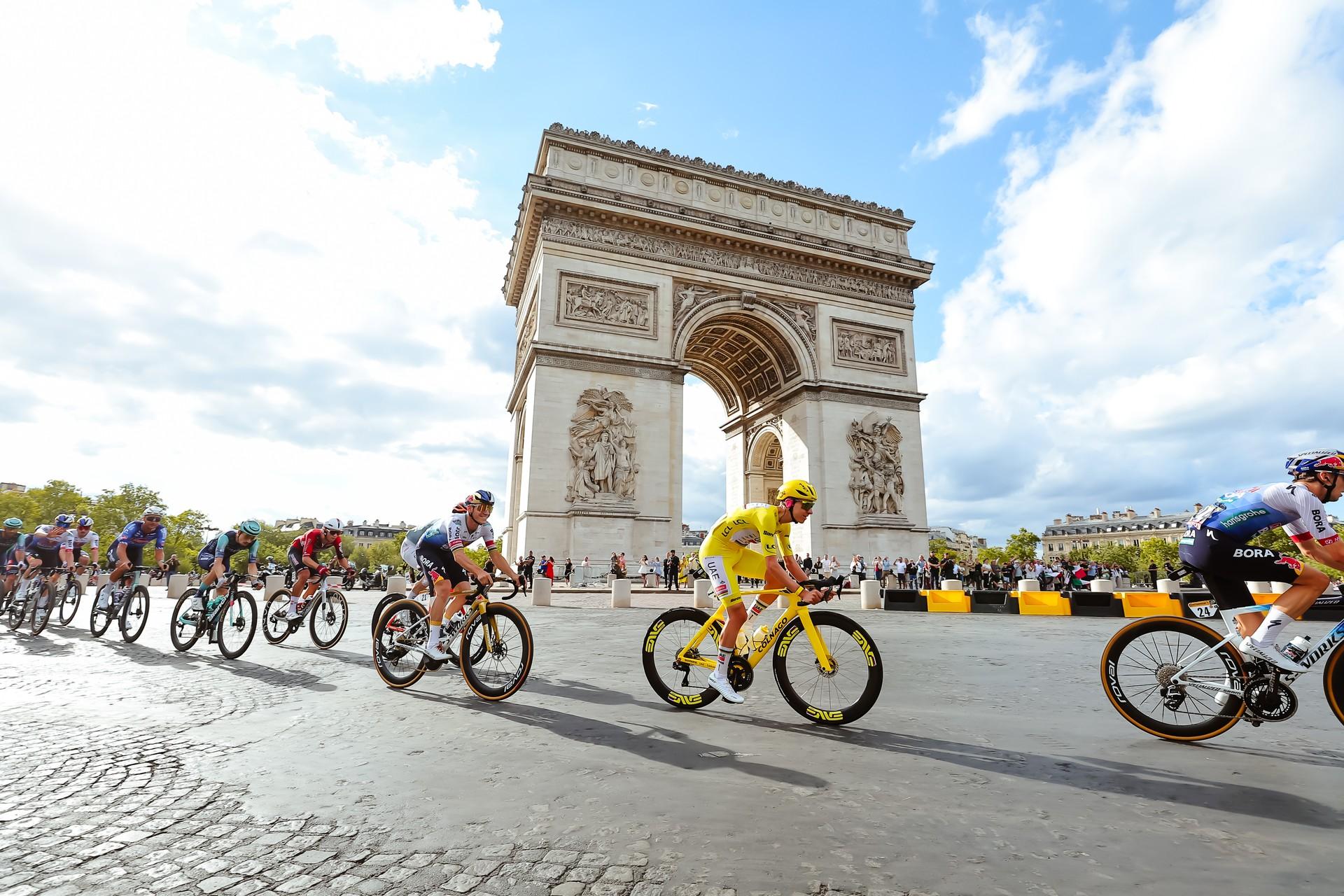
In France, France Télévisions still does what many fans elsewhere dream of: it puts the Tour de France in front of everyone. Big chunks of the race remain on free-to-air channels; millions dip in for the big mountain stages and the final sprint on the Champs-Élysées.
The Tour pulls tens of millions of viewers across July, and that scale justifies keeping it widely available. It’s not pure generosity – it’s national theatre. Advertising loves it, politicians love being seen roadside, and the whole thing feeds back into cycling as part of French identity.
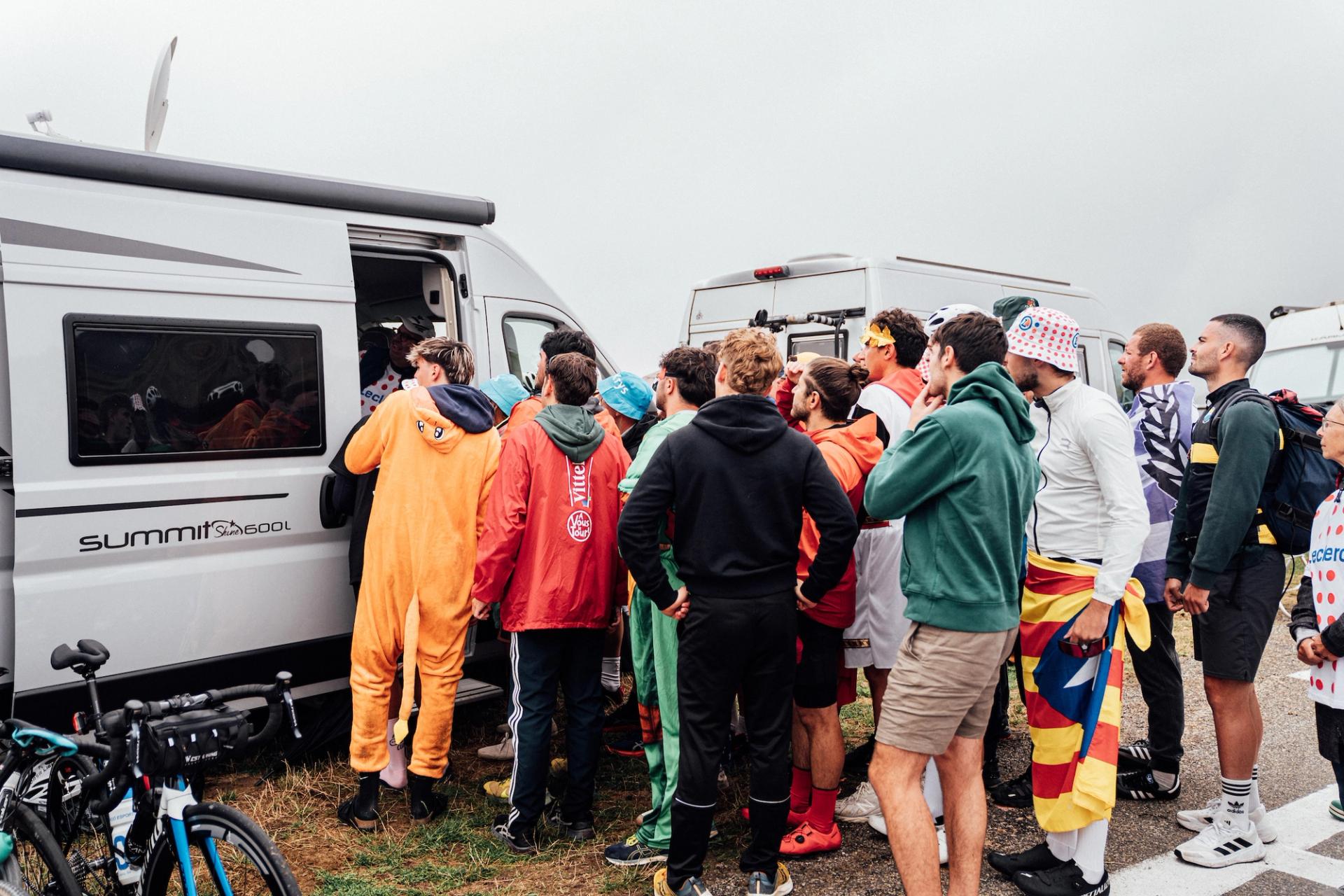
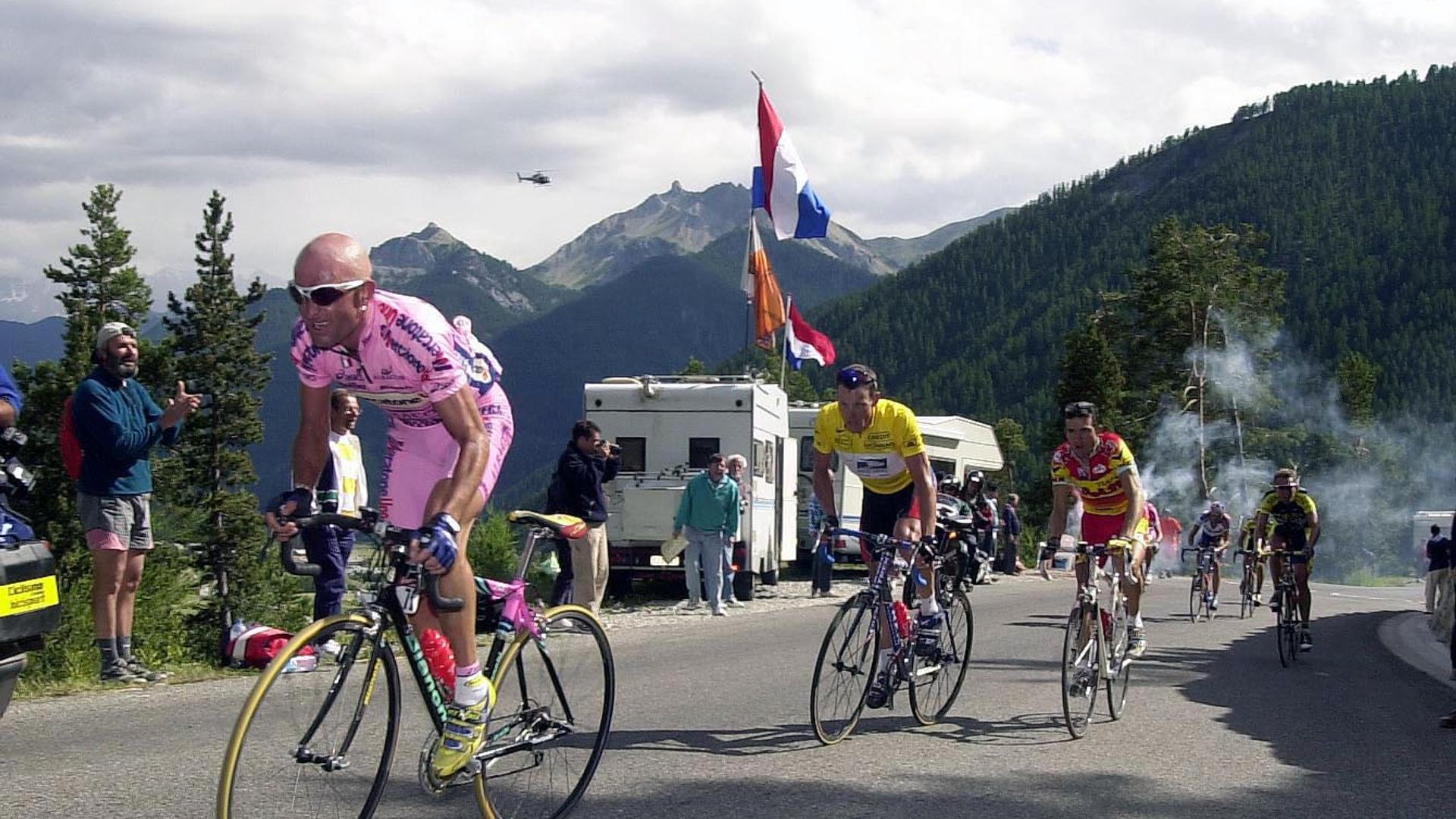
Roadside fans gathered around a campervan TV - Picture by Zac Williams/SWpix.com
Netherlands: NOS and the sensible option
Across the border, Dutch public broadcaster NOS quietly carries an enormous amount of the load. Big races – the Worlds, national championships, the Tour, most monuments – still have a stable, free-to-air home, and the tone mirrors Belgium: cycling presented as shared culture rather than a premium add-on.
But that foundation is starting to shift. As NOS trims its rights portfolio, dropping the Vuelta, Paris–Nice and several smaller events, the gaps are beginning to show. You’ll still get the major moments for free, but increasingly the smaller stage races disappear first – and if a race falls outside that shrinking core, finding it now often requires more than a casual channel flick.
Australia: SBS and the late‑night cult
Australia’s SBS has made an art form out of late‑night European cycling. Long before streaming was fashionable, Aussies were half‑sleeping through the third week of the Giro on a grainy TV, gratis.
SBS still offers a lot of racing free-to-air or via a free app, including Grand Tours and classics. There are compromises – time zones, not always every minute of every minor race – but in terms of cost vs access, it’s still absurdly generous.
In all three of these countries, the pattern is similar: relatively strong public broadcasters; a sense that cycling is part of the cultural wallpaper; and enough audience volume that putting big races behind a hard paywall would feel…uncomfortable.
Paywall purgatory: UK and US fans do the maths
Now cross over to the English‑speaking markets where things start to look less like a romantic postcard and more like an Excel nightmare. REWORK
United Kingdom: from Eurosport comfort to Discovery+ “premium”
For years, British fans had a fairly simple deal: get Eurosport (cheap, often bundled) and you got most of the calendar. ITV4 chipped in with free Tour coverage for the casuals. GCN+ was a blessing, a truly vast schedule of coverage for £6.99. Life was manageable.
Then came consolidation.
GCN+ was shuttered, then Eurosport’s UK service was folded into TNT Sports / Discovery+. If you want the full buffet of cycling, you’re pushed toward Discovery+ Premium, which sits around £30.99 a month. That’s the kind of number that makes even committed fans start converting it into tyres and race entries.
From 2026, the Tour de France will sit entirely behind pay TV in the UK. No more free live ITV lifeline. For hardcore fans, that probably means paying up. For the curious person who just wants to see what this Pogačar guy is about? Maybe they just don’t.
United States: choose your fighter (and your budget)
In the US, the issue isn’t one expensive gate. It’s three smaller, annoyingly spaced gates.
Broadly speaking:
- Peacock carries ASO races like the Tour de France and Liège–Bastogne–Liège.
- Max has the Giro d’Italia and associated RCS races.
- FloBikes mops up a lot of other classics and stage races.
To follow most of the big stuff all year, you’re realistically looking at subscribing to two or three services, at least intermittently. Annualised, fans estimate that can land somewhere in the $330–$400 range.
Plenty of people play the “binge-and-cancel” game: sign up for the Giro month, cancel; re‑up for Tour time; maybe skip half the autumn. It works, but it doesn’t exactly make the sport feel welcoming.
The underlying message is clear: in the UK and US, cycling is treated as a nice‑to‑have add‑on for sports bundles, not as a core national product. Broadcasters assume the people who care will pay almost whatever it costs. Everyone else? Collateral damage.
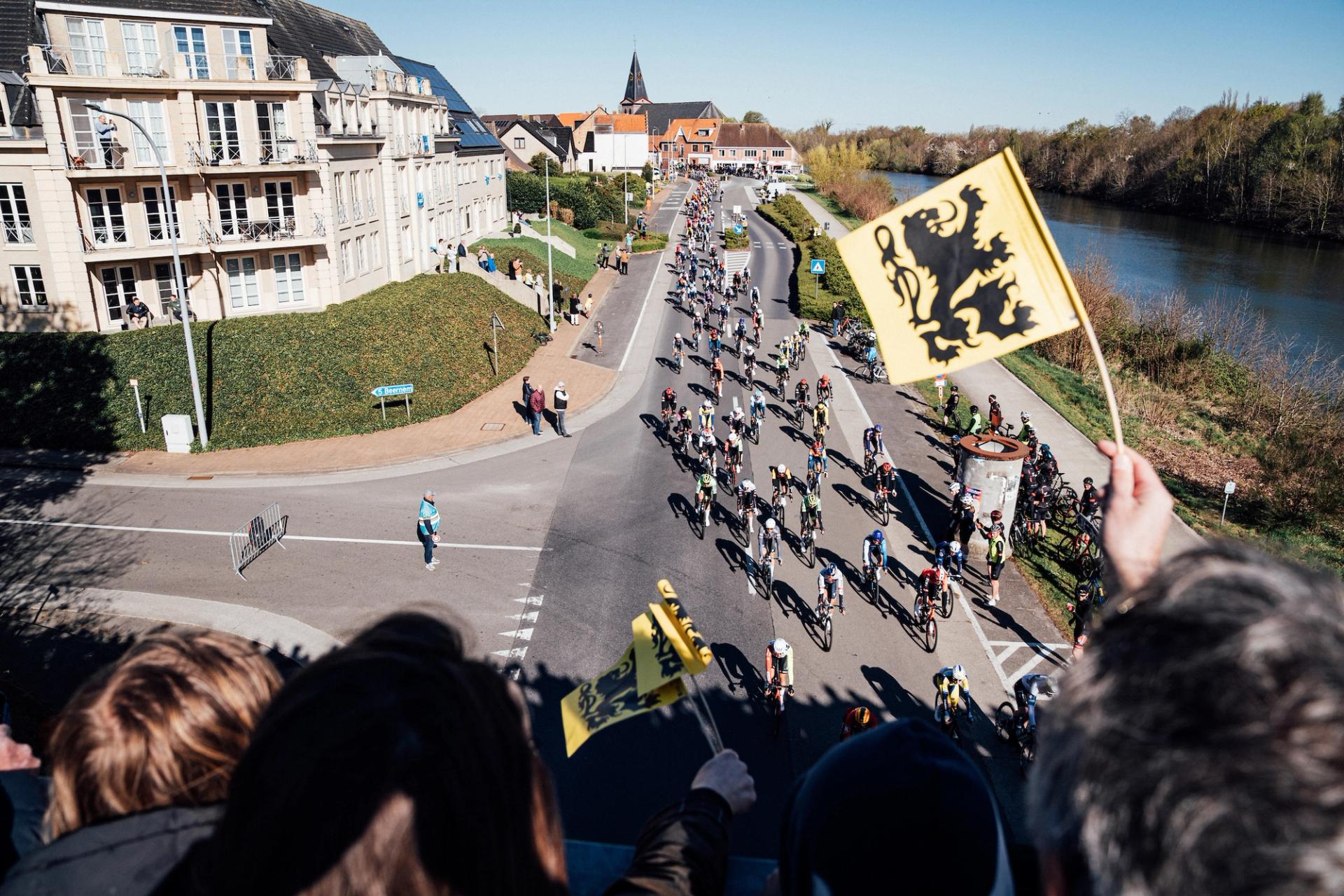
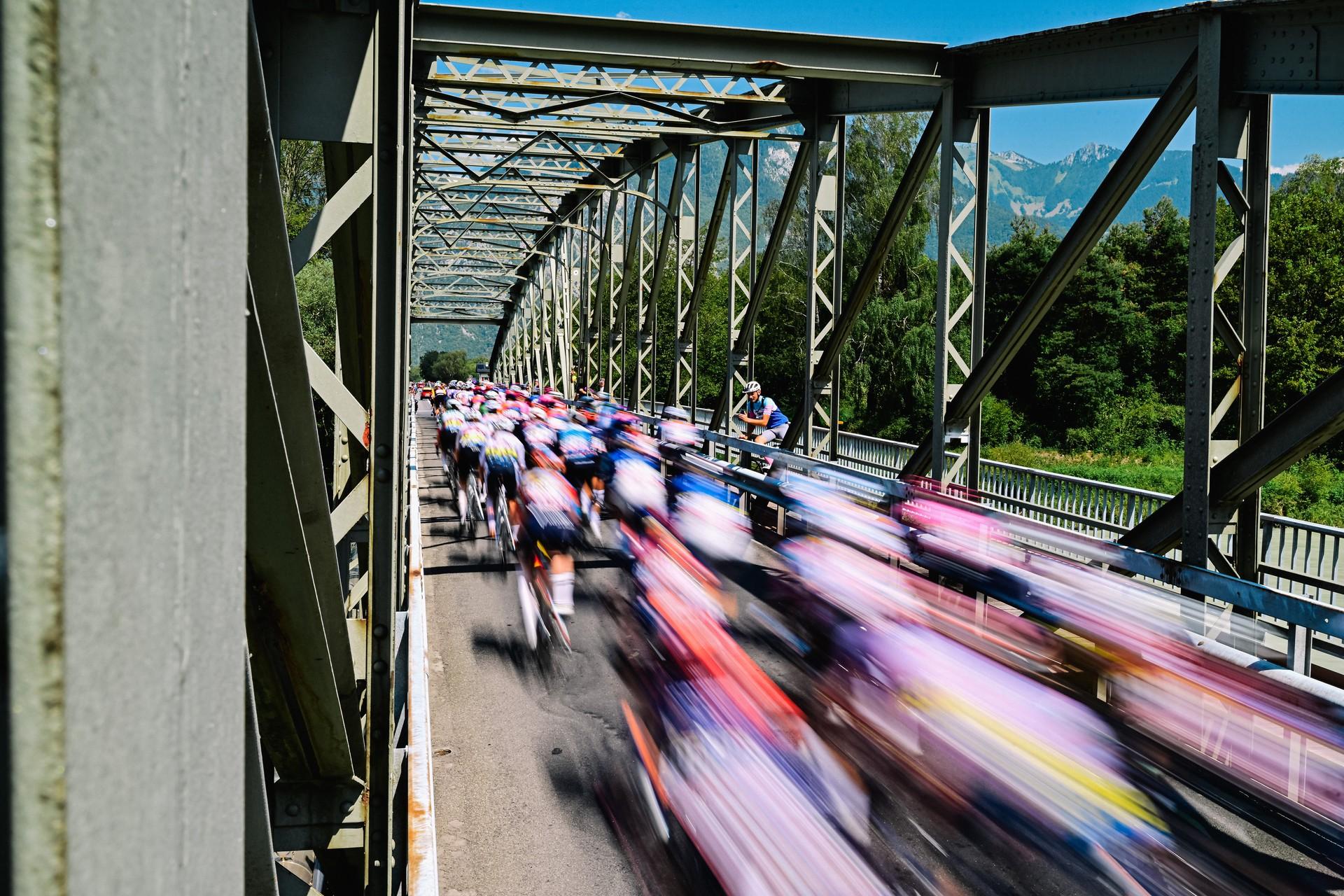
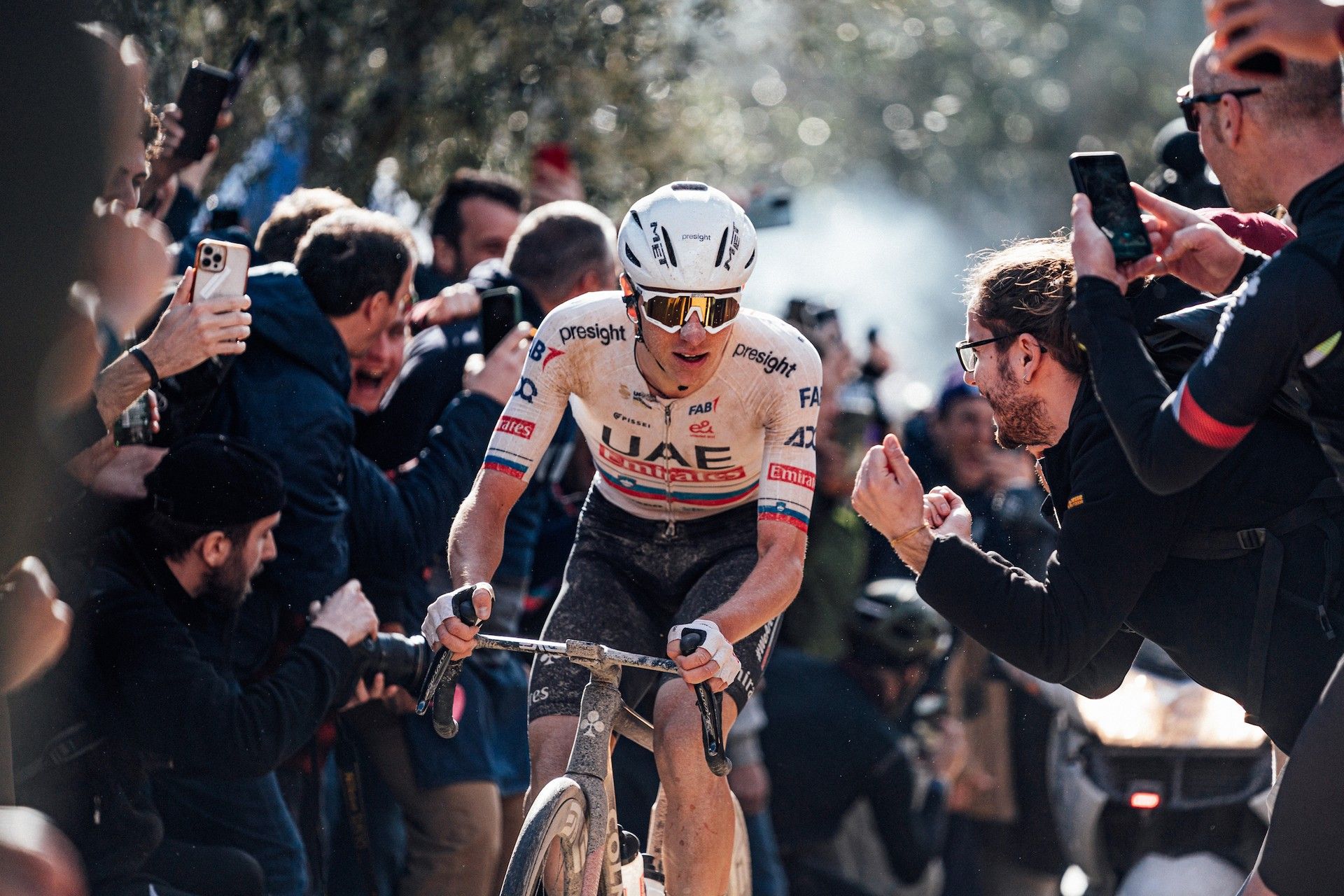
In Flanders, cycling is infrastructure not just entertainment. Picture by Zac Williams/SWpix.com
Why the gap? Three simple ingredients
For anyone who has touched on the topic, sports rights and funding models can be quantum computer-level complicated, but the fan‑level explanation really comes down to three things.
1. Cultural appetite
Where cycling holds a central place in national identity – Flanders, much of France, the Netherlands, parts of Australia – there’s pressure, both political and social, to keep it widely available. Taking Flanders’ big races off free TV would be about as popular as banning mayonnaise.
In markets where cycling is a niche interest, it’s easier to shove it into an expensive corner of a streaming app. Fewer people complain, and companies can charge the die‑hards more.
2. Broadcaster priorities
Public broadcasters (VRT, France Télévisions, NOS, SBS) are supposed to care about reach, culture and shared experience. That doesn’t mean they’re charities, but they’ll tolerate lower profit margins if it means millions of people can watch.
Commercial streamers and pay‑TV operators answer mainly to shareholders. Cycling sits on the balance sheet alongside everything else. If the rights are costly and the audience is relatively small, the answer is simple: higher prices or bigger bundles.
3. Who owns what
Over the past few years, big media groups have hoovered up cycling rights and parked them inside larger packages. Warner Bros. Discovery’s consolidation of Eurosport content, the shutdown of GCN+, and long‑term deals into the 2030s all point in the same direction: fewer gatekeepers, bigger walls.
The upshot: if a public broadcaster already has a race and treats it as cultural capital, you probably watch it cheaply. If a global media conglomerate has it and sees it as an upsell, get your wallet.
So, which country actually has it best?
On the unofficial Velora podium of fan experience, it probably looks like this:
Gold – Belgium (Flanders, specifically)
Free, obsessive coverage; top‑tier production; commentators who know the under‑23 scene better than most WorldTour DSs; cycling on in every bar from Opening Weekend to Roubaix. If you designed Cycling TV Heaven, you’d end up perilously close to Sporza.
Silver – France, Netherlands, Australia
Different flavours, same basic recipe: public broadcasters treat cycling as part of national life, keep the big races free or cheap, and pull in audiences big enough to justify it.
Bronze(ish) – UK, US and other paywall markets
Quality of coverage can be high – the pictures are the same for everyone, after all – but access is more expensive, more fragmented, and less friendly to casual discovery. Hardcore fans find workarounds; everyone else often never sees the sport at all.
What it means for fans (and the future)
None of this is fixed. Rights change hands, platforms merge, public broadcasters fight budget cuts. Belgium today could, in theory, become the UK tomorrow.
But one thing is constant: fans who can watch easily tend to stick around. Kids who see the Tour or Roubaix on free TV are more likely to end up on a bike – or at least know what on earth a cobbled sector is.
If you live in a Sporza‑style paradise, enjoy it, defend it, and maybe don’t boast too loudly in the group chat. If you’re in subscription purgatory, you’re not imagining it – you really are paying more for the same watts.
And somewhere in a Flemish café, another round of beers has just arrived, the race is flicking into the final hour on free‑to‑air TV, and nobody is typing “how to watch” into a search bar. For now, at least, Belgium still owns the peloton’s remote control.