The 2027 Giro d'Italia Women has a stage for almost every type of rider in the peloton, and it saves its hardest questions for the final weekend. The nine-stage route, unveiled in Rome, runs from Viareggio on May 29 to the Aosta Valley on June 6. It covers 1,132km and 17,450m of climbing.
It is the 38th edition of the race but the fourth under the organisation of RCS Sport, the company that also organises the men’s race. It is the first time Viareggio has hosted the Grande Partenza, and the race takes place entirely within Italy. From the Tuscan coast the race heads along the Ligurian Riviera, crosses the Po Valley and then climbs into the mountains of Lombardy and the Aosta Valley. It ends with a stage the organisers have named after Monte Bianco.
Our visualisation below shows an interactive preview of the race, based on the approximate information available so far.
The 2027 route
Nine days north from the Tuscan coast
Stage 1 · 29 May · 124km
One small hill, four times
Pitoro tops out at 220m, but it comes round every 32km or so. The last time over, the line is 21km away.
Stages 2 and 3 · 30 to 31 May
One climb tips it, one comes too soon
San Martino di Noceto crests 27km from Genova. The next day the Bocco is over by km 20, and the last 151km run down to the Po.
Stage 4 · 1 June · 131km
The first pecking order
Four climbs and 3,500m, finishing on 11.6km at a steady 5.4%.
Stage 5 · 2 June · 140km
Flat as the race gets
Four laps and 300m of climbing all day. The sprinters' cleanest chance.
Stage 6 · 3 June · 137km
Up to the roof of the race
San Marco at 1,987m, then 19.3km to the line. Nearly 40km of the day goes uphill.
Stages 7 and 8 · 4 to 5 June
A last sprint, then a clock that climbs
Rho is the final day for the fast. The only time trial, 11km in the Valdigne, rises almost all the way, so there is no flat test to win time back.
Stage 9 · 6 June · 132km
Over the top, still 25km out
3,950m of climbing. Colle San Carlo, 10km at 9.8%, is the steepest climb of the race, and the finish is still 25km beyond it.
The whole route
Four days decide it, and three come at the end
- 5 days for the fast and the opportunistic
- 4 days for the maglia rosa
Routes sketched through the places on the organiser's stage profiles, positions approximate. The stage 8 course is not drawn, and stage 9 is drawn only between its climbs. Profiles traced from the organiser's charts; stage 5 has none and is shown flat. Heights exaggerated.
The route as a whole is excellent. It has classic Giro stages for climbers, sprinters and puncheurs alike, with three stages surely set for a bunch sprint and possiyly four or five in which some sprinters survive. But breaks and puncheurs will also have their chance. The overall race turns on four days: summit finishes at Passo della Presolana and Madesimo-Valle Spluga, an uphill time trial in the Valdigne and the 3,950m finale.
The order of those days matters as much as the climbing. The only time trial is uphill, so a rider who loses time to the pure climbers in the mountains has no flat test against the clock to win it back. The last four days also carry the heaviest load: a high-mountain stage, a sprint stage, the uphill time trial and the queen stage, one after another. A contender who has raced cautiously for the first half will still have plenty of terrain on which to make her move.

Stage | Date | Route | Type | Distance |
|---|---|---|---|---|
| 1 | May 29 | Viareggio – Viareggio | Hilly | 124km |
| 2 | May 30 | Massa – Genova | Hilly | 139km |
| 3 | May 31 | Cogorno – Viadana | Flat | 171km |
| 4 | June 1 | Credaro – Passo della Presolana | Mountain (summit finish) | 131km |
| 5 | June 2 | Cassano d'Adda – Cassano d'Adda | Flat | 140km |
| 6 | June 3 | Bergamo – Madesimo-Valle Spluga | Mountain (summit finish) | 137km |
| 7 | June 4 | Carugate – Rho | Flat | 147km |
| 8 | June 5 | Valdigne Tudor ITT | Uphill ITT | 11km |
| 9 | June 6 | Monte Bianco Stage | Mountain | 132km |
Five days for the fast and the opportunistic
Stage 1 could provide a shock to the system for many riders. The repeated climbs of Pitoro may see the bunch split and stretch, dropping the sprinters. They have time to claw their way back on but it may prove too much by the finale. The 124km circuit around Viareggio climbs Pitoro four times. The summits come at 6.5km, 38.7km, 70.9km and 103.1km, roughly every 32km, with flat roads in between. Pitoro tops out at only 220m, so this is a short climb rather than a mountain. Repeated four times, it adds up to around 1,200m of climbing over the day.
Some teams will aim to pressure the sprinters in favour of puncheurs to go for the win. The likes of Kim Le Court (AG Insurance-Soudal), Celia Gery (FDJ United-Suez), Lotte Kopecky (SD Worx-Protime) and Noemi Ruegg (EF Education-Oatly) would all be perfect for this stage if they do line up for the start.
The last ascent comes about 21km from the finish, and the fast run-in back to Viareggio decides how the day ends. A dropped sprinter with team-mates around her can hope to close a gap over that distance. A committed group of strong riders can also hold one. That is where an overall contender can be caught out. If they are poorly placed at the back as the field splits on the fourth climb, 21km of fast, flat road is a long way to chase. In a race likely to be decided by seconds across four mountain days, the GC teams cannot treat day one as a formality.
Stage 2 takes on 139km from Massa to Genova along the Via Aurelia, with more than 2,000m of climbing. It has two categorised climbs. Passo del Bracco, which tops out at 619m, comes at 67.3km, potentially too early to decide the stage but hard enough to tire the legs. San Martino di Noceto, summit at 265m, comes at 112km, leaving about 27km to the finish.
The organisers leave the outcome open to attackers and sprinters alike, and San Martino di Noceto is where the day will tip one way or the other. A puncheur who escapes over the top with a small group has a realistic chance of staying clear. To stop that, the sprinters' teams have to commit riders to the chase on the fast-flowing roads into Genova. There is a rise towards the finish as well, adding to the difficulties for the fast women.
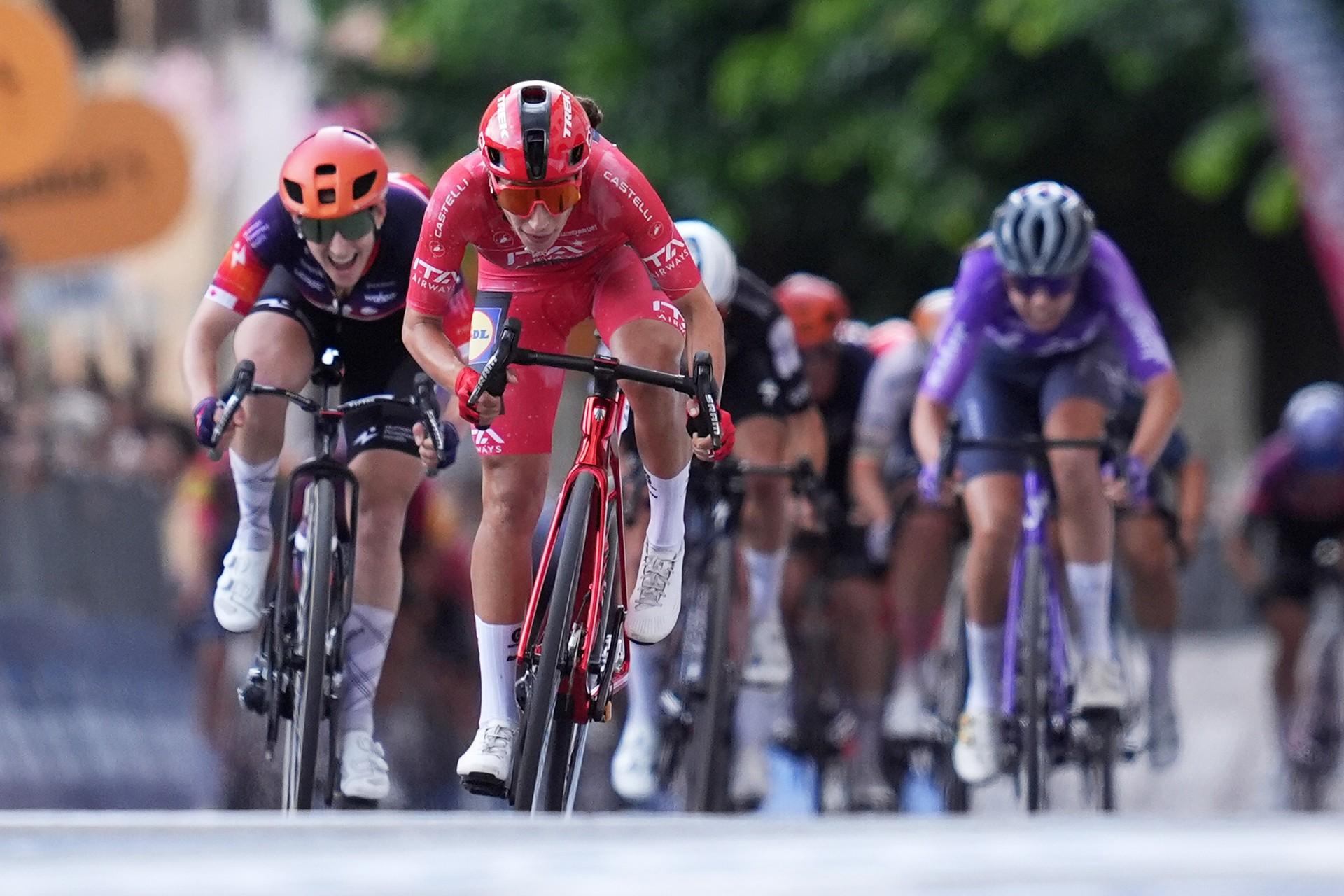
Stage 3, from Cogorno to Viadana, is the longest of the race at 171km. Most of its difficulty comes early. Passo del Bocco, cresting at 957m, peaks after 20km, followed by a long descent through the Val di Taro. The second half of the stage is flat. This will likely see a battle for the break on the climb but after that the sprinters' teams should take control with a bunch sprint in Viadana very likely. The overall contenders will spend the day trying to waste as little energy as possible, with Presolana the following afternoon.
The fifth stage is easily the flattest of the race with a 140km route around Cassano d’Adda in the Milano and Bergamo provinces. Just 300m of climbing over the day, with four laps of the finishing circuit. This is as pure as pure gets for the sprinters. The GC riders will just need to keep their wits about them as stress in the bunch will be high.
Stage 7, from Carugate to Rho, is the sprinters' last chance. The 147km stage rolls through Brianza in its first half and crests Sirtori, at 472m, after 40.5km. The stage is rolling but this is another near-nailed-on sprint stage. But how will the sprinters' legs be after some brutal climbing and more big ascents to come for the final two stages? If their teams are short of riders, a breakaway that forms in Brianza and works well together on the run-in could stay clear. If the sprint teams still have the numbers, Rho should end in a bunch finish.
Four days for the maglia rosa
Stage 4 is the first real mountain test. The 131km stage from Credaro to Passo della Presolana packs 3,500m of climbing into four categorised ascents. Forcellino di Bianzano comes at 45.1km, followed by Ganda at 65km and Colle di Zambla at 91.8km, both familiar from Il Lombardia. The stage then finishes on Passo della Presolana.
The final climb is 11.6km at an average of 5.4%, with a maximum of 10%. That gradient is steady rather than brutal, which shapes the tactics. Leaders will hope for teammate support and the chance to sit in the wheels for longer before unleashing decisive attacks on the steeper gradients.
The earlier climbs of Ganda and Zambla will test the legs and potentially show surprise weaknesses of some of the big-name favourites before the final ascent to the finish, laying out the first clear hierarchy for the race.
 Photo: Marco Alpozzi/LaPresse
Stage 6, from Bergamo to Madesimo-Valle Spluga, is the toughest test for the pure climbers. The 137km stage has 3,550m of climbing over two very long ascents. Passo San Marco, at 1,987m the highest point of the race and this year's Cima Alfonsina Strada, is 19.6km at 7.4%, with ramps of up to 15%. Its summit comes at 56.6km. A descent of more than 20km follows into Valtellina, and the stage finishes on the climb to Madesimo-Valle Spluga: 19.3km at 6.3%, maximum 13%, ending at 1,535m.
That is almost 40km of climbing in just 137km with some very tough gradients along the way. The best GC names will look to really push their rivals on this stage, potentially even going early on the Passo San Marco to really explode things and cause panic in the bunch. The breakaway could also be key with GC riders trying to place teammates out front for them to drop back in the valley between the two climbs.
The final climb will reward riders who have saved energy. Nearly 20km is long enough for a rider to lose several minutes if she runs out of strength, and long enough for a rider who started steadily to make up time. After this stage, the gaps should be large enough to show who can win the race.
But it can all change very fast and stage 8 is a perfect place for it to happen. The ITT at Valdigne is a great chance for another big shake-up of the GC with 11km of almost solid climbing. The climb is roughly 6% average gradient but some sources suggest it is 4% to 5%. Either way, this is a steady climb for a diesel climber such as someone like Anna van der Breggen (SD Worx-Protime) or Marlen Reusser (Movistar).
 Photo: Marco Alpozzi / LaPresse
The ITT will set things up for the final stage around Monte Bianco (Mont Blanc) with every rider knowing exactly what is between them and their individual goals for the race.
Stage 9 has more climbing than any other day of the race: 3,950m in 132km, entirely within the extremely mountainous Aosta Valley. There is almost no flat road. The stage climbs Doues, then Verrogne, which rises 7.4km at 7.9%, has about 2km of undulating downhill, then climbs another 5.6km at 6.9%. Saint-Nicolas follows, then Colle San Carlo: 10km at 9.8%, with early sections at 15%. It is the steepest major climb of the race. The summit comes about 25km from the finish, followed by a descent and a short uphill finish.
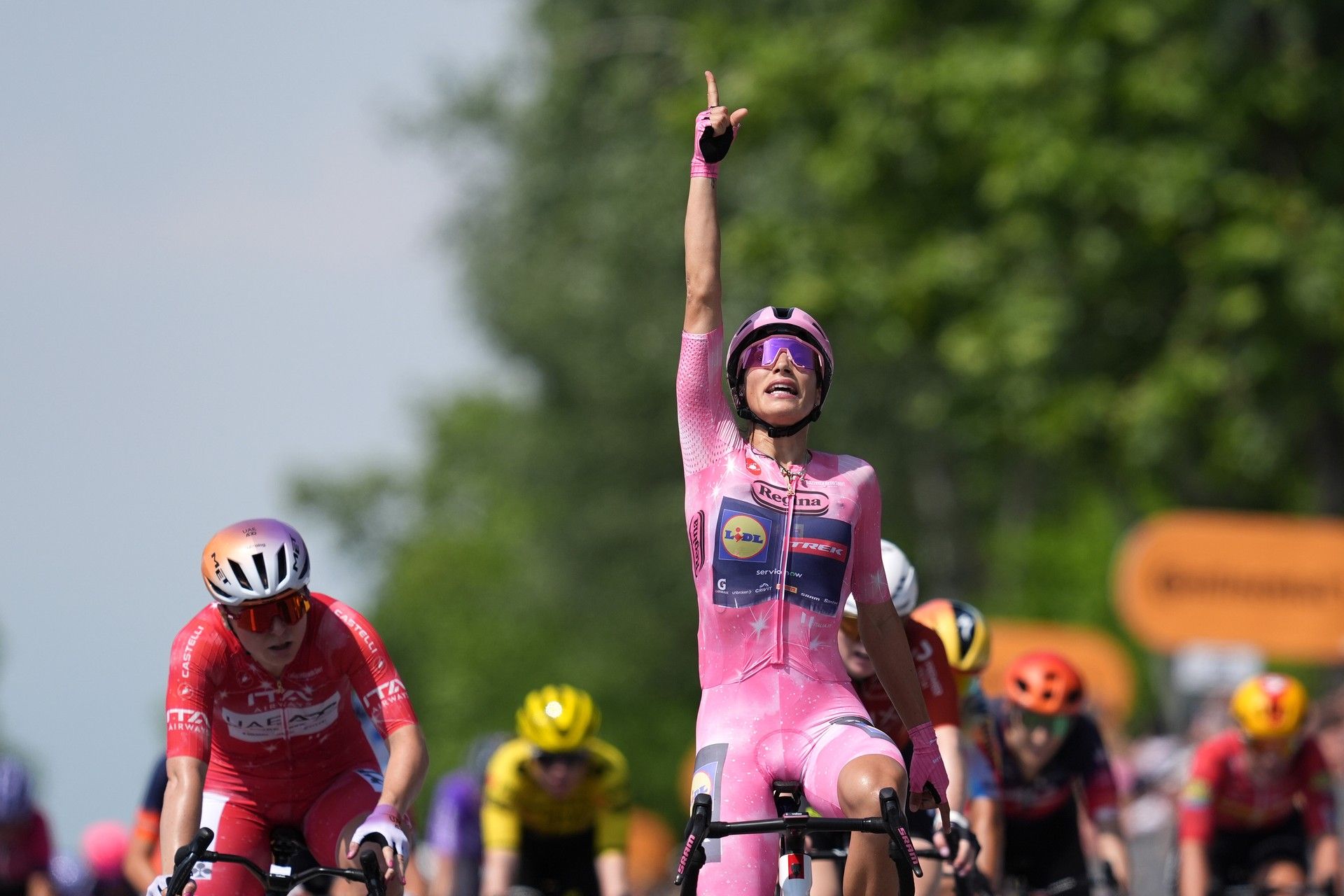
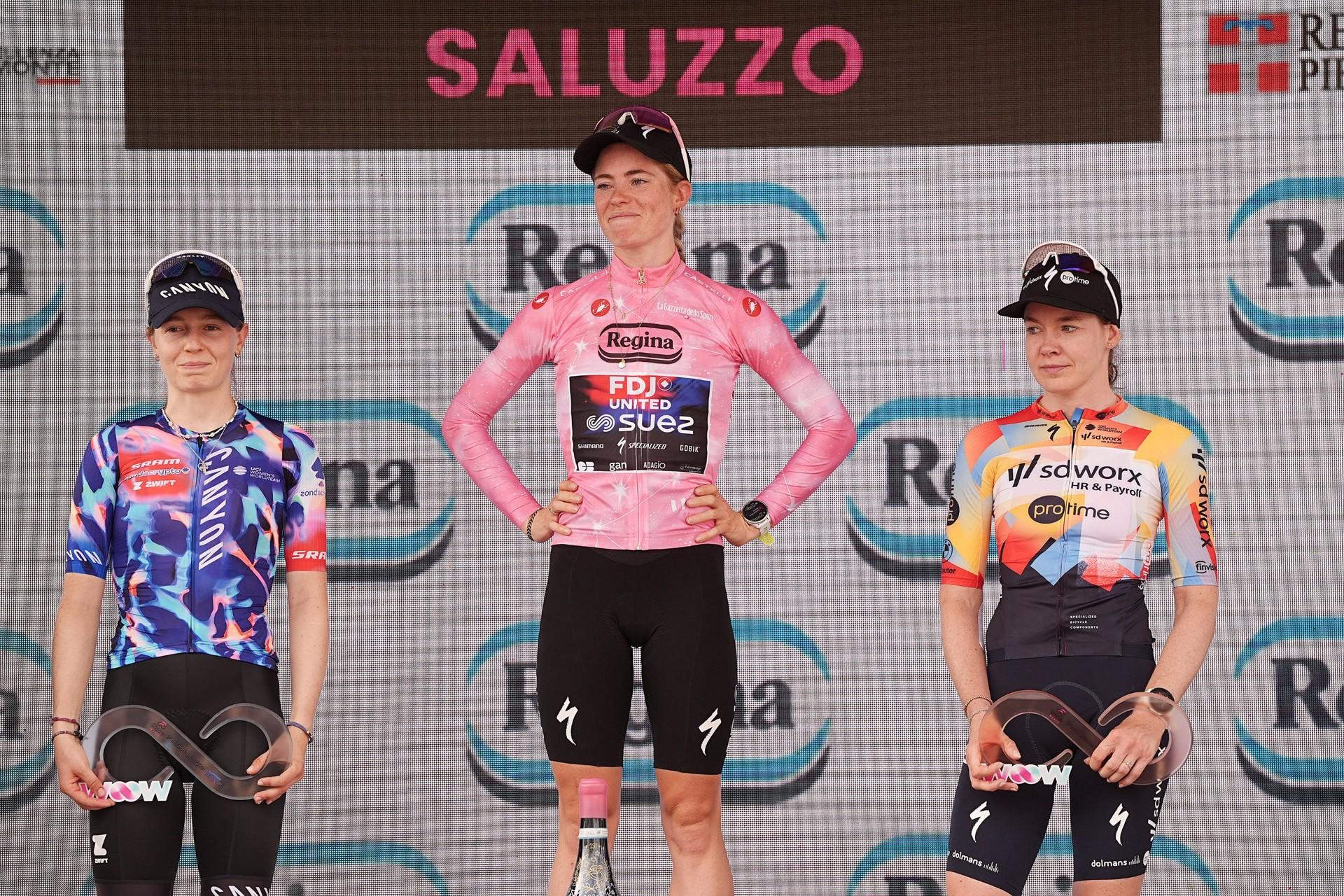
This stage could overturn the general classification. The 2026 race showed that this is very possible. On the final stage to Saluzzo, Demi Vollering (FDJ United-Suez) overturned a 49-second deficit to Van der Breggen and took the maglia rosa. Van der Breggen dropped from first to third, and Elisa Longo Borghini (UAE Team L'IMAD) won the stage. Vollering had risked her own podium place by letting Antonia Niedermaier (Canyon//SRAM) attack earlier then forcing Van der Breggen to close the gaps instead of doing so herself, before the now world champion launched a huge attack on the final climb to bridge to the leaders and drop Van der Breggen.
"It was really an all-or-nothing thing," Vollering said afterwards. "I had cramps everywhere, but I just kept going full gas."
The 2027 finale offers even more terrain for that kind of racing. Doues, Verrogne and Saint-Nicolas will wear down the leader's team before Colle San Carlo. A rider who lost time in the uphill time trial will have climbing to attack on almost all day, and team-mates sent up the road on the earlier climbs could help her later. San Carlo is steep enough to open real gaps.
The 25km after the summit adds one more test. A rider who reaches the top alone still has a descent and a final rise to survive, and a group that works well together can bring her back. A leader under pressure can also lose time if she descends badly. Vollering described her decisive climb in Saluzzo the same way: "My finish line was on the top of that climb." In the Aosta Valley, the line will still be 25km away.