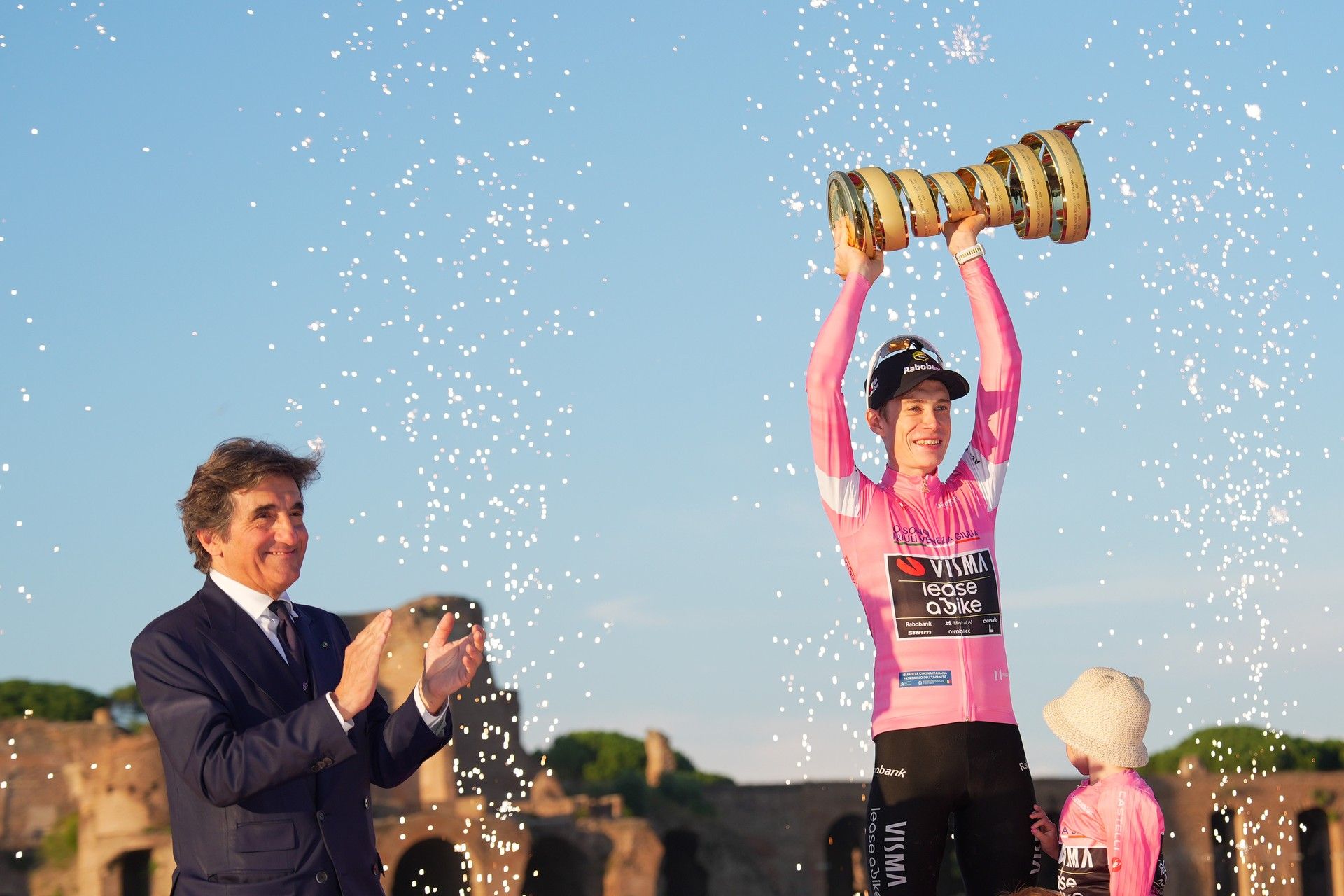
The 2027 Giro d'Italia sees riders tackle some of the most brutal climbs in Italy with two ascents of the Mortirolo and one of the Gavia taken on in a single day. The route also takes on the brutal Ovaro side of Monte Zoncolan with plenty of other hellish mountain stages and tests against the clock to challenge the very best in the fight for pink.
RCS Sports unveiled the route for the 110th edition of the race in Rome on November 3. The racing kicks off in Trieste on Saturday, May 8 and finishes three weeks later in Rome on Sunday, May 30 after 21 stages, 3,418.9km and 50,250m of climbing. That is 1,550m more climbing than the 2026 race, which totalled 48,700m. Time trialling rises from 42km to 56.9km, split between two very different courses: 19.6km climbing to Campo di Giove on stage seven and a flat 37.3km from Monza to Milan on stage 15.
Our visualisation below shows an interactive preview of the 21 stages of the race, based on the information we have available so far.
Routes and profiles traced from the organiser's map and charts, positions approximate. Heights exaggerated. Bars show each stage's climbing.
The rest days on May 17 and May 24 divide the race into blocks of nine, six and six racing days.
Route
21 Stages • 2,094.9km total

| Stage | Date | Route | Distance | Type |
|---|---|---|---|---|
| 1 | May 8 | Trieste – Trieste | km | Hilly |
| 2 | May 9 | Ljubljana – Koper | km | Hilly |
| 3 | May 10 | Cervignano del Friuli – Possagno | 163 km | Hilly |
| 4 | May 11 | Argenta – Misano Adriatico (Autodromo Marco Simoncelli) | km | Flat |
| 5 | May 12 | Filottrano – Sarnano-Sassotetto | 139 km | Mountain |
| 6 | May 13 | Alba Adriatica – Lanciano | km | Hilly |
| 7 | May 14 | Sulmona – Campo di Giove | 19.6 km | Individual time trial |
| 8 | May 15 | Trasacco – Napoli | 219 km | Hilly |
| 9 | May 16 | Itri – Subiaco-Monte Livata | km | Mountain |
| 10 | May 18 | Palombara Sabina – Norcia | 218 km | Hilly |
| 11 | May 19 | Gualdo Tadino – Scarperia (Autodromo del Mugello) | 220 km | Hilly |
| 12 | May 20 | Montecatini Terme – Zeri (Passo Due Santi) | km | Mountain |
| 13 | May 21 | Borgo Val di Taro – Reggio Emilia | 176 km | Flat |
| 14 | May 22 | Cantù Arena – Piani di Bobbio/Valtorta | 187 km | Mountain |
| 15 | May 23 | Monza (Autodromo Nazionale) – Milano | 37.3 km | Individual time trial |
| 16 | May 25 | Sondrio – Aprica | 192 km | Mountain |
| 17 | May 26 | Chiari – Vo' | 194 km | Hilly |
| 18 | May 27 | Rovereto – Madonna di Campiglio | km | Mountain |
| 19 | May 28 | Rovereto – Sacile | 199 km | Hilly |
| 20 | May 29 | Pordenone – Monte Zoncolan | km | Mountain |
| 21 | May 30 | Roma – Roma | 131 km | Flat |
Week one: Slovenia, Sassotetto and a climbing time trial
The race begins with the Grande Partenza starting on Italian soil in Trieste, which hosts the start for the second time. In 1981 it staged a 6.6km prologue in Piazza Unità d'Italia, which Knut Knudsen won. This time the opening stage begins and concludes in the city, crosses briefly into Slovenia and climbs about 2,400m, with three climbs in the final 40km. That finale suits attackers, so the first maglia rosa is unlikely to go to a pure sprinter. GC teams will also need to stay near the front from the first day to avoid losing time.
 Photo: Fabio Ferrari/LaPresse
After this brief dip into Slovenia, stage two is entirely inside the country with the day from Ljubljana to Koper. It is the fourth Giro stage to start there, after 1971, 1994 and 2001. Its 2,200m of climbing comes as continuous rolling terrain with some easier sections, which points to a reduced sprint for fast riders who can get over the climbs. Stage three runs 163km to Possagno at the foot of Monte Grappa, with about 1,450m of climbing. The Montello and Mostaccin are the climbs most likely to break up the run to the line.
The first stage built for a full bunch sprint is stage four on May 11, from Argenta to the Misano World Circuit Marco Simoncelli. It is predominantly flat with no significant climbing. Sprinters' teams will have had to judge for three days whether chasing was worth the effort, and here the answer is simple.
Stage five on May 12 is the first real GC test. It starts in Filottrano, hometown of Michele Scarponi, to mark the tenth anniversary of his death, and covers just 139km with 3,300m of climbing. With such a huge amount of climbing for such a short stage, there is hardly a moment of flat across the entire day but the climbs are all on relatively steady gradients.
The following day is a tough and undulating stage to Lanciano that will suit the puncheurs. This could be a very good opportunity for the breakaway to try and stay away from the bunch and GC riders who switch off could easily lose seconds along the way. Then comes stage seven, the 19.6km time trial from Sulmona to Campo di Giove. The second half climbs at about 5%, so pacing decides the result: a rider who goes too hard early pays for it on the climb.
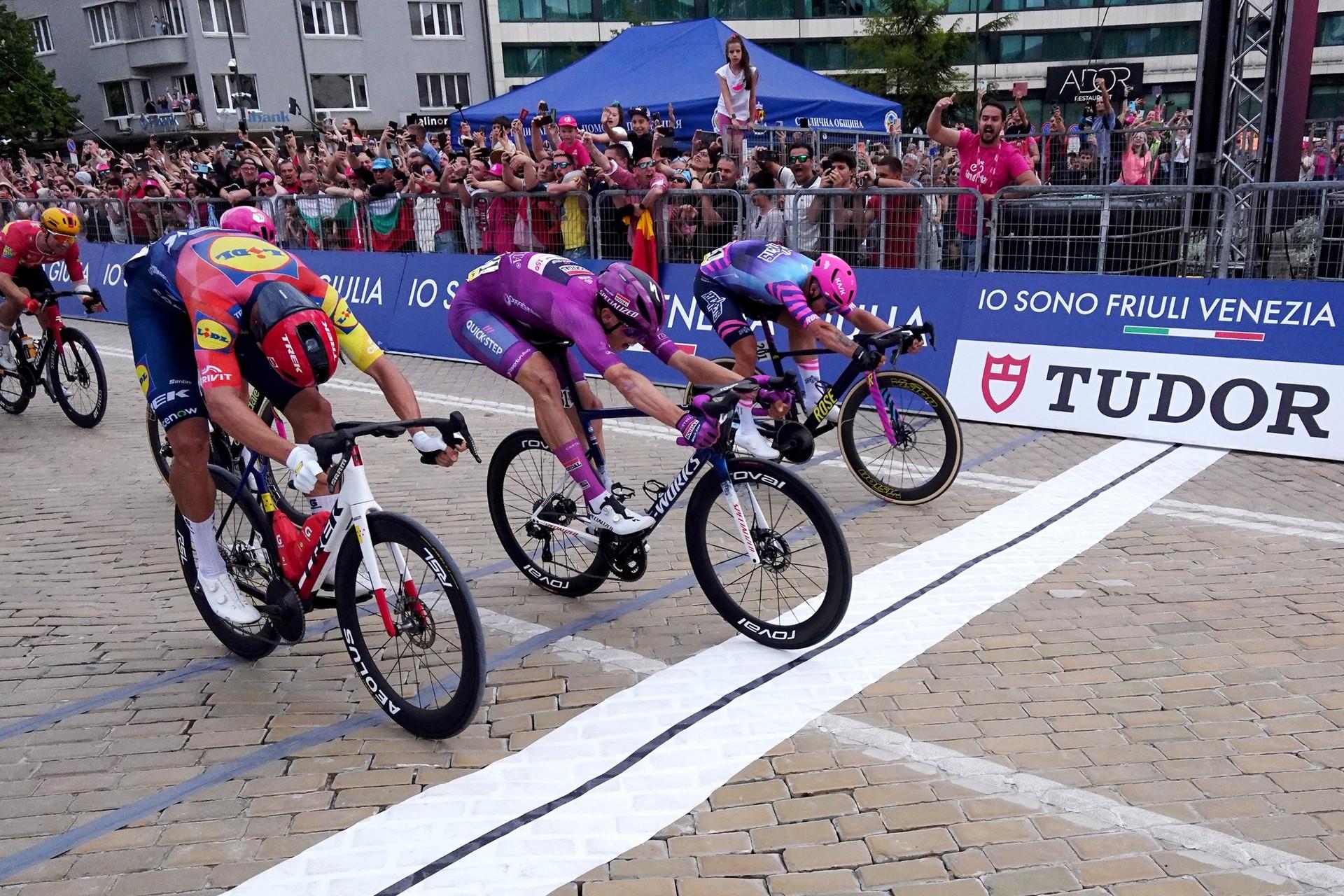
Stage eight sees the race finish in Naples for the sixth year in a row with a 219km route across the Apennines with a lumpy finale that could potentially see puncheurs challenge sprinters but also a chance for a daring breakaway to succeed.
Monte Livata brings week one to a close on Sunday, May 16. The Livata climb featured in the 2026 Giro Next Gen and measures around 13.9km at an average gradient of 6.9%, with the first four kilometres consistently above 10% before the climb eases to around 6%. Because the steepest gradients come at the bottom, the selection is likely to be made early on the climb rather than in the final kilometre. A rider who empties himself on those opening ramps then faces around 10km of steadier climbing, where a well-organised chase can bring him back. In the Next Gen race, attacks began at the foot. Lorenzo Finn (Red Bull-Bora-Hansgrohe) opened a gap 9km from the finish. Henrique Bravo (Soudal Quick-Step Devo Team) chased with Mateo Ramirez (UAE Team Emirates Gen Z), finished third on the stage and moved up ten places to third overall.
"It was a hard stage with a difficult climb, where it was every man for himself, and I am content with my result," Bravo said in a team statement.
Week two: Zeri, Piani di Bobbio and the Milan time trial
The second week kicks off with another very hard day in the saddle as the riders take on 218km and 3,600m of climbing from Palombara Sabina to Norcia. After the Castelluccio plateau come Forca di Presta and Forca Ventolosa, and the gradient changes constantly. It is the first stage after the rest day, and a breakaway containing climbers could make it hard for GC teams to control. Stage 11 to the Mugello circuit is the longest of the race at 220km. This is down as a rare chance for the sprinters but the Vetta le Croci climb that peaks with around 30km to go may test the fast men’s legs.
Zeri on stage 12 is the Tappa Bartali, dedicated to Gino Bartali, and the Giro's first visit to Passo Due Santi. Most of the climbing comes in the second half, and the organiser describes the finale as one for pure climbers. The harder upper section measures 8.5km averaging 8.6%, with a maximum of 14%. The full ascent from Pontremoli is 23.7km at 4.5%, a figure brought down by descents and false flats. The approach drops from Passo Mistadella straight into that harder section, leaving no gradual lead-in to the decisive part of the climb. For lightweight climbers, this is the second-to-last summit finish before Milan, and they will want to gain time here. Stage 13, 176km from Borgo Val di Taro to Reggio Emilia, has some easy climbing early and should end in a bunch sprint.
Stage 14 covers 187km from Cantù Arena with an absolutely brutal 4,900m of climbing over the Ghisallo, Culmine di San Pietro, Miragolo San Salvatore and Alino, before the finish at the Piani di Bobbio ski lifts. Current rumours suggest the approach will be on the Valtorta side. With four climbs before the final ascent, teams will have used up most of their climbing domestiques before the finale, and a leader with a strong team can control the race for longer. For climbers it is the last chance to gain time before the second time trial.
 Photo: Marco Alpozzi/LaPresse
That second time trial follows 24 hours later. The 37.3km course on May 23 starts inside the Autodromo Nazionale Monza and finishes in Milan. The organiser calls it predominantly flat and fast, ideal for specialists and potentially decisive for the GC. Milan's two most recent time trial finishes, in 2020 and 2021, were both won by Filippo Ganna. It offers the most GC time a strong time triallist can gain on any single stage of the race, and it comes the day after the 4,900m mountain stage. The rest day follows, and no time trial comes after it. Any deficit from Milan must be recovered on the road stages.
Week three: Aprica, Campiglio and the Zoncolan
As per usual with the Giro, the final week sees the hardest stages with a brutal set of mountain stages and some rather tricky punchy sprint stages, as well as the usual chaotic Rome circuit to finish things off.
 Photo: Fabio Ferrari/LaPresse
The final week kicks off with the hardest stage of the entire race on paper. Stage 16 sees the riders take on 192km of racing from Sondrio to Aprica. That sounds fine enough, but then you see that there is around 5,700m of climbing over the brutal slopes of the Mortirolo, the Gavia and the Mortirolo again, a sequence the Giro has never used before. The Mortirolo has featured 17 times, most recently in 2025. The Gavia, this year's Cima Coppi (highest point of the race), has been climbed ten times, most recently in 2014. The Mortirolo ascent from Mazzo is 12.5km at 10.5%, with ramps of 20%.
The stage finishes in Aprica, beyond the final Mortirolo summit, which leaves a descent and a run-in where the race can still change. In 2015, Alberto Contador punctured on an earlier descent, then caught and passed his rivals on the Mortirolo. Mikel Landa, then riding for Astana, attacked a little over 3km from the finish to win in Aprica. With the Gavia and an extra Mortirolo added, riders in 2027 will reach that finale far more tired.
There is little recovery from here. Stage 17 runs 194km from Chiari to Vo', flat at first before the short, steep muri of the Euganean Hills. Stage 18 to Madonna di Campiglio on May 27 is raced entirely in Trentino and gets harder as it goes. It includes a circuit of about 50km between Ponte Arche and Spiazzo, two ascents of Passo Durone and the demanding Passo Daone before the final climb. Daone was also used on the 2015 stage to Campiglio. Riders were dropped there, a crash during the descent led to a chase, and Astana set the tempo on the final climb. Landa won, but Contador finished five seconds behind and extended his lead over Fabio Aru. That stage showed that a strong team riding a steady tempo can limit the damage on a climb like this, and that a leader can hold on if he can follow it.
Stage 19, 199km from Rovereto to Sacile, has 3,000m of climbing. Vigolo Vattaro and Bieno come early, followed by a long downhill and flat section, before the short, steep Montaner and Castello di Caneva close to the finish.
The final stage before Rome returns to the brutal Zoncolan for its eighth inclusion in the race. It is famed for its horrendously steep gradients with an average of 11.9% and a max of 22% over the 10.1km-long climb from Ovaro. Lorenzo Fortunato (XDS Astana Team) won the most recent finish in 2021, which used the Sutrio side. The Ovaro side was last used in 2018, when Chris Froome attacked 4.3km from the top ahead of then pink jersey Simon Yates. Tom Dumoulin lost 37 seconds and Thibaut Pinot 42. Even on gradients this steep, a contender riding at his own pace can keep his losses small.
 Photo: Fabio Ferrari/LaPresse
Rome closes the race with 131km on a flat circuit of about 9km ridden eight times, which should end in a bunch sprint.
The route favours a complete GC rider. A pure climber has Sassotetto, Livata, Zeri and Piani di Bobbio to build a lead before Monza–Milan, and must then defend it, or recover lost time, on Aprica, Campiglio and Zoncolan. A strong time triallist has more ground to gain in Milan than anywhere else, but the Campo di Giove time trial gives that rider less of an edge, because it climbs. After Milan, there are no more time trials, and no rest day after the race resumes in week three.
Sprinters have few opportunities. The finishes at Misano, Reggio Emilia and Rome look like straightforward bunch sprints. Koper and Mugello are sprint chances only for riders who can get over the climbs, and Vo' finishes after a series of muri. Breakaway riders and puncheurs have more options in Trieste, Lanciano, Norcia and Sacile.
The GC will be settled on the Zoncolan on May 29, with the race arriving there after four hard days since Aprica.