Mathieu van der Poel (Alpecin-Deceuninck) has disclosed detailed biometric and recovery data during an appearance on the WHOOP podcast, describing how the eight-time cyclocross champion manages workload, chronic injury and day-to-day lifestyle choices.
Speaking to WHOOP CEO Will Ahmed on February 11, Van der Poel said his average resting heart rate sits at 38 bpm, with the device recording a low of 34 bpm. His heart rate variability, the variation in time between heartbeats that coaches use as a proxy for recovery readiness, regularly exceeds 200 milliseconds. The average male HRV is around 50–80 ms,
"I sit very high with my HRV," Van der Poel said. "It's genetic, but fitness helps too. It makes me stronger and better recovered."
He noted that after three consecutive hard training days his recovery status on WHOOP typically drops out of the "green" zone, prompting him to focus on sleep quality and dietary choices to return to baseline.
Van der Poel described endurance racing as “painful in some way”, but said enjoyment comes when the body cooperates. “On good days, the suffering is something I enjoy. On bad days, it can be really hard – but that’s sport. It makes you appreciate the good moments even more.”
Recovery protocol
Van der Poel identified red meat and alcohol as the two factors that most consistently degrade his recovery scores. He avoids alcohol during the season and takes magnesium before bed to aid muscle relaxation.
Reading before sleep has also become a fixed habit. "It helps me fall asleep much faster," he said. "Everyone knows magnesium helps, but it's nice that the WHOOP data supports that."
He described himself as a "high responder" to caffeine, a trait confirmed by DNA testing, and uses it strategically on the third day of heavy training blocks to raise alertness and pain tolerance.
A recent change in Van der Poel's programme has been the addition of twice-weekly gym sessions, driven by chronic back problems earlier in his career. His routine centres on squats, deadlifts, single-leg squats and core stability work, typically performed in four sets of eight repetitions with weight adjusted based on the following day's ride.
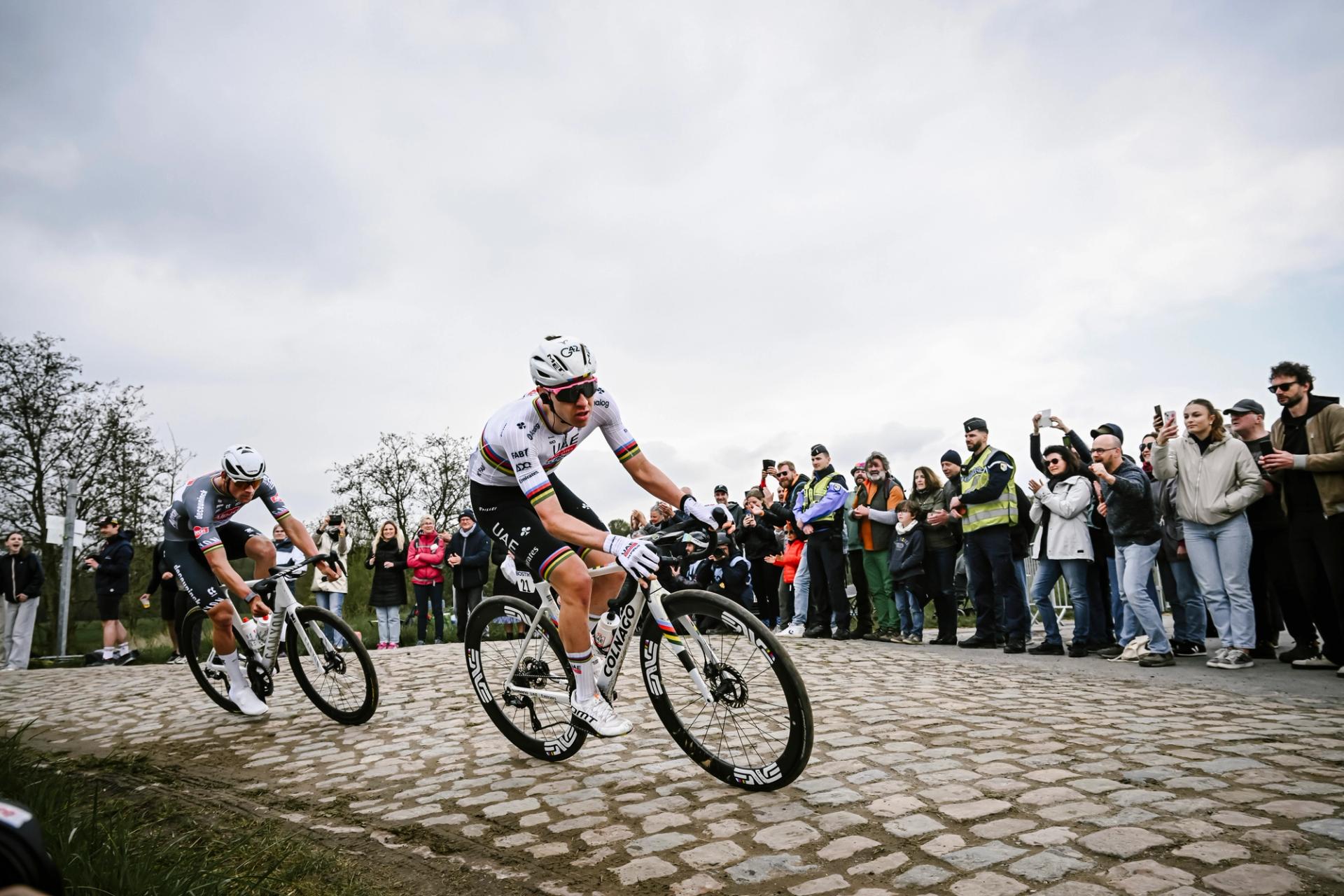
"Sometimes I wish I was less muscular in my upper body, but the gym has developed me as a total athlete," he said. The added mass, he acknowledged, rules out competing with pure climbers, and he focuses on the cobbled Classics.
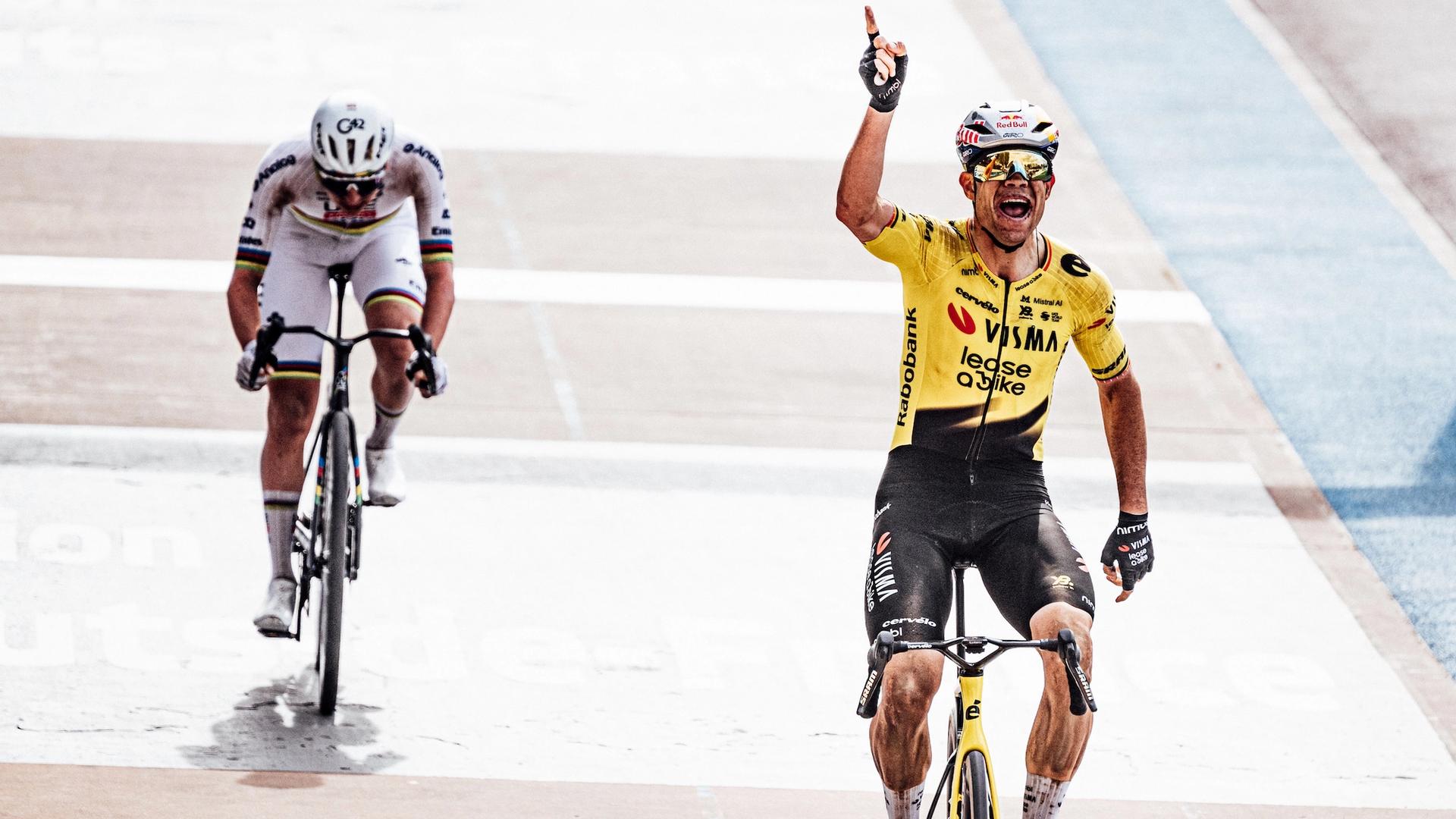
Van der Poel also credited his rivalry with Wout van Aert (Team Visma | Lease a Bike) as a motivator in the weight room. "You do one rep extra just to make sure," he said.
Unlike some riders, Van der Poel said he has no issue sharing biometric data publicly, arguing that rivals gain little from isolated metrics without context.