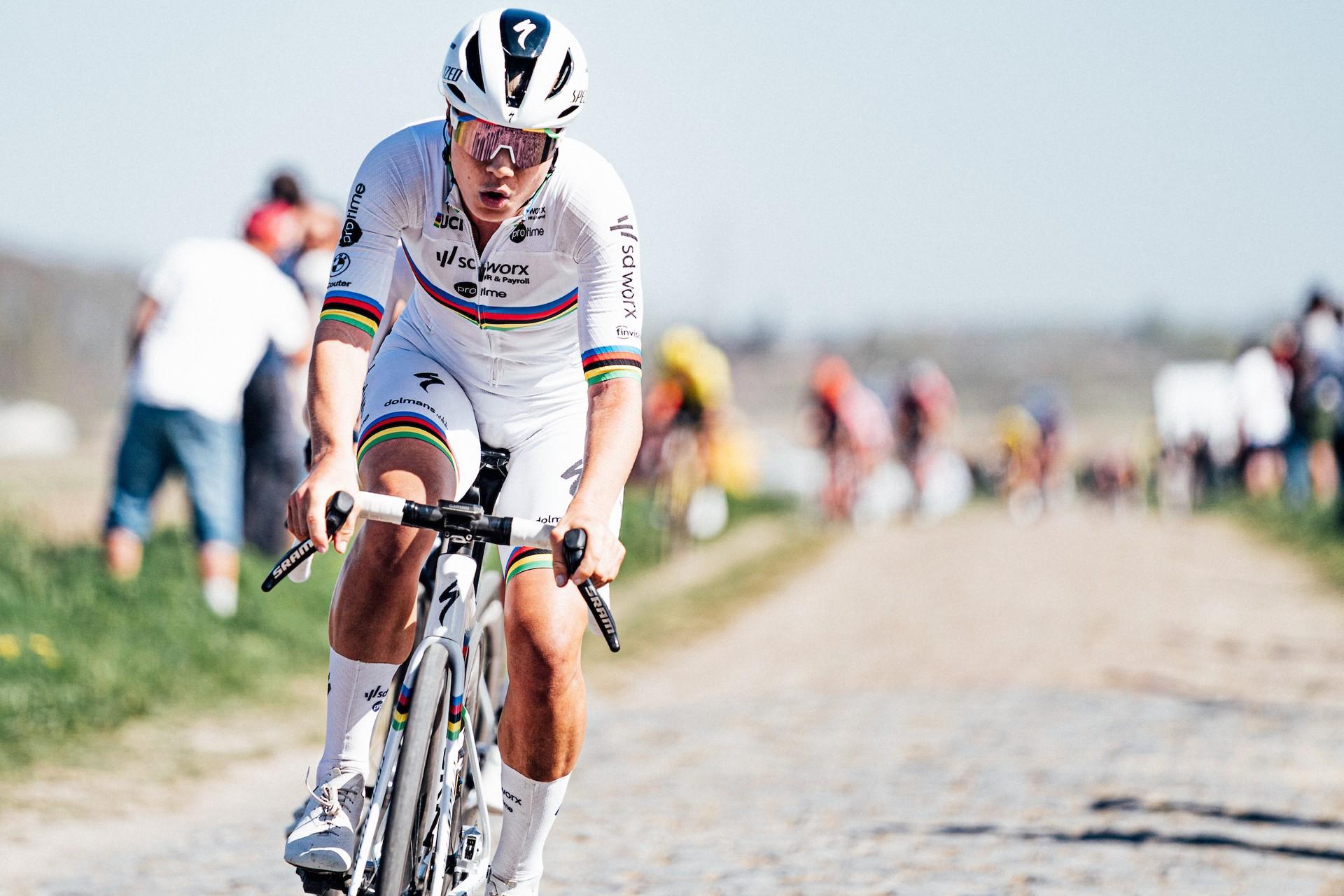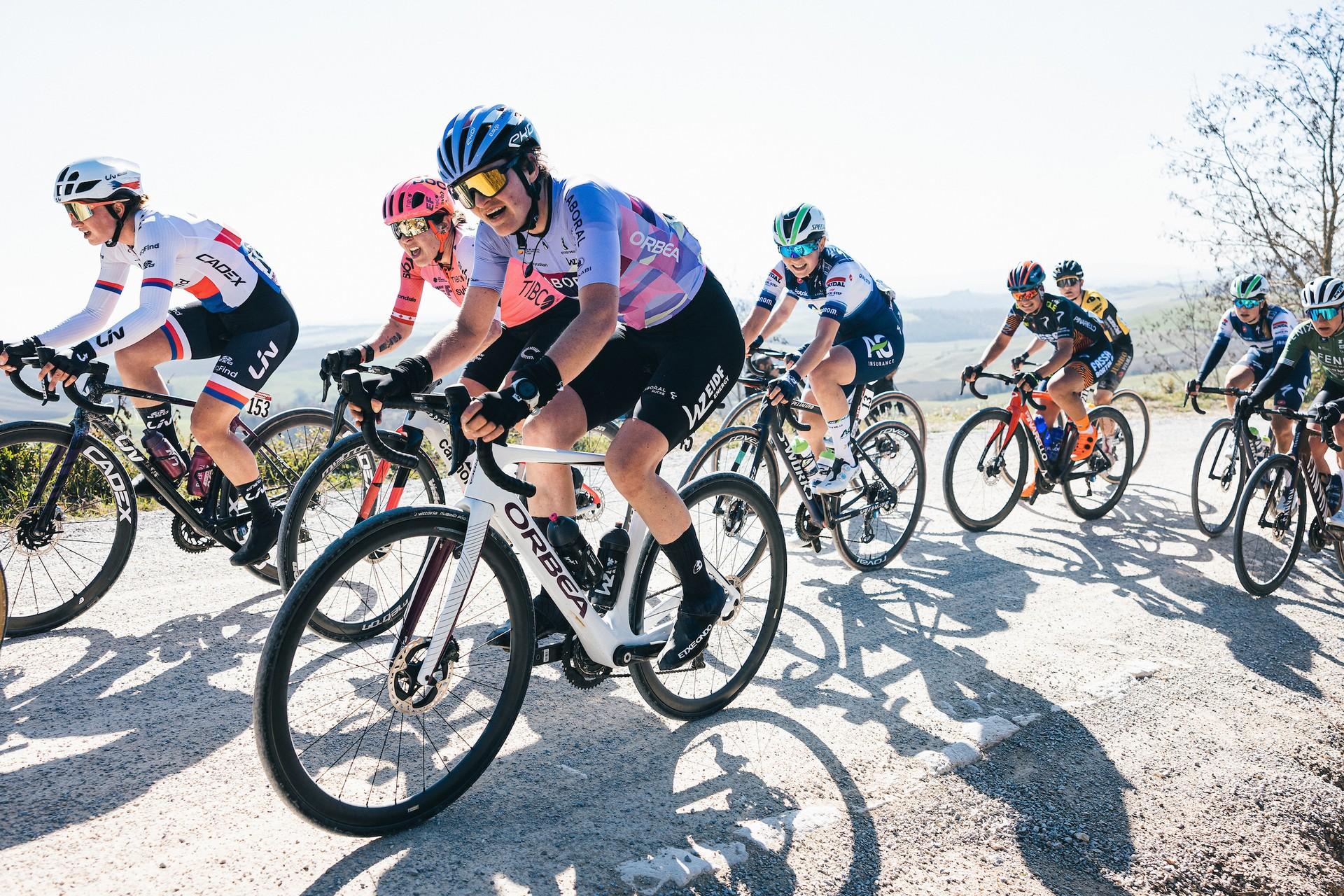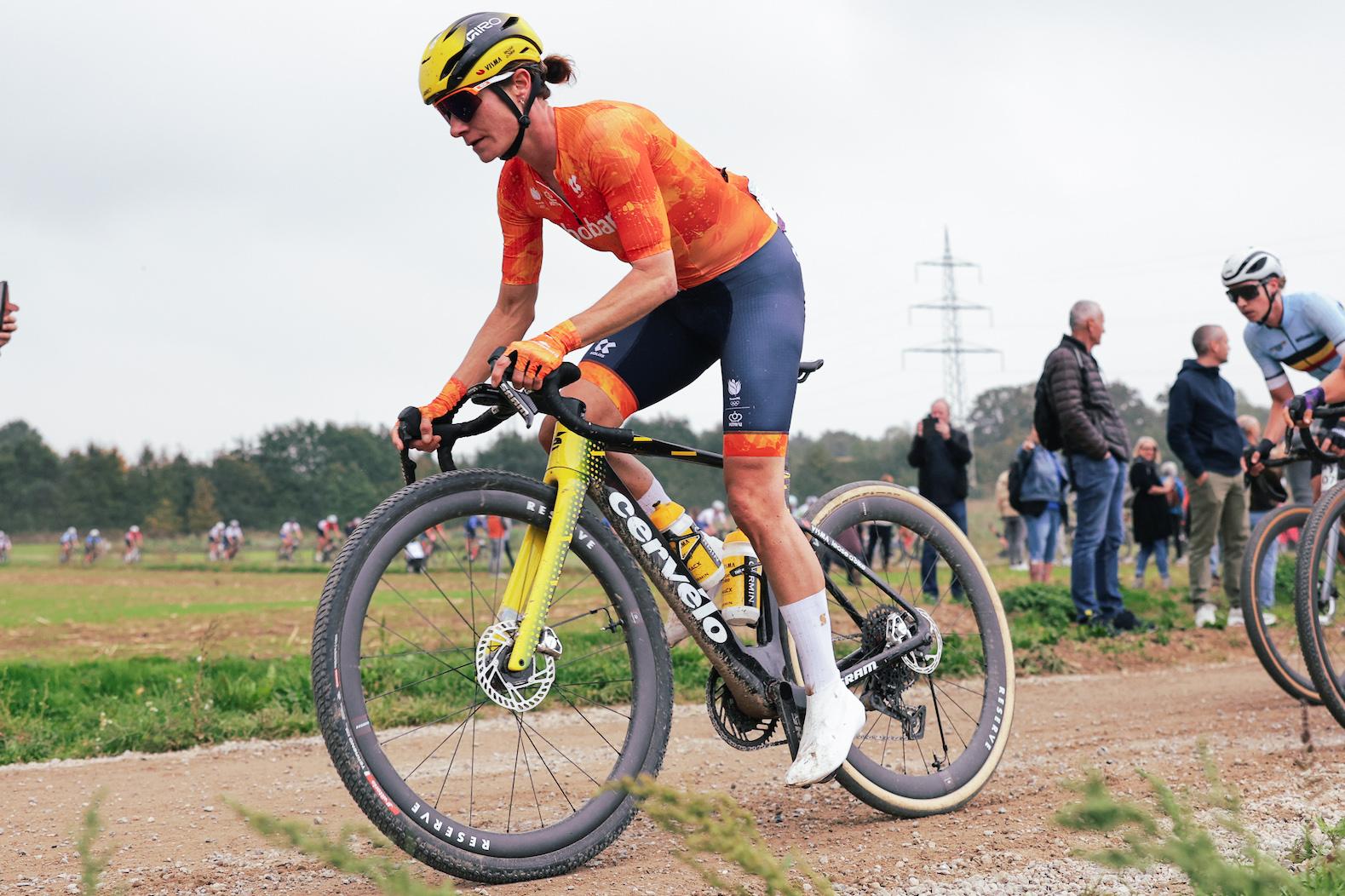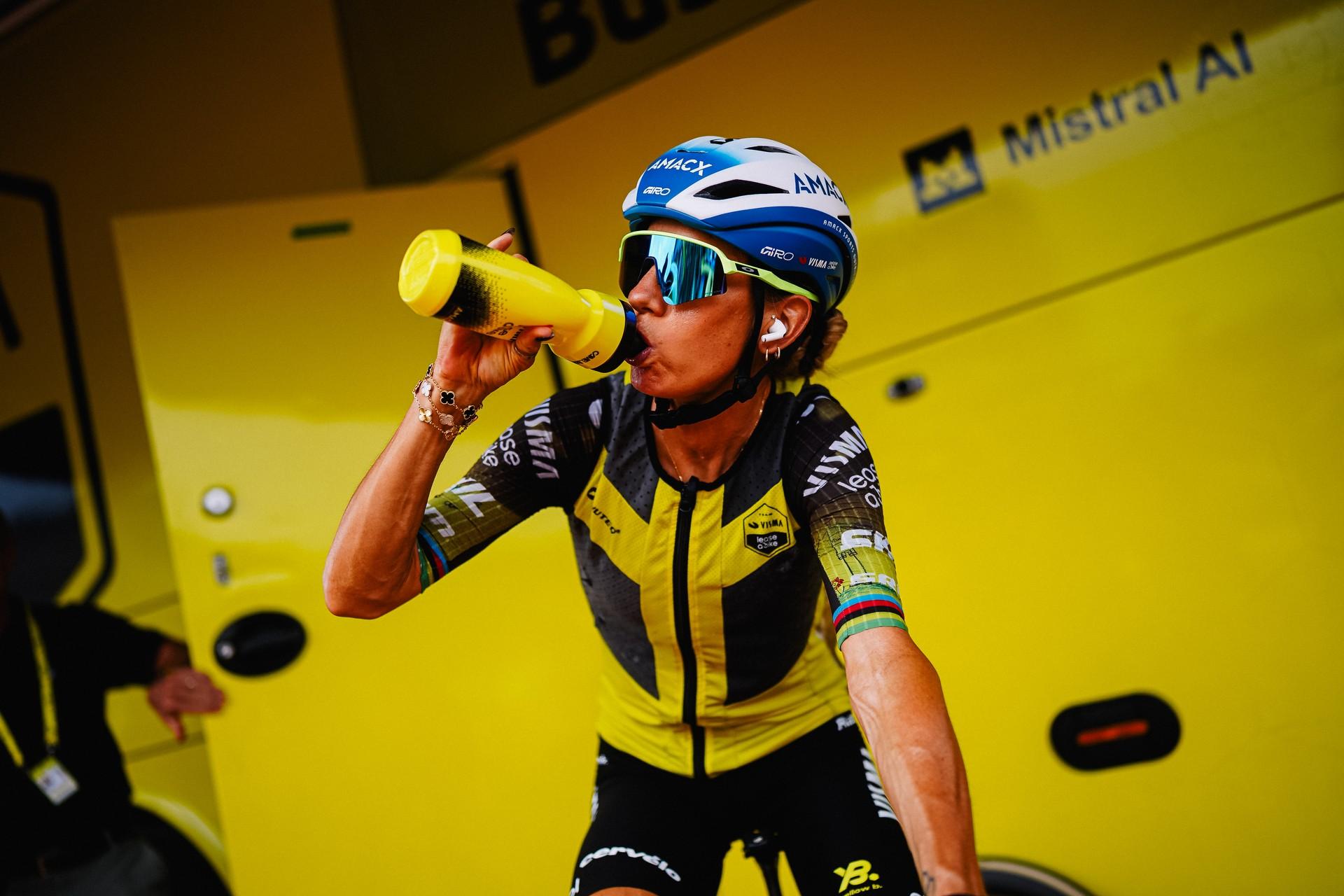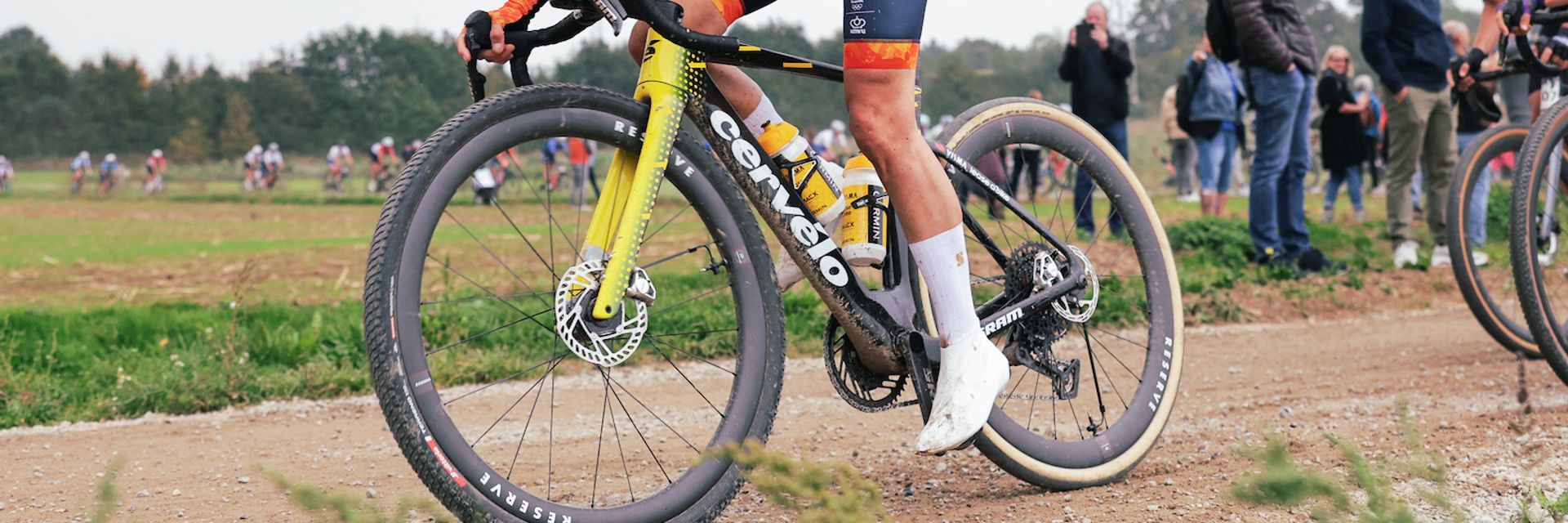
On the cobbled streets of Leuven in 2024, Marianne Vos (Visma | Lease a Bike) quietly rewrote the gravel rulebook. Now the Dutch tech that helped her do it has arrived for paying customers – or at least for the first ten of them.
Her use of the tech was first reported by Velora's Peter Stuart (then writing for Cyclingnews), from the ground at the event, ahead of her successful World Championship win.
Gravaa and Handgespaakt have launched an ultra-limited gravel wheelset built around Gravaa’s Kinetic Air Pressure System (KAPS), giving riders the same on-the-fly tyre pressure control Vos used to win the UCI Gravel World Championships. Only 10 hand-built sets of the Gravaa x Handgespaakt HG GR 4025 wheelset are being offered, priced at €2,995 (around $3,400) and available directly from Gravaa.
From rainbow stripes to retail experiment
At Gravel Worlds in Leuven, Vos punctured with around 3 km to go. Sealant plugged the hole, but the tyre pressure dropped to a desperate crawl. Inside her hubs, however, sat Gravaa’s secret weapon.
Using KAPS, the system pumped the tyre back from about 0.5 bar to a rideable pressure, then Vos fine-tuned it as the surface changed from rough gravel to smooth city streets. After the race she summed it up in typically understated fashion: “It helped with higher pressure at the finish but also with lowering the pressure on rougher track,” she said after the race.
Her rival Lotte Kopecky (SD Worx–Protime) felt the other side of that convenience – explaining to Velonews after the race, “I heard it all the time during the race...Pssst, pssst, pssst” – with Vos able to adapt to a much faster road-appropriate pressure for the final sprint. When asked if the higher pressure helped her win the rainbow jersey, she simply replied: “I think so.”
That Worlds win, Vos’s 14th in rainbow bands, became the ultimate live demo for KAPS. Until now, though, you needed a pro connection or deep pockets for Gravaa’s Reserve or DT Swiss builds, which can push towards €4,400. The Handgespaakt collaboration brings the ticket price down, if not exactly into bargain territory.
How the HG GR 4025 works
At the heart of the new wheelset is KAPS, a self-powered pump housed inside an oversized hub. As the wheel turns, it generates the pressure needed to inflate your tyres. Small control buttons, mounted near the brake hoods, let you add or release air while riding. Lower pressure for loose, rocky sectors, then add a few psi before a fast tarmac section or sprint.
Handgespaakt provides the rims and the build, with a very modern gravel profile:
- Handgespaakt HG GR 4025 carbon rims, 40 mm deep, 25 mm internal, 700c
- Sapim CX-Ray spokes and DT Swiss ratchet internals
- Tubeless-ready rims, but tubes required with KAPS
- Custom 5-bolt Galfer rotors supplied with the wheelset
- Claimed weight 2,170 g for the set
On paper, that weight is the elephant in the room. At over 2.1 kg, this is heavier than many carbon gravel options and even some cross-country mountain bike wheelsets. Gravaa estimates the KAPS hardware adds roughly 450g over a comparable conventional build.
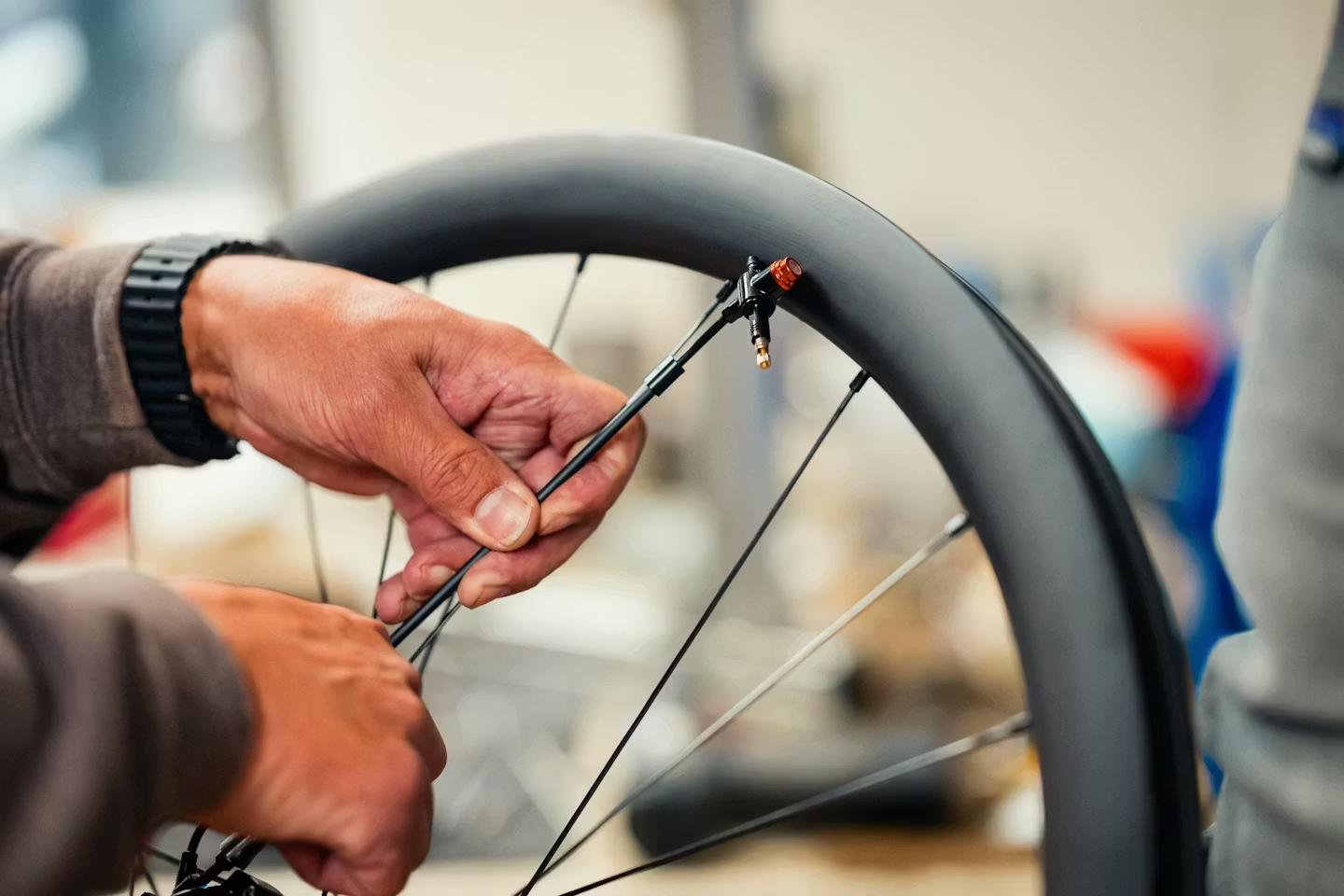
Handgespaakt × Gravaa Limited Edition Wheelsets - Image credit: Gravaa
The other big caveat is compatibility. Although the rims themselves are tubeless-ready, the current KAPS hub design does not play nicely with liquid sealant, so these wheels must be run with inner tubes. Vos’s Worlds-winning setup combined KAPS with a tubeless tyre and sealant, but that was on a different configuration that is not yet available in this Handgespaakt spec.
For riders used to tubeless self-sealing away small punctures, stepping back to tubes is a real compromise, even if you gain the ability to rescue a soft tyre with a few button presses.
Who are these wheels really for?
In truth, this wheelset is less a mass-market product and more a halo project for Dutch innovation. Gravaa co-CEO John Zopfi described it as “a beautiful example of Dutch innovation where handmade craftsmanship and integrated technology come together”, while Handgespaakt’s Paul Leentjens called it “performance through precision”. Ten sets worldwide is hardly the start of a revolution, but it is a very loud proof of concept.
For tech-hungry gravel racers, the appeal is obvious. On rolling, mixed-surface courses, being able to hit a sand pit at 1.4 bar then roll a fast asphalt section at 2.5 bar could be worth serious seconds, not to mention confidence. Kopecky’s disadvantage might be partly psychological, yet there is no doubt that traction versus rolling resistance is a real, measurable trade-off.
For everyone else, the arithmetic is tougher. You are paying superbike money for a wheelset that is heavier than many stock options and currently tied to tubes. This is niche within a niche – but that niche just happens to be the sharp end of world championship gravel racing.
If the HG GR 4025 sells out quickly, expect lighter, more tubeless-friendly versions to follow. Vos has already shown what happens when tyre pressure becomes as tactical as gearing. Gravaa and Handgespaakt are betting that a small group of gravel adventurers want to be next in line to press the button.