Oier Lazkano (formerly Red Bull-BORA-hansgrohe) was provisionally suspended by the UCI on 30 October after what the federation described as “unexplained abnormalities” in his Athlete Biological Passport (ABP) covering 2022 to 2024, a period when he raced for Movistar.
The 2023 Spanish champion has since been released from his 2025 contract and emphatically denies wrongdoing, calling himself “a clean athlete” in a public statement.
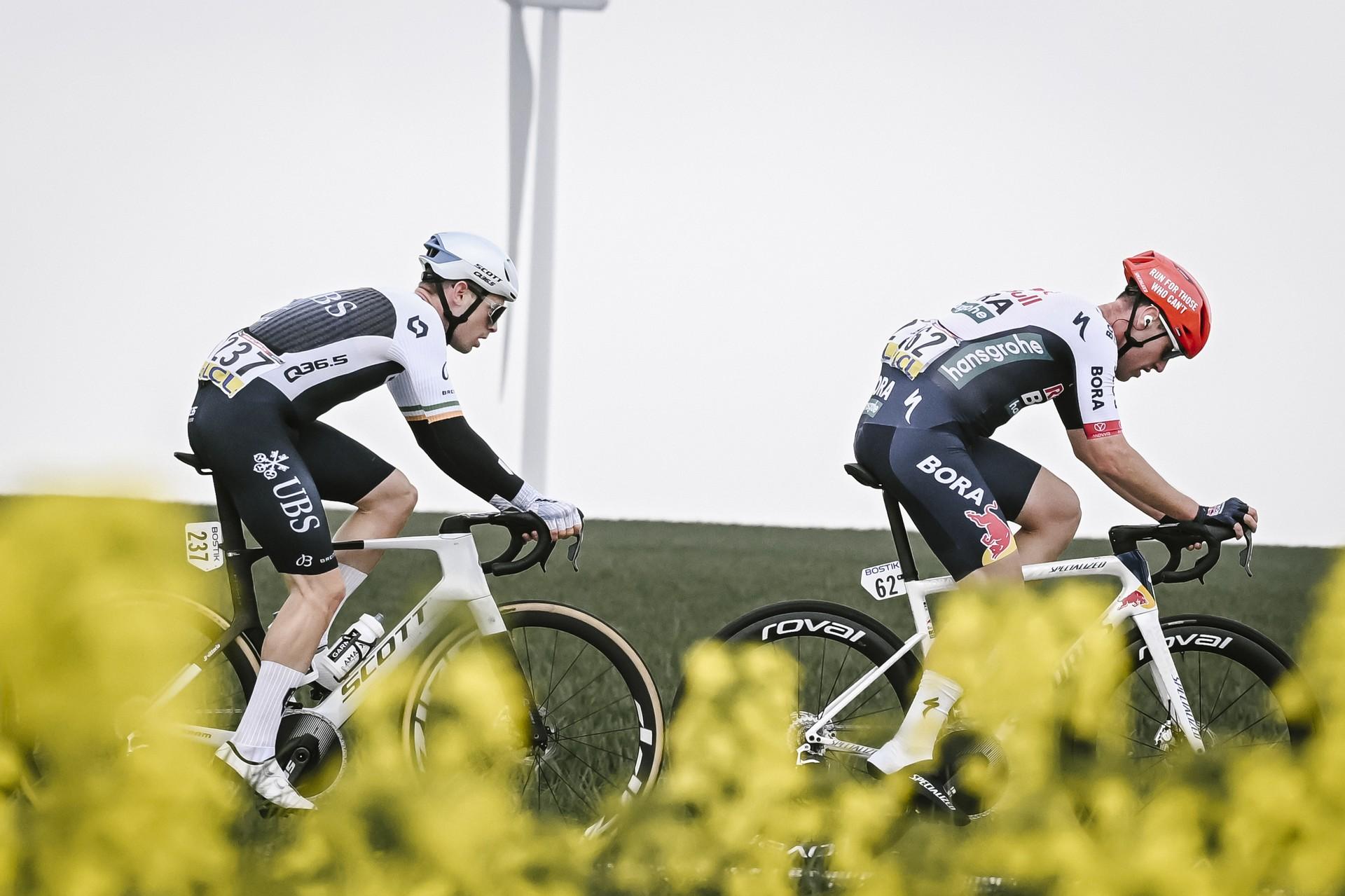
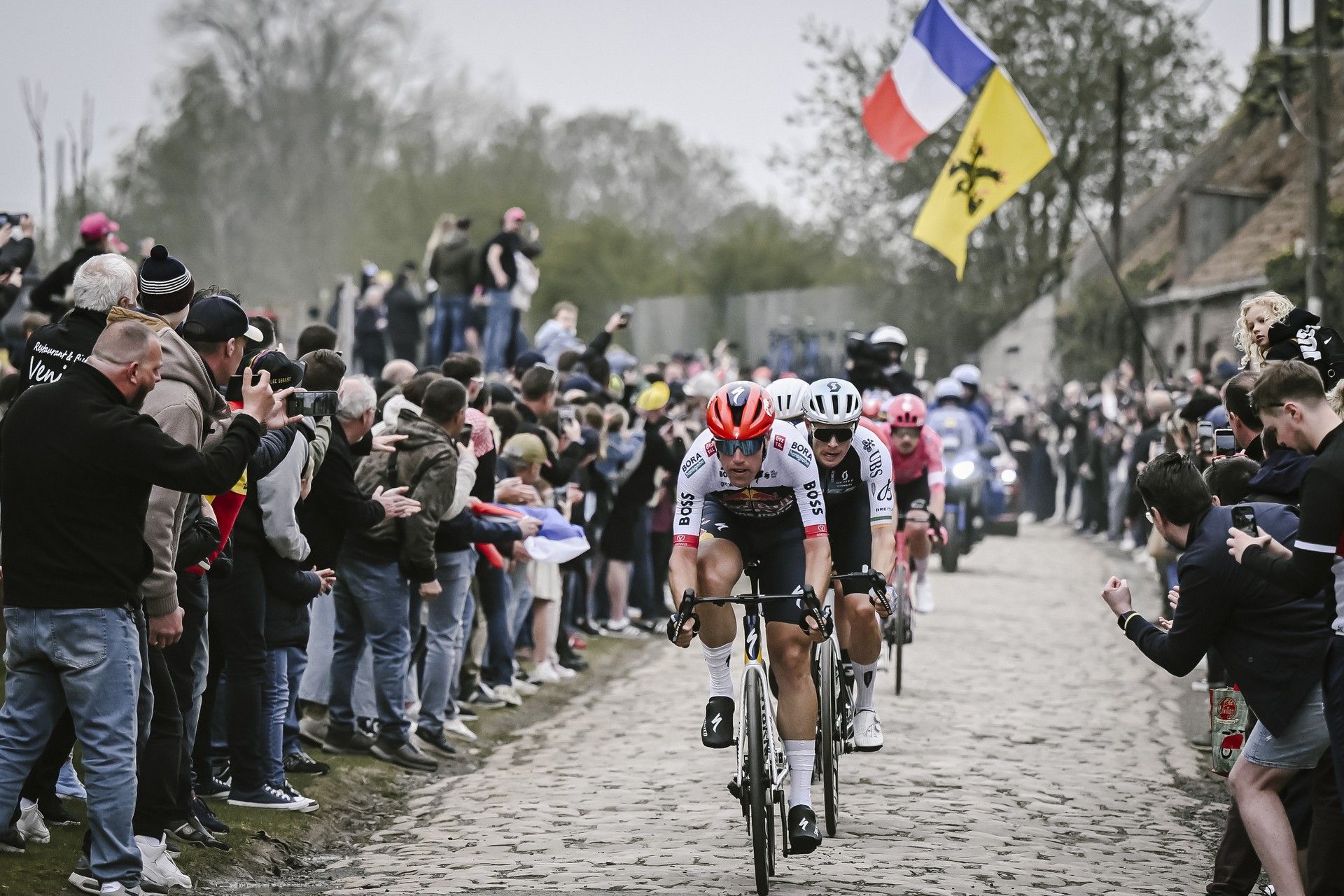
Oier Lazkano racing through yellow fields at Paris-Roubaix. Lazkano is currently provisionally suspended pending review of “unexplained abnormalities” in his Athlete Biological Passport
The case has re-ignited scrutiny of the Athlete Biological Passport, with Dutch journalist and former pro Thijs Zonneveld saying the system, for all its impact on cycling’s worst excesses, “is certainly not infallible.” Speaking on the In de Waaier podcast and reported by Wieler Revue, Zonneveld argued the UCI typically acts when values swing significantly, which “likely leaves room to smuggle small quantities in the gray area.”
More broadly, anti-doping experts point to two techniques that could evade detection thresholds without triggering the ABP’s statistical alarms: microdosing of endogenous EPO and, more insidiously, autologous blood microdosing. The latter avoids introducing a foreign substance.
As Zonneveld put it, re-infusing one’s own blood is an old method, “but also laborious,” and because no external agent is present, it presents a sterner challenge for current anti-doping tools. Fellow analyst Theo Bos echoed that logic on the same podcast, noting that microdosing with one’s own blood keeps exogenous markers out of the equation.
The ABP does not test for a single drug. Instead it tracks an athlete’s biological variables over time, primarily through the haematological module and the steroidal module, and compares them to an individual baseline using expert-driven statistical models. Atypical profiles are reviewed by an independent panel before any action is taken.
The passport has been credited with eliminating the wild blood-value swings associated with the 1990s and early 2000s. Zonneveld’s point, however, is that sophisticated practices designed to produce small, incremental changes can be hard to tease out from legitimate physiological variability when they stay within an athlete’s established range.
These techniques are discussed here to illustrate the ABP’s theoretical limitations; there is no suggestion that they are linked to Lazkano’s case, for which no details have been disclosed.
In Lazkano’s case, the UCI has not published which markers triggered the adverse profile finding, only that the anomalies spanned multiple seasons. That is typical for ABP proceedings and protects both the integrity of the process and the rider’s rights while expert review and any explanation from the athlete are assessed.
As standard in ABP cases, a provisional suspension is not a finding of guilt and the review process is ongoing.
Lazkano stated, “I have never used doping substances or prohibited methods... I will continue, with determination and transparency, to defend my name and professional dignity.”
Analysis, the ABP’s grey zones
Autologous microdosing is attractive to would-be cheats because it attempts to gain the oxygen-transport benefits of higher red cell mass without the obvious fingerprints of a foreign agent. The strategy, outlined at a high level by Zonneveld and Bos, aims to keep values such as haemoglobin concentration and reticulocyte percentage nudged but not spiked, thereby avoiding the large variations that trigger an Atypical Passport Finding. Microdosed EPO seeks a similar statistical camouflage by using very small amounts and careful timing, although analytical methods for recombinant EPO have advanced in recent years.
This is not to say the passport is obsolete. The haematological module’s longitudinal approach has been decisive in numerous sanctions and is widely seen by anti-doping scientists as a powerful deterrent. But the Lazkano affair underlines its limits. Where the signal-to-noise ratio is low, the system leans on cumulative patterns and expert interpretation, and that makes context crucial, from altitude exposure and illness to sampling conditions. It also explains why some ABP cases take months to move from a provisional suspension to a final decision, and why some profiles are ultimately deemed non-violations after rider explanations.
Two things can be true at once. The ABP has made the sport cleaner by erasing the extremes. It can also be probed at the margins by methods that avoid exogenous markers. That is the tension highlighted by Zonneveld’s “grey area” warning.