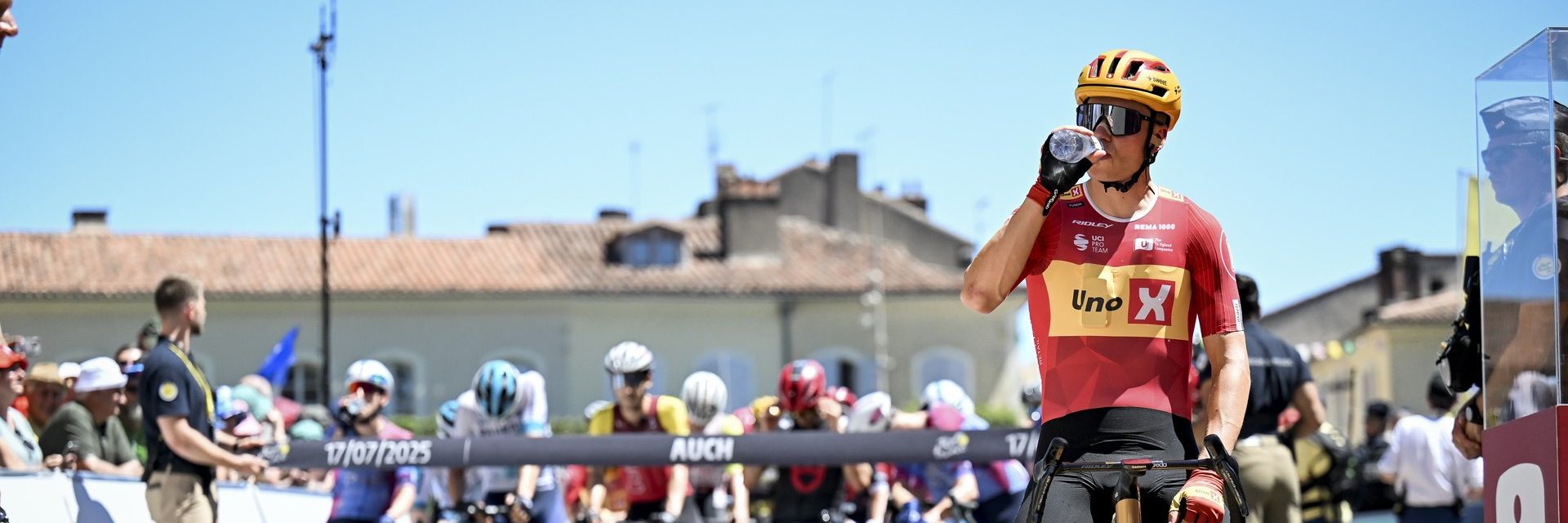
The UCI's strong-heat protocol could be activated during the opening week of the 2026 Tour de France, with forecasts suggesting France will face another heatwave in early July. The 113th edition starts with a team time trial in Barcelona on 4 July and runs to 26 July, and measures available under the protocol range from extra feeding and cooling to, in extreme cases, stage neutralisation or cancellation.
Tour director Christian Prudhomme said protecting riders and spectators is the priority but that the race can only adjust within tight logistical constraints. "You have to understand that 28,000 police, firefighters and gendarmes are mobilised and we don't own the roads," Prudhomme said. "The permits we have are for a specific time. These are not things that can be done at the last moment." He said the Tour could shave 15 kilometres from a stage or bring the start forward by half an hour, but only at the margins.
The protocol, introduced by the UCI in 2024, uses the Wet Bulb Globe Temperature index, a heat-stress measure that combines air temperature, humidity, solar radiation and air movement. Route-specific factors such as the presence of shaded sections are also considered. At the orange level (WBGT 23–27.9°C), organisers must provide shaded start areas, deploy additional neutral motorcycles carrying drinks and ice, and remove restrictions on in-race feeding. At red (above 28°C), start and finish times can be altered, sections of a stage neutralised, or a stage cancelled entirely.
The extreme weather protocol was brought into force at races such as the Tour Down Under in January on account of high temperatures, as we reported at the time.
What the Tour has done before
Thierry Gouvenou, the Tour's technical director, said in L'Équipe that this year's situation is more pressing because France has already had two difficult heat episodes in May and June. "The last times, we opened feeding from kilometre zero all the way to the finish and extended the elimination time limits," Gouvenou said. Neutral motorcycles carrying drinks to riders, especially those in breakaways, have been standard practice in hot conditions for years.
At the French national championships in Isère, held in similar heat, organisers erected tents at the start to shield riders from the sun, added extra feed zones on the time trial course, and set up misting devices and an air-conditioned truck at the finish to help riders cool down. Those measures offer a template for what the Tour could deploy at scale.
Pascal Chanteur, president of the Union nationale des cyclistes professionnels, has pushed for a more aggressive response. In comments reported by L'Equipe he has called for departures at 9 a.m. during hot weather so finishes arrive by 2:30 p.m., and argued that riders should not be forced to race in 45°C conditions, especially over 21 consecutive days. Prudhomme's position is that daytime broadcast commitments and the security coordination required across hundreds of kilometres of open road make that kind of shift impractical on short notice. Gouvenou made the same point: "The problem is that we are an endurance sport, raced in daylight and televised. We can't ride at night."
The Barcelona opening stage illustrates the narrow time windows the Tour already operates within. The first team is scheduled to roll off the start ramp at 17:05, with the final team expected to finish at 19:16, a window shaped by city permits and television schedules.
Prudhomme urged spectators to bring hats and water and to take care of children and older relatives. Final decisions on which protocol measures to implement will depend on WBGT readings closer to each stage.