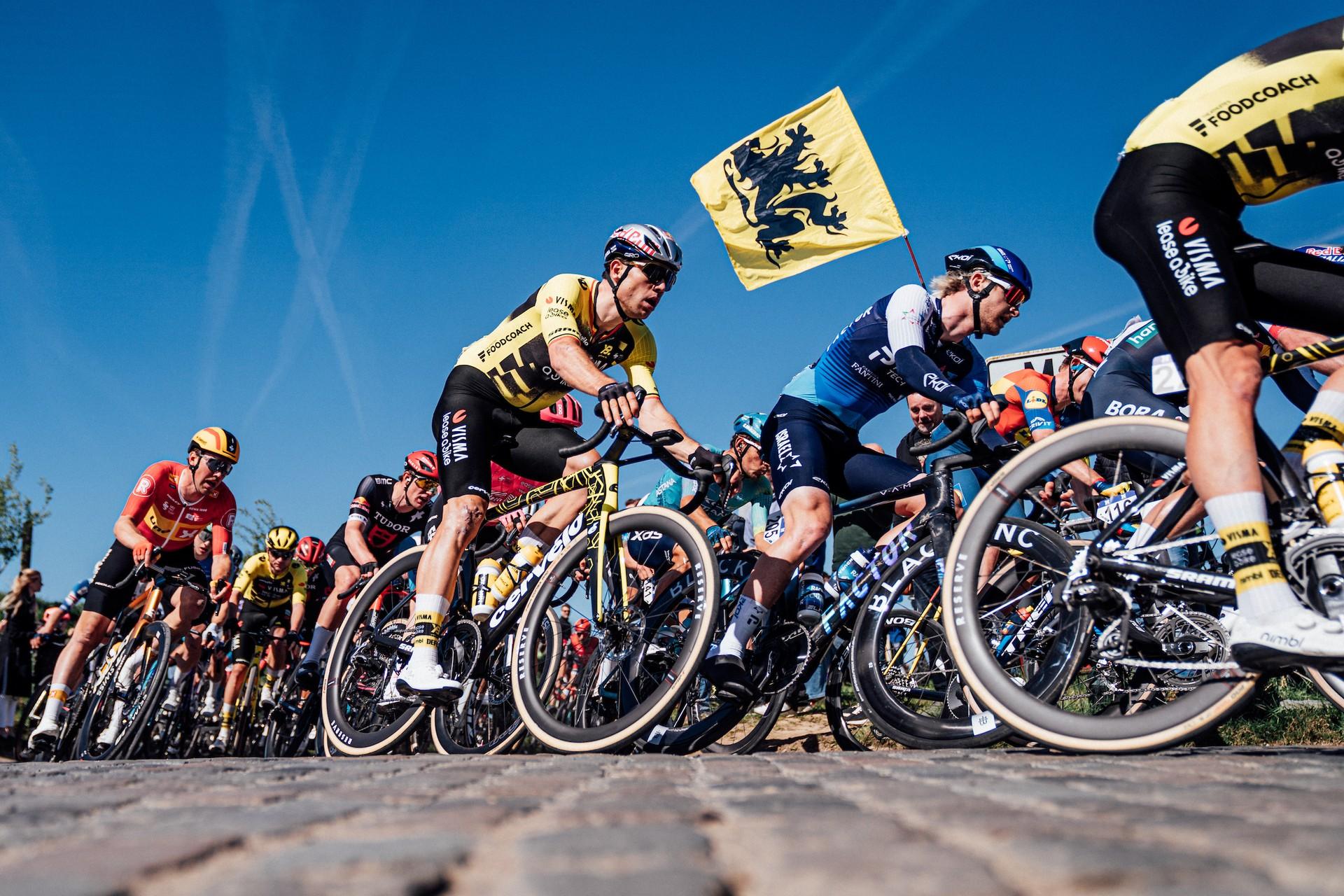
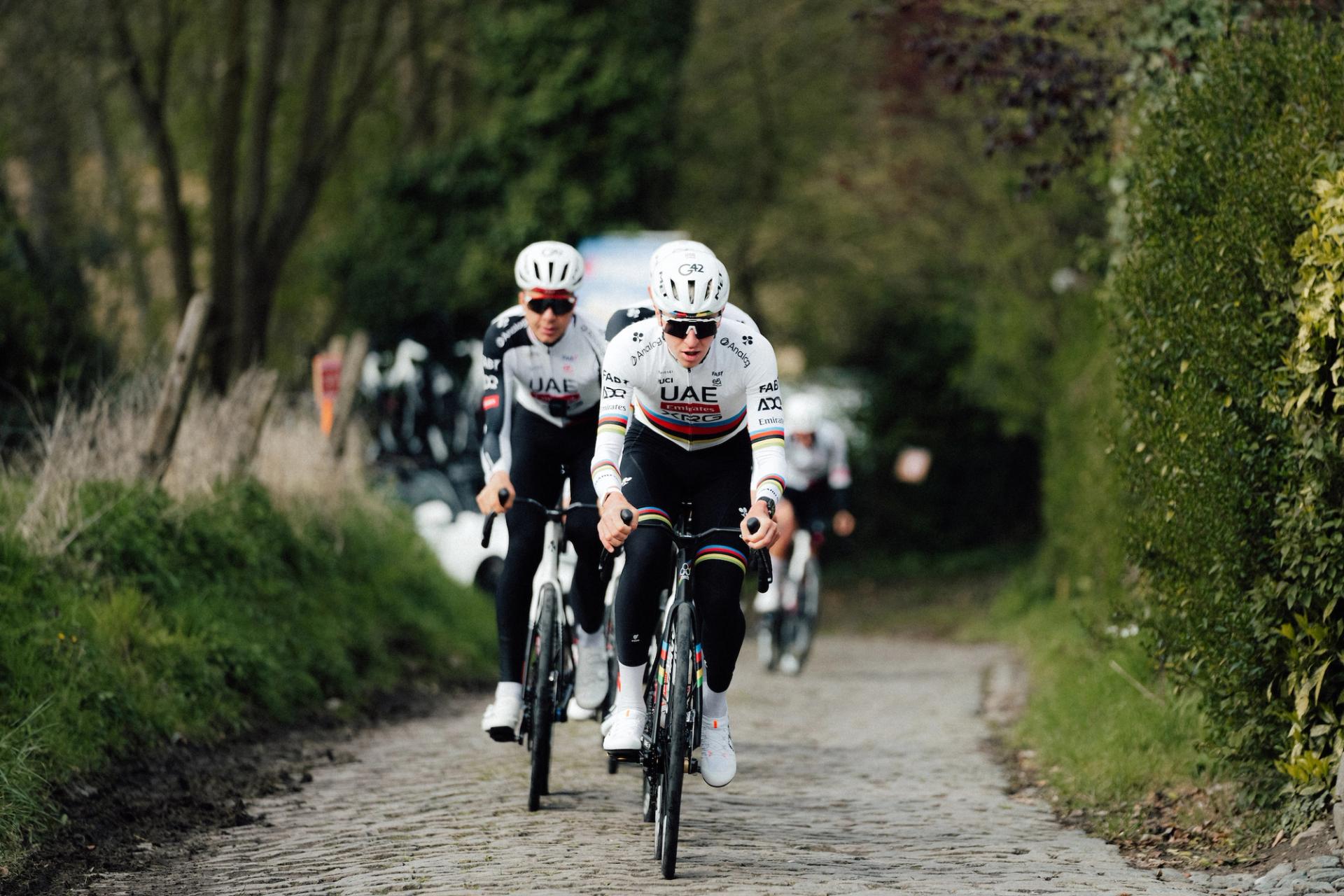
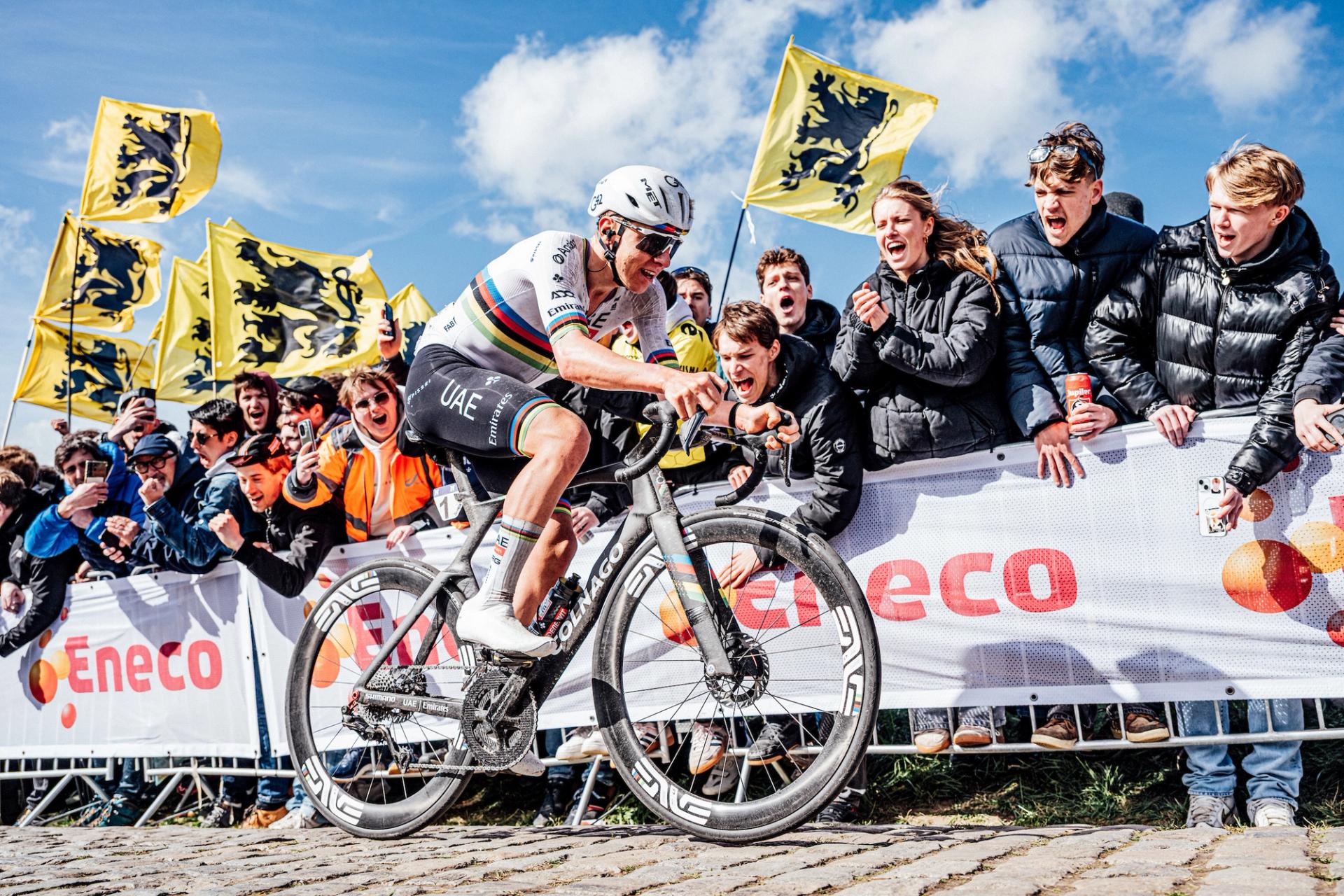
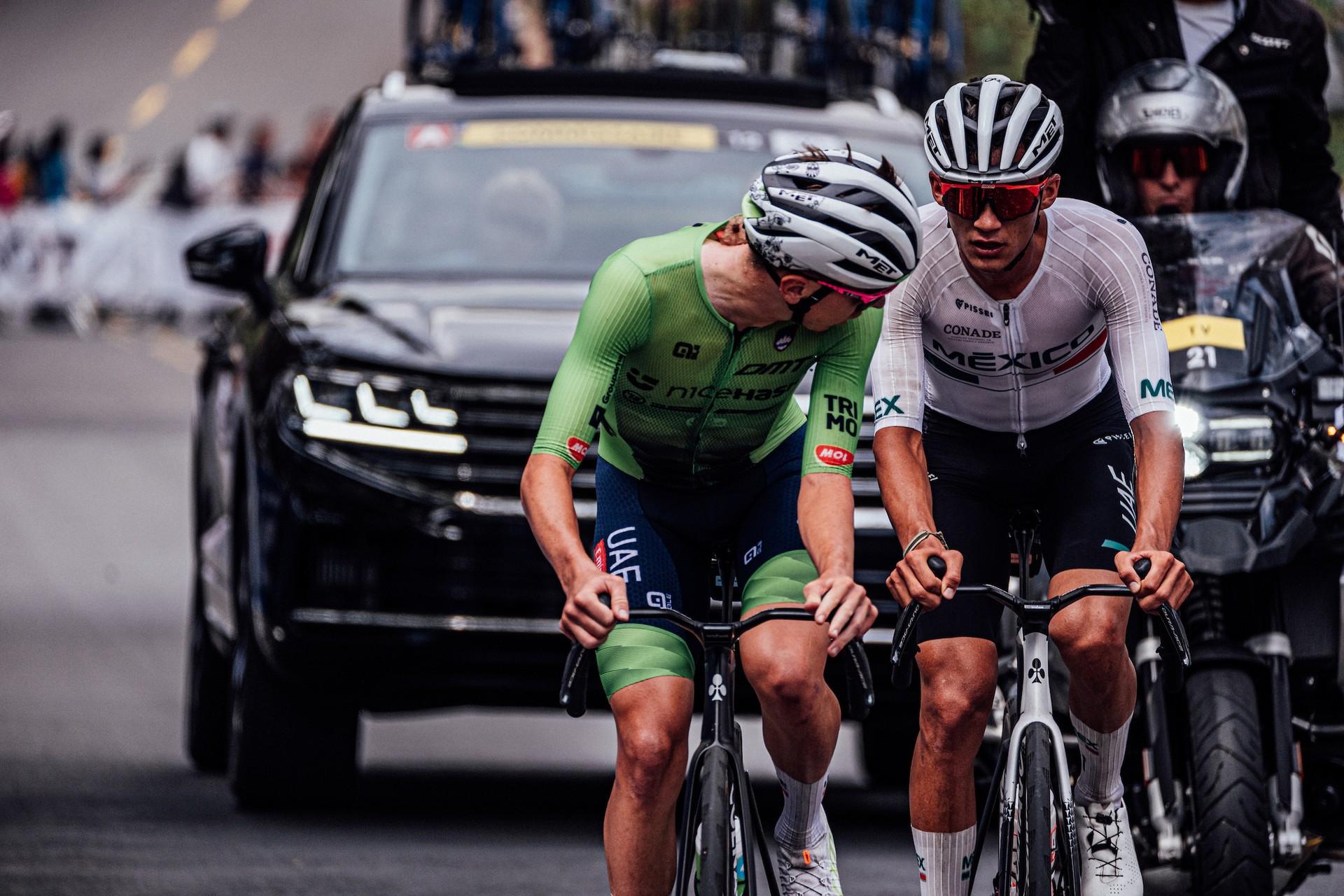
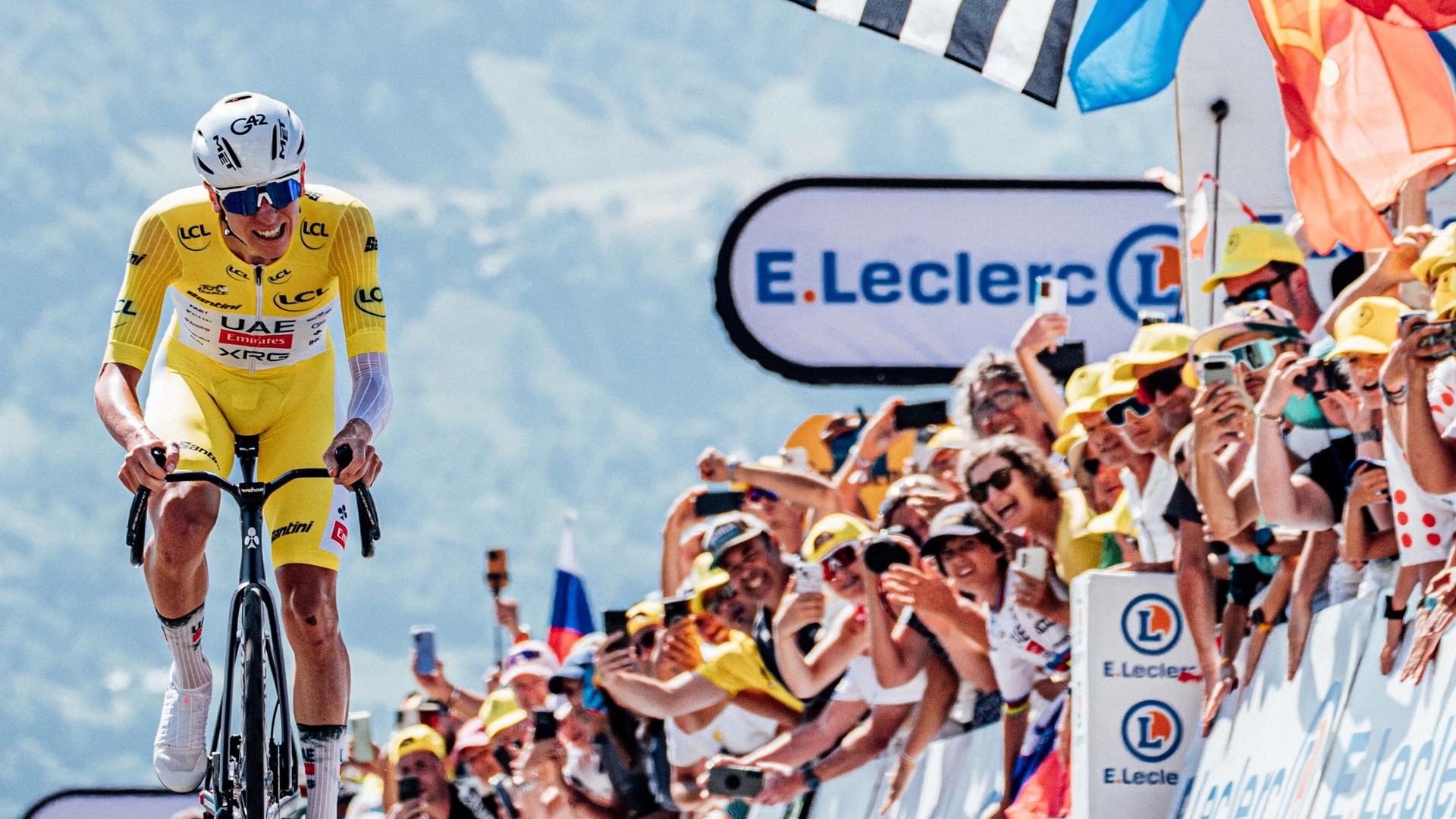
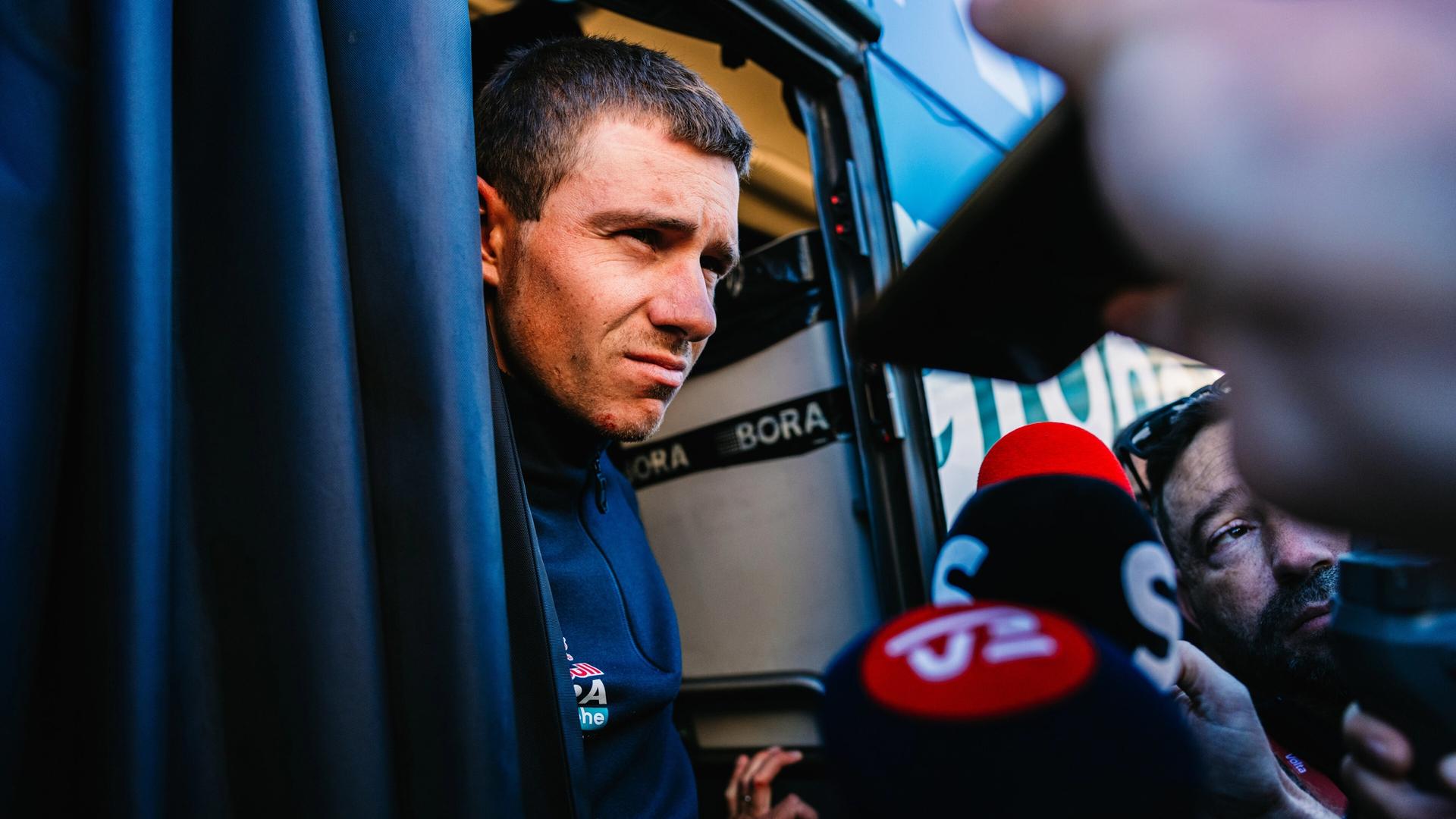
The 2026 Tour of Flanders was split at a level crossing on Paepestraat in Wichelen on Sunday when a passing train forced part of the peloton to stop while riders at the front of the race continued.
Around 30 riders, including Tadej Pogačar (UAE Team Emirates-XRG) and Remco Evenepoel (Red Bull-Bora-Hansgrohe), crossed while the warning lights were reportedly already flashing, while Mathieu van der Poel (Alpecin-Premier Tech) and Wout van Aert (Visma | Lease a Bike) were among those held behind the barrier.
The incident immediately raised the question of whether riders who passed the crossing after the signal activated should be sanctioned under the UCI's own regulations.
UCI road regulation 2.3.034 is explicit. The rule states: "It shall be strictly forbidden to cross level crossings when the barrier is down or closing,
the warning signal ringing or flashing.
"Apart from risking the penalty for such an offence as provided by law, offending riders shall be sanctioned as provided in article 2.12.007; besides, the disciplinary commission may impose a suspension of up to one month as well as a fine of CHF 200 to 5’000."
The language is mandatory, not discretionary. "Shall be sanctioned" leaves no obvious room for a lenient sporting exception once the factual threshold is met.
The language has evolved in complexity from the initial 2016 rule: "It shall be strictly forbidden to cross level crossings when the barrier is down or closing, the warning signal ringing or flashing. Apart from risking the penalty for such an offence as provided by law, offending riders shall be eliminated from the competition by the commissaires."
The new rule falls back on the wider disciplinary framework of article 2.12.007. Within that, for Men's Elite events, the penalty for crossing a level crossing is listed as: "Rider: CHF 1,000 fine, 100 points from UCI rankings and elimination or disqualification."
A UCI commissaire told Het Nieuwsblad: "The rules are clear: riders must stop at a red light. Anyone who rides through it should be removed from the race."
Race officials intervened on the road by instructing the front section of the peloton to slow so the delayed riders could rejoin. The breakaway, which was unaffected by the crossing, was allowed to keep its advantage. The break's lead grew from roughly 3:30 to nearly 5:30 as a result, because the regrouping applied only to the split peloton.
However, the breakaway's extended distance did not affect the race outcome, as Tadej Pogačar won from the group that was split and reformed by the incident.
Pogačar was widely reported as having received a sanction after the race, but this was a 500 CHF fine for littering outside a designated area, while Evenepoel was fined 200 CHF for a sticky water bottle. None of the initial listed sanctions mentioned the level crossing.
What enforcement would require
The real difficulty is not the rule's wording but its application. Enforcement hinges on two questions: whether the warning signal was already active when each rider crossed, and whether commissaires can identify individual offenders from video evidence.
In a tight bunch moving at speed, the difference between crossing before the signal activates and crossing a second after it begins flashing can be almost impossible to determine rider by rider.
Beyond that, commissaires will receive no applause for reducing the finish order of a historic edition of the Tour of Flanders to a lengthy public debate of a technical video analysis.
History suggests that commissaires may opt to choose pragmatism over absolute compliance. At the 2015 Paris-Roubaix, riders crossed as warning lights flashed and barriers began to close, but commissaires did not disqualify the large group because they could not identify every offender individually. That incident prompted the UCI to tighten rule 2.3.034, removing ambiguity and making elimination the explicit sanction.
When identification is clear, the rule works. Taylor Phinney was disqualified from the 2017 Tour of Britain after entering a level crossing as the gates were closing. The jury cited 2.3.034 verbatim. Three riders were also disqualified at the 2006 Paris-Roubaix in similar circumstances.
The UCI's modern enforcement infrastructure is more developed than it was in 2015. The governing body now operates a race incident database and a Case Management Committee designed to review incidents using video and determine whether disciplinary measures are warranted. That procedural capacity exists. Whether it produces sanctions in this case depends on whether the footage is precise enough to match individual riders to the exact moment the crossing signal activated.
Het Nieuwsblad reports that the Belgian public prosecutor intends to pursue riders who allegedly crossed on red, but no UCI sanction had been confirmed at the time of publication.
The rulebook is clear, but it seems more likely that the Belgian authorities will consider civil penalties for riders who broke the rules rather than commissaires disrupting the finishing order with sanctions which may prove contentious or impossible to implement.