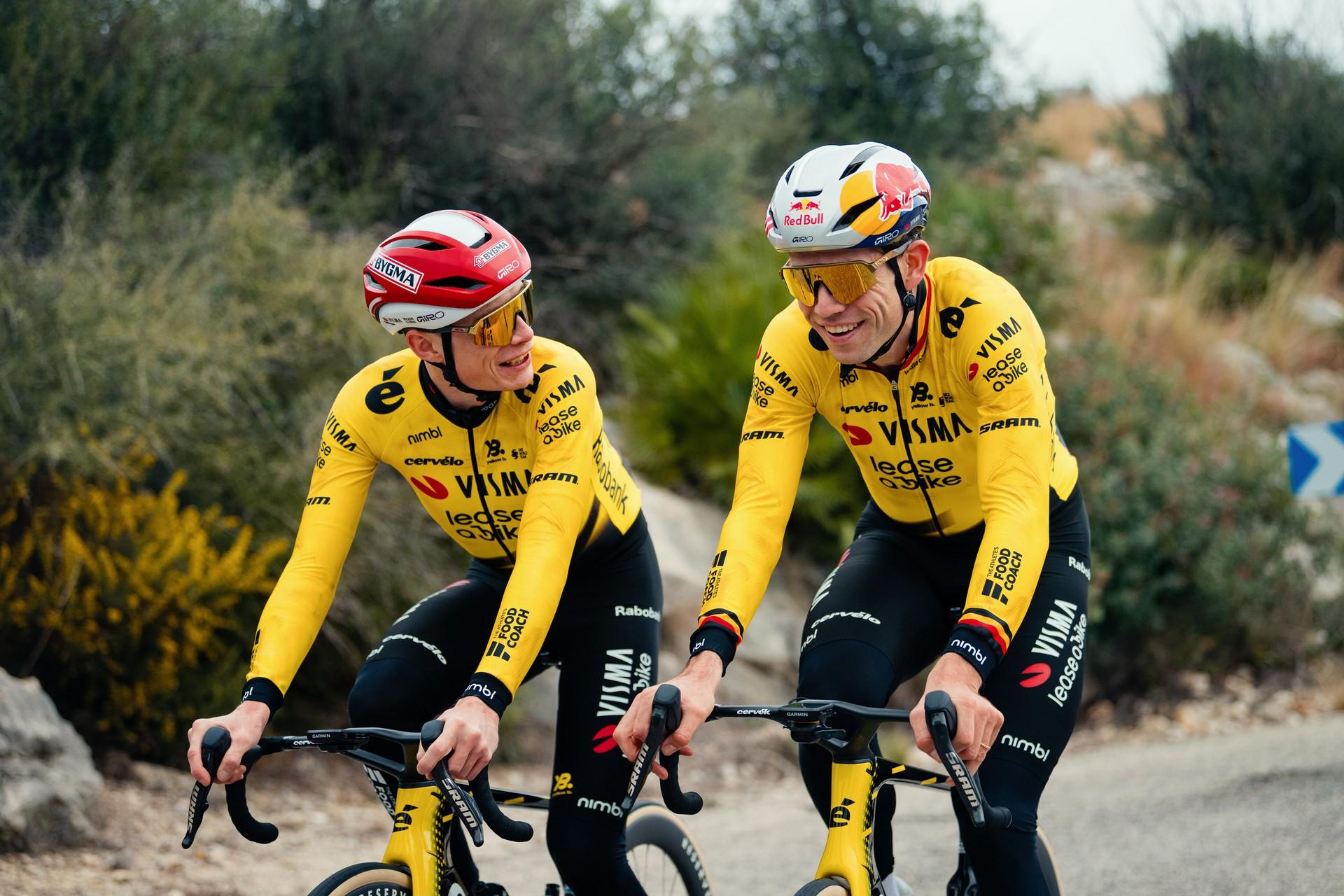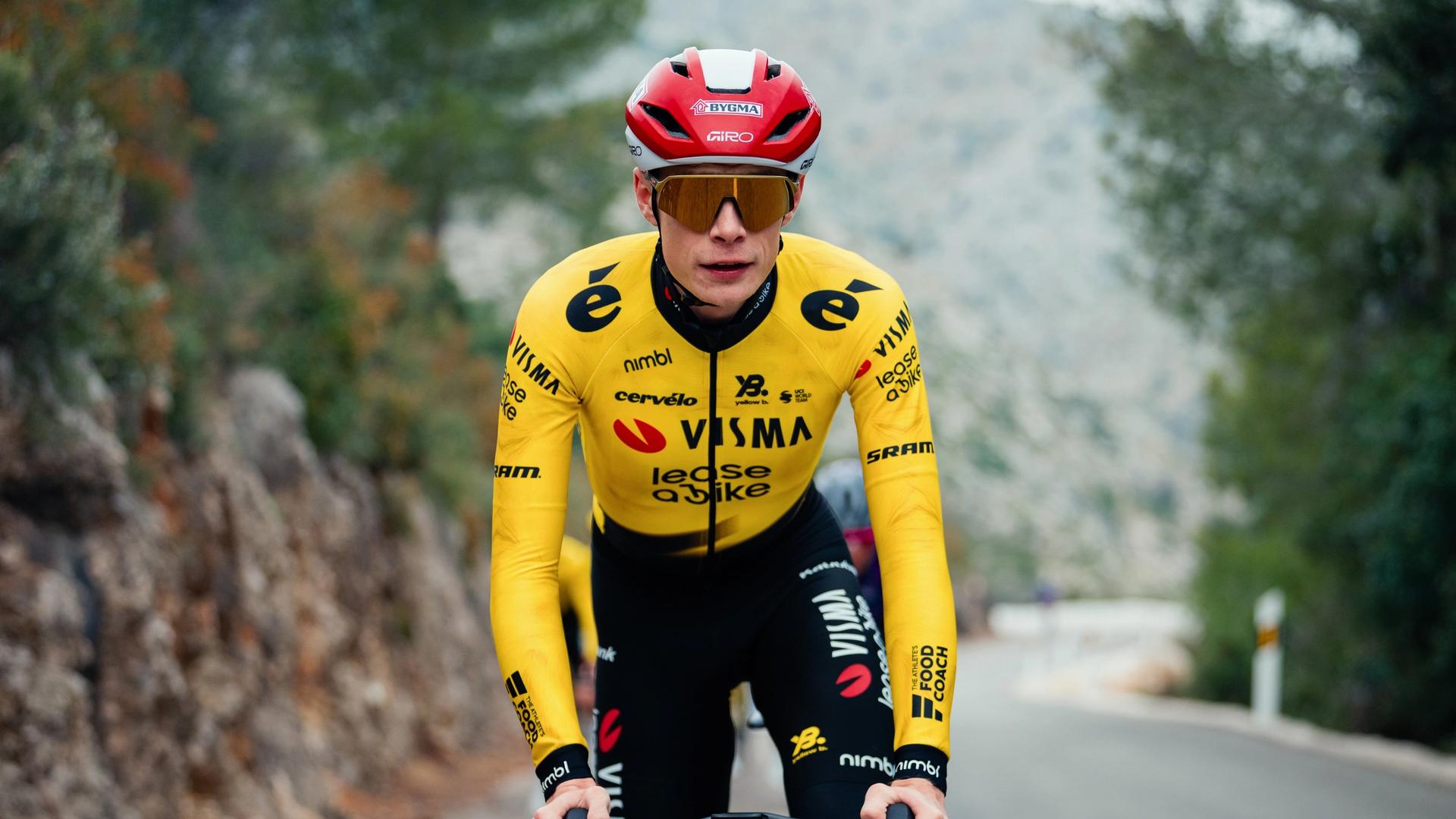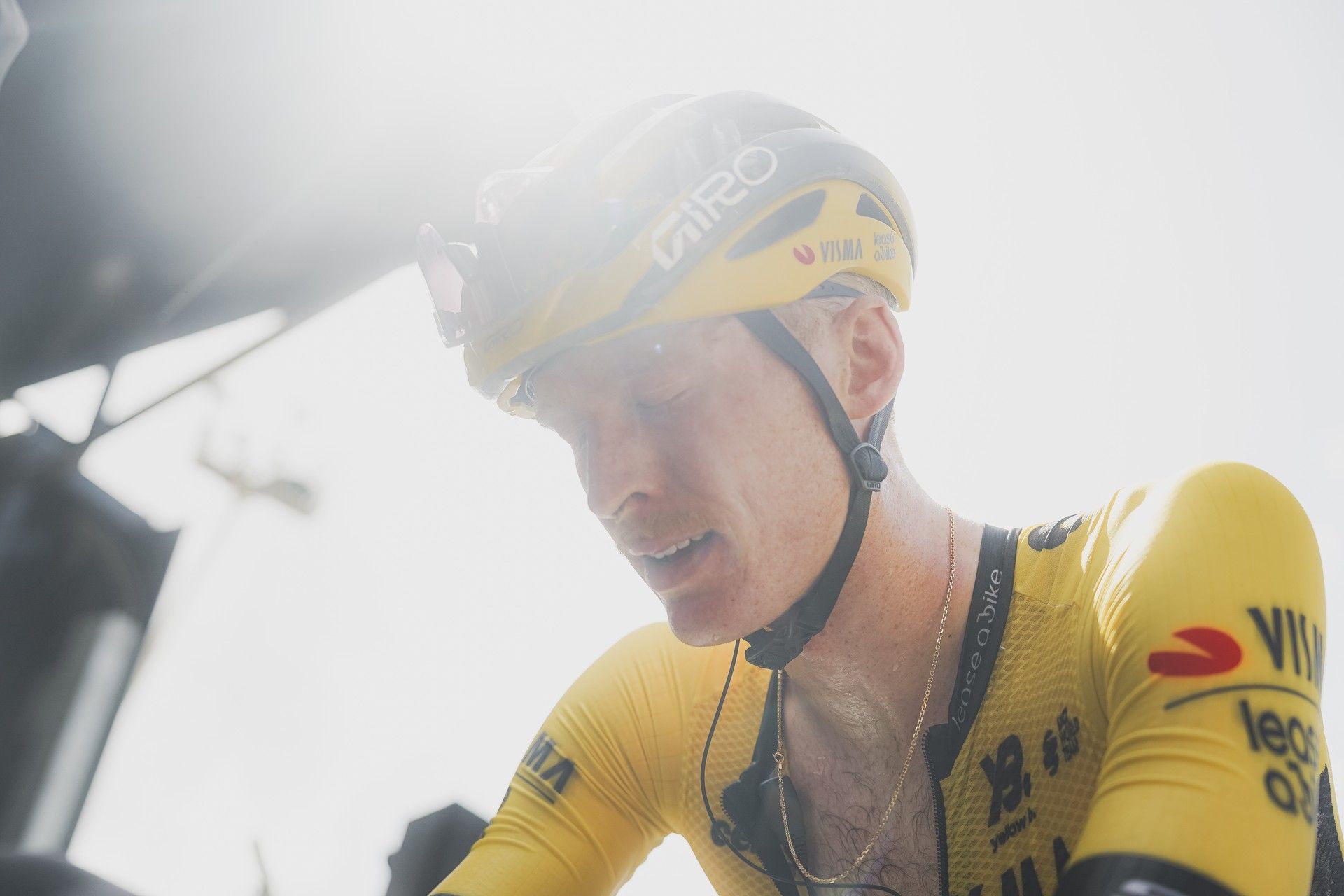
Matteo Jorgenson (Visma-Lease a Bike) has described how relinquishing control of his own performance management at Team Visma-Lease a Bike transformed not only his results but his relationship with professional cycling, allowing him to reclaim the time and mental space he had spent managing every detail of his career.
"I surrendered to the plan, and got my life back," Jorgenson said in a team video interview published on 8th January, reflecting on his integration into the Dutch squad after joining from Movistar in 2024.
The American detailed the psychological shift required to trust Visma's centralised support structure after years of self-reliance, a process he described as both rapid and uncomfortable.
"It's been a process joining this team of like releasing my grip a little bit on my own performance," Jorgenson said. "I think that was a process - it began with building trust with the staff of the team and it didn't take very long to be honest. It was a very fast process."
Before arriving at Visma, Jorgenson had operated as his own performance director, a role that consumed his finances and mental energy. "When I joined the team, I had a very direct role in all of my performance. So I was managing my own nutrition. I was half coaching myself. I was doing my own logistics. I set up my own training camps," he said.
In 2023, Jorgenson shared on a thread on X that he had spent nearly his entire salary funding his own performance optimisation. "I can say now that I’ve spent every penny of my salary so far this year on my own performance," he posted "Between solo camps, tt material, nutrition, massage, and motorpacing; it all made me better and compounded on itself."
The transition to a team environment where support staff handled those responsibilities required Jorgenson to accept a loss of control that initially felt precarious. "It was kind of a scary thing to go onto a team where they say, 'We have it all covered for you and all you have to do is follow our plan.' And so I think it was a relief once I was able to do it, but it took me a little bit to embrace that."
Jorgenson admitted that trusting coach Tim Heemskerk's training plans, which diverged from his previous methods, created discomfort. "When Tim would give me training that was different than before or was different than I had done in the past, I would, you know, it was uncomfortable to just release my grasp."
The validation came quickly. After winning Paris-Nice in his debut season with Visma in 2024, Jorgenson said he reached a point of total commitment. "After Paris-Nice my first year and winning I just completely surrendered myself to this team and it's been now like a huge win because I have so much more of my time back and like my life outside of cycling."
The impact extended beyond race results. Jorgenson described how the removal of logistical and nutritional management freed hours of his day. "Today I can go on a ride in the morning and then have the afternoon doing what I want to do and learn something and have a normal life.
"I think that's part of also the reason why I like this team so much and why I renewed was 'cause it provides me that kind of balance that I like."
Jorgenson also reflected on the contrast between his first two Tours de France with Movistar and his subsequent editions supporting Jonas Vingegaard (Visma-Lease a Bike). At Movistar, where team leaders left both Tours he attended, Jorgenson was left without direction.
"My first two were very much like soul searching almost," Jorgenson said. "I was in a team where we had a leader and like the leader, he crashed out within the first week of both editions [Enric Mas crashed out in 2023, but left with a COVID-19 positive in 2022]. So I was left, like the whole team was left, to just fight for like what was left in the race. Breakaways and sprints and stuff like that."
The experience left him adrift in the peloton. "I just remember it being like really, very, I felt lost in the race. And it's really easy to feel lost in the Tour because you look around you and it's almost like everybody else has a very clear job because it's like so it's really like the pinnacle and every team has prepared for months for it."
When leadership plans collapsed, the void was acute. "When your plans kind of go awry, you can quickly feel super lost and like where do we, what are we racing for?"
At Visma, clarity replaced ambiguity. "Contrasted by my two Tours on this team where you're there with Jonas and you know he's capable of winning the race. You believe in him and it's like the whole team makes a plan," Jorgenson said.
"It feels much more focused and you really have a job every day and the race actually goes by much faster because you're just so locked into your job that it's like almost anything can happen and you'll be okay with it 'cause you know you just have to do this one thing and it's to help Jonas get there."
Tour de France elation and the goal that still sits on the horizon
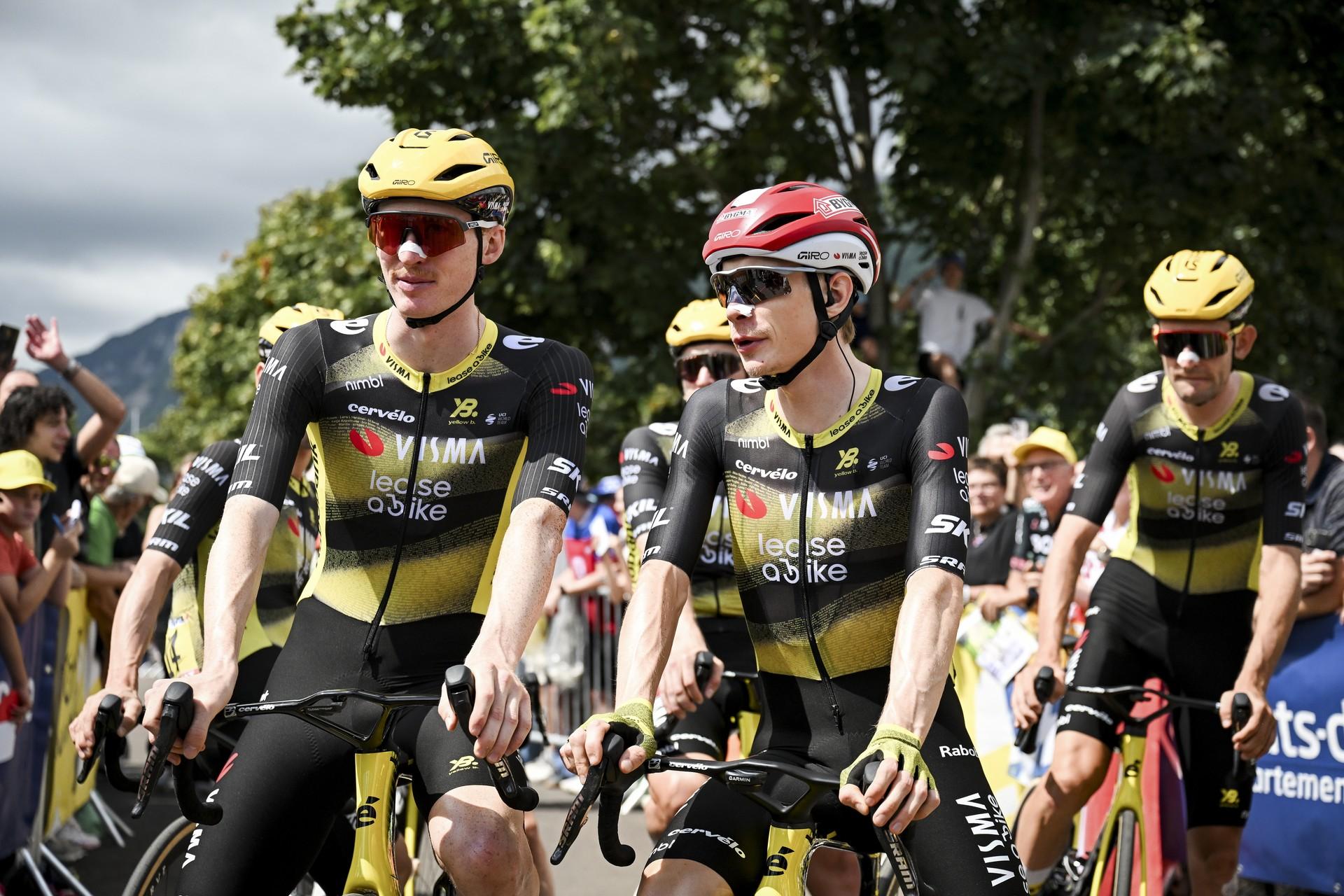
Jorgenson carefully recounts stage 21 of the 2025 Tour de France, when Wout van Aert (Visma-Lease a Bike) won the final stage into Paris. He revealed he had entered the stage ill and uncertain whether to commit.
"I almost didn't even think about stage 21 until the morning of the stage and we're in the bus driving towards Paris," Jorgenson said. "I didn't think one time about how the course was changed – or we were going Montmartre – until like the morning of the race and I'm sitting on the bus like half asleep and they're starting the meeting and I'm thinking oh this is going to be disaster."
What shifted his mindset was a direct appeal from Van Aert during the team meeting. "I will always remember Wout in the meeting, like turning his chair like after Grischa had spoken about the stage and just asking us like human to human, asking especially me and Victor and Tiesj to believe in him for the stage," Jorgenson said.
"Because he had had this stage marked and he felt good and he hadn't won a stage yet and it was like he just felt like he still saw possibility and he believed in himself. And for me that was like a moment where it inspired me to really like refocus for that stage."
The stage itself was chaotic, with rain complicating the new Paris route. Jorgenson was back in the pack on the first ascent of Montmartre and forced to chase back. "I remember entering the first time on Montmartre and I was nowhere to be found. I was like 80th wheel. And I was dropped, was split off from the group with Victor and Wout. And at that point I also had a moment of do I want to give up right now and just sit up and like with all the other guys kind of like give up on the race."
He bridged back with Davide Ballerini, then watched as Van Aert attacked clear. "I watched Wout, you know, ride away and I was kind of in shock and awe and was screaming with all the power I had left on the radio and I'll remember it always."
For all the structure and clarity he now describes, one personal goal remains unresolved. Jorgenson has yet to win a stage at the Tour de France, and opportunities are necessarily limited within a GC-led team. When the chance does come, he admits it will matter deeply. “I want to win a stage of the Tour de France,” he says. “That’s evaded me for my whole career so far, and I feel a hunger for it like no other race.”
In 2026, with Vingegaard chasing a seemingly unbeatable Tadej Pogačar, it will remain to be seen whether Jorgenson may be given free rein to chase a stage win. What's clear, though, is that the American rider is hungry for a big win, but more comfortable than ever existing within a structured team, even if the sport’s biggest individual prizes no longer sit at the top of his personal priority list.