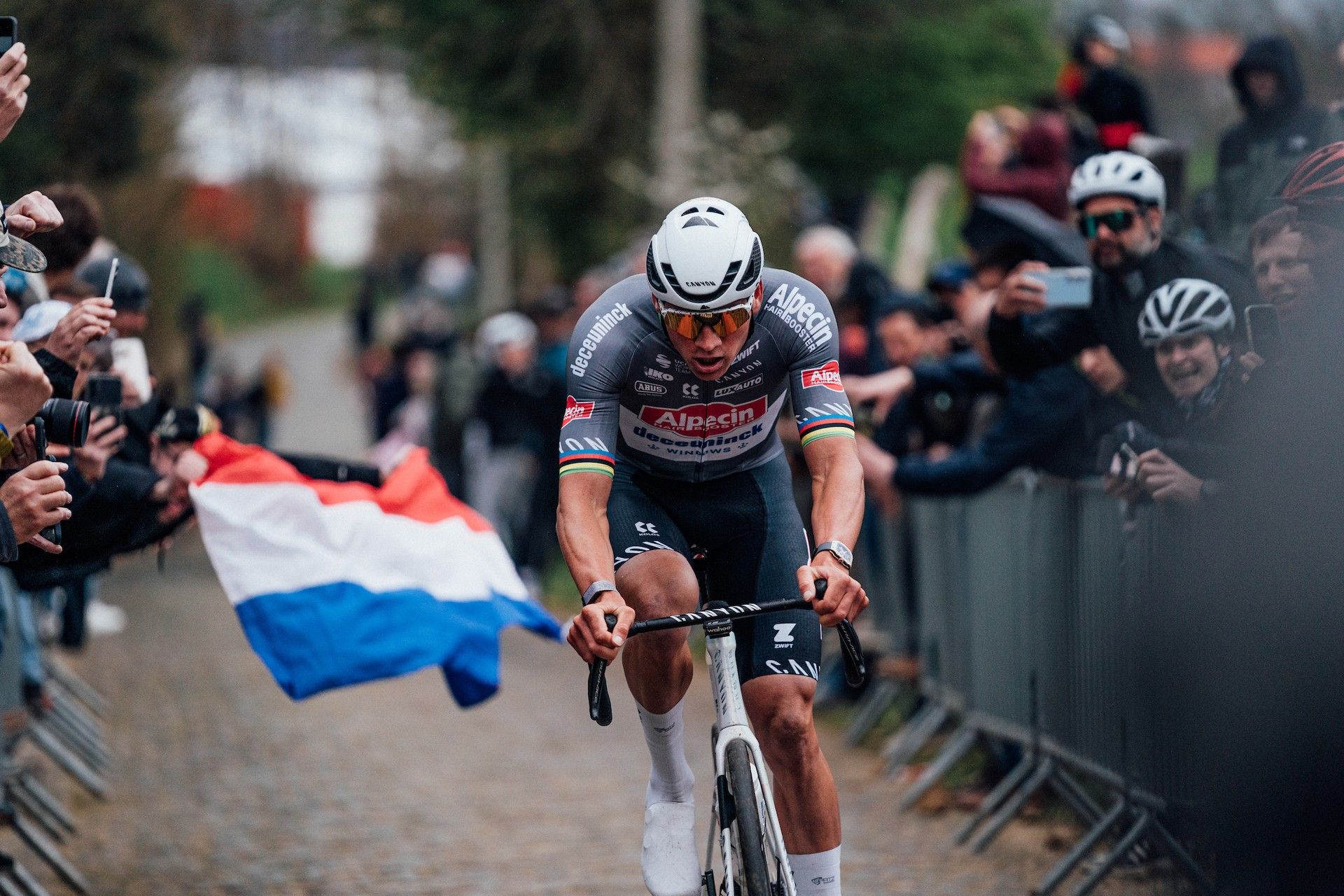
Dwars door Vlaanderen is adding a Flemish Ardennes loop to both the men’s and women’s races on March 31 with the men heading over the Knokteberg-Trieu three times and the women twice. That’s one more ascent for each race than in 2026. Five days earlier, the E3 Saxo Classic will go the other way: a change in the opening 100km takes Berg Ten Stene and Oude Kruisberg out of the 207.8km race from Harelbeke.
The 70th edition of E3 drops its climb count from 16 to 14 on Friday, March 26. “We received a request from the peloton to adjust the course in terms of elevation gain,” Seppe Seynhaeve of the organising committee told VRT NWS.
The Katteberg and La Houppe are still the first two climbs. In 2026, riders went from La Houppe to Berg Ten Stene, then via Ronse to Oude Kruisberg just beyond halfway. In 2027 they go straight from La Houppe to the Karnemelkbeekstraat, also known as the E3 Col, which becomes the third climb rather than the fifth.
From the E3 Col the route is largely unchanged. Riders climb the Oude Kwaremont for the first time before tackling the Taaienberg, now the seventh climb. The Paterberg and the return up the familiar cobbled side of the Oude Kwaremont come 11th and 12th. A second ascent of the E3 Col and the Tiegemberg complete the climbing before the finish in Harelbeke.
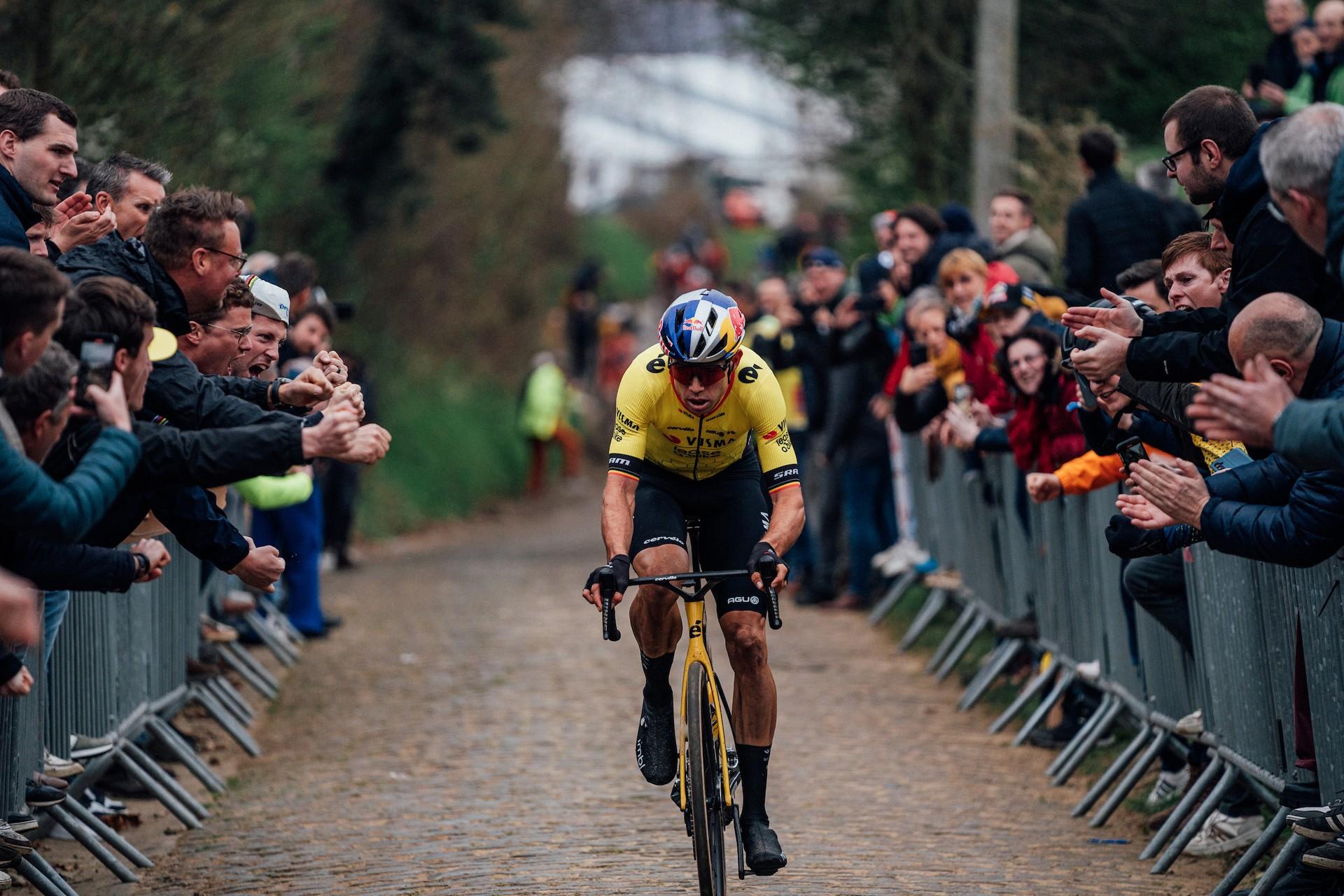 Photo: Zac Williams/SWpix.com
Skipping two earlier efforts could leave teams with more riders able to chase after the Kwaremont. In 2026, four chasers closed to within three seconds of Mathieu van der Poel (Alpecin-Premier Tech) before they stopped working together in the final kilometre.
Where Dwars adds the extra climbing
Flanders Classics has kept the men’s race from Roeselare to Waregem at 184.6km with seven cobbled sectors and 16 climbs, up from 12. After the Hellestraat, the Kluisberg replaces the Volkegemberg as the second climb. The extra ascent of the Knokteberg-Trieu comes with 134km to go, before the riders first reach Berg ten Houte. The Trieu climbs for about 1.3km at an average of 7.3%, with the steepest stretch just before the summit.
The men start their second Ardennes loop with 100km remaining. After the second Knokteberg-Trieu ascent, they repeat the Hotond, Mariaborrestraat and Onderbossenaarstraat before climbing the Varentberg in Maarkedal, with cobbles at the top. That gives teams another chance to force a split before they return to Berg ten Houte. In 2026, 18 riders went clear on the first ascent of Berg ten Houte after 75km, though the field came back together with 84km to go.
The 15th women’s edition starts at Waregem’s HippoLoggia for a 130km race with 11 climbs (up from eight) and six cobbled sectors. Their new loop after the Hellestraat and Kluisberg takes in the Knokteberg-Trieu, Hotond, Mariaborrestraat and Onderbossenaarstraat. From there they join the men’s course with 72km remaining, skipping the Varentberg.
That shared run-in is largely unchanged from 2026. Both fields tackle Berg ten Houte and then the Knokteberg-Trieu for the last time. The route continues over the Hotond, Mariaborrestraat and Eikenberg to the Doorn cobbles. In the final 30km, the Huisepontweg cobbles and Nokereberg precede the first of two passes over the Herlegemstraat cobbles, with the last climb on Waregemsestraat between them. Both races finish on Waregem’s Verbindingsweg.