You don’t forget your first proper bonk.
Mine was the age of 17, on a chain gang in the Cotswolds, vision narrowing, brain fog, balance teetering, with a long, long way back home at 15 kph.
For many riders, it arrives somewhere after the 70‑mile mark of a sportive – right when the course tilts up and the timing chip starts to matter.
The good news: a 100‑mile ride – call it a century, a sportive, or just a long day out – is now one of the more predictable challenges in endurance sport. The physiology is well mapped, and the WorldTour has effectively turned race fuelling into a solved maths problem.
The carbohydrate count
At the centre of that maths problem is carbohydrate. Not calories in the abstract, not “energy”, but stored muscle glycogen – the fast-access fuel that lets you ride at anything resembling sportive pace.
Your body can store roughly 400–600 g of carbohydrate as glycogen in muscles and liver. At endurance intensity, you burn through that at a predictable rate. Fat stores, by contrast, are effectively limitless – but fat burns too slowly to sustain hard group riding, long climbs, or repeated surges.
A bonk isn’t a lack of effort or toughness. It’s the moment glycogen drops low enough that you’re forced onto fat alone. Power collapses, coordination goes, decision-making follows. Everything that follows in this guide – carb-loading, hourly intake, drink mix ratios – is simply about delaying that switch for as long as possible.
In practical terms, “carbohydrate” isn’t a special food group. It’s just glucose in different disguises.
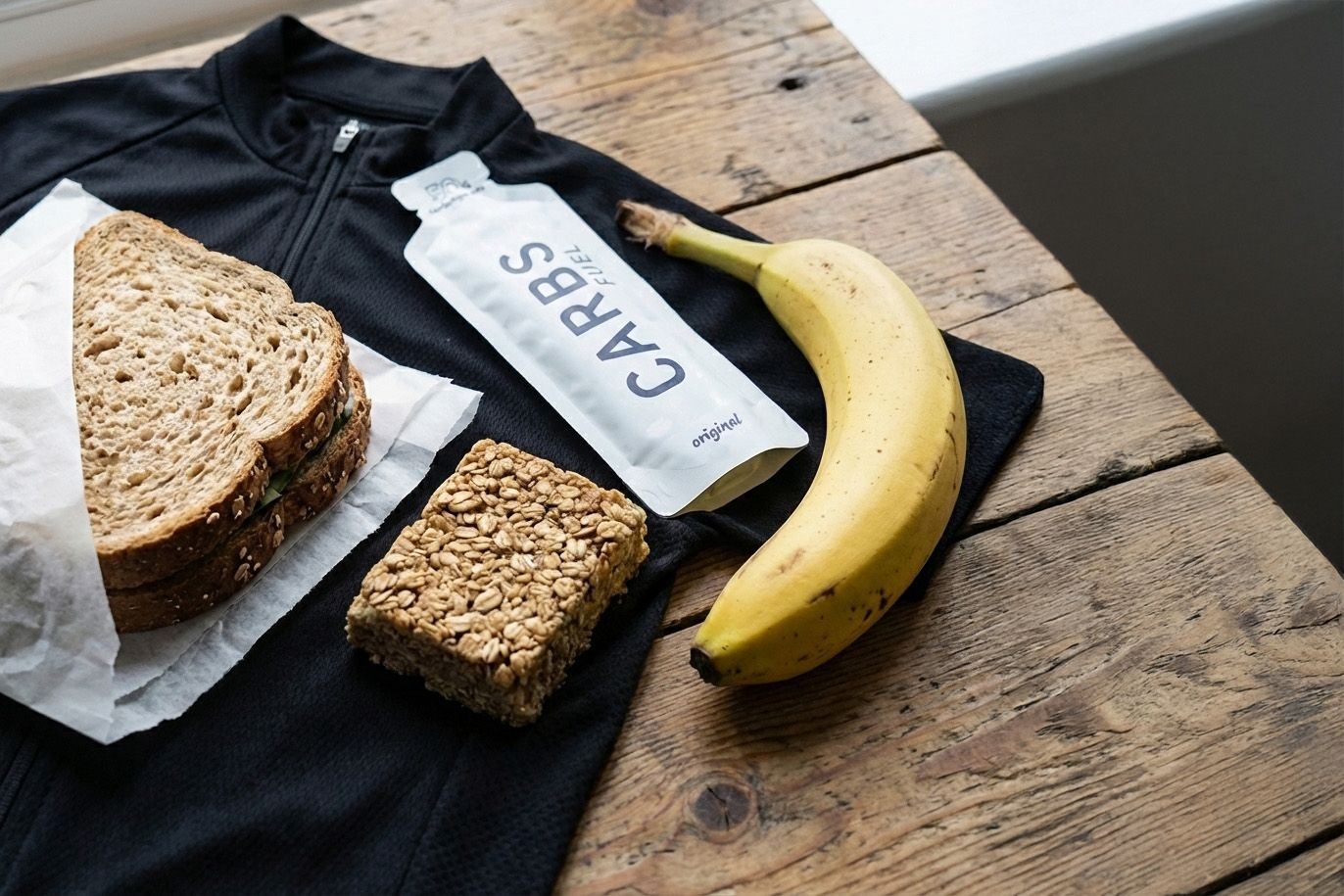
A bowl of pasta, a banana, a slice of white bread, a rice cake, a sports drink, a gel – they all end up in the same place. Some arrive slower, some faster. Some are easier to eat at a table, others at 35 kph. But metabolically, your muscles don’t care where the carbs came from.
The only real difference is context: solid foods work best before and early in a ride; liquids, chews and gels become more useful as intensity rises and chewing stops being appealing.
The 48 Hours That Decide Your Ride
You don’t start fuelling on the start line; you start two days out.
48–24 hours to go: fill the tank
For a century effort, sports nutritionists now routinely push riders towards 10–12 g of carbohydrate per kilogram of body weight, per day in the final 48 hours. For a 75 kg rider, that’s 750–900 g of carbs.
That sounds absurd until you translate it: big portions of rice or pasta, white bread, potatoes, fruit juice, low‑fat desserts. The modern twist is going low‑fibre and low‑residue – white rice, white bread, simple cereals – to pack glycogen in without dragging a full stomach to the start.
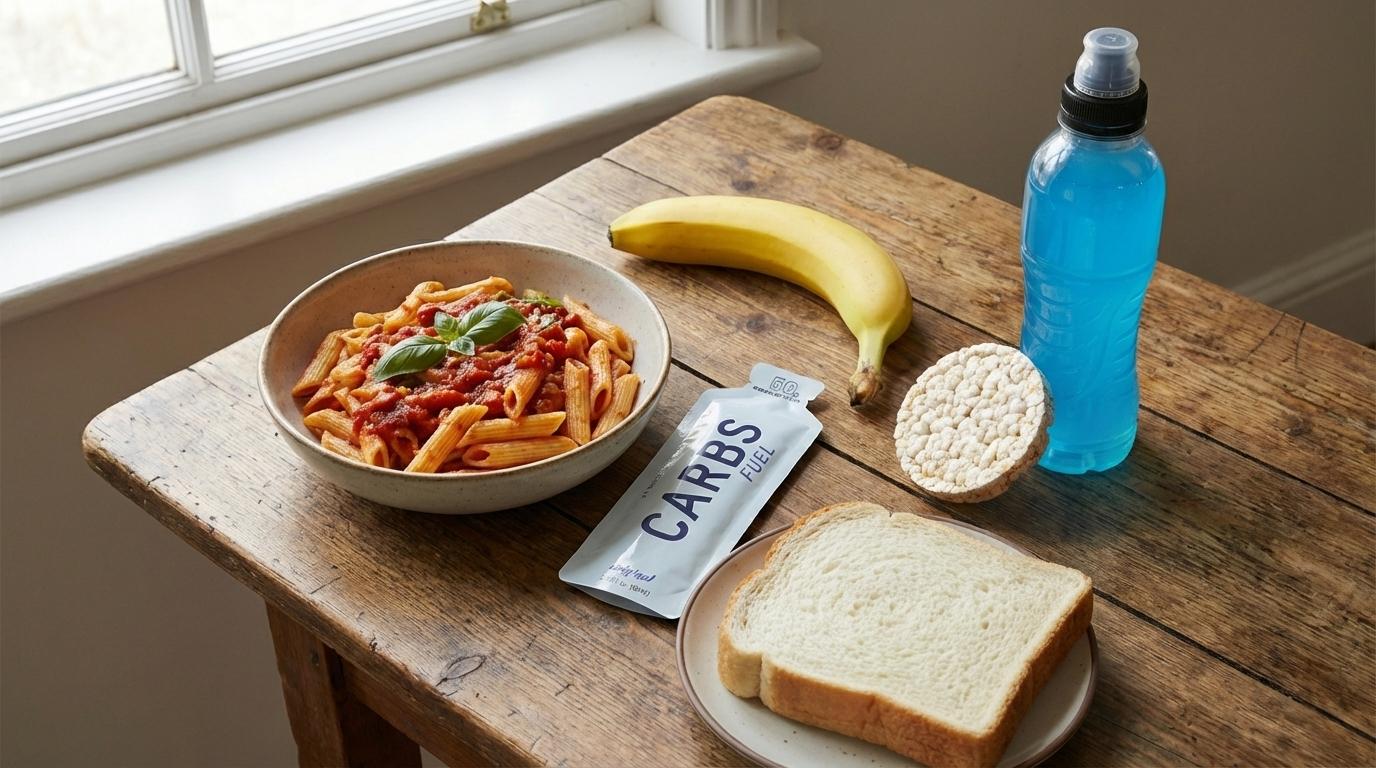
Carbohydrates come in many forms, a good race day strategy mixes a solid food carb-building with on-bike gels and fruits
Event morning: Carb-loading breakfast
Pro team kitchens work backwards from the start time. The same approach works for sportives:
- Eat a substantial breakfast 2–4 hours before the start.
- Aim for 1–4 g/kg of carbs (75–300 g for that same 75 kg rider). For most amateurs 1-2 g/kg will be sufficient unless you have a well trained gut.
- Keep it simple: porridge with honey and banana, or bagels with jam and a little yoghurt.
Teams like Visma | Lease a Bike use a multiplier of time between breakfast and a race – every hour further you can have one g/kg more carbs. So if you eat four hours before the race you can eat 4g/kg, but only 1g/kg if you're an hour out from the race.
Inside the 100‑Mile Fuel Plan
Once you roll out, the job is no longer to build glycogen – it’s to spare it.
How much to eat on the bike
For most sportive riders, current guidance sits at:
- 60–90 g of carbohydrate per hour for well‑trained amateurs.
- Up to 90–120 g/h for elite or very well‑conditioned riders who’ve trained their gut.
Below about 60 g/h, you’re almost guaranteed to tap out your internal stores before the finish. Above that, you run into the limits of intestinal transport unless you use multiple carbohydrate sources.
That’s where the label reading comes in. Look for a drink/gel/chew mix based on a glucose + fructose blend:
- Around 2:1 glucose:fructose works well up to ~90 g/h.
- The newer 1:0.8 glucose:fructose blends are designed to let you push towards 120 g/h with less stomach rebellion.
Little and often, not heroic feeds
The delivery pattern matters almost as much as the total.
- Aim to eat every 20–30 minutes.
- Sip fluids every 10–15 minutes rather than downing a full bottle in one go.
Studies comparing taking a gel every 30 minutes vs every 45 minutes show a clear performance edge to the “drip feed” approach. Practically, that looks like:
- One 30 g bar or half a rice cake every half hour, plus
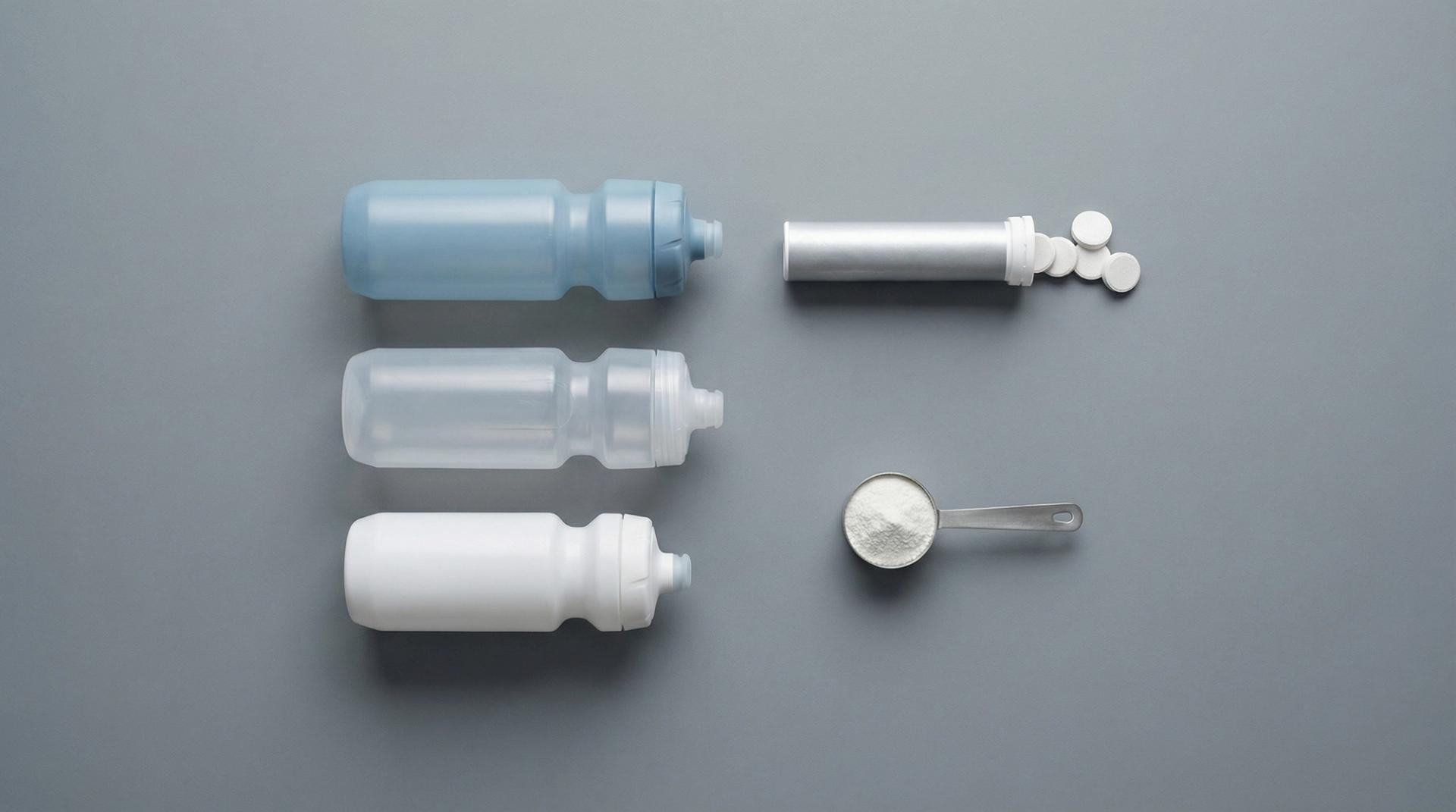
- A 30–40 g carbohydrate drink mix per bottle.
Hit that rhythm from the first 20 minutes, not from the first signs of hunger. If you wait until you “feel like” eating, you’re already behind.
Hydration, Sodium and the Bonk Problem
Most riders obsess over carbs and then blow their day on the basics: drinking either too much, too little, or the wrong thing.
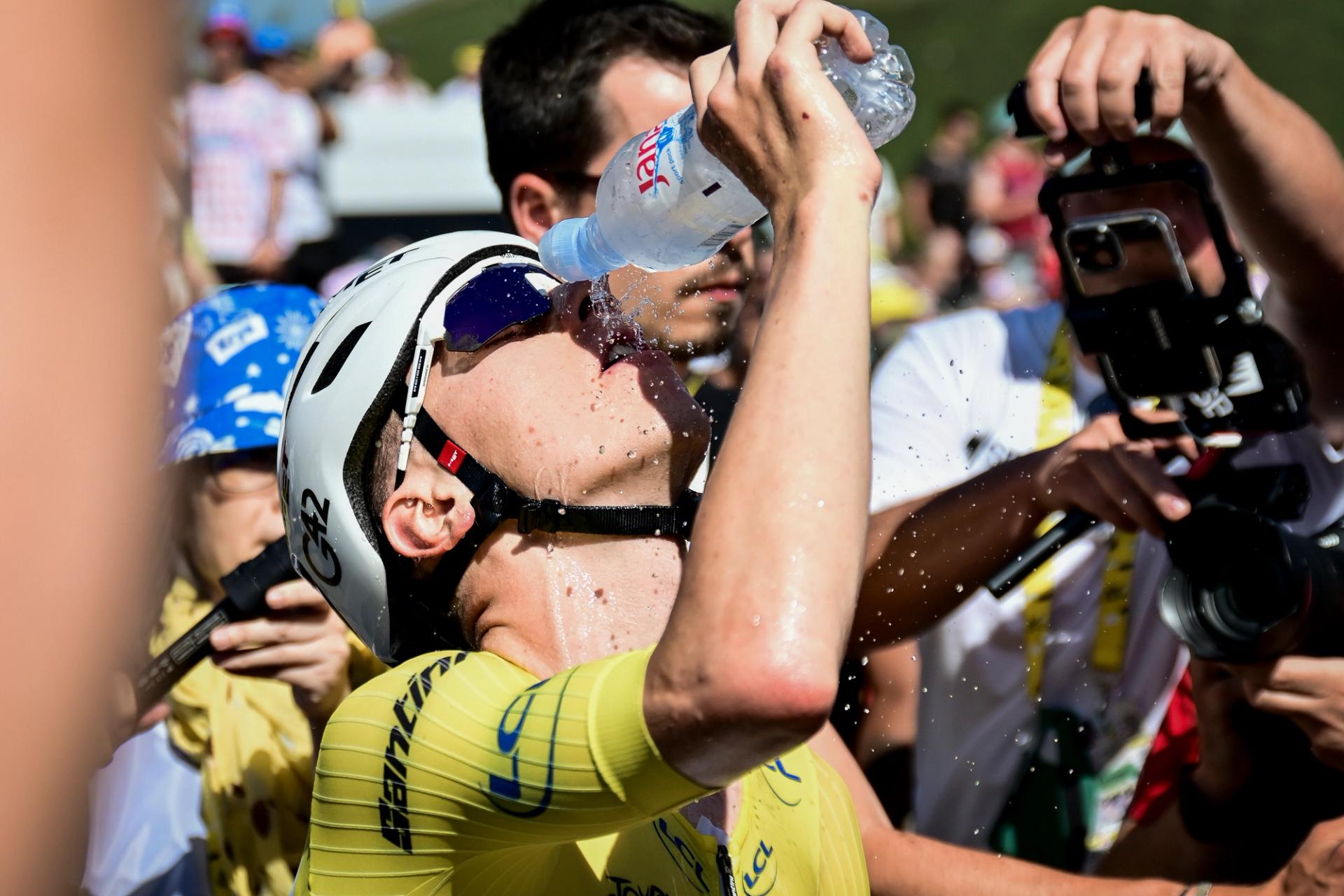
Hydration is critical for the world's best cyclists - image credit: ASO
Fluids: know your range
A broad, workable range for a temperate‑weather sportive is:
- 400–800 ml of fluid per hour
Hotter, more humid days can push that towards a litre. The simplest way to personalise it is the old‑school sweat test: weigh yourself before and after a one‑hour ride at event intensity. Try to keep race‑day losses under about 2% of body mass.
Sodium: the quiet limiter
The current consensus is:
- 500–1,000 mg sodium per litre of fluid for most riders.
- Up to 1,200 mg/h for very salty sweaters (white streaks on kit, crusty helmet straps, crampy by default).
The real danger is the opposite: drowning yourself in plain water. That can dilute blood sodium enough to cause water intoxication (hyponatraemia) – rare in cycling, but ugly when it happens. Your bottles for a 100‑miler should almost never be just water.
What a bonk really is
This is worth repeating: you don’t run out of energy; you run out of accessible energy.
Most riders only store enough glycogen for 90–120 minutes of moderate‑hard riding. Once that’s gone, your body flips to mostly fat oxidation, which can’t sustain sportive‑pace watts. That’s the classic scenario: crawling on the flat, tunnel vision, irrational grumpiness.
The only way around it is boringly simple:
- You started with full glycogen (carb‑load done).
- You fuelled early and consistently (60–90 g/h in from the first 20 minutes).
- You didn’t blast the first hour in the red with a group you can’t actually hold.
Of course, pacing also plays a role in bonking. Fuelling can’t rescue pacing mistakes – it can only support sensible ones.
Training Your Gut, Not Just Your Legs
Here’s the part most riders skip: you can’t magically jump to 90 g/h on event day.
The small intestine adapts to habitual intake. If you want to run a modern high‑carb strategy, treat it like intervals:
- On at least 2–4 long training rides, practice your target fuel and drink plan at near‑race intensity.
- Use the same brands and flavours you’ll run on the day.
- Note what causes sloshing, bloating or urgent roadside stops – and adjust.
To combat flavour fatigue on a five‑to‑eight‑hour route, pros increasingly rotate textures and tastes:
- First 50 miles: more solids – rice cakes, small sandwiches, bananas, flapjacks.
- Final 50 miles: shift towards gels, chews and drink mix as intensity rises.
- Drop in savory options (pretzels, salted nuts, cheese or Vegemite sandwiches) after the three‑hour mark to reset the palate and top up sodium.
And once you roll over the line? You’re not quite done.
Within 30–45 minutes, aim for:
- Around 30 g of protein, and
- Roughly a 3:1 carb:protein ratio overall,
- Plus 150% of the fluid you lost, with electrolytes.
Do that, and your next training block starts sooner – and your next century feels a lot less like survival, a lot more like riding fast on purpose.